The Hidden Costs of Stablecoin Remittances: Do You Really Understand Them?




Image Source: pexels
You may have noticed that the market size of stablecoins is growing rapidly.
Many people choose stablecoins forremittances, attracted by their near-instant speed andtransaction fees below 1%. However, behind these advantages lies a key issue.
Have you really calculated the spread cost when buying and selling stablecoins with fiat? This “invisible fee” may far exceed your imagination.
Key Takeaways
- Stablecoin remittances seem cheap, but the spread when buying and selling stablecoins with fiat is the main hidden cost.
- Traditional bank remittance fees are transparent, including wire transfer fees, intermediary fees, exchange rate spreads, and incoming fees.
- Stablecoin remittances are fast with low network fees, but fiat on-ramp premiums and off-ramp discounts increase total costs.
- For large remittances, traditional banks are usually more cost-effective and safer.
- When choosing a remittance method, calculate all hidden fees, especially the “total on/off-ramp spread” for stablecoins.
Traditional Bank Remittances: Fee Structure Breakdown
Before diving into stablecoins, you first need to clearly understand all the fees in traditional bank remittances. These fees are transparent but interconnected, and the total cost may exceed your initial impression.
Wire Transfer Fees and Intermediary Bank Fees
When you initiate an international remittance from a bank, the first fee is the wire transfer fee. This fee is charged by your sending bank for processing the transaction.
Most major international banks have fairly standard outgoing wire fees. For example, initiating an international wire from Bank of America or HSBC typically costs about$45.
| Bank Name | International Outgoing Wire Fee |
|---|---|
| Bank of America | $45 (average) |
| HSBC Bank | $45 (average) |
| Citibank | $45 (average) |
Additionally, your funds may pass through one or more intermediary banks before reaching the final destination. These banks also charge service fees for handling your remittance, usually between$15 and $50. This fee is deducted directly from your principal, and you often cannot predict it in advance.
Currency Exchange Rate Spread
This is the largest “hidden cost” in traditional remittances. The exchange rate provided by the bank is not themid-market rate you see on Google or XE.com. Banks add a profit margin to this benchmark rate, known as a “markup.”
This markup is usually between0.5% and 5%. This means if you remit $10,000, you could lose $50 to $500 just from the exchange rate spread.
Recipient Bank Incoming Fee
Finally, when funds arrive in the recipient’s bank account, the receiving bank also charges an incoming wire fee. This fee varies by bank.
As shown, some banks (like Charles Schwab) do not charge this fee, but most charge around $15, while banks like U.S. Bank may charge up to$25.
In summary, a seemingly simple bank remittance has total fees that are the sum of wire transfer fees, intermediary fees, exchange rate spreads, and incoming fees.
Stablecoin Remittances: Advantages and Hidden Costs
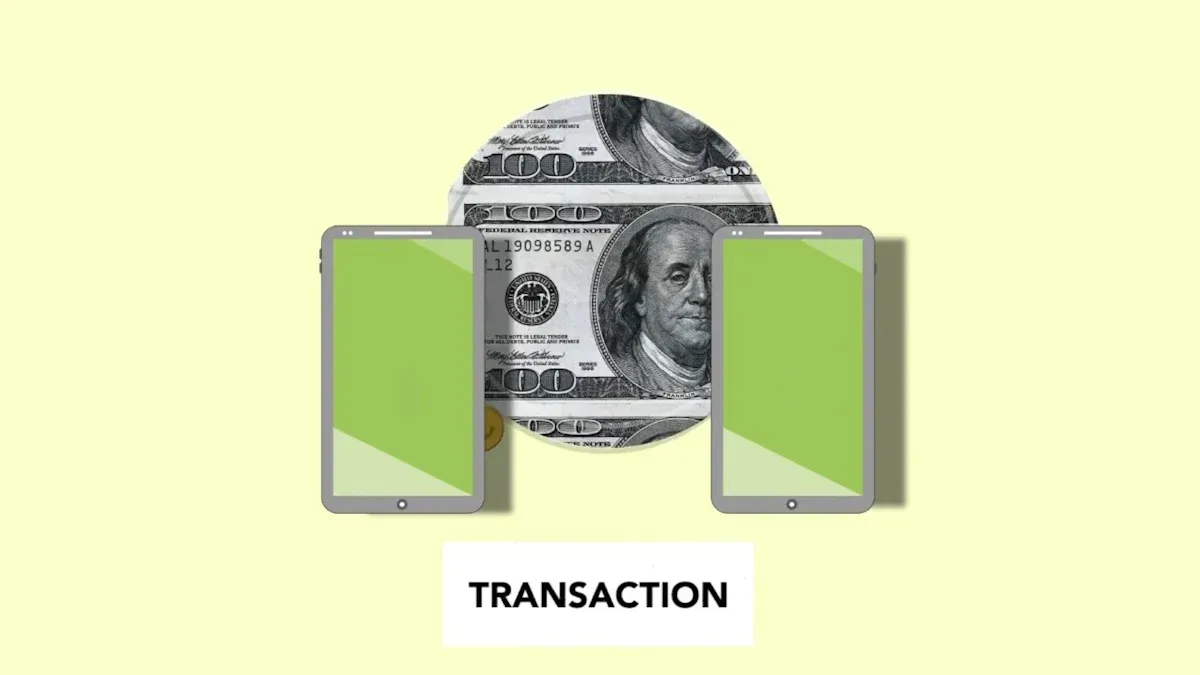
Image Source: pexels
Now, let’s turn our attention to stablecoins. When you’re tired of traditional banks’ long waits and layered fees, stablecoin remittances seem like a perfect alternative. It does have very attractive surface advantages, but you must also understand its complete cost structure behind the scenes.
Obvious Advantages: Speed and Low Gas Fees
The two most prominent advantages of stablecoins are speed and low transfer network fees (Gas Fee).
First is speed. Unlike bank wires that take 1-5 business days, a stablecoin transaction usually confirms in minutes and is not limited by holidays or business hours, truly achieving anytime transfers.
- USDT transactions on Ethereum (ERC-20) average1 to 10 minutes.
- USDT transactions on Tron (TRC-20) usually complete within 1 minute.
- The Solana network can even achievesub-second confirmation speeds.
Second is Gas fees. If you choose the right blockchain network, transfer costs can be very low. The TRC-20 network is currently the most common choice for individual users because its fees are far lower than Ethereum’s ERC-20 network.
Note: Gas fees are paid to blockchain network miners or validators for processing your transaction; they do not belong to any trading platform.
| Feature | ERC-20 (Ethereum) | TRC-20 (TRON) |
|---|---|---|
| Transaction Fees | Higher, from a few dollars to over $20 | Very low, usually between $1-2 |
Choosing the TRC-20 network for stablecoin remittances does make the direct cost per transfer far lower than bank wire fees. However, this is just the beginning of the story.
Hidden Cost One: Fiat On-Ramp Premium
This is the first and most critical hidden cost you encounter. The so-called “on-ramp” is the process of buying stablecoins (like USDT) with fiat currency (like USD). In this process, you almost never get USDT at a 1:1 exchange rate.
This difference is called a premium.
Take a real-world example: suppose you need to remit from mainland China. You might transfer funds through compliant channels to a platform supporting fiat trading (such asBiyapay), then use the USD in your account to buy USDT. At this point, you will find the price may not be 1 USDT = 1.00 USD, but:
1 USDT = 1.01 USD
This means you pay an extra 0.01 USD for every 1 USDT. If you buy 10,000 USDT, just this on-ramp step costs you $100 (1% premium).
Why does a premium occur?
- Market Demand: When risk aversion is high or trading demand is strong, more people buy USDT, pushing its price above $1.
- Platform Costs and Profits: Platforms providing fiat trading services need to cover operational costs and earn profits, passing this on toconversion prices.
- Risk Factors: Different stablecoins have varying risk perceptions. In the past, TrueUSD (TUSD) experiencedpremiums up to 7% due to market factors, trading at $1.07.
Hidden Cost Two: Fiat Off-Ramp Discount
When your recipient receives USDT, they need to convert it back to fiat for daily use. This process is called “off-ramp” and also has hidden costs, namely a discount.
Opposite to on-ramp, when selling USDT, the recipient usually cannot get a 1:1 rate either.
Continuing the example above, your recipient in the US sells the received 10,000 USDT through a platform likeBiyapay. The price they see may not be 1 USDT = 1.00 USD, but:
1 USDT = 0.99 USD
This means they lose 0.01 USD for every 1 USDT sold. Selling 10,000 USDT, they actually get only $9,900, incurring another $100 (1% discount) cost.
Key Point: Total Spread is the Real Cost Your true remittance cost must never just look at the intermediate transfer Gas fee. It must be the sum of “on-ramp premium” and “off-ramp discount.” In the above case, your total spread cost is 1% + 1% = 2%, or $200. This number already far exceeds the bank’s fixed wire fee.
Other Costs: Platform Fees and Network Fluctuations
Besides the core on/off-ramp spreads, consider some other fees.
- Trading PlatformFees (Trading Fee) When buying and selling USDT with fiat on exchanges or platforms, the platform charges a trading fee. For regular users, mainstream exchanges like Binance or KuCoin have standard rates usually around0.1%. Discounts are available using platform coins (like BNB), but this fee still exists.
- VIP Rate “Trap” You may have heard some exchanges offer extremely low VIP rates, even 0% maker fees. But be clear: these perks are for high-volume professional traders.
- For example, to become Binance VIP 1, you need totrade over $1 million in a month.
- For the vast majority of users doing personal small stablecoin remittances, you cannot enjoy these VIP benefits. Therefore, do not include these ultra-low rates in your cost expectations.
- Network Fee Fluctuations Although TRC-20 fees are relatively stable, under extreme market conditions, Gas fees on all blockchain networks can spike instantly. This is a low-probability event but still a potential cost.
Overall, the real cost of stablecoin remittances is far more complex than “low Gas fees.” The on/off-ramp spreads at both ends are the core determining total fees.
Case Showdown: Which is More Cost-Effective?
Image Source: pexels
Theoretical analysis is always somewhat abstract; let’s calculate and compare the true total costs of both remittance methods through a specific case.
Case Background Setup
Assume you are in mainland China and need to remit funds to family in the US.
- Target Arrival Amount: Final arrival $10,000 (USD).
- Path One: Traditional wire transfer through a licensed bank in Hong Kong.
- Path Two: Transfer via stablecoin USDT (TRC-20 network).
Now, we break down all fees you and the recipient bear under both paths step by step.
Bank Remittance Total Cost Estimate
When choosing traditional banks, fees are transparent and predictable. Based on our earlier chapter analysis, total costs consist of:
- Wire Fee: Outgoing fee charged by the Hong Kong bank, usually about $45 USD.
- Intermediary Fee: Deducted during cross-border transmission; we take a midpoint estimate of $20 USD.
- Currency Exchange Spread: Bank markup usually around 0.5%. To ensure the recipient gets $10,000 USD, your extra cost when buying forex is about:
10,000 USD * 0.5% = 50 USD - Recipient Incoming Fee: Charged by the US receiving bank; we calculate at average $15 USD.
Total Cost Estimate Adding the above items, your total bank remittance cost is approximately:
45 + 20 + 50 + 15 = 130 USD
USDT Remittance Total Cost Estimate
Now, let’s look at stablecoin remittance costs. To ensure compliance and safety, we use a platform supporting fiat trading like Biyapay as an example.
- Fiat On-Ramp Premium (On-Ramp Cost): You first buy USDT with USD. Assume on Biyapay, the on-ramp premium is 1.2%; buying 10,000 USDT costs:
10,000 USDT * 1.2% = 120 USD - Platform Trading Fee (Buy): Platform charges trading fee at 0.1%:
10,000 USDT * 0.1% = 10 USD - Network Transfer Fee (Gas Fee): You transfer 10,000 USDT to the recipient via TRC-20; Gas fee is very low, about $2 USD.
- Fiat Off-Ramp Discount (Off-Ramp Cost): Recipient sells USDT to USD on Biyapay. Assume off-ramp discount 1.0%; they lose:
10,000 USDT * 1.0% = 100 USD - Platform Trading Fee (Sell): Platform charges another 0.1% on sell:
10,000 USDT * 0.1% = 10 USD
Total Cost Estimate Adding all links’ costs, this stablecoin remittance total is:
120 + 10 + 2 + 100 + 10 = 242 USD
⚠️ Risk Warning on P2P Trading You might think: if using P2P (peer-to-peer) trading, can I find lower spreads? Theoretically possible, but you must be aware of the huge risks.P2P trading lacks central regulation, bringing extra uncertainty:
- Bank Account Freezes: If your counterparty involves illegal activities, law enforcement may trace and freeze related bank accounts.
- Crypto Scams: You may encounter scammers posing as real sellers; once you pay, they disappear.
- Tax Implications: P2P trading may attract tax authority scrutiny for evading regulation.
Taking these risks to save a little spread is not worth it for most people.
Cost Comparison and Conclusion
Now, put the total costs of both methods together; the result is clear.
| Fee Item | Traditional Bank Remittance (USD) | USDT Remittance (USD) |
|---|---|---|
| Total Cost | ~130 | ~242 |
| Arrival Time | 1-5 business days | About 10 minutes |
The conclusion is very clear: In this $10,000 remittance case, although banks are slower, their total fee (about $130) is far lower than USDT remittance’s total cost (about $242). The seemingly low $2 Gas fee in USDT is completely swallowed by the $220 total on/off-ramp spread.
This reveals a core fact: for medium-amount remittances most ordinary users do, when all hidden costs are included, traditional banks still have significant advantages in fees.
Before making a choice, the more important step is to put real numbers on that “total on/off-ramp spread,” instead of only looking at the advertised low network fee. Tools like BiyaPay, a multi-asset wallet, let you check stablecoin buy/sell quotes and FX comparisons alongside cross-border remittance costs, so you can see the true all-in cost of a bank transfer and an on-chain route on the same footing.
BiyaPay covers fiat–crypto conversion, international remittances and trading, and operates under licenses such as US MSB and New Zealand FSP, with an emphasis on compliance and fund safety. For users who still value the speed and flexibility of stablecoins, using such tools to quantify spreads and fees at each step—before deciding between a “bank rail” and a “blockchain rail”—is more reliable than relying on intuition alone.
Now you understand: although stablecoin remittances are extremely fast, when all hidden costs are factored in, traditional banks often have more competitive total fees and security for medium amounts.
Your choice should be based on specific needs:
- Large Remittances: Banks are the safer choice. They professionally handlecomplex compliance declarations for transfers over $10,000, giving you peace of mind.
- Small Frequent Remittances: If you are a crypto expert and can find low-spread channels, consider USDT. But you must be awaremainland China has strict bans on crypto activities, with legal risks.
Ultimately, your decision hinges on one thing: before transferring, you must estimate USDT’s “total on/off-ramp spread”; this is its real cost.
FAQ
Are USDT Remittances Always More Expensive Than Banks?
Not necessarily. The key is calculating the total “on-ramp premium” and “off-ramp discount” costs. For small remittances, this total spread may be lower than banks’ fixed fees. But for medium to large remittances, banks are usually more cost-effective.
How About Costs for Other Stablecoin Remittances Besides USDT?
The cost principle is the same. Whether using USDC or other stablecoins, core costs come from fiat on/off-ramp spreads. Spreads for different stablecoins vary with market liquidity and demand.
How Do I Check Real-Time On/Off-Ramp Spreads?
You can directly view on your chosen trading platform or service provider.
Simultaneously compare “buy USDT” and “sell USDT” USD quotes. The gaps between these two prices and $1.00 are the real spread costs you pay.
Why Does USDT’s Price Deviate from $1?
This is mainly determined by market supply and demand. When buyers outnumber sellers, USDT’s price exceeds $1, creating a premium. Conversely, when sellers outnumber buyers, the price falls below $1, forming a discount.
*This article is provided for general information purposes and does not constitute legal, tax or other professional advice from BiyaPay or its subsidiaries and its affiliates, and it is not intended as a substitute for obtaining advice from a financial advisor or any other professional.
We make no representations, warranties or warranties, express or implied, as to the accuracy, completeness or timeliness of the contents of this publication.
Related Blogs of
Zelle Wire Transfer or ACH? Clearing Up the Confusion


What Are the Daily Limits for Chase Accounts?


SoFi Checking and Savings A Deep Dive Review


What is the Dialing Code for the USA and How to Call?
Choose Country or Region to Read Local Blog
 Australia
 Austria
 Belgium
 Canada
 Cyprus
 Czech Republic
 Denmark
 Estonia
 Finland
 France
 Germany
 Greece
 Hong Kong
 India
India Indonesia
 Ireland
 Italy
Italy Japan
Japan Latvia
 Lithuania
 Luxembourg
 Malaysia
 Malta
Malta Morocco
 Nepal
Nepal Netherlands
 New Zealand
 Norway
 Pakistan
 Philippines
 Poland
 Portugal
 Romania
 Singapore
 Slovakia
 Slovenia
 South Africa
 South Korea
 Spain
Spain Sweden
 Thailand
 The United States
 Turkey
 United Arab Emirates
 United Kingdom
 Vietnam
Contact Us




BIYA GLOBAL LLC is a licensed entity registered with the U.S. Securities and Exchange Commission (SEC No.: 802-127417); a certified member of the Financial Industry Regulatory Authority (FINRA) (Central Registration Depository CRD No.: 325027); regulated by the Financial Industry Regulatory Authority (FINRA) and the U.S. Securities and Exchange Commission (SEC).
BIYA GLOBAL LLC is registered with the Financial Crimes Enforcement Network (FinCEN), an agency under the U.S. Department of the Treasury, as a Money Services Business (MSB), with registration number 31000218637349, and regulated by the Financial Crimes Enforcement Network (FinCEN).
BIYA GLOBAL LIMITED is a registered Financial Service Provider (FSP) in New Zealand, with registration number FSP1007221, and is also a registered member of the Financial Services Complaints Limited (FSCL), an independent dispute resolution scheme in New Zealand.