
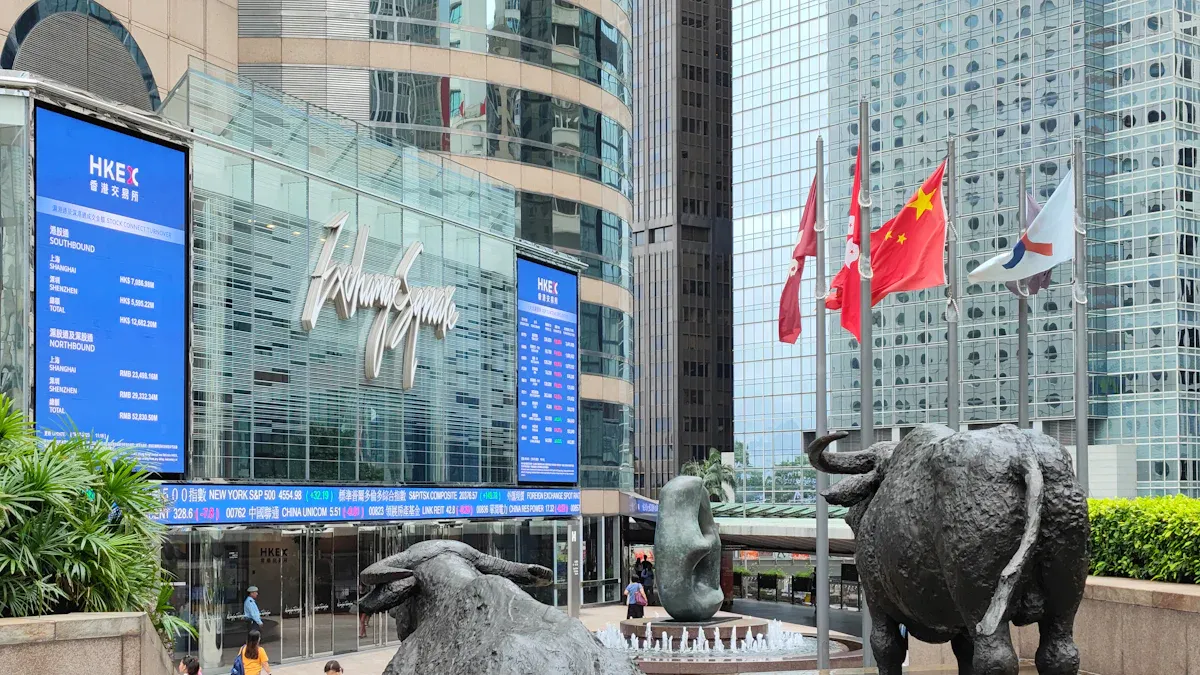
Hong Kong Stock Investing for Beginners
Learn the basics of Hong Kong stock investing, including account opening, market hours, fees, order types, Stock Connect, trading rules, and key risks.
Related Blogs

[Hang Seng Index Lazy Guide] Understand What the HSI Is in 5 Minutes and How It Affects Your Investments
Want to invest in Hong Kong stocks? This article explains what the Hang Seng Index is. The HSI is the core indicator reflecting the performance of the Hong Kong stock market, consisting of about 80 blue-chip stocks like Tencent and HSBC. Its rises and falls are not only a market barometer but also directly impact your ETF or fund investment returns.

Maggie
2025-12-12 13:45:41

Tencent ADR (TCEHY) vs Hong Kong Shares (00700): What’s the Difference?
Want to invest in Tencent stock — should you choose the US ADR (TCEHY) or Hong Kong shares (00700)? This article compares the key differences in trading market, currency, liquidity, and taxation. TCEHY trades in USD with lower liquidity; 00700 trades in HKD with high liquidity but stamp duty, helping you make the best choice.

Tomas
2025-12-10 10:50:16

Hong Kong Stock Market Half-Day Trading Hours: 5 Essential Tips to Avoid Costly Mistakes
Confused about Hong Kong’s special half-day trading sessions? These sessions end at 12:00 noon with no afternoon session. This article shares 5 practical tips to master T+2 settlement postponement rules, closing auction order placement, and cash planning so you can trade safely before holidays without stepping on landmines.

Reggie
2025-12-08 10:10:50

Hong Kong, US & Taiwan Stock Market Trading Hours Comparison Chart 2025 – Never Get Confused Again
Want to know the exact Hong Kong (HKEX) trading hours compared with Taiwan (TWSE) and US markets? This complete guide includes a full cross-market timetable, explains HK morning/afternoon sessions, US summer/winter time plus pre-market & after-hours, and gives you one master chart so you can easily track overlapping sessions and never miss an entry again.
Tomas
2025-12-05 09:57:14

Why Hong Kong Stock Index ETFs Are the Ideal Tool for Practicing Passive Investing
Want to practice passive investing? Hong Kong stock index ETFs allow you to buy a market-representative stock basket at extremely low cost and high efficiency, achieving risk diversification and hassle-free goals. This article teaches you how to choose the right ETF and start your investment plan.

Max
2025-12-04 16:35:45

Analysis of Preferred Platforms for Chinese Users Trading Hong Kong Stocks: Tiger Brokers vs. Futu Securities
A comparison of Hong Kong stock trading platforms, Tiger Brokers and Futu Securities, each with unique strengths. Detailed analysis of fees, features, and account opening policies to help you choose the best platform.

Neve
2025-08-08 17:30:33

Hong Kong Stock Investment Account Selection Guide: Tiger Brokers vs. BOCI Services and Fees Comparison
Compare Tiger Brokers and BOCI for Hong Kong stock investments, detailing account opening processes, commission fees, services, and security measures to help you efficiently choose the best account.
Neve
2025-08-08 17:24:31

Hong Kong Stock Investment Features Review: Differences and Selection Recommendations for Futu Securities vs. BOCI
Comparison of Hong Kong stock investment features: How do Futu Securities and BOCI differ in fees, services, and safety? This article details their pros and cons to help you rationally choose a broker.
Neve
2025-08-08 17:14:35

Hong Kong Stock Trading Mobile Experience Analysis: In-Depth Pros and Cons of Futu Securities vs. Webull
A detailed comparison of the mobile experience for Hong Kong stock trading, analyzing the pros and cons of Futu Securities and Webull in terms of interface, usability, market data, features, and fees to help you efficiently choose a platform.
Neve
2025-08-08 17:08:15