

US Stock Investing for Beginners
Learn the fundamentals of investing in the US stock market with practical guides designed for beginners. This topic covers account opening, trading procedures, market hours, order types, fees, taxes, market rules, and risk management. It also explains the New York Stock Exchange, Nasdaq, major US stock indices, pre-market and after-hours trading, and commonly used investment terms, helping new investors build a basic understanding of the market and make informed decisions based on their own circumstances and risk tolerance.
Related Blogs

Beginner's Guide to Investing in US Stocks: Everything You Need to Know About 2025 Trading Hours and Rules
Planning to invest in US stocks? This article explains the latest 2025 trading hours and rules. We've compiled daylight saving and standard time US stock market opening hours (including Beijing time conversion), full-year holiday calendar, and T+0 trading rules to help you get started easily.

Matt
2025-12-15 11:42:16

Why Investing in US Stock ETFs Is Smarter Than Picking Individual Stocks
Investing in US stock ETFs is smarter than picking individual stocks because it automatically diversifies risks, avoiding losses from single companies or sudden US financial news. ETFs allow you to easily capture average market returns with low costs—a more reliable long-term wealth growth strategy.

Maggie
2025-12-15 11:26:51

Why Did the Three Major US Stock Indices Fall? Challenging Your Investment Common Sense
Why did the three major US stock indices fall? This is not due to major negative news, but rather market caution ahead of the Federal Reserve's interest rate meeting. The article deeply analyzes the structural divergence amid the index pullback, revealing why semiconductors rose against the trend, helping you identify investment opportunities in a downturn.

William
2025-12-15 11:11:36

US Stock Futures Fluctuate Narrowly as Investors Weigh Employment Data and Fed Easing Signals
Why are US stock futures fluctuating narrowly? This article provides an in-depth analysis of the mixed employment data and the intense market battle over expectations for Federal Reserve rate cuts. It interprets key data such as NFP and JOLTS to help you understand the Fed's policy direction and future market catalysts.

Reggie
2025-12-15 11:06:50

Planning to Trade? Bookmark This 2025 US Stock Market Holiday Schedule
Planning your 2025 US stock trading? This article provides a complete holiday calendar and schedule, including 10 full closure days such as New Year's Day and Thanksgiving, as well as 3 early closure days like the day before Independence Day. It also includes regular US stock closing times and reminders for daylight saving time changes.
Matt
2025-12-15 11:00:41

2026 US Stock Market Holiday Calendar Released: Easily Plan Your Investment Rhythm
Want to know the 2026 US stock market closure times? This article provides the complete 2026 US stock market holiday calendar, including 10 full closure days such as Martin Luther King Jr. Day, Good Friday, and Independence Day observance, plus 2 early closure days, helping you plan trades in advance.
Maggie
2025-12-15 10:42:58

Beginner’s Guide: What to Do When a Stock Hits Limit-Down? Can You Still Trade?
Can you still trade a stock after it hits limit-down? Theoretically yes, but selling is extremely difficult while buying is easy. This article explains A-share limit-down rules, why you can’t sell, and gives hanging-order tips and coping strategies to stay calm during volatility.
Matt
2025-12-12 18:16:18

Want to Invest in U.S. Stocks? First Understand What the Dow Jones Industrial Average Is
Want to invest in U.S. stocks? Start by understanding the Dow Jones Industrial Average (DJIA). It is a price-weighted index consisting of 30 major U.S. blue-chip companies and serves as a key indicator of the American economy. Beginners can easily get started by investing in ETFs that track the Dow, such as DIA.

Max
2025-12-12 11:58:22
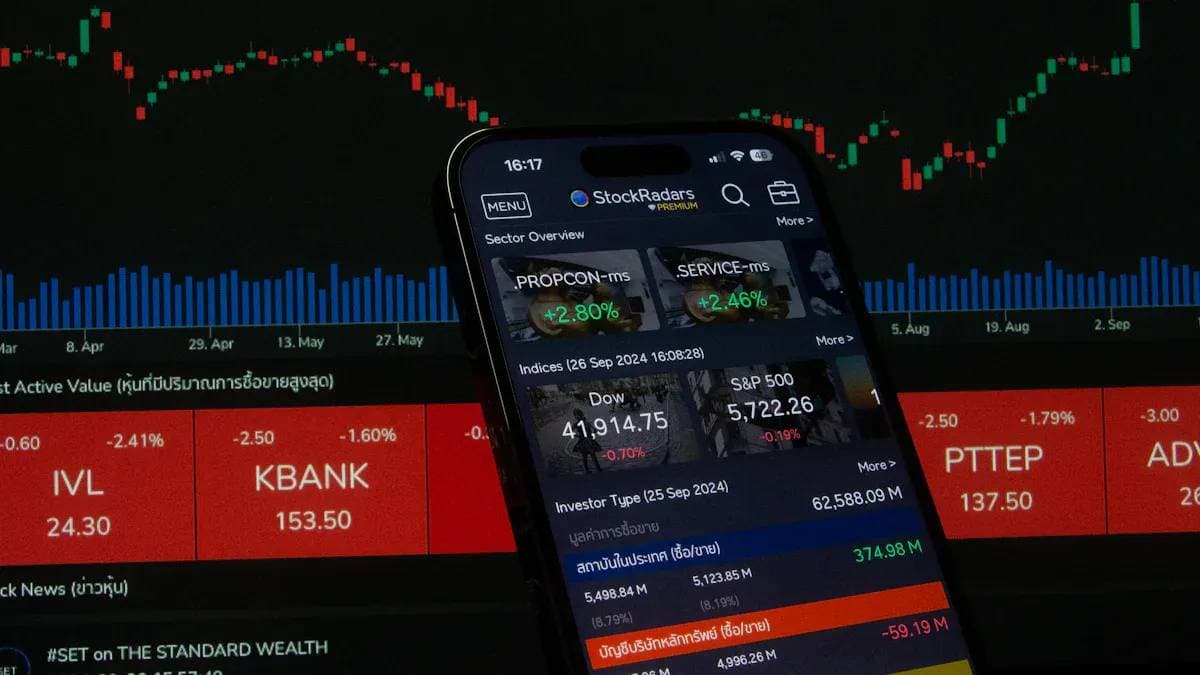
Beginner's Guide: Top 5 Recommended Platforms for Investing in Dow Jones Index Exchange-Traded Funds
Want to invest in Dow Jones Index ETFs? This article provides an in-depth review of the top 5 platforms including Fidelity, Charles Schwab, Vanguard, and others, comparing trading fees, Chinese-language services, and core advantages to help you easily find the most suitable channel for investing in Dow Jones Index ETFs.

Neve
2025-12-12 10:01:09