Qualcomm Fiscal 2026 Q3 Earnings Preview: Handset Chips, Automotive, Data Center, and Licensing





The key question for Qualcomm's fiscal 2026 Q3 earnings is not simply whether the handset chip business has rebounded, but whether the company can build a more balanced growth structure across handset-cycle pressure, automotive growth, IoT/PC recovery, the data center narrative, and QTL licensing stability. Handsets remain the largest revenue source, but Q2 handset revenue fell 13% year over year, and Q3 guidance already includes memory supply constraints and pricing pressure. If automotive, IoT/PC, data center, and licensing can provide clearer support, QCOM's valuation logic becomes more stable than a single handset-cycle story.
Key Takeaways
- Qualcomm will report fiscal 2026 Q3 earnings after the U.S. market closes on July 29, 2026.
- Q3 guidance calls for revenue of $9.2 billion to $10.0 billion and non-GAAP EPS of $2.10 to $2.30.
- Handset chips remain the largest business, but Q2 Handsets revenue fell 13% year over year.
- Automotive revenue reached $1.326 billion in Q2, up 38% year over year and a quarterly record.
- Data center Dragonfly, AI accelerators, HBC, and custom silicon are long-term valuation variables.
- QTL licensing has high margins and remains an important stabilizer for cash flow, buybacks, and dividends.
Why Should Qualcomm Q3 Earnings Be Read Across Handsets, Automotive, Data Center, and Licensing?
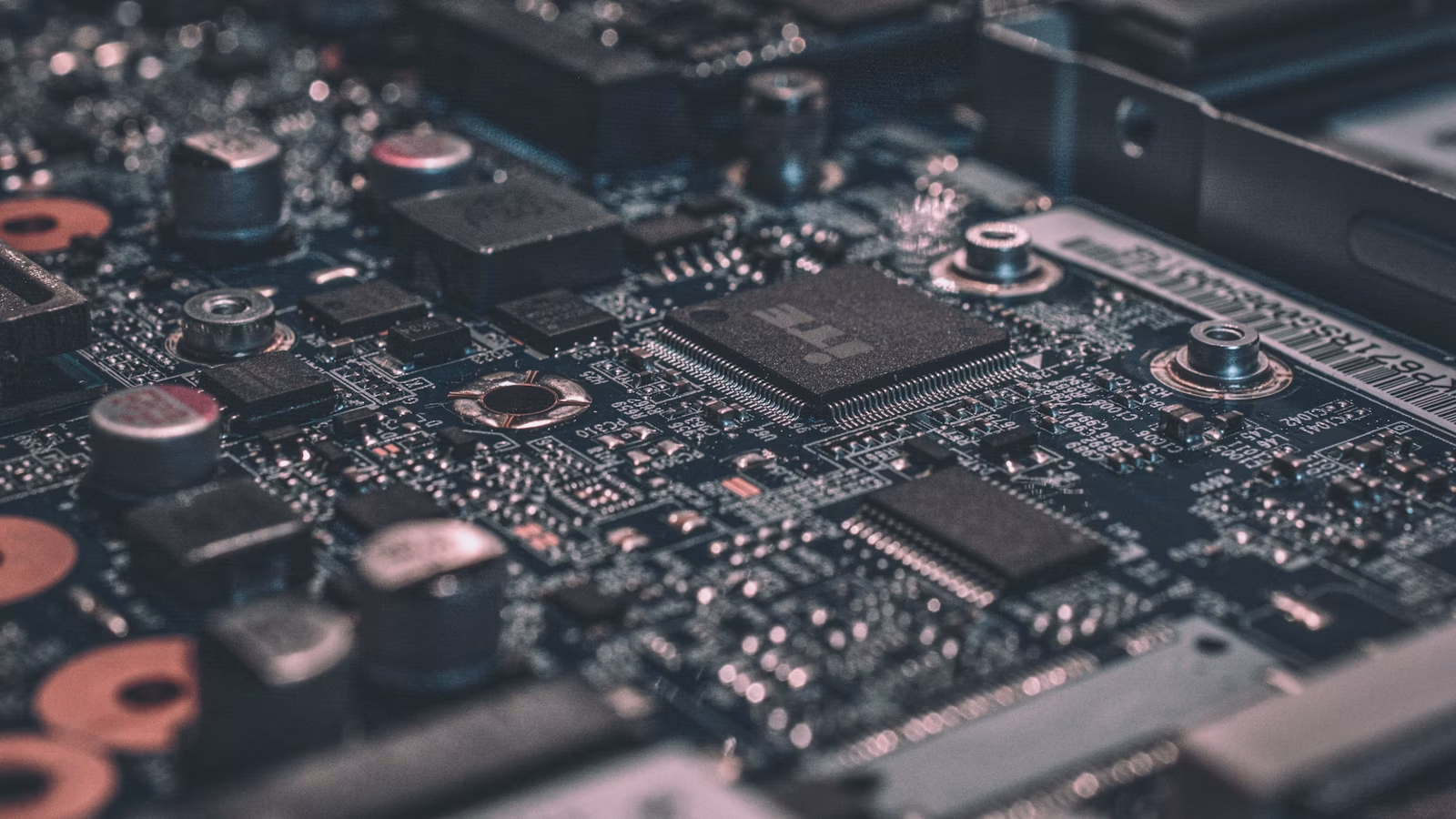
Qualcomm's Q3 earnings need to be read across handsets, automotive, data center, and licensing because QCOM is no longer valued only as a handset SoC company. QCT is still the main revenue engine, QTL is the high-margin licensing business, automotive and IoT/PC are diversification growth lines, and data center is a new long-term valuation variable. If investors only ask whether handset chips rebounded, they may miss the structural shift from a mobile chip company toward an edge-to-cloud AI computing platform company.
The company has announced that it will report fiscal 2026 Q3 earnings after the U.S. market closes on July 29, 2026, with a conference call at 1:45 p.m. PT that day. Since today is July 28, 2026, Q3 results have not yet been released. The market is currently pricing expectations around Q2 results, Q3 guidance, handset memory pressure, automotive growth, and the data center roadmap.
The prior quarter already showed this structural divergence. Qualcomm's Q2 FY2026 results showed revenue of $10.6 billion, GAAP EPS of $6.88, and non-GAAP EPS of $2.65. QCT revenue was $9.076 billion, down 4% year over year, while QTL revenue was $1.382 billion, up 5%. Within QCT, Handsets revenue fell 13% year over year, Automotive revenue grew 38%, and IoT revenue grew 9%.
| Business Line | Q3 Earnings Focus | Stock Implication |
|---|---|---|
| Handsets | Whether China customers have bottomed, AI phone demand | Determines near-term revenue elasticity |
| Automotive | Whether revenue keeps growing, backlog quality | Tests diversification visibility |
| IoT / PC | AI PC, industrial, and edge device demand | Judges quality of non-handset expansion |
| Data Center | Dragonfly, custom silicon, customer progress | Determines long-term valuation imagination |
| QTL | Licensing revenue and margins | Supports cash flow and shareholder returns |
The real Q3 earnings question is business mix quality. If handsets remain weak but automotive and IoT/PC are stable, QTL maintains high margins, and data center customer progress becomes clearer, the market may give Qualcomm more long-cycle valuation patience. If handsets are weak, non-handset growth also slows, and data center lacks customer progress, QCOM can easily be pulled back into the handset-cycle-stock framework.
Summary: Qualcomm Q3 earnings should be read through near-term handset bottoming, automotive and IoT diversification, long-term data center optionality, and QTL licensing stability. Only if these business lines reinforce one another can QCOM move beyond a single handset-cycle narrative.
How Should Investors Read Q3 Guidance: Can Revenue, EPS, QCT, and QTL Beat Expectations?

Qualcomm's Q3 guidance already embeds near-term pressure. The company guided fiscal 2026 Q3 revenue to $9.2 billion to $10.0 billion, QCT revenue to $7.9 billion to $8.5 billion, QTL revenue to $1.15 billion to $1.35 billion, GAAP diluted EPS to $1.26 to $1.46, and non-GAAP diluted EPS to $2.10 to $2.30. Because Q2 GAAP EPS was affected by a one-time tax item, Q3 should be evaluated more through non-GAAP EPS, QCT performance, and QTL revenue quality.
If Q3 revenue approaches the $10.0 billion high end, handset pressure may be manageable and automotive plus IoT/PC may be providing stronger revenue cushioning. If QCT approaches or exceeds the $8.5 billion high end, at least one of handsets, automotive, or IoT is likely better than expected. If QTL approaches the $1.35 billion high end, the licensing business is still providing high-margin support. Conversely, if revenue and EPS land in the mid-to-low part of guidance, the market will ask whether the Q4 rebound is credible enough.
| Metric | Qualcomm FY2026 Q3 Guidance | Earnings Interpretation |
|---|---|---|
| Total revenue | $9.2B to $10.0B | High end suggests handset pressure or non-handset growth is better |
| QCT revenue | $7.9B to $8.5B | Tests whether chip revenue beats expectations |
| QTL revenue | $1.15B to $1.35B | Licensing stability and profit support |
| GAAP EPS | $1.26 to $1.46 | More affected by accounting and one-time items |
| Non-GAAP EPS | $2.10 to $2.30 | Better gauge of operating leverage |
| China handset customers | Expected to bottom in Q3 | Q4 sequential recovery is the key comment |
Q2 GAAP EPS needs separate explanation. Qualcomm Q2 GAAP EPS reached $6.88, mainly including a $5.7 billion income tax benefit, or $5.33 per share, which was excluded from non-GAAP metrics. Therefore, Q3 earnings quality should not be judged against Q2 GAAP EPS as a sustainable baseline. Investors should instead watch QCT EBT margin, QTL EBT margin, expense discipline, and non-GAAP EPS.
QTL licensing should also be read inside this framework. Q2 QTL revenue was $1.382 billion, up 5% year over year, with EBT margin of 72%. QTL is smaller than QCT in revenue, but its margin is much higher, making it more important to EPS, free cash flow, buybacks, and dividends than its revenue share suggests. In Q2, Qualcomm said it had completed $5.4 billion of share repurchases in the first half of the fiscal year and announced a new $20 billion repurchase authorization. The high margin of licensing is an important foundation for capital returns during handset-cycle volatility.
| QTL Signal | Why It Matters | Positive Signal |
|---|---|---|
| Licensing revenue | Directly affects high-margin contribution | Near the $1.35B high end |
| EBT margin | Measures licensing profit quality | Remains elevated |
| Handset ASP | Affects royalty base | Premium tier stable |
| Agreement renewals | Determines long-term visibility | Stable management tone |
| Regulation and disputes | Affects licensing model risk | No new major negative signal |
Management's Q4 commentary may matter more than the Q3 actual number. In Q2 results, the company said Q3 guidance included the estimated impact of memory supply constraints and related pricing on demand from certain handset OEMs, and that QCT handset revenue from China customers was expected to bottom in Q3 before returning to sequential growth the following quarter. If this is confirmed or strengthened on the Q3 call, the market may treat Q3 weakness as temporary. If management walks it back or delays the recovery timeline, stock pressure could be more obvious.
Summary: The core of Qualcomm's Q3 guidance is whether the $10.0 billion revenue high end, $8.5 billion QCT high end, $1.35 billion QTL high end, and $2.30 non-GAAP EPS high end can be exceeded. QTL's high margin is a cash-flow stabilizer, but the post-earnings move may depend most on whether China handset customers recover sequentially in Q4 as previously expected.
Handset Chips: Memory Pressure, Android Demand, and Whether China Customers Have Bottomed

Handset chips remain the most sensitive variable in Qualcomm's Q3 earnings because Handsets are still the largest QCT revenue source. Q2 Handsets revenue was $6.024 billion, down 13% year over year, showing continued pressure from Android customers and parts of the premium device market. The key to Q3 is not whether handsets have already staged a strong recovery, but whether China customers truly bottomed in Q3 and whether memory inflation's impact on Android OEMs has been fully reflected.
Memory pressure is the special variable in this handset cycle. In Q2, Qualcomm directly said it was navigating a challenging memory environment, and Q3 guidance includes memory supply constraints and related pricing effects on demand from certain handset OEMs. This aligns with recent LPDDR, NAND, and mobile DRAM price increases. If phone brands face higher memory and storage costs, they may reduce high-configuration models, lower shipment timing, or delay some product launches.
| Handset Variable | Positive Signal | Pressure Signal |
|---|---|---|
| China customers | Q3 bottom, Q4 sequential recovery | Bottom delayed or recovery weak |
| Premium Android | Snapdragon 8 series demand stable | Premium shipments miss expectations |
| AI phones | On-device AI adds replacement reason | AI features do not drive real replacement |
| Memory cost | OEMs have absorbed cost pressure | High configurations and shipments remain pressured |
| Inventory | Customer inventory becomes healthy | Channel continues destocking |
Premium Android is Qualcomm's buffer. Flagship phones are more likely to use high-performance Snapdragon platforms and more able to absorb memory costs through brand premium. If demand stays stable across Samsung, Xiaomi, Honor, OPPO, vivo, and other premium models, Qualcomm's handset revenue may be more resilient than the mid-to-low-end Android market. The problem is that if LPDDR and NAND costs continue compressing OEM margins, volume models outside the flagship tier may still drag total shipments.
AI phones are another focus, but they should not be judged only by marketing. On-device AI, imaging, gaming, multitasking, and agent features can indeed raise demand for NPU, CPU, GPU, memory, and connectivity, which benefits Snapdragon platforms. But whether consumers upgrade earlier still depends on price, feature differentiation, battery life, cameras, and carrier subsidies. If management gives more concrete details on premium tier demand, AI phone attach rates, or China customer recovery on the Q3 call, the handset bottoming thesis becomes more convincing.
Summary: The key to Qualcomm's handset chip business is not whether Q3 already shows a sharp rebound, but whether memory cost pressure is close to being absorbed, China customers bottom as expected, and Q4 returns to sequential growth. If premium Android and AI phone demand remain stable, handset downside pressure may ease.
Automotive and IoT/PC: Can Diversified Revenue Offset Handset Volatility?
Automotive and IoT/PC are central to Qualcomm's diversification story. Q2 Automotive revenue reached $1.326 billion, up 38% year over year and a quarterly record. IoT revenue was $1.726 billion, up 9% year over year. This shows Qualcomm does not have to simply wait for a handset-cycle recovery. Snapdragon Digital Chassis, in-vehicle connectivity, digital cockpits, ADAS, industrial IoT, edge AI, and AI PCs all provide new growth paths.
The most important automotive signal is whether design wins are converting into revenue. Qualcomm's Snapdragon Digital Chassis covers digital cockpit, connectivity, ADAS, car-to-cloud services, and software platforms, making it suitable for automakers moving from single-chip purchases toward platform-level cooperation. Automotive projects have long cycles, and once they enter production, revenue visibility is often longer than handset product cycles. However, they are still affected by automaker production timing, model delays, and auto demand cycles.
| Non-Handset Business | Q2 Performance | Q3 Earnings Checkpoint |
|---|---|---|
| Automotive | $1.326B, up 38% YoY | Whether high growth continues and backlog remains healthy |
| IoT | $1.726B, up 9% YoY | Whether industrial, edge AI, and PC improve |
| AI PC | Snapdragon X / C platforms | Design wins and shipment timing |
| Industrial IoT | Connectivity, edge computing, AI devices | Whether demand is steadier than consumer IoT |
| XR / Edge AI | Edge AI and spatial computing | Whether sustained revenue contribution emerges |
For IoT/PC, quality matters more than the headline growth rate. Qualcomm launched Snapdragon X2 Elite for PCs in June, continuing the Windows on Arm and AI PC narrative, while the Snapdragon C series addresses broader price points. The issue is that AI PCs are still in ecosystem development. Software compatibility, OEM pricing, channel inventory, and memory costs all affect actual shipments. If Q3 earnings only discuss design wins without revenue or shipment timing, the market may remain cautious.
The diversification test is whether automotive and IoT/PC can offset handset volatility. If Handsets remain weak but Automotive keeps growing, IoT stabilizes, and PC design wins improve, the market will see Qualcomm's revenue mix improving. If automotive growth slows, IoT only grows slightly, and PC lacks scale, handset pressure will again dominate QCOM's valuation.
Summary: Automotive and IoT/PC are the key to Qualcomm reducing dependence on handset cycles. In Q3, whether Automotive continues high growth, IoT/PC improves, and AI PC shows real shipment signals will determine whether the diversification story can offset Handsets pressure.
Data Center: Can Dragonfly and Custom Silicon Open New Valuation Space?
Data center is the most imaginative part of Qualcomm's Q3 earnings, but also the business line where expectations need the most restraint. It may not contribute large Q3 revenue yet, but it affects whether the market is willing to view Qualcomm as a new participant in AI inference, custom silicon, and low-power data center architecture. The real focus is not how much Q3 data center revenue exists, but whether Dragonfly, hyperscaler custom silicon, AI accelerators, and HBC show verifiable customer progress.
In June, Qualcomm released its Dragonfly data center roadmap, including the Dragonfly C1000 CPU, AI200/AI250/AI300 AI accelerators, High Bandwidth Compute, connectivity, and custom silicon. The company positioned it for the agentic AI era, emphasizing memory bandwidth, tokens-per-watt, tokens-per-dollar, and rack-scale inference.
| Data Center Signal | Qualcomm Roadmap | Earnings Verification |
|---|---|---|
| Dragonfly C1000 CPU | AI head node, general-purpose, agentic workloads | Customer adoption and sample progress |
| AI200 / AI250 / AI300 | Multi-generation AI inference accelerator | Annual cadence and customer testing |
| HBC | Higher memory bandwidth per watt | Performance metrics and ecosystem validation |
| Connectivity | 800G / 1.6T optical and electrical DSP | Data center interconnect customers |
| Custom silicon | Hyperscaler custom chips | Initial shipment, contracts, revenue recognition |
Qualcomm's Data Center product page further emphasizes that Dragonfly covers CPUs, AI accelerators, connectivity, and custom silicon, while seeking to improve inference economics through power efficiency and high memory bandwidth. Its AI accelerator page also cites AI250 rack with HBC Gen 1 metrics such as 43TB rack memory, 768GB per card, and 7.4PB/s effective memory bandwidth per rack. For investors, these figures show that Qualcomm is not trying to compete mainly in the training GPU market, but in AI inference economics around efficiency, memory bandwidth, and cost per token.
Still, data center remains a long-cycle variable. In Q2, management said a leading hyperscaler custom silicon engagement was expected to begin initial shipments later this year. On the Q3 call, investors should listen for three questions: whether the customer remains on schedule, whether initial shipments will occur in 2026, and when Dragonfly product commercialization revenue enters a more measurable phase. If the company only repeats the roadmap without customer or timeline details, valuation upside may be limited.
Summary: Data center is Qualcomm's most important new valuation variable, but not the main Q3 revenue pillar. If Dragonfly, AI accelerators, HBC, and custom silicon gain customer progress and shipment timelines, QCOM can transition from a handset chip stock toward an AI inference platform stock.
How to Track QCOM After Earnings: From Business Validation to Trading Costs
After earnings, QCOM should be split into six questions: whether handsets have bottomed, automotive keeps growing, IoT/PC improves, data center has customer progress, QTL remains stable, and trading costs are manageable. Qualcomm spans handsets, automotive, PCs, edge AI, data center, and licensing, so looking only at an EPS beat can miss internal structural changes.
The tracking set should not be limited to QCOM. Handset signals can be compared with Apple, Samsung, Android OEMs, ARM, and MediaTek. Automotive signals can be compared with Mobileye, NXP, TI, ON, and automaker production timing. AI PC and data center signals can be compared with NVDA, AMD, INTC, ARM, and Broadcom. If multiple chains validate the thesis at the same time, QCOM's diversification logic becomes stronger. If only the data center story heats up while handsets and automotive weaken, the stock will rely more heavily on long-term imagination.
| Tracking Target | Key Question | Trading Meaning |
|---|---|---|
| QCOM | Handset bottoming, automotive growth, QTL stability | Tests Qualcomm's own earnings quality |
| AAPL / Android OEMs | Premium handset demand and memory costs | Validates handset demand |
| ARM / INTC / AMD | AI PC and server CPU competition | Judges Qualcomm's new-market opportunity |
| NVDA / AVGO | AI accelerators and custom silicon | Compares data center competition |
| Mobileye / NXPI | Automotive chip cycle | Validates auto electronics demand |
If you need to track Qualcomm, Apple, ARM, NVIDIA, AMD, Mobileye, or other handset chip, automotive chip, and AI data center names, Biya U.S. stock quotes can help you build a watchlist and map QCOM's different businesses to related companies. During earnings season, the point is not only price direction, but also after-hours volume, bid-ask spreads, order types, and liquidity.
Costs should also be checked in advance. Biya is a global multi-asset trading wallet that supports U.S. stocks, Hong Kong stocks, cryptocurrencies, and other assets. In U.S. stock trading scenarios, Biya charges $0 commission for U.S. stock trades, while platform fees, external institutional fees, and other costs are subject to Biya U.S. stock trading fees and order display. If you later need to manage watched assets, complete account information, or prepare for trading, you can enter the personal account system through Biya registration, and you can also use the Biya App to track post-earnings market moves. Availability of related services depends on the user's location, identity verification results, platform rules, and applicable laws and regulations.
Summary: QCOM after earnings cannot be judged only by handset chips or EPS. Handsets, Automotive, IoT/PC, Data Center, QTL, and trading costs should be read together. If handsets bottom, automotive keeps growing, QTL stays stable, and data center shows customer progress, Qualcomm's diversified valuation will have stronger support.
FAQ
When Will Qualcomm Report Fiscal 2026 Q3 Earnings?
Qualcomm will report fiscal 2026 Q3 earnings after the U.S. market closes on July 29, 2026, and will hold a conference call at 1:45 p.m. PT that day. The market will focus on Q3 revenue, non-GAAP EPS, QCT, QTL, whether handset business has bottomed, and progress in automotive and data center.
Which Metrics Matter Most in Qualcomm Q3 Earnings?
The key metrics are whether revenue approaches or exceeds the $10.0 billion guidance high end, whether non-GAAP EPS exceeds $2.30, whether QCT revenue exceeds $8.5 billion, whether QTL approaches the $1.35 billion high end, and whether management confirms China handset customers bottomed in Q3 and recover sequentially in Q4.
Why Is Qualcomm's Handset Chip Business Under Pressure?
The handset chip business is under pressure mainly due to demand from some Android OEMs, memory supply constraints, and rising memory prices. Qualcomm Q2 Handsets revenue fell 13% year over year, and the company said Q3 guidance includes the effect of memory supply constraints on some handset customer demand.
Why Is Qualcomm's Automotive Business Important?
The automotive business matters because it is one of Qualcomm's core growth lines for reducing dependence on handset cycles. Q2 Automotive revenue grew 38% year over year to $1.326 billion, showing that Snapdragon Digital Chassis, digital cockpit, ADAS, and in-vehicle connectivity are continuing to convert into revenue.
How Much Revenue Can Qualcomm's Data Center Business Contribute in the Short Term?
Data center may still not be a major short-term revenue contributor, but it matters for long-term valuation. The Dragonfly C1000 CPU, AI accelerator, HBC, and custom silicon roadmap shows Qualcomm entering the AI inference data center market. Investors should watch customer agreements, initial shipments, and commercialization timing.
Why Should Qualcomm's QTL Licensing Business Not Be Ignored?
QTL should not be ignored because its revenue is smaller than QCT but its profitability is much higher. Q2 QTL EBT margin reached 72%, supporting cash flow, buybacks, and dividends. Risks include handset shipments, ASP, customer agreements, regulation, and patent licensing disputes.
*本文仅供参考,不构成 BiyaPay 或其子公司及其关联公司的法律,税务或其他专业建议,也不能替代财务顾问或任何其他专业人士的建议。
我们不以任何明示或暗示的形式陈述,保证或担保该出版物中内容的准确性,完整性或时效性。
其他BiyaPay博客内容

Will Rising Memory Prices Pressure Apple's Margins? iPhone Pricing, Supply Chain, and Earnings Impact


Can Silicon Motion Still Be Bought After Rising Over 300% in a Year? Watch SSD Share, Valuation, and 2027 Growth in Earnings


The Three Questions Palantir Earnings Must Answer: AIP Growth, Government Contracts, and Valuation Risk

Amazon 2026 Q2 Earnings Preview: AWS Growth, Revenue, EPS, and Third-Quarter Guidance

选择国家或地区,阅读当地博客
 澳大利亚
澳大利亚 奥地利
奥地利 比利时
比利时 加拿大
加拿大 塞浦路斯
塞浦路斯 捷克
捷克 丹麦
丹麦 爱沙尼亚
爱沙尼亚 芬兰
芬兰 法国
法国 德国
德国 希腊
希腊 香港
香港 印度
印度 印度尼西亚
印度尼西亚 爱尔兰
爱尔兰 意大利
意大利 日本
日本 拉脱维亚
拉脱维亚 立陶宛
立陶宛 卢森堡
卢森堡 马来西亚
马来西亚 马耳他
马耳他 摩洛哥
摩洛哥 尼泊尔
尼泊尔 荷兰
荷兰 新西兰
新西兰 挪威
挪威 巴基斯坦
巴基斯坦 菲律宾
菲律宾 波兰
波兰 葡萄牙
葡萄牙 罗马尼亚
罗马尼亚 新加坡
新加坡 斯洛伐克
斯洛伐克 斯洛文尼亚
斯洛文尼亚 南非
南非 韩国
韩国 西班牙
西班牙 瑞典
瑞典 泰国
泰国 美国
美国 土耳其
土耳其 阿联酋
阿联酋 英国
英国 越南
越南
联系我们



