Comparing the Beneficiaries of the AI Equipment Cycle: ASML, Applied Materials, Lam Research, and KLA





The AI equipment cycle is not a single-company story. It is a capital spending upcycle driven by advanced logic, HBM, DRAM, advanced packaging, and yield control. ASML has the strongest scarcity value, Applied Materials has the broadest exposure, Lam Research has greater sensitivity to memory, etch, and deposition demand, while KLA benefits from rising process complexity and process control needs. If you compare these four companies, the key is not to ask “which one is best,” but to understand which part of the AI supply chain each company captures and what type of cycle risk each one carries.
Key Takeaways
- ASML benefits from EUV scarcity, but valuation and delivery expectations are higher.
- Applied Materials covers materials engineering, GAA, DRAM, and advanced packaging.
- Lam Research is more exposed to HBM, DRAM, NAND upgrades, etch, and deposition.
- KLA benefits from rising process complexity, with strong margins and cash flow quality.
- Equipment stock comparison should focus on scarcity, customer CapEx, margins, and cycle risk.
Why the AI Equipment Cycle Is Not Just About “Buying ASML”

The core conclusion is that cloud CapEx first drives demand for AI accelerators and HBM, then flows into advanced logic, advanced DRAM, advanced packaging, inspection, metrology, and front-end wafer fab equipment. ASML is central to lithography, but the AI equipment cycle is not only about EUV. Etch, deposition, materials engineering, process control, and service upgrades are also being pulled higher.
From the supply chain perspective, AI training and inference require more GPUs, ASICs, HBM, DDR5, high-capacity NAND, and advanced packaging. Chip designers place orders with foundries, and foundry expansion translates into demand for WFE, testing equipment, packaging tools, and services. In mid-2026, SEMI forecast that global semiconductor manufacturing equipment sales would reach $165.9 billion, up 23.2% year over year; WFE spending was expected to rise to $143.9 billion, showing that the equipment cycle has expanded from a single-company story into an industry-wide investment upcycle.
The four companies sit in different parts of the value chain. ASML is responsible for lithography, especially EUV, which is a bottleneck for pattern transfer at advanced nodes. Applied Materials covers deposition, materials engineering, ion implantation, advanced packaging, and services, giving it the broadest business exposure. Lam Research is more sensitive to the memory cycle through etch, deposition, cleaning, and customer support. KLA does not sell EUV or mainstream etch tools directly, but as processes become more complex, inspection, metrology, and yield management become more valuable.
| AI Demand Segment | Equipment Demand | Main Beneficiaries | Key Metric to Watch |
|---|---|---|---|
| GPU/ASIC advanced logic | EUV, GAA, deposition, etch | ASML, AMAT, LRCX, KLAC | Advanced-node expansion |
| HBM/DRAM | EUV, deposition, etch, inspection | ASML, AMAT, LRCX, KLAC | Memory CapEx strength |
| Advanced packaging | Plating, hybrid bonding, inspection | AMAT, LRCX, KLAC | Packaging bottleneck relief |
| Yield improvement | Metrology, inspection, process control | KLAC | Defect density and yield |
| Installed-base upgrades | Services, spare parts, software upgrades | All four companies | Revenue continuity |
Summary: The AI equipment cycle should not be reduced to “AI chips are rising, so ASML rises.” ASML does have the strongest lithography scarcity value, but AI-driven equipment demand also falls across wafer fabrication, advanced DRAM, HBM stacking, advanced packaging, and process control. When comparing equipment stocks, you should first divide AI CapEx into four lines: advanced logic, memory, packaging, and yield. Then assess whether each company represents an irreplaceable bottleneck, broad equipment exposure, cyclical process-equipment leverage, or high-margin process-control quality.
How Do ASML, AMAT, Lam, and KLA Benefit Differently?
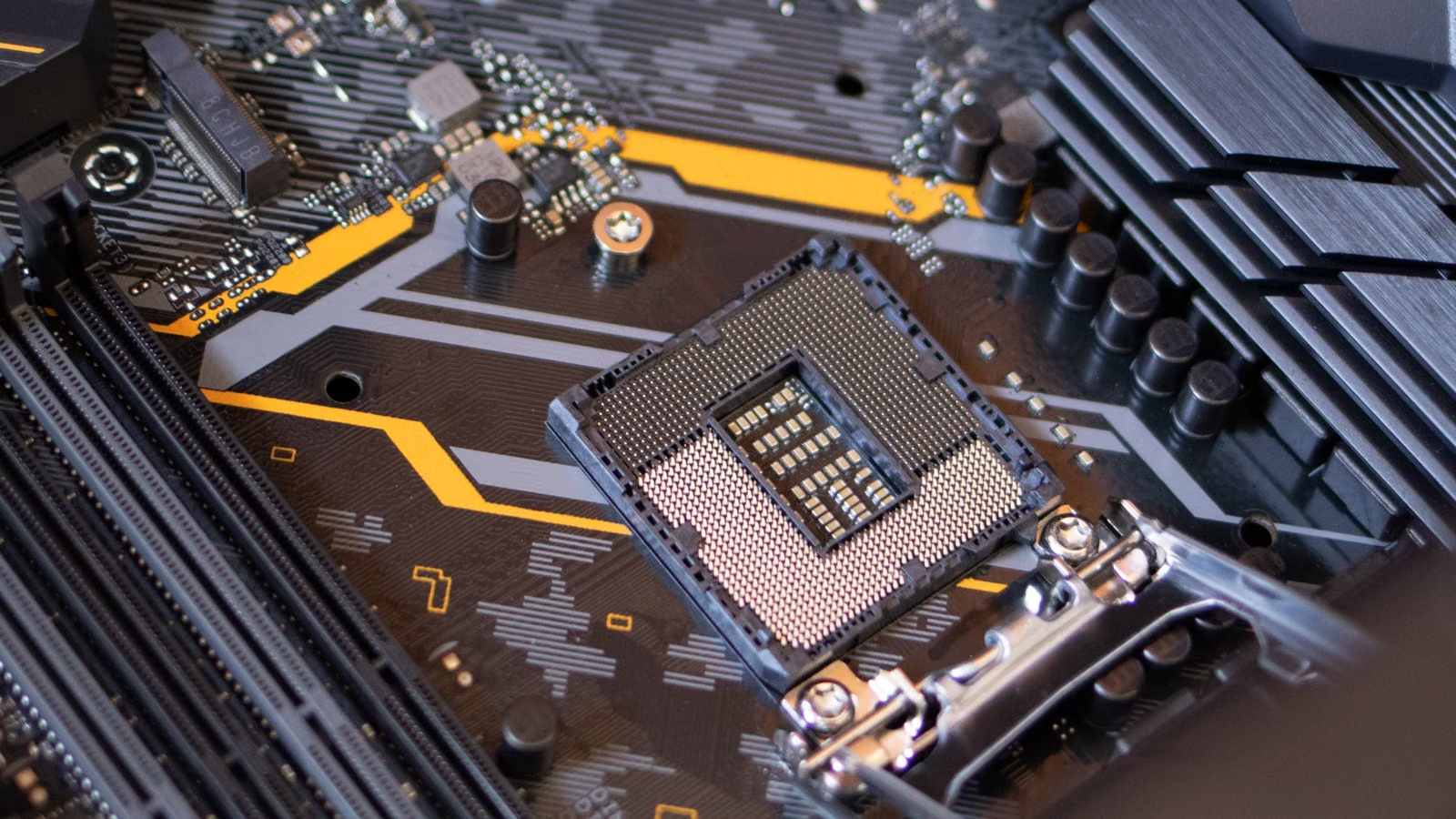
These four companies are not interchangeable semiconductor equipment stocks. ASML represents the lithography bottleneck, Applied Materials represents the breadth of materials engineering, Lam Research represents etch, deposition, and memory-process leverage, and KLA represents inspection, metrology, and yield-control quality. To compare their exposure, you should not only look at revenue size, but also where each company sits in the AI manufacturing chain.
ASML: The Scarcest Player, but Highly Sensitive to Advanced Nodes and Delivery Timing
ASML has the highest technology scarcity among the four, especially due to its strong moat in EUV lithography. In the second quarter of 2026, ASML’s Q2 results showed net sales of €9.3 billion, a gross margin of 54.0%, and net income of €2.9 billion. The company also raised its full-year net sales guidance to €43 billion–€45 billion. Its advantage is that as advanced logic and advanced DRAM move to smaller nodes, EUV and DUV demand strengthens. Its weakness is that tool delivery, customer acceptance, and export licenses can all affect the revenue timeline.
Applied Materials: The Broadest Exposure, Benefiting From Materials Engineering and Advanced Packaging
Applied Materials is not a single-point scarcity company. It is a diversified beneficiary. In the second quarter of fiscal 2026, the company reported revenue of $7.91 billion, up 11% year over year, with a GAAP gross margin of 49.9%. Management expected its semiconductor systems business to grow by more than 30% in calendar year 2026. Its strength lies in its exposure to advanced logic, DRAM, advanced packaging, and services. Its limitation is that the business is more diversified, so its single-point scarcity premium is lower than ASML’s.
Lam Research: Stronger Leverage to Memory, HBM, Etch, and Deposition
Lam Research’s key appeal is memory expansion driven by AI. HBM, DRAM node migration, and 3D NAND layer-count increases all raise demand for etch, deposition, cleaning, and process control. In the quarter ended March 29, 2026, Lam reported revenue of $5.841 billion, a GAAP gross margin of 49.8%, and an operating margin of 35.0%. If HBM and advanced DRAM continue to expand, Lam’s revenue leverage is often more visible. But when the memory cycle reverses, it may also face greater volatility.
KLA: The More Complex the Process, the Higher the Value of Process Control
KLA’s value comes from process control. As advanced nodes, HBM, chiplets, and advanced packaging become more complex, defect inspection, metrology, and yield management become more critical. In the third quarter of fiscal 2026, KLA reported revenue of $3.415 billion, GAAP EPS of $9.12, and next-quarter revenue guidance of $3.575 billion, plus or minus $200 million. Its revenue leverage may be less aggressive than Lam’s or AMAT’s, but its margins, service revenue, and cash flow quality are stronger.
| Company | Core Segment | AI-Cycle Benefit | Biggest Advantage | Main Limitation |
|---|---|---|---|---|
| ASML | EUV/DUV lithography | Advanced logic, advanced DRAM | Highest technology scarcity | High valuation and delivery expectations |
| AMAT | Materials engineering/deposition/packaging | GAA, DRAM, advanced packaging | Broadest exposure | More diversified business mix |
| LRCX | Etch/deposition/cleaning | HBM, DRAM, NAND upgrades | Strong memory leverage | More cyclical volatility |
| KLAC | Inspection/metrology/process control | Yield and defect control | Strong margins and cash flow | More moderate revenue leverage |
Summary: ASML, Applied Materials, Lam Research, and KLA represent different types of equipment exposure. ASML is about lithography scarcity. Applied Materials is about materials engineering and packaging breadth. Lam Research is about etch, deposition, and memory upgrades. KLA is about yield control and profit quality. If you only look at the broad label “AI equipment stocks,” it is easy to group all four together. A more useful comparison starts with each company’s equipment role, customer structure, and technology migration exposure.
Which Company Benefits Most From Advanced Logic, HBM, and Advanced Packaging?
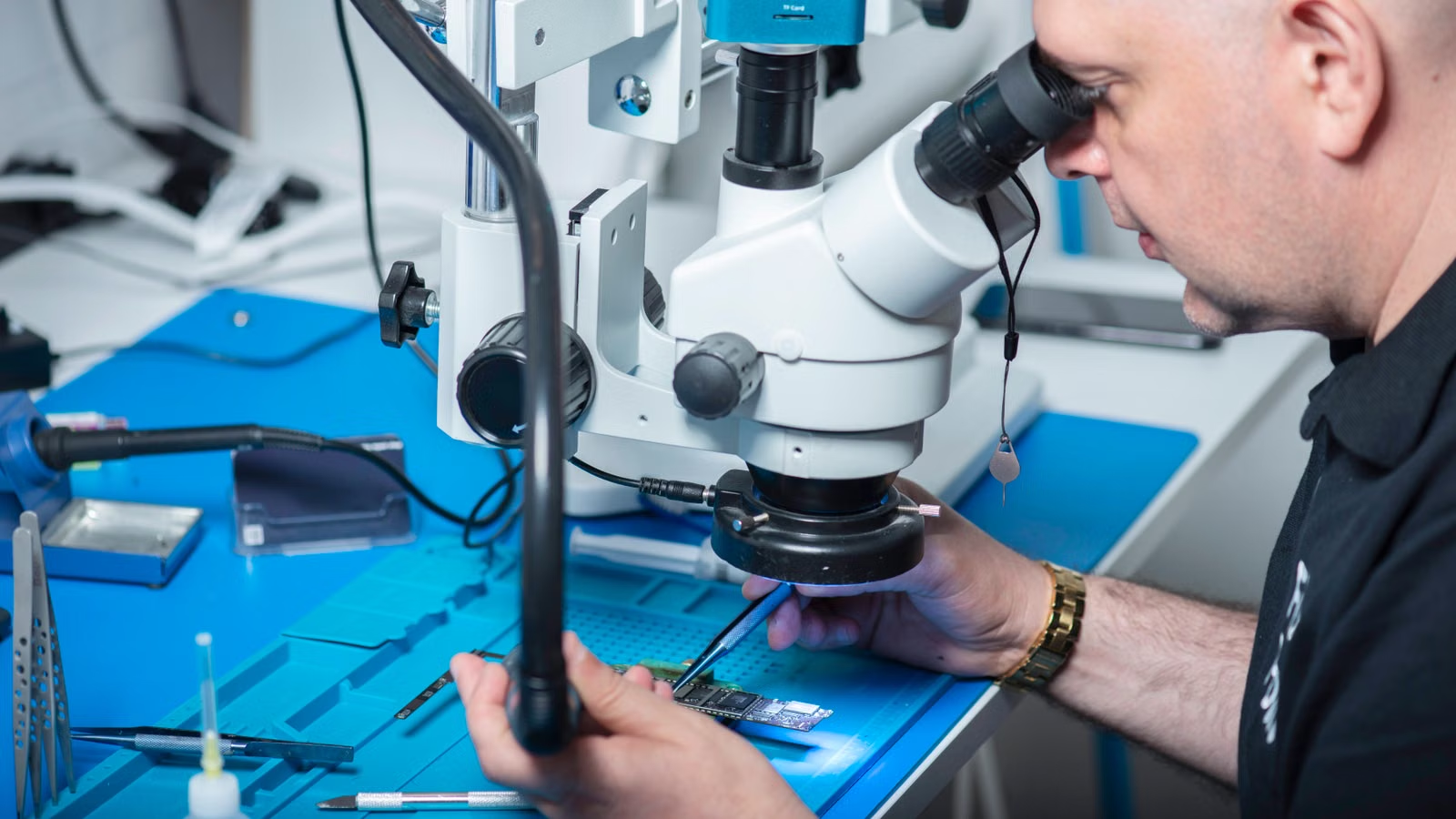
Different AI technology paths correspond to different equipment beneficiaries. Advanced logic is more directly positive for ASML and Applied Materials. HBM, DRAM, and 3D NAND are more favorable to Lam Research and Applied Materials. Advanced packaging is more relevant to Applied Materials, Lam, and KLA. Yield control gives KLA ongoing value as process complexity rises.
Advanced Logic: ASML and Applied Materials Have More Direct Exposure
If you focus on AI accelerators, 2nm, GAA, and high-performance computing chips, ASML and Applied Materials have more direct exposure. ASML provides EUV and DUV lithography capabilities that affect pattern transfer at advanced nodes. Applied Materials participates in GAA transistors, selective deposition, metal gate, materials engineering, and parts of advanced packaging. As advanced logic moves below 2nm, lithography layer counts, materials complexity, and process windows all rise, reinforcing the logic for both ASML and AMAT.
TSMC is an important company to watch on this line. In 2026, TSMC raised its 2026 capital expenditure to $60 billion–$64 billion, reflecting continued AI chip and advanced-node expansion. But this CapEx will not all flow to ASML or AMAT. It also covers buildings, packaging, testing, power infrastructure, and other equipment. Therefore, the key is to assess the structure of capital spending, not just the total amount.
HBM and DRAM: Lam and Applied Materials Show More Obvious Leverage
If you focus on HBM and advanced DRAM, Lam Research and Applied Materials show stronger leverage. HBM requires not only more DRAM wafers, but also TSV, stacking, bonding, thinning, inspection, and packaging processes. SEMI expects 300mm memory equipment investment to exceed $50 billion for the first time in 2026, with DRAM equipment spending expected to grow 29% to $37 billion, mainly driven by HBM and DDR5 demand.
Lam’s advantage lies in etch, deposition, and memory process complexity, while Applied Materials’ advantage lies in materials engineering, DRAM processes, and advanced packaging coverage. ASML also benefits from EUV adoption in advanced DRAM, and KLA benefits from memory yield control. But from a revenue-leverage perspective, Lam and AMAT are usually closer to the equipment-intensity increase caused by HBM expansion.
Advanced Packaging: AMAT, Lam, and KLA Deserve More Attention
Advanced packaging is not ASML’s most direct battlefield. As chiplets, CoWoS, HBM stacking, and hybrid bonding become bottlenecks for AI accelerators, packaging demand rises for plating, deposition, bonding, inspection, and metrology. Through EPIC Center collaborations, Applied Materials is working with TSMC, SK hynix, Micron, and others on materials engineering, DRAM, HBM, and advanced packaging technologies, while also planning to strengthen large-area advanced packaging deposition capabilities through the NEXX business.
| Technology Path | Primary Beneficiaries | Secondary Beneficiaries | Key Indicators |
|---|---|---|---|
| 2nm/advanced logic | ASML, AMAT | KLAC, LRCX | EUV capacity, GAA investment |
| HBM/DRAM | LRCX, AMAT | ASML, KLAC | Memory CapEx, HBM pricing |
| 3D NAND upgrades | LRCX | AMAT, KLAC | Layer-count upgrades, NAND demand |
| Advanced packaging | AMAT, KLAC | LRCX | CoWoS, hybrid bonding, inspection |
| Yield improvement | KLAC | AMAT, LRCX | Defect density, process complexity |
Summary: The AI equipment cycle does not benefit every company equally. Different technology routes match different equipment capabilities. Advanced logic favors ASML and AMAT. HBM and DRAM favor Lam and AMAT. Advanced packaging favors AMAT, KLA, and Lam. Yield control favors KLA. If you want to judge which company benefits more, you should first decide whether your view is centered on AI chip advanced processes, HBM expansion, NAND upgrades, advanced packaging bottlenecks, or yield improvement. Each answer points to a different equipment stock mix.
How Do Revenue Leverage, Margins, and Cash Flow Quality Compare?
Revenue leverage and profit quality are not the same thing. Lam and Applied Materials are more sensitive to WFE upcycles. ASML has stronger scarcity value but is constrained by capacity and delivery timing. KLA has more moderate revenue leverage, but its process-control advantage translates into stronger margins and cash flow quality.
In terms of revenue leverage, AMAT and Lam look more like “cycle expansion” companies. Once customers expand fab investment, upgrade memory nodes, or increase advanced packaging capacity, demand for deposition, etch, materials engineering, and customer support can be released quickly. Applied Materials guided fiscal third-quarter 2026 revenue to $8.95 billion, plus or minus $500 million. Lam guided revenue for the June 2026 quarter to $6.6 billion, plus or minus $400 million, showing that both companies are operating in a strong equipment demand environment.
ASML also has high revenue leverage, but the difference is that it is constrained by EUV and DUV capacity. The company plans to expand Low-NA EUV capacity in 2027 by about 30% from the 2026 base of roughly 65 systems, while also increasing immersion DUV capacity. In other words, ASML’s problem may not be a lack of orders, but whether supply chain, installation, and acceptance can keep pace.
On margins, KLA stands out for quality. KLA’s fourth-quarter gross margin guidance implies a non-GAAP gross margin of 61.75%, plus or minus one percentage point, which is above the typical level of ASML, AMAT, and Lam. KLA’s higher margin comes from process control, software algorithms, inspection and metrology barriers, and service revenue. Lam’s customer support-related revenue reached $2.111 billion in the March quarter, providing a buffer against cyclical volatility. Applied Global Services revenue was $1.665 billion, while ASML Installed Base Management sales were €2.762 billion, showing that all four companies rely on more than new equipment sales alone.
| Company | Revenue Leverage | Margin Profile | Service Revenue Stability | Investor Focus |
|---|---|---|---|---|
| ASML | High, but capacity-constrained | EUV scarcity premium | Strong installed-base services | EUV deliveries and order coverage |
| AMAT | High, broad exposure | Mid-to-high level | Stable AGS | GAA, DRAM, packaging |
| LRCX | High, strong memory leverage | Close to AMAT | Strong customer support revenue | HBM, NAND upgrades |
| KLAC | Medium-high, quality-oriented | Highest among the four | Strong services and process control | Yield and defect control |
Summary: If you are looking for revenue leverage, AMAT and Lam are usually more directly driven by WFE upside, memory expansion, and advanced packaging. If you focus on scarcity, ASML’s EUV position is the most prominent. If you care more about profit quality and cash flow, KLA deserves a place in the core watchlist. The key distinction in equipment stocks is that “leverage” and “quality” do not always appear together. Higher-leverage companies can outperform more strongly in an upcycle, but may also pull back faster when CapEx slows.
Where Are the Biggest Risks: Customer CapEx, Export Controls, or Valuation?
All four companies benefit from AI CapEx, but their biggest shared risk comes from the same source: if customer capital expenditure is rescheduled, equipment delivery may be delayed first, then new orders and revenue recognition may be affected. Beyond that, export controls, the memory cycle, supply chain execution, and high valuation expectations can all amplify equipment stock volatility.
Customer CapEx is the first layer of risk. A small number of major customers, including TSMC, Samsung, Intel, SK hynix, and Micron, determine advanced logic, DRAM, HBM, and NAND equipment demand. If the return on AI server investment comes under scrutiny and cloud companies slow GPU and ASIC deployments, foundries and memory makers may adjust capacity plans. Advanced logic CapEx usually has greater persistence than memory CapEx, but equipment prices and market expectations are also higher. Memory CapEx has greater leverage, but is more sensitive to pricing, inventories, and customer profitability.
The second risk layer is export controls and regional revenue exposure. ASML faces EUV and DUV licensing issues and some service restrictions. Lam and Applied Materials are more exposed to China mature-node, memory equipment, and export licensing restrictions. KLA needs to monitor whether inspection, metrology, and services are affected by rule changes. KLA’s risk disclosures explicitly mention U.S. Commerce Department rules, tariffs, trade restrictions, and the impact on sales and services to Chinese customers. Applied Materials has also warned that global trade, export regulations, licenses, and tariffs may affect its business.
The third layer is valuation and expectations. The question for equipment stocks today is not whether AI demand exists, but how much growth the market has already priced in. ASML enjoys a premium valuation because of EUV scarcity, but if 2027–2028 order conversion falls short of expectations, share-price tolerance may decline. AMAT and Lam may have stronger leverage if WFE expectations continue to move higher, but they may also retreat faster when the cycle peaks. KLA has high margins and strong cash flow, but its valuation often already reflects that quality premium.
The shared risk list for the four companies includes:
- A slowdown in AI data center CapEx.
- Reversal in HBM and DRAM supply-demand conditions.
- Delays in customer fab construction or equipment move-in.
- Export controls, tariffs, and licensing uncertainty.
- Lower tolerance for single-quarter misses under high valuations.
- Supply chain, critical component, and delivery constraints.
| Risk Dimension | ASML | AMAT | LRCX | KLAC |
|---|---|---|---|---|
| Customer CapEx rescheduling | High | High | High | Medium-high |
| Memory cycle | Medium | High | Highest | Medium |
| Export controls | High | High | High | Medium-high |
| Delivery execution | High | Medium-high | Medium-high | Medium |
| Valuation tolerance | High | Medium-high | Medium-high | High |
Summary: The biggest risk for semiconductor equipment stocks is not that one company’s products suddenly lose competitiveness. It is that customer CapEx, policy restrictions, and market expectations shift at the same time. ASML’s core risks are high expectations and delivery timing. AMAT and Lam’s core risks are WFE and the memory cycle. KLA’s core risks are high-quality valuation and slowing customer CapEx. If you compare the four companies using the same valuation logic, you may miss the differences in products, customers, regions, and margin profiles.
What Investment Framework Fits These Four Companies?
The clearest way to compare ASML, Applied Materials, Lam Research, and KLA is not to ask “which one is best,” but to place them across four dimensions: scarcity, breadth, cyclical leverage, and profit quality. Their relative advantages change across different market stages.
ASML belongs in the “scarcity” dimension. As long as advanced logic and advanced DRAM continue migrating to smaller nodes, EUV and DUV capacity will remain key variables. Applied Materials belongs in the “breadth” dimension because it covers materials engineering, GAA, DRAM, advanced packaging, and services. Lam belongs in the “leverage” dimension because the stronger HBM, DRAM, NAND, and 3D structures become, the more prominent etch and deposition demand becomes. KLA belongs in the “quality” dimension because process control, inspection, metrology, and services support higher margins and cash flow resilience.
The logic also changes by scenario. If AI CapEx continues to move higher, AMAT and Lam may show more obvious revenue leverage. If advanced logic remains the leading theme, ASML’s advantage becomes more prominent. If market volatility rises or CapEx timing becomes uncertain, KLA’s quality attributes may receive more attention. If policy pressure intensifies, investors need to compare the four companies’ exposure to China, mature-node manufacturing, memory equipment, and service revenue.
When moving from research to actual trading, valuation, liquidity, FX, position sizing, and costs should also be included in the same checklist. If you track equipment stocks such as ASML, AMAT, LRCX, and KLAC, you can use Biya U.S. stock information search to monitor related stocks and market changes. If you trade U.S. stocks, you also need to check order types and fee structures. Biya U.S. stock trading fees show $0 commission for U.S. stock trading, while platform fees, external institutional fees, and other costs are subject to the fee center and order page display. Public market information and fee structures are for reference only and do not constitute investment advice. Service availability depends on the user’s location, identity verification results, platform rules, and applicable laws and regulations.
| Dimension | ASML | AMAT | LRCX | KLAC |
|---|---|---|---|---|
| Scarcity | Highest | Medium-high | Medium-high | High |
| Breadth | Medium | Highest | Medium-high | Medium |
| AI leverage | High | High | High | Medium-high |
| Memory leverage | Medium-high | High | Highest | Medium-high |
| Profit quality | High | Medium-high | Medium-high | Highest |
| Main risk | Valuation and delivery | Cycle and business dispersion | Memory cycle | Valuation and CapEx slowdown |
Summary: ASML is not the only answer to the AI equipment cycle. Applied Materials, Lam Research, and KLA each represent different types of equipment exposure. ASML is scarcity-oriented. AMAT is breadth-oriented. Lam is memory-leverage-oriented. KLA is quality- and yield-control-oriented. To compare the four, you should return to five questions: where AI demand comes from, where customer CapEx is going, whether the product segment is scarce, whether margins can hold, and whether valuation has already priced in too much optimism. This is more stable than simply looking at share-price gains or single-quarter headlines.
If you follow AI equipment stocks over the long term, your comparison framework should be updated continuously rather than reordered only after earnings reports. You can put ASML, Applied Materials, Lam Research, and KLA’s earnings, customer CapEx, order guidance, gross margins, service revenue, export restrictions, and actual trading costs into the same watchlist. Biya can be used to monitor related U.S. stock market changes, and it also supports U.S. stock, Hong Kong stock, and crypto trading. Before trading, you should still verify the fees shown on the order page, FX costs, service availability, and your own risk tolerance, and avoid treating the long-term AI equipment cycle logic as a direct short-term buy or sell signal.
FAQ
Which Company Benefits Most From the AI Equipment Cycle: ASML, AMAT, Lam, or KLA?
There is no single answer. ASML benefits from EUV scarcity, AMAT from materials engineering and advanced packaging breadth, Lam from HBM and memory upgrades, and KLA from yield and process control. You should compare them separately across advanced logic, memory, packaging, and inspection/metrology.
Why Does AI Chip Expansion Benefit Semiconductor Equipment Stocks?
AI chip expansion increases demand for advanced logic, HBM, DRAM, advanced packaging, and yield control. These needs flow into WFE, testing equipment, packaging tools, inspection, metrology, and service revenue. However, the transmission depends on customer CapEx, capacity construction, and equipment delivery schedules.
Does HBM Expansion Benefit Lam Research or Applied Materials More?
Both benefit, but in different ways. Lam is more exposed to etch, deposition, and memory-process leverage, while Applied Materials is more exposed to materials engineering, DRAM processes, and advanced packaging. If HBM drives greater DRAM process complexity, both Lam and AMAT deserve close attention.
Why Is KLA Important in the AI Equipment Cycle?
KLA is important because of process control. As advanced nodes, HBM, and advanced packaging become more complex, defect inspection, metrology, and yield management become more critical. KLA may not have the highest revenue leverage, but its margins, service revenue, and cash flow quality are usually stronger.
Is Slower AI Demand the Biggest Risk for Semiconductor Equipment Stocks?
Slower AI demand is an important risk, but it is not the only one. Customer CapEx rescheduling, export controls, memory pricing reversal, fab construction delays, supply chain constraints, and high valuation expectations can all affect ASML, AMAT, Lam, and KLA.
What Indicators Should Beginners Use to Compare ASML, AMAT, Lam, and KLA?
Beginners should watch revenue growth, gross margin, orders and guidance, customer CapEx, service revenue, regional risk, export restrictions, and valuation. Do not rely only on share-price gains or single-quarter news, and do not assume that one company’s strength in one segment applies equally across all cycles.
*本文仅供参考,不构成 BiyaPay 或其子公司及其关联公司的法律,税务或其他专业建议,也不能替代财务顾问或任何其他专业人士的建议。
我们不以任何明示或暗示的形式陈述,保证或担保该出版物中内容的准确性,完整性或时效性。
其他BiyaPay博客内容

Understanding Net Interest Margin and Provision Changes Through JPM, BAC, and Citi


How Much Is Venmo Worth in the PayPal Acquisition Case? User Scale, Revenue, and Strategic Value


What Is Kevin Warsh’s Policy Framework? How It Affects the U.S. Dollar, Treasuries, and Tech Stocks


IBM Plunges While ASML Rises: Is Capital Rotating from Software to AI Hardware?

选择国家或地区,阅读当地博客
 澳大利亚
澳大利亚 奥地利
奥地利 比利时
比利时 加拿大
加拿大 塞浦路斯
塞浦路斯 捷克
捷克 丹麦
丹麦 爱沙尼亚
爱沙尼亚 芬兰
芬兰 法国
法国 德国
德国 希腊
希腊 香港
香港 印度
印度 印度尼西亚
印度尼西亚 爱尔兰
爱尔兰 意大利
意大利 日本
日本 拉脱维亚
拉脱维亚 立陶宛
立陶宛 卢森堡
卢森堡 马来西亚
马来西亚 马耳他
马耳他 摩洛哥
摩洛哥 尼泊尔
尼泊尔 荷兰
荷兰 新西兰
新西兰 挪威
挪威 巴基斯坦
巴基斯坦 菲律宾
菲律宾 波兰
波兰 葡萄牙
葡萄牙 罗马尼亚
罗马尼亚 新加坡
新加坡 斯洛伐克
斯洛伐克 斯洛文尼亚
斯洛文尼亚 南非
南非 韩国
韩国 西班牙
西班牙 瑞典
瑞典 泰国
泰国 美国
美国 土耳其
土耳其 阿联酋
阿联酋 英国
英国 越南
越南
联系我们



