What Happens If Cloud Providers Slow AI CAPEX? The Biggest Risks for Semiconductor and Memory Stocks





If cloud providers slow AI CAPEX, the first impact is usually on valuation expectations for semiconductor and memory stocks, rather than an immediate disappearance of all orders. You need to distinguish between “spending still growing but at a slower pace,” “project delays,” “procurement mix changes,” and an “absolute decline in spending.” Large cloud providers are still expanding AI infrastructure, so the main risks come from future investment returns, free cash flow pressure, depreciation, and order visibility. If multiple cloud providers later lower capital expenditure at the same time, AI server deliveries slow, memory inventories rise, and contract prices weaken, GPUs, AI networking chips, HBM, server DRAM, and enterprise SSDs may all enter a repricing phase.
Key Takeaways
- A CAPEX slowdown usually hits valuations first, while orders and revenue react later.
- GPUs, AI ASICs, and networking chips are most sensitive to cloud provider budgets.
- HBM has short-term contract support, but long-term demand can still be revalued.
- The biggest risk for DRAM and NAND is a simultaneous reversal in inventory and pricing.
- Foundry, packaging, and semiconductor equipment impacts usually appear with a lag.
- To identify a cycle inflection point, watch cloud revenue, orders, inventory, and pricing together.
What Does a Cloud Provider AI CAPEX Slowdown Really Mean?

A slowdown in cloud provider AI CAPEX should not be simply interpreted as an immediate peak in AI investment. A more accurate judgment is this: if capital expenditure is still growing but the growth rate is slowing, the supply chain may still have orders, but stock valuations will come under pressure first. If absolute capital expenditure declines and is accompanied by delays in servers, GPUs, HBM, and data center projects, semiconductor and memory stocks will face a more fundamental downside risk.
CAPEX, or capital expenditure, is mainly used for data center land, buildings, power systems, cooling systems, servers, GPUs, networking equipment, storage devices, and long-term leases. Cloud provider AI CAPEX is not a single procurement item. It is a long-cycle investment chain that runs from data center construction to chip delivery, and from power access to server deployment.
Current public information shows that major cloud providers have not broadly stopped AI investment. Amazon said in its latest annual outlook that it expects to invest about $200 billion in capital expenditure in 2026, covering AI, chips, robotics, and low-Earth-orbit satellites. Microsoft said in its FY2026 Q3 earnings call that it expects calendar-year 2026 capital expenditure to reach about $190 billion, and noted that GPU, CPU, and storage capacity would remain constrained at least through 2026. Meta raised its 2026 capital expenditure guidance to $125 billion to $145 billion, citing rising component prices and future data center capacity needs.
This means the better framing is “risk of an AI CAPEX slowdown,” not a direct conclusion that “the AI infrastructure cycle is over.” The risk comes from two layers. First, the spending base is already very high, making it harder for future growth to continue exceeding expectations. Second, investment returns need to be validated through cloud revenue, enterprise AI adoption, and inference demand. Alphabet’s Q1 2026 results showed that Google Cloud revenue grew 63%, with backlog exceeding $460 billion. Data like this shows cloud demand remains strong, but it also means the market will keep asking whether these orders can cover rising depreciation, chip costs, and power costs.
| Type of CAPEX Change | Financial Statement Signal | Meaning for the Semiconductor Supply Chain | Risk Level |
|---|---|---|---|
| Slower growth | Spending still grows year over year | Orders may still grow, but valuation expectations decline | Lower |
| Project delays | Some spending is pushed into later quarters | Server, GPU, and memory delivery schedules are delayed | Medium |
| Procurement mix change | GPU, ASIC, and in-house chip proportions change | Supplier performance diverges, revenue allocation changes | Medium-high |
| Absolute spending decline | Capital expenditure falls year over year | Orders, inventory, and pricing come under pressure together | High |
For you, the real question is not simply whether cloud provider CAPEX is still increasing. The more important question is whether growth is below market expectations, whether procurement structures are changing, and whether AI revenue can cover capital costs. For example, if capital expenditure moves from rapid growth to moderate growth, semiconductor company revenue may still hit new highs, but valuation multiples may decline. If cloud providers shift more budget toward in-house ASICs, NVIDIA’s general-purpose GPU share may come under pressure, but foundry, HBM, and advanced packaging demand may not decline at the same time.
Summary: A cloud provider AI CAPEX slowdown can mean at least four different things: slower growth, project delays, procurement mix changes, or an absolute decline in spending. The first two usually affect valuations and delivery schedules first, while the latter two are more likely to affect orders, inventory, and profitability. You should not rely on a single quarter’s capital expenditure number. Instead, look at full-year guidance, cloud revenue growth, AI order backlog, server deliveries, and whether customers are still expanding inference deployments. As long as cloud revenue, AI usage, and long-term orders continue to grow, slower CAPEX growth is more of a valuation pressure. If absolute spending falls and memory pricing weakens, the risk moves into supply chain fundamentals.
How a CAPEX Slowdown Spreads to the Semiconductor and Memory Supply Chain
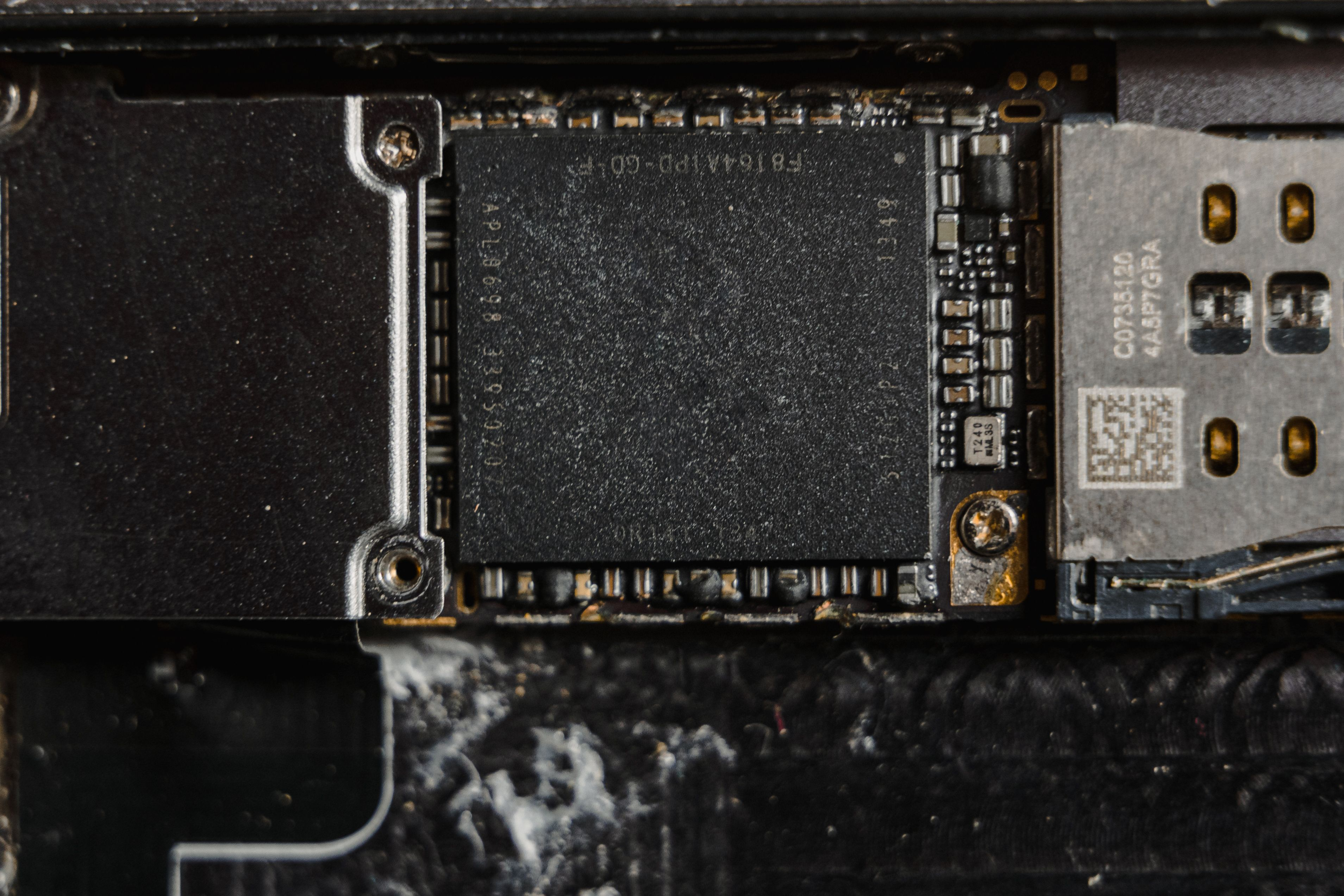
After cloud providers reduce or slow AI CAPEX, the impact usually spreads in the order of “valuation expectations—new orders—inventory—contract pricing—revenue and profit.” Chip companies may still report strong current-quarter revenue, but the market will price in changes in growth expectations over the next six to twelve months. The closer a company is to cloud procurement, the more concentrated its customers are, and the more price-sensitive its products are, the earlier the risk appears.
A semiconductor stock falling first does not necessarily mean the company is immediately losing orders. Many AI chips, HBM products, and server components are supported by pre-booked capacity, long-term purchase agreements, or extended delivery cycles. The issue is that stock prices reflect future growth. If cloud providers signal that future CAPEX will no longer be revised upward, analysts may first reduce future revenue growth assumptions, gross margin expectations, and valuation multiples.
NVIDIA is the most typical example. Its latest quarter showed that Data Center revenue reached $75.2 billion, up 92% year over year, indicating that AI compute demand remains strong. But precisely because the data center business has such a high revenue share and a large growth base, if cloud provider procurement slows more than expected, the market may reflect that in valuation before revenue actually declines.
The transmission chain can be broken into five steps:
- Cloud providers lower future CAPEX guidance or stop raising budgets.
- The market lowers forward revenue assumptions for GPUs, AI ASICs, HBM, and networking chips.
- Server manufacturers and module suppliers reduce new inventory buildup, and lead times shorten.
- Semiconductor supplier inventory days rise, while contract price increases slow.
- Foundry, advanced packaging, and equipment companies see pressure on future orders.
This transmission does not happen all at once. GPUs and AI accelerators are usually revalued first because they are directly tied to cloud provider procurement budgets. AI networking chips, optical modules, switch chips, and custom ASICs usually follow. Foundry and advanced packaging have longer order cycles, so their short-term financial performance may remain strong, but the market will reassess future expansion plans. Semiconductor equipment companies depend more on whether foundries cut expansion plans than on a single quarter of cloud provider procurement changes.
| Transmission Stage | Key Indicators | Main Impact |
|---|---|---|
| Market expectations | Stock prices, valuation multiples, analyst earnings forecasts | Prices in lower future growth early |
| Customer procurement | New orders, delivery plans, server deployment volume | Affects demand for chips and components |
| Supply chain inventory | Inventory days, channel inventory, lead times | Indicates whether supply-demand balance is easing |
| Product pricing | HBM, DRAM, and NAND contract prices | Determines memory supplier gross margins |
| Financial results | Revenue, gross margin, free cash flow | Confirms the downturn in reported results |
You also need to watch the financial constraints on cloud providers themselves. AI servers are shorter-life assets, and their depreciation cycle is much shorter than that of data center buildings. Once GPU, CPU, and storage procurement expands rapidly, cloud providers’ free cash flow comes under pressure first. If AI product revenue does not scale at the same pace, capital markets will ask management to prove investment returns. This pressure can feed back into procurement schedules, especially through delays in non-core regional data centers, reduced buffer inventory, or a reallocation of budgets between general-purpose GPUs and in-house ASICs.
Summary: The supply chain impact of a CAPEX slowdown usually appears in valuations before revenue. When semiconductor stocks fall, you need to judge whether the market is pricing in lower future growth or whether actual orders have already weakened. The more reliable sequence is to check whether cloud provider guidance has fallen, whether new orders have declined, whether inventory has risen, whether contract pricing has weakened, and whether company revenue and gross margin guidance has been revised down. If only valuations decline while orders remain strong, the risk is mainly expectation correction. If orders, inventory, and pricing all deteriorate, the supply chain has entered a more fundamental adjustment.
Which Semiconductor Stocks Are Most Sensitive to Cloud Provider CAPEX?
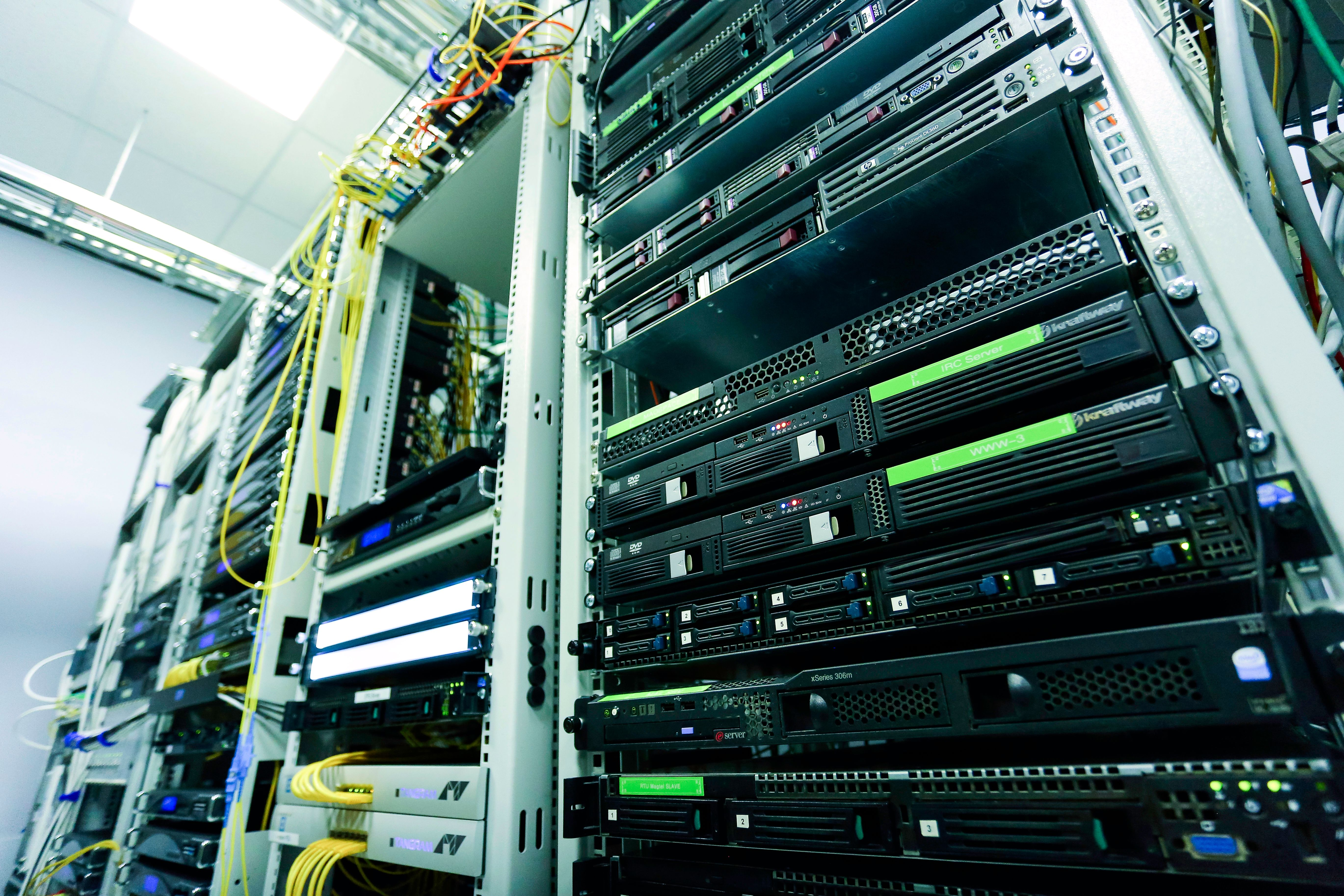
The semiconductor stocks most sensitive to cloud provider AI CAPEX are usually companies directly exposed to large customer procurement, with a high AI business mix and concentrated orders. GPUs, AI ASICs, AI networking chips, and high-speed interconnect components respond first. Foundry, advanced packaging, and semiconductor equipment companies are also affected, but typically with a lag of one to several quarters.
NVIDIA is the most sensitive to cloud provider AI CAPEX because its data center GPUs, networking products, systems, and software ecosystem directly correspond to AI cluster construction. If cloud providers shift from “rushing to secure compute” to “optimizing utilization,” GPU procurement growth may slow, and the market will reassess product premiums, customer concentration, and the shipment pace of next-generation platforms.
AMD’s sensitivity is different. It is still in the stage of expanding AI accelerator market share. If cloud providers continue expanding capacity, AMD may benefit from multi-supplier strategies. If CAPEX slows, cloud providers may prioritize the most mature platforms and existing cluster standards, which could slow the adoption of newer suppliers.
Broadcom and Marvell represent another type of risk: custom AI ASICs, Ethernet switch chips, interconnect solutions, and optical communications. Broadcom reported Q1 FY2026 AI revenue of $8.4 billion, up 106% year over year, mainly driven by custom AI accelerators and AI networking demand. These companies are not necessarily weakened by cloud providers’ in-house chip efforts. In some cases, they may benefit from the custom ASIC trend. But when customer concentration is high, a single large customer’s project schedule can also create more visible volatility.
TSMC, advanced packaging, and equipment companies face risks more in the middle to later stages of the chain. TSMC reported Q1 2026 net revenue of $35.9 billion, supported by strong advanced process and AI demand. However, it serves not only cloud providers, but also smartphones, high-performance computing, automotive, and other end markets. ASML raised its 2026 revenue expectation to €43 billion to €45 billion, while Applied Materials said its 2026 semiconductor equipment business is expected to grow by more than 30%. These data points show that the upstream equipment cycle remains strong. But if cloud provider CAPEX shifts from “accelerated expansion” to “controlled incremental capacity,” equipment orders may face pressure further out.
| Supply Chain Segment | Representative Companies | CAPEX Sensitivity | Impact Lag | Core Risk |
|---|---|---|---|---|
| GPUs and AI systems | NVIDIA, AMD | High | Short | Order growth and product premiums |
| AI ASICs and networking | Broadcom, Marvell | High | Short to medium | Large-customer project concentration |
| Foundry | TSMC | Medium-high | Medium | Advanced process utilization |
| Advanced packaging | CoWoS-related supply chain | Medium-high | Medium | Overly aggressive capacity expansion |
| Semiconductor equipment | ASML, AMAT, LRCX, KLAC | Medium | Longer | Foundries delaying expansion |
If you trade or monitor these stocks, you should consider valuation volatility together with real trading costs. AI semiconductor stocks often move sharply around earnings seasons, cloud provider conference calls, CAPEX guidance changes, and memory price data releases. Frequent portfolio adjustments can amplify cost differences. U.S. stock trading costs usually include more than commissions. They may also include platform fees, external institutional fees, and trading activity fees. For example, Biya charges $0 commission on U.S. stock trading, while platform fees, external institutional fees, and other charges are subject to U.S. stock trading fees and the order display. Service availability depends on the user’s location, identity verification result, platform rules, and applicable laws and regulations.
Summary: A cloud provider CAPEX slowdown does not affect every semiconductor company equally. GPUs, AI ASICs, and networking chips are the most sensitive because they are closest to procurement budgets. Foundry and advanced packaging reflect order and utilization changes later. Semiconductor equipment companies depend more on whether foundries reduce long-term expansion plans. You need to separate “AI compute demand is falling” from “procurement is shifting from GPUs to ASICs.” The latter may only change the supplier mix, rather than signal the disappearance of overall AI infrastructure demand.
Why the Biggest Risk for Memory Stocks Is Different from Logic Chips
The biggest risk for memory stocks is not just that cloud providers buy less. The real risk is a simultaneous reversal in demand, inventory, and pricing. Logic chips depend more on customer orders and product competitiveness, while memory chips also depend on industry supply-demand balance, contract pricing, capacity release, and inventory cycles. Once DRAM and NAND shift from shortage to oversupply, profit volatility can be much greater than in logic chips.
AI infrastructure has pushed the memory industry into a new high-growth phase, especially in HBM, server DRAM, and enterprise SSDs. Gartner expects global semiconductor revenue to exceed $1.3 trillion in 2026, and forecasts annual DRAM and NAND price increases of 125% and 234%, respectively. This shows that the current main issue in memory is not weak demand, but “memflation,” or excessively rapid increases in memory and storage prices.
But the stronger the price increase, the greater the risk if the cycle reverses. Memory products are relatively standardized, making prices highly sensitive to supply-demand gaps. When cloud providers continue expanding AI clusters, HBM and high-end server DRAM can remain tight. If cloud providers delay server deployments, ordinary server DRAM and enterprise SSDs may be the first to feel inventory adjustment pressure.
HBM’s short-term protection comes from long-term supply agreements. Micron previously disclosed that it had completed pricing and volume agreements for its entire 2026 HBM supply, which improves order visibility and makes revenue more predictable. But long-term agreements do not mean there is no risk. Customers may still adjust procurement structures in later years, change product mixes, or lower expectations for incremental orders in the next round of negotiations.
The logic for server DRAM and enterprise SSDs is more complex. In its Computex 2026 AI memory and storage portfolio presentation, Micron said HBM is used for high-speed model execution and KV cache, LPDDR and DDR are used for system memory and long-context expansion, and data center SSDs are used for persistent KV cache and large data lakes. This means AI inference consumes not only GPUs, but also large amounts of memory bandwidth and storage capacity. The issue is that these products usually have weaker price protection than HBM and are more vulnerable to inventory and procurement cycles.
| Product Category | Main Demand Source | Contract Visibility | Price Sensitivity | Risk After CAPEX Slows |
|---|---|---|---|---|
| HBM | GPUs and AI accelerators | Relatively high | Medium-high | Lower forward incremental orders |
| Server DRAM | AI servers and general servers | Medium | High | Inventory adjustment and order delays |
| Enterprise SSDs | Data lakes, cache, inference storage | Medium | High | Slower server deployment |
| Consumer DRAM/NAND | PCs, smartphones, consumer electronics | Lower | Very high | AI demand may not offset weak consumer demand |
A weakening memory cycle usually shows four combined signals:
- Cloud providers lower server deployment plans or reduce new cluster builds.
- Memory supplier inventory days rise for multiple consecutive periods.
- DRAM and NAND contract price increases fall meaningfully below market expectations.
- After HBM capacity comes online, ordinary DRAM demand weakens at the same time.
Summary: Memory stock risks are different from logic chip risks. Logic chips depend more on product roadmaps, customer orders, and competition, while memory chips depend more on supply-demand balance and pricing. HBM has long-term agreements and technical barriers, so its short-term resilience is usually stronger than ordinary DRAM and NAND. But if cloud provider CAPEX slows and server deployments decline, ordinary server memory and enterprise SSDs are more likely to enter inventory adjustment first. The most dangerous stage is when AI demand slows, supply increases, and prices fall at the same time.
How to Tell Whether a CAPEX Slowdown Is a Short-Term Adjustment or Structural Downturn
To judge whether an AI CAPEX slowdown is a short-term adjustment or a structural downturn, you cannot rely on one company’s capital expenditure in one quarter. You need to look at cloud revenue, AI orders, server deliveries, memory pricing, supply chain inventory, and free cash flow together. Only when multiple indicators deteriorate at the same time does the AI infrastructure cycle look more likely to shift from expansion to downturn.
A short-term adjustment usually has three characteristics: capital expenditure is still growing but at a slower rate; cloud business revenue still maintains high growth; and supply chain orders have not been clearly canceled, only rescheduled. In this situation, the main risk for semiconductor and memory stocks is valuation compression, not a collapse in revenue.
A cyclical adjustment is more serious. It usually appears as project delays, fewer new orders, rising inventory, and weaker pricing for some products. GPU companies may still grow revenue, but growth no longer exceeds expectations. Server DRAM and enterprise SSD price increases slow. Advanced packaging and foundry customers begin to revise production schedules.
A structural downturn requires stronger evidence. For example, multiple cloud providers simultaneously reduce absolute capital expenditure, AI revenue growth fails to cover depreciation and operating costs, chip companies lower long-term guidance, memory contract prices turn negative, and equipment orders decline. In that case, the risk is no longer limited to stock valuations. It spreads into revenue, gross margins, and cash flow.
You can use the following checklist to evaluate where the cycle stands:
| Indicator | Mild Slowdown | Cyclical Adjustment | Structural Downturn |
|---|---|---|---|
| Cloud provider CAPEX | Still growing, but growth slows | Near flat or projects delayed | Absolute spending declines |
| Cloud revenue | Maintains solid growth | Growth slows meaningfully | Revenue stalls |
| Chip orders | Growth slows | New orders decline | Orders canceled or sharply reduced |
| Memory pricing | Price increases narrow | Some prices fall | Sustained large price declines |
| Inventory | Mostly stable | Begins to rise | Builds across the chain |
| Free cash flow | Pressured but explainable | Pressure expands | Investment returns questioned |
A more practical approach is to track indicators in three groups:
- Demand side: AWS, Azure, and Google Cloud revenue growth, AI backlog, and enterprise AI adoption.
- Supply side: GPU lead times, advanced packaging utilization, HBM supply agreements, and DRAM/NAND contract prices.
- Financial side: Cloud provider free cash flow, depreciation expense, return on capital, and management commentary on future CAPEX.
SEMI’s latest forecast shows that global semiconductor manufacturing equipment sales are expected to reach $165.9 billion in 2026, up 23.2% year over year, and reach $229.5 billion by 2028. Upstream equipment data like this helps you assess whether foundries are still expanding capacity. If cloud provider CAPEX has already slowed but equipment sales and advanced packaging expansion continue to rise sharply, future oversupply risk deserves attention. If cloud revenue and equipment orders both remain strong, the risk is more likely to be valuation correction.
Summary: The difference between a short-term CAPEX slowdown and a structural downturn lies in whether multiple indicators weaken together. If only capital expenditure growth slows, it is usually a cooling of expectations. If cloud revenue, chip orders, memory prices, inventory, and free cash flow all weaken at the same time, the AI infrastructure cycle may be entering a deeper adjustment. You should avoid judging the inflection point from a single news item. Instead, put cloud provider guidance, semiconductor company orders, memory prices, and the equipment cycle into the same framework.
How Ordinary Investors Can Respond to Semiconductor and Memory CAPEX Risk
For ordinary investors facing cloud provider AI CAPEX risk, the core task is not to guess the short-term direction of a single stock. It is to control exposure concentration, confirm whether valuation already prices in high growth, and track order and pricing signals. The stronger the industry cycle, the more important it is to avoid linearly extrapolating current strong demand several years into the future.
You can manage risk at three levels.
First, distinguish company types. GPU leaders, AI ASIC suppliers, memory makers, foundries, and equipment companies are all part of the AI supply chain, but their risk sources are different. GPUs depend on cloud provider procurement and product cycles. HBM depends on supply agreements and capacity. NAND depends on the pricing cycle. Equipment depends on foundry expansion.
Second, distinguish holding logic. If you are investing in the long-term AI infrastructure trend, you should not let one quarter of capital expenditure volatility completely override your thesis. If you are trading the cycle and valuation expansion, you must closely follow cloud provider earnings, memory pricing, and inventory data. These two logics should not be mixed, or you may end up repeatedly chasing rallies and selling into pullbacks.
Third, control single-stock risk. Semiconductor ETFs can reduce single-company risk, but they cannot eliminate industry-cycle risk. If an ETF’s main weights are concentrated in GPUs, memory, and foundry companies, it will still be affected by changes in cloud provider CAPEX expectations. Individual stocks offer higher upside elasticity, but they are more sensitive to earnings and order changes.
| Investment Target | Advantage | Main Risk | More Relevant Indicators |
|---|---|---|---|
| GPU leaders | Direct beneficiaries of AI demand | Sensitive to valuation and procurement cycles | Cloud CAPEX, data center revenue |
| Memory stocks | High elasticity from HBM and server memory | Severe pricing and inventory cycles | DRAM/NAND prices, inventory |
| Foundries | More diversified customers and end markets | Advanced process utilization volatility | HPC revenue, advanced packaging capacity |
| Semiconductor equipment | Benefits from long-term expansion | Orders lag but cycles are clear | WFE, EUV, packaging equipment orders |
| Semiconductor ETFs | Reduce single-company risk | Still exposed to industry-wide drawdowns | Weight structure, valuation levels |
If you need to continuously track U.S.-listed semiconductor, memory chip, and AI infrastructure companies, you can use U.S. stock information search to view basic market data, company information, and market performance. For investors involved in cross-market fund arrangements and actual trade execution, it is also important to check order types, fee structures, and service availability in your location before placing orders. Do not focus only on price volatility while ignoring trading costs and compliance boundaries.
Summary: When facing AI CAPEX slowdown risk, ordinary investors should not simply ask whether semiconductor stocks are still worth buying. The better questions are: which part of the supply chain are you buying, are you taking valuation risk or fundamental risk, and can you tolerate the memory pricing cycle? GPUs and AI ASICs are the most sensitive. Memory stocks have the greatest earnings elasticity. Foundry and equipment names react with a lag. A more disciplined approach is to build a quarterly checklist tracking cloud provider CAPEX, cloud revenue, chip orders, HBM agreements, DRAM/NAND pricing, and inventory changes together.
When you monitor NVIDIA, AMD, Broadcom, Micron, TSMC, or related semiconductor ETFs, stock price volatility is only the first layer of information. The more important factors are order visibility, pricing cycles, and capital expenditure logic behind the moves. Biya is a global multi-asset trading wallet that supports U.S. stocks, Hong Kong stocks, digital assets, and other asset classes. If services are available in your region, you can learn more about account and trading support through Biya. Before trading, you should also check the order screen and fee details, including platform fees, external institutional fees, and trading activity fees. You can also download the app to track related market information. The information above introduces public market data, industry logic, and fee structures only. It does not constitute investment advice. Service availability depends on platform rules, identity verification results, and applicable laws and regulations.
FAQ
Why Can Growing Cloud Provider CAPEX Still Pressure Semiconductor Stocks?
Growing cloud provider CAPEX can still pressure semiconductor stocks because the market focuses on whether future growth continues to exceed expectations. If capital expenditure shifts from rapid growth to moderate growth, chip company revenue may still rise, but valuation multiples, earnings forecasts, and order growth assumptions may be revised downward first.
Will Cloud Providers’ In-House AI Chips Weaken NVIDIA GPU Demand?
Cloud providers’ in-house AI chips may reduce part of the demand share for general-purpose GPUs, but they do not necessarily reduce total AI compute demand. You need to judge whether procurement is shifting from GPUs to ASICs, or whether total capital expenditure is truly declining. The former creates supplier divergence, while the latter is closer to an industry demand downturn.
Can Long-Term HBM Agreements Prevent Memory Stock Cycle Risk?
Long-term HBM agreements can improve short-term order and pricing visibility, but they cannot fully eliminate memory stock cycle risk. Customers may still adjust future procurement, change product mixes, or renegotiate pricing after new capacity is released. Ordinary DRAM and NAND are more sensitive to inventory and pricing.
Will Better AI Inference Efficiency Reduce Data Center Chip Demand?
Better AI inference efficiency does not necessarily reduce data center chip demand. Lower compute cost per task may reduce the chips needed for a single inference workload, but it may also stimulate more applications, more users, and higher call volumes. The final impact depends on whether efficiency gains or demand expansion move faster.
Can Semiconductor ETFs Reduce Cloud Provider CAPEX Slowdown Risk?
Semiconductor ETFs can reduce single-company and single-customer risk, but they cannot eliminate industry-wide risk. If an ETF is heavily weighted toward GPUs, memory, foundry, and semiconductor equipment, lower cloud provider CAPEX expectations may still affect overall performance. Investors should review holdings and fees before trading.
How Often Should Ordinary Investors Check AI CAPEX Data?
Ordinary investors should check AI CAPEX data at least during quarterly earnings seasons for major cloud providers and semiconductor companies. The key indicators include full-year guidance, cloud revenue growth, order backlog, GPU lead times, HBM agreements, DRAM/NAND contract prices, and inventory changes. Decisions should not rely on a single news item.
*本文仅供参考,不构成 BiyaPay 或其子公司及其关联公司的法律,税务或其他专业建议,也不能替代财务顾问或任何其他专业人士的建议。
我们不以任何明示或暗示的形式陈述,保证或担保该出版物中内容的准确性,完整性或时效性。
其他BiyaPay博客内容

Where Will IBM Stock Go After Q2 Earnings? Three Scenarios Based on Revenue, Red Hat, and Free Cash Flow


Which Software Stocks Could IBM’s Selloff Drag Down? Comparing ServiceNow, Salesforce, Adobe, and Oracle


Which AI Hardware Stocks Benefit More Under IBM’s Warning? Comparing the Sensitivity of NVDA, DELL, MU, and HPE


Will PayPal Accept Stripe’s Offer? Three Major Obstacles: Board Approval, Financing, and Regulation
选择国家或地区,阅读当地博客
 澳大利亚
澳大利亚 奥地利
奥地利 比利时
比利时 加拿大
加拿大 塞浦路斯
塞浦路斯 捷克
捷克 丹麦
丹麦 爱沙尼亚
爱沙尼亚 芬兰
芬兰 法国
法国 德国
德国 希腊
希腊 香港
香港 印度
印度 印度尼西亚
印度尼西亚 爱尔兰
爱尔兰 意大利
意大利 日本
日本 拉脱维亚
拉脱维亚 立陶宛
立陶宛 卢森堡
卢森堡 马来西亚
马来西亚 马耳他
马耳他 摩洛哥
摩洛哥 尼泊尔
尼泊尔 荷兰
荷兰 新西兰
新西兰 挪威
挪威 巴基斯坦
巴基斯坦 菲律宾
菲律宾 波兰
波兰 葡萄牙
葡萄牙 罗马尼亚
罗马尼亚 新加坡
新加坡 斯洛伐克
斯洛伐克 斯洛文尼亚
斯洛文尼亚 南非
南非 韩国
韩国 西班牙
西班牙 瑞典
瑞典 泰国
泰国 美国
美国 土耳其
土耳其 阿联酋
阿联酋 英国
英国 越南
越南
联系我们



