What Business Does Western Digital Have Left After Spinning Off SanDisk? Explaining the HDD Pure-Play Logic




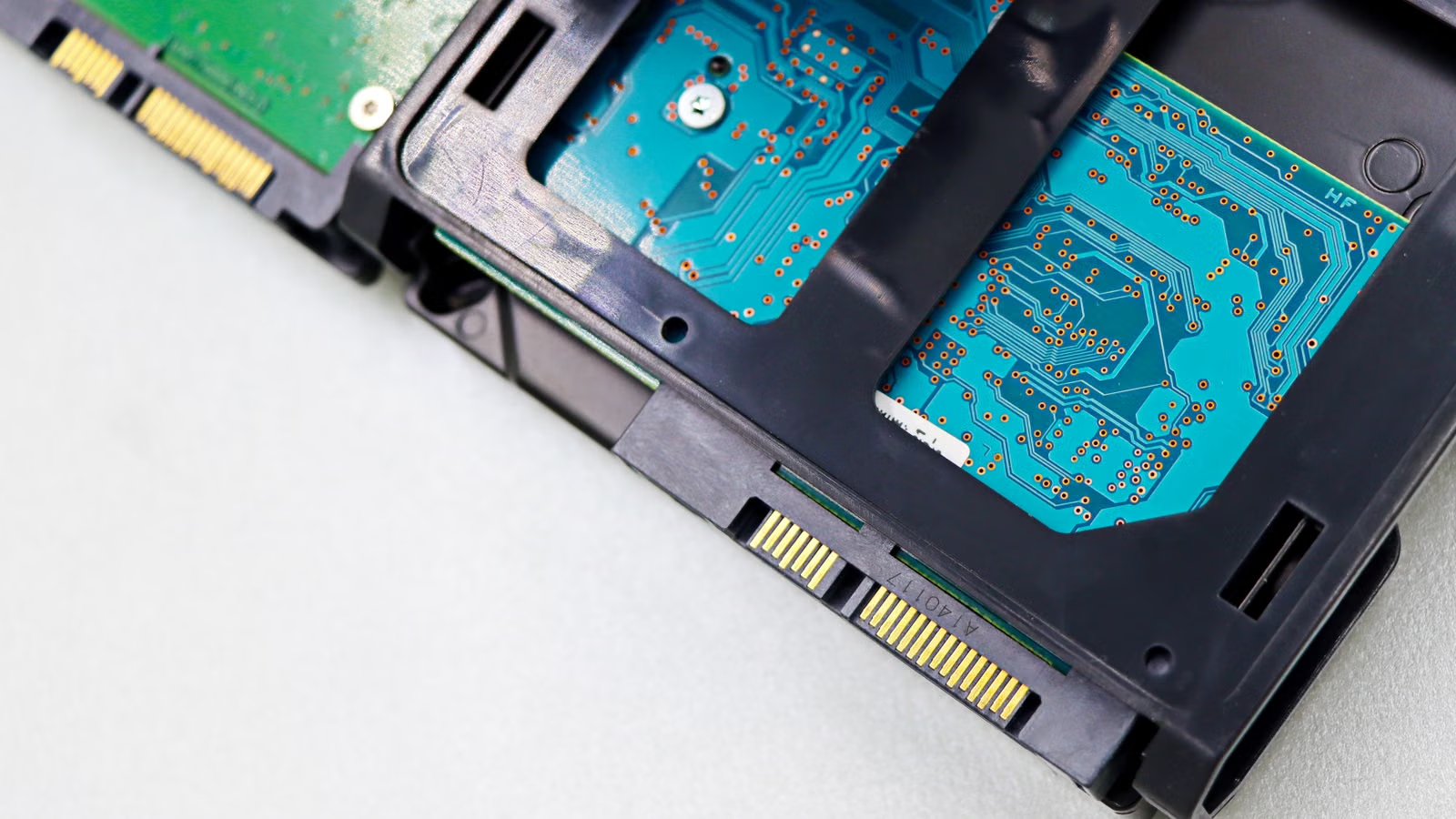
After Western Digital spun off SanDisk, what remained was not a “smaller storage company,” but a data storage infrastructure company more focused on HDDs. When you look at WDC today, the focus should shift away from NAND, SSDs, and consumer flash toward Cloud, nearline HDDs, AI data center capacity demand, gross margin, and free cash flow. This change makes WDC’s business boundaries clearer, but it also makes the company more sensitive to the HDD cycle, cloud customer procurement, and hyperscaler capital expenditure.
Key Takeaways
- After separating Flash, WDC’s core business is concentrated in HDDs.
- SanDisk carries the NAND / Flash logic, while WDC carries the HDD logic.
- Cloud and nearline HDDs are the main revenue drivers after the separation.
- HDD pure-play positioning improves valuation clarity but increases cycle sensitivity.
- AI data center demand is the key variable in WDC’s new investment narrative.
What Business Does WDC Have Left After Spinning Off SanDisk?
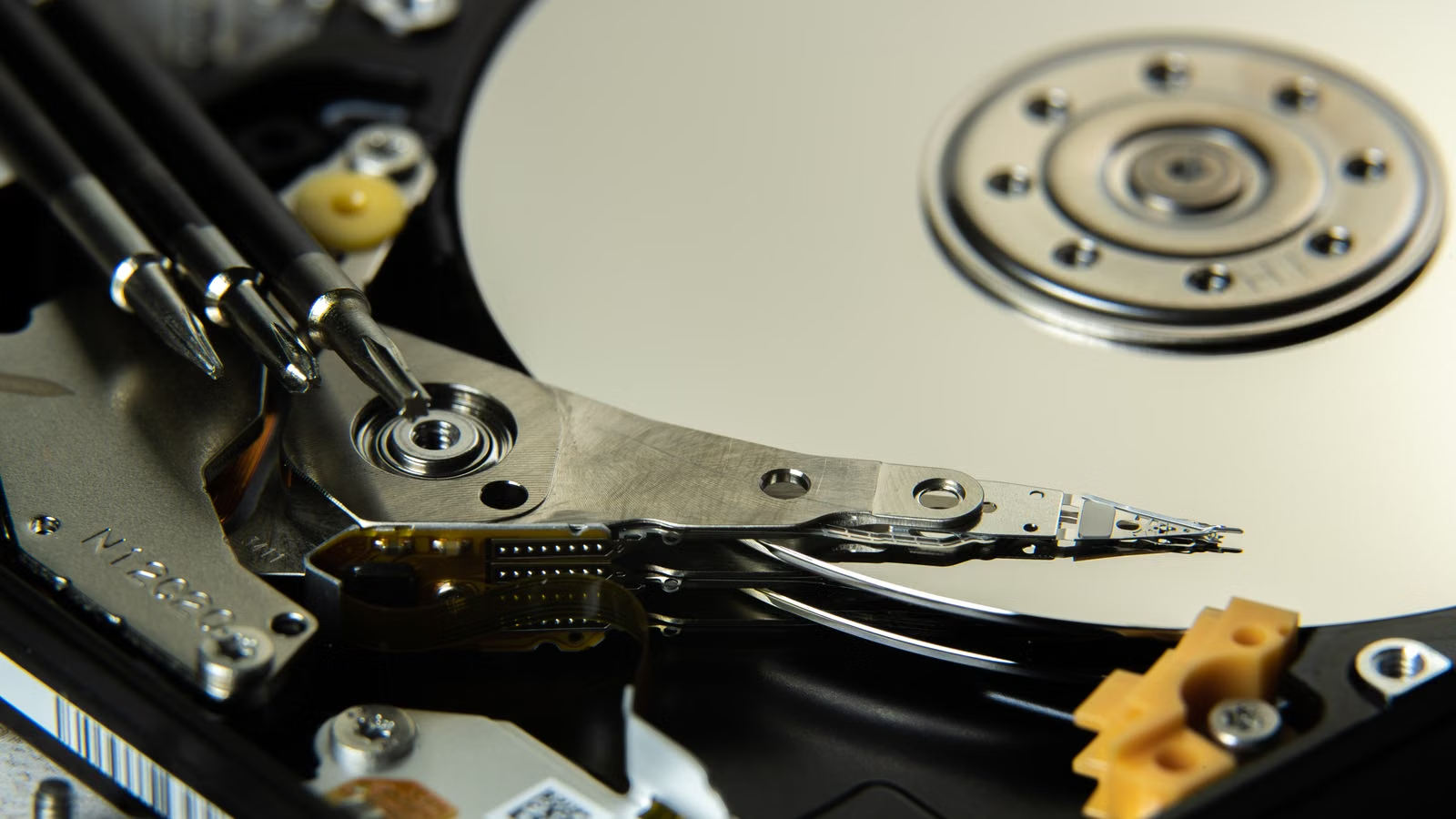
After spinning off SanDisk, WDC’s core remaining business is HDDs, especially high-capacity nearline HDDs for cloud providers, enterprise customers, and AI data centers. SanDisk took over NAND Flash, SSDs, memory cards, and flash storage products, while WDC became more focused on mechanical hard drives, Cloud storage, enterprise HDDs, and data center capacity storage. You can no longer treat the NAND cycle as WDC’s main earnings driver.
Western Digital completed the Flash business separation in February 2025. This separated two storage cycles that had previously existed inside the same company. After that, SanDisk became an independently listed company and continued to carry the Flash, NAND, and SSD businesses. WDC still retained the Western Digital listed entity, but the meaning of its financial statements changed: previously, you were looking at a hybrid HDD + Flash storage company; now, you are looking at a more focused HDD company.
This change is easy to misunderstand. Some investors may think Western Digital “lost a business” after spinning off SanDisk, making the company smaller. But from an investment analysis perspective, the key point is not that the company has fewer businesses. The key point is that it has fewer variables. The old WDC was affected by NAND pricing, SSD demand, PC end-market cycles, HDD supply and demand, and cloud customer procurement at the same time, making the source of profit swings difficult to identify. After the separation, it is easier to judge where WDC’s revenue, gross margin, and cash flow are coming from.
| Company | Core Business After Separation | Main Customers | Cycle Driver | Investment Keywords |
|---|---|---|---|---|
| WDC | HDDs, nearline HDDs, Cloud storage | Cloud providers, enterprise customers, data centers | HDD supply-demand, AI data, cloud capex | HDD pure play, Cloud, exabyte |
| SanDisk | NAND Flash, SSDs, memory cards, flash products | Consumer electronics, enterprise SSD, device brands | NAND pricing, SSD demand, consumer electronics cycle | NAND, SSD, Flash memory |
When researching WDC today, you should place it and SanDisk into separate frameworks. WDC is not exiting storage; it is retaining the capacity storage business that is more infrastructure-oriented. SanDisk is no longer a WDC segment, but an independent company carrying the Flash logic. If you still directly assign SSD price increases, NAND supply-demand changes, or memory card demand to WDC, you will misread the company’s post-separation reporting scope.
Summary: After spinning off SanDisk, Western Digital did not retain a marginal business. It retained the HDD business, especially Cloud and nearline HDDs. SanDisk is responsible for NAND, SSDs, and Flash, while WDC is responsible for HDDs and data center capacity storage. The separation allows the two companies to carry different storage cycles and makes WDC’s business boundary clearer. When looking at WDC stock, you should focus on HDD pricing, exabyte shipments, Cloud revenue, customer long-term agreements, gross margin, and free cash flow, rather than continuing to use the old “HDD plus Flash” mixed framework.
What Is the HDD Pure-Play Logic: From a Hybrid Storage Company to an HDD Pure Play

The core of the HDD pure-play logic is that WDC has moved from being an HDD + Flash hybrid company to a company closer to an HDD pure play. When valuing the company, you no longer need to analyze both the NAND cycle and the HDD cycle at the same time. Instead, you can focus on HDD supply and demand, Cloud customer demand, nearline HDD shipments, ASP per exabyte, gross margin, and free cash flow. This makes the analysis clearer and makes it easier for the market to revalue WDC.
Before the separation, WDC’s problem was not a lack of attractive businesses, but a confusing business narrative. HDDs and NAND are both storage technologies, but their business models, pricing cycles, capital expenditure patterns, and competitive landscapes are different. NAND is closer to a semiconductor cycle, affected by wafer capacity, SSD pricing, end-market demand, and inventory. HDDs are more tied to large-scale capacity storage infrastructure, driven by hyperscalers, enterprise storage, nearline procurement, and cost per unit of capacity. When these two curves were inside one company, investors had difficulty identifying which side was driving profit improvement.
After the separation, WDC’s financial statements look more like a single-track story. In its Q3 FY2026 earnings, revenue was $3.34 billion, up 45% year over year; GAAP gross margin was 50.2%, non-GAAP gross margin was 50.5%; operating cash flow was $1.12 billion, and free cash flow was $978 million. These numbers are easier to interpret as improvements in HDD demand, pricing, and product mix, rather than being blurred by the NAND cycle.
| Analysis Dimension | WDC Before Separation | WDC After Separation | Investment Implication |
|---|---|---|---|
| Business framework | HDD + Flash hybrid | HDD-centered | More focused valuation anchor |
| Revenue variables | NAND, SSD, and HDD drivers | Cloud, nearline, enterprise HDD | Easier to identify growth sources |
| Profit variables | Semiconductor cycle plus HDD cycle | HDD pricing, cost, product mix | Gross margin is easier to interpret |
| Peer comparison | Micron, SanDisk, and Seagate all relevant | More comparable to Seagate | Clearer peer group |
| Risk source | Multiple overlapping cycles | HDD cycle and cloud customer concentration | More transparent but more sensitive |
HDD pure play does not mean the company is safer. It means the company is easier to understand. The more focused the business is, the easier it is for the market to judge whether performance is good or bad. If Cloud revenue, exabyte shipments, ASP, and free cash flow continue to improve, WDC’s revaluation logic becomes more direct. If cloud customer procurement slows, gross margin falls, or pricing weakens, the negative impact will also show up more directly in financial results and the stock price.
Summary: The HDD pure-play logic is not simply about carving out one business. It is about shifting WDC’s valuation framework from hybrid storage to hard-drive infrastructure. After the separation, WDC’s revenue and profit can be analyzed more clearly around Cloud, nearline HDDs, ASP, gross margin, and free cash flow. The benefit is higher financial statement readability and a clearer peer comparison. The cost is greater sensitivity to the HDD cycle, cloud customer demand, and AI data center capex. Therefore, HDD pure-play positioning is both a clarification of valuation and a concentration of risk.
WDC’s Post-Separation Revenue Story: Cloud, Nearline HDDs, and AI Data Centers
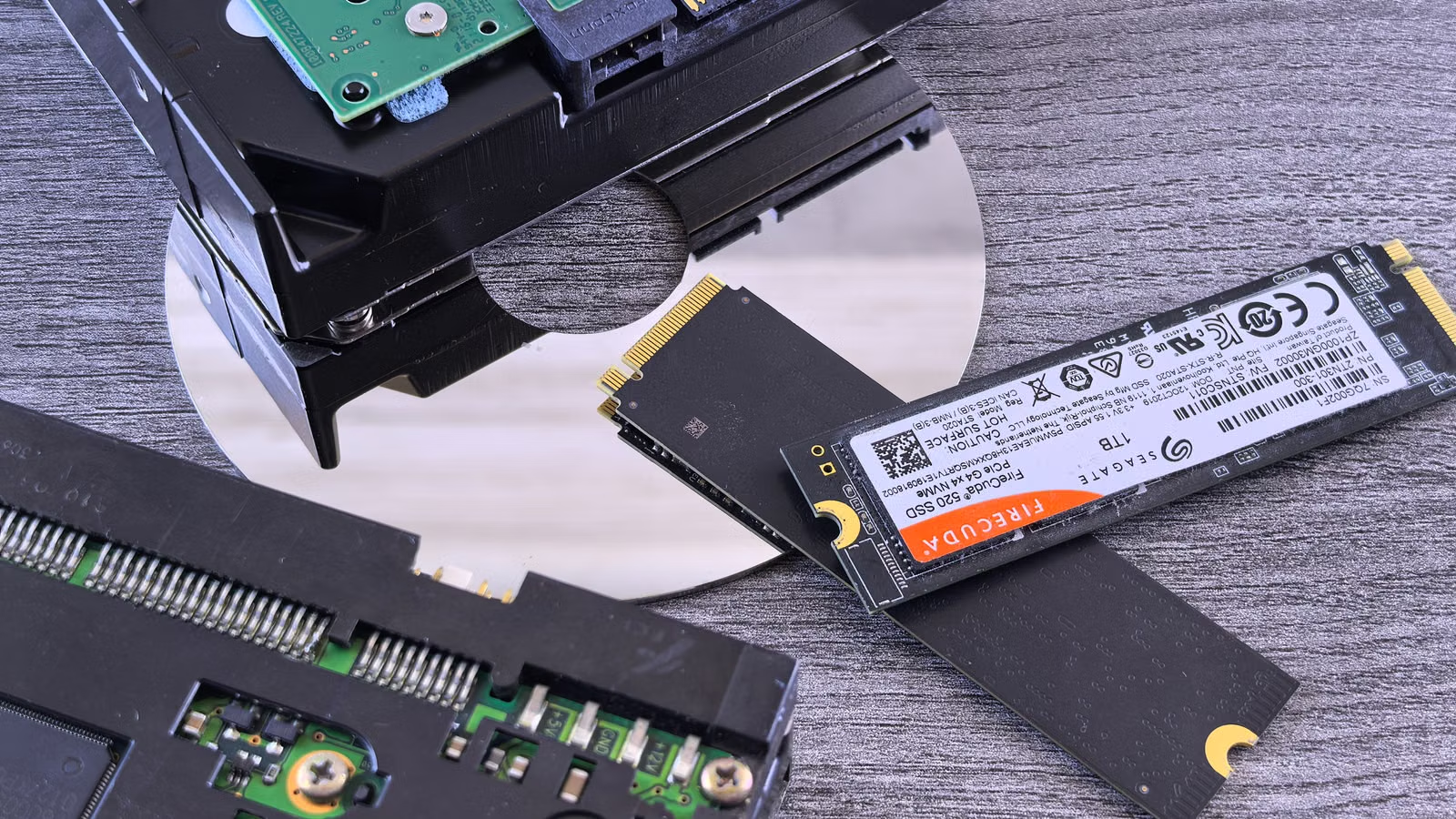
After the separation, WDC’s main revenue story is Cloud and nearline HDDs. When looking at WDC, you should not only ask whether total hard drive shipments are growing. You should ask whether high-capacity data center HDDs are continuing to scale. AI training, inference, logs, backup, object storage, video, and cold data archiving all increase demand for large-scale capacity storage. HDDs do not handle the highest-speed compute layer, but they store massive amounts of data at a lower unit cost over long periods.
In its Form 10-Q, WDC disclosed that Cloud revenue accounted for about 89% of total revenue in Q3 FY2026. This shows that post-separation WDC is clearly tilted toward cloud and enterprise data centers. Cloud revenue, nearline HDDs, hyperscalers, exabyte shipments, and enterprise storage are the key terms for understanding WDC’s revenue quality.
Nearline HDDs have regained market attention because AI infrastructure is not only about GPUs, HBM, and high-speed networking. AI model training requires raw data, cleaned data, log data, versioned data, synthetic data, and inference feedback data. Much of this data does not need to remain in expensive high-speed storage at all times. For hyperscalers, the value of HDDs lies in low cost, high capacity, scalability, and long-term storage. In its long-term HDD value white paper, WDC emphasizes that HDDs remain an important economic foundation for large-scale data center capacity storage.
| Revenue Driver | Related Business | Main Customers | Key Metric | Risk Variable |
|---|---|---|---|---|
| AI data growth | Nearline HDDs | Hyperscalers, cloud providers | Exabyte shipments | AI capex slowdown |
| Cloud storage expansion | Cloud storage | Data center customers | Cloud revenue mix | Customer procurement delays |
| High-capacity products | Enterprise HDDs | Enterprise and cloud customers | ASP per exabyte | Price decline |
| Long-term supply agreements | Large-customer HDD supply | Global cloud providers | Order visibility | Customer concentration |
| Technology upgrades | ePMR, UltraSMR, HAMR | Hyperscalers | Qualification and production progress | Technology ramp risk |
This revenue structure also explains why WDC is now more comparable to Seagate than to SanDisk or Micron. Seagate is also centered on nearline HDDs, Cloud, and high-capacity data center demand, while SanDisk and Micron are more affected by NAND, DRAM, HBM, or SSD pricing cycles. If you put WDC into the wrong peer group, it is easy to misjudge its revenue leverage and valuation logic.
Summary: After the separation, WDC’s main revenue story is Cloud and nearline HDDs, not consumer hard drives or NAND Flash. AI data centers create demand for massive data retention, archiving, and long-term access. HDDs play the role of a low-cost capacity layer in that system. When judging WDC’s revenue quality, focus on Cloud mix, exabyte shipments, ASP per exabyte, customer long-term agreements, and high-capacity product progress. Looking only at total revenue growth is not enough, because what really determines WDC’s revaluation is whether data center HDD demand is sustainable.
WDC’s Post-Separation Profit Logic: Gross Margin, Cash Flow, and Balance Sheet
After the separation, WDC’s profit logic should be judged mainly through gross margin and free cash flow. Revenue growth only tells you that demand is strong. Gross margin improvement tells you whether WDC has pricing power, product mix advantage, or cost benefits. Strong free cash flow tells you whether profit is turning into real cash. In Q3 FY2026, WDC’s non-GAAP gross margin reached 50.5%, and free cash flow reached $978 million, showing that the operating quality of the HDD-focused business is improving.
Gross margin is more important than revenue growth in this case. The HDD industry has long been viewed as a mature cyclical industry. If WDC’s revenue rises but gross margin does not improve, the growth may only reflect short-term inventory restocking or lower-quality demand. WDC’s current GAAP gross margin of 50.2% suggests that high-capacity HDDs, Cloud demand, ASP per exabyte, and cost structure are working together. As nearline HDDs become a larger share of the mix, the product portfolio has stronger profit leverage than traditional consumer hard drives.
Free cash flow verifies whether the HDD pure-play logic has real value. WDC generated $1.12 billion in operating cash flow and $978 million in free cash flow in Q3 FY2026, showing that the HDD upcycle is visible not only on the income statement, but also in the cash flow statement. Strong cash flow can support deleveraging, buybacks, dividends, and technology investment, while also improving the market’s view of WDC’s balance sheet. Reuters reported that WDC planned to sell part of its SanDisk stake to reduce debt, which also shows that post-separation capital structure optimization is part of the HDD pure-play logic.
| Metric | Latest Signal | What It Shows | Potential Risk |
|---|---|---|---|
| Revenue | Q3 FY2026 revenue up 45% YoY | HDD cycle is strong | Demand pulled forward |
| Non-GAAP gross margin | 50.5% | Product mix and pricing are improving | Margin retreats from high level |
| Free cash flow | $978 million | High-quality profit conversion | Working capital volatility |
| Debt optimization | Selling SanDisk stake to reduce debt | Cleaner balance sheet | Capital allocation uncertainty |
| Technology investment | ePMR, UltraSMR, HAMR | Supports long-term competitiveness | Qualification or production delays |
If you track WDC’s stock revaluation, you also need to connect the business logic with trading costs. Around earnings, storage stocks such as WDC can see pre-market and after-hours gaps, wider spreads, and volatile execution. U.S. stock trading costs usually include more than commissions; they may also include platform fees, external agency fees, trading activity fees, and order execution differences. If the service is available in your region, you can review Biya U.S. stock trading fees. Biya charges $0 commission for U.S. stock trading, while platform fees, external agency fees, and other costs are subject to the fee schedule and order page.
Summary: WDC’s post-separation earnings quality should be judged by gross margin and free cash flow, not revenue alone. Gross margin improvement suggests that after the HDD-focused transition, WDC may gain stronger operating leverage from Cloud, nearline HDDs, and high-capacity products. Strong free cash flow shows that profit has cash support. Balance sheet optimization also affects valuation, but cash flow improvement should not be interpreted as a guarantee of stock price appreciation. You still need to track pricing, customer orders, capital expenditure, debt, and technology roadmap changes.
HDD Pure-Play Positioning Is Not Risk-Free: Customer Concentration, Cycle Volatility, and Technology Roadmap
HDD pure-play positioning improves WDC’s business transparency, but it does not remove risk. In fact, the more focused the business becomes, the more concentrated the risks become. When looking at WDC today, the main risks are customer concentration, the HDD cycle, AI data center capex volatility, and whether technologies such as ePMR, UltraSMR, and HAMR can move smoothly through customer qualification and mass production. The benefit of an HDD pure play is clarity; the cost is higher sensitivity to a single cycle.
Customer concentration is the first risk. WDC’s high Cloud revenue mix shows strong hyperscaler demand, but it also means a small number of large customers have greater influence over revenue. The customer concentration disclosed in the 10-Q shows that the top ten customers contribute a very high share of revenue. Large customers usually have large order sizes, long qualification cycles, and strong bargaining power. If order timing changes, data center construction is delayed, or AI capex slows, WDC’s revenue and gross margin may both be affected.
The second risk is that the HDD cycle still exists. HDD pure-play positioning does not turn WDC into a non-cyclical company. Current industry strength comes from cloud customer expansion, AI data growth, supply discipline, and long-term agreements. If any of these variables reverses, pricing and shipments may be affected. Industry discussion of AI storage winners also shows that the market has already started revaluing WDC, Seagate, SanDisk, Micron, and other storage companies within the AI demand chain. The higher the expectations, the greater the pressure to deliver in earnings.
The third risk is the technology roadmap. In its AI-era storage innovation, WDC said its 40TB UltraSMR ePMR HDD was under qualification with two hyperscale customers and planned for mass production in the second half of 2026. HAMR HDDs were also under customer qualification and planned to ramp in 2027. Tom’s Hardware’s reporting on the 40TB HDD and 100TB HAMR roadmap also shows that the high-capacity roadmap is an important part of WDC’s long-term narrative. The issue is that qualification, yield, customer adoption, and scaled production can all affect actual delivery.
| Risk Type | How It Shows Up | Affected Metrics | How to Track It |
|---|---|---|---|
| Customer concentration | High share from a few cloud customers | Cloud revenue, order visibility | 10-Q and customer concentration disclosures |
| Cycle volatility | Pricing and shipments fall | ASP, exabyte shipments | Quarterly earnings and guidance |
| AI capex | Cloud providers slow expansion | Nearline demand | Hyperscaler capital expenditure |
| Technology roadmap | ePMR / HAMR ramp issues | Gross margin, product mix | Customer qualification and production schedule |
| Valuation expectation | Stock price prices in good news early | Multiples and volatility | Peer earnings and market expectations |
Summary: HDD pure-play positioning is a clarification for WDC, not a risk-free positive. After the business becomes more focused, WDC’s strengths are easier for the market to recognize, but its risks are also more directly exposed to the HDD cycle, cloud customer demand, and technology execution. You should track customer concentration, AI capex, ASP, exabyte shipments, ePMR / HAMR qualification, and peer performance together. Only when revenue, gross margin, cash flow, and technology progress all deliver does the HDD pure-play thesis become more convincing.
How Investors Should Reinterpret WDC: From a Hybrid Storage Stock to an AI Data Infrastructure Stock
The better way to understand WDC now is to reposition it from a “hybrid storage stock” to an “HDD company within AI data infrastructure.” WDC is not a GPU, HBM, or SSD story. It is a story about long-term data retention and the low-cost capacity layer. After the separation, WDC is more comparable to Seagate, and it is more useful to analyze it through Cloud, nearline HDDs, cash flow, and customer long-term agreements.
WDC and SanDisk should be analyzed separately. WDC’s keywords are HDD, Cloud, nearline, enterprise storage, and AI data infrastructure. SanDisk’s keywords are NAND, SSD, Flash, consumer electronics, and enterprise flash. A rise in SanDisk’s stock price, a rebound in NAND pricing, or stronger SSD demand may signal a broader storage recovery, but it should not be mechanically treated as WDC’s core business growth. WDC’s core question is whether data centers continue to need more high-capacity hard drives, and whether WDC can convert that demand into cash flow through better product mix and pricing.
It is more meaningful to compare WDC with Seagate. Seagate’s FY2026 third-quarter earnings also reflected an improving HDD industry environment. When comparing the two companies, focus on nearline HDD shipments, Cloud customer demand, gross margin, free cash flow, HAMR / ePMR roadmaps, debt levels, and capital returns, rather than only comparing stock price movements. If both companies improve at the same time, the industry cycle argument is stronger. If only WDC improves, you need to distinguish company execution from industry momentum.
| Observation Dimension | Key Question | Positive Signal | Risk Signal |
|---|---|---|---|
| Business boundary | Has WDC truly become HDD-focused? | Cloud and nearline mix rises | SanDisk-related confusion persists |
| Industry demand | Does AI data continue to grow? | Hyperscalers expand procurement | AI capex slows |
| Earnings quality | Can gross margin remain high? | ASP and product mix improve | Pricing pressure rises |
| Cash flow | Does profit convert into cash? | Free cash flow stays strong | Working capital deteriorates |
| Peer validation | Is Seagate improving in the same direction? | HDD industry rises together | Only one company improves |
| Valuation discipline | Are market expectations too high? | Guidance continues to move up | Good news already priced in |
If you are watching WDC’s post-separation revaluation, it also helps to prepare an observation checklist before trading. When using Biya to follow U.S. and Hong Kong stock opportunities, you should also review the company’s business boundary, earnings calendar, pre-market and after-hours volatility, order types, and cost structure. You can use U.S. stock information search to organize related tickers such as WDC, STX, SNDK, and MU, then identify whether each one belongs to HDD, NAND, DRAM, HBM, or the AI data center chain. Public market information, trading rules, and fee structures are for research reference only and do not constitute investment advice.
Summary: Post-separation WDC should be understood through the lens of AI data infrastructure. It is no longer an HDD + Flash hybrid storage company, but a company more focused on high-capacity HDDs, Cloud, and nearline storage. You should analyze it separately from SanDisk and compare it more closely with Seagate. The real question is not “how much business was removed after the separation,” but whether WDC can gain a clearer valuation framework through greater business clarity, higher gross margin, and stronger cash flow.
If you continue to track U.S.-listed storage chain companies such as WDC, SanDisk, Seagate, and Micron, you need to understand business boundaries, reporting scope, valuation variables, and trading costs at the same time. Biya is a global multi-asset trading wallet that supports U.S. stocks, Hong Kong stocks, digital assets, and other asset classes. In actual trading, commissions, platform fees, external agency fees, execution prices, and applicable rules can all affect the final outcome. Service availability depends on your location, identity verification result, platform rules, and applicable laws and regulations. If you want to manage watchlists, review supported trading services, and track related assets on mobile, you can download the App for more information.
FAQ
What Business Does Western Digital Still Have After Spinning Off SanDisk?
After spinning off SanDisk, Western Digital mainly retains the HDD business, with a focus on Cloud, nearline HDDs, enterprise storage, and high-capacity data center hard drives. SanDisk carries NAND, SSD, and Flash products, while WDC is more focused on HDDs and data center capacity storage.
Is WDC Still a Storage Company After the SanDisk Separation?
Yes. WDC is still a storage company after the SanDisk separation, but its business focus has changed. It is no longer an HDD + Flash hybrid company. It is now closer to an HDD and data center storage company, so analysis should focus on Cloud, nearline, and cash flow.
What Is the Difference Between WDC and SanDisk After the Separation?
WDC is more focused on HDDs, Cloud, and AI data center capacity storage, while SanDisk is more focused on NAND, SSDs, Flash, and consumer flash products. Both companies remain part of the storage chain, but their earnings drivers, cycle sources, and peer groups are now different.
What Does WDC’s HDD Pure-Play Logic Mean for Investors?
WDC’s HDD pure-play logic makes the valuation framework clearer, but it also makes the company more sensitive to the HDD cycle, cloud customer procurement, and AI capex. Investors can judge core business quality more easily, but they also need to pay closer attention to customer concentration and pricing cycle risks.
Why Should Investors Watch Cloud Revenue After WDC’s Separation?
Investors should watch Cloud revenue after WDC’s separation because it reflects hyperscaler and AI data center demand for nearline HDDs. The higher the Cloud mix, the more WDC depends on data center capacity storage and the more important large customer procurement timing becomes.
How Should WDC Be Compared With Seagate After the Separation?
After the separation, WDC is more comparable to Seagate across nearline HDD shipments, gross margin, free cash flow, customer long-term agreements, technology roadmaps, and capital returns. If both companies improve at the same time, it usually provides stronger evidence that HDD industry conditions are improving.
*本文仅供参考,不构成 BiyaPay 或其子公司及其关联公司的法律,税务或其他专业建议,也不能替代财务顾问或任何其他专业人士的建议。
我们不以任何明示或暗示的形式陈述,保证或担保该出版物中内容的准确性,完整性或时效性。
其他BiyaPay博客内容

What Is Kevin Warsh’s Policy Framework? How It Affects the U.S. Dollar, Treasuries, and Tech Stocks


What Are IGV’s Holdings? Microsoft, Salesforce, Oracle, ServiceNow Weights and AI Risks


Are SMH, SOXX, and Hardware Leaders Absorbing Outflows from Software Stocks?


How Should ASML’s New Orders Be Read? Revenue Differences Between EUV, DUV, and High-NA EUV
选择国家或地区,阅读当地博客
 澳大利亚
澳大利亚 奥地利
奥地利 比利时
比利时 加拿大
加拿大 塞浦路斯
塞浦路斯 捷克
捷克 丹麦
丹麦 爱沙尼亚
爱沙尼亚 芬兰
芬兰 法国
法国 德国
德国 希腊
希腊 香港
香港 印度
印度 印度尼西亚
印度尼西亚 爱尔兰
爱尔兰 意大利
意大利 日本
日本 拉脱维亚
拉脱维亚 立陶宛
立陶宛 卢森堡
卢森堡 马来西亚
马来西亚 马耳他
马耳他 摩洛哥
摩洛哥 尼泊尔
尼泊尔 荷兰
荷兰 新西兰
新西兰 挪威
挪威 巴基斯坦
巴基斯坦 菲律宾
菲律宾 波兰
波兰 葡萄牙
葡萄牙 罗马尼亚
罗马尼亚 新加坡
新加坡 斯洛伐克
斯洛伐克 斯洛文尼亚
斯洛文尼亚 南非
南非 韩国
韩国 西班牙
西班牙 瑞典
瑞典 泰国
泰国 美国
美国 土耳其
土耳其 阿联酋
阿联酋 英国
英国 越南
越南
联系我们



