Which Currency Holds the Most Value Against the USD?




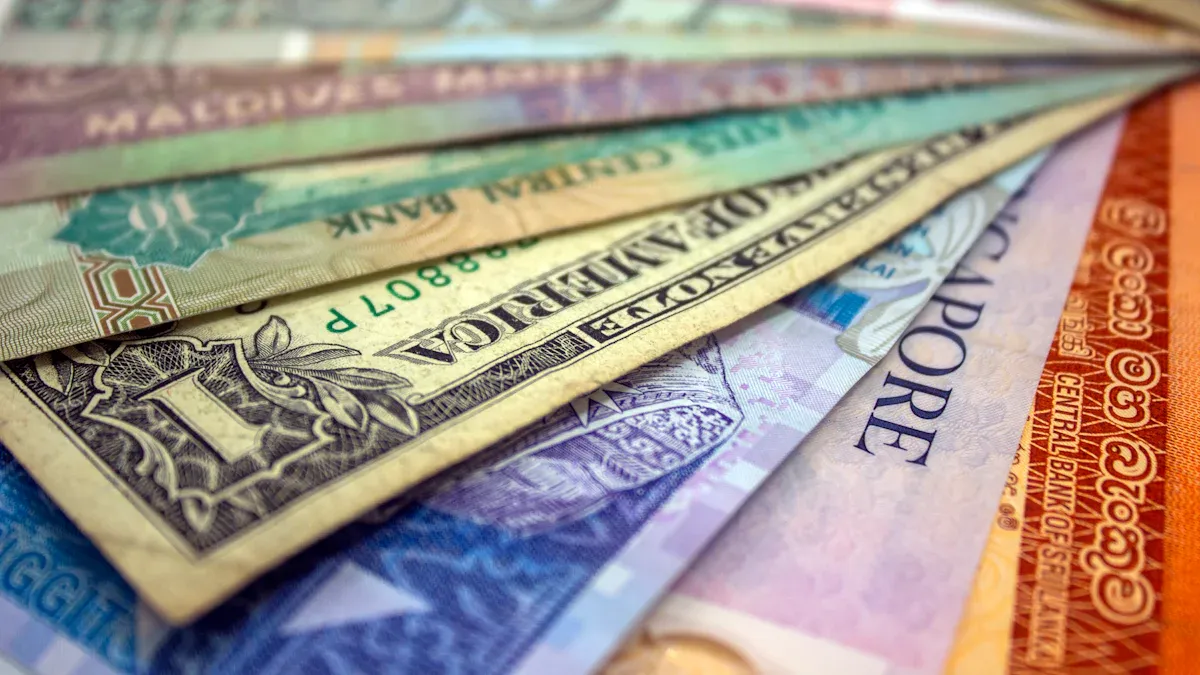
Image Source: pexels
The Kuwaiti Dinar (KWD) holds its position as the strongest currency in the world. This strongest currency consistently maintains a high value against the US Dollar. Recent data from late 2025 highlights the Kuwaiti Dinar’s significant lead over the USD.
| Date | KWD to USD Exchange Rate |
|---|---|
| Dec 29, 2025 | 1 KWD = 3.2579 USD |
| Dec 30, 2025 | 1 KWD = 3.2496 USD |
Other strongest currencies also demonstrate notable value. This group includes the Bahraini Dinar (BHD), Omani Rial (OMR), and the British Pound (GBP). The Bahraini Dinar, for instance, traded at approximately 2.653 USD at the end of 2025.
Key Takeaways
- The Kuwaiti Dinar is the strongest currency. It gets its value from Kuwait’s large oil exports.
- Some currencies, like the Bahraini Dinar, are strong because they are fixed to the US Dollar. This means their value does not change much.
- The Swiss Franc is a safe currency. People trust it when the world economy is not stable.
- A currency’s strength comes from many things. These include a country’s wealth, good money rules, and a stable exchange rate.
When you read “strongest currency,” it helps to treat it as a live FX question: the USD value of 1 unit can move day to day. A quick way to sanity-check numbers is to compare KWD, BHD, OMR, and GBP against USD in one place using BiyaPay’s currency converter, instead of relying on a single historical screenshot or headline rate.
If your next step is actually converting funds or paying across borders, what matters most is the delivered amount and timing. You can review supported routes and payout methods via BiyaPay Send Money, then manage access from the official website or complete setup through register. BiyaPay operates with compliance registrations such as a U.S. MSB and New Zealand FSP.
Ranking the World’s Strongest Currencies
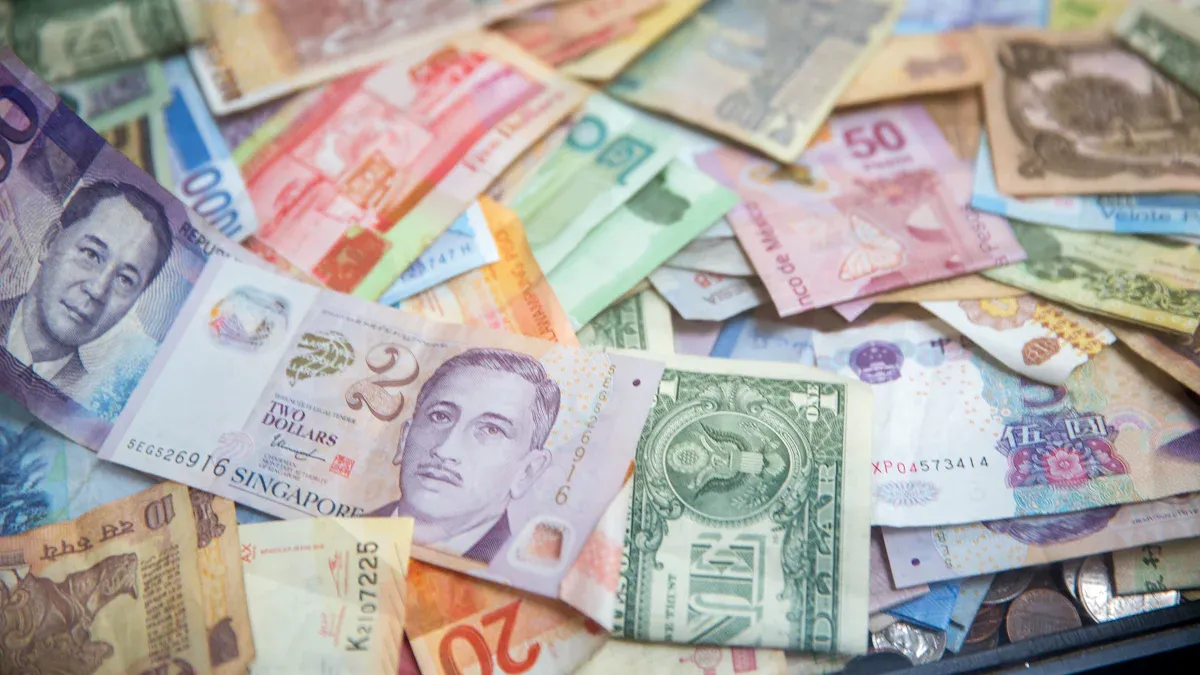
Image Source: unsplash
Several factors, including economic stability, natural resource wealth, and sound fiscal policy, determine a currency’s value. The following currencies consistently rank at the top, demonstrating significant strength against the US Dollar.
Kuwaiti Dinar (KWD): The Strongest Currency in the World
The Kuwaiti Dinar is unequivocally the strongest currency in the world. As of late 2025, data shows one Kuwaiti Dinar trading for over 3.25 USD, a testament to its immense value. The primary reason for this status is Kuwait’s dominant position in the global oil market. The petroleum industry is the backbone of its economy.
| Year | Price Measure | Oil Sector’s Share of GDP |
|---|---|---|
| 2024 | Current Prices | 43.4% |
| 2023 | Current Prices | 47.1% |
This oil wealth, which accounts for over 80% of the country’s exports, generates substantial revenue. However, the Kuwaiti Dinar’s position as the strongest currency in the world is not solely due to oil. The nation employs prudent financial policies to protect its value. The Central Bank of Kuwait (CBK) manages the currency’s exchange rate with a specific strategy.
Kuwait’s Currency Peg Strategy The CBK pegs the Kuwaiti Dinar to a weighted basket of international currencies. This basket includes currencies from Kuwait’s major trade and financial partners. This policy shields the domestic economy from inflation and maintains the dinar’s stability.
This approach, combined with one of the world’s largest sovereign wealth funds, ensures the Kuwaiti Dinar remains the strongest currency in the world. The country’s massive financial reserves prevent any need to devalue the currency, solidifying its standing as the strongest currency. This makes the Kuwaiti Dinar the strongest currency in the world.
Bahraini Dinar (BHD): Pegged to the USD
The Bahraini Dinar (BHD) is another of the world’s strongest currencies, largely due to its fixed exchange rate with the US Dollar. This is achieved through a mechanism known as a currency peg.
A currency peg is a policy where a government fixes its currency’s exchange rate to that of another country’s currency. To maintain this rate, the central bank must hold large foreign exchange reserves to buy or sell its currency as needed.
Bahrain officially pegged its currency to the USD in 2001. The official rate is fixed at 1 BHD = 2.653 USD. This peg provides economic stability and simplifies cross-border transactions. The Central Bank of Bahrain manages substantial foreign exchange reserves to ensure it can defend this fixed rate, making the Bahraini Dinar a consistently strong currency.
Omani Rial (OMR): Oil and Economic Stability
The Omani Rial (OMR) also holds a place among the strongest global currencies. Like its neighbors, Oman’s economy has historically been dependent on oil and gas exports. This resource wealth provides a strong foundation for the Omani Rial. However, the government is actively working to secure its economic future beyond oil through its “Oman Vision 2040” plan.
This long-term strategy focuses on diversifying the economy by developing key sectors:
- Logistics and Aviation: Expanding major seaports and airports to become a regional trade hub.
- Eco-Tourism: Leveraging the nation’s natural beauty and cultural heritage to attract tourism.
- Renewable Energy: Investing in sustainable energy projects to reduce its carbon footprint.
- Digital Transformation: Enhancing connectivity and efficiency through technological innovation.
These diversification efforts, combined with its oil revenue, contribute to the stability and high value of this strong currency.
Jordanian Dinar (JOD): A Stable Fixed Rate
The Jordanian Dinar (JOD) stands out among strong currencies because Jordan does not have the vast oil wealth of its Gulf neighbors. Instead, its currency strength comes from a long-standing fixed exchange rate with the US Dollar. Since 1995, the rate has been pegged at 1 USD = 0.709 JOD.
Jordan maintains this peg through several key strategies:
- High Foreign Reserves: The Central Bank of Jordan holds reserves equivalent to over seven months of imports. These reserves consist of gold, foreign currencies, and marketable securities.
- Monetary Policy: The central bank often aligns its interest rate decisions with the US Federal Reserve to support the peg.
- Foreign Support: The country receives significant financial support and investment from Western partners and Gulf nations.
- Remittances: Jordanians working abroad send back substantial funds, which contribute nearly 9% of the nation’s GDP and bolster its foreign currency supply.
These deliberate policies ensure the stability of the Jordanian Dinar, making it one of the world’s strongest currencies despite regional economic challenges.
Powerful European Currencies

Image Source: unsplash
Europe hosts some of the world’s most influential currencies. While many nations use the euro, two standouts, the British Pound and the Swiss Franc, maintain their own high-value status. The euro is a major world currency, but it does not trade higher than the USD. The euro is different from these other powerful European currencies. The euro is the official currency of 20 of the 27 member states of the European Union, but not the UK or Switzerland. The value of the euro fluctuates based on the economic health of the entire Eurozone. The euro is a significant player, but the British Pound and Swiss Franc are notable for their individual strength. The euro is not considered a stronger currency than the USD.
British Pound (GBP): A Top 5 Strongest Currency
The British Pound (GBP) consistently ranks among the top five strongest currencies globally. It is the official currency of the United Kingdom and is one of the most traded currencies in the world. The British Pound has a long history as a strong currency. Its value remains significant against the US Dollar.
| GBP | USD |
|---|---|
| 1 | 1.34 |
| 10 | 13.44 |
| 100 | 134.37 |
The Bank of England’s monetary policy directly influences the British Pound’s value. Recently, the bank cut its main interest rate to 3.75% as UK inflation slowed to 3.2%. These decisions impact investor confidence and the currency’s attractiveness. A policymaker noted the careful approach to future changes.
“We still think rates are on a gradual downward path,” he said. “But with every cut we make, how much further we go becomes a closer call.”
Swiss Franc (CHF): A Global Safe Haven
The Swiss Franc (CHF) is another of the world’s strong currencies, with an exchange rate where 1 Swiss Franc equals 1.260 USD. The Swiss Franc is widely known as a “safe-haven” currency. During periods of global economic instability, investors move their funds to stable countries like Switzerland. This high demand increases the value of the Swiss Franc, reinforcing its status as the world’s strongest currency for safety.
Why the Swiss Franc Preserves Its Value
Several key factors help the Swiss Franc maintain its position as a uniquely strongest currency. Switzerland’s long-standing political neutrality has created a secure environment for investments, shielding it from regional conflicts. This stability is a major reason for its strength.
The Swiss National Bank (SNB) also plays a crucial role. It uses specific monetary policies to manage the currency’s value and ensure stability. These tools include:
- The SNB policy rate
- Open market operations
- Foreign exchange market interventions
These deliberate policies, combined with the nation’s political and economic stability, make the Swiss Franc a reliable store of value for investors worldwide.
Other Notable Strong Currencies
Beyond the top-ranked currencies, several others hold significant value due to unique economic structures. The Cayman Islands Dollar and the Singapore Dollar are prime examples of how specialized economies can support a strong currency.
Cayman Islands Dollar (KYD): Offshore Finance Hub
The Cayman Islands Dollar (KYD) is a powerful currency due to the nation’s status as a major international financial center. The Cayman Islands Monetary Authority pegs the currency to the US Dollar. This fixed rate ensures stability for the thousands of multinational businesses based there.
The Cayman Islands Dollar has a fixed exchange rate where 1 KYD equals 1.20 USD. This peg was officially established in 1974.
The services sector dominates the Cayman Islands’ economy, accounting for over 85% of its GDP. While finance is the primary driver, other key industries support its economic strength:
- Tourism: The islands attract visitors with pristine beaches and vibrant marine life, generating significant foreign currency earnings.
- Real Estate and Construction: Ongoing development of residential and commercial properties fuels economic expansion.
- Professional Services: Legal and accounting firms provide essential support to the global financial industry.
This specialized economic model makes the KYD a consistently valuable currency.
Singapore Dollar (SGD): A Model of Stability
The Singapore Dollar (SGD) is recognized globally for its stability. While it does not trade higher than the USD, its strength is a testament to Singapore’s sound economic management. The current exchange rate is approximately 1 SGD = 0.7775 USD.
| SGD | USD |
|---|---|
| 1 | 0.78 |
| 10 | 7.77 |
| 100 | 77.75 |
| 1000 | 777.48 |
Unlike other central banks, the Monetary Authority of Singapore (MAS) does not use interest rates as its main policy tool. Instead, it manages the exchange rate. The MAS uses a “Basket, Band, and Crawl” system, allowing the SGD to appreciate gradually against a basket of currencies from its major trading partners. This unique approach has proven highly effective at controlling inflation and has made the Singapore Dollar a uniquely strongest currency for stability. Prudent fiscal policies and consistent investment in infrastructure further reinforce its position.
The world’s strongest currencies demonstrate that a high exchange rate depends on more than economic size. The Kuwaiti Dinar, the strongest currency in the world, derives its value from immense oil exports. The Bahraini Dinar and Omani Rial also leverage resource wealth and maintain a fixed exchange rate with the US Dollar. Other powerful currencies, like the British Pound and Swiss Franc, showcase how currency strength also stems from financial stability. Ultimately, a strong currency like the Kuwaiti Dinar reflects a combination of resource wealth, sound policy, and a stable exchange rate against the USD.
FAQ
Why is the Kuwaiti Dinar the strongest currency?
The Kuwaiti Dinar’s strength comes from Kuwait’s massive oil wealth. The country is a major global oil exporter. This creates high demand for its currency. Prudent financial policies from its central bank also help maintain the dinar’s high value.
What is a currency peg?
A currency peg is a government policy. It fixes a country’s exchange rate to another currency, like the US Dollar. Central banks must hold large foreign reserves to maintain this fixed rate. This policy provides economic stability for countries like Bahrain and Jordan.
Which currency is considered the safest?
The Swiss Franc (CHF) is widely known as a safe-haven currency. Investors trust Switzerland’s political neutrality and economic stability. During global uncertainty, demand for the CHF increases, which strengthens its value and reinforces its reputation for safety.
How can someone get the best value in currency exchange?
Travelers and investors often find the best value in currency exchange by using reputable banks or official exchange services. Comparing rates is essential. Exchange rates fluctuate, so checking them before a transaction helps secure a favorable deal.
*This article is provided for general information purposes and does not constitute legal, tax or other professional advice from BiyaPay or its subsidiaries and its affiliates, and it is not intended as a substitute for obtaining advice from a financial advisor or any other professional.
We make no representations, warranties or warranties, express or implied, as to the accuracy, completeness or timeliness of the contents of this publication.
Related Blogs of

Reasons for Cross-Border Payment Account Closure (Account Shutdown) and How to Respond: Essential Anti-Account-Ban Guide for Foreign Trade Professionals

Funds Frozen for Half a Year? Administrative Reconsideration After 'Involved Account' and Cross-Border Multi-Currency Account Backup Solutions

International Students Returning Home After Graduation: How to Most Conveniently and Cost-Effectively Bring Back the Few Thousand USD Left in Your US Bank Card?


Cross-Border Merchants' Dilemma: Received Crypto Payments Containing Gray Assets — How to Clean and Comply Through a Compliant Platform?
Choose Country or Region to Read Local Blog
 Australia
 Austria
 Belgium
 Canada
 Cyprus
 Czech Republic
 Denmark
 Estonia
 Finland
 France
 Germany
 Greece
 Hong Kong
 India
India Indonesia
 Ireland
 Italy
Italy Japan
Japan Latvia
 Lithuania
 Luxembourg
 Malaysia
 Malta
Malta Morocco
 Nepal
Nepal Netherlands
 New Zealand
 Norway
 Pakistan
 Philippines
 Poland
 Portugal
 Romania
 Singapore
 Slovakia
 Slovenia
 South Africa
 South Korea
 Spain
Spain Sweden
 Thailand
 The United States
 Turkey
 United Arab Emirates
 United Kingdom
 Vietnam
Contact Us




BIYA GLOBAL LLC is registered with the Financial Crimes Enforcement Network (FinCEN), an agency under the U.S. Department of the Treasury, as a Money Services Business (MSB), with registration number 31000218637349, and regulated by the Financial Crimes Enforcement Network (FinCEN).
BIYA GLOBAL LIMITED is a registered Financial Service Provider (FSP) in New Zealand, with registration number FSP1007221, and is also a registered member of the Financial Services Complaints Limited (FSCL), an independent dispute resolution scheme in New Zealand.