PayPal Payment Process Tutorial: All Fees Explained Clearly





Image Source: unsplash
When you shop online and use PayPal to pay merchants, it is usually free. However, if your PayPal payment involves currency conversion or personal transfers, fees may apply fees. As the world’s leading payment platform, PayPal has an enormous transaction volume.
- In 2023, total user payment volume reached $1.53 trillion.
- In 2024, total payment volume set a new record of $1.68 trillion.
Understanding when these fees occur can help you make smarter payment choices.
Key Takeaways
- For online shopping, PayPal usually does not charge buyers fees, but currency conversion incurs about 4% fees.
- For transfers to friends and family, using PayPal balance or linked bank account is usually free, but using credit card or cross-border transfers incurs fees.
- To avoid unnecessary currency conversion fees, choose “Pay in the currency invoiced by the seller” for cross-border shopping.
- “Friends and Family” transfers do not provide buyer protection and are only suitable for trusted non-commercial personal transactions; always choose “Goods and Services” for purchases to get protection.
PayPal Payment Operation Guide
Image Source: unsplash
Understanding the PayPal payment process is very simple. You just need to follow the corresponding steps based on different usage scenarios. Below, we will break down the two most core scenarios for you: online shopping checkout and transfers to friends and family.
Scenario 1: Online Shopping Checkout
When you shop on overseas e-commerce sites that support PayPal, the checkout process is usually very smooth. PayPal acts as a secure payment gateway, allowing you to avoid entering bank card information on every site.
Operation steps are as follows:
- Select payment method: On the merchant’s cart or checkout page, you will see multiple payment options. Please select “PayPal” as your payment method here.
- Redirect to PayPal: After clicking continue, the site will pop up a secure PayPal login window or direct you to the PayPal official site.
- Log in and confirm information: On the PayPal page, enter your email and password to log in to your account. After logging in, you will see an order confirmation page clearly listing the merchant name, product information, and payment amount.
Important tip: At this point, PayPal has already obtained your shipping address and other information from the merchant. You do not need to fill it again — just verify the information is accurate.
- Select funding source: You can choose to pay using PayPal balance, linked bank account (e.g., your associated Hong Kong licensed bank account), or credit card.
- Complete payment: After verifying all information is correct, click “Pay” or “Pay Now” button. After successful payment, the page will display final confirmation and provide a button to return to the merchant site. At this point, your entire PayPal payment shopping process is complete.
Scenario 2: Transfer to Personal Friends and Family
In addition to shopping, you can also use PayPal to transfer money to friends and family worldwide. The entry point and fee rules for this operation are completely different from shopping, so pay special attention.
You can initiate transfers mainly through the following two ways:
- Via website operation
- Log in to your PayPal account, find and click Send & Request in the top navigation bar.
- Enter recipient information, which can be the recipient’s name, PayPal username, email, or mobile number.
- Enter the amount you want to transfer and select the corresponding currency. You can also add a note here.
- Select payment type: This is the most critical step. You need to clearly choose whether the transfer is for “Friends and Family” or “Goods and Services”.
- Select your payment funding source, then click “Next”.
- Finally, carefully review all transfer information and click “Send Payment Now” after confirming no errors.
- Via mobile app operation
- Open the PayPal app and click the “Send/Request” button at the bottom of the home screen.
- Enter recipient information or select directly from your phone contacts.
- Enter amount and currency, then click “Next”.
- Similarly, you need to select the correct payment type here (“Friends and Family” or “Goods and Services”).
- After reviewing information, click “Send” to complete.
How to distinguish transfer types? This choice directly affects fees and transaction protection.
- Friends and Family: Suitable for everyday money exchanges between you and family/friends, such as gifting, splitting bills, etc. This type of PayPal payment usually has lower fees but no PayPal buyer protection.
- Goods and Services: Suitable for purchasing goods or services from others. Choosing this provides PayPal buyer protection, but the recipient pays a fee.
Mastering these two scenario operations allows you to confidently use PayPal for global payments. Next, we will dive into the fee issues everyone cares about most.
Full Breakdown of PayPal Fees
Image Source: pexels
Now that you have mastered PayPal payment operations, it is time to deeply understand the core issue: fees. The fee structure is central to PayPal’s profitability, but for users, clearly understanding it avoids unnecessary expenses. We will thoroughly analyze how fees arise from both buyer and seller perspectives.
Shopping Payments: Buyer Fee Breakdown
First, answer the question everyone cares about most: Do you as a buyer need to pay fees for online shopping?
Core answer: Usually no. When you use PayPal to purchase goods or services on e-commerce sites, the transaction cost is borne by the seller (merchant). Therefore, in most cases, the product price you see is the final amount you pay — PayPal does not charge you extra service fees.
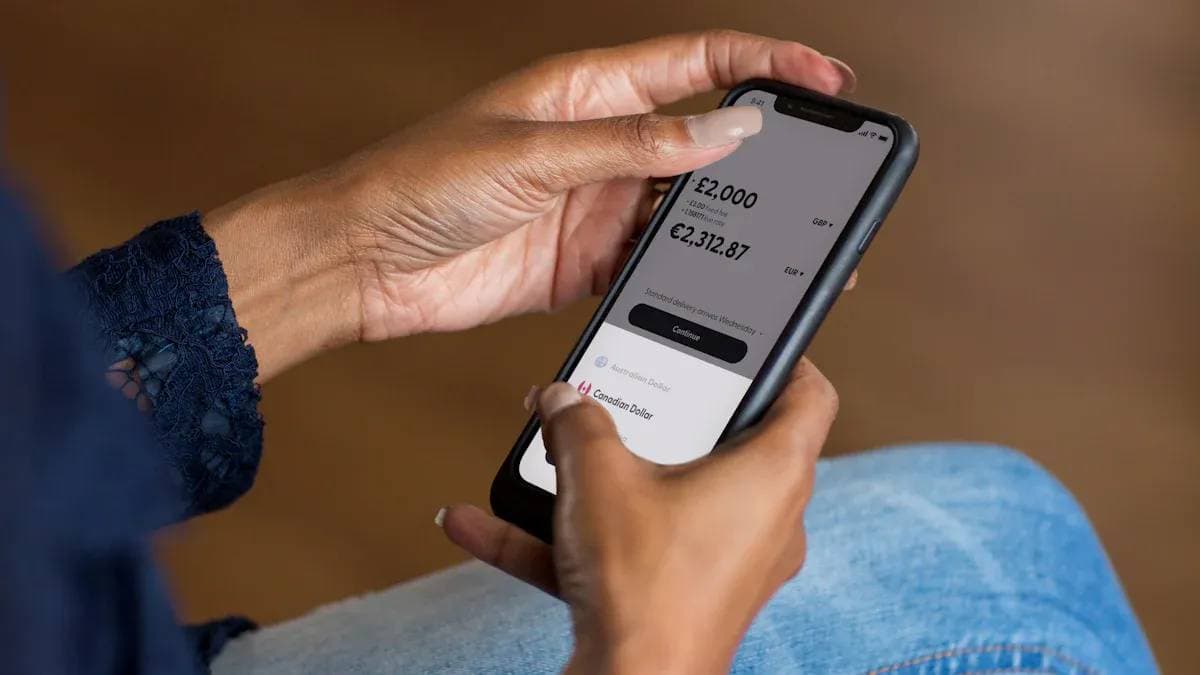
However, there are always exceptions. You may incur fees in one specific case: when currency conversion is involved.
- When does currency conversion occur? Suppose you shop on a US site with products priced in USD, but your PayPal account is mainly linked to HKD funding sources. During payment, PayPal needs to convert HKD to USD.
- How much is the currency conversion fee? When your PayPal payment involves currency conversion, PayPal adds a currency conversion spread on top of its base rate. This fee is usually around 4%. The fee is directly included in your final payment amount — you can see the final rate and amount on the payment confirmation page.
In practice, extra costs often arise not from choosing PayPal itself, but from accepting a platform’s default exchange rate without prior comparison. This is especially common in cross-border shopping, overseas subscriptions, or multi-currency transfers, where small exchange differences can accumulate into noticeable fees.
In such scenarios, users can refer to BiyaPay’s free currency rate comparison tool before completing a payment. It allows you to check real-time conversion results between major fiat currencies and estimate whether letting a payment platform handle the conversion is cost-effective, or if settling directly in the merchant’s currency makes more sense.
From a broader perspective, BiyaPay is positioned as a multi-asset wallet covering cross-border payments, transfers, trading, and fund management. For users who regularly deal with international payments, its cross-border remittance service can be used alongside the rate tool to evaluate total costs, including fees and settlement time. Related features and access points are available via the official website and the event center, without relying on RMB-based accounts.
So, the conclusion is clear: As long as your payment does not involve currency conversion, online shopping as a buyer is free.
Personal Transfers: Domestic and Cross-Border Fees
Personal transfer fee rules are much more complex than shopping, mainly depending on funding source and transfer destination.
Domestic Transfers in Mainland China
If you transfer to friends and family also in mainland China, fees depend entirely on your funding source.
| Funding Source | Fee Rate | Fixed Fee |
|---|---|---|
| PayPal balance or linked bank account | 0% | None |
| Credit or debit card | 2.90% | + currency-based fixed fee (e.g., $0.30 USD) |
As shown, using PayPal balance or linked bank account (e.g., your associated Hong Kong licensed bank account) for transfers is completely free. But if you use credit or debit card as funding, you pay a fee.
Cross-Border Transfers
When transferring to friends in other countries or regions, fees increase significantly. Cross-border transfer costs usually consist of multiple parts:
- Transfer fee: Base fee, usually a percentage of the amount, up to 4.49%.
- International transaction surcharge: PayPal adds a fixed international transaction fee for all cross-border transactions, about 1.50%.
- Currency conversion fee: If the transfer involves different currencies (e.g., you pay in USD, recipient receives EUR), PayPal charges another 3% to 4% conversion spread.
Note: These fees are cumulative, meaning total fees for a cross-border transfer can be very high. Before initiating, carefully check the fee details PayPal provides on the confirmation page.
Merchant Receipts: Who Bears the Cost
Now, reveal why buyer shopping is usually free — because the cost is borne by the merchant. For all commercial payments received via “Goods and Services,” PayPal charges the recipient (merchant) a fee.
This is PayPal’s standard commercial fee structure for US merchants, giving you a clear view of merchant costs:
- Standard PayPal payment:
3.49% + $0.49 USD - Credit/debit card payment:
2.99% + $0.49 USD - Using other payment methods (e.g., Apple Pay):
2.59% + $0.49 USD
Merchants pay a “percentage commission + fixed fee” combination to PayPal for each customer payment received. This is part of merchant operating costs, usually factored into product pricing.
Additionally, PayPal offers different rate plans for high-sales-volume businesses or certain organizations (e.g., nonprofits). But for most consumers, remember: Your shopping payment already includes the transaction costs merchants bear — you pay no extra.
How to Avoid Unnecessary Fees
After understanding PayPal’s fee structure, you can save money with simple tips. Mastering these lets you enjoy convenient payments while avoiding unnecessary fees.
Tip 1: Optimize Settlement Currency
The core tip to avoid fees when shopping on overseas sites is to prevent PayPal from converting currency for you.
When paying overseas merchants via PayPal, PayPal defaults to its own exchange rate, usually including about 4% currency conversion spread. In contrast, your credit card company (e.g., Mastercard or Visa) often provides better rates.
The smartest approach is to manually select payment in the merchant’s local currency at checkout.
Operation method:
- On the PayPal payment confirmation page, find the exchange rate display option (usually “View exchange rate” or “Conversion options”).
- Click to enter and select “Pay in the currency invoiced by the seller”.
- This way, PayPal deducts foreign currency directly from your credit card, letting your card issuer handle conversion and saving you considerable fees.
This simple operation is one of the most effective money-saving methods for cross-border shopping.
Tip 2: Use Transfer Types Wisely
Correctly selecting transfer type for personal transfers is crucial, as it directly determines fees and protection.
- Friends and Family This option suits non-commercial money exchanges with family/friends, like splitting meals or gifting red envelopes. Using PayPal balance or linked bank account (e.g., your associated Hong Kong licensed bank account) for domestic Friends and Family transfers is usually free. But remember, this offers no PayPal buyer protection.
- Goods and Services Choose this when purchasing any goods or services from others. Though the recipient pays a fee, you as buyer get PayPal buyer protection. If the item is not received or significantly not as described, you can file a dispute via PayPal to recover funds.
⚠️ Important warning: Do not abuse “Friends and Family” Some sellers request “Friends and Family” for commercial transactions to avoid fees. This severely violates PayPal’s user agreement. Doing so poses huge risks:
- Lose protection: No buyer protection — if scammed, funds are almost unrecoverable.
- Account risk: PayPal may restrict or ban your account upon detection.
For transaction safety, always select the correct type based on reality.
In summary, PayPal as a shopping payment tool is efficient and usually free for buyers like you. However, for personal transfers or foreign currency payments, watch the fee structure to avoid unnecessary expenses.
Money-saving key: Remember, for cross-border shopping, choosing “Pay in the currency invoiced by the seller” is the most effective way to avoid PayPal currency conversion fees.
Mastering this knowledge lets you use PayPal more confidently and economically for global payments.
FAQ
Why was I still charged fees for online shopping?
You likely encountered currency conversion. If the product is priced in foreign currency, PayPal charges about 4% on conversion. You can choose to settle in the merchant’s currency at payment, letting your credit card company handle conversion — usually more cost-effective.
Is it safe to link bank or credit card to PayPal?
Yes, it is usually safe. PayPal as payment intermediary offers these benefits:
- Your bank card information is not directly exposed to merchants.
- This reduces risk of your financial information leaking across multiple sites.
If scammed using “Friends and Family,” can I get a refund?
No. Choosing “Friends and Family” means waiving PayPal buyer protection. This type is designed for trusted personal transfers, not commercial transactions. Once paid, funds are hard to recover — use cautiously.
*This article is provided for general information purposes and does not constitute legal, tax or other professional advice from BiyaPay or its subsidiaries and its affiliates, and it is not intended as a substitute for obtaining advice from a financial advisor or any other professional.
We make no representations, warranties or warranties, express or implied, as to the accuracy, completeness or timeliness of the contents of this publication.
Related Blogs of
Patreon/OnlyFans and Other Overseas Creator Platforms Payout: Ultimate Tricks to Bypass Domestic Bank Forex Review for Withdrawal

Run Local Large Models or Call APIs? 2026 AI Development Cost and Payment Method Comparison

YouTube Video Monetization: How Overseas Creators Convert Received USD Ad Revenue to Chinese Living Expenses the Fastest Way?
How Do European International Students Pay the Final Installment for a Used Car? Digital Payment Methods to Avoid SEPA Transfer Delays Caused by Weekend Bank Closures

Choose Country or Region to Read Local Blog
 Australia
 Austria
 Belgium
 Canada
 Cyprus
 Czech Republic
 Denmark
 Estonia
 Finland
 France
 Germany
 Greece
 Hong Kong
 India
India Indonesia
 Ireland
 Italy
Italy Japan
Japan Latvia
 Lithuania
 Luxembourg
 Malaysia
 Malta
Malta Morocco
 Nepal
Nepal Netherlands
 New Zealand
 Norway
 Pakistan
 Philippines
 Poland
 Portugal
 Romania
 Singapore
 Slovakia
 Slovenia
 South Africa
 South Korea
 Spain
Spain Sweden
 Thailand
 The United States
 Turkey
 United Arab Emirates
 United Kingdom
 Vietnam
Contact Us




BIYA GLOBAL LLC is registered with the Financial Crimes Enforcement Network (FinCEN), an agency under the U.S. Department of the Treasury, as a Money Services Business (MSB), with registration number 31000218637349, and regulated by the Financial Crimes Enforcement Network (FinCEN).
BIYA GLOBAL LIMITED is a registered Financial Service Provider (FSP) in New Zealand, with registration number FSP1007221, and is also a registered member of the Financial Services Complaints Limited (FSCL), an independent dispute resolution scheme in New Zealand.