How Mainland Chinese Can Apply for a Hong Kong Bank Card: In-Depth Analysis of HSBC and BOC Hong Kong Account Opening Requirements




Image Source: unsplash
You can absolutely apply for a Hong Kong bank card. Successful application is not out of reach — the core lies in preparing three key elements.
- Complete identity proof
- Valid address proof
- Clear and reasonable account opening purpose
This is the starting point of any Hong Kong bank account opening guide.
Key Takeaways
- Applying for a Hong Kong bank card requires preparing identity proof, address proof, and an explanation of account purpose.
- HSBC account opening usually requires visiting Hong Kong in person — HSBC One accounts have no minimum deposit requirement.
- Bank of China (Hong Kong) offers mainland witness account opening service, convenient for mainland residents.
- After opening, deposit a small amount of cash at an ATM and change the password to activate the account.
- Choosing which bank and account type depends on your financial situation, convenience of visiting Hong Kong, and account usage.
Hong Kong Bank Account Opening Guide: General Material Preparation
Preparing complete materials is the first step to successful account opening. Bank staff will carefully review every document. This Hong Kong bank account opening guide will help you understand the core materials you must prepare.
Core Identity Proof: ID Card and Mainland Travel Permit
You need to provide valid personal identity documents. Banks typically require the following two:
- Resident ID card
- Mainland Travel Permit for Hong Kong and Macao (EEP)
Important tip Ensure all documents are within validity, preferably with at least 6 months remaining. While mainland Chinese residents mainly use the travel permit, your passport can serve as supplementary identity proof. For non-Hong Kong residents, the passport is the primary identity verification document.
Key Address Proof: Bank-Accepted Types and Standards
Address proof is another focus of bank review. You need to provide a document issued within the last 3 months clearly showing your name and residential address.
Commonly accepted proof documents by banks include:
Many banks now accept printed electronic bills. The key is that the name and address on the document must exactly match your ID card information, and it cannot be a P.O. Box address. Any mismatch may lead to application rejection.
Source of Funds and Account Purpose Explanation
Bank staff will ask about your account opening purpose. You need to provide a clear and reasonable explanation. Common purposes include savings, overseas investments (e.g., investing in U.S. stocks), or paying overseas bills.
For example, you can explain that the account is for convenient investing, needing a Hong Kong account to manage funds and using platforms like Biyapay for deposits and withdrawals. To prove legitimate fund sources, banks may require supporting documents like employment proof or recent payslips. Preparing these makes your Hong Kong bank account opening guide smoother.
A common reason people get rejected isn’t missing paperwork—it’s that the purpose sounds vague and the money flow doesn’t look verifiable. A stronger (and more “bank-friendly”) explanation is one that’s specific and auditable: for example, savings + overseas spending/bill payments, or investment funding with a clear source of funds (salary slips, tax records, contracts/invoices, or platform statements that match your story).
If your real need is “cross-border transfers + multi-currency management,” it helps to plan the route in advance. You can first sanity-check outcomes with BiyaPay’s rate converter, then review available rails, timing, and fee presentation on BiyaPay’s international remittance page. And if investing is part of your plan, BiyaPay’s U.S./HK stock entry (supports USDT trading) is an example of a concrete use case you can align with your account-opening narrative—much stronger than simply saying “I want an offshore account.”
In short: keep the purpose specific, keep the amounts reasonable, and make sure your supporting documents can “connect the dots.”
HSBC Account Opening Requirements and Process
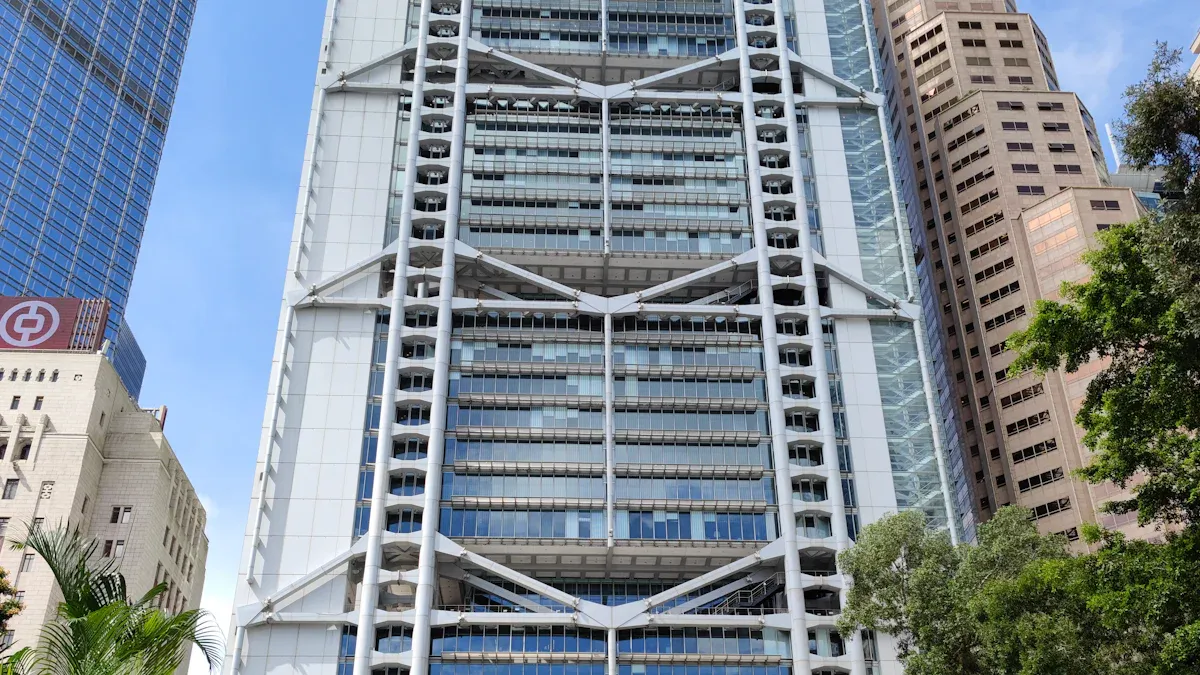
Image Source: unsplash
HSBC, as a globally renowned financial institution, offers strong international usability and is the top choice for many mainland residents configuring overseas assets. If you plan to apply, understanding its account types and specific process is crucial.
Account Type Selection: HSBC One vs. Premier
HSBC mainly offers two accounts for individual customers: HSBC One and HSBC Premier. Choose based on your financial situation and needs.
- HSBC One This is a comprehensive banking account ideal for beginners. Its biggest advantage is no minimum deposit requirement, with no account management fees for low balances.
- HSBC Premier This is a higher-tier account for high-net-worth clients. It provides dedicated relationship managers and global banking services. To open this account, maintain total relationship balance of at least approximately 19,050 USD (or equivalent).
Selection Advice: If you just need a basic Hong Kong account for savings, transfers, or small investments, HSBC One fully meets your needs. If you have substantial assets and want personalized wealth management services, Premier is more suitable.
Account Opening Requirements: Deposit Thresholds and Application Methods
After clarifying account types, understand specific application conditions. Besides the general materials mentioned earlier, HSBC has clear guidelines on application methods.
For deposit thresholds, HSBC One has no strict requirement, while Premier requires maintaining about 19,050 USD in assets.
Regarding application methods, note:
Although HSBC offers a mobile app, its online account opening primarily targets Hong Kong local residents. For mainland Chinese residents, the most reliable and highest-success method is visiting a Hong Kong branch in person.
Thus, plan a trip to Hong Kong. Recommend booking in advance via HSBC Hong Kong website to save significant waiting time. Usually book at least two business days ahead.
Application Process Details: In-Person Branch vs. App Opening
Let’s break down the two application methods in detail. Though we strongly recommend in-person branch visits, understanding the app process gives fuller insight.
1. In-Person Branch Application (Recommended)
This is the most mainstream and highest-success method. The complete Hong Kong bank account opening guide process is:
- Book and Prepare Materials
- Book opening time and specific branch on HSBC Hong Kong website.
- Prepare your ID card, Mainland Travel Permit, and entry slip.
- If planning investment account, bring address proof from last three months.
- Ensure your phone has international roaming or can receive SMS in Hong Kong for on-site verification.
- Visit Branch
- Arrive at booked time, explain purpose to staff, e.g., savings and U.S. stock investing.
- Relationship manager reviews documents and conducts simple interview.
- Upon approval, manager assists with form filling and information confirmation. Process may take one to two hours.
- Activate Account
- Upon success, receive bank card and initial password letter on-site.
- Go to branch ATM, deposit cash to activate. Counter accepts HKD 100 or higher denominations, prepare about 13 USD equivalent HKD cash.
- Follow ATM prompts, log in with initial password, then change to your new password. This step officially activates your account.
2. Mobile App Opening (For Reference Only)
In theory, HSBC HK Mobile Banking app supports online opening, but conditions are strict and success rate low for mainland residents.
- Basic Requirements: Be over 18, hold valid ID and travel permit, and be physically in Hong Kong during opening due to GPS verification.
- Technical Preparation: Phone needs NFC for document reading.
- Failure Risk: Due to document upload, face recognition, or background checks, app rejection rates may reach 30% to 50%.
Given uncertainty, we do not recommend it as primary option.
Finally, here are some conveniently located HSBC branches popular with mainland visitors for reference. Note Greater Bay Area services currently require appointments.
| Branch Name | Address |
|---|---|
| Mong Kok Branch | HSBC Mong Kok Building, 673 Nathan Road, Mong Kok, Kowloon |
| Tsim Sha Tsui Branch | HSBC Tsim Sha Tsui Building, 82–84 Nathan Road, Tsim Sha Tsui, Kowloon |
| Des Voeux Road Central Branch | China Life Tower, 141 Des Voeux Road Central, Sheung Wan, Hong Kong |
| Tsuen Wan Branch | Foo Wah Centre, 210 Castle Peak Road, Tsuen Wan, New Territories |
| Sheung Shui Branch | 134–136 San Fung Avenue, Shek Wu Hui, Sheung Shui, New Territories |
Bank of China (Hong Kong) Account Opening Requirements and Process
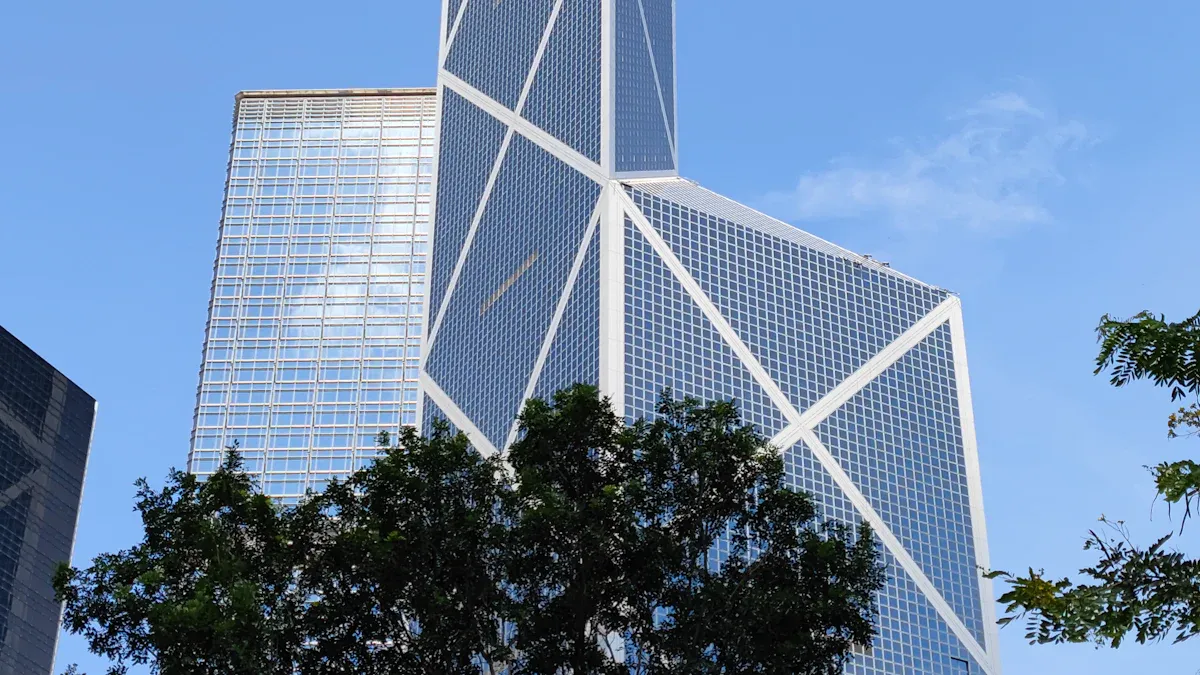
Image Source: unsplash
Compared to HSBC, Bank of China (Hong Kong) offers mainland residents another convenient path. If visiting Hong Kong in person is inconvenient, BOC Hong Kong’s policies may brighten your options.
Account Type Selection: i-Free Banking vs. Wealth Management
Like HSBC, start by choosing the right account type. BOC Hong Kong mainly offers two personal integrated accounts.
- i-Free Banking This is BOC Hong Kong’s basic account with no minimum deposit requirement and no monthly fees. Ideal for first-time Hong Kong account users, meeting daily savings, transfers, and payment needs.
- Wealth Management This is VIP service for high-net-worth clients. To open, maintain daily average total relationship balance of at least approximately 25,500 USD. In return, get dedicated relationship manager for “one-on-one” professional service.
Exclusive Advantages of Wealth Management Wealth Management clients access exclusive investment products. For example, the bank once launched online banking exclusive wealth products with expected yield up to 5.1%, higher than counter products. Such products typically have specific thresholds and terms.
- Minimum subscription : Approximately 7,000 USD (RMB 50,000)
- Investment term : 125 days
Selection Advice: If your main purpose is a zero-cost Hong Kong account for daily transactions, “i-Free Banking” suffices. If you have higher assets and want professional investment advice and exclusive products, “Wealth Management” is better.
Account Opening Requirements: Visit Hong Kong or Mainland Witness
BOC Hong Kong’s biggest feature is flexible application methods. Besides general identity and address proofs, it offers two options.
- Visit Hong Kong in person : Traditional method — go to any Hong Kong branch.
- Mainland witness account opening : BOC Hong Kong’s unique convenient service. Submit application at designated mainland China branches, where staff witness your identity and documents, then forward to Hong Kong for approval.
Core Difference Convenience of visiting Hong Kong determines your method. If no short-term Hong Kong plans, mainland witness opening saves significant time and travel costs.
Two Application Processes: Hong Kong Visit vs. Mainland Branch
After understanding the two methods, let’s detail the specific steps.
1. Visit Hong Kong Branch
Similar to other Hong Kong bank cards — efficient and direct.
- Prepare Materials : Bring ID card, travel permit, entry slip, and address proof.
- Go to Branch : Recommend booking in advance via BOC Hong Kong mobile app or website to avoid long queues.
- Handle Procedures : Explain purpose to manager, e.g., savings or U.S. stock investing. Manager reviews documents and assists application.
- Activate Account : Upon approval, usually receive card on-site. Then deposit small cash (e.g., 13 USD equivalent HKD) at ATM and change password to activate.
2. Mainland Branch Witness Opening
This is many mainland users’ favored Hong Kong bank account opening guide — apply without leaving the mainland.
- Consult and Book : Contact designated Bank of China branch in your city, confirm service availability, and book.
- Submit Application : On booked day, bring all required materials to mainland branch. Staff review documents and have you sign forms. They act as “witnesses” confirming identity.
- Await Approval : Mainland branch mails application to Hong Kong for review. This requires patience due to cross-border process — typically about 30 business days.
- Receive Card : Upon approval, BOC Hong Kong mails card and password letter separately to your provided address. Receive, activate, and start using.
For convenience, here are some mainland cities offering witness opening — check specific branches with official bank announcements.
| Region | Some Cities |
|---|---|
| South China | Guangzhou, Shenzhen, Zhuhai, Foshan, Dongguan |
| East China | Shanghai, Hangzhou, Nanjing, Suzhou |
| North China | Beijing, Tianjin |
| Other Regions | Chongqing, Chengdu, Xi’an, etc. |
Now you have a clear understanding of applying for a Hong Kong bank card. HSBC accounts are more international but usually require visiting Hong Kong in person. Bank of China (Hong Kong) offers convenient mainland witness opening option.
Your choice depends on three key points: your financial situation, convenience of visiting Hong Kong, and future account usage.
For example, HSBC premium customers enjoy fee-free ATM use in mainland China. Meanwhile, online transfer fees differ — HSBC around 6.5 USD, BOC Hong Kong around 8.5 USD. These details are worth considering. Finally remember, preparing complete, genuine, and valid materials is always the foundation of successful account opening.
FAQ
We have compiled some common questions you may encounter during account opening to help you.
Can I open without an investment account?
Of course. Clearly tell the bank manager your main purpose is savings and daily transfers. Then the bank will not enable stock or fund investment features, making the application simpler.
Do I need to deposit money immediately after opening?
Yes, usually. After success, deposit small cash (e.g., 13 USD equivalent HKD) at the bank’s ATM to activate. This step also changes your initial password, officially enabling the account.
What if I have no utility bills?
You can provide other documents as address proof. Banks usually accept recent three months’ credit card statements or landline bills. The key is name and address exactly matching your ID card information.
Is there a minimum deposit requirement?
This depends on account type. Basic accounts like HSBC One and BOC Hong Kong i-Free Banking have no minimum deposit requirement. But premium accounts like Premier require maintaining about 19,050 USD or more in assets.
*This article is provided for general information purposes and does not constitute legal, tax or other professional advice from BiyaPay or its subsidiaries and its affiliates, and it is not intended as a substitute for obtaining advice from a financial advisor or any other professional.
We make no representations, warranties or warranties, express or implied, as to the accuracy, completeness or timeliness of the contents of this publication.
Related Blogs of
YouTube Video Monetization: How Overseas Creators Convert Received USD Ad Revenue to Chinese Living Expenses the Fastest Way?


Capital Preparation in Early Stages of Cross-Border M&A: How Enterprises Safely Transfer Millions in USD Deposits to Overseas Trust Escrow Accounts?


How to Write Remittance Notes to Avoid Bank Risk Control Interception? 2026 Cross-Border Remittance Compliance Guide & Sensitive Words Avoidance

Enterprise Overseas Payroll Compliance and Tax Planning: How to Use Multi-Asset Payroll Platforms to Reduce Cross-Border Employment Costs?

Choose Country or Region to Read Local Blog
 Australia
 Austria
 Belgium
 Canada
 Cyprus
 Czech Republic
 Denmark
 Estonia
 Finland
 France
 Germany
 Greece
 Hong Kong
 India
India Indonesia
 Ireland
 Italy
Italy Japan
Japan Latvia
 Lithuania
 Luxembourg
 Malaysia
 Malta
Malta Morocco
 Nepal
Nepal Netherlands
 New Zealand
 Norway
 Pakistan
 Philippines
 Poland
 Portugal
 Romania
 Singapore
 Slovakia
 Slovenia
 South Africa
 South Korea
 Spain
Spain Sweden
 Thailand
 The United States
 Turkey
 United Arab Emirates
 United Kingdom
 Vietnam
Contact Us




BIYA GLOBAL LLC is registered with the Financial Crimes Enforcement Network (FinCEN), an agency under the U.S. Department of the Treasury, as a Money Services Business (MSB), with registration number 31000218637349, and regulated by the Financial Crimes Enforcement Network (FinCEN).
BIYA GLOBAL LIMITED is a registered Financial Service Provider (FSP) in New Zealand, with registration number FSP1007221, and is also a registered member of the Financial Services Complaints Limited (FSCL), an independent dispute resolution scheme in New Zealand.