Money Order Explained: Complete Guide and Essential Knowledge for Cross-Border Payments



Image Source: pexels
When you need a payment method that is safer than cash and more reliable than a personal check, consider using a money order.
It is a prepaid payment instrument guaranteed by a bank, post office, or similar institution. You pay the full amount upfront when purchasing it, so it will never bounce like a personal check, protecting the recipient’s interests.
You can use it to pay bills or send personal remittances. For those without bank accounts, it is an important payment tool, with data showing that approximately 3.2% of unbanked individuals use this method to make payments.
Key Takeaways
- A money order is a prepaid payment instrument. It is safer than cash and will not bounce like a check.
- You do not need a bank account to purchase a money order. You can buy one at a post office or retail store.
- Be careful when filling out a money order. Never leave the payee field blank and keep the receipt safe.
- Money orders generally do not expire. However, if left uncashed for a long time, fees may apply.
- If a money order is lost, the receipt is the only way to track it. Always store it securely.
What Is a Money Order and Its Pros and Cons
Understanding how money orders work and their advantages and disadvantages can help you decide if it is the right payment option for you.
Core Definition and How It Works
A money order is essentially a prepaid paper payment instrument. Unlike a personal check, you must pay the full amount in cash or with a debit card when purchasing it, meaning the funds are 100% guaranteed with zero risk of bouncing for the recipient.
To help you clearly understand the differences from other payment methods, refer to the table below:
| Feature | Personal Check | Cashier’s Check | Money Order |
|---|---|---|---|
| Funding Source | Personal bank account | Bank’s own account | Prepaid cash/debit card |
| Fund Guarantee | No guarantee, may bounce | Guaranteed | Guaranteed |
| Issuer | Individual | Bank | Post office, retailers, etc. |
| Per-Item Limit | No limit | No limit | Usually under $1,000 |
Main Advantages: Security, Convenience, Wide Acceptance
Despite being a traditional payment method, the advantages of money orders remain very clear:
- High security: Each money order is trackable and includes anti-fraud features like watermarks or raised amount numbers, effectively preventing fraud and tampering — much safer than mailing cash.
- No bank account required: You can purchase and use a money order without a bank account, providing great convenience for unbanked individuals.
- Wide acceptance: It is broadly accepted, including by government agencies like the IRS, proving its reliability.
Main Disadvantages: Limits, Fees, and Speed
Of course, money orders also have unavoidable drawbacks:
- Amount limits: The maximum per money order is typically $1,000. For larger payments, you must buy multiple, which is cumbersome.
- Slow processing: From purchase and mailing to the recipient cashing it, the process can take days or longer — far slower than electronic transfers.
- Additional fees: You must pay a service fee when purchasing.
In contrast, modern digital payment tools address these pain points. For example, platforms like Biyapay support instant global transfers with much higher limits than traditional money orders and more competitive fees, offering a more efficient and cost-effective option for cross-border payments.
Money Order Purchase and Filling Guide
Image Source: unsplash
Once you decide to use a money order, the next step is to learn how to purchase and fill it out correctly. The process is straightforward, but every detail is critical as it directly affects whether your funds reach the recipient safely.
Purchase Channels and Fee Comparison
You can buy money orders at many locations, including post offices, major retail stores, and banks. Fees and limits vary by channel — choosing the best one can save you money.
The table below clearly compares fees and limits at several common purchase points:
| Purchase Channel | Fee | Maximum Per Order |
|---|---|---|
| Walmart | Usually under $1.00 | $1,000 |
| USPS | $2.35 (up to $500) / $2.55 ($500.01–$1,000) | $1,000 (domestic) |
| 7-Eleven | Varies by location, typically 1–3% | $500 |
| MoneyGram | About $1.25 | $500 |
| Banks (e.g., Chase, Bank of America) | Usually $5.00 | $1,000 |
Important tip: Payment methods When buying a money order, you can usually only use cash or a debit card. Most issuers do not accept credit cards. This is because credit card companies treat such transactions as “cash advances,” which trigger high fees and interest that starts accruing immediately — very costly.
If you need to pay more than $1,000, you must purchase multiple money orders. Also note that under U.S. law, if you buy money orders worth $3,000 or more in one day, the issuer must verify and record your identity.
In comparison, digital payment platforms like Biyapay offer a more modern solution. You can make instant global transfers with limits far exceeding a single money order’s $1,000 cap and more competitive fee structures, providing a more efficient and economical option for cross-border payments.
How to Correctly Fill Out a Money Order
You must be extremely careful when filling out a money order, as any error can invalidate it. Here are the detailed steps:
- Fill in the payee information (Pay to) Clearly write the full name of the individual or company in this field. Be sure to double-check spelling.
Never leave this field blank! If you lose a blank-payee money order, anyone who finds it can fill in their own name and cash it — your money would be irretrievable.
- Fill in your address and memo (purchaser address and note) Enter your address in the “Purchaser address” or “From” field. In the “Memo” or “For” field, briefly note the payment purpose, such as “October rent” or an invoice number. This helps the recipient record the payment and makes it easier for you to verify later.
- Sign on the front (purchaser signature) Sign in the designated spot on the front, usually labeled “Purchaser’s signature,” “Drawer,” or “Signer.” Your signature authorizes payment to the recipient.
Remember: Do not sign on the back — the back is for the recipient to endorse when cashing.
- Detach and securely store the receipt After payment, you receive the money order and a detachable receipt. Immediately separate the receipt and store it in a safe place. This receipt is your proof of purchase with a unique serial number — the only way to track the money order or request a refund if lost.
What if you make a mistake while filling? You cannot alter a money order — any changes will void it. If you err, take the incorrect money order and receipt back to the purchase location for a refund or replacement. There may be a small fee, but this is the safest way to protect your funds.
Money Order Cashing and Usage Notes
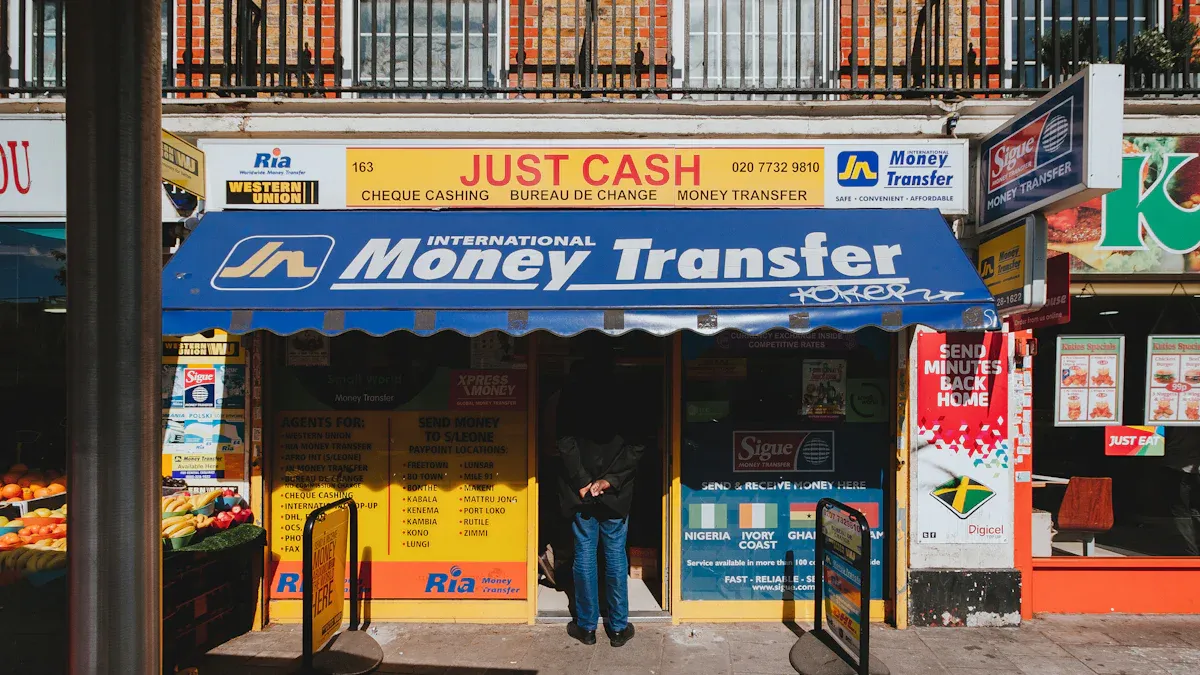
Image Source: unsplash
When you receive a money order, knowing how to cash it safely and understanding its expiration and tracking options is the final step to securing your funds.
How to Cash It
Cashing a money order is simple. First, sign the back — this is called “endorsement.” Once signed, you can cash it.
You can cash a money order at several places:
- Banks and credit unions: If you are a customer, cashing is usually free.
- Post offices: Especially for USPS-issued money orders, the post office is the preferred location.
- Check-cashing stores: Convenient but typically charge a percentage fee.
- Certain retailers: Large stores like Walmart also offer cashing services.
Cashing tip Wherever you go, bring valid photo ID, such as a driver’s license or passport. Non-account banks may charge a fee or refuse service.
Limits, Expiration, and Tracking
When using or receiving money orders, note these key points to avoid issues.
- Expiration: The good news is most money orders never expire. However, if left uncashed long-term, the issuer may start charging service fees.
| Issuer | Expiration Policy | Notes |
|---|---|---|
| USPS | Never expires | No fees for inactivity, but may become unclaimed property. |
| Western Union / MoneyGram | Never expires | Fees typically start 1–3 years after purchase, deducted from principal. |
| Banks | Usually never expires | Policies vary; some charge inactivity fees. |
If left too long (e.g., over 3–7 years), funds may be turned over to the state as unclaimed property. Reclaiming then requires applying to the state — a complex process.
- Tracking and replacement: Your purchase receipt is the only way to track status. If lost or stolen, use the receipt to request tracking or replacement. For example, replacing a USPS money order requires Form PS 6401 and a $8.10 fee, taking about 30 days. To check if cashed, call Western Union (1-800-999-9660) or MoneyGram (1-800-926-9400).
In summary, a money order is a safe and reliable traditional payment method. Despite growing digital payments, it retains unique value in specific scenarios. If you lack a bank account or need to mail bill payments, it offers convenience. It is also much safer than mailing cash.
Its core advantages are:
- Prepaid guarantee: Funds are assured and will never bounce.
- Trackability: Each has a receipt and serial number — lost ones can be tracked or replaced.
These features make it a trustworthy choice for small payments.
FAQ
What if I lose the purchase receipt?
You will have great difficulty tracking or requesting a refund. The receipt is the only proof of payment with the tracking number. Always store it securely until you confirm the recipient has cashed it.
Can I cancel a money order?
Yes, but only if it has not been cashed. Take the receipt back to the original purchase location to request cancellation. This usually involves a fee and may take time to receive the refund.
How do I know if my money order has been cashed?
Use the tracking number on the receipt to check. Most issuers (e.g., USPS, Western Union) offer online or phone inquiry services. This lets you confirm whether the money order has been cashed.
*This article is provided for general information purposes and does not constitute legal, tax or other professional advice from BiyaPay or its subsidiaries and its affiliates, and it is not intended as a substitute for obtaining advice from a financial advisor or any other professional.
We make no representations, warranties or warranties, express or implied, as to the accuracy, completeness or timeliness of the contents of this publication.
Related Blogs of
Avoid These Pitfalls: Tips for Successfully Registering and Using a U.S. PayPal Account

Beginner's Guide to US Individual Income Tax Rates: Understanding Minimum Filing Income Requirements

It's Finally Here: Mainland China Users Can Now Register Wise with ID Card Only

Exclusive for Chinese Users: Longbridge Securities Account Opening Process and Permanent Commission-Free Strategy

Choose Country or Region to Read Local Blog
 Australia
 Austria
 Belgium
 Canada
 Cyprus
 Czech Republic
 Denmark
 Estonia
 Finland
 France
 Germany
 Greece
 Hong Kong
 India
India Indonesia
 Ireland
 Italy
Italy Japan
Japan Latvia
 Lithuania
 Luxembourg
 Malaysia
 Malta
Malta Morocco
 Nepal
Nepal Netherlands
 New Zealand
 Norway
 Pakistan
 Philippines
 Poland
 Portugal
 Romania
 Singapore
 Slovakia
 Slovenia
 South Africa
 South Korea
 Spain
Spain Sweden
 Thailand
 The United States
 Turkey
 United Arab Emirates
 United Kingdom
 Vietnam
Contact Us




BIYA GLOBAL LLC is a licensed entity registered with the U.S. Securities and Exchange Commission (SEC No.: 802-127417); a certified member of the Financial Industry Regulatory Authority (FINRA) (Central Registration Depository CRD No.: 325027); regulated by the Financial Industry Regulatory Authority (FINRA) and the U.S. Securities and Exchange Commission (SEC).
BIYA GLOBAL LLC is registered with the Financial Crimes Enforcement Network (FinCEN), an agency under the U.S. Department of the Treasury, as a Money Services Business (MSB), with registration number 31000218637349, and regulated by the Financial Crimes Enforcement Network (FinCEN).
BIYA GLOBAL LIMITED is a registered Financial Service Provider (FSP) in New Zealand, with registration number FSP1007221, and is also a registered member of the Financial Services Complaints Limited (FSCL), an independent dispute resolution scheme in New Zealand.