Beginner Guide to US Stock Exchanges: Easily Master Account Opening and Trading Essentials




Image Source: pexels
Do you think the barrier to investing in US stock exchanges is very high? In fact, the entire process is much simpler than you imagine. Although recent retail investor behavior in some Asian markets has changed:
- Korean retail investors became net sellers of US stocks for the first time in May.
- Japanese accounts became net sellers of US exchange-traded funds.
- The number of traders in Singapore buying US stocks dropped by a quarter month-over-month in May.
However, from a long-term perspective, market returns remain attractive. Taking the S&P 500 index as an example, the average annualized return over the past decade demonstrates its growth potential.
| Period | Average Annualized Stock Market Return | Inflation-Adjusted Average Annualized Stock Market Return |
|---|---|---|
| 10 Years (2014 to 2024) | 11.3% | 8% |
This article will help you build confidence and take the crucial first step.
Key Points
- Choosing the right broker and account type is the first step in investing in US stocks; ensure the broker is regulated by FINRA and SIPC.
- US stock trading has unique rules, such as T+0 trading and no price limits; beginners should start with cash accounts.
- Non-US resident investors can exempt capital gains tax by filling out the W-8BEN form, with preferential dividend tax rates.
- Understanding the New York Stock Exchange, Nasdaq, and major market indices helps you better grasp the market.
- Investing in US stocks has low barriers; start small and practice with paper trading to gain experience.
Account Opening Preparation: Choosing Broker and Account Type
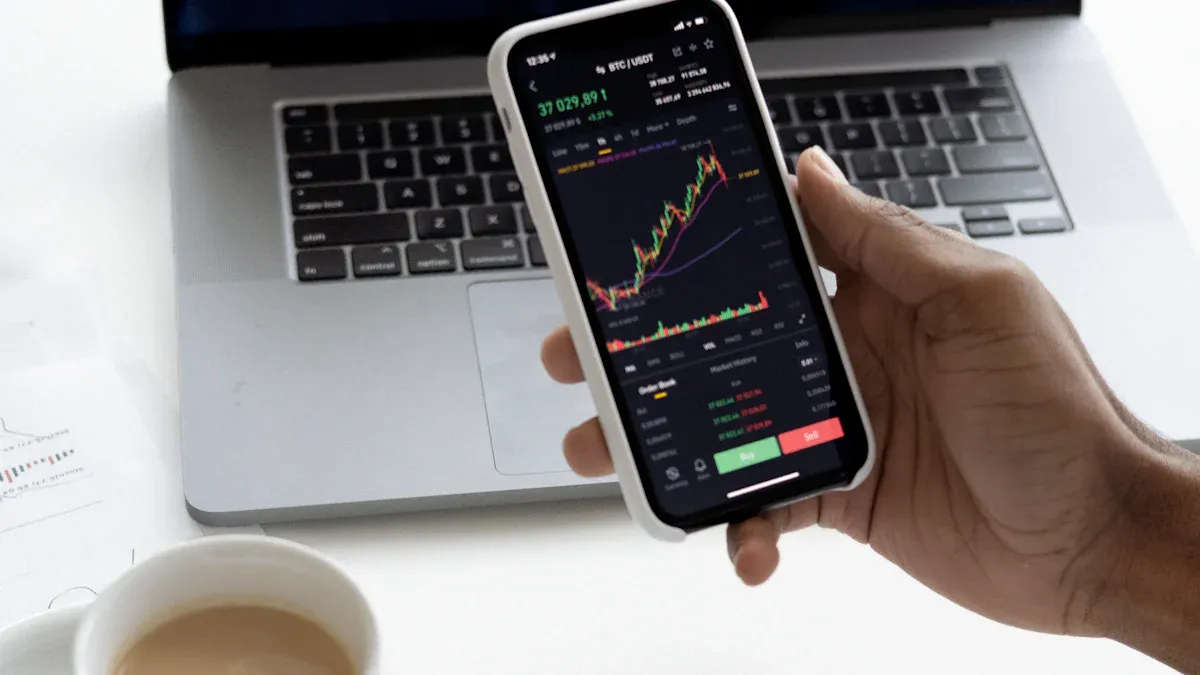
Image Source: pexels
After initial market understanding, the first practical thing you need to do is open a trading account. This step is the cornerstone of your investment journey. Choosing the right broker and account type directly affects your trading costs, operational convenience, and fund security. Let’s break down this process step by step.
Account Opening Methods: Overseas Brokers vs Sub-Brokerage
There are mainly two ways to invest in US stocks: directly opening an overseas broker account or using “sub-brokerage” services through local financial institutions. For most investors seeking low costs and high flexibility, directly choosing overseas brokers is more mainstream.
You can refer to the table below for a clear understanding of their differences:
| Feature/Service | International Online Brokers (Overseas Brokers) | Mainland China Sub-Brokerage Services |
|---|---|---|
| Advantages | Extremely low trading costs; strong fund protection; rich product variety (stocks, ETFs, options, etc.) | Familiar process; full Chinese communication |
| Disadvantages | Funds need overseas transfer; may involve more complex tax documents | Higher trading costs (commissions usually 0.15%–0.5%); limited investment choices |
Currently, many excellent international brokers are available, such as Futu Securities (Futu), Tiger Brokers, and Interactive Brokers. They each excel in fees, platform experience, and customer support.
| Broker | US Stock Commission (Example: 100 Shares) | Platform Features | Main Advantages |
|---|---|---|---|
| Futu Securities | About $0.99 | Web version, App (moomoo) | Rich platform functions, smooth user experience, fast Chinese support response |
| Tiger Brokers | About $0.99 | Web version, App (Tiger Trade) | Covers multi-market trading, mobile-friendly operations |
| Interactive Brokers | About $1.00 | Web version, Desktop (TWS) | Extremely powerful professional functions, suitable for experienced traders |
Futu Securities and Tiger Brokers both provide high-quality Chinese customer service, helping you quickly resolve issues in account opening and trading. While Interactive Brokers has the most powerful platform functions, its interface and logic may require some adaptation time for beginners.
Key to Judging Broker Security
Before depositing funds with any financial institution, verifying its security is crucial. A compliant US broker must undergo strict financial regulation. You need to focus on two core institutions:
- FINRA (Financial Industry Regulatory Authority): Responsible for regulating all broker-dealers conducting securities business in the US.
- SIPC (Securities Investor Protection Corporation): Provides protection for investors if the broker faces bankruptcy.
SIPC Fund Protection If your broker is an SIPC member and unfortunately fails, SIPC will provide up to $500,000 protection for your account, including up to $250,000 for cash compensation. This protection covers stocks, bonds, mutual funds, and cash in your account, providing a solid safety net.
How to Verify Broker Qualifications?
- Check FINRA Membership: Visit FINRA’s official tool
BrokerCheck(brokercheck.finra.org). Enter the broker company’s name to view detailed registration information, history, and compliance records. - Check SIPC Membership: Visit SIPC’s official website (
sipc.org) and search its member list. Meanwhile,BrokerCheckresults usually also show whether the broker is an SIPC member.
Ensure your chosen broker is both a FINRA and SIPC member—this is the basic prerequisite for securing your investments in US stock exchanges.
Account Types: Cash vs Margin Accounts
When opening a broker account, you usually need to choose between Cash Account and Margin Account.
- Cash Account: You can only trade with funds deposited in your account. Pay cash for securities, simple and direct with controllable risks.
- Margin Account: You can borrow money from the broker to buy stocks, using leverage. This amplifies potential gains but also potential losses.
The table below helps you intuitively understand their differences:
| Feature | Cash Account | Margin Account |
|---|---|---|
| Funding Source | Only own funds | Own funds + broker borrowing |
| Leverage Use | Not allowed | Allowed (i.e., “margin trading”) |
| Trading Restrictions | No short selling, complex trades like options limited | Allows short selling, complex strategies like options, futures |
| Risk Level | Lower, maximum loss is your invested principal | Higher, losses may exceed initial investment |
Margin Account Risk Warning Using a margin account means you need deeper risk understanding. When markets fall, your losses are amplified by leverage. If account equity falls below the broker’s required “maintenance margin,” you receive a margin call. You must deposit more funds or sell positions. If you fail to respond timely, the broker has the right to force liquidation (Liquidation) without notifying you to protect its interests.
For beginner investors, we strongly recommend starting with a Cash Account. When you gain sufficient experience and full risk awareness, consider whether to open a margin account.
Online Account Opening Process Details
Nowadays, opening an overseas broker account is very convenient, fully online. Generally follows these three steps:
- Prepare Account Opening Documents As a non-US resident, you usually need clear scans or photos of two types of documents:
- Identity Proof: Valid ID with your name, date of birth, and photo. Usually your passport.
- Address Proof: A document issued within recent 3-12 months clearly showing your name and current residential address. For example, bank statement from a Hong Kong licensed bank, utility bill, or lease agreement.
- Fill Online Application Visit your selected broker’s official website, find the “Open Account” entry, then fill personal information, financial status, investment experience, etc., as guided. This process usually takes 10-20 minutes.
- Minimum Deposit: Good news—many mainstream brokers have no minimum deposit requirement. For example, Interactive Brokers and Charles Schwab International have $0.00 account minimums. You can open the account first, then fund at your own pace.
- Deposit Initial Funds After account approval, transfer funds from your bank to the broker account.
- Traditional Wire Transfer: Perform international wire transfer via your bank. Obtain receiving bank details from the broker, including SWIFT code, ABA routing number, and your exclusive receiving account, then handle remittance at your bank (e.g., a Hong Kong licensed bank).
- New Digital Wallet/Payment Apps: To simplify, consider digital payment apps like Biyapay. Such platforms allow convenient local currency exchange to USD and direct transfer to your broker account, usually more efficient and lower cost than traditional wires.
After completing funding, you can officially start your US stock trading journey!
Core Trading Rules: Hours, Units, and Fees
After successful account opening and funding, you enter practical preparation. Before placing orders, you must understand basic US stock exchange trading rules. Mastering these helps avoid unnecessary mistakes and execute investment strategies more effectively.
Trading Hours: Regular, Pre-Market, and After-Hours
Unlike many markets, US stock trading hours divide into three parts: pre-market, regular, and after-hours. This provides longer trading windows.
First, understand an important concept: Daylight Saving Time (DST). The US advances clocks one hour in summer, affecting corresponding Beijing times for open/close.
- Daylight Saving Time: Usually starts second Sunday in March, ends first Sunday in November.
- Standard Time: Covers the rest of the year.
Regular trading session is Eastern Time (ET) 9:30 AM to 4:00 PM. This session is most active with best liquidity. Pre-market and after-hours provide additional opportunities, but note their risks.
Pre/After-Hours Trading Reminder In pre-market and after-hours, fewer participants lead to significantly lower liquidity. This may cause two outcomes:
- Widened Bid-Ask Spreads: Gap between buy and sell prices widens, increasing trading costs.
- Sharper Price Volatility: Medium-sized orders can cause sharp price swings. Therefore, beginner investors should cautiously participate in these sessions and preferably use limit orders to control execution prices.
The table below clearly shows corresponding Beijing times for different sessions, convenient for scheduling trades.
| Trading Session | Eastern Time (ET) | Beijing Time (DST) | Beijing Time (Standard) |
|---|---|---|---|
| Pre-Market | 4:00 AM – 9:30 AM | 16:00 – 21:30 | 17:00 – 22:30 |
| Regular | 9:30 AM – 4:00 PM | 21:30 – Next Day 4:00 | 22:30 – Next Day 5:00 |
| After-Hours | 4:00 PM – 8:00 PM | 4:00 – 8:00 | 5:00 – 9:00 |
Key Rules: Trading Units and Price Limits
After understanding trading hours, let’s look at several core trading rules you must master.
- Color Definition: US stock color definition is opposite to mainland China markets. Green represents rises, red represents falls. You need some time to adapt to this habit.
- Trading Units: US stocks’ minimum unit is 1 share. This greatly lowers investment barriers, allowing small amounts to invest in high-priced stocks like Amazon (AMZN) or Google (GOOGL).
- Trading Mechanism (T+0): US stocks implement T+0 trading mechanism. This means stocks bought today can be sold anytime today. This flexibility enables intraday trading and timely stop-loss or profit-taking.
- Price Limits: Unlike A-shares, US stocks have no daily price limits on individual stocks. Theoretically, a stock’s price can multiply or lose most value in one day. This brings high return potential but also high risks.
Risk Management: Circuit Breaker Mechanism Although no individual stock price limits, to prevent panic crashes in extreme conditions, US securities markets introduced an overall market circuit breaker mechanism. It is based on S&P 500 declines, divided into three levels.
Trigger Level S&P 500 Decline Trigger Time (ET) Trading Halt Duration Level 1 7% Before 3:25 PM 15 minutes Level 2 13% Before 3:25 PM 15 minutes Level 3 20% Any time Remaining trading time that day This mechanism acts like a “cooling-off period,” giving market and investors time to digest information and avoid irrational selling.
Trading Costs and Tax Explanation
Trading costs and taxes are important components of investment returns. Good news—for non-US resident investors, both are quite friendly.
1. Trading Costs
Your main trading cost is commission. Thanks to intense competition, many mainstream US brokers like Interactive Brokers (IBKR Lite), Fidelity, and Charles Schwab offer $0.00 commissions for online US stock and ETF trading. This means broker-side fees are negligible for buying/selling stocks.
However, you still pay some very small regulatory fees, such as:
- SEC Fee: Charged only on sells, very low rate.
- FINRA TAF (Trading Activity Fee): Charged only on sells, similarly very low rate.
These fees are usually just cents per trade, with negligible impact on overall investment.
2. Tax Explanation
Tax issues worry many beginners, but they are actually very simple. As a non-US resident, focus on two taxes: capital gains tax and dividend tax.
Key Document: W-8BEN Form During account opening, the broker requires you to fill a W-8BEN form online. This form declares your “non-US resident” status. Its core role is proving your identity to the IRS for related tax benefits.
- Capital Gains Tax: After filling W-8BEN, your gains from buying/selling stocks, ETFs, etc. (capital gains) are completely tax-exempt.
- Dividend Tax: If held stocks pay dividends, this income is taxed. US default withholding rate is 30%. However, if your country/region has a tax treaty with the US, you enjoy lower preferential rates. For example, for mainland China residents, the preferential rate is usually 10%. The broker automatically withholds at the preferential rate based on your W-8BEN information.
In summary, you just correctly fill the W-8BEN form during opening; the broker handles most tax matters automatically. You don’t need complex US tax filing—just focus on investment decisions.
Market Overview: Understanding US Stock Exchanges and Indices

Image Source: pexels
After familiarizing with trading rules, next is understanding the market itself. The US securities market mainly consists of several large exchanges, reflected by several core indices for overall performance. Understanding these basics helps you better grasp market pulses.
Overview of Three Major Exchanges
When trading US stocks, your orders usually execute on one of the following three exchanges. They each focus differently, attracting different company types.
- New York Stock Exchange (NYSE): The oldest and most famous US stock exchange. Traditionally home to large blue-chip and mature industrial companies.
- Nasdaq: The world’s second-largest stock exchange. Mainly tech companies, preferred listing venue for many innovative and growth companies.
- NYSE American: Formerly American Stock Exchange (AMEX), now focused on small- and mid-cap stocks and derivatives trading.
You can quickly understand core differences between NYSE and Nasdaq via the table below:
| Feature | New York Stock Exchange (NYSE) | Nasdaq |
|---|---|---|
| Company Type | Traditional blue-chips, mature stable companies | High-tech, high-growth, innovative companies |
| Trading Mode | Hybrid of human and electronic systems | Fully electronic trading |
| Listing Cost | Relatively higher | Relatively lower |
You Need to Know Despite NYSE’s long history, Nasdaq has matched it in total market cap, together forming the core of US stock exchanges. As of early 2024, both had total market caps around 30 trillion USD, enormous scale.
Market Barometers: Three Core Indices
You often hear “US stocks surge” or “US stocks plunge,” usually referring to several core stock indices’ performance. They are important indicators measuring overall market health.
- Dow Jones Industrial Average (DJIA): Abbreviated “Dow,” includes 30 large US blue-chip stocks. It is a price-weighted index, meaning higher-priced stocks influence it more.
- Standard & Poor’s 500 Index (S&P 500): Tracks 500 large US listed companies, covering about 80% of US market cap. It is a market-cap weighted index, widely considered the best gauge for US large-cap market.
- Nasdaq Composite Index: Includes all Nasdaq-listed companies, over 3000 stocks. Since Nasdaq focuses on tech, this index is seen as a barometer for tech and growth stocks.
Investment Tip: How to View the Dow? The Dow only includes 30 stocks with limited representation. In contrast, the S&P 500 has broader coverage, better reflecting overall market conditions. Therefore, many professional fund managers prefer using the S&P 500 as the benchmark for market performance and portfolio returns.
Congratulations! You have mastered the blueprint for starting your US stock investment journey. The entire process can be summarized in three core steps:
- Choose the right broker and account
- Familiarize with core trading rules
- Understand overall market overview
We strongly recommend starting with paper trading. You can practice ordering, testing strategies, and building confidence in a zero financial risk environment. When ready, start with small investments, accumulating valuable experience in practice.
Investing is a marathon, not a sprint. Adopt a long-term perspective, letting time and compound interest become friends in your wealth growth.
Wish you steady progress on the investment path.
FAQ
How much money do I need to start investing in US stocks?
US stocks’ minimum unit is 1 share. You can start investing with very little money, even buying just one share. Many brokers have no minimum deposit requirement; you can flexibly decide initial investment based on your finances—very low barrier.
Do I need to update the W-8BEN form every year?
No. The W-8BEN form is usually valid for three years. When nearing expiration, your broker notifies you via email or app to update online. Just follow guidance—process is very simple.
Why is my buy or sell order not executing immediately?
This is usually because you used a limit order. This order type executes only when market price reaches your set target. If you want immediate execution at current best market price, choose market order.
*This article is provided for general information purposes and does not constitute legal, tax or other professional advice from BiyaPay or its subsidiaries and its affiliates, and it is not intended as a substitute for obtaining advice from a financial advisor or any other professional.
We make no representations, warranties or warranties, express or implied, as to the accuracy, completeness or timeliness of the contents of this publication.
Related Blogs of

Review of the 2025 Shanghai Composite Index: Can It Start a Healthy Bull Above 4000 Points?


How Much Is the Bank of China Cash to Spot Exchange Fee? Comprehensive Money-Saving Techniques Revealed


Master Real-Time Quotes: Roundup of Forex Apps Favored by Professional Traders in 2025

Beyond Sina Finance: Roundup of Stock Trading Apps Used by Veteran Investors

Choose Country or Region to Read Local Blog
 Australia
 Austria
 Belgium
 Canada
 Cyprus
 Czech Republic
 Denmark
 Estonia
 Finland
 France
 Germany
 Greece
 Hong Kong
 India
India Indonesia
 Ireland
 Italy
Italy Japan
Japan Latvia
 Lithuania
 Luxembourg
 Malaysia
 Malta
Malta Morocco
 Nepal
Nepal Netherlands
 New Zealand
 Norway
 Pakistan
 Philippines
 Poland
 Portugal
 Romania
 Singapore
 Slovakia
 Slovenia
 South Africa
 South Korea
 Spain
Spain Sweden
 Thailand
 The United States
 Turkey
 United Arab Emirates
 United Kingdom
 Vietnam
Contact Us




BIYA GLOBAL LLC is a licensed entity registered with the U.S. Securities and Exchange Commission (SEC No.: 802-127417); a certified member of the Financial Industry Regulatory Authority (FINRA) (Central Registration Depository CRD No.: 325027); regulated by the Financial Industry Regulatory Authority (FINRA) and the U.S. Securities and Exchange Commission (SEC).
BIYA GLOBAL LLC is registered with the Financial Crimes Enforcement Network (FinCEN), an agency under the U.S. Department of the Treasury, as a Money Services Business (MSB), with registration number 31000218637349, and regulated by the Financial Crimes Enforcement Network (FinCEN).
BIYA GLOBAL LIMITED is a registered Financial Service Provider (FSP) in New Zealand, with registration number FSP1007221, and is also a registered member of the Financial Services Complaints Limited (FSCL), an independent dispute resolution scheme in New Zealand.