Want to Invest in US Stocks? 2025's Top 5 Recommended Brokers: Pros and Cons at a Glance



Image Source: unsplash
Investing in US stocks allows you to participate in global market dynamics. Choosing the right broker is the critical first step to getting ahead when the US market opens.
To help you quickly grasp the options, here’s a direct comparison of the 5 most noteworthy brokers in 2025:
| Broker Name | Core Features | Trading Fees | Minimum Deposit | Best For |
|---|---|---|---|---|
| Firstrade | Fully Chinese interface, pioneer of $0 fees | $0.00 | $0.00 | US stock beginners, small investors |
| Interactive Brokers (IBKR) | Most powerful professional platform | $0.00 (Pro version extra) | $0.00 | Professional traders, high-net-worth individuals |
| Charles Schwab | Comprehensive and stable service from a major broker | $0.00 | $0.00 (international accounts recommend $25,000) | Investors with larger capital who value service |
| Futu (Moomoo) | Excellent Chinese community experience | $0.00 (platform fees apply) | $0.00 | Investors who prefer community interaction |
| eToro | Unique copy-trading feature | $0.00 (includes spread cost) | $50 - $200 | Users wanting to try copy trading |
Not sure which one to choose? Don’t worry! We’ll walk you through everything step by step to find the perfect broker for you!
Key Takeaways
- When choosing a US stock broker, consider trading costs, convenience, security, and your personal investment needs.
- Overseas brokers offer low costs and a wide range of products but require you to handle remittances and tax matters yourself.
- Domestic sub-brokerage (complex entrustment) is simple with full Chinese support but has higher fees and fewer product options.
- Firstrade is ideal for beginners and small investors, offering zero fees and full Chinese-language service.
- Interactive Brokers is extremely powerful, perfect for professional traders and high-net-worth individuals looking to invest globally.
Overseas Brokers vs. Domestic Sub-Brokerage: Which Is Right for Me?
Before taking the first step, you’ll likely face this question: Should I open an account directly with an overseas broker or invest in US stocks through a Taiwanese broker’s “sub-brokerage” service? Both approaches have pros and cons—understanding the differences will help you make the smartest decision.
Pros and Cons of Overseas Brokers
Opening an account directly with a US broker is the mainstream choice for many investors.
- Advantages:
- Extremely low trading costs: This is the biggest attraction. Most overseas brokers offer stocks and ETF trades with zero commission, minimizing your investment expenses.
- Strong fund protection: Your account is protected by the Securities Investor Protection Corporation (SIPC). If the broker fails, SIPC provides up to $500,000 in protection for your securities, including up to $250,000 in cash. This protection also applies to non-US citizens, giving you peace of mind.
- Wide variety of products: You can trade stocks, ETFs, futures, options, and more, offering greater investment flexibility.
- Disadvantages:
- Funds must be wired overseas: You’ll need to transfer money from a Taiwanese bank to the broker’s designated account, incurring wire transfer fees and intermediary bank charges.
- Language and tax issues: Although many brokers offer Chinese interfaces, some documents or customer support may still require English. Estate tax and other issues can also be more complicated.
Pros and Cons of Domestic Sub-Brokerage
Sub-brokerage means you entrust a Taiwanese securities firm to place US stock orders for you overseas.
- Advantages:
- Simple and convenient process: Place orders through a familiar Taiwanese broker app, with funds deducted directly from your TWD or foreign currency settlement account—no overseas wiring hassle.
- Full Chinese communication: From account opening to trading, everything (interface and support) is in Chinese, making problem-solving quick and easy.
- Disadvantages:
- Higher trading costs: Sub-brokerage typically charges a commission (around 0.15%–0.5%) with a minimum fee of $15–$35 per trade—a significant burden for small or frequent traders.
- Limited investment options: Fewer products are available compared to overseas brokers, which may not meet all investment needs.
One Chart to Find Your Best Choice
If you’re still confused, this table will help you quickly decide:
| Consideration | Overseas Brokers | Domestic Sub-Brokerage |
|---|---|---|
| Trading Costs | Extremely low (mostly $0 commission) | Higher (commission + minimum fee) |
| Convenience | Moderate (requires currency exchange & overseas wiring) | Very high (funds stay domestic, familiar process) |
| Security | High (SIPC protection) | High (regulated by Taiwanese laws) |
| Best For | Cost-conscious, larger or long-term investors | Beginners, those who hate hassle, prefer full Chinese service |
In summary, if you’re willing to spend a little time on account opening and wiring, overseas brokers will save you significant fees. If you prioritize ultimate convenience and don’t mind higher costs, domestic sub-brokerage is the easy choice.
Firstrade: The Zero-Burden Entry Choice for Beginners
If you’re new to US stocks and intimidated by jargon and English interfaces, Firstrade has long been praised as “the best friend for US stock beginners”. Its biggest strength is being extremely friendly to Chinese-speaking users—you’ll hardly feel any language barrier.
Firstrade Advantages
- True zero-cost trading: Firstrade offers $0 commission on stocks and ETFs with no minimum deposit requirement. You can start investing with a very small amount without worrying about fees eating your capital.
- Comprehensive Chinese support: From account opening and website to trading platform and customer service, everything is fully in Chinese. You can communicate in Chinese via phone or email, greatly lowering the entry barrier.
- Rich free educational resources: The platform includes numerous beginner-friendly articles and videos covering everything from basic concepts to advanced options strategies, helping you grow continuously.
Quick Tip: Firstrade often runs account-opening promotions, such as free stocks or cash bonuses. Check the official website for the latest 2025 offers before opening an account!
Firstrade Disadvantages
- Basic trading platform and tools: Compared to professional brokers, Firstrade’s interface feels outdated, and charting tools are relatively basic. It lacks advanced features like Level 2 data or complex backtesting, which may not satisfy professional traders.
- Some services incur extra fees: While trading is commission-free, certain actions cost money—for example, wire withdrawals cost $30, and broker-assisted trades cost $19.95 per order.
- Limited customer service hours: Support is not 24/7. For users in Asia, you must align with US East Coast hours (8 AM–6 PM), so urgent issues may not get immediate help.
Best For: Small Investors and US Stock Beginners
In short, Firstrade is perfect for US stock beginners and small investors who don’t trade large amounts.
Its zero fees and zero minimums let you start investing without pressure. If you prioritize ultra-low costs, mainly invest long-term, and don’t mind a simpler interface, Firstrade is the ideal entry-level choice.
Interactive Brokers (IBKR): The Ultimate Arsenal for Professional Investors
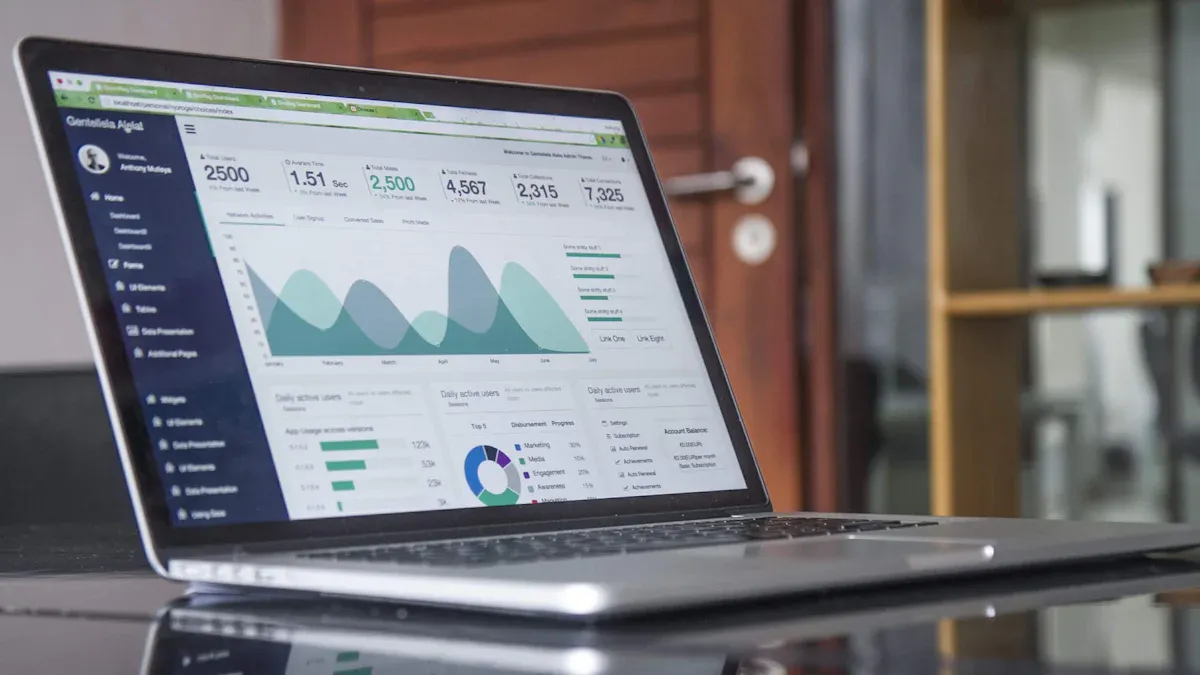
Image Source: unsplash
If Firstrade is the beginner village, Interactive Brokers (IBKR) is the ultimate battlefield for experts. It’s not designed for novices—it’s a comprehensive arsenal built for professional traders and active investors, letting you prepare fully before every US market open.
Interactive Brokers Advantages
- Unmatched global market access: IBKR’s greatest strength is its breadth. With a single account, you can trade financial products across 36 countries and over 160 markets, including stocks, options, futures, forex, bonds, and funds—true global asset allocation.
- Top-tier professional trading tools: The Trader Workstation (TWS) platform is incredibly powerful. It includes advanced tools like the “Options Portfolio Algorithm”, which helps find the most cost-effective options combinations based on risk parameters (Delta, Gamma, etc.)—invaluable for advanced investors.
- Flexible fee structure: IBKR Pro offers two pricing plans so you can choose based on your trading style:
- Fixed: $0.005 per share, minimum $1.00 per order. Simple calculation, best for large single trades.
- Tiered: Fees decrease with volume, plus exchange and regulatory fees. Ideal for frequent or small-lot traders.
How to choose? Simple rule: If you usually trade more than 300 shares per order, Fixed is likely cheaper; otherwise, Tiered is better for small or high-frequency trades.
Full Pre-Market and After-Hours Support to Seize Every Opportunity
IBKR supports complete pre-market and after-hours trading. When major earnings or news break outside regular hours, you don’t have to wait until the next day’s US market open—you can react instantly. This ability to act before and after regular hours is crucial for capturing volatility and a major advantage of professional platforms.
Interactive Brokers Disadvantages
- Extremely complex interface: The platform is built for professionals and very unfriendly to beginners. You’re greeted with overwhelming data and options that can be confusing if you just want to buy and hold ETFs.
- Steep learning curve: Understanding the two fee structures, order types, and software takes significant time. The account-opening process is also lengthy and involves many technical questions.
- Tax handling is on you: As an overseas broker, IBKR doesn’t withhold taxes. You must research and handle all tax obligations yourself—a hidden hassle for many.
Best For: Professional Traders and High-Net-Worth Individuals
In summary, Interactive Brokers is ideal for:
- Professional traders who need advanced tools, lightning-fast execution, and pre/after-hours high-frequency or arbitrage trading.
- Global asset allocators with substantial capital who want one account for worldwide investing.
If you don’t fall into these categories, IBKR’s complexity may hinder rather than help.
Charles Schwab: The Comprehensive Asset Guardian with Full-Service Support
If you find IBKR too complex but want more comprehensive service than Firstrade, Charles Schwab is a strong option. It acts like a seasoned financial butler—stable, thorough, and service-oriented—especially suited for investors with larger capital.
Charles Schwab Advantages
- Powerful global money management tools: One of Schwab’s most attractive features is the Schwab Bank Visa Debit Card you can apply for after opening an account. This card lets you withdraw cash from any ATM worldwide, and Schwab refunds all ATM fees. It also has no foreign transaction fees—perfect for using overseas funds.
- Stability and trust of a major broker: As one of the largest US brokers, Schwab provides peace of mind with excellent customer service. High-net-worth clients get dedicated advisors, wealth management experts, and priority support to fully protect your assets.
- Zero-commission trading for mainstream products: Like other major brokers, Schwab offers $0 commission on US stocks and ETFs, letting you enjoy premium service while saving on costs.
Charles Schwab Disadvantages
- Higher account-opening threshold: Officially $0 minimum, but international accounts are strongly recommended to deposit $25,000 initially. Below that, you may not receive full services—a barrier for small investors.
- Somewhat limited product selection: Compared to IBKR, Schwab is more restricted in certain areas. For example, its Stock Slices fractional share feature is limited to S&P 500 constituents. Investors wanting diverse small-cap or global products may feel constrained.
- Higher margin interest rates: If you use margin trading, Schwab’s rates are significantly higher than professional brokers like IBKR, increasing your costs.
Best For: Investors Who Value Service and Have Larger Capital
In summary, Charles Schwab is best for investors with ample funds, who prioritize service quality, and have global fund usage needs.
If asset safety and premium service are your top priorities, and you want a convenient global debit card, Schwab’s higher threshold delivers excellent value and peace of mind.
Futu Securities (Moomoo): Excellent Community Experience on a Chinese Platform
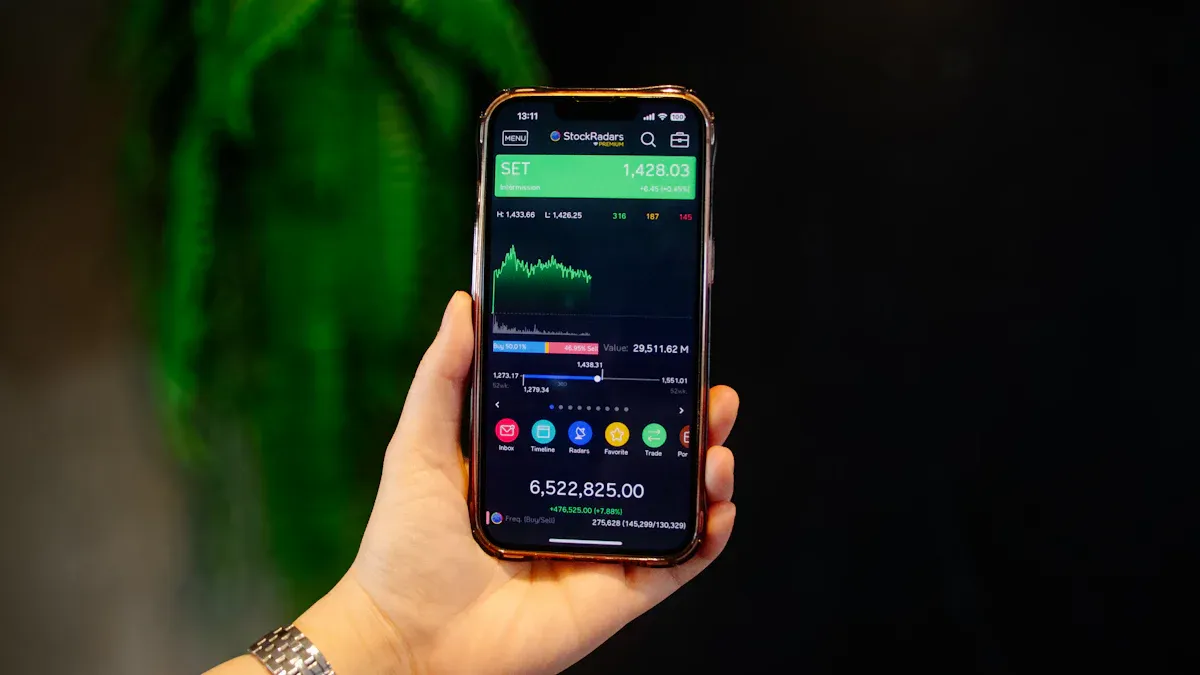
Image Source: pexels
If traditional broker interfaces feel dull and you want more interaction and fun in investing, Futu Securities (Futu) and its popular “Moomoo” app might catch your eye. With the slogan “making investing simpler and less lonely”, it combines trading and community in a modern platform.
Futu Advantages
- Powerful community interaction: This is Moomoo’s biggest highlight. You’re no longer investing alone—you join a vibrant community where you can:
- Follow experts and join hot topic discussions in “Moomoo Circle”.
- Discuss individual stocks with other investors.
- View real profit/loss statements shared by users and learn their strategies.
- Customize your profile avatar to build your personal brand in the investment community.
- Modern, feature-rich trading tools: The interface is beautiful and intuitive while offering professional analysis tools. You get multiple technical indicators, drawing tools, conditional orders for automation, and an earnings calendar to stay on top of company events.
Futu Disadvantages
- Not truly zero commission: Although marketed as low-cost, US stock trades are not completely free. Fees consist of two parts:
Fee breakdown: Per trade = commission (~$0.0049/share, min $0.99) + platform fee (~$0.005/share, min $1.00). Even for one share, the minimum cost is nearly $2.00—higher than Firstrade for tiny trades.
- Potential regulatory uncertainty: Due to its operational background, Futu faces stricter regulatory scrutiny, especially regarding data security. While the company emphasizes compliance efforts, policy changes from mainland China introduce some background risk.
- High transfer-out fees: Transferring stocks to another broker costs up to $150 per ticker—a cost to watch.
Best For: Investors Who Prefer Chinese Interface and Community Interaction
In summary, Futu is ideal for investors who value user experience, enjoy community discussion, and are willing to pay a small platform fee for it.
If you’re an active trader who loves getting market insights and interacting in a lively Chinese environment, Moomoo’s comprehensive experience can be well worth it. But if you want absolute zero-cost trading, other brokers are more economical.
eToro: One-Click Copy Trading Social Investment Platform
If analyzing financial statements feels overwhelming but you still want to participate in the market, eToro offers a unique solution. It’s not just a trading platform—it’s a large investment community where you can “copy trade” top performers with one click.
eToro Advantages
- Unique CopyTrader feature: This is eToro’s flagship tool. Browse “Popular Investors” with their historical performance and risk scores, then allocate funds (minimum $200). The system automatically and proportionally replicates all their trades in real time—no market analysis required.
- Social learning and automation: Follow top investors, learn their insights, and once set up, all buying/selling is automatic—no need to watch the market. You can copy multiple traders with different styles for easy diversification.
- Simple, intuitive interface: The modern app is very beginner-friendly, and the signup process is fast.
eToro Disadvantages
- Hidden trading and currency conversion costs: Although eToro advertises zero-commission stock trading, costs are built into the spread (difference between buy and sell prices). Two key fees to note:
- Currency conversion fee: eToro accounts only accept USD. Any non-USD deposit from Taiwan incurs a conversion fee.
- Withdrawal fee: Every withdrawal costs a flat $5.
- Inherent risks of copy trading: Copying others doesn’t guarantee profits—you bear the same risk. If they make mistakes, your account loses too. Over-reliance can also prevent you from developing your own skills.
Risk reminder: Popularity doesn’t equal skill. Always thoroughly check a trader’s long-term performance, not just short-term gains.
Best For: Investors Curious About Copy Trading
In summary, eToro is perfect for investors who lack time or experience, are willing to pay extra for convenience, and are curious about social copy trading.
If you see investing as learning and exploration and don’t mind the cost structure, eToro offers a fun entry point. But if you want the lowest costs and professional tools, traditional brokers are better.
After reading all this, do you have your answer? Remember: there’s no single best broker—only the one that fits you best.
Ultimate Decision Guide for the Indecisive
- If you care most about zero commission and low cost: Firstrade is your top choice.
- If you need the most professional trading tools and global markets: Interactive Brokers has you covered.
- If you don’t speak English and want a fully Chinese interface: Firstrade or Futu (Moomoo) will let you start pain-free.
Choose your investment partner and start your US stock journey today!
FAQ
What documents do I need to open an account?
Typically, you need two things:
- Identity proof: A valid passport.
- Address proof: A utility bill, bank statement, or driver’s license from the last three months showing your name and address.
Is wiring money to an overseas broker safe?
Your funds are protected. Most US brokers are covered by the Securities Investor Protection Corporation (SIPC). In the unlikely event the broker fails, your securities and cash are protected up to $500,000.
Do I need to pay taxes on US stock investments?
As a non-US investor, you’ll fill out the W-8BEN form when opening an account. This exempts you from capital gains tax, but dividends are subject to a 30% withholding tax.
I still don’t know which to choose—what should I do?
Your Quick Decision Guide:
- Beginner, want zero cost: Choose Firstrade.
- Professional trading, need global products: Choose Interactive Brokers.
- Larger capital, value service and convenience: Choose Charles Schwab.
*This article is provided for general information purposes and does not constitute legal, tax or other professional advice from BiyaPay or its subsidiaries and its affiliates, and it is not intended as a substitute for obtaining advice from a financial advisor or any other professional.
We make no representations, warranties or warranties, express or implied, as to the accuracy, completeness or timeliness of the contents of this publication.
Related Blogs of

A-Share Crash Turning Point: Will 2026 Deliver a Legendary Bull Market?


How to Wire Transfer USD from Industrial and Commercial Bank of China to OCBC Singapore? This Guide is All You Need


Beginner’s Guide: What to Do When a Stock Hits Limit-Down? Can You Still Trade?
Another Major Drop! Why Is the A-Share Index Falling Non-Stop – Where Exactly Is the Problem?

Choose Country or Region to Read Local Blog
 Australia
 Austria
 Belgium
 Canada
 Cyprus
 Czech Republic
 Denmark
 Estonia
 Finland
 France
 Germany
 Greece
 Hong Kong
 India
India Indonesia
 Ireland
 Italy
Italy Japan
Japan Latvia
 Lithuania
 Luxembourg
 Malaysia
 Malta
Malta Morocco
 Nepal
Nepal Netherlands
 New Zealand
 Norway
 Pakistan
 Philippines
 Poland
 Portugal
 Romania
 Singapore
 Slovakia
 Slovenia
 South Africa
 South Korea
 Spain
Spain Sweden
 Thailand
 The United States
 Turkey
 United Arab Emirates
 United Kingdom
 Vietnam
Contact Us




BIYA GLOBAL LLC is a licensed entity registered with the U.S. Securities and Exchange Commission (SEC No.: 802-127417); a certified member of the Financial Industry Regulatory Authority (FINRA) (Central Registration Depository CRD No.: 325027); regulated by the Financial Industry Regulatory Authority (FINRA) and the U.S. Securities and Exchange Commission (SEC).
BIYA GLOBAL LLC is registered with the Financial Crimes Enforcement Network (FinCEN), an agency under the U.S. Department of the Treasury, as a Money Services Business (MSB), with registration number 31000218637349, and regulated by the Financial Crimes Enforcement Network (FinCEN).
BIYA GLOBAL LIMITED is a registered Financial Service Provider (FSP) in New Zealand, with registration number FSP1007221, and is also a registered member of the Financial Services Complaints Limited (FSCL), an independent dispute resolution scheme in New Zealand.