Another Major Drop! Why Is the A-Share Index Falling Non-Stop – Where Exactly Is the Problem?




Image Source: pexels
The market’s continuous decline is the result of the resonance of three major factors: weakening macroeconomic expectations, internal structural imbalances, and fragile investor confidence. The recent plunge in A-shares once again highlights the severity of the problem, with more than 4,400 stocks across the market suffering declines and pessimism spreading. The weak performance of key indices also confirms this.
| Index Name | Closing Price | Date |
|---|---|---|
| Shanghai Composite Index | 3903 | December 5 |
Note: The market’s problems are not formed in a single day but are the concentrated outbreak of long-term issues.
Key Takeaways
- A-shares are falling due to poor economic expectations, internal market problems, and insufficient investor confidence.
- When the market falls, heavyweight stocks lead the decline, exacerbating the overall drop.
- Macroeconomic weakness and corporate earnings pressure are affecting stock market performance.
- Lack of investor confidence leads to reduced market liquidity, magnifying even small negative news.
- Ordinary investors should diversify, control risk, and avoid blindly bottom-fishing.
Review: What Triggered Today’s A-Share Plunge?
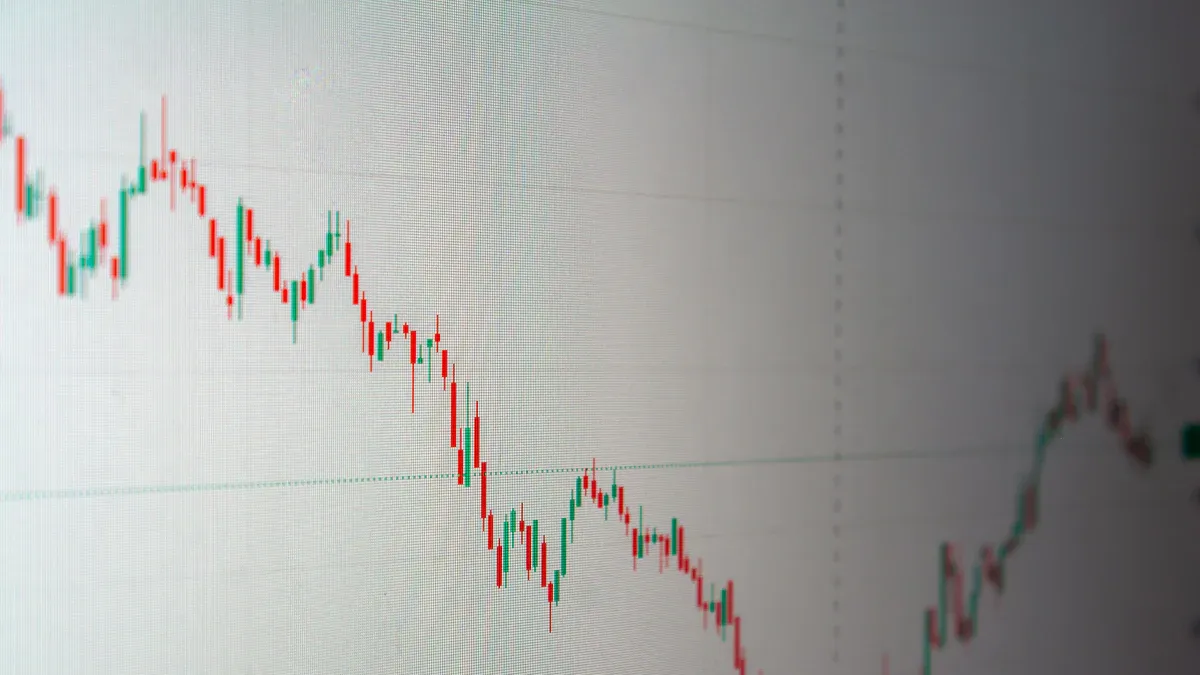
Image Source: unsplash
Today’s violent market fluctuations were not without warning. Multiple factors fermented during the session, collectively igniting selling pressure. Understanding these direct triggers is the first step to seeing the full picture of the market.
Capital Panic and Unusual Market Movements
From the opening bell, ominous signs appeared in the market. A flood of sell orders quickly overwhelmed the weak buying support, causing major indices to dive rapidly. This decline was not a slow grind lower but a panic-driven concentrated sell-off.
Intraday data shows the pace of decline accelerated significantly in the afternoon. Capital flight was resolute, and the market barely mounted any effective defense. This reflects extreme fragility in investor sentiment, where even minor disturbances can trigger a chain reaction.
Ultimately, a market landscape with more than 4,400 stocks falling vividly depicted the scene of panicked capital withdrawal. Market liquidity faced a severe test in the short term, with buying support appearing extremely weak.
Heavyweight Sectors Lead the Decline, Intensifying the A-Share Drop
In this A-share sell-off, the collective slump of heavyweight sectors was the core force dragging down the indices. Unlike a broad-based decline, the turning of these “elephants” dealt a heavier blow to market confidence. The leading declining sectors were mainly concentrated in:
- Major financial sector: Brokerages, insurance, and banking all weakened collectively.
- Non-ferrous metals sector: Affected by global economic expectations and demand outlook, this sector suffered massive capital outflows.
The financial sector, as the market’s stabilizer, had a particularly fatal weak performance. Market concerns about the future economy directly translated into doubts about the asset quality and profitability of financial institutions. This sentiment even spread to Hong Kong-licensed banks closely tied to mainland China, with investors worrying about increased credit risk exposure. The energy sector faced similar troubles, with expectations of slowing economic activity directly suppressing its valuation.
The recent continued weakness in heavyweight stocks had already been evident. Data shows that the index representing large-cap blue chips had accumulated a certain decline over the past month, laying the groundwork for today’s accelerated drop.
| Index Name | Percentage Decline | Time Range |
|---|---|---|
| SSE 50 Index | 0.83% | 4 weeks |
External Markets and Sudden News Impact
When analyzing the A-share decline, observing external market performance is necessary. However, the external trigger for this drop seemed not obvious. In the 24 hours before A-shares opened, major global indices performed relatively steadily.
- S&P 500: Closed basically flat
- NASDAQ Composite: Rose 0.1%
- Hang Seng Index: Fell 0.9%
It can be seen that US stocks performed steadily without a crash. The nearest Hong Kong market in China, although down, had a relatively moderate decline. This set of data clearly indicates that today’s A-share drop was more driven by the accumulation and outbreak of internal factors rather than a direct impact from external black swan events. The market’s own structural problems and lack of confidence are the main reasons for its fragility in the global market.
Root Cause: Why Does the Market Keep “Falling Non-Stop”?

Image Source: pexels
Today’s decline is not an isolated event but a concentrated manifestation of long-accumulated problems. To see the future of A-shares clearly, one must deeply analyze the underlying root causes behind its continued weakness. The market’s predicament mainly stems from the resonance of macro, structural, and confidence levels.
Weakening Macro Expectations and Fundamental Pressure
Weakening macroeconomic expectations have shaken the fundamental support of the market. Corporate earnings are the cornerstone of stock prices; when the economic growth outlook is unclear, investors naturally lower their future expectations.
From a data perspective, the momentum of economic recovery faces challenges. The latest official Purchasing Managers’ Index (PMI) clearly reflects this pressure.
| Indicator | Value | Unit | Time |
|---|---|---|---|
| NBS Non-Manufacturing PMI | 49.5 | points | November 2025 |
| NBS Manufacturing PMI | 49.20 | points | November 2025 |
Note: The PMI index uses 50 points as the boom-bust line. Both manufacturing and non-manufacturing PMI in November fell into contraction territory and were below market forecasts, indicating a slowdown in economic activity.
Other key economic indicators also confirm this trend. In October, China’s industrial value-added grew 4.9% year-on-year, with growth slowing compared to before. At the same time, fixed asset investment from the beginning of the year to date fell 1.7% year-on-year, showing insufficient investment demand. Although retail sales growth slowed less than expected, the overall fundamental pressure remains significant.
This macro-level uncertainty is also reflected in forecasts from international institutions. According to the International Monetary Fund (IMF), China’s GDP growth rate in 2025 is expected to be 4.8%. Meanwhile, institutions like J.P. Morgan predict that China will face low Consumer Price Index (CPI) inflation and Producer Price Index (PPI) deflation for the rest of this year, further intensifying market concerns about economic vitality.
Internal Structural Contradictions in the Market
In addition to macro pressure, the internal structural contradictions of the A-share market are equally prominent, leading to a lack of clear leading sectors and sustained growth engines.
- Pain of Transition Between Old and New Growth Drivers: The real estate industry, as a past economic pillar, is facing growing debt burdens, especially at the local government and developer levels. Although policy seems to be guiding the economy away from real estate dependence, no alternative industry has yet fully filled its growth gap. This window period of transitioning between old and new growth drivers leaves the market confused about future growth paths.
- Some Industries Facing Regulatory Reshaping: In recent years, China has carried out profound policy adjustments in education, healthcare, housing, and technology sectors. For example, targeting the “common prosperity” goal, the after-school tutoring industry was massively converted to non-profit; the tech sector saw anti-monopoly and data security regulations. Although these reforms aim for longer-term social benefits, they have caused huge short-term shocks to related industries’ business models and earnings expectations, leading to continued pressure on relevant sector valuations.
Lack of Money-Making Effect and Loss of Confidence
Under the double blow of weakening macro expectations and internal structural contradictions, the most direct consequence for the market is the continued absence of a “money-making effect.” When investors repeatedly lose money, their confidence will inevitably be severely eroded.
Confidence is more important than gold. Once the market forms a negative feedback loop of “buying means losing money,” investors will tend to sit on the sidelines or even panic-sell. This leads to a liquidity drought, where even small negative news can be magnified, triggering more violent declines.
Although the latest official investor confidence index has not been released, we can glimpse key changes in sentiment from historical data. For example, during market volatility periods, investors’ optimism and willingness to buy stocks drop significantly.
The current market conditions are similar to historical low periods. The continuous A-share decline has caused a large number of investors to lose confidence, with buying willingness hitting rock bottom. This loss of confidence is the key reason why the market struggles to form effective rebounds and repeatedly probes lower.
Way Out: Outlook and Coping Strategies
Facing the market’s prolonged slump, investors generally feel lost. However, crisis and opportunity always coexist. Clarifying institutions’ bullish and bearish logic, grasping future key variables, and formulating reasonable coping strategies are necessary lessons to navigate the fog.
Institutional Views: Bullish and Bearish Divergence
Currently, pessimism pervades the market, but professional institutions’ views are not monolithic, showing clear bullish and bearish divergence.
Bearish side mainly focuses on short-term fundamental pressure and weak investor sentiment, believing that without substantial improvement in economic data, the market will struggle to see a trend reversal.
Bullish side seeks opportunities from longer-term structural changes. For example, China International Capital Corporation (CICC) believes that mainland Chinese residents’ deposits have huge potential to shift to the stock market, with a potential scale of about $700 billion to $1 trillion. Although the actual inflow process depends on the macro environment, this trend of capital activation provides long-term imagination for the capital market. At the same time, its strategic layout also shows ambition to move toward a global investment bank, aiming to enhance the influence of Chinese financial institutions in global capital markets.
Key Observation Points for Future Trends
In a complex market environment, investors need to focus on several core indicators, which will be important wind vanes for judging future trends.
- Gain or Loss of Key Technical Levels: The 3000-point level of the Shanghai Composite Index is not just a number but an important “psychological barrier.” Historical data shows that when the index crashed in February this year, national team funds actively intervened near this level to stabilize the market. Therefore, whether the index can stabilize at this level is an important signal to observe if market confidence has bottomed.
- Changes in Trading Volume: Continued shrinking volume decline indicates low market enthusiasm. For an effective rebound in the future, it must be accompanied by a moderate increase in volume, representing incremental funds willing to enter and take over.
- Signals from Important Policy Meetings: Policy is the core variable affecting the A-share market. The recent Central Economic Work Conference held in mid-December has set the tone for 2025 economic work. The specific measures released on stabilizing growth and promoting reform will directly affect the market’s expectations for the future.
Survival Rules for Ordinary Investors
In the bottom area of the market, blind panic and aggressive bottom-fishing are not wise moves. For ordinary investors, it is more important to return to the essence of investing and manage risk well.
- Adhere to asset allocation: Do not put all funds into a single market or asset. Diversifying your portfolio across stocks, bonds, gold, and other categories can effectively balance risk and return.
- Make good use of risk management tools: Learn to use stop-loss orders to set a maximum tolerable loss line for your positions. Once the price hits this line, it automatically sells, avoiding greater losses due to emotional decisions.
- Adopt dollar-cost averaging: For high-quality assets you are bullish on long-term, you can use regular fixed investment. This strategy can help investors average costs during A-share declines and smooth market fluctuations.
Ultimately, the core task for investors is to “survive.” In uncertainty, preserving capital and controlling risk are far more important than catching short-term rebounds.
The current predicament of A-shares is the superposition of short-term negative factors and long-term structural problems. Rebuilding market confidence requires time and substantial improvement.
In the short term, the market may continue its oscillating probe lower pattern, and a rapid reversal is difficult. Facing uncertainty, investors should remain rational, control risk, select individual stocks carefully in structural opportunities, and avoid blindly bottom-fishing or panic selling.
Data shows that the current P/E ratio of the Chinese stock market is basically flat with the historical average, but valuation depression is not a sufficient condition for reversal.
| Indicator | Current P/E Ratio (Dec 4, 2025) | 1-Year Avg P/E | 5-Year Avg P/E | 10-Year Avg P/E | 20-Year Avg P/E |
|---|---|---|---|---|---|
| Chinese Stock Market (FXI ETF) | 10.95 | 10.27 | 10.45 | 11.14 | 11.03 |
FAQ
Why do A-shares fall independently when Hong Kong and US markets are stable?
This decline is mainly driven by internal factors in the mainland China market. Weakening macroeconomic expectations, market structural contradictions, and insufficient investor confidence are the core reasons. External markets did not provide direct negative shocks, highlighting A-shares’ own fragility.
Is now a “good time” to bottom-fish?
Market confidence rebuilding takes time, and a rapid reversal is difficult. Blind bottom-fishing carries extremely high risk before the trend is clear. Investors should remain rational, control risk, and avoid counter-trend operations in a downtrend to prevent greater losses.
What are the key signals for a market bottom?
Investors should watch three key points: whether trading volume moderately enlarges, representing fund inflows; whether key indices (like the 3000-point level) can stabilize; and whether important policy meetings release clear signals of stabilizing growth.
How should ordinary investors cope with the current A-share decline?
The primary task is risk management. It is recommended that investors use asset allocation to diversify risk and use stop-loss orders to control potential losses. For long-term investment, consider regular fixed investment dollar-cost averaging to smooth market fluctuations.
*This article is provided for general information purposes and does not constitute legal, tax or other professional advice from BiyaPay or its subsidiaries and its affiliates, and it is not intended as a substitute for obtaining advice from a financial advisor or any other professional.
We make no representations, warranties or warranties, express or implied, as to the accuracy, completeness or timeliness of the contents of this publication.
Related Blogs of

How to Wire Transfer USD from Industrial and Commercial Bank of China to OCBC Singapore? This Guide is All You Need


Like a Snowball: Let Shanghai Stock Market Index Make Your Money Work for You


A-Share Crash Turning Point: Will 2026 Deliver a Legendary Bull Market?

A-Share Beginner’s Guide: Master Market Hours and Trading Rules in One Article

Choose Country or Region to Read Local Blog
 Australia
 Austria
 Belgium
 Canada
 Cyprus
 Czech Republic
 Denmark
 Estonia
 Finland
 France
 Germany
 Greece
 Hong Kong
 India
India Indonesia
 Ireland
 Italy
Italy Japan
Japan Latvia
 Lithuania
 Luxembourg
 Malaysia
 Malta
Malta Morocco
 Nepal
Nepal Netherlands
 New Zealand
 Norway
 Pakistan
 Philippines
 Poland
 Portugal
 Romania
 Singapore
 Slovakia
 Slovenia
 South Africa
 South Korea
 Spain
Spain Sweden
 Thailand
 The United States
 Turkey
 United Arab Emirates
 United Kingdom
 Vietnam
Contact Us




BIYA GLOBAL LLC is a licensed entity registered with the U.S. Securities and Exchange Commission (SEC No.: 802-127417); a certified member of the Financial Industry Regulatory Authority (FINRA) (Central Registration Depository CRD No.: 325027); regulated by the Financial Industry Regulatory Authority (FINRA) and the U.S. Securities and Exchange Commission (SEC).
BIYA GLOBAL LLC is registered with the Financial Crimes Enforcement Network (FinCEN), an agency under the U.S. Department of the Treasury, as a Money Services Business (MSB), with registration number 31000218637349, and regulated by the Financial Crimes Enforcement Network (FinCEN).
BIYA GLOBAL LIMITED is a registered Financial Service Provider (FSP) in New Zealand, with registration number FSP1007221, and is also a registered member of the Financial Services Complaints Limited (FSCL), an independent dispute resolution scheme in New Zealand.