Year-End Review 2025: Has the Federal Reserve Completed the Transition from Hawkish to Dovish?




Image Source: pexels
At the end of 2025, the Federal Reserve has basically completed the key transition from “hawkish tightening” to “neutral slightly dovish.” The December meeting lowered the benchmark interest rate to the target range of 3.50%-3.75%, marking a clear policy shift. Chairman Powell emphasized that policy is now within a “reasonable estimate range of neutral interest rates.” Latest US finance news also reflects this change. However, whether this transition is a strategic adjustment in response to economic data or represents a longer-term structural shift remains a question for the market.
Key Takeaways
- At the end of 2025, the Federal Reserve shifted from “hawkish” to “neutral slightly dovish” and began rate cuts.
- The main reason for the Federal Reserve’s policy shift is cooling in the job market, but inflation remains a challenge.
- The Federal Reserve faces multiple challenges in rate cuts, including stubborn inflation and persistent services prices.
- The market has different views on the magnitude and speed of rate cuts in 2026, with significant divergences.
- Investors need to pay attention to factors such as midterm elections, Federal Reserve leadership changes, and artificial intelligence.
Reviewing the Transition Path: From Standing Pat to Starting Rate Cuts
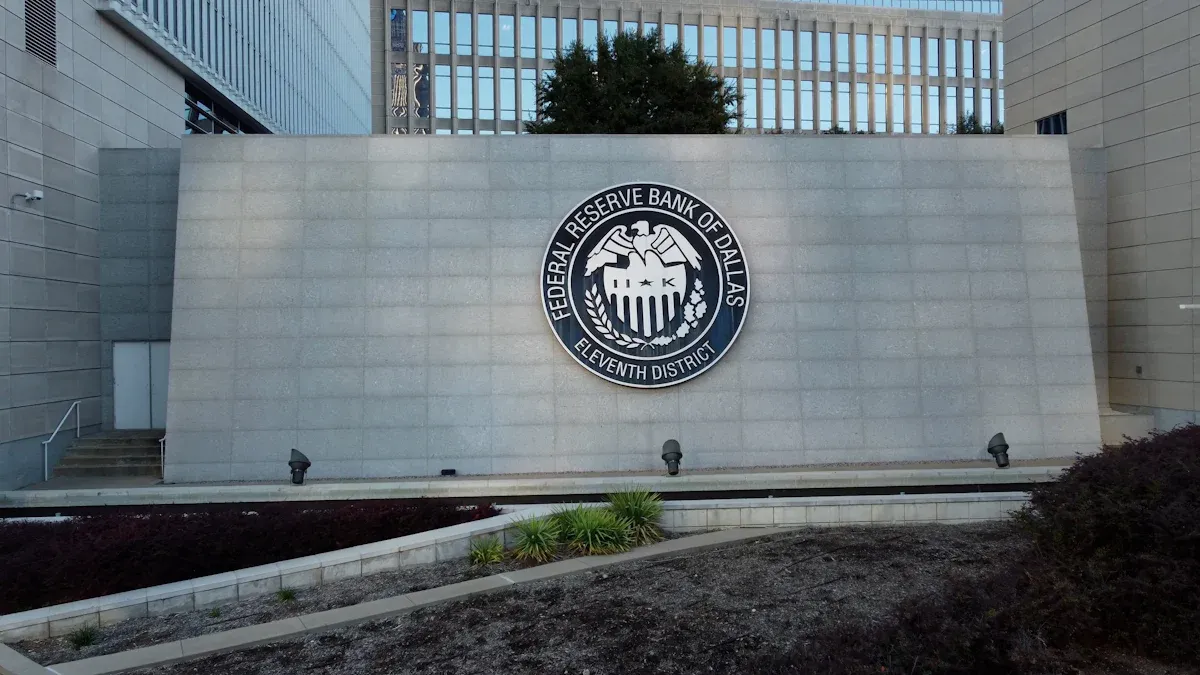
Image Source: pexels
The Federal Reserve’s policy path in 2025 is a clear evolutionary trajectory from firm hawkish to cautious dovish. This shift was not achieved overnight but driven by changes in key economic data, ultimately confirmed by landmark rate cut actions in the second half of the year.
Hawkish Stance at the Beginning of 2025
Looking back at the beginning of the year, the Federal Reserve’s hawkish stance was very solid. After the Federal Open Market Committee (FOMC) meeting on January 30, the market almost completely ruled out the possibility of rate cuts in the short term. The interest rate futures market pricing at that time reflected this expectation.
| Outcome | Probability |
|---|---|
| Maintain rates unchanged | 99.5% |
| Cut rates by 25 basis points | 0.5% |
This data clearly shows that the market and the Federal Reserve reached a high degree of consensus at that time: fighting inflation remains the primary task, and the threshold for policy shift is extremely high.
Key Data Shaking the Hawkish Foundation
However, starting from the end of the second quarter, data signals shaking the hawkish foundation began to emerge, with the most critical being the continuous cooling of the job market. Entering the third quarter, non-farm employment data continued to perform weakly, with new jobs added from July to September far below market expectations, showing significant slowdown in labor demand.
This phenomenon of employment growth slowdown coexisting with low unemployment rate was interpreted by the market as a “no hiring, no firing” environment. Companies chose to pause expansion in the face of economic uncertainty but did not lay off on a large scale.
This series of data forced Federal Reserve officials to reassess the economic outlook, laying the groundwork for subsequent policy adjustments.
Landmark Actions of Rate Cuts in the Second Half of the Year
The weak signals in the job market ultimately translated into actual policy actions. On September 19, 2025, the Federal Reserve announced a 25 basis point cut in the benchmark interest rate, the first rate cut in this tightening cycle.
This decision was not unanimous, with the voting results showing divisions within the committee. Although most members supported the rate cut, some members held reservations, reflecting different judgments within the decision-making layer on future economic paths.
This rate cut officially declared the shift in the Federal Reserve’s policy focus, marking a key step in its transition from hawkish posture to neutral slightly dovish.
In-Depth Analysis of Transition: New Challenges Under Neutral Slightly Dovish
The Federal Reserve’s transition to “neutral slightly dovish” does not mean the end of policy uncertainty but rather opens a complex stage full of new challenges. Policymakers now face how to avoid a hard economic landing while thoroughly resolving the thorny inflation problem and coping with huge pressures from internal and external sources.
The Dilemma of Inflation’s “Last Mile”
Although the Federal Reserve has started rate cuts, the “last mile” of inflation falling back to the 2% target is unusually difficult. This challenge is the core factor limiting the depth of its dovish policy. Multiple officials expressed concerns about inflation stickiness in speeches at the end of 2025.
- New York Fed President John Williams pointed out in November that the process of inflation falling back to 2% has “temporarily stalled,” with the inflation rate hovering around 2.75%.
- Federal Reserve Chairman Powell also reiterated in October that the inflation rate remains above target, implying sustained challenges in achieving the target.
The root of the problem lies in the stubbornness of services inflation. When core goods prices have significantly fallen, services prices remain firm, becoming the main force driving overall inflation.
Data analysis shows that non-housing core services are the main source of inflation stickiness. Inflation in this area has shown almost no signs of decline, bringing great uncertainty to the Federal Reserve’s policy path.
The table below details the contributions of different sectors to core Personal Consumption Expenditures (PCE) inflation, clearly revealing the structural nature of the problem.
| Services Sector | Inflation Rate Over the Past Year | Weight in Core PCE Basket | Contribution to Core PCE in Percentage Points |
|---|---|---|---|
| Core Goods | About 1.2% | About 30% | About 0.3 |
| Housing Services | About 3.8% | About 15% | About 0.7 |
| Non-Housing Core Services | About 3.3% | About 55% | About 1.9 |
| Portfolio Management and Investment Advisory Services | About 12% | N/A | About 0.2 |
This services-dominated inflation structure means that even if goods prices continue to fall, overall inflation is difficult to smoothly return to the 2% target. This forces the Federal Reserve to remain cautious in rate cuts, ready to respond to unexpected inflation rebounds at any time.
Economic Soft Landing and “Deep V” Risk
While addressing inflation, the Federal Reserve must also guide the economy to a “soft landing.” Economic data in 2025 presents a complex and differentiated picture, with both resilience and risks of stalling.
Economic resilience is mainly reflected in strong GDP growth and business investment. The US economy achieved an annualized growth rate of 3.8% in the second quarter of 2025, strongly rebounding from contraction in the first quarter. Behind this, business investment played a key role.
- Business Investment: Expected to grow 3.6% in 2025, mainly driven by artificial intelligence (AI)-related spending.
- Consumer Spending: Shows resilience but presents “K-shaped” differentiation. High-income household spending is strong, while low-income households feel pressure from prices and interest rates.
However, leading economic indicators have issued warning signals. The ISM Purchasing Managers’ Index (PMI) shows obvious splits between services and manufacturing.
In November 2025, the services PMI remained in the expansion zone at 52.6%, while the manufacturing PMI fell to 48.2%, contracting for the ninth consecutive month. This “hot services, cold manufacturing” pattern increases uncertainty in the economic outlook. The market therefore begins to worry about a “deep V” risk: that is, premature rate cuts by the Federal Reserve may lead to overheating of the economy and inflation again, forcing it to raise rates again in the future, forming a drastic policy swing of “cut-raise.”
Constraints from Politics and External Environment
The Federal Reserve’s decisions are not made in a vacuum; its independence is facing dual tests from domestic politics and the international environment.
First, political pressure is increasingly evident. With the 2026 midterm elections approaching, interest rate policy has become a focus of political games.
- US President Trump publicly criticized the Federal Reserve’s policy multiple times in 2025, believing the rate cut magnitude “could at least double”.
- He linked low interest rates to the campaign theme of “affordability” and hinted at scouting candidates for a new Federal Reserve chair who could implement lower interest rate policies.
- This direct political rhetoric undoubtedly brings huge pressure to the Federal Reserve insisting on independence.
Second, policy divergences among major global central banks also increase the complexity of the external environment. In the second half of 2025, global monetary policies were not synchronized. In December, the European Central Bank (ECB) chose to maintain interest rates unchanged, while the Bank of England (BoE) was expected to cut rates. This differentiated policy path may trigger volatility in currency markets and indirectly affect US trade and inflation prospects. The Federal Reserve must incorporate these external factors into consideration when formulating policy, further limiting its freedom of action.
Market Pricing Game: Tug-of-War Between Expectations and Reality

Image Source: pexels
The Federal Reserve’s dovish transition has not brought consistent expectations to the market but instead opened an intense tug-of-war between expectations and reality. Traders and analysts are trying to interpret future policy paths from complex signals, while bond markets, stock markets, and various forecast data jointly stage a wonderful game. Various latest US finance news also report this market dynamic in detail.
Steepening Signal of the Yield Curve
The bond market is the best window to observe market expectations, and the yield curve shape at the end of 2025 sent a complex signal. After the Federal Reserve started rate cuts, the yield curve experienced “bull steepening,” that is, short-term rates fell faster than long-term rates. This is usually seen as a signal of improving economic prospects.
However, this steepening is not a simple optimistic signal. The market presents a unique “twisted” shape.
Short-term rates fell due to expectations of continued Federal Reserve rate cuts, but long-term rates (such as 10-year Treasury yields) remained firm due to concerns about huge fiscal deficits and sticky inflation, anchored above 4%. This shape suggests that the market believes risks are controllable in the short term but still has doubts about long-term inflation and growth prospects.
Market Sentiment in Latest US Finance News
The stock market gave positive feedback to the Federal Reserve’s rate cuts. Latest US finance news shows that after the December rate cut, the S&P 500 Index rose 0.7%, approaching historical highs at year-end. The VIX index measuring market panic also remained in a moderate range, with no “risk aversion” signals.
Although the market generally expected the rate cut, many latest US finance news interpreted this policy as a “hawkish cut”.
- Powell’s Cautious Statement: He emphasized that rates are already in the neutral range, and the Federal Reserve is positioned to “wait and see,” reducing market expectations for rapid, large rate cuts in the future.
- Optimistic Economic Outlook: The Federal Reserve remains optimistic about the 2026 economic outlook, keeping investors cautious on duration allocation.
This sentiment is reflected in analyses from various latest US finance news: the market welcomes the arrival of rate cuts but holds reservations about their depth and speed.
Divergences in 2026 Rate Cut Expectations
Divergences are particularly evident for the 2026 interest rate path, which is the focus of the game. The Federal Reserve, traders, and major investment banks gave different predictions.
| Prediction Source | 2026 Year-End Rate Prediction |
|---|---|
| Federal Reserve Dot Plot (Median) | 3.25% - 3.50% |
| Goldman Sachs | 3.00% - 3.25% |
The Federal Reserve’s own predictions are relatively conservative, while investment banks like Goldman Sachs are more optimistic, expecting larger rate cuts. This divergence stems from different judgments on several key variables:
- Inflation Path: Optimists believe the disappearance of tariff effects will accelerate inflation decline.
- Economic Growth: Pessimists worry that economic slowdown exceeds expectations, requiring more rate cut support.
- Political Variables: The market expects a possible change in Federal Reserve chair in May 2026, with the new chair potentially more dovish.
- Fiscal Risks: Some worry that fiscal stimulus may reignite inflation, limiting rate cut space.
These divergences make latest US finance news full of intense debates about future rates, also meaning that the 2026 market will continue to move forward in the tug-of-war between expectations and reality.
In 2025, the Federal Reserve did complete a major transition to “neutral slightly dovish.” But this is not the end but a new starting point full of uncertainty. Final economic data shows that while the economy is growing moderately, inflation and unemployment rates remain above ideal levels.
| Indicator | Median (2025) |
|---|---|
| Core PCE Inflation | 3.0% |
| Unemployment Rate | 4.5% |
| Real GDP Change | 1.7% |
Federal Reserve Chairman Powell also admitted that policy is facing a challenging situation.
“In the short term, inflation risks are biased upward, employment risks are biased downward, this is a challenging situation. There is no risk-free policy path as we address this tension between employment and inflation goals.”
Looking ahead to 2026, investors need to go beyond simple “hawk” and “dove” labels and flexibly adjust strategies. Some institutions have suggested increasing stock holdings and favoring US assets. Closely monitoring the following key variables is crucial:
- Upcoming midterm elections
- Potential changes in Federal Reserve leadership
- Ongoing impact of artificial intelligence
- US dollar exchange rate trends
FAQ
What do “hawkish” and “dovish” mean?
“Hawkish” refers to a policy stance supporting high interest rates to control inflation. They prioritize price stability. “Dovish” tends toward low interest rates to stimulate employment and economic growth. They focus more on overall economic health.
Why did the Federal Reserve start rate cuts in the second half of 2025?
The main reason is cooling in the job market. Non-farm employment data for several consecutive months was far below expectations, showing significant slowdown in labor demand. This prompted the Federal Reserve to adjust policy to prevent excessive economic downturn.
What is the inflation “last mile” dilemma?
It refers to the unusually difficult process of inflation falling from 3% to the 2% target. Core goods prices have fallen, but services inflation remains stubborn.
This stickiness limits the Federal Reserve’s space for large rate cuts, as they need to be vigilant against inflation rebounds.
Will interest rates continue to decline in 2026?
The market has huge divergences. The Federal Reserve dot plot predicts smaller rate cut magnitude. But many investment banks and traders expect larger rate cuts. The final path depends on future economic data and inflation performance.
*This article is provided for general information purposes and does not constitute legal, tax or other professional advice from BiyaPay or its subsidiaries and its affiliates, and it is not intended as a substitute for obtaining advice from a financial advisor or any other professional.
We make no representations, warranties or warranties, express or implied, as to the accuracy, completeness or timeliness of the contents of this publication.
Related Blogs of
Bookmark for Reference: 2025 US Stock Market Holiday Calendar and Early Closure Dates


Opportunities and Challenges Coexist for Asian Stock Markets Under Fed Rate Cut Expectations


Taipei Stock Market Closing Report for December 11, 2025

Beginner Guide to After-Hours Trading: Easily Master Key Buy and Sell Points
Choose Country or Region to Read Local Blog
 Australia
 Austria
 Belgium
 Canada
 Cyprus
 Czech Republic
 Denmark
 Estonia
 Finland
 France
 Germany
 Greece
 Hong Kong
 India
India Indonesia
 Ireland
 Italy
Italy Japan
Japan Latvia
 Lithuania
 Luxembourg
 Malaysia
 Malta
Malta Morocco
 Nepal
Nepal Netherlands
 New Zealand
 Norway
 Pakistan
 Philippines
 Poland
 Portugal
 Romania
 Singapore
 Slovakia
 Slovenia
 South Africa
 South Korea
 Spain
Spain Sweden
 Thailand
 The United States
 Turkey
 United Arab Emirates
 United Kingdom
 Vietnam
Contact Us




BIYA GLOBAL LLC is a licensed entity registered with the U.S. Securities and Exchange Commission (SEC No.: 802-127417); a certified member of the Financial Industry Regulatory Authority (FINRA) (Central Registration Depository CRD No.: 325027); regulated by the Financial Industry Regulatory Authority (FINRA) and the U.S. Securities and Exchange Commission (SEC).
BIYA GLOBAL LLC is registered with the Financial Crimes Enforcement Network (FinCEN), an agency under the U.S. Department of the Treasury, as a Money Services Business (MSB), with registration number 31000218637349, and regulated by the Financial Crimes Enforcement Network (FinCEN).
BIYA GLOBAL LIMITED is a registered Financial Service Provider (FSP) in New Zealand, with registration number FSP1007221, and is also a registered member of the Financial Services Complaints Limited (FSCL), an independent dispute resolution scheme in New Zealand.