Beginner Guide to After-Hours Trading: Easily Master Key Buy and Sell Points




Image Source: pexels
After-hours trading allows you to operate based on breaking news after regular trading sessions end. However, this opportunity is closely tied to high risks. In the US market, its trading volume is less than 10% of total market volume, directly leading to low liquidity and sharp price volatility.
So, how should you make informed choices in a high-risk environment, balancing the opportunities and challenges? This is the core question beginners need to consider.
Key Points
- After-hours trading offers unique opportunities, such as capturing news advantages and flexible trading hours, but it also comes with high risks.
- After-hours trading has four major risks: low liquidity, wide bid-ask spreads, sharp price volatility, and prices potentially disconnecting from the next day’s open.
- When beginners engage in after-hours trading, they should choose familiar stocks with clear plans and always use limit orders for protection.
- Strict position control is key in after-hours trading; it is recommended to follow the “1% rule,” ensuring single-trade risk does not exceed 1% of total trading capital.
- After-hours trading is a double-edged sword; for beginners, before fully understanding risks and establishing discipline, observing is best—respecting risks is more important than chasing profits.
Opportunities in After-Hours Trading: Why Worth Attention?

Image Source: unsplash
Although risks cannot be ignored, after-hours trading indeed provides unique opportunities incomparable to regular sessions. If you understand and utilize these opportunities well, it can become a powerful supplement in your investment toolbox.
Capture After-Hours News Advantages
Many key information affecting stock prices, such as company earnings, M&A news, or regulatory announcements, are usually released after 4:00 PM close. This allows you to make decisions one step ahead based on the latest news before the next day’s open.
- Earnings Chain Reaction: Industry giants’ earnings affect the entire supply chain. For example, Qualcomm’s performance may drive other semiconductor stocks higher; Apple’s (Apple) earnings are seen as a barometer for consumer spending.
- Major Event Impacts: Breaking events cause sharp price moves. Understanding these can help you seize opportunities.
| Stock Name | Event Type | Specific Event | After-Hours Price Change |
|---|---|---|---|
| Cidara Therapeutics | M&A News | Rumored acquisition by Merck | Surged 42% |
| Medtronic | FDA Announcement | Received FDA warning letter on diabetes business | Dropped nearly 9% |
Enjoy Flexible Trading Hours
For office workers unable to watch during regular sessions or international investors in different time zones, extended hours provide great convenience. For example, Nasdaq’s after-hours trading is Eastern Time 4:00 PM to 8:00 PM.
This means, even if you are in Asia or Europe, you can manage US stock positions during your work hours, timely responding to global economic and political events, without waiting for market open.
Find Potential Bargain Opportunities
Due to fewer participants, market sentiment is more easily amplified in after-hours. Sometimes, the market overreacts to bad news, causing unreasonable sharp drops.
This creates opportunities for prepared investors. If you judge the market reaction excessive, you may buy stocks below intrinsic value. Of course, this requires deep understanding of company fundamentals and accurate judgment— you might buy “discounted gems” or catch a “falling knife.”
Risks in After-Hours Trading: Four Potential Traps
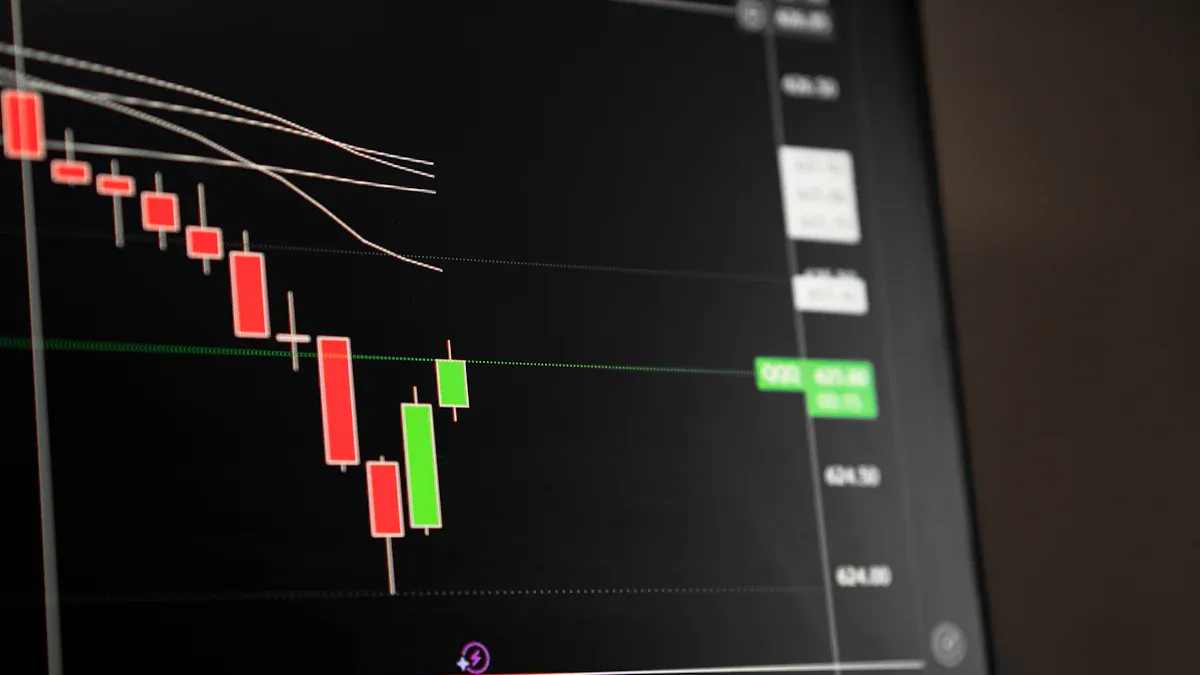
Image Source: pexels
Opportunities always hide risks. Before committing funds, you must clearly recognize the four potential traps in after-hours trading. These risks stem from its fundamental feature: few participants, low volume.
Risk One: Low Liquidity and Hard Execution
Liquidity simply means how many buyers and sellers are in the market. In regular sessions, the market is active with many participants. But in after-hours, the situation is completely different.
Due to most institutional and individual traders leaving, trading volume sharply shrinks. This means even if you see an ideal price, you may fail to execute due to no counterparty.
Data shows after-hours volume is only a small fraction of total market share, vastly differing from regular sessions.
| Trading Session | Average Volume (Million Shares/Day) | Share of Total Market |
|---|---|---|
| After-Hours (Last Hour) | 43.22 | 11% |
| Pre-Market (First Hour) | 113.30 | - |
| Overnight (Peak) | 2.94 | 0.11% |
This low liquidity directly leads to two frustrating outcomes:
- Partial Fills: You may want to buy 100 shares, but only 30 shares match your price, ultimately filling only a small part.
- No Fills: Your order may hang for long without execution, ultimately missing the opportunity. This is common in after-hours; you must be mentally prepared.
Risk Two: Widened Bid-Ask Spreads
Bid-ask spread is the gap between the highest price buyers are willing to pay (bid) and the lowest sellers accept (ask). In liquid regular sessions, this spread is usually small. But in after-hours, spreads significantly widen.
Take a simple example: suppose a stock’s after-hours bid is $10.00 and ask $10.50.
Spread = Ask - Bid = $10.50 - $10.00 = $0.50
This means even if you buy at $10.50, the stock must rise over $0.50 for your trade to start profiting. Widened spreads directly increase trading costs, eroding potential profits.
Taking Viper Energy Partners (VNOM) as an example, we clearly see huge spread differences across sessions:
| Trading Session | Stock Ticker | After-Hours Spread | Intraday Spread |
|---|---|---|---|
| After-Hours (May 18, 2018) | VNOM | $1.25 | N/A |
| Intraday (May 22, 2018) | VNOM | N/A | $0.35 |
Main reasons for widened spreads include:
- Reduced Liquidity: Fewer buyers/sellers naturally widen price disagreements.
- Increased Volatility: Market makers widen spreads to compensate for providing liquidity in volatile periods.
Risk Three: Sharp Price Volatility
High volatility is one of after-hours’ core features. Due to sparse volume, even medium-sized buys/sells can disproportionately impact prices. It’s like throwing a stone in a small pond creates bigger ripples than in the ocean.
You may see prices jump 10% without warning in minutes or crash 15% on unconfirmed news. Such sharp volatility is extremely hard for beginners to handle.
Statistics show after-hours volatility far exceeds regular sessions.
| Statistic | Regular Sessions | After-Hours Sessions |
|---|---|---|
| Standard Deviation (Volatility Measure) | 0.0093 | 0.6167 |
Higher standard deviation means prices deviate more from averages, with higher risks. Prices you see may just reflect a few traders’ emotional actions, not broad market consensus.
Risk Four: Price Disconnect from Next Day Open
Many beginners mistakenly think stocks rising after-hours will continue higher next open. However, facts often differ. After-hours trends have very limited predictive power for next-day opens.
Remember: After-hours prices are determined by few participants in low liquidity; they may be overly amplified by sentiment. When all institutions and individuals return next morning, they reprice based on fuller information and rational analysis, often causing reversals.
History has many such examples:
- Qualcomm (QCOM): During 1999 internet bubble, continuous rises led to “exhaustion gaps”; after-hours frenzy ultimately reversed post-open.
- Super Micro Computer (SMCI): In early 2024, guidance boosts caused surges, but after multi-day rises and multiple gaps, overheated sentiment led to sharp pullback on record volume.
After-hours price euphoria may become a “trap” trapping you next open.
How Beginners Conduct After-Hours Trading?
After understanding opportunities and risks, you may ask: “How exactly should I safely take the first step?” The answer lies in discipline and strategy. After-hours trading is not gambling; you need a clear action framework guiding every decision. The following three key points will help you build this framework.
Decision Key: When to Participate?
Not all after-hours volatile stocks deserve your attention. As a beginner, your primary task is screening opportunities, not chasing every hotspot. Before deciding to participate, be sure to ask yourself these questions:
Trade what you understand, not what you hear. This is the basic law of survival in any market, especially crucial in after-hours.
- Is this major and verifiable news? Your trading decisions should be based on released, credible information, such as official company earnings, FDA approvals, or confirmed M&A deals. Avoid volatility triggered only by social media rumors or unconfirmed news.
- Is this a stock you are familiar with? Prioritize companies with deep understanding of fundamentals, business models, and industries. This helps judge if market reactions are excessive or reasonable, making more informed decisions.
- Do you have a clear trading plan? Before ordering, think clearly: What is your entry price? Where is your target exit? If wrong, where will you stop-loss? Trading without a plan is pure gambling.
Ordering Key: Use Limit Orders
In after-hours trading, order type is your most important safety belt. Due to special market conditions, you absolutely cannot use market orders.
Market orders execute immediately at current best prices, but in extremely low liquidity and wide spread after-hours, this may lead to executions far worse than expected. Many brokers even directly prohibit market orders in after-hours. Why?
- Insufficient Liquidity: Your order may fail to fill or only partially due to no counterparty.
- Sharp Volatility: Tiny volume can cause large price jumps; your execution may far exceed expectations.
- Huge Spreads: Large spreads mean your buy price may significantly differ from market midpoint, starting in loss.
The solution is clear: Always use limit orders.
Limit orders allow specifying a maximum buy price or minimum sell price. Orders execute only when market reaches or betters your set price. This provides price protection, ensuring you don’t overpay for a trade.
Setting Limit Orders on Trading Platforms (Example with Biyapay)
| Step | Operation Guide |
|---|---|
| Step 1 | Select the stock ticker you want to trade in the trading interface. |
| Step 2 | Choose “Buy” or “Sell” in “Operation,” enter quantity. |
| Step 3 | Explicitly select “Limit Order” in “Order Type.” |
| Step 4 | Enter your “Limit Price,” i.e., maximum buy or minimum sell price you accept. |
| Step 5 | Choose “Day Order” or applicable for after-hours in “Duration.” |
| Step 6 | Carefully check all order details, confirm correct, then submit. |
Risk Control Key: Control Position Size
Risk control is core to trading success, even more so in high-risk after-hours. Even with great opportunities and limit orders, overweight positions can devastate your account on one mistake.
A widely followed and practical risk principle is the “1% Rule”. It suggests risk per trade should not exceed 1% of total trading capital.
This means even with consecutive losses, your account won’t be wiped out—you always have comeback chances. How to calculate position size per this rule?
- Determine Single-Trade Maximum Risk Amount:
Total Trading Capital x 1% = Maximum Tolerable LossFor example, with $10,000 account, single-trade max loss is $100. - Determine Stop-Loss Distance:
Entry Price - Stop Price = Per-Share RiskSuppose planning buy at $20, stop at $19, per-share risk is $1. - Calculate Reasonable Position Size (Shares):
Position Size = Maximum Tolerable Loss / Per-Share Risk
Per above example, shares you can buy: $100 / $1 = 100 shares.
This way, even if market goes completely against you and hits stop, loss is strictly controlled within acceptable $100.
Finally, note that due to after-hours sharp volatility, regular stops may execute worse due to gaps or even fail. Some experienced traders choose wider stops to accommodate higher volatility or no stops, managing overnight risk via strict position control. For beginners, sticking to small positions is always the best protection strategy.
After-hours trading is a double-edged sword. Its appeal lies in profiting from information edges and market sentiment, but risks precisely from missing liquidity and sharp price swings. As investment master Peter Lynch said: “Far more money has been lost by investors trying to anticipate corrections, than has been lost in the corrections themselves.”
For beginners, before fully understanding risks and establishing strict discipline, observing is the best strategy. Remember, respecting risks is always more important than chasing profits. Make risk control your primary principle for any trade.
FAQ
Can all stocks be traded after-hours?
No. You need to confirm your broker supports after-hours for that stock. Usually, only higher-volume stocks listed on major exchanges (like Nasdaq, NYSE) offer after-hours. Small-cap or low-liquidity stocks may not participate.
Does after-hours trading charge extra fees?
It depends on your broker. Some may charge extra for ECN-executed after-hours orders, others not. Before trading, check broker fee descriptions to avoid unexpected costs.
What if my limit order doesn’t fill after-hours?
If your limit order is set “Day Order,” unfilled orders automatically cancel after after-hours session ends. They do not carry over to next day’s pre-market or regular sessions.
Why is after-hours price volatility so high?
Main reason is few participants and low volume. In this “thin” market, even medium-sized buys/sells can disproportionately impact prices, causing sharp and rapid surges or drops.
*This article is provided for general information purposes and does not constitute legal, tax or other professional advice from BiyaPay or its subsidiaries and its affiliates, and it is not intended as a substitute for obtaining advice from a financial advisor or any other professional.
We make no representations, warranties or warranties, express or implied, as to the accuracy, completeness or timeliness of the contents of this publication.
Related Blogs of

Taipei Stock Market Closing Report for December 11, 2025


Ultimate Guide to Avoiding Pitfalls When Converting USD to CNY: Easily Save Thousands


Master Real-Time Quotes: Roundup of Forex Apps Favored by Professional Traders in 2025

SSE Composite Index vs. CSI 300 Index: Which Better Represents the Pulse of the Chinese Stock Market?

Choose Country or Region to Read Local Blog
 Australia
 Austria
 Belgium
 Canada
 Cyprus
 Czech Republic
 Denmark
 Estonia
 Finland
 France
 Germany
 Greece
 Hong Kong
 India
India Indonesia
 Ireland
 Italy
Italy Japan
Japan Latvia
 Lithuania
 Luxembourg
 Malaysia
 Malta
Malta Morocco
 Nepal
Nepal Netherlands
 New Zealand
 Norway
 Pakistan
 Philippines
 Poland
 Portugal
 Romania
 Singapore
 Slovakia
 Slovenia
 South Africa
 South Korea
 Spain
Spain Sweden
 Thailand
 The United States
 Turkey
 United Arab Emirates
 United Kingdom
 Vietnam
Contact Us




BIYA GLOBAL LLC is a licensed entity registered with the U.S. Securities and Exchange Commission (SEC No.: 802-127417); a certified member of the Financial Industry Regulatory Authority (FINRA) (Central Registration Depository CRD No.: 325027); regulated by the Financial Industry Regulatory Authority (FINRA) and the U.S. Securities and Exchange Commission (SEC).
BIYA GLOBAL LLC is registered with the Financial Crimes Enforcement Network (FinCEN), an agency under the U.S. Department of the Treasury, as a Money Services Business (MSB), with registration number 31000218637349, and regulated by the Financial Crimes Enforcement Network (FinCEN).
BIYA GLOBAL LIMITED is a registered Financial Service Provider (FSP) in New Zealand, with registration number FSP1007221, and is also a registered member of the Financial Services Complaints Limited (FSCL), an independent dispute resolution scheme in New Zealand.