Ultimate Guide to Avoiding Pitfalls When Converting USD to CNY: Easily Save Thousands




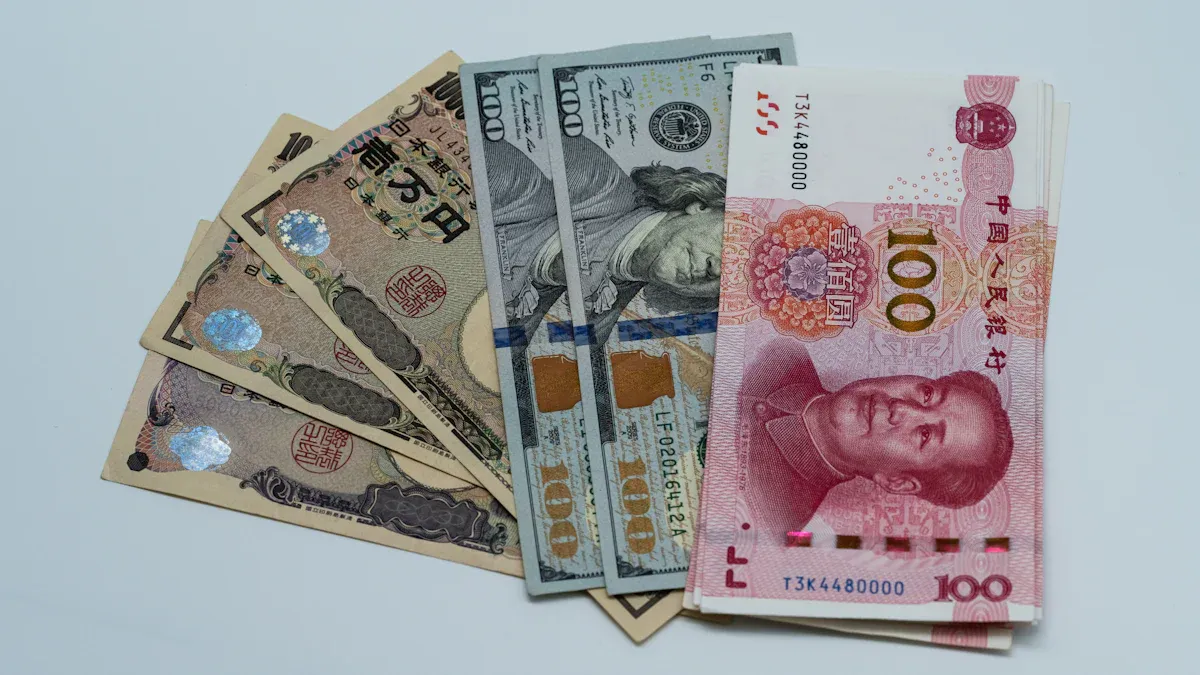
Image Source: pexels
When you need to convert USD to CNY, remember the most important principle: Never complete the currency exchange step at a US bank.
At major US banks for exchange, you will ultimately lose about 5% of your money due to unfavorable exchange rates.
This means that for every conversion, you may unknowingly pay a high “intelligence tax.” By following the correct strategy, you can easily save this considerable expense.
Most people lose money not because “remitting is expensive,” but because they combine two steps: cross-border transfer and FX conversion—then let a bank do both. Banks often hide the real cost in the spread: it looks like there’s no fee, but the exchange rate is where you pay.
A more reliable approach is to separate the workflow: keep funds in USD during the cross-border leg, and move the “convert to CNY” step to a more transparent channel. Start by using the BiyaPay FX converter to estimate how much you’d actually receive via different routes; if you choose “remit USD first, convert in China,” it’s also worth double-checking currency selection, settlement rails, and whether the transfer goes through SWIFT to avoid intermediary and receiving fees—see BiyaPay’s SWIFT explainer. If you care most about predictable fees and speed, compare online remittance paths and run a cost check via the BiyaPay remittance entry so “saving money” becomes a repeatable, calculable decision rather than a guess.
Key Points
- Never convert USD to CNY at a US bank, as the exchange rate is unfavorable and results in significant losses.
- When remitting from the US to China, send USD and let the recipient convert to CNY at a Chinese bank, which is much more cost-effective.
- Online remittance platforms (like Wise) are cheaper and more transparent than traditional bank wire transfers, making them a great choice for remittances.
- Avoid private currency exchange, as it carries high legal and financial risks.
- When needing cash upon returning to China, using a Fidelity or Charles Schwab debit card for ATM withdrawals is the most cost-effective, as they reimburse fees and provide good exchange rates.
First Principle of Currency Exchange: Avoid US Banks
You might think handling all financial matters at your usual US bank is most convenient, but this idea will cost you dearly when it comes to currency exchange. Converting USD to CNY at a US bank exposes you to double losses from exchange rates and fees.
Double Losses from US Bank Exchanges
The losses at US banks mainly come from a hidden aspect: extremely unfavorable exchange rates. The rate offered by the bank is not the real international market rate but one with a significant “markup” added to the market rate. This difference is the bank’s profit and your hidden loss.
Simply put, the bank “buys” your dollars at a poorer rate, giving you fewer CNY in exchange. This process appears fee-free, but in reality, you have already lost a substantial amount.
Many banks also update rates infrequently, meaning you may miss out on favorable market fluctuations.
Comparison of Exchange Rates Between US and Chinese Banks
To give you a clearer sense of the difference, let’s look at a specific example. Assume at the same time, you need to convert $10,000 USD to CNY.
| Channel | Exchange Rate (1 USD = ? CNY) | Amount Received from $10,000 USD | Loss Compared to Market Rate |
|---|---|---|---|
| Real-Time Mid-Market Rate | 7.30 | ¥73,000 | Baseline |
| US Bank (e.g., Bank of America) | 6.95 | ¥69,500 | About ¥3,500 (nearly $500) |
| Mainland China Bank (e.g., Bank of China) | 7.28 | ¥72,800 | About ¥200 (about $28) |
From the table, you can see a startling fact: For the same $10,000 USD, converting at a US bank means you receive nearly 3,500 CNY less than at a mainland China bank. This amount is enough to cover a round-trip flight between China and the US! This nearly 5% exchange rate difference is the “big pit” you need to avoid at all costs.
Scenario One: Remitting from the US to China
Image Source: pexels
Having understood the basic principle of currency exchange, let’s look at the most common scenario: You are in the US and need to remit money to family or your own account in mainland China. Many people instinctively choose the most direct method, but this is often the most expensive.
Wrong Path: Directly Remitting CNY
The operation you must absolutely avoid is selecting “directly remit CNY” on your US bank’s online banking or at the counter. When you choose this option, you authorize the US bank to perform the currency conversion for you.
This means your USD will be converted to CNY at the US bank’s extremely poor rate (with about 5% loss), and then remitted to China. You lose a large amount right at the first step of remittance.
This option seems convenient, skipping the conversion step in mainland China, but the cost is that part of your hard-earned money evaporates unnecessarily.
Optimal Path: Remit USD, Convert in Mainland China
The correct approach is to keep the funds in USD form throughout the cross-border remittance process. You need to remit the USD intact from your US account to a bank account in mainland China, then have the recipient convert the USD to CNY through a mainland China bank.
The benefits of this are obvious: You enjoy the much more favorable “spot buying rate” at mainland China banks compared to US banks. Although this rate has a slight gap from the real-time market rate, the loss is negligible compared to US bank rates. This simple change in operation order can save you thousands of CNY.
Standard Three-Step Operation
Follow these three steps to easily complete a cost-effective USD to CNY remittance:
- Remit USD from the US: Initiate an international wire transfer at your US bank. When filling in remittance details, ensure the recipient account is one that can receive foreign currency (USD) at a mainland China bank, and select USD as the remittance currency.
- Receive USD in Mainland China: The remittance usually takes 1-3 business days to arrive. The funds will be deposited in USD into the recipient’s mainland China bank account.
- Convert in Mainland China Bank: The recipient can now bring their ID and handle the conversion via mobile banking app or at the bank counter. According to China’s foreign exchange regulations, each Chinese resident has an annual equivalent of $50,000 USD convenient conversion quota. Within the quota, you only need to declare the fund purpose (such as living expenses, family support, etc.) to easily convert the USD in the account to CNY.
Comparison of Mainstream Channels for USD to CNY
Image Source: unsplash
After understanding the basic strategy of “remit USD, convert in mainland China,” the next step is to choose a suitable channel to send USD from the US to mainland China. Different channels vary greatly in fees, exchange rates, and security. Below, we detail and compare several mainstream USD to CNY remittance methods.
Traditional Bank Wire Transfer
Bank wire transfer is the most familiar method and the most traditional. You can initiate an international remittance directly to a mainland China bank account through your US bank’s branch or online banking.
Its main advantage is feeling “safe and reliable,” as it is your own bank. However, its disadvantages are very obvious: high and opaque fees.
Bank wire transfers usually involve “two-way charging,” meaning both the sending and receiving banks charge fees.
Let’s look at the typical fee structure:
| Fee Type | Amount |
|---|---|
| International Outgoing Transfer (Charged by US Bank) | About $50 per transfer |
| International Incoming Transfer (Charged by Mainland China Bank) | About $25 per transfer |
This means that for each remittance, fixed fees alone can reach up to $75. Additionally, wire transfer processing time is relatively long.
- Arrival Time: Usually takes 1 to 5 business days.
- Influencing Factors: Bank identity verification, holidays, intermediary bank processing, etc., can all extend waiting time.
Conclusion: For small-amount remittances, the fixed fees of bank wire transfers are too high in proportion, making it very uneconomical. It is more suitable for large-amount remittances where fees are less sensitive and traditional bank channels are highly trusted.
Online Remittance Platforms (Wise, Remitly)
In recent years, online remittance platforms represented by Wise (formerly TransferWise) and Remitly have risen rapidly, becoming the preferred choice for many. Their biggest advantages are transparency, low cost, and efficiency.
These platforms usually use a completely different model from banks. They do not use the traditional SWIFT network but have their own local accounts in different countries, completing cross-border transfers via “local transfers,” greatly reducing costs.
Core Advantage: Online platforms usually provide you with the real “mid-market rate” for conversion, charging only a publicly transparent service fee. Before remitting, you can clearly see all fees and the final arrival amount.
Taking Wise as an example, when you remit $1,000 USD, it might look like this:
| Category | Details |
|---|---|
| Exchange Rate | 1 USD = 7.06210 CNY (Mid-Market Rate) |
| Transfer Fee | $13.43 |
| Recipient Receives | ¥6,967.26 CNY |
| Transfer Speed | Can arrive in seconds at fastest |
Compared to bank wire transfers, you not only save high fixed fees but also enjoy the best exchange rate.
? Money-Saving Tip Most online remittance platforms offer very attractive promotions to attract new customers. For example, Wise and Remitly usually provide first transfer fee-free or significant fee discounts for new users. When using for the first time, be sure to look for and use these new user benefits to save even more.
Private Currency Exchange Institutions
You may have seen individuals or institutions offering exchange services in social groups or forums, usually quoting more attractive rates than banks or even Wise. This method seems tempting, but it hides huge risks.
⚠️ High-Risk Warning We strongly recommend you avoid using any unofficial, unlicensed private currency exchange channels. The sources and destinations of funds in these channels are unclear, may involve illegal activities, and put your funds at great risk.
- Legal Risk: In the US, operating money transmission without a license is a federal crime. According to US law, participating in such activities can face high fines or even up to 5 years imprisonment. As a user, you may unintentionally get involved in illegal activities like money laundering, leading to frozen bank accounts or investigations.
- Financial Security Risk: Private exchanges rely entirely on trust, with no legal protection. After transferring money to the other party, they could simply disappear, leaving you with nothing. In recent years, fraud cases from private exchanges have emerged endlessly, such as scams using fake investment platforms to attract users, ultimately absconding with funds and causing heavy losses to thousands of participants.
Conclusion: Risking your entire principal for a small exchange rate difference in huge legal and financial dangers is extremely unwise. Always choose regulated, legitimate financial institutions to handle your funds.
Strategies for Large-Amount Remittances and Commercial Receipts
When handling large amounts of funds or commercial receipts, strategies become even more important. A wise decision can not only save you more money but also effectively hedge against exchange rate fluctuation risks.
Money-Saving Tips for Large Transfers
For large personal remittances, such as paying tuition or purchasing assets, the core money-saving tip is to utilize provider discounts for large amounts.
The first tip is consolidating small transfers into a single large transfer. Many platforms offer discounts for large transactions. For example, Wise provides fee discounts for single or multiple transfers exceeding $25,000. Once you reach this threshold, the discount activates automatically and lasts until the end of the month. Therefore, instead of ten $5,000 transfers, one $50,000 transfer can significantly reduce your total fee cost.
The second tip is choosing providers with tiered fee structures, especially beneficial for freelancers or businesses with ongoing remittance needs. For example, Revolut offers different paid plans, with higher monthly fees including more free international payments.
| Revolut Plan Type | Monthly Fee | Free International Payment Quota |
|---|---|---|
| Freelancer Plans | ||
| Free Plan | $0 | 0 times |
| Professional Plan | $9.99 | 5 times |
| Flagship Plan | $39.99 | 10 times |
By choosing a plan matching your remittance frequency, you can minimize per-transfer costs.
Hedging Methods for Commercial Receipts
If you do cross-border business or receive USD payments as a freelancer, exchange rate fluctuations are an operational risk you must face. One unfavorable rate change can wipe out your hard-earned profits.
The most direct hedging method is including exchange rate risk management clauses in commercial contracts. This locks in risk in advance, protecting your income. You can negotiate the following clauses with clients:
Fixed Rate Clause (Freezing Provision): Clearly specify a fixed exchange rate in the contract. Regardless of market fluctuations, both parties settle at this agreed rate.
Shared Risk Clause (Shared Risk Provision): Agree on an exchange rate fluctuation range (e.g., 3%). If fluctuations exceed this range, both parties share the excess losses or gains.
Besides contract constraints, you can consider more professional financial tools. For example, open a commercial account that can receive and hold USD (such as at a licensed Hong Kong bank or through professional receipt platforms), allowing you to convert USD to CNY when rates are favorable. For more professional sellers, banks offer tools like “forward settlement” to lock in a future date’s rate in advance.
Best Solution for Needing Cash Upon Returning to China
When you just get off the plane and step onto mainland China soil, you may immediately need some CNY cash for taxi fare or a bottle of water. In such emergencies, how do you get cash in the most cost-effective way? Different choices lead to huge cost differences.
Best Choice: Zero-Fee Debit Card ATM Withdrawals
For needing cash in mainland China, the most powerful tool is a debit card from Fidelity or Charles Schwab. These two cards are hailed by many overseas Chinese as “god cards” because they almost perfectly solve all pain points of overseas withdrawals.
Their core advantages are:
- Reimburse All Global ATM Fees: No matter which bank ATM in mainland China you use, the fees charged by the ATM owner bank will be fully reimbursed by Fidelity and Charles Schwab.
- Excellent Exchange Rates: These two institutions charge no foreign transaction fees, using rates directly from the Visa network. This means you enjoy rates very close to real-time market rates, avoiding up to 5% losses from banks.
Fidelity Cash Management Account
- Fee Reimbursement: When withdrawing at any ATM with Visa logo, all ATM fees are automatically reimbursed to your account on the same day.
- Exchange Rate: Fidelity charges no foreign transaction fees. Although terms mention possible 1% foreign transaction fee, many user reports indicate no such fee for ATM withdrawals. Rates use Visa’s directly.
Charles Schwab Bank High Yield Investor Checking Account
- Fee Reimbursement: Schwab reimburses unlimited global ATM fees in a lump sum at the end of the month you use the debit card.
- Exchange Rate: Schwab also charges no foreign transaction fees.
| Feature Comparison | Fidelity Debit Card | Charles Schwab Debit Card |
|---|---|---|
| ATM Fee Reimbursement | Global reimbursement, same-day arrival | Global unlimited reimbursement, lump sum at month-end |
| Foreign Transaction Fee | $0 | $0 |
| Exchange Rate Source | Visa Network Rate | Visa Network Rate |
| Account Opening Requirements | No need to link investment account | Need to open an investment account simultaneously (no funding required) |
Therefore, if you frequently return to China or travel globally, getting one of these “god cards” in advance can save you considerable fees each withdrawal.
Backup Choice: No Foreign Transaction Fee Credit Card
If you do not have the above “god cards” or just want to spend at malls and restaurants rather than withdraw cash, a no foreign transaction fee credit card is your excellent backup choice.
Many US credit card companies, such as Capital One and Bank of America, offer cards with no foreign transaction fees. Using such cards for spending avoids the usual about 3% transaction fee charged by traditional credit cards.
| Credit Card Examples | Foreign Transaction Fee |
|---|---|
| Capital One VentureOne Rewards Credit Card | $0 |
| Capital One Quicksilver Cash Rewards Credit Card | $0 |
⚠️ Note: Avoid the "Dynamic Currency Conversion" (DCC) Trap When swiping a US credit card in mainland China, the cashier or POS screen may offer an option: “Do you want to pay in CNY or USD?”
Remember the golden rule: Always choose to pay in local currency (CNY).
If you choose to pay in USD, you trigger the mechanism called “Dynamic Currency Conversion, DCC.” This seems convenient as it immediately shows the USD equivalent, but the cost is extremely high. Institutions providing DCC add up to 5% to 7% markup to the rate, deducting this huge hidden fee directly from your bill.
Simply put, decline DCC and let Visa or Mastercard handle the conversion to save a lot of money.
Emergency Choice: Airport or Bank Small-Amount Exchange
If you have no cards and can only exchange carried USD cash, this should only be a last-resort emergency option, and only recommended for small amounts.
- Airport Exchange Points (e.g., Travelex): This is the most expensive choice. These points may advertise “zero commission,” but their profits are all hidden in extremely poor rates. Exchanging here, your actual rate loss can reach 10% or more. For example, when market rate is 1 USD = 7.3 CNY, airport points may offer only 1 USD = 6.5 CNY.
- Mainland China Bank Counters: This is much more cost-effective than airports. You need to bring your passport to a bank branch. Bank rates are slightly worse than market but far fairer than airport points. Main drawbacks are time-consuming: finding a bank, queuing, and filling forms.
Conclusion: These two cash exchange methods are only suitable for solving urgent cash needs of tens to a hundred USD upon arrival. For any large-amount exchanges, absolutely avoid these channels.
Hope you remember the most important core principle of this article: No matter the fund flow direction, never let a US bank handle the exchange step.
The ultimate strategy is simple: Always keep funds in USD for cross-border transfer, then complete conversion at the most favorable location (like mainland China) or through the best channel (like online platforms).
Now, based on your specific needs, such as amount size, urgency, and personal or commercial use, choose the most suitable option from those mentioned in this article to easily save real money.
FAQ
What does the annual $50,000 USD quota per person mean?
This is the annual quota for mainland China residents to convert foreign currency to CNY. The amount of USD remitted from the US is not restricted by this. When the recipient converts at a mainland China bank, this $50,000 USD quota is used.
Can I use PayPal for remittances?
We do not recommend using PayPal for personal remittances. Its fees are high, and the exchange rate is very unfavorable. The final amount received will be much less than using professional platforms like Wise. PayPal is more suitable for commercial transaction receipts.
What if I do not have a mainland China ID?
You can choose platforms that support remittance to Alipay or WeChat, like Wise. Alternatively, you can open a multi-currency account at a licensed Hong Kong bank. This way, you can first receive USD and convert at favorable rates yourself.
Is bringing cash or using cards more cost-effective when returning to mainland China?
Strongly recommend using cards. A Fidelity or Charles Schwab debit card is the best for withdrawals. No foreign transaction fee credit cards are suitable for spending. Carrying USD cash for exchange is the most expensive, only suitable for small emergency use.
*This article is provided for general information purposes and does not constitute legal, tax or other professional advice from BiyaPay or its subsidiaries and its affiliates, and it is not intended as a substitute for obtaining advice from a financial advisor or any other professional.
We make no representations, warranties or warranties, express or implied, as to the accuracy, completeness or timeliness of the contents of this publication.
Related Blogs of

Patreon/OnlyFans and Other Overseas Creator Platforms Payout: Ultimate Tricks to Bypass Domestic Bank Forex Review for Withdrawal

How Do European International Students Pay the Final Installment for a Used Car? Digital Payment Methods to Avoid SEPA Transfer Delays Caused by Weekend Bank Closures


Virtual Card Binding to AWS/GCP for AI Agent Deployment Frequently Flagged by Risk Control? Compliance Card Opening Guide to Avoid Pitfalls

OpenAI Card Frequently Declined (Card Declined)? Virtual Card Tested Solutions

Choose Country or Region to Read Local Blog
 Australia
 Austria
 Belgium
 Canada
 Cyprus
 Czech Republic
 Denmark
 Estonia
 Finland
 France
 Germany
 Greece
 Hong Kong
 India
India Indonesia
 Ireland
 Italy
Italy Japan
Japan Latvia
 Lithuania
 Luxembourg
 Malaysia
 Malta
Malta Morocco
 Nepal
Nepal Netherlands
 New Zealand
 Norway
 Pakistan
 Philippines
 Poland
 Portugal
 Romania
 Singapore
 Slovakia
 Slovenia
 South Africa
 South Korea
 Spain
Spain Sweden
 Thailand
 The United States
 Turkey
 United Arab Emirates
 United Kingdom
 Vietnam
Contact Us




BIYA GLOBAL LLC is registered with the Financial Crimes Enforcement Network (FinCEN), an agency under the U.S. Department of the Treasury, as a Money Services Business (MSB), with registration number 31000218637349, and regulated by the Financial Crimes Enforcement Network (FinCEN).
BIYA GLOBAL LIMITED is a registered Financial Service Provider (FSP) in New Zealand, with registration number FSP1007221, and is also a registered member of the Financial Services Complaints Limited (FSCL), an independent dispute resolution scheme in New Zealand.