Where Will the A-Share Index Head Next After Returning to 4000 Points?



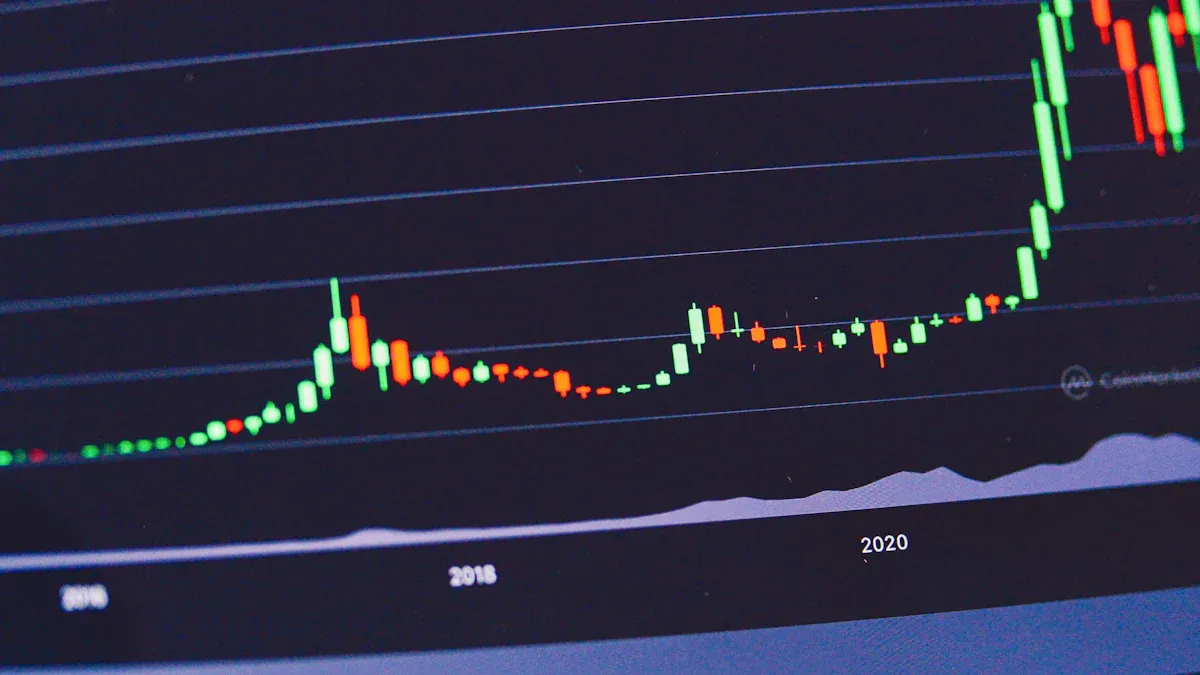
Image Source: unsplash
Market consensus predicts that after the A-share index reaches 4000 points in 2025, its next target will point to 4500 points in 2026.
This optimistic outlook is strongly supported by three core pillars. First, thanks to a series of supportive policies, China’s economic narrative has shifted toward stability, providing a solid foundation for the market. Second, corporate earnings are experiencing better-than-expected recovery, particularly in cutting-edge fields such as artificial intelligence. Finally, the supply-demand dynamics in the capital market are continuously improving.
Key Takeaways
- The China A-share market is expected to reach 4000 points in 2025 and potentially 4500 points in 2026.
- Economic stability, corporate earnings growth, and improved market supply-demand balance are the main drivers of the A-share rally.
- Technology, consumption, and traditional manufacturing sectors will offer investment opportunities.
- Investors should adopt a “core + satellite” strategy while remaining mindful of global economic and geopolitical risks.
Macro and Policy: The Cornerstone of A-Share Index Growth
Any healthy bull market is inseparable from macroeconomic stability and supportive policies. The current upward momentum in the A-share market stems from the continuous strengthening of these two foundations. Economic stabilization provides a “safety cushion” for the market, while targeted policies inject a “booster shot.”
Economic Fundamentals: Steady Growth Provides Support
Economic resilience is the source of market confidence. Despite challenges, core economic indicators show signs of stabilization. Industrial production maintained growth in the third quarter of 2025, with high-tech manufacturing growing by 10.3%, demonstrating positive structural optimization. Although the Manufacturing Purchasing Managers’ Index (PMI) remains near the boom-bust line, the new orders index has improved.
| Indicator | Time | Value |
|---|---|---|
| Manufacturing PMI | November 2025 | 49.2 |
| Manufacturing PMI | October 2025 | 49.0 |
These data indicate that the economy is gradually recovering from the bottom, providing a solid macroeconomic foundation for the capital market.
Policy Mix: Injecting Liquidity and Confidence
Proactive policies are key catalysts for market rallies. The government has explicitly called for more active fiscal policy and moderately loose monetary policy to stabilize market expectations.
The policy objectives are clear: effectively reduce financing costs for the real economy through a combination of measures while boosting investor confidence.
To this end, regulators have introduced a series of initiatives:
- Lowering the reserve requirement ratio for financial institutions
- Cutting key policy interest rates
- Expanding re-lending facility quotas to 1.1 trillion RMB
These measures directly release ample liquidity into the market and are expected to strongly support the recovery process of the A-share market.
Market Supply and Demand: Tighter IPOs and Inflows of Capital
The supply-demand dynamics in the capital market are undergoing profound changes, becoming an internal driver pushing the A-share index higher. On one hand, the phased tightening of IPO pacing helps optimize market supply and improve overall listed company quality. On the other hand, policies actively guide medium- and long-term capital into the market, continuously strengthening demand-side forces. The accelerated entry of “long-term money” such as social security funds, insurance funds, and pensions has significantly improved the market’s investor structure.
| Time | Institutional Investors’ Holdings of A-Share Floating Market Cap (Trillion RMB) | Proportion of Total Market Cap (%) |
|---|---|---|
| End of August 2024 | 14.5 | 22.2 |
This “reduce supply, increase demand” pattern lays the foundation for the long-term healthy development of the market.
Earnings and Valuation: The Core Driver of the Rally
If macro and policy factors are the foundation of the rally, then corporate earnings growth is the core engine driving sustained upward movement in the A-share index. The market has moved past the stage of pure valuation repair; the next phase of gains will be driven more by tangible performance growth.
Earnings Inflection Point: From Valuation Repair to Earnings-Driven
The market is witnessing a key shift: corporate earnings are poised for better-than-expected recovery. This recovery stems not only from cyclical warming but also from new growth points driven by structural upgrades.
Better-than-expected earnings growth is particularly evident in sectors that have successfully translated technological innovation into commercial value.
Taking high-end manufacturing as an example, overseas expansion is accelerating. Chinese companies are leveraging strong supply chains and technological advantages to secure important positions in global markets. Research shows that since 2011, Chinese companies have announced over 460 overseas green manufacturing projects, with more than 80% launched after 2022. This indicates that Chinese firms are globalizing their value chains, not just exporting products.
Core factors driving Chinese high-end manufacturing overseas include:
- Strategic Support: Initiatives like “Made in China 2025” have provided early and sustained support for industries such as electric vehicles.
- Capacity Advantage: Massive prior investments have created enormous production capacity, prompting companies to actively expand overseas.
- Cost Control: Control over key raw materials like lithium gives companies a significant edge in offering cost-effective products.
These factors combined open new possibilities for earnings growth in related companies, becoming an important fundamental support for market confidence.
Structural Opportunities: Technology, Consumption, and Manufacturing Forming a Triad
Against the backdrop of overall earnings recovery, structural opportunities stand out prominently. Technology, consumption, and “old economy” sectors in manufacturing and finance form a tripartite pattern, expected to take turns leading the market at different stages.
1. Technology: AI Empowerment and Semiconductor Independence
The implementation of artificial intelligence (AI) applications is injecting new vitality into the technology sector. At the same time, the investment logic in the semiconductor industry is undergoing profound changes. In the past, growth was mainly driven by rapid policy-fueled expansion. Now, investors are more cautiously seeking companies with core technologies and stable profitability within the chip and equipment ecosystem.
- Industry Forecast: The Semiconductor Industry Association (SIA) predicts that by 2024, China’s semiconductor industry revenue will reach $116 billion, accounting for over 17.4% of the global market.
- Technology Focus: Facing external restrictions, Chinese companies are focusing on mature process technologies, achieving significant capacity growth.
- Market Size: China’s equipment market is expected to reach approximately $32.857 billion in 2025, with growth slowing but volume remaining substantial.
Additionally, signs of easing in China-U.S. relations and better-than-expected progress in pragmatic cooperation could positively impact technology supply chains reliant on global networks.
2. Consumption: Beneficiaries of Cyclical Recovery
As economic activity gradually normalizes, recovery in the consumption sector—particularly cyclical segments—is worth anticipating. With improving income expectations and rising consumer confidence, long-suppressed demand is likely to be released.
Historical experience shows that in the early stages of economic recovery, big-ticket items and discretionary consumer goods typically perform strongly.
The following consumption sub-sectors are expected to benefit most from this cyclical recovery:
- Automobiles
- Consumer discretionary (including home renovation, building materials, and furniture)
3. “Old Economy”: Value Reassessment in Manufacturing and Finance
Sectors represented by finance and energy, with their low valuations and high dividends, are re-entering investors’ focus, becoming important market “stabilizers.”
Style Outlook: Value Return of High-Dividend “Old Economy”
In a market environment where uncertainty persists, high-dividend strategies offer unique defensive value and stable cash returns. Traditional industries such as banking and energy currently trade at historically low valuations with attractive dividend yields.
Taking the U.S. market as an example, there are clear valuation differences between energy and financial sectors compared to the broader market. As of December 5, 2025, the overall P/E ratio of the Chinese stock market is approximately 11.11, while the S&P 500 energy sector P/E is 17.07 and financials is 18.21. This highlights the valuation appeal of specific sectors.
At the same time, these sectors offer substantial dividend yields.
| Sector Name | Dividend Yield |
|---|---|
| Banks (Money Center) | 2.32% |
| Banks (Regional) | 2.86% |
Energy sector dividend returns are even more generous:
- Enbridge (Energy Transportation): Dividend yield 5.8%
- Chevron (Integrated Oil & Gas): Dividend yield 4.4%
This combination of low valuation and high dividends makes “old economy” sectors not only a safe haven for capital but also poised for value reversion, likely playing a key role in market rotations.
Technical and Historical Analysis: A-Share Index Target Calculations
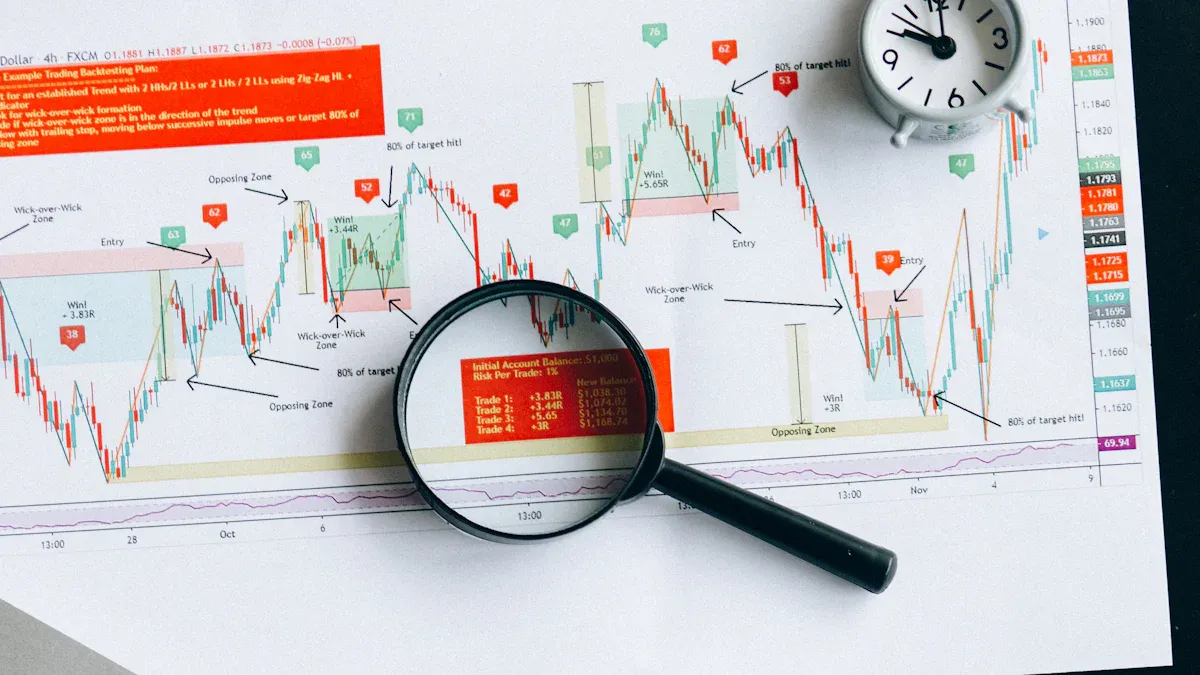
Image Source: pexels
Macro fundamentals and corporate earnings provide the “why” for market gains, while technical analysis and historical patterns attempt to answer “where to.” By interpreting chart patterns and reviewing historical cycles, investors can build a reference framework for future market paths.
Technical Patterns: Key Levels and Support/Resistance
Technical analysis predicts future movements by studying historical prices and volumes. At the current juncture, several key technical levels provide important guidance for the A-share index’s future direction. Market analysts generally believe that after effectively breaking through and stabilizing above the 4000-point integer mark, the index has opened new upside potential.
From a technical target perspective, several noteworthy potential levels exist:
- Short-term targets are widely seen around 4500 points, a key psychological and technical resistance level for the next phase.
- More optimistic long-term forecasts point to the historical high of 6,124 points (RMB-denominated), with some views suggesting an ultimate target of 8,660 points (RMB-denominated).
Notably, as prices approach these key psychological levels, market sentiment often intensifies. Trading volume typically surges during these periods, reflecting strong reactions and collective emotions from participants, often leading to heightened short-term volatility.
Volume expansion is a critical signal confirming breakout validity. A sustained rise accompanied by moderate volume increase generally indicates a healthier, more sustainable trend than a sharp surge driven by panic buying. Therefore, observing the price-volume relationship as the index approaches key levels is crucial for assessing rally strength.
Historical Lessons: Similarities and Differences with the 2015 Bull Market
History does not simply repeat, but it often rhymes. Reviewing the 2015 bull market and comparing it to the current environment can help clarify the unique nature of this rally and set more reasonable expectations.
Although both periods feature rapid index gains, their core drivers, market environments, and participant structures differ fundamentally. Simply equating the current rally with the 2015 “leveraged bull” could lead to serious misjudgments.
| Comparison Dimension | 2015 Bull Market | Current Market Rally |
|---|---|---|
| Core Driver | Leveraged funds and liquidity flood | Corporate earnings recovery and structural opportunities |
| Valuation Levels | Overall high, GEM bubble | Relatively reasonable, clear structural divergence |
| Investor Structure | Extremely high retail participation, chasing highs and cutting lows | Higher institutional share, long-term capital inflows |
| Macro Background | Policy stimulus amid economic downturn pressure | Economic stabilization and recovery, high-quality development transition |
The comparison reveals that this rally has a more solid foundation. It relies more on improvements in economic fundamentals and endogenous corporate earnings growth rather than strong external capital pushes. This suggests a potentially smoother and more sustained upward path with lower probability of systemic risks. Investors should recognize these differences and avoid blindly applying past experiences to current decisions.
Investment Strategy and Risk Outlook

Image Source: pexels
With clear potential market targets, investors need a well-defined action plan. This involves not only capturing opportunities but also managing risks. A comprehensive strategy should balance offense and defense while maintaining clarity amid optimism.
Allocation Recommendations: Building a “Core + Satellite” Portfolio
In a structurally driven market, constructing a “core + satellite” portfolio is an effective approach. This strategy balances stability and growth, helping investors navigate market cycles.
- Core Position: This forms the foundation of the portfolio, typically accounting for 70% to 90% of total assets. It should be allocated to high-certainty earnings growth and reasonably valued mainline sectors, such as the technology, consumption, and high-dividend blue-chip sectors mentioned earlier. The core provides steady growth and defensive capabilities for the overall portfolio.
- Satellite Position: This acts as the “vanguard” for excess returns, typically 10% to 30% of assets. It targets high-growth thematic opportunities, such as state-owned enterprise reform.
The State-owned Assets Supervision and Administration Commission (SASAC) has prioritized technological innovation in reforms and pushed SOEs to improve financial performance. These efforts are showing results, with 2023 SOE dividend payouts rising to approximately $171.8 billion and stock repurchases increasing significantly.
These policy-driven, fundamentally improving themes provide rich options for satellite positions.
Risk Warnings: Beware of Internal and External Uncertainties
Any investment decision must be based on full awareness of risks. Although the current market outlook is positive, internal and external uncertainties remain.
External risks cannot be ignored. First, the global macro environment is full of variables. Over 50 countries held elections in 2024, and geopolitical tensions could impact market sentiment at any time. Second, elevated valuations in major overseas assets pose potential risks. For example, the forward P/E of the U.S. S&P 500 is near historical highs with high market concentration; a sentiment reversal could transmit effects to global markets.
Internal risks also require vigilance. If China’s economic recovery falls short of expectations, it will directly affect corporate earnings and market confidence. Investors should monitor several key areas:
- Structural overcapacity: Output in some industrial sectors exceeds market absorption, potentially triggering price wars and compressing profits.
- Domestic demand recovery: Confidence indicators related to the real estate market remain weak, which may constrain the strength of consumption recovery.
- Investment discipline: Amid rising markets, investors should set reasonable return expectations. Taking profits timely during periods of high sentiment is key to managing risk and achieving long-term steady returns.
In summary, investors should actively position themselves while remaining highly vigilant to various risks to achieve steady progress.
Multiple positive factors are collectively pushing the A-share index to new heights, with market consensus viewing 4500 points as the next target. The core drivers of this rally lie in better-than-expected corporate earnings recovery and structural opportunities created by new technologies such as artificial intelligence.
Investors should focus on earnings-driven themes and adopt a balanced “core + satellite” strategy. At the same time, staying alert to global macro risks is key to achieving steady returns.
FAQ
How does this rally differ from the 2015 bull market?
The core drivers are fundamentally different. The 2015 rally was primarily driven by leveraged funds, while this rally is based on corporate earnings recovery and economic structural transformation. Current valuations are more reasonable, the investor structure is healthier, and the overall foundation is more solid.
What exactly is the “core + satellite” strategy?
It is a portfolio construction method. The majority of funds (core) are allocated to high-certainty blue-chip sectors for stable returns. A smaller portion (satellite) is invested in high-growth themes like SOE reform to capture excess return opportunities.
What role do technology stocks play in this rally?
Technology stocks are one of the core drivers of the rally. The implementation of new technologies such as artificial intelligence (AI) has opened new earnings growth space for related companies. The independent development of the semiconductor industry also provides structural opportunities, becoming a market focus.
What is the biggest external risk investors face currently?
Uncertainty in the global macro environment is the primary risk. This includes policy changes in major economies, geopolitical tensions, and potential market volatility triggered by high valuations in major overseas assets. Investors need to remain vigilant to these external factors.
*This article is provided for general information purposes and does not constitute legal, tax or other professional advice from BiyaPay or its subsidiaries and its affiliates, and it is not intended as a substitute for obtaining advice from a financial advisor or any other professional.
We make no representations, warranties or warranties, express or implied, as to the accuracy, completeness or timeliness of the contents of this publication.
Related Blogs of

A-Share Market Capitalization Query Guide: Easily Master Calculation Methods and Analysis Techniques


Nasdaq 100 vs S&P 500: From Components to Future Outlook in One Article


Essential Guide to Cross-Border Wire Transfers: Complete Strategy for Wiring Money from China to the US


The A-Share Index Apps Professional Investors Are Using — Have You Downloaded Them?

Choose Country or Region to Read Local Blog
 Australia
 Austria
 Belgium
 Canada
 Cyprus
 Czech Republic
 Denmark
 Estonia
 Finland
 France
 Germany
 Greece
 Hong Kong
 India
India Indonesia
 Ireland
 Italy
Italy Japan
Japan Latvia
 Lithuania
 Luxembourg
 Malaysia
 Malta
Malta Morocco
 Nepal
Nepal Netherlands
 New Zealand
 Norway
 Pakistan
 Philippines
 Poland
 Portugal
 Romania
 Singapore
 Slovakia
 Slovenia
 South Africa
 South Korea
 Spain
Spain Sweden
 Thailand
 The United States
 Turkey
 United Arab Emirates
 United Kingdom
 Vietnam
Contact Us
Company and Team
BiyaPay Products
Customer Services




BIYA GLOBAL LLC is a licensed entity registered with the U.S. Securities and Exchange Commission (SEC No.: 802-127417); a certified member of the Financial Industry Regulatory Authority (FINRA) (Central Registration Depository CRD No.: 325027); regulated by the Financial Industry Regulatory Authority (FINRA) and the U.S. Securities and Exchange Commission (SEC).
BIYA GLOBAL LLC is registered with the Financial Crimes Enforcement Network (FinCEN), an agency under the U.S. Department of the Treasury, as a Money Services Business (MSB), with registration number 31000218637349, and regulated by the Financial Crimes Enforcement Network (FinCEN).
BIYA GLOBAL LIMITED is a registered Financial Service Provider (FSP) in New Zealand, with registration number FSP1007221, and is also a registered member of the Financial Services Complaints Limited (FSCL), an independent dispute resolution scheme in New Zealand.