Tesla, Microsoft, or Palantir: Which Is the Best Tech Investment for 2026?




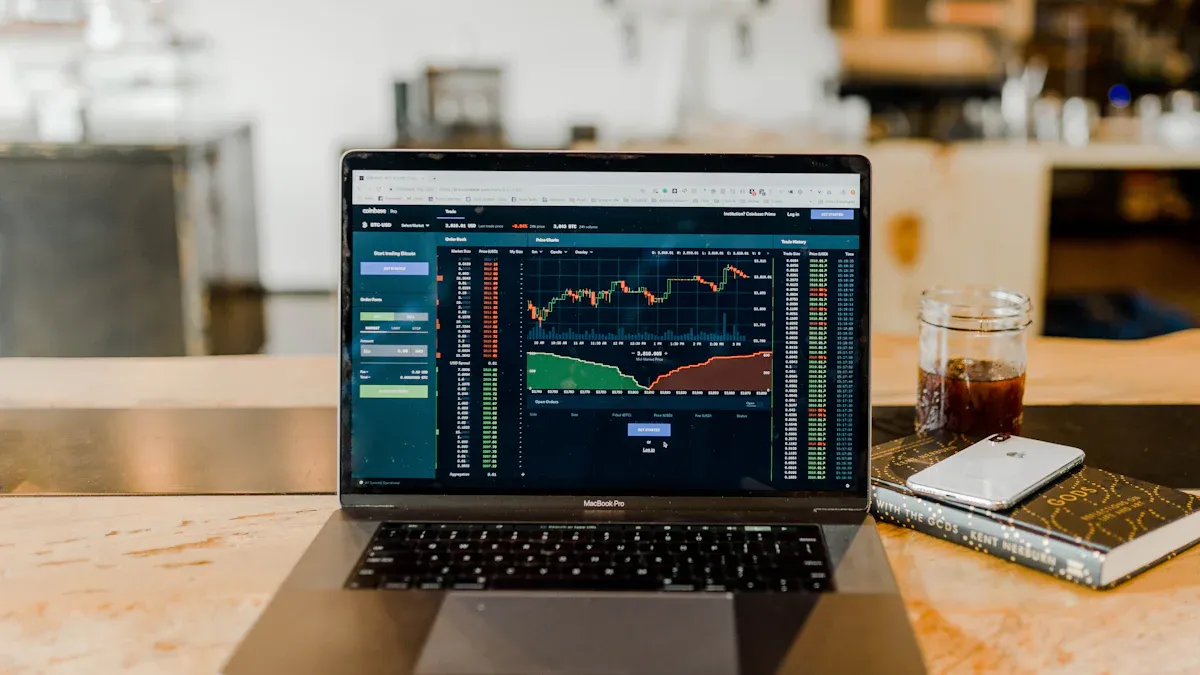
Image Source: unsplash
Looking toward 2026, the explosive growth of artificial intelligence (AI) combined with expected Federal Reserve rate cuts forms the core backdrop for tech stock investing. Microsoft stands out as a stable cornerstone of the AI, while Tesla and Palantir represent higher-risk, higher-reward opportunities. The US financial markets widely anticipate a looser monetary environment, with analysts forecasting policy rates potentially heading toward:
- End of 2025: 3.75%
- End of 2026: close to 3.0% – 3.50%
Ultimately, there is no single “best choice” — the optimal pick depends entirely on each investor’s risk appetite and goals.
Key Takeaways
- Tesla is a high-risk, high-reward play driven by electric vehicles, energy, Full Self-Driving, and Optimus robotics.
- Microsoft is the stable choice, anchored by Azure cloud services and Copilot AI integration.
- Palantir offers explosive growth potential through its data analytics platforms and accelerating AIP commercialization.
- Fed rate cuts benefit growth stocks like Tesla and Palantir by supporting higher valuation multiples.
- Investors should allocate according to personal risk tolerance.
Tesla (TSLA): Innovation Beast — Opportunities and Challenges
Tesla is far more than an electric vehicle manufacturer — it is a massive ecosystem built around breakthrough technology. For investors seeking aggressive growth, Tesla remains highly attractive yet extremely volatile.
Core Strengths: EVs, Energy, and AI Ecosystem
Tesla’s competitive edge stems from market leadership across multiple domains. Its first-mover advantage in electric vehicles is deeply entrenched, continuously reinforced by technological innovation and brand power. Meanwhile, its energy business is becoming another powerful growth pillar.
- EV Market Leadership: Tesla dominates global EV market share through brand appeal and technical superiority.
| Category | Data |
|---|---|
| Tesla Global EV Market Share (2024) | ~10.52% |
| Tesla EV Deliveries (2024) | 1.79 million vehicles |
- Energy Business Potential: The Megapack energy storage business is on a high-growth trajectory with massive market potential.
| Category | Data |
|---|---|
| Tesla Share in Energy Storage Integrators (2023) | 15% |
| Global Energy Storage CAGR (2024–2032) | 20.88% |
2026 Growth Catalysts: Full Self-Driving Commercialization and Optimus Robot
Looking to 2026, two forward-looking projects will determine whether Tesla’s valuation can reach the next level. The commercialization of Full Self-Driving (FSD) is under intense market scrutiny. CEO Elon Musk expects existing vehicles to achieve unsupervised full autonomy as early as 2025, a feature already generating significant profit at $8,000 per activation.
Additionally, the Optimus humanoid robot opens even greater imagination. Experts predict initial commercial deployment between 2025 and 2026, starting in Tesla factories and expanding into logistics and other sectors. Success here would transform Tesla from an auto and energy company into a full-fledged AI and robotics platform.
Risks: Intensifying Competition and High Valuation Pressure
Investing in Tesla requires acknowledging substantial risks. Global EV competition is becoming unprecedented, with legacy automakers and startups pouring resources in, potentially eroding Tesla’s market share and margins. Furthermore, Tesla’s stock has long traded at a premium reflecting extremely high future growth expectations. This elevated valuation means any delay in technology milestones or weaker-than-expected financial results could trigger sharp corrections.
Microsoft (MSFT): Cloud and Software Titan of the AI Era
As a core member of the Magnificent Seven, Microsoft leverages deep technical depth and an enormous enterprise customer base to serve as an indispensable foundation in the AI era. For investors seeking steady growth, Microsoft offers relatively high certainty.
Core Strengths: Azure + Copilot AI Moat
Microsoft’s moat rests on two pillars: cloud computing and AI applications. Azure is the critical infrastructure for global enterprise digital transformation, firmly holding second place worldwide.
| Provider | Q3 2024 Market Share |
|---|---|
| AWS | 31% |
| Microsoft Azure | 20% |
| Google Cloud | 12% |
More importantly, Microsoft is injecting Copilot AI across its entire product suite — Office, Windows, and Azure — strengthening user stickiness and building an almost insurmountable AI ecosystem moat.
2026 Growth Drivers: AI Monetization and Gaming
By 2026, Microsoft’s biggest growth engine will be full AI service monetization. Copilot has already demonstrated remarkable productivity gains, becoming a compelling paid enterprise feature.
Early Copilot User Feedback
- 70% of users report improved daily productivity.
- Tasks completed 29% faster on average.
- Financial report generation reduced from 20 minutes to 45 seconds.
These metrics directly support Copilot pricing power and recurring revenue potential. Following the Activision Blizzard acquisition, gaming is another growth engine. Although content & services revenue grew only 1% YoY in Q1 FY2026, integration benefits are expected to emerge, shifting the business toward higher-margin subscription content.
Risks: Global Antitrust Scrutiny and Rapid Tech Evolution
Microsoft’s primary risks stem from global antitrust regulation. The EU has launched investigations into bundling Teams with Office suites. Despite voluntarily unbundling in Europe, regulators remain unsatisfied. History shows Microsoft has faced massive fines for similar practices — a continuing variable to monitor. Rapid AI evolution also demands massive R&D investment to maintain leadership.
Palantir (PLTR): The Mysterious Data Intelligence Unicorn
Palantir is often regarded as one of the most enigmatic companies in tech, renowned for powerful data analytics platforms serving governments and large enterprises. For investors willing to accept higher risk for potential explosive growth, Palantir stands alone.
Core Strength: Proprietary Data Operating System
Palantir’s moat lies in its highly proprietary data OS — Gotham for government and Foundry for commercial clients. These platforms transform fragmented internal data into a unified, actionable intelligence network, enabling analysts to connect massive datasets and conduct deep searches.
Proven across critical US agencies:
- Department of Defense: Multi-billion-dollar contracts for battlefield intelligence.
- ICE: Integrates travel, visa, and biometric data.
- CDC: Expanded partnership for disease surveillance.
- NYPD: Supports criminal investigations through data integration.
2026 Growth Driver: AIP Commercialization and Customer Expansion
By 2026, Palantir’s biggest catalyst is the full commercialization of its Artificial Intelligence Platform (AIP) and rapid commercial market penetration. AIP allows enterprises to easily deploy AI models on proprietary data, driving accelerating revenue growth.
Stunning metrics reflect strong adoption:
| Metric | YoY Growth |
|---|---|
| Total Contract Value (TCV) | 151% |
| US Commercial Revenue | 121% |
| Customer Count | 45% |
“We achieved the highest quarterly TCV bookings in our history at $2.8 billion, up 151% YoY. We are seeing the impact of the AI revolution.”
Risks: Valuation Debate and Customer Concentration
Palantir’s main risks revolve around its sky-high valuation and customer structure. Some analysts view Palantir as a pure-software AI play trading at Cisco-like multiples from the dot-com era — pricing in many years of future profitability. This makes the stock extremely sensitive to any earnings miss.
Another risk is customer concentration. While commercial revenue is surging, government contracts remain a key revenue pillar.
| Customer Type | Revenue (million USD) |
|---|---|
| Commercial | 548 |
| Government | 633 |
Heavy reliance on large government contracts means a lost or non-renewed deal could materially impact revenue. Investors must monitor commercial diversification speed.
Head-to-Head Showdown: Who Will Be the 2026 US Tech Darling?

Image Source: pexels
When Tesla, Microsoft, and Palantir all appear on Wedbush’s Top 10 Tech Picks list, it underscores their market significance. Yet their investment profiles differ dramatically. This showdown isn’t about crowning one winner — it’s about understanding each company’s unique traits to help investors navigate the unpredictable US markets.
Valuation & Financials: Who Offers the Most Attractive Price?
Valuation and financial health are the two most critical metrics for assessing reasonableness.
To keep TSLA, MSFT, and PLTR comparisons consistent, you can first verify tickers, quotes, and market-cap context via BiyaPay’s stock info lookup, then return to the table below with the same “baseline” in mind.
If you’re funding across currencies or allocating in batches, check the fiat FX converter & comparison to estimate conversion cost and slippage; for a unified entry, start from the official site or register to complete basic setup.
BiyaPay is positioned as a multi-asset wallet covering cross-border transfers and investing/trading workflows, and it operates with U.S. MSB status and New Zealand FSP registration; details are available on the official site.
| Company | Forward P/E | Price/Sales | Key Characteristics |
|---|---|---|---|
| Microsoft (MSFT) | ~35x | ~13x | Reasonable valuation, strong cash flow & profitability |
| Tesla (TSLA) | ~60x | ~7x | High multiple reflects massive disruptive expectations |
| Palantir (PLTR) | ~65x | ~22x | Extremely rich valuation on pure-software AI story |
Key takeaways:
- Microsoft is the most financially sound with the most “reasonable” valuation among the three.
- Tesla and Palantir trade on “dream multiples” — investors are betting on world-changing potential years into the future, making them highly sensitive to sentiment and execution.
Fed Rate Cut Impact In 2026, if the Fed proceeds with cuts as expected, lower rates increase the present value of future cash flows. This benefits growth stocks like Tesla and Palantir far more than stable Microsoft, potentially driving significant multiple expansion.
Innovation & Moat: Whose Moat Is Deepest?
Long-term value depends on moat depth and breadth.
- Microsoft: Ecosystem Moat Microsoft’s ubiquity — Office, Windows, Azure — locks in millions of users. Copilot adds an AI defense layer, dramatically raising switching costs.
- Tesla: Technology + Brand Moat Tesla’s relentless R&D yields extensive AI patent portfolio covering real-time autonomous decision-making, reinforcement learning, robotic manufacturing, Optimus improvements, AI-driven energy optimization, and AR displays.
- Palantir: Data Platform Moat Highly specialized, high-switching-cost platforms create a narrow but extremely deep moat in mission-critical environments.
Risk vs Reward: Who Offers the Highest Certainty?
Investment is always a risk-reward trade-off.
Historical volatility data shows stark differences:
- Tesla remains extremely volatile despite its size — capable of both massive gains and painful drawdowns.
- Microsoft exhibits low volatility befitting a mature giant — classic lower-risk, steady-return profile.
Analyst consensus reflects this:
| Company | Consensus Rating | Market Interpretation |
|---|---|---|
| Tesla (TSLA) | Hold | Huge potential but valuation & execution risk keep many sidelined |
| Microsoft (MSFT) | Buy | High certainty, clear AI monetization path — widely favored |
| Palantir (PLTR) | Hold | Compelling story but rich valuation creates debate |
In summary, the three occupy distinct places on the US tech spectrum: Microsoft = certainty & stability, Tesla = dream & highest upside/risk, Palantir = breakout potential awaiting commercial validation.
Ultimately, the three companies offer very different investment profiles. Tesla is the “high-risk, high-dream” bet; Microsoft is the “stable, AI-embracing” core holding; Palantir is the “high-growth, still-to-explode” speculative play.
Portfolio Allocation Suggestions Conservative investors should overweight Microsoft. Balanced growth investors can use Microsoft as core with a Palantir satellite. Aggressive investors seeking maximum upside can allocate to Tesla.
Looking to 2026 and beyond, successful tech investing will require dynamic adjustment. Investors must continuously monitor key macro variables such as:
- Actual AI impact on GDP and inflation
- US-China relations and global tech supply chain risks
- Fiscal health and debt risks in major economies
FAQ
As a beginner, which company should I prioritize?
For beginners seeking stability, Microsoft (MSFT) is the best starting point. Mature business, strong balance sheet, and relatively low volatility provide higher investment certainty.
How do Fed rate cuts affect these three stocks differently?
Rate cuts generally benefit tech. Lower funding costs are especially powerful for:
- Tesla (TSLA) and Palantir (PLTR): High-growth names are more sensitive to discount rates — cuts can drive significant valuation expansion.
- Microsoft (MSFT): Benefits but less dramatically than the other two.
Which company carries the highest investment risk?
Tesla (TSLA) has the highest risk. Extreme volatility and a valuation already pricing in aggressive future success mean any delay or increased competition can cause sharp declines. Requires high risk tolerance.
Beyond 2026, what is each company’s long-term potential?
- Microsoft: Long-term strength lies in continued AI ecosystem penetration and monetization.
- Tesla: Transformation from car company into AI and robotics platform company.
- Palantir: Depends on whether AIP achieves dominant commercial market share.
*This article is provided for general information purposes and does not constitute legal, tax or other professional advice from BiyaPay or its subsidiaries and its affiliates, and it is not intended as a substitute for obtaining advice from a financial advisor or any other professional.
We make no representations, warranties or warranties, express or implied, as to the accuracy, completeness or timeliness of the contents of this publication.
Related Blogs of
Run Local Large Models or Call APIs? 2026 AI Development Cost and Payment Method Comparison


YouTube Video Monetization: How Overseas Creators Convert Received USD Ad Revenue to Chinese Living Expenses the Fastest Way?


OpenAI Card Frequently Declined (Card Declined)? Virtual Card Tested Solutions


Patreon/OnlyFans and Other Overseas Creator Platforms Payout: Ultimate Tricks to Bypass Domestic Bank Forex Review for Withdrawal
Choose Country or Region to Read Local Blog
 Australia
 Austria
 Belgium
 Canada
 Cyprus
 Czech Republic
 Denmark
 Estonia
 Finland
 France
 Germany
 Greece
 Hong Kong
 India
India Indonesia
 Ireland
 Italy
Italy Japan
Japan Latvia
 Lithuania
 Luxembourg
 Malaysia
 Malta
Malta Morocco
 Nepal
Nepal Netherlands
 New Zealand
 Norway
 Pakistan
 Philippines
 Poland
 Portugal
 Romania
 Singapore
 Slovakia
 Slovenia
 South Africa
 South Korea
 Spain
Spain Sweden
 Thailand
 The United States
 Turkey
 United Arab Emirates
 United Kingdom
 Vietnam
Contact Us




BIYA GLOBAL LLC is registered with the Financial Crimes Enforcement Network (FinCEN), an agency under the U.S. Department of the Treasury, as a Money Services Business (MSB), with registration number 31000218637349, and regulated by the Financial Crimes Enforcement Network (FinCEN).
BIYA GLOBAL LIMITED is a registered Financial Service Provider (FSP) in New Zealand, with registration number FSP1007221, and is also a registered member of the Financial Services Complaints Limited (FSCL), an independent dispute resolution scheme in New Zealand.