What Are the Options for Urgent International Money Transfers? Comprehensive Comparison of Bank Wire Transfers and Third-Party Platforms



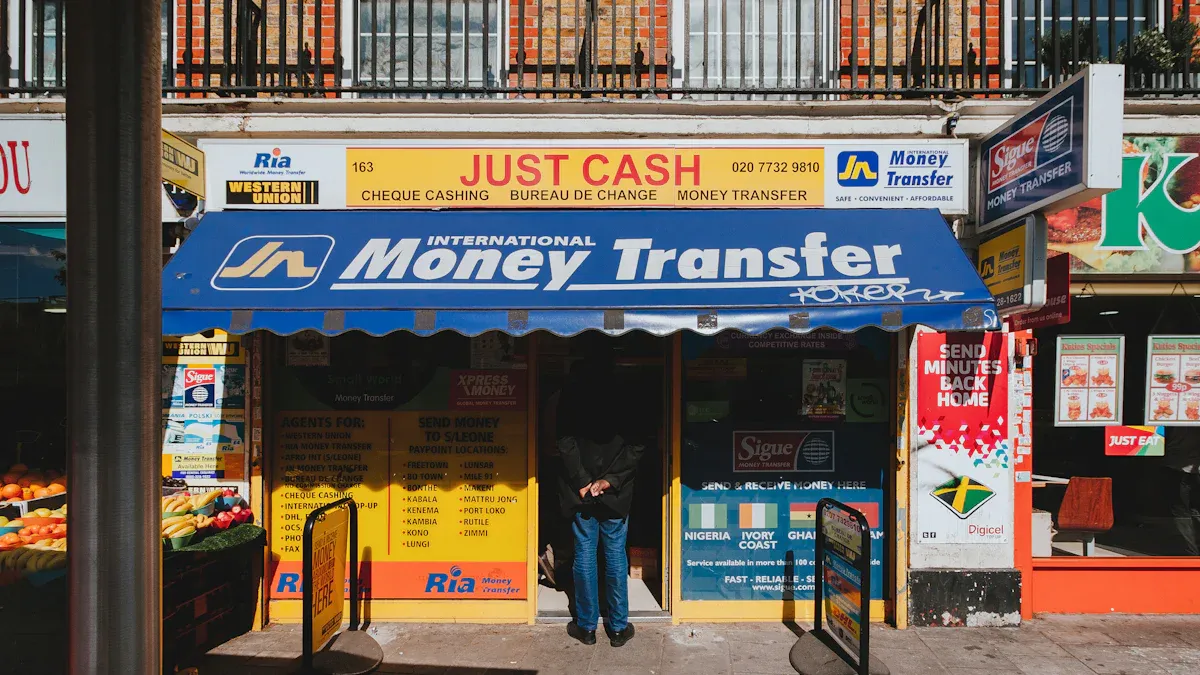
Image Source: unsplash
When you face the need for an urgent international remittance, you will mainly encounter two options: traditional bank wire transfers and modern third-party remittance platforms. You need to understand their most significant differences to make an informed decision.
Third-party platforms usually have advantages in speed and fees. Banks are more robust in compliance when handling ultra-large transactions.
Understanding these key differences can help you quickly make the best decision based on your situation and resolve urgent needs.
Core Takeaways
- When making urgent international remittances, speed, fees, and security are three important considerations.
- Third-party platforms are usually fast and have transparent fees, suitable for most personal urgent remittances.
- Banks have stronger compliance when handling large remittances, but fees may be complex.
- Cash remittance services (such as Western Union) allow recipients to pick up cash within minutes, suitable for emergency situations.
- Before remitting, be sure to carefully verify recipient information and compare the total fees and arrival amounts of different platforms.
Urgent International Remittances: Speed, Fees, and Security Comparison

Image Source: pexels
When you need to make an urgent international remittance, speed, fees, and security are the three core elements you care about most. Banks and third-party platforms each have their strengths in these three aspects. Understanding their differences can help you make the most suitable choice.
Speed Comparison: Minute-Level vs. Business Day-Level
The traditional view is that bank remittances are slow, while third-party platforms are fast. This view is largely correct, but the situation is changing.
- Third-Party Platforms: Pursuing Ultimate Speed Most online remittance platforms make speed their core advantage. For example, using Wise for mainstream currency transfers, most remittances can be completed within a few minutes. Other platforms like Remitly usually take two to three days, but also offer paid acceleration services to get funds there faster.
- Banks: Also Continuously Speeding Up You can no longer simply assume all bank remittances are slow. To cope with competition, many banks have launched their own fast lanes. For example, some licensed banks in Hong Kong or Ping An Bank in mainland China, utilizing its direct clearing system or SWIFT system optimization, can provide near real-time transfer services for specific customers or remittance paths (such as between Shenzhen and Hong Kong), with zero in-transit funds.
Operation Tip Before remitting, you can first check if your bank offers fast remittance services. If not, or if your need is very urgent, third-party platforms are usually a more reliable fast choice.
Fees Comparison: Transparent Pricing vs. Hidden Costs
Fees are another key comparison dimension. Third-party platforms attract users with their transparent pricing structures, while bank fees may include some hard-to-notice “hidden costs”.
Let’s compare through a specific case: Remitting $5,000 USD from the United States to Japan.
| Fee Components | Traditional Bank (via SWIFT Network) | Online Remittance Platform (Taking Wise as Example) |
|---|---|---|
| Remittance Handling Fee | $35 - $50 USD varying | Starting from 0.33%, about $54.00 USD |
| Intermediary Bank Fees | May occur, usually $10 - $30 USD | None |
| Exchange Rate Markup (Exchange Loss) | Yes, markup on mid-market rate, the largest hidden cost | None, uses real mid-market rate |
| Recipient Bank Fees | May occur, $0 - $15 USD varying | No platform fees, recipient banks usually do not charge |
| Total Fee Estimate | $45 - $95 USD + exchange rate markup | About $54.00 USD |
From the table above, you can clearly see:
- Bank Fee Structure is Complex: You need to pay not only the remittance handling fee, but may also be deducted a fee by intermediary banks. More importantly, banks usually do not use the real-time exchange rate you find on Google, but add a spread on top to profit.
- Platform Fee Structure is Transparent: Platforms like Wise will clearly list all fees before you confirm payment. They use the real mid-market exchange rate, and the service fee you pay is the total cost—what you see is what you get.
For an urgent international remittance, fee transparency is as important as the amount itself.
Security and Convenience Comparison
In terms of fund security, both banks and regulated third-party platforms provide high-level protection, but their protection methods and convenience differ.
- Security Protection
- Banks: Rely on their century-old reputation, strong capital, and strict government regulatory systems to provide you with top-level fund security protection.
- Third-Party Platforms: Also subject to strict financial regulation. For example, platforms like Wise and Remitly hold licenses issued by the UK Financial Conduct Authority (FCA) and the US Financial Crimes Enforcement Network (FinCEN) and other institutions. They must comply with anti-money laundering and customer fund protection regulations as strict as those for banks.
- Technical Security and Convenience Modern remittance platforms invest significant resources in technical security and user experience. They generally adopt:
- Strong Encryption Protocols: To protect the security of your data during transmission.
- Multi-Factor Authentication (MFA): Adding an extra security barrier to your account.
- Fraud Detection Systems: Using machine learning technology to monitor and prevent suspicious transactions in real time.
In terms of convenience, you can complete remittances anytime via mobile apps or websites, with a simple and intuitive operation process. In contrast, bank online banking systems may be more complex, or you may need to visit a branch in person and be limited by bank working hours.
Remittance Channel Classification and Characteristics
Image Source: pexels
Understanding the characteristics of different remittance channels can help you make the wisest choice in emergency situations. Below, we break down four mainstream remittance methods for you.
Traditional Bank Wire Transfer (SWIFT)
When you use a traditional bank wire transfer, your funds are usually transmitted through the SWIFT network. This is the most universal system among global banks, but speed and cost may not be satisfactory.
- Time: A SWIFT transfer usually takes 1 to 5 business days to arrive. If the remittance path involves intermediary banks, the average processing time may exceed one day.
- Cost: In addition to the handling fee charged by the bank, you may also need to pay intermediary bank fees, which are usually between $15 and $50 USD.
Bank Fast Lanes
To enhance competitiveness, many banks have launched their own fast remittance services. These services usually use direct clearing systems to bypass multiple nodes of the traditional SWIFT network, thereby greatly speeding up.
Typical Representative: HSBC Premier If you are an HSBC Premier customer, you can enjoy free transfer services up to $200,000 USD per day between global accounts in the same name. Through its Global Money Account, you can easily manage multiple currencies and achieve near real-time cross-border payments.
Online Remittance Platforms (such as Wise, Remitly)
Online platforms are powerful tools for handling urgent international remittances, known for their speed and transparency.
- Wise: You can remit to more than 140 countries via Wise, with a single wire transfer limit up to $1,000,000 USD. It is famous for using real market exchange rates.
- Remitly: This platform supports remittances in more than 100 currencies. It offers unique acceleration options: if you choose to pay with a debit or credit card, its Express service can usually achieve instant transfers, much faster than the Economy service via bank account transfer.
In addition to platforms like Wise and Remitly, users can also consider using a multi-asset trading wallet like BiyaPay for urgent international money transfers. BiyaPay offers professional international remittance services, supporting free conversion between various fiat currencies and digital assets, typically achieving same-day delivery with fees as low as 0.5%, covering most countries and regions worldwide.
The platform also provides a free exchange rate query and comparison tool to help users assess real-time rates and exchange costs before transferring. As a compliant financial platform, BiyaPay holds relevant financial licenses in both the US and New Zealand, including the US MSB money services license and New Zealand FSP financial services registration, providing users with a secure and reliable cross-border payment experience.
Cash Remittance Services (such as Western Union, MoneyGram)
When your recipient urgently needs cash, Western Union and MoneyGram are the best choices.
Their huge advantage lies in their global physical outlets. For example, in the Philippines alone, Western Union has more than 21,000 agent locations. After you complete the online payment, the recipient can usually pick up cash at a nearby agent location with ID proof within minutes. However, you need to note that the fees for such services (usually between $5 and $40 USD) and exchange rate markups may be higher than other channels.
Best Choices in Emergency Scenarios
Different emergency situations require different solutions. Understanding your specific needs can help you quickly lock in the best urgent international remittance method from numerous options.
Scenario One: Paying Tuition, Time-Sensitive Priority
Paying tuition has strict deadlines. Schools usually require you to complete payment before a specific date, such as fall semester fees due in August. Traditional bank wire transfers may take 5 to 10 business days to arrive, which poses the risk of missing the deadline.
Consequences of Late Payment are Serious
- You may be charged a late fee of $40 USD per period.
- Your student account will be frozen, preventing you from registering for new courses or obtaining transcripts.
- If late multiple times, the school may even cancel your future course registration eligibility.
To avoid these issues, you should choose faster and more reliable channels. Bank fast lanes or online platforms like Wise can usually ensure funds arrive within 1-2 business days, giving you peace of mind.
Scenario Two: Family Emergency, Need Immediate Cash Pickup
If your family overseas encounters an emergency and needs cash immediately, speed is everything. In this scenario, cash remittance services are your best choice.
- Minute-Level Cash Pickup: Through Western Union or MoneyGram, after you complete the payment online, the recipient can usually pick up cash at a nearby agent location with ID proof within minutes.
- Note Limits: These services are very fast but usually have daily remittance limits. For example, the daily limit may be around $3,000 USD. If the amount to remit exceeds this, you need to plan ahead.
Although fees and exchange rates may not be as favorable as other platforms, in a race against time, this immediacy is irreplaceable.
Scenario Three: Large Payments, Compliance Priority
When you need to make large payments, such as buying property or making business investments, compliance becomes the primary consideration. Improper handling may lead to funds being frozen or returned.
For large funds remitted from mainland China, banks are a safer choice.
- Personal Limit: Chinese citizens have an annual foreign exchange purchase limit of $50,000 USD.
- Excess Documentation: To remit funds exceeding this limit, you need to provide detailed proof documents to the bank, such as formal contracts, invoices, income proofs, and tax records, and obtain approval from the State Administration of Foreign Exchange (SAFE).
In such cases, large banks like Bank of America or Citibank have mature compliance processes that can guide you in preparing required documents to ensure smooth transactions. Although speed is not the fastest, their professional services can minimize compliance risks to the greatest extent.
Pre-Operation Checklist
Before you hurriedly click the “Send” button, take a few minutes to check the following key points. This simple step can save you unnecessary trouble and financial loss.
Verify Recipient Information
The accuracy of information is the first step to successful remittance. A tiny error can cause your funds to be delayed, returned, or even lost.
If you provide incorrect account information, the remittance service provider may need extra time to investigate and may charge you a fee for resending the remittance.
Please carefully verify the following common error-prone points:
- Bank Code Errors: This is one of the most common errors. Ensure you enter the correct SWIFT/BIC code or local clearing code.
- Confusing Account Types: Some countries (especially in Europe) require the use of IBAN (International Bank Account Number) instead of regular bank account numbers.
- Format Issues: IBAN or SWIFT codes should not contain spaces or hyphens. It is recommended to directly copy and paste the information provided by the recipient instead of manually entering to reduce spelling errors.
Confirm Total Fees and Arrival Amount
The “handling fee” you see is often not the total cost. The real difference is hidden in the exchange rate.
Before confirming the remittance, you should compare the exchange rate provided by the service provider with the real-time mid-market rate on websites like Google or XE. More importantly, focus on the amount “the recipient ultimately receives”. Some platforms clearly display this through comparison tools.
As shown, even if a platform advertises “zero fees”, its poorer exchange rate may result in the recipient getting less money in hand.
Keep Transaction Proof
After completing the payment, your task is not over. Be sure to download and properly store the transaction proof. This document is strong evidence that you have completed the payment. A valid proof should include:
- Transaction ID or receipt number
- Remittance amount and payment method
- Remittance date and time
- Merchant and recipient details
According to financial regulations, banks and remittance institutions usually need to retain records of international transactions exceeding a certain amount (such as $10,000 USD) for five years. For your own records, store these electronic proofs in a secure folder for future tax or legal inquiries.
For most time-sensitive personal urgent remittances, third-party platforms, with their advantages of fast speed, transparent and low fees, are usually more efficient choices.
But you should not ignore the upgrades in bank systems. Many banks are enhancing services through new technologies like APIs and blockchain, and their “fast lanes” are also highly competitive in specific cases.
Therefore, before remitting, you should spend a few minutes comparing actual options across different platforms based on your remittance amount, urgency, and recipient needs to make the wisest choice.
FAQ
Will remittances on weekends or holidays be delayed?
If you remit through a bank, funds are usually processed on the next business day. Many third-party platforms support 24/7 remittances, but the final arrival time still depends on the recipient bank’s system. In emergencies, cash remittance services are a more reliable choice.
Can a remittance be canceled after an error?
You can try to cancel the remittance. If the funds have not yet been paid to the recipient, cancellation is usually successful, but the platform may charge a fee. Once the recipient receives the funds, the transaction cannot be reversed. If you discover an error, contact customer service immediately.
Are there amount limits for international remittances?
Yes, there are limits. Remittance platforms and banks have their own per-transaction or daily limits. Additionally, countries have relevant regulations. For example, remitting from mainland China, the personal annual foreign exchange purchase limit is $50,000 USD. You need to confirm these restrictions in advance.
*This article is provided for general information purposes and does not constitute legal, tax or other professional advice from BiyaPay or its subsidiaries and its affiliates, and it is not intended as a substitute for obtaining advice from a financial advisor or any other professional.
We make no representations, warranties or warranties, express or implied, as to the accuracy, completeness or timeliness of the contents of this publication.
Related Blogs of

Volume-Price Rising Together or Diverging? Complete A-Share Practical Trading Strategy Guide


Another Major Drop! Why Is the A-Share Index Falling Non-Stop – Where Exactly Is the Problem?


Beginner’s Guide: What to Do When a Stock Hits Limit-Down? Can You Still Trade?


Like a Snowball: Let Shanghai Stock Market Index Make Your Money Work for You
Choose Country or Region to Read Local Blog
 Australia
 Austria
 Belgium
 Canada
 Cyprus
 Czech Republic
 Denmark
 Estonia
 Finland
 France
 Germany
 Greece
 Hong Kong
 India
India Indonesia
 Ireland
 Italy
Italy Japan
Japan Latvia
 Lithuania
 Luxembourg
 Malaysia
 Malta
Malta Morocco
 Nepal
Nepal Netherlands
 New Zealand
 Norway
 Pakistan
 Philippines
 Poland
 Portugal
 Romania
 Singapore
 Slovakia
 Slovenia
 South Africa
 South Korea
 Spain
Spain Sweden
 Thailand
 The United States
 Turkey
 United Arab Emirates
 United Kingdom
 Vietnam
Contact Us




BIYA GLOBAL LLC is a licensed entity registered with the U.S. Securities and Exchange Commission (SEC No.: 802-127417); a certified member of the Financial Industry Regulatory Authority (FINRA) (Central Registration Depository CRD No.: 325027); regulated by the Financial Industry Regulatory Authority (FINRA) and the U.S. Securities and Exchange Commission (SEC).
BIYA GLOBAL LLC is registered with the Financial Crimes Enforcement Network (FinCEN), an agency under the U.S. Department of the Treasury, as a Money Services Business (MSB), with registration number 31000218637349, and regulated by the Financial Crimes Enforcement Network (FinCEN).
BIYA GLOBAL LIMITED is a registered Financial Service Provider (FSP) in New Zealand, with registration number FSP1007221, and is also a registered member of the Financial Services Complaints Limited (FSCL), an independent dispute resolution scheme in New Zealand.