How Chinese Users Choose Southeast Asia Remittance Methods: WeChat Pay vs. Western Union




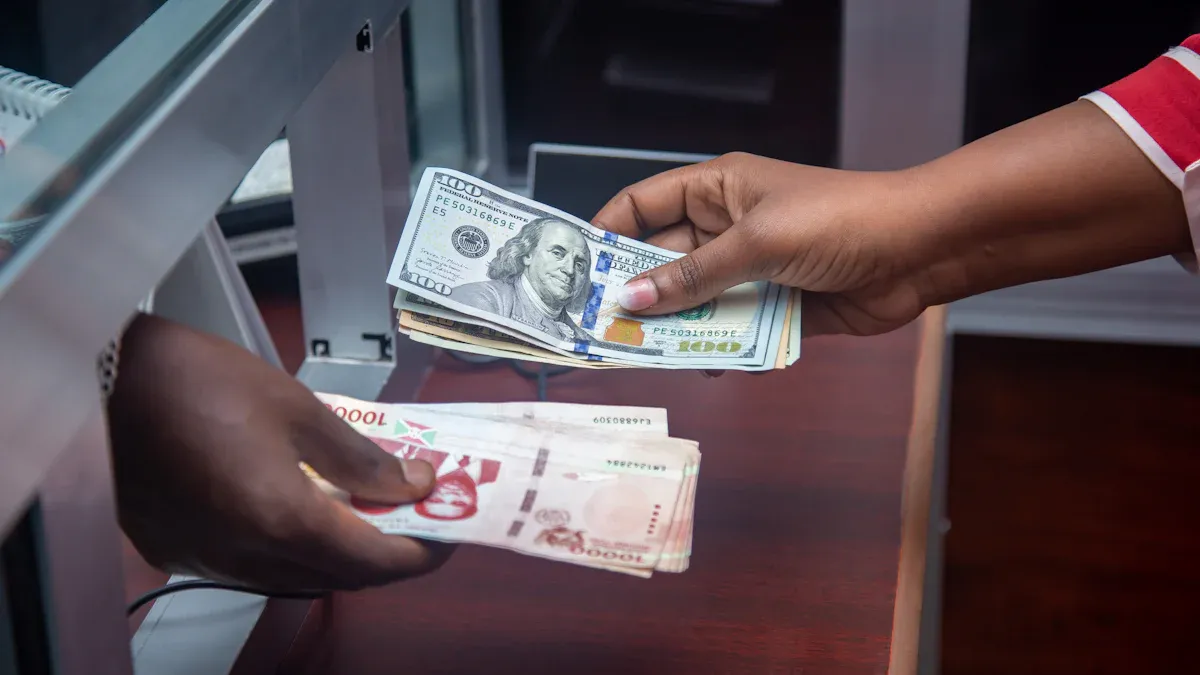
Image Source: pexels
Chinese users remitting to Southeast Asia often focus on fees, speed, security, and convenience. The collaboration between WeChat Pay and Western Union has diversified remittance options. Users can directly transfer USD to a WeChat wallet or choose Western Union to send funds to a Hong Kong bank account. In practice, users should compare handling fees and exchange rates across different channels to select the most suitable method.
Key Points
- WeChat Pay is ideal for online consumption and daily small-amount remittances, with simple operations, fast processing, and support for multi-currency settlements.
- Western Union offers fast delivery and high security, suitable for urgent remittances and cash pickup needs without a WeChat account.
- When choosing a remittance method, consider handling fees, exchange rates, and hidden costs to avoid additional expenses increasing the total cost.
- Accurately filling in remittance details and selecting the appropriate bank account can effectively improve delivery speed and reduce delay risks.
- Use legitimate platforms like WeChat Pay and Western Union, comply with laws and regulations, ensure fund security, and avoid risks.
Method Differences
Image Source: pexels
Basic Process
WeChat Pay primarily expands its payment scenarios in Southeast Asia through partnerships with local businesses and investments. Tencent has invested in Southeast Asian e-commerce and payment platforms, such as Shopee and AirPay, providing traffic entry points for WeChat Pay. Users in Southeast Asia can use WeChat Pay for cross-border consumption, supporting multi-currency transactions. WeChat Pay focuses on personal consumption and O2O models, with overseas merchants attracting users through subsidies and discounted commissions.
Western Union, on the other hand, focuses on cross-border remittance services in Southeast Asia. Although there is no clear evidence of direct collaboration between Western Union and WeChat Pay, Western Union has partnered with Google Pay to support person-to-person cross-border remittances, covering countries like Singapore. Users can use Western Union to transfer USD to a Hong Kong bank account or designated pickup channels, suitable for scenarios requiring fast delivery. Western Union typically requires in-person processing at a counter, which is relatively complex but highly secure.
Tip: WeChat Pay is better suited for online consumption and electronic payment environments, while Western Union is ideal for traditional remittances and urgent fund transfers.
Applicable Scenarios
Southeast Asian users exhibit distinct payment preferences. The main characteristics are:
- Many Southeast Asian users prefer cash payments and cash on delivery (COD), as online payment adoption is still developing.
- COD relies on logistics providers, increasing trust but with higher fees and risks of rejection.
- International remittances like Western Union are suitable for large or traditional trade transactions, with fast delivery but higher fees, resulting in lower user acceptance.
- WeChat Pay has broad coverage and is suitable for online electronic payment environments, though some countries face payment restrictions or fee issues.
| Payment Method | Advantages | Disadvantages | User Habits & Applicable Scenarios |
|---|---|---|---|
| WeChat Pay | Comprehensive cross-border e-commerce payment functions, wide coverage | Payment restrictions or high fees in some countries | Ideal for online electronic payments, users accustomed to online payments |
| Western Union | Fast delivery, high security | Complex process, requires in-person handling, low acceptance | Suitable for urgent or small transactions, traditional remittance methods |
WeChat Pay is suitable for Chinese users making daily purchases or e-commerce shopping in Southeast Asia. Western Union is better for scenarios requiring fast delivery or when the recipient lacks a WeChat account. Users should choose based on actual needs and recipient preferences.
Fees

Image Source: pexels
WeChat Pay Fees
WeChat Pay’s fee structure for cross-border remittances in Southeast Asia is relatively clear. Users face two types of fee structures for cross-border remittances. First, some banks charge a handling fee of 0.1% of the remittance amount, with a minimum of about 3 USD and a maximum of 40 USD. Second, WeChat Pay’s official channels stipulate that transactions of 200 USD or less are fee-free, while amounts exceeding 200 USD incur a 3% fee. The annual cumulative remittance limit is approximately 28,000 USD. Actual fees may vary depending on partner institutions and remittance methods. Users should carefully check fee standards before proceeding to avoid unexpected costs.
Western Union Fees
Western Union’s fees increase with the remittance amount and destination. For Chinese users remitting to Southeast Asia, the fee structure is as follows:
| Amount Range (USD) | Fee (USD) | Notes |
|---|---|---|
| 0 - 500 | 15 | Applies to China to Southeast Asia |
| 500.01 - 1000 | 20 | |
| 1000.01 - 2000 | 25 | |
| 2000.01 - 5000 | 30 | |
| 5000.01 - 10000 | 40 | |
| Over 10000, per additional 500 | Additional 20 | Increases per additional 500 USD or fraction |
Fees increase with the amount, and special services like address delivery or phone notifications may incur additional costs. Users should plan based on the remittance amount to avoid significant fee increases due to amount segmentation.
Exchange Rates and Hidden Costs
Exchange rates and hidden costs are critical yet often overlooked factors in cross-border remittances. For example, for 1 USD converted to CNY, Western Union offers an exchange rate of about 1 USD = 7.0808 CNY for bank account receipts, while WeChat Pay offers about 1 USD = 7.1460 CNY. The exchange rate difference ranges from approximately 1.16% to 2.3%. Additionally, Western Union’s fees vary by payment method, with cash payments costing up to 8 USD and bank transfers as low as 0.99 USD.
| Payment Method | Bank Account Receipt Rate | WeChat Receipt Rate | Fee Range (USD) |
|---|---|---|---|
| Bank Transfer | 7.0808 | 7.1460 | 0.99 - 1.99 |
| Credit Card | 7.0808 | 7.1460 | 5.49 - 7.49 |
| Debit Card | 7.0808 | 7.1460 | 1.99 - 3.99 |
| Cash | 7.1322 | 7.1322 | 8 |
Users should also consider the following hidden costs during remittances:
- Multiple fees: Including outgoing fees, agent fees, and incoming fees, which can accumulate significantly.
- Double exchange losses: Converting to USD and then to the target currency may result in about 1% additional loss.
- Intermediary bank fees: Each additional intermediary bank adds 5-20 USD in fees.
- Exchange rate spread costs: Traditional banks have larger spreads, while third-party platforms like WeChat Pay have smaller spreads.
- Payment path selection: Choosing the right payment path can effectively reduce hidden costs.
- Multi-currency account management: Using multi-currency accounts can minimize exchange losses from immediate conversions.
Tip: Users should consider handling fees, exchange rates, and all possible hidden costs to truly minimize the total cost of cross-border remittances.
Delivery Speed
WeChat Pay Delivery
WeChat Pay’s cross-border remittance delivery is relatively fast. Many users report that when using cross-border payment services, if both the sender and recipient use the same Hong Kong bank account, funds can achieve “instant delivery” with no handling fees. In most cases, WeChat Pay international remittances arrive on the same day or the next day. During weekends or holidays, delivery may extend to 3-5 business days. For interbank transfers, delivery speed depends on the recipient bank’s processing efficiency. Some regions and banks support electronic channels, and when information is correct, funds typically arrive within 24 hours. WeChat Pay’s cross-border remittance service has limited coverage, available only in select regions and banks.
Tip: Choosing the same Hong Kong bank account for WeChat Pay remittances ensures the fastest delivery, ideal for users with high time sensitivity.
Western Union Delivery
Western Union is renowned for its fast delivery. In most cases, users remitting from China to Southeast Asia via Western Union can have funds reach the recipient within 24 hours. Western Union is suitable for small and private transfers, where recipients can collect cash at designated banks or post offices with ID and a reference code. Western Union supports in-person processing, which is relatively complex but highly secure. Online processing through Western Union’s website incurs lower fees. Western Union is ideal for payments under 10,000 USD, with the sender bearing the fees and no additional costs for the recipient.
- Western Union delivers quickly, typically within 24 hours.
- Requires in-person processing, which is relatively complex.
- Suitable for urgent remittances and cash pickup needs.
Influencing Factors
Multiple factors affect the delivery speed of WeChat Pay and Western Union. The completeness and accuracy of remittance information are critical. For example, errors or omissions in filling out partner bank accounts or SWIFT codes can cause delays. Business day restrictions also impact delivery; banks and intermediary banks do not process transactions on weekends or holidays, extending delivery to 3-5 business days. The processing speed of banks and intermediary banks varies, with multiple intermediaries complicating and lengthening the process. Large remittances require risk control audits, which extend delivery time. Anti-money laundering checks may also cause delays. Western Union has fewer partner companies in China and supports only in-person processing, which is complex and may delay delivery. WeChat Pay, through partnerships with local institutions, offers a simpler process and faster delivery. Other factors like exchange rate fluctuations, international service networks, and security measures indirectly affect delivery efficiency.
| Influencing Factor | Description & Delivery Time Range |
|---|---|
| Remittance Method | WeChat Pay: same or next day; Western Union: within 24 hours |
| Bank Processing Speed | Hong Kong banks like HSBC, Standard Chartered, Citibank deliver faster |
| Remittance Amount | Large amounts require risk audits, lengthening delivery time |
| Weekends/Holidays | Banks do not operate, extending delivery to 3-5 business days |
| Information Accuracy | Correct information: within 24 hours; errors: 3-7 business days |
| Anti-Money Laundering | Blacklist checks may delay delivery |
Suggestion: Before remitting, ensure all information is accurate, process on business days, and prioritize Hong Kong bank accounts with electronic channels to improve delivery speed.
Security
WeChat Pay Security
WeChat Pay employs multiple security measures for cross-border remittances to protect user funds and information.
- Technical safeguards: The platform uses advanced encryption to secure data during transmission and storage. Multi-factor authentication reduces account theft risks.
- Risk control: Users can set payment limits, and the platform can freeze accounts instantly upon detecting suspicious transactions to prevent losses.
- Privacy protection: Payment processes do not expose real bank card information, effectively safeguarding personal privacy.
- Legal compliance: WeChat Pay strictly adheres to Chinese and target country regulations, protecting user rights.
- User self-protection: Users should safeguard personal information, avoid disclosing payment passwords, and regularly check account security.
WeChat Pay provides high security through these measures, suitable for daily cross-border consumption and small remittances.
Western Union Security
Western Union, a globally recognized remittance service, has a robust security system.
- The platform uses encryption to protect payment information and funds, preventing fraud.
- Western Union supports multiple identity verification methods to ensure each remittance is legitimate.
- Users processing remittances at Hong Kong bank counters must present valid ID, further enhancing security.
- The platform complies with international regulations, reducing legal risks.
Western Union enjoys a strong security reputation in Southeast Asia, ideal for large, urgent, or cash pickup needs.
Risk Prevention
During cross-border remittances, users must be vigilant about various security risks.
- Some remittance companies, though licensed, may require users to sign disclaimers, complicating recourse.
- Splitting funds across multiple transfers or using unfamiliar accounts increases the risk of account freezes.
- Using local IDs and bank cards for receipt may raise legal and fund security issues.
- Black-market currency exchanges carry high fees and risks, with potential fund loss and legal liability if detected.
- Regulatory upgrades may suspend some remittance services, increasing difficulty and risk.
Users should choose legitimate platforms like WeChat Pay or Western Union, comply with regulations, and protect personal information. For large remittances, prepare relevant documentation to avoid losses from non-compliant operations.
Convenience
WeChat Pay Operations
Using WeChat Pay for cross-border remittances in Southeast Asia is highly convenient. Users select the “WeRemit” service within WeChat, enter recipient details and the remittance amount, and the system automatically displays the current exchange rate and fees. Funds can be transferred directly to the recipient’s WeChat wallet or linked Hong Kong bank account. The per-transaction limit is 5,000 USD, meeting most personal needs. WeChat Pay leverages its vast user base and digital services, making the experience as simple as sending a message. The digital process reduces manual operations, enhancing remittance speed and reliability.
Western Union Operations
Western Union offers multiple remittance channels. Users can process transactions at physical locations or through Western Union’s website or partnered fintech platforms. Users must provide the recipient’s name, country, and amount, and the system generates a reference code. Recipients can collect cash at Western Union locations in Southeast Asia with the code and ID. With WeChat Pay integration, users can also transfer funds directly to a WeChat wallet, simplifying receipt. Each transaction supports up to 5,000 USD, flexibly meeting various needs.
User Experience
The integration of WeChat Pay and Western Union significantly enhances cross-border remittance convenience. Users can transfer overseas funds directly to a WeChat wallet or Hong Kong bank account without complex procedures. Digital and seamless services ensure faster and more reliable remittances. WeChat’s WeRemit, as an official channel, is fully compliant, adhering to local regulations and employing bank-grade security standards. Multiple Southeast Asian countries support official mobile real-time payment systems, such as Singapore’s PayNow and Thailand’s PromptPay, further improving cross-border payment efficiency and experience. Collaboration between fintech and traditional banks offers users more choices and greater accessibility, promoting inclusive financial services.
Tip: Choosing official channels like WeChat’s WeRemit provides a compliant, secure, and convenient cross-border remittance experience, suitable for daily consumption and urgent fund needs.
Coverage
WeChat Pay Supported Countries
Chinese users remitting to Southeast Asia often focus on service coverage. WeChat Pay has achieved compliant access in multiple Southeast Asian countries, with some obtaining local payment licenses. The table below shows supported countries and service availability:
| Country (Region) | Remittance Service Support |
|---|---|
| Cambodia | Supports compliant access, offers cross-border payment and remittance services |
| Indonesia | Holds local payment license, supports local currency payments and remittances |
| Laos | Supports compliant access, offers cross-border payment and remittance services |
| Malaysia | Holds local payment license, supports local currency payments and remittances |
| Myanmar | Supports compliant access, offers cross-border payment and remittance services |
| Philippines | Supports compliant access, offers cross-border payment and remittance services |
| Singapore | Supports compliant access, offers cross-border payment and remittance services |
| Thailand | Supports compliant access, expanding local payment services |
| Vietnam | Supports compliant access, offers cross-border payment and remittance services |
WeChat Pay supports 16 foreign currency settlements, including Thai Baht and Singapore Dollar. Users can pay in CNY, with the system automatically converting to local currency. The service primarily targets Chinese tourists but is gradually expanding to local residents.
Western Union Locations
Western Union has over 300,000 partner locations worldwide, covering more than 200 countries and regions. Southeast Asia has extensive location coverage, allowing users to process remittances at banks, post offices, convenience stores, currency exchange points, train stations, and airports. Western Union relies on its physical agent network, maintaining competitiveness in Southeast Asia. Chinese users can process remittances through partner locations like Postal Savings Bank of China or Pudong Development Bank. Recipients in Southeast Asia can easily find Western Union locations to collect cash.
- Bank branches
- Post offices
- Convenience stores
- Currency exchange points
- Train stations and airports
Western Union’s extensive physical network is ideal for users needing cash pickup or lacking electronic payment options.
Recipient Needs
Users have varying recipient needs. Some prefer direct transfers to Hong Kong bank accounts, suitable for electronic payment methods. Others favor cash pickup, which Western Union’s physical locations can accommodate. For users needing local currency settlements, WeChat Pay supports multiple foreign currencies, facilitating consumption and receipt in Southeast Asia. Users should choose based on the recipient’s circumstances and preferences.
Scenario Recommendations
Small Remittances
Many Chinese users focus on speed and security for small remittances in Southeast Asia. Western Union excels in this scenario, allowing users to complete transfers within minutes, protecting recipient interests. Fees are typically borne by the sender, with no additional costs for the recipient. Merchants can ship goods after confirming receipt, reducing transaction risks. Western Union is suitable for payments under 10,000 USD. Users must process in-person at bank counters, which is traditional but highly secure.
Urgent Remittances
In urgent situations, fast delivery is critical. Western Union’s efficient delivery makes it the preferred choice, with users able to complete remittances in minutes, ideal for immediate needs like family emergencies or trade fund scheduling. Other third-party platforms may take hours, unable to meet extreme urgency.
Non-WeChat Account Recipients
When recipients lack a WeChat account, Western Union offers convenient pickup options. Recipients can collect cash in-person with just a name and city, a simple and risk-free process. Some Hong Kong banks support UnionPay debit card receipts, requiring identity verification for first-time use. Alipay receipt is also an option, requiring a Chinese phone number and real-name verification. In-person pickup involves queuing and identity checks but remains a secure solution for users without electronic wallets.
Other Needs
Southeast Asia’s payment networks are increasingly interconnected, with local fast payment systems like Singapore’s PayNow and Thailand’s PromptPay gaining traction. Many merchants and individuals prefer local bank transfers or e-wallets. Cross-border payments face high exchange losses and fees, so users should balance convenience and cost. Demand for diverse payment tools is growing, with aggregated payment services and localized solutions trending. Users should select the most suitable channel based on recipient needs.
Precautions
Remittance Preparation
Chinese users must prepare necessary materials and information before remitting to Southeast Asia.
- Users must provide recipient account name, account number, and remittance amount.
- Prepare the full name of the overseas recipient bank, its city, and country.
- Users must fill in the recipient bank’s identification code, such as SWIFT code, BIC, or ABA code.
- For wire transfers, larger single remittances can save on fees.
- During the process, carefully verify recipient information to avoid reduced receipt amounts due to intermediary fees.
- For large amounts, prepare expenditure proof or bank certificates and apply for approval from the foreign exchange authority.
- When withdrawing to Southeast Asian local bank accounts, fees are typically low and delivery is fast, suitable for frequent cross-border remittances.
Tip: Accurate information prevents delays or failed deliveries.
Common Pitfalls
Many users encounter pitfalls when remitting to Southeast Asia.
- Focusing only on exchange rates, ignoring withdrawal and platform fees, resulting in lower-than-expected receipt amounts.
- Blindly choosing PayPal or similar channels without considering account freeze risks, especially for receipts exceeding 10,000 USD.
- Using a single account for multiple businesses, causing fund flow confusion and potential audits by platforms or tax authorities.
- Ignoring settlement compliance, as some platforms lack cross-border payment licenses, risking scrutiny by foreign exchange or tax authorities.
- Arbitrarily linking accounts in multiple countries, potentially violating platform policies.
Over 60% of new users face account linking errors within 90 days of registration, leading to failed receipts or account freezes. Users should understand platform rules and plan receipt paths.
Tracking and Inquiry
Users can track fund status through multiple methods post-remittance.
- WeChat Pay and Western Union offer online inquiry services, allowing users to check delivery progress in real-time with a reference number.
- For Hong Kong bank remittances, users can check status via the bank’s website or customer service hotline.
- Platforms support 24/7 automated monitoring, ideal for frequent cross-border remittances.
- If delivery is delayed, contact platform or bank customer service promptly to verify information accuracy.
Users should retain remittance receipts and reference numbers for tracking and ensuring fund security.
WeChat Pay and Western Union each have strengths. Users can refer to the table below for selection:
| Aspect | WeChat Pay Advantages | Western Union Advantages |
|---|---|---|
| Fees | Convenient mobile operations | Low fees, ideal for small cross-border transactions |
| Speed | Fast transfers, minutes to delivery | Fast delivery, simple process |
| Security | Suitable for small payments | Non-reversible, high security |
| Convenience | P2P transfers, ideal for friends | No bank account needed, convenient cash remittances |
Users should consider their needs and recipient circumstances, focusing on remittance limits, policy changes, and service fees to choose the best method. Regularly review policies to avoid pitfalls and ensure fund security.
FAQ
Which is faster, WeChat Pay or Western Union?
In most cases, Western Union delivers faster, typically within 24 hours. WeChat Pay generally delivers on the same or next day, with possible delays during holidays.
How to choose the best exchange rate?
Compare real-time exchange rates for WeChat Pay and Western Union before remitting. WeChat Pay typically has smaller spreads. Operate when rates are favorable to minimize losses.
Can recipients without WeChat accounts receive funds?
Recipients without WeChat accounts can use Western Union, collecting cash at local Southeast Asian locations with ID and a reference code, no e-wallet required.
Are there remittance amount limits?
WeChat Pay has a per-transaction limit of 5,000 USD and an annual cumulative limit of about 28,000 USD. Western Union’s per-transaction limit is 5,000 USD. Large remittances require documentation and compliance with local regulations.
What to do if delivery is delayed?
Use WeChat Pay or Western Union’s online inquiry function to track progress with a reference number. If delayed, contact platform customer service or Hong Kong banks to verify information.
When choosing between WeChat Pay and Western Union, you always have to compromise between convenience, cost, and payment methods. If you want to enjoy the convenience of online remittance while avoiding complex fee structures and unpredictable delivery times, then you need more than just one of these options—you need a more efficient, transparent, and comprehensive solution. BiyaPay was created for this purpose, breaking the limitations of traditional remittance. We offer fees as low as 0.5% and ensure your funds are delivered on the same day. More importantly, we provide a single account to manage both fiat and digital currencies, completely simplifying your cross-border financial life. Register now and use our real-time exchange rate converter* to make every transaction transparent. Say goodbye to cumbersome remittance processes and enjoy unprecedented financial freedom.
*This article is provided for general information purposes and does not constitute legal, tax or other professional advice from BiyaPay or its subsidiaries and its affiliates, and it is not intended as a substitute for obtaining advice from a financial advisor or any other professional.
We make no representations, warranties or warranties, express or implied, as to the accuracy, completeness or timeliness of the contents of this publication.
Related Blogs of

Never Trust Any 'Acquaintance Currency Exchange': Real Cases of Crypto Assets Stolen via Acquaintance Scams During the World Cup


Reasons for Cross-Border Payment Account Closure (Account Shutdown) and How to Respond: Essential Anti-Account-Ban Guide for Foreign Trade Professionals


Cross-Border Charity and International Rescue: How Digital Assets Enable Point-to-Point Ultra-Fast Fund Delivery in Major Global Events?

Logic of Money Laundering Conviction: How Ordinary People Ensure Their Crypto Asset Cash-Out Activities Never Cross the Red Line

Choose Country or Region to Read Local Blog
 Australia
 Austria
 Belgium
 Canada
 Cyprus
 Czech Republic
 Denmark
 Estonia
 Finland
 France
 Germany
 Greece
 Hong Kong
 India
India Indonesia
 Ireland
 Italy
Italy Japan
Japan Latvia
 Lithuania
 Luxembourg
 Malaysia
 Malta
Malta Morocco
 Nepal
Nepal Netherlands
 New Zealand
 Norway
 Pakistan
 Philippines
 Poland
 Portugal
 Romania
 Singapore
 Slovakia
 Slovenia
 South Africa
 South Korea
 Spain
Spain Sweden
 Thailand
 The United States
 Turkey
 United Arab Emirates
 United Kingdom
 Vietnam
Contact Us




BIYA GLOBAL LLC is registered with the Financial Crimes Enforcement Network (FinCEN), an agency under the U.S. Department of the Treasury, as a Money Services Business (MSB), with registration number 31000218637349, and regulated by the Financial Crimes Enforcement Network (FinCEN).
BIYA GLOBAL LIMITED is a registered Financial Service Provider (FSP) in New Zealand, with registration number FSP1007221, and is also a registered member of the Financial Services Complaints Limited (FSCL), an independent dispute resolution scheme in New Zealand.