What is the Currency of Greece? The History, Impact of the Euro and Remittance Guide



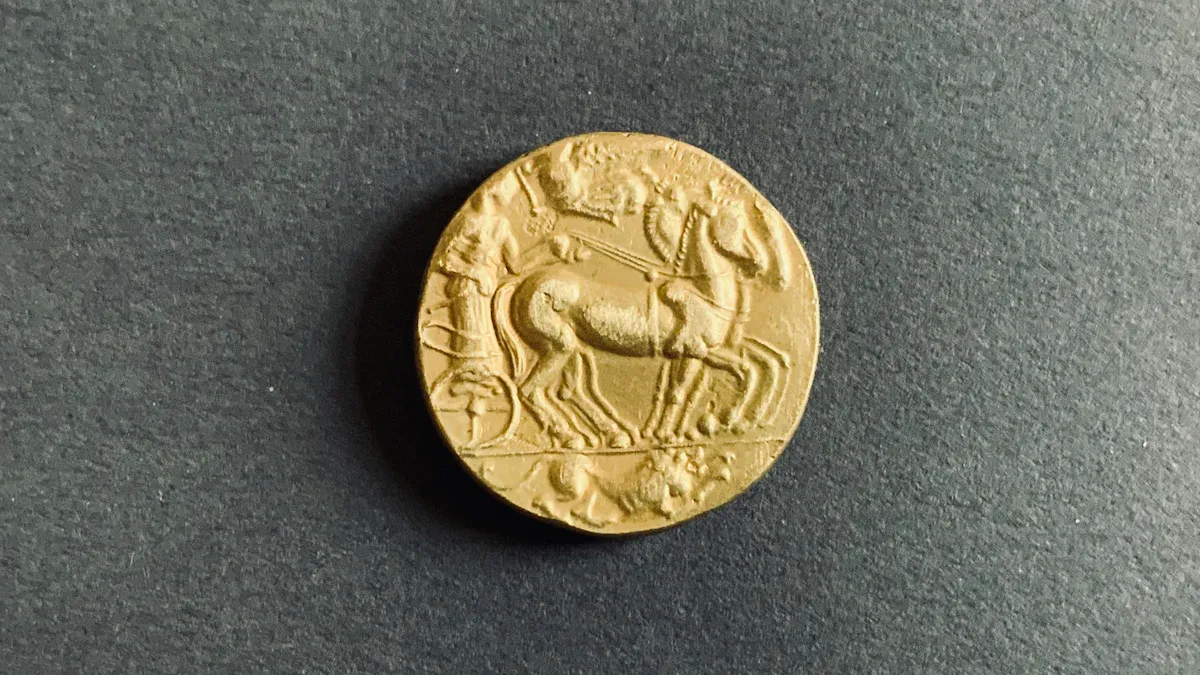
Image Source: pexels
Planning a trip to Greece? You need to know that Greece’s official currency is the Euro (EUR). Every year, tens of millions of tourists flock to this beautiful country, and understanding its currency system is crucial for a smooth trip.
Core Knowledge Point: Greece officially became a Eurozone member in 2001. This transition from the old Drachma to the Euro is a significant chapter in the modern history of the Euro.
This guide will help you prepare financially for your trip to Greece.
Key Points
- Greece’s official currency is the Euro, which replaced the Drachma in 2002.
- When traveling in Greece, ATM withdrawals are the most convenient, but keep some cash for tipping and small purchases.
- Credit cards are convenient in large cities but may not be accepted in smaller areas.
- When sending money to Greece via remittance, online platforms are typically faster and cheaper than traditional banks.
- Before transferring, carefully verify the recipient’s name, address, IBAN, and SWIFT/BIC code to ensure accuracy.
Greece’s Euro Era and the History of the Euro
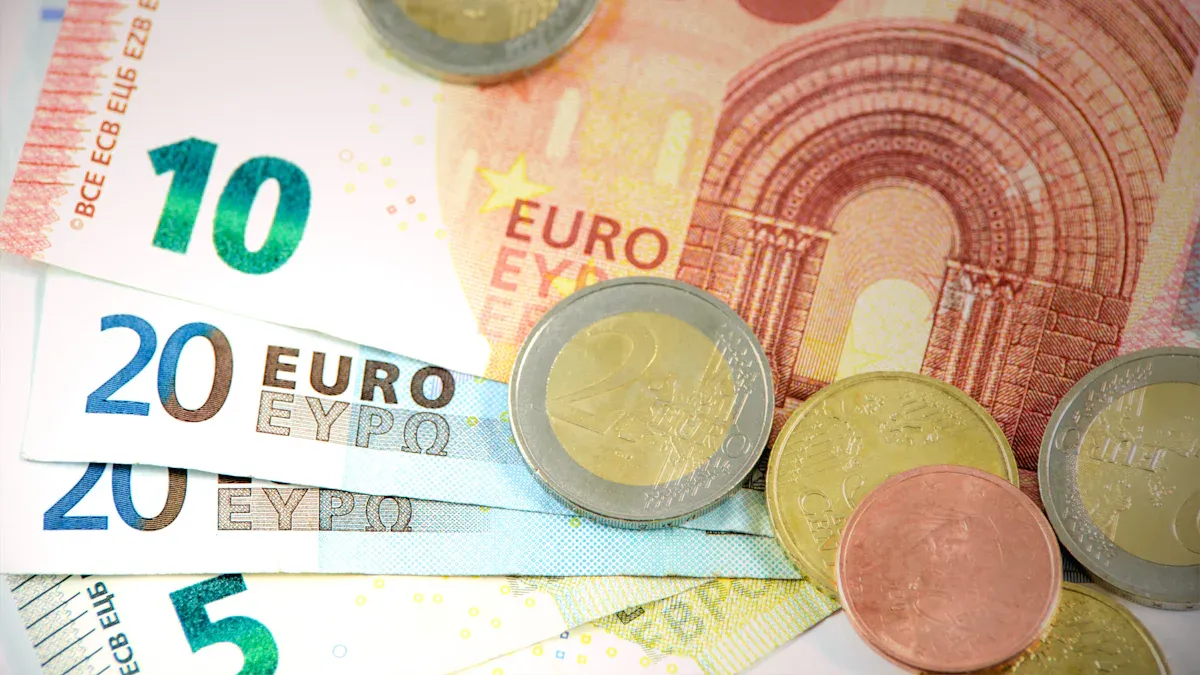
Image Source: pexels
The Euro (code: EUR, symbol: €) is not only Greece’s currency but also the official currency of 20 Eurozone countries. Understanding Greece’s integration into the Eurozone helps you better grasp the modern history of the Euro.
From Drachma to Euro
Before 2001, Greece used the Drachma as its currency. Afterward, Greece embarked on its transition to the Euro. This process was a significant step in the history of the Euro, which you can understand through the following key milestones:
- January 1, 2001: Greece officially became the 12th Eurozone member. The Euro began being used as an electronic currency, with a fixed exchange rate of 1 Euro to 340.750 Greek Drachmas.
- January 1, 2002: Euro banknotes and coins officially entered circulation in Greece, starting a two-month period where the Euro and Drachma were used concurrently.
- March 1, 2002: The Euro became Greece’s sole legal tender, and the Drachma officially ceased circulation.
Impact of the Euro on Greece
Adopting the Euro brought both convenience and challenges to Greece. On one hand, it simplified trade and tourism with EU countries. On the other hand, Greece lost some economic control tools.
When facing economic pressure, Greece could no longer adjust its currency exchange rate. Wages and prices bore the brunt of adjustment pressures.
During the global financial crisis, this challenge became particularly severe. Greece’s budget deficit and public debt surged, leading to a request for international assistance in 2010, receiving approximately $121 billion in loans. This crisis was a major test in the history of the Euro, prompting the Eurozone to establish more robust crisis management mechanisms.
Euro Banknotes and Coin Denominations
In Greece, you’ll encounter various Euro denominations. Banknotes are themed around “ages and styles,” with fronts featuring doors and windows (symbolizing openness) and backs showcasing bridges (symbolizing communication), though these are not real structures.
- Banknotes: There are seven denominations: 5, 10, 20, 50, 100, 200 Euros. The new “Europa” series banknotes include a portrait watermark of the Greek mythological figure Europa for enhanced anti-counterfeiting.
- Coins: There are eight denominations: 1, 2, 5, 10, 20, 50 Euro cents, and 1 and 2 Euros.
The following table details the physical specifications of the coins:
| Denomination | Diameter (mm) | Weight (gr) | Composition |
|---|---|---|---|
| 1 Cent | 16.25 | 2.27 | Copper-plated steel |
| 2 Cents | 18.75 | 3.06 | Copper-plated steel |
| 5 Cents | 21.25 | 3.92 | Copper-plated steel |
| 10 Cents | 19.75 | 4.10 | Nordic gold |
| 20 Cents | 22.25 | 5.74 | Nordic gold |
| 50 Cents | 24.25 | 7.80 | Nordic gold |
| 1 Euro | 23.25 | 7.50 | Outer: Nickel brass; Inner: Three-layer alloy |
| 2 Euro | 25.75 | 8.50 | Outer: Copper-nickel alloy; Inner: Three-layer alloy |
How to Obtain and Use Euros in Greece
When you arrive in Greece, you’ll need to exchange your currency for Euros. Understanding how to obtain and use Euros efficiently and safely can make your trip smoother. This section provides a detailed guide on payments and exchanges.
Comparing Currency Exchange Locations
There are three main ways to obtain Euro cash in Greece: ATM withdrawals, bank counters, and currency exchange offices.
Before choosing an ATM or exchange booth, use BiyaPay’s Exchange Rate Checker to view the live EUR mid-market rate and estimate net proceeds and fees. It’s handy for planning a short trip budget.
If you need to pay a recipient in Greece (rent, tuition, etc.), you can initiate a cross-border remittance from the same account with transparent steps and costs. BiyaPay is a multi-asset wallet for conversion and fund management, operating under multiple jurisdictions (incl. U.S. MSB and NZ FSP). Learn more on the website.
- ATM Withdrawals: This is the most convenient and cost-effective method for exchange rates. Greece has a well-developed ATM network. However, when using a non-Greek bank card (e.g., from mainland China or Hong Kong) at banks like Alpha Bank or Piraeus Bank, you’ll typically incur a handling fee, usually 2 to 4 Euros (about $2.15 to $4.30 USD).
Practical Tip: The Greek Ministry of Finance has announced that, starting August 11, 2025, Greek banks will be prohibited from charging ATM withdrawal fees for all bank cards. This will make ATM withdrawals even more cost-effective in the future.
- Banks and Currency Exchange Offices: While these locations can exchange money, their rates are typically less favorable than ATM withdrawals, and they may charge additional service fees. Unless it’s an emergency, they’re not recommended as the primary choice.
To ensure you get the best exchange rate, use real-time exchange rate tools.
Recommended Tool: Easy Currency Converter
- This is a free mobile app supporting Android and iOS systems.
- It can convert major global currencies and provide exchange rate trend charts.
- Most importantly, it supports offline mode, allowing you to check rates without a network, avoiding costly international roaming fees.
Credit Cards and Mobile Payments
The prevalence of cashless payments in Greece varies significantly by region.
Credit Cards (Visa, Mastercard) In large cities like Athens or Thessaloniki, credit cards are nearly ubiquitous. In tourist-heavy areas like Athens’ Plaka, 99% of merchants accept credit card payments. However, once you leave these central areas, the situation changes. Many small shops, family-run tavernas, beach bars, and even gas stations may prefer cash. Thus, relying solely on credit cards is not feasible.
Mobile Payments (Apple Pay/Google Pay) Contactless payment methods like Apple Pay and Google Pay are increasingly popular in Greece. As long as a merchant has a contactless payment terminal, you can pay with your phone. However, like credit cards, small shops may not accept these payments.
Transportation Payment Update: Since April 2024, Greek law mandates that all taxis must have bank card payment terminals. This means you can now conveniently use cards or mobile payments for taxi fares.
Cash Usage Tips
Despite the rise of electronic payments, carrying some cash remains essential when traveling in Greece.
Why Do You Need Cash?
- Tipping: In Greece, tipping in cash is the most common and appreciated method.
- Small Purchases: Cash is faster for transactions at markets, food stalls, or souvenir shops.
- Remote Areas: In some small islands or rural areas, cash is the only payment option.
Greek Tipping Guide
Tipping is a way to acknowledge excellent service. Here are some tipping suggestions for common scenarios:
| Scenario | Suggested Tip | Notes |
|---|---|---|
| Restaurants/Cafes | 5%-15% of the bill | At casual restaurants, locals typically round up or tip 5-10%. At upscale restaurants, 10-15% is appropriate. Leave cash on the table. |
| Taxis | Round up or 1-2 Euros (about $1.08-$2.16 USD) | For short trips, round up the fare, e.g., from 7.5 to 8 Euros. For long trips with luggage assistance, tip 10%. |
| Hotel Staff | 1-2 Euros per service (about $1.08-$2.16 USD) | For porters or daily housekeeping, leave small cash amounts after service or each morning to show appreciation. |
How to Spot Counterfeit Currency?
To avoid receiving fake Euros, learn the European Central Bank’s recommended “Touch, Look, Tilt” method:
- Touch: Genuine notes use special printing techniques, and you can feel a raised texture on patterns, numbers, and letters.
- Look: Hold the note to the light to see a hidden watermark (typically an architectural design or Europa’s portrait) and a security thread running through the note.
- Tilt: Tilt the note to observe the front’s silver holographic strip or patch, which changes patterns and colors. The back’s denomination number also shifts colors.
Mastering these simple techniques helps you use cash confidently in Greece.
Practical Guide: How to Send Money to Greece
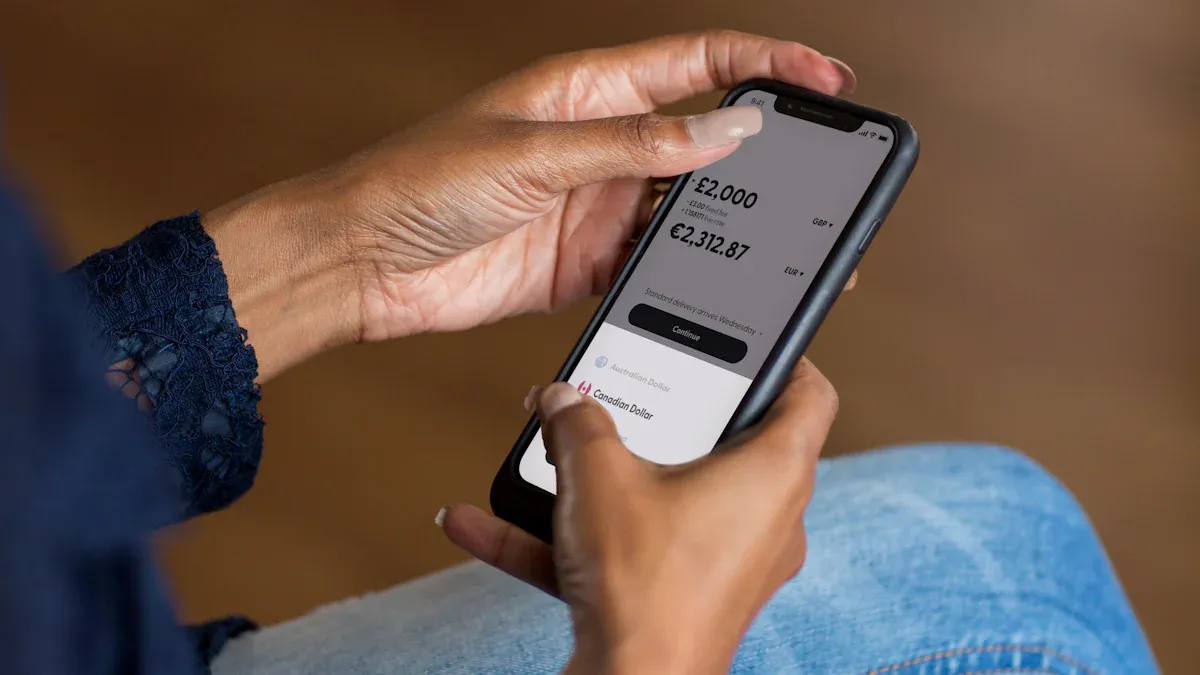
Image Source: unsplash
If you need to send money to family or friends in Greece or pay for rent, tuition, or other expenses, understanding the right remittance method is crucial. You can choose traditional bank wire transfers or more modern online platforms.
Traditional Bank Wire Transfers
International wire transfers through banks are a time-tested and reliable method. You can initiate them via online banking, mobile apps, or in-person at a bank branch.
The process is generally straightforward. Follow these steps:
- Log into Your Bank Account: Locate the “International Transfer” or “Wire Transfer” function.
- Enter Recipient Information: Accurately input the recipient’s name, address, bank account type, and the critical IBAN and SWIFT/BIC code.
- Specify Transfer Amount: Clearly state the amount and currency to be sent.
- Pay Related Fees: Complete the payment, and the bank will process your transfer request.
Important Note: Bank wire transfers usually take 3 to 5 business days to arrive, and the exchange rate may include a bank profit margin, making it less cost-effective than the mid-market rate.
Online Remittance Platforms
Compared to traditional banks, online platforms (e.g., Wise, Remitly) offer faster and more cost-effective options. These modern services typically have the following advantages:
- Better Exchange Rates: Most use the mid-market rate without hidden markups.
- Lower Fees: Handling fees are transparent and usually much lower than bank transfers.
- Faster Delivery: Many transfers arrive in minutes or hours.
- Convenient Operation: You can complete transfers anytime, anywhere via a mobile app.
These platforms are ideal for small to medium personal transfers. They simplify complex international financial processes, allowing you to send funds to Greece effortlessly.
Verifying Key Transfer Information
Regardless of the method, providing accurate recipient information is critical to a successful transfer. A single minor error can lead to delays, returns, or even loss of funds.
Before initiating a transfer, verify the following with the recipient:
- Recipient’s Full Name: Must match the name on the bank account exactly.
- Recipient’s Address: The complete residential address.
- International Bank Account Number (IBAN): The most critical information. Greece’s IBAN consists of 27 characters, including the country code, bank code, and account number.
- Bank Identifier Code (SWIFT/BIC Code): Used to identify the specific bank in the global banking network.
How to Obtain the Correct IBAN? The safest method is to request it directly from the recipient. They can find it on their bank statements or online banking. While online IBAN calculators exist, differences in bank rules may lead to errors, so using them carries risks.
For your convenience, the table below lists SWIFT/BIC codes for some major Greek banks:
| Bank Name | SWIFT/BIC Code |
|---|---|
| ALPHA BANK S.A. | CRBAGRAA |
| EUROBANK S.A. | ERBKGRAA |
| PIRAEUS BANK SA | PIRBGRAA |
| NATIONAL BANK OF GREECE SA | ETHNGRAA |
| HSBC BANK PLC | MIDLGRAA |
| CITIBANK N.A. | CITIGRAA |
Carefully verifying each detail ensures your funds arrive in Greece safely and quickly.
Now you know that Greece’s official currency is the Euro. Understanding this history, starting from the Drachma, helps you better plan your trip. For a week-long trip, it’s recommended to carry about $540 USD equivalent in Euro cash for tipping and transportation, with larger expenses covered by credit card. When sending money to Greece, compare the pros and cons of banks and online platforms.
Proper financial planning can help you avoid unnecessary fees. Visit the Greek National Tourism Organization website
http://www.visitgreece.grfor more official information.
Happy travels in Greece!
FAQ
Can I still exchange old Greek Drachmas?
No. The Bank of Greece stopped exchanging Drachma notes and coins on March 1, 2012. This old currency now exists only as a collectible with no monetary value.
Is it convenient to use large Euro banknotes in Greece?
Not convenient. Many small shops, taxis, or restaurants may struggle to provide change for 100 or 200 Euro notes. It’s best to use 50 Euro notes or smaller for daily transactions.
How much should I budget per day for a trip to Greece?
For a mid-range budget, plan for about $85 to $160 USD per day. This covers accommodation, meals, and basic activities. Costs may be higher during peak season or on popular islands.
Do Greek ATMs have daily withdrawal limits?
Yes. Most Greek bank ATMs impose a daily withdrawal limit for non-local cards, typically between $650 and $860 USD. The exact limit depends on your issuing bank and the local ATM settings.
*This article is provided for general information purposes and does not constitute legal, tax or other professional advice from BiyaPay or its subsidiaries and its affiliates, and it is not intended as a substitute for obtaining advice from a financial advisor or any other professional.
We make no representations, warranties or warranties, express or implied, as to the accuracy, completeness or timeliness of the contents of this publication.
Related Blogs of

Exploring the History of the S&P 500 Index: A Financial Journey Across Decades


Decoding Hang Seng Index Key Levels: Master Your H2 2025 Hong Kong Stock Investment Strategy

Unlock U.S. Pre-Market Trading: Get Ahead of the Opening Bell and Stay in Front

Dow Jones Futures Beginner Guide: Micro vs Mini Dow Contracts – Key Differences and How to Choose

Choose Country or Region to Read Local Blog
 Australia
 Austria
 Belgium
 Canada
 Cyprus
 Czech Republic
 Denmark
 Estonia
 Finland
 France
 Germany
 Greece
 Hong Kong
 India
India Indonesia
 Ireland
 Italy
Italy Japan
Japan Latvia
 Lithuania
 Luxembourg
 Malaysia
 Malta
Malta Morocco
 Nepal
Nepal Netherlands
 New Zealand
 Norway
 Pakistan
 Philippines
 Poland
 Portugal
 Romania
 Singapore
 Slovakia
 Slovenia
 South Africa
 South Korea
 Spain
Spain Sweden
 Thailand
 The United States
 Turkey
 United Arab Emirates
 United Kingdom
 Vietnam
Contact Us
Company and Team
BiyaPay Products
Customer Services




BIYA GLOBAL LLC is a licensed entity registered with the U.S. Securities and Exchange Commission (SEC No.: 802-127417); a certified member of the Financial Industry Regulatory Authority (FINRA) (Central Registration Depository CRD No.: 325027); regulated by the Financial Industry Regulatory Authority (FINRA) and the U.S. Securities and Exchange Commission (SEC).
BIYA GLOBAL LLC is registered with the Financial Crimes Enforcement Network (FinCEN), an agency under the U.S. Department of the Treasury, as a Money Services Business (MSB), with registration number 31000218637349, and regulated by the Financial Crimes Enforcement Network (FinCEN).
BIYA GLOBAL LIMITED is a registered Financial Service Provider (FSP) in New Zealand, with registration number FSP1007221, and is also a registered member of the Financial Services Complaints Limited (FSCL), an independent dispute resolution scheme in New Zealand.