What Currency is ZAR? The History and Current Situation of the South African Rand



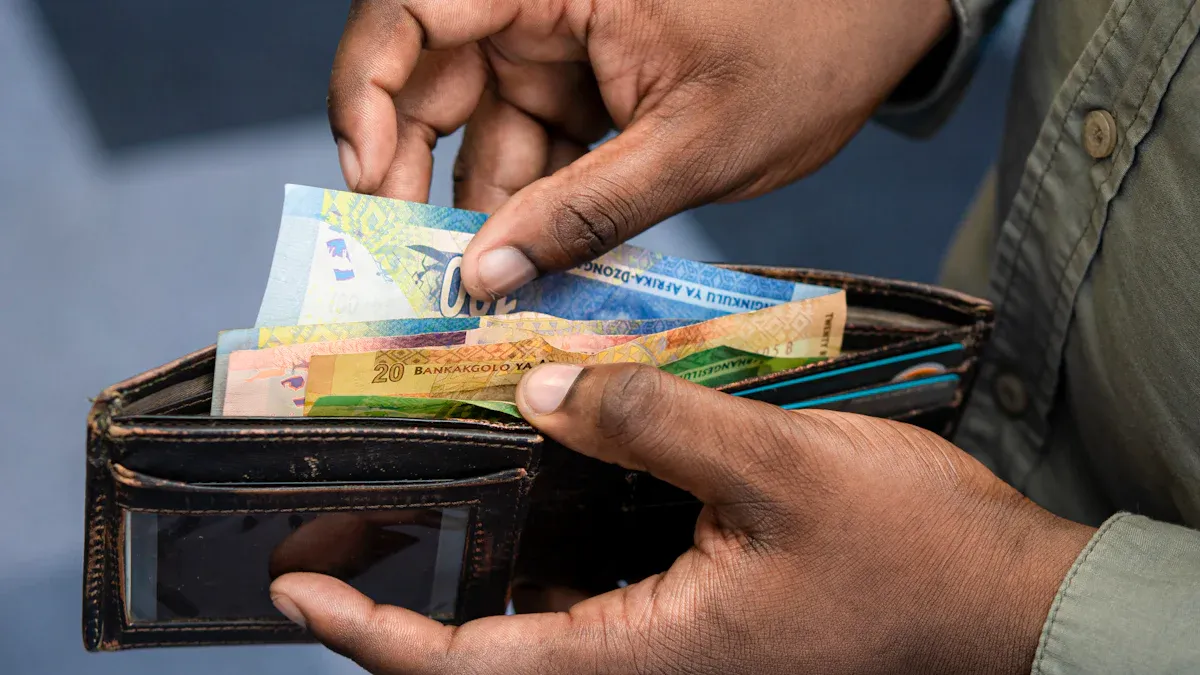
Image Source: pexels
Have you seen the code “ZAR” in financial news or travel plans and wondered what ZAR currency is? This code represents South Africa’s legal tender—the South African Rand, with the symbol “R”. South Africa’s unique natural beauty and culture attract millions of international tourists annually. Data shows that Europe, the Americas, and Asia are significant source markets.
Key Points
- ZAR is the international currency code for the South African Rand, representing South Africa’s legal tender.
- South African Rand banknotes feature Nelson Mandela’s portrait and the Big Five animals, while coins showcase South African flora and fauna.
- The Rand’s value is influenced by South Africa’s economy, global commodity prices, and political stability, resulting in high volatility.
- When traveling to South Africa, credit cards are widely used in major cities, but cash is necessary in rural areas.
- Investing in the Rand offers high return opportunities but comes with significant risks due to its volatility.
What is ZAR Currency
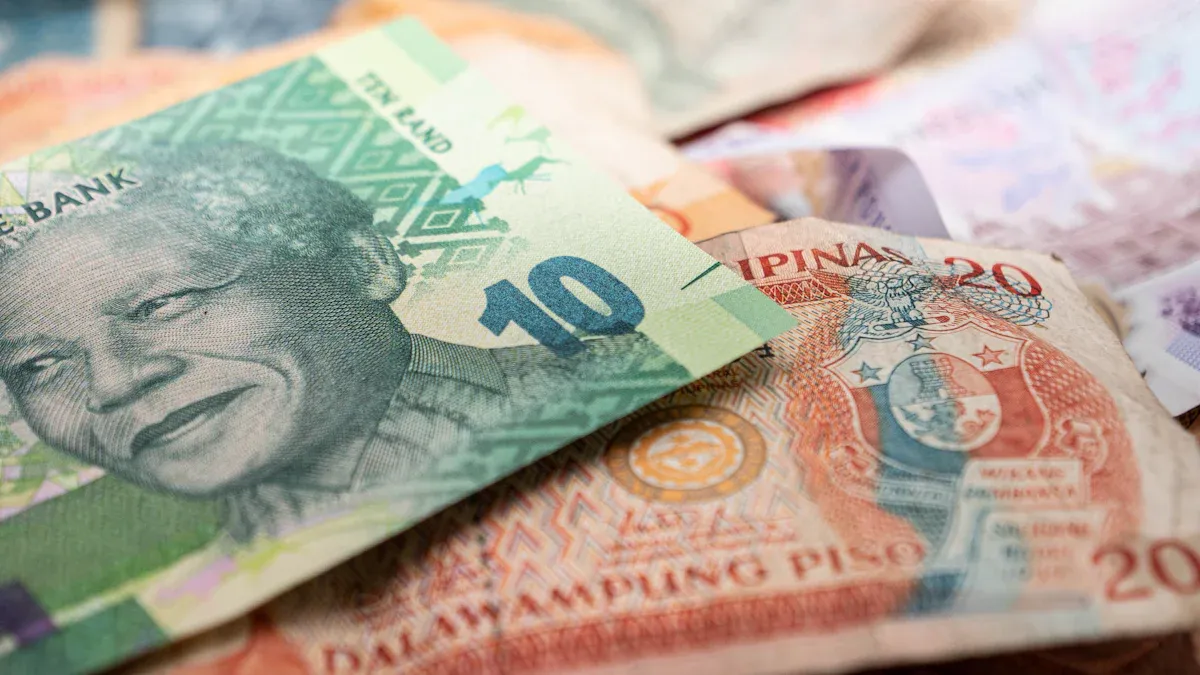
Image Source: pexels
To deeply understand the South African Rand, we need to start with its basic components. This includes its international code, issuing authority, and physical appearance in circulation. Understanding what ZAR currency is helps us better appreciate this vibrant African economy.
Currency Code and Symbol
In international financial markets, every currency has a unique three-letter code. The South African Rand’s code is ZAR. This code is designated by the International Organization for Standardization (ISO) in its ISO 4217 standard. Here, “ZA” stands for South Africa (from the Dutch “Zuid-Afrika”), and “R” represents Rand. In daily use, the Rand’s symbol is “R”. So, when you see a price tag marked R100, it means 100 South African Rand.
Issuing Authority and Currency Units
The issuing and managing authority for the South African Rand is the South African Reserve Bank (SARB). As South Africa’s central bank, SARB undertakes critical responsibilities. According to the South African Constitution, its core mission is to protect the Rand’s value, thereby creating conditions for balanced and sustainable economic growth.
Core Responsibilities of the South African Reserve Bank (SARB) SARB is committed to maintaining price stability through independent monetary policy. Its goal is to keep the Consumer Price Index (CPI) annual inflation rate within a target range of 3% to 6%.
To achieve this goal, SARB has several key functions:
- Formulating and implementing monetary policy, such as adjusting interest rates.
- Maintaining the stability of the entire financial system.
- Managing the national payment system to ensure efficient and secure fund flows.
- Regulating banks and insurance institutions.
The basic unit of the Rand is the “Rand,” with its subunit being the “Cent.” The conversion is straightforward: 1 Rand equals 100 Cents. This unit system provides a clearer concept of what ZAR currency is.
Banknotes and Coin Denominations
The South African Rand’s banknotes and coins are exquisitely designed, showcasing the nation’s history and natural heritage. Understanding these denominations and designs not only helps you use the currency easily while traveling in South Africa but also gives you a more tangible sense of what ZAR currency is.
The current banknote series features the portrait of former South African President Nelson Mandela on the front, honoring his significant contributions to building a new South Africa. The back of the banknotes showcases the famous “Big Five” animals, with each denomination corresponding to a specific animal.
| Banknote Denomination | Back Design |
|---|---|
| R10 | Rhinoceros |
| R20 | Elephant |
| R50 | Lion |
| R100 | Cape Buffalo |
| R200 | Leopard |
To combat counterfeiting, the South African Reserve Bank employs advanced anti-counterfeit technology on its banknotes. The public can verify authenticity using the simple “look, feel, tilt” method.
- Look: Hold the note up to the light to see Mandela’s portrait watermark.
- Feel: The front of the banknote has a distinct raised print texture, especially tactile markers designed for the visually impaired.
- Tilt: Tilt the note to see the animal pattern in the bottom right corner change color and produce a dynamic effect.
Additionally, circulating coins follow the theme of “deep ecology”, featuring South Africa’s rich flora and fauna, further highlighting the country’s commitment to its natural environment.
Historical Footprint of the Rand

Image Source: pexels
Every currency carries a nation’s story. The South African Rand is no exception, its birth and evolution vividly reflecting South Africa’s journey from a colony to independence and from apartheid to democracy.
Origin of the Name
Birth of the Currency 📜 The Rand was officially introduced on February 14, 1961, the same year South Africa became a republic. It replaced the South African Pound and introduced a more modern decimal currency system.
Impact of the Apartheid Era
During the apartheid era (1948-1994), South Africa’s economy and currency faced immense pressure. Economic sanctions imposed by the international community to oppose apartheid policies led to significant capital outflows.
Massive capital flight directly impacted the Rand’s value, causing its international exchange rate to plummet sharply. Currency depreciation made imported goods extremely expensive, triggering severe domestic inflation, with annual inflation rates reaching 12% to 15%, placing a heavy burden on people’s lives.
Symbol of the New South Africa
With the end of apartheid in 1994, South Africa entered a new era. The currency’s design underwent a fundamental transformation to reflect the “Rainbow Nation’s” new identity. Portraits of Dutch colonizers on old banknotes were completely replaced. The new banknotes uniformly featured the portrait of South Africa’s first democratically elected president, Nelson Mandela, on the front. This change was profoundly significant, symbolizing reconciliation, unity, and the dawn of a new era for all South Africans. Additionally, South Africa issued commemorative coins, such as those celebrating 25 years of democracy, continuously documenting the nation’s progress through its currency.
Core Factors Affecting the Rand’s Value
The South African Rand is a typical emerging market currency and a commodity currency. This means its value is highly volatile, influenced by a complex interplay of domestic economy, global markets, and geopolitical factors. Understanding these core drivers is key to grasping the Rand’s exchange rate trends.
Domestic Economy and Policy
A currency’s strength is primarily determined by the health of its country’s economy. South Africa’s economic fundamentals, such as growth, inflation, and employment, directly impact international investors’ confidence in the Rand.
Here are South Africa’s recent key economic indicators:
| Indicator | Value | Time Point |
|---|---|---|
| Annual GDP Growth Rate | 0.6% | Q2 2025 |
| Inflation Rate | 3.3% | August 2025 |
| Unemployment Rate | 33.2% | June 2025 |
These figures highlight the challenges facing South Africa’s economy. Slow GDP growth and high unemployment may erode investor confidence, putting downward pressure on the Rand. Meanwhile, the inflation rate is a core basis for the South African Reserve Bank’s (SARB) monetary policy decisions.
Direct Impact of Monetary Policy The South African Reserve Bank manages inflation and stabilizes the economy by adjusting interest rates. Raising rates typically attracts foreign capital seeking high returns, boosting the Rand’s exchange rate; conversely, lowering rates may lead to capital outflows, causing the Rand to depreciate.
The South African Reserve Bank maintained its key repo rate at 7.00% on September 18, 2025. This decision aims to address global uncertainties and prepare for adopting a new 3% inflation target. Since September last year, rates have been cut by a cumulative 125 basis points, with policymakers indicating a pause in rate cuts to assess their impact on the economy and inflation risks.
Current interest rate levels are as follows:
| Rate Type | Percentage | Date |
|---|---|---|
| Key Repo Rate | 7.00% | September 2025 |
| Interbank Rate | 6.86% | October 2025 |
| Lending Rate | 10.50% | September 2025 |
Additionally, domestic political stability has an immediate impact on the Rand’s value. Analysis shows that negative political news often leads to poor Rand performance and increased volatility. For instance, the unexpected dismissal of the Finance Minister in December 2015 (known as “Nenegate”) triggered significant turmoil in the currency market. Conversely, positive political developments, such as the smooth leadership transition starting in late 2017, drove a notable recovery in the Rand’s exchange rate.
Global Markets and Commodity Prices
As a commodity currency, the Rand’s fate is closely tied to global commodity markets, particularly gold and platinum prices. South Africa is a major exporter of these precious metals.
In 2024, South Africa’s mineral product exports were substantial, with key contributions as follows:
| Commodity Category | Value (USD) |
|---|---|
| Unprocessed Platinum | 9,974,418,000 |
| Unprocessed Gold | 8,206,213,000 |
| Coal, Solid Fuels from Coal | 6,298,648,000 |
When prices of gold, platinum, and other commodities rise, South Africa’s export revenue increases, boosting foreign exchange inflows and strengthening the Rand’s exchange rate. Conversely, falling commodity prices directly impact the Rand negatively.
Additionally, global investor risk appetite plays a significant role.
- Risk-On Periods: When investor risk appetite rises, they are more willing to invest in emerging markets like South Africa for higher returns, leading to capital inflows that boost the Rand.
- Risk-Off Periods: During global uncertainties, such as geopolitical tensions or recession fears, investors withdraw from higher-risk assets and shift to safe-haven currencies like the USD. This capital outflow puts significant depreciation pressure on the Rand.
South Africa’s financial markets are highly sensitive to international economic changes. For example, trade wars initiated by the U.S. or adjustments in its economic policies have previously triggered declines in the Rand’s value, reminding us that South Africa is highly vulnerable to global macroeconomic environments, particularly U.S. economic dynamics.
Regional Status in Africa
The Rand’s influence extends beyond South Africa’s borders, playing a central role in southern Africa. South Africa, along with Lesotho, Namibia, and Eswatini, forms the “Common Monetary Area” (CMA).
Within this monetary area, the Rand holds a special status:
- Legal Tender: The Rand is legal tender in all four member countries, freely circulating and used.
- Exchange Rate Peg: The national currencies of the other three members (Lesotho Loti, Namibian Dollar, and Eswatini Lilangeni) are pegged to the Rand at a 1:1 fixed exchange rate.
This arrangement significantly facilitates trade and financial integration within the region, solidifying the Rand’s position as a regional reserve currency.
Moreover, South Africa is the economic engine of the Southern African Development Community (SADC). Data shows that in 2018, nearly 90% of South Africa’s exports to other African regions went to SADC economies. This means many trade activities in the region are settled in Rand, further enhancing its circulation and importance on the African continent.
The Rand and Personal Life
Understanding the South African Rand is relevant not only to economists and investors but also to tourists visiting South Africa and those interested in global financial markets. Whether planning a trip or considering investments, grasping the Rand’s characteristics is crucial.
South Africa Travel Currency Exchange Guide
When preparing financially for a trip to South Africa, tourists need to know how to exchange and use the Rand efficiently and cost-effectively.
Before you travel, use BiyaPay’s free Exchange Rate Converter & Comparison to evaluate costs by “total received,” helping you avoid high airport commissions.
If you need cross-border funds for tuition or rent, see BiyaPay Remittance: transparent live rates, fees as low as 0.5%, and same-day in/day-of delivery support across most countries.
As a multi-asset wallet, BiyaPay supports fiat–crypto conversions; learn more on the homepage. BiyaPay also holds U.S. MSB and New Zealand FSP registrations, reinforcing predictability and compliance for transfers.
First, tourists should avoid exchanging currency upon arrival at the airport. Currency exchange counters at Johannesburg International Airport typically charge high commissions of 5% to 8%. Even counters claiming “zero commission” often compensate through unfavorable exchange rates. In contrast, withdrawing cash directly from an ATM is usually a lower-cost option.
Second, the choice of payment method depends on the location. In major cities like Cape Town and Johannesburg, Visa and Mastercard are widely accepted at hotels, restaurants, and shopping malls. However, in rural areas, local markets, or national parks, cash is often necessary. Therefore, carrying some Rand cash is a wise precaution.
Finally, tourists need to comply with cash-carrying regulations.
Tourists carrying cash exceeding 25,000 South African Rand (approximately $1,400) or the equivalent of $10,000 in foreign currency must declare it to customs upon entry. The amount of foreign currency carried out of the country cannot exceed the amount declared upon entry.
Opportunities and Risks of Investing in the Rand
The South African Rand is a typical high-volatility currency, presenting both opportunities and risks for investors.
Opportunities
- Securities Investment: Foreign investors can freely purchase South African local securities, directly participating in its market growth.
- Carry Trade: Since South Africa’s interest rates are typically higher than those in developed countries like Japan, investors can borrow low-interest currencies (e.g., JPY) and invest in high-interest Rand to earn the interest rate differential. ZAR/JPY is a common currency pair for carry trades.
Risks The Rand’s high volatility is its greatest risk factor. Historical data shows that the Rand’s exchange rate can fluctuate dramatically in a short period. For example, the Rand-to-USD exchange rate once surged to a historic high of 1 USD = 19.93 ZAR but fell 11% within months. This instability means that while carry trades may offer high returns, they also face significant risks of sudden currency depreciation, potentially leading to losses of investment principal.
What is ZAR currency? It is the South African Rand, a currency that deeply reflects South Africa’s history and economic vitality. It has witnessed South Africa’s journey from its inception to democratic transformation and, as a highly volatile emerging market currency, its value is closely tied to commodity prices like gold and platinum. Economists predict that stable inflation and improved fiscal management may gradually strengthen it. For travelers, this means paying attention to exchange timing; for investors, it represents a mix of high risk and high potential returns.
FAQ
What is the difference between ZAR and Rand?
ZAR is the standard currency code for the South African Rand in international financial markets. Rand is the common name used in daily life. Both refer to the same currency, just used in different contexts.
Is the South African Rand a stable currency?
The Rand is an emerging market currency with significant volatility. Its exchange rate is susceptible to global commodity prices and investor sentiment, making it relatively less stable.
Do I need to exchange a lot of cash for a trip to South Africa?
In major cities, credit card payments are common. However, in small towns, rural areas, or national parks, cash is necessary. It’s advisable to prepare an appropriate amount of Rand cash for contingencies.
How much is 100 Rand worth?
The Rand’s exchange rate is floating. Typically, 100 South African Rand is equivalent to approximately 5 to 6 USD.
Tip 💡 Exchange rates fluctuate daily. Before traveling or conducting transactions, be sure to check the latest real-time exchange rate information.
*This article is provided for general information purposes and does not constitute legal, tax or other professional advice from BiyaPay or its subsidiaries and its affiliates, and it is not intended as a substitute for obtaining advice from a financial advisor or any other professional.
We make no representations, warranties or warranties, express or implied, as to the accuracy, completeness or timeliness of the contents of this publication.
Related Blogs of

Guide to Remitting Money from Abroad to China and RMB Exchange


Beginner’s Guide: Easily Understand the Shanghai Composite Index and Its Investment Value


US Index ETF Investing 2025: From Beginner to Pro – Strategies and Top Recommendations


Learn Investing from Zero: Your First Practical Guide to Global Stock Markets
Choose Country or Region to Read Local Blog
 Australia
 Austria
 Belgium
 Canada
 Cyprus
 Czech Republic
 Denmark
 Estonia
 Finland
 France
 Germany
 Greece
 Hong Kong
 India
India Indonesia
 Ireland
 Italy
Italy Japan
Japan Latvia
 Lithuania
 Luxembourg
 Malaysia
 Malta
Malta Morocco
 Nepal
Nepal Netherlands
 New Zealand
 Norway
 Pakistan
 Philippines
 Poland
 Portugal
 Romania
 Singapore
 Slovakia
 Slovenia
 South Africa
 South Korea
 Spain
Spain Sweden
 Thailand
 The United States
 Turkey
 United Arab Emirates
 United Kingdom
 Vietnam
Contact Us




BIYA GLOBAL LLC is a licensed entity registered with the U.S. Securities and Exchange Commission (SEC No.: 802-127417); a certified member of the Financial Industry Regulatory Authority (FINRA) (Central Registration Depository CRD No.: 325027); regulated by the Financial Industry Regulatory Authority (FINRA) and the U.S. Securities and Exchange Commission (SEC).
BIYA GLOBAL LLC is registered with the Financial Crimes Enforcement Network (FinCEN), an agency under the U.S. Department of the Treasury, as a Money Services Business (MSB), with registration number 31000218637349, and regulated by the Financial Crimes Enforcement Network (FinCEN).
BIYA GLOBAL LIMITED is a registered Financial Service Provider (FSP) in New Zealand, with registration number FSP1007221, and is also a registered member of the Financial Services Complaints Limited (FSCL), an independent dispute resolution scheme in New Zealand.