Guide to Remitting Money from Abroad to China and RMB Exchange




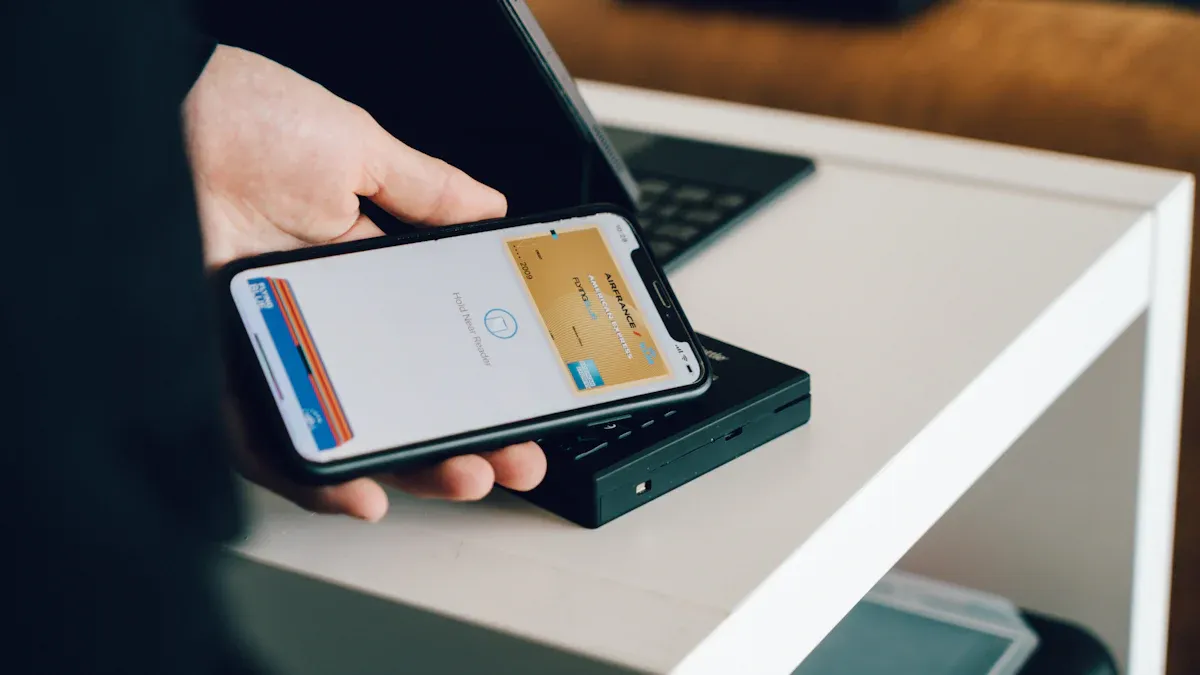
Image Source: unsplash
Are you planning to remit money from abroad to China? Your main choices are traditional bank wire transfers and online remittance platforms. This is a very common need, and relevant data confirms it:
- In 2023, total personal remittances into China reached $50 billion.
- This makes China the third-largest remittance recipient among low- and middle-income countries.
Consider this: Do you prioritize absolute security for large transfers, or efficiency and cost for small-to-medium ones?
Your decision will directly affect transfer speed, total cost, and the final RMB exchange experience.
Key Takeaways
- There are two main ways to send money to China: traditional bank wire transfers and online remittance platforms.
- Total remittance cost includes service fees, exchange rate markup, and possible intermediary bank charges.
- Traditional bank wires suit large transfers but are slow and expensive; online platforms suit smaller transfers with fast speed and low fees.
- Chinese residents have an annual foreign exchange settlement limit of $50,000 USD equivalent; exceeding it requires supporting documents.
- Before remitting, double-check recipient details, especially the pinyin name and bank account number, to avoid transfer failure.
Must-Know Before Remitting: Exchange Rates and Fees
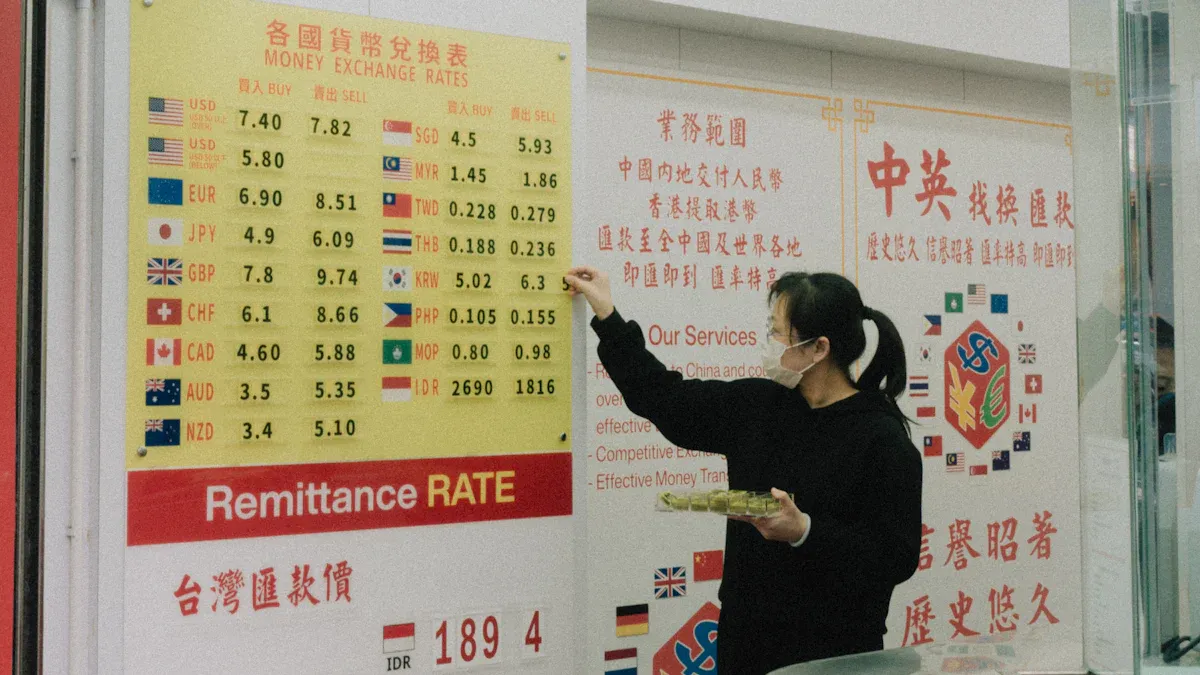
Image Source: unsplash
Before clicking “send,” understanding the true cost of remittance is crucial. The final RMB amount received depends not only on the visible exchange rate but also on a series of open and hidden fees.
Understand Real-Time Exchange Rates: Mid-Market vs. Buy Rate
The exchange rate you find online is usually the mid-market rate. This is the wholesale rate used when large institutions trade currencies, essentially the average of buy and sell rates, and the fairest rate available.
However, as an individual consumer, you typically cannot access this rate. Remittance providers offer you a buy rate. This price adds a profit margin (i.e., “markup”) to the mid-market rate. Thus, the provider’s buy rate is lower than the mid-market rate.
Tip: Since you are making an electronic transfer, the applicable rate is the cash selling rate (telegraphic transfer buying rate). This differs from the cash buying rate used when exchanging physical foreign currency notes at a bank counter; the former usually offers a better rate.
Total Remittance Cost Breakdown: Fees and Hidden Costs
Your total remittance cost consists of several parts. Besides explicit service fees, some hidden costs quietly reduce the final amount received.
- Transfer Fees: The service fee charged by the remittance institution, either a fixed amount or a percentage of the transfer.
- Exchange Rate Markup: The most common hidden cost — the profit added by the provider to the mid-market rate.
- Intermediary Bank Fees: When your transfer goes through the SWIFT network, funds may pass through one or more “correspondent banks.” These banks deduct processing fees, typically $10–$30 USD, and you may not know about them in advance.
- Receiving Bank Fees: Some mainland Chinese banks may also charge an incoming fee for international transfers.
Calculate Actual Amount Received
To clearly compare different channels, use this formula to estimate the final amount:
Actual RMB Received ≈ (Sent Foreign Currency Amount - All Fees) × Final Exchange Rate
Here’s an example comparing costs for a $5,000 USD transfer to China:
| Transfer Method | Sent Amount (USD) | Exchange Rate (USD-CNY) | Service Fee (USD) | Potential Intermediary Fee (USD) | Final RMB Received |
|---|---|---|---|---|---|
| Online Platform | $5,000 | 7.21 (close to mid-market) | $43 | $0 | ≈ 35,747 CNY |
| Traditional Bank Wire | $5,000 | 7.05 (higher markup) | $40 | $15–$30 | ≈ 34,824 CNY |
Note: The table is an estimate. Bank wires yield lower final amounts due to larger exchange rate markup and unpredictable intermediary fees. Always calculate all costs before choosing a method.
Comparison of the Two Main Remittance Methods
After understanding rates and fees, the next step is choosing the channel that best fits you. Your main options are traditional banks and modern online platforms, each with different focuses on security, speed, cost, and process.
Method 1: Traditional Bank International Wire Transfer
Traditional bank wire transfers are conducted via the SWIFT (Society for Worldwide Interbank Financial Telecommunication) network. This is the oldest and most trusted method, especially suitable for large cross-border transfers.
When maximum security is your priority, banks are the top choice. Bank wires use a mature global payment network with strict security protocols to protect your funds.
- Identity Verification: Through multi-factor authentication (e.g., password, security token).
- Secure Communication: Standardized encrypted messaging between sending and receiving banks.
- Compliance Review: Transactions exceeding certain amounts (e.g., $10,000 USD in the US) are reviewed and reported to regulators to prevent fraud and money laundering.
Pre-Transfer Preparation: Bank wires require absolutely accurate information. Before proceeding, confirm with the recipient and prepare:
- Recipient Full Name: Pinyin name exactly matching the bank account.
- Recipient Address: Full residential address in China.
- Receiving Bank Name & Address: Full English name and branch address of the bank.
- SWIFT/BIC Code: The bank’s unique international identifier.
- Recipient Account Number: Complete bank card or passbook number.
Process
You can initiate a bank wire in two ways:
- Online Banking: Log into your overseas bank’s online banking, find “International Transfer” or “Wire Transfer,” fill in recipient details, and complete payment.
- Bank Branch: Bring your ID and recipient details to your bank branch for staff assistance.
Characteristics of Bank Wires
| Feature | Description |
|---|---|
| Security | Extremely high. Relies on the global banking system with the highest level of fund protection. |
| Transfer Limit | Very high. Usually no clear single-transaction cap — ideal for large transfers (e.g., property, investment). |
| Processing Time | Slow. Typical SWIFT transfer takes 2–5 business days to reach the recipient’s Chinese account. |
| Total Cost | High. Includes service fees, poor exchange rates, and unpredictable intermediary bank charges. |
Method 2: Online Remittance Platforms
In recent years, fintech companies like Biyapay have provided more modern options. These online platforms are designed for small-to-medium, high-frequency personal transfers, with core advantages in speed, cost, and convenience.
Unlike the multi-bank SWIFT network, many online platforms use their own global fund networks or direct partnerships with local payment tools (e.g., Alipay, WeChat Pay) to complete transfers. This greatly simplifies the process and reduces costs.
Take Biyapay as an example — it typically offers:
- Better Exchange Rates: Rates very close to mid-market, with much lower markup than traditional banks.
- Transparent Fees: All fees and final RMB amount are clearly shown before transfer — no hidden intermediary charges.
- Very Fast Speed: Most transfers arrive in the recipient’s account within minutes.
Process
Online platforms have a very simple process, fully completable online:
- Register Account: Sign up on the website or app with email or phone and complete identity verification.
- Create Transfer: Enter the foreign currency amount; the platform instantly shows the real-time rate and exact RMB the recipient will receive.
- Fill Recipient Info: Depending on the receiving method (e.g., Alipay), usually just the recipient’s Alipay-linked phone number and pinyin name.
- Pay Fees: Use your local bank card or account to pay.
- Track Progress: Monitor transfer status in real time in the app until funds arrive.
Characteristics and Limits of Online Platforms
While highly efficient, online platforms are mainly constrained by mainland China’s foreign exchange regulations, especially receiving limits.
Important Note: The following limits are set by mainland Chinese receiving channels (e.g., Alipay, WeChat Pay) and apply to all services using them.
- Single Transaction Limit: Via Alipay or WeChat, usually up to 50,000 RMB per transfer.
- Annual Limit: Total amount received annually via Alipay or WeChat is capped, typically between 300,000–500,000 RMB, depending on purpose.
- Transaction Count Limit: Some channels also limit monthly transactions (e.g., 5 per month).
Summary Comparison: How to Choose?
| Consideration | Traditional Bank Wire | Online Platform (e.g., Biyapay) |
|---|---|---|
| Best Use | Large transfers (> $50,000 USD), business payments, investments | Personal living expenses, family support, small purchases (< $7,000 USD) |
| Speed | Slow (2–5 business days) | Fast (usually minutes) |
| Cost | High (fees + markup + intermediary fees) | Low (transparent fees + good rate) |
| Ease of Use | Complex, many fields required | Simple, complete online in a few steps |
| Security | Extremely high | High (regulated by financial authorities) |
In short, your transfer amount is the key decision factor. For single transfers under $7,000 USD (≈50,000 RMB) prioritizing cost-effectiveness and speed, online platforms are wiser. For very large amounts where security is paramount, traditional bank wires remain the most reliable partner.
Receiving in China and RMB Exchange Guide
Image Source: unsplash
When your funds arrive in a mainland Chinese bank account, they are still in foreign currency. You need to complete the final step — exchanging them into RMB. This process is governed by China’s foreign exchange policies. This guide helps you smoothly receive and exchange.
Difference Between Personal Settlement and Purchase of Foreign Exchange
First, understand two basic concepts: settlement and purchase. Your operation is “settlement.”
Settlement: You sell received foreign currency (e.g., USD) to the bank for RMB. Purchase: You buy foreign currency with RMB.
According to China’s Personal Foreign Exchange Administration Measures, both settlement and purchase are subject to annual total amount management.
Bank Declaration Process and Common Purposes
When exchanging RMB at the bank, you will be asked to declare the source and purpose of funds. This is standard — just fill truthfully.
Common remittance purposes include:
- Family support or living expenses
- Salary income
- Study abroad tuition or living expenses
- Overseas travel expenses
- Medical expenses
Choosing the most accurate reason ensures smoother exchange.
Detailed Explanation of the Annual $50,000 USD Settlement Limit
The State Administration of Foreign Exchange (SAFE) stipulates that each Chinese resident has an annual foreign exchange settlement limit equivalent to $50,000 USD.
Key points about this limit:
- Per Person: The quota belongs to the individual; family members cannot share.
- Annual Cycle: From January 1 to December 31 each year.
- Non-Carryover: Unused quota resets to zero at year-end and cannot roll over.
If you need to exceed the limit for genuine purposes like study abroad or medical treatment, you can apply with contracts, invoices, etc. for a higher amount.
Notes for Receiving via Alipay or WeChat
Yes, remittances received via Alipay or WeChat also count toward your annual $50,000 USD equivalent personal settlement quota. When receiving through these platforms, the funds are automatically exchanged into RMB upon arrival. Thus, these amounts are automatically included in your annual total.
Your remittance decision depends on amount, speed, and cost. Choose banks for large sums to ensure safety; choose online platforms for small-to-medium sums to enjoy efficiency and low cost. Whichever method you choose, success lies in thorough preparation to ensure smooth RMB exchange.
For first-time remitters, the biggest “hidden trap” is usually not the transfer form—it’s the cost you don’t see upfront. A transfer can look cheap on fees, yet end up expensive once exchange-rate markup and intermediary deductions kick in. A practical way to stay in control is to treat the decision as two lanes: if you prioritize certainty (especially for large, well-documented transfers), bank wires can still be the most straightforward path; if you prioritize speed and total cost (typical for living expenses or family support), online platforms often reduce friction and minimize surprise charges.
To make “total cost” predictable, build a quick comparison habit before you send. Check the exact RMB the recipient will get, what’s included in the fee line, and whether intermediary deductions are possible. You can simulate this by starting from BiyaPay’s remittance hub, confirming the fee logic on the pricing/fee page, and using the rate & channel comparison page to see how markup changes your outcome. The point isn’t to “guess which is cheaper,” but to make the choice repeatable with numbers.
One more common misconception is the $50,000 annual quota: some people assume receiving via Alipay/WeChat doesn’t count, but in many cases the RMB conversion happens automatically on receipt, so it still consumes the quota. Treat the quota like an annual budget—plan your timing and your declared purpose early. The more consistent your recipient details and purpose are (pinyin name, account number, reason), the fewer frictions you’ll face and the closer your final received amount will be to what you saw before hitting “send.”
Final Pre-Send Checklist
Before clicking “send,” confirm with the recipient:
- Recipient full name in pinyin (exactly matching bank account)
- Recipient bank account number
- Bank name and SWIFT code
FAQ
What happens if the recipient’s pinyin name is misspelled?
The bank will reject the transfer. Your funds will usually be returned, but you may lose already-paid fees. Double-check the pinyin name with the recipient before sending to match the bank account exactly.
Can I directly send foreign currency to a mainland Chinese bank account?
Yes. You can send foreign currency directly to the recipient’s mainland Chinese bank account. Funds will be credited in foreign currency to their multi-currency or foreign exchange savings account. The recipient then needs to settle it into RMB themselves.
Why is the final amount received less than expected?
The difference usually comes from intermediary bank fees. Traditional bank wires via SWIFT may pass through multiple banks that deduct fees. These fees are unpredictable and deducted directly from the principal.
What if I exceed the annual $50,000 USD equivalent limit?
You cannot exceed the annual limit for ordinary settlement. If you have genuine large needs (e.g., study abroad, medical), submit contracts, invoices, etc., to the bank. After approval, the bank can process settlement above the limit.
*This article is provided for general information purposes and does not constitute legal, tax or other professional advice from BiyaPay or its subsidiaries and its affiliates, and it is not intended as a substitute for obtaining advice from a financial advisor or any other professional.
We make no representations, warranties or warranties, express or implied, as to the accuracy, completeness or timeliness of the contents of this publication.
Related Blogs of

Cross-Border Merchants' Dilemma: Received Crypto Payments Containing Gray Assets — How to Clean and Comply Through a Compliant Platform?

International Students Returning Home After Graduation: How to Most Conveniently and Cost-Effectively Bring Back the Few Thousand USD Left in Your US Bank Card?


Never Trust Any 'Acquaintance Currency Exchange': Real Cases of Crypto Assets Stolen via Acquaintance Scams During the World Cup


Funds Frozen for Half a Year? Administrative Reconsideration After 'Involved Account' and Cross-Border Multi-Currency Account Backup Solutions

Choose Country or Region to Read Local Blog
 Australia
 Austria
 Belgium
 Canada
 Cyprus
 Czech Republic
 Denmark
 Estonia
 Finland
 France
 Germany
 Greece
 Hong Kong
 India
India Indonesia
 Ireland
 Italy
Italy Japan
Japan Latvia
 Lithuania
 Luxembourg
 Malaysia
 Malta
Malta Morocco
 Nepal
Nepal Netherlands
 New Zealand
 Norway
 Pakistan
 Philippines
 Poland
 Portugal
 Romania
 Singapore
 Slovakia
 Slovenia
 South Africa
 South Korea
 Spain
Spain Sweden
 Thailand
 The United States
 Turkey
 United Arab Emirates
 United Kingdom
 Vietnam
Contact Us




BIYA GLOBAL LLC is registered with the Financial Crimes Enforcement Network (FinCEN), an agency under the U.S. Department of the Treasury, as a Money Services Business (MSB), with registration number 31000218637349, and regulated by the Financial Crimes Enforcement Network (FinCEN).
BIYA GLOBAL LIMITED is a registered Financial Service Provider (FSP) in New Zealand, with registration number FSP1007221, and is also a registered member of the Financial Services Complaints Limited (FSCL), an independent dispute resolution scheme in New Zealand.