CNN Fear and Greed Index Hits Record Low: Is Panic Over US Economic Recession Spreading?




Image Source: pexels
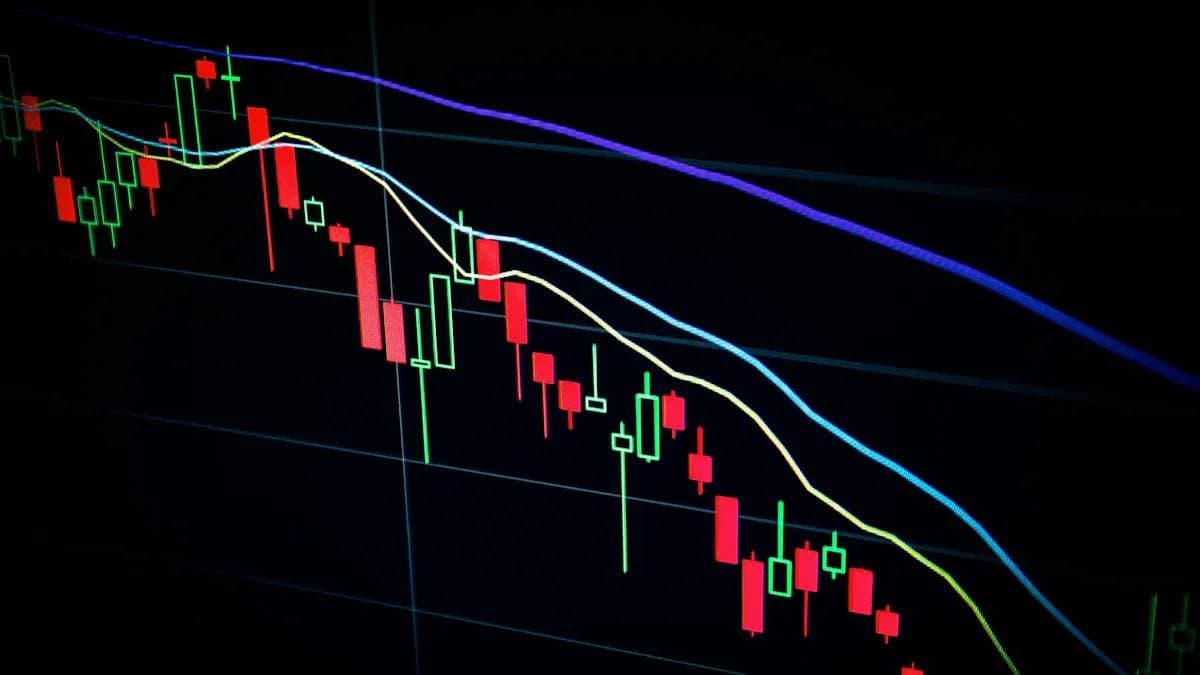
Panic over a US economic recession is indeed spreading. However, this is more a market’s preemptive reaction to future uncertainties rather than confirmation that the economic fundamentals have already collapsed.
Investor sentiment fluctuates extremely rapidly. The year-end pullback is a typical example, with the S&P 500 Index falling 2.5% in December 2024.
This panic forms a stark contrast with the previous market optimism. Many US economic news reports were still discussing the prior market recovery, when:
- The CNN Fear and Greed Index was once in the 60-80 “increasingly greedy” range.
This rapid shift in sentiment is precisely a manifestation of the market preemptively digesting future risks.
Key Takeaways
- Market panic sentiment is spreading, but it is more a preemptive reaction to future uncertainties.
- The CNN Fear and Greed Index and Treasury yield inversion are important market warning signals.
- Employment market, consumption, and GDP data indicate that the US economy may be heading toward a “jobs recession.”
- Fiscal deficits, trade policies, and the Fed’s policy dilemma increase the risk of economic recession.
- Investors should remain calm, focus on long-term investment plans, and avoid emotional decisions.
Market Panic: Leading Indicator of Recession?

Image Source: pexels
Dramatic fluctuations in market sentiment are often seen as the “canary in the coal mine” for economic direction. When panic spreads, does it really foreshadow an impending recession? We can look for clues from several key market indicators.
Interpreting the CNN Fear and Greed Index
The CNN Fear and Greed Index is a common tool for measuring market sentiment. It is not a simple opinion poll, but a complex calculation integrating seven different market indicators.
The index quantifies market sentiment by tracking seven dimensions such as stock price momentum, safe-haven demand, and market volatility. Scores range from 0 (extreme fear) to 100 (extreme greed)](https://supertype.ai/notes/fear-greed-index-part1), providing investors with an intuitive snapshot of sentiment.
Historical data shows that extreme readings of the index are often associated with market turning points. For example, in March 2020, the index fell to single digits, and the S&P 500 subsequently embarked on a multi-month rebound. However, sharp drops in the index are also often accompanied by actual market declines. In December 2024, when the index fell to the extreme fear zone, the Dow Jones Industrial Average once dropped over 1200 points. This indicates that extreme fear can be both a signal of market bottoming and confirmation of a downward trend.
Treasury Yield Inversion: The Most Accurate Alarm?
Among all recession warning signals, the US Treasury yield curve inversion is considered one of the most reliable indicators. Normally, long-term Treasury yields should be higher than short-term yields. When short-term yields surpass long-term yields, it is an “inversion,” reflecting market concerns about short-term risks exceeding long-term ones.
Since the 1970s, every US economic recession has been preceded by a yield curve inversion. Although the time lag from inversion to recession onset can range from 6 months to 2 years, its predictive accuracy is extremely high. According to Federal Reserve Economic Data, the recent yield spread between 10-year and 2-year US Treasuries has remained in negative territory, undoubtedly heightening market recession concerns.
Stock Market Volatility: Investors Voting with Their Feet
Investor sentiment ultimately manifests in capital flows. Recent trends in US stock market fund flows clearly show investors are “voting with their feet.” Data indicates that actively managed funds are experiencing sustained outflows.
- US stock funds outflows neared $20 billion in October 2025, marking the sixth consecutive month of net outflows.
- Although passive ETF funds continue to attract inflows, the amount is insufficient to offset the “bleeding” from active funds.
This trend of shifting funds away from active management stock funds is a clear signal of investors reducing risk exposure and seeking safe havens. When large amounts of capital choose to sit on the sidelines, it itself constitutes a pessimistic vote on future economic prospects.
Economic Fundamentals: Is Recession Panic Justified?

Image Source: unsplash
Market panic is not without basis. To judge the true recession risk, we must deeply analyze the economic fundamentals. Although some surface data appear strong, deeper cracks have begun to emerge. This section will systematically assess the current economic reality from three core dimensions—employment, consumption, and GDP—using a pro-con comparison approach.
Employment Market: On the Edge of a “Jobs Recession”?
The employment market is key to judging economic health. On the surface, official data seem to paint a picture of slow but orderly cooling. However, deeper analysis and private sector data reveal disturbing signs.
On one hand, the officially reported unemployment rate remains at historically low levels. This reassures many policymakers. The latest nonfarm payrolls report shows the economy is still creating jobs, albeit at a slower pace.
| Indicator | Value |
|---|---|
| Nonfarm Payrolls Change (September 2025) | 119,000 |
| Unemployment Rate (September 2025) | 4.4% |
| Number of Unemployed (September 2025) | 7.6 million |
| Unemployment Rate Last Year | 4.1% |
| Number of Unemployed Last Year | 6.9 million |
On the other hand, some economists warn that these macro data may mask the severity of the problem. Moody’s chief economist Mark Zandi has issued a clear warning, believing the US labor market is on the brink of a “jobs recession”.
Zandi stated on social media: “The economy is on the edge of recession… Consumer spending is stagnant, construction and manufacturing are shrinking, employment will decline. With inflation rising, it’s hard for the Fed to come to the rescue.”
Zandi’s pessimistic judgment is based on several key observations:
- Hiring Freezes: He points out signs of hiring freezes across the economy, especially for recent college graduates, while employee hours are also decreasing.
- Data Revisions: The Bureau of Labor Statistics recently sharply downward revised employment data for past months. For example, May and June employment totals were downward revised by 258,000. Zandi believes such large revisions are common at economic turning points, confirming the economy is weakening.
- Policy Impact: He believes current US tariff policies and restrictive immigration policies are eroding corporate profits and household purchasing power while hindering labor market growth.
Private sector data also supports this view. The ADP National Employment Report shows small businesses are becoming the hardest hit in the job market.
| Business Size | Employment Change (November) |
|---|---|
| Small Businesses | -120,000 |
| 1-19 Employees | -46,000 |
| 20-49 Employees | -74,000 |
| Medium Businesses | +51,000 |
| Large Businesses | +39,000 |
ADP chief economist Nela Richardson points out that hiring slowdown is widespread, but mainly driven by small business contraction. This indicates economic pressure is starting to manifest from the most vulnerable links. The latest US economic news also frequently reports on small business difficulties.
Inflation and Consumption: Tug-of-War Under Stubborn Inflation
Inflation and consumer spending are the other two major engines driving the US economy. Currently, a fierce tug-of-war is underway between the two. The Fed’s high interest rate policy aims to curb inflation but also brings enormous pressure on consumers.
Since 2024, inflation data has shown stubbornness. Although the annual inflation rate has fallen from its peak, the decline has been slow, even rebounding slightly recently. The annual inflation rate in September 2025 was 3.0%, higher than the previous 2.9%. This sticky inflation limits the Fed’s room for rate cuts, meaning the high interest rate environment will persist longer.
Against this backdrop, consumer performance presents a contradictory picture.
- Surface Resilience: Some retail data were unexpectedly strong. For example, retail sales in October 2025 grew 0.6% month-over-month, showing certain resilience in consumer demand.
- Debt-Driven: However, behind this consumption vitality is sharply inflating credit card debt. As of the third quarter of 2025, total US credit card debt has soared to 1.233 trillion dollars, a historical high. Credit card balances have grown 60% in four years since Q1 2021.
This mode of relying on credit to sustain consumption is unsustainable. When savings are depleted and credit tightens, consumer spending faces the risk of a “cliff-like” drop. This is the core of market concerns, and many US economic news analyses point out this hidden danger.
US Economic News: How to View GDP Data?
Among various US economic news, GDP data undoubtedly receives the most attention. Recently released GDP data appear strong, but future forecasts are not optimistic.
The US economy grew at an annualized 3.8% in Q2 2025, far exceeding expectations, mainly due to strong consumer spending. This data seems to contradict recession narratives.
However, we cannot just look in the rearview mirror. Forecasts from major institutions are becoming cautious. Although the Atlanta Fed’s GDPNow model predicts 3.5% growth for Q3, longer-term forecasts show significant economic slowdown.
The chart above predicts that US real GDP growth is expected to fall back from 2025 highs, with the annual average growth rate dropping to 1.8% in 2026. This trend of slowing growth is an important reason why the market is preemptively digesting recession expectations. Strong past data represent the economy’s “residual heat,” while weak future forecasts signal that “cooling” is arriving.
Future Outlook: Is a Perfect Storm Brewing?
Beyond current economic data, some deeper structural risks are accumulating, potentially intertwining into a “perfect storm” in the future, pushing the US economy toward recession. These longer-term risks are the root cause of the market’s true unease.
Fiscal Deficits and Public Debt: A Long-Term Bomb?
The US is facing increasingly severe fiscal challenges. Continuously expanding fiscal deficits and soaring public debt levels together constitute a long-term economic bomb.
According to Congressional Budget Office (CBO) estimates, the US federal budget deficit for fiscal year 2025 is expected to reach 5.9% of GDP.
This deficit level means the government must continuously borrow to maintain operations. Currently, total US national debt has climbed to a staggering 38 trillion dollars. CBO predicts that the federal government will borrow nearly 2 trillion dollars annually over the next decade. This unsustainable debt accumulation not only crowds out future fiscal space but may at some point shake market confidence in the dollar and US Treasuries.
Trade Policy and Stagflation Risk
Uncertainty in trade policy, particularly widespread use of tariffs, is bringing “stagflation” risk to the economy—stagnant growth combined with high inflation. A JPMorgan report clearly points out this danger.
The report analyzes that tariff costs are mainly borne by US consumers, directly pushing up inflation. At the same time, trade conflicts worsen business sentiment, suppressing corporate capital expenditure and investment, thus dragging down economic growth. This combination casts a thick shadow over economic prospects.
The latest US economic news also shows that global recession risk has risen from 30% at the beginning of the year to 40%, with trade policy being a key driver.
The Fed’s Policy Dilemma
Facing dual pressures of slowing growth and stubborn inflation, the Fed is caught in a policy dilemma.
On one hand, weak economic data and recession risks require the Fed to cut rates to stimulate the economy. The Fed has indeed cut rates consecutively in the second half of 2025, lowering the federal funds rate target range to 3.5%–3.75%.
On the other hand, sticky inflation boosted by factors like tariffs limits further easing space. Fed Chair Powell has publicly acknowledged tariffs are causing inflation. This contradiction makes the Fed’s decisions exceptionally difficult, with officials showing clear divisions on whether to continue cutting rates, increasing uncertainty in future monetary policy.
Current market panic is more a “dress rehearsal” and emotional amplification of future recession risks rather than an accurate portrayal of the economic status quo. The US economy is in a phase of “cooling” from overheating rather than heading toward “collapse.” Compared to 2008, current household debt levels are healthier, and most economists believe the possibility of a “soft landing” is increasing. Therefore, in investment decisions, one should learn to distinguish short-term fluctuations in market sentiment from long-term trends in economic fundamentals. Experts recommend staying calm, adhering to long-term investment plans, and avoiding emotional decisions due to panic.
FAQ
What Does the CNN Fear and Greed Index Falling to a Low Point Mean?
The index is a tool for measuring market sentiment. Falling to a low point reflects widespread investor panic and increased selling pressure. This may be a signal of short-term market bottoming or foreshadowing a broader downturn. Investors need to combine other economic indicators for comprehensive judgment.
What Is the Official Definition of an Economic Recession?
An economic recession usually refers to a country’s real GDP experiencing negative growth for two consecutive quarters. The National Bureau of Economic Research (NBER)'s definition is broader, comprehensively considering multiple indicators like income, employment, and industrial production to determine the start and end of a recession.
Why Is GDP Growth Strong, Yet the Market Still Worries About Recession?
The market focuses on future expectations rather than past data. Although current GDP data are acceptable, forecasts from major institutions show significant slowdown in future economic growth. Investors are preemptively digesting this pessimistic expectation, leading to tense market sentiment.
Facing Market Volatility, What Should Individual Investors Do?
Experts recommend staying calm and adhering to long-term investment plans. Market sentiment fluctuates dramatically, but economic fundamentals change relatively slowly. Investors should avoid emotional selling decisions due to short-term panic and instead focus on the long-term value of assets.
*This article is provided for general information purposes and does not constitute legal, tax or other professional advice from BiyaPay or its subsidiaries and its affiliates, and it is not intended as a substitute for obtaining advice from a financial advisor or any other professional.
We make no representations, warranties or warranties, express or implied, as to the accuracy, completeness or timeliness of the contents of this publication.
Related Blogs of

Beginner's Must-Read: How to Participate in US Stock Pre-Market and After-Hours Trading on Friday


Beginner Guide to US Stock Exchanges: Easily Master Account Opening and Trading Essentials

Opportunities and Challenges Coexist for Asian Stock Markets Under Fed Rate Cut Expectations


Is the US Stock Market Closed on Saturday? Master 5 After-Hours Trading Secrets

Choose Country or Region to Read Local Blog
 Australia
 Austria
 Belgium
 Canada
 Cyprus
 Czech Republic
 Denmark
 Estonia
 Finland
 France
 Germany
 Greece
 Hong Kong
 India
India Indonesia
 Ireland
 Italy
Italy Japan
Japan Latvia
 Lithuania
 Luxembourg
 Malaysia
 Malta
Malta Morocco
 Nepal
Nepal Netherlands
 New Zealand
 Norway
 Pakistan
 Philippines
 Poland
 Portugal
 Romania
 Singapore
 Slovakia
 Slovenia
 South Africa
 South Korea
 Spain
Spain Sweden
 Thailand
 The United States
 Turkey
 United Arab Emirates
 United Kingdom
 Vietnam
Contact Us




BIYA GLOBAL LLC is a licensed entity registered with the U.S. Securities and Exchange Commission (SEC No.: 802-127417); a certified member of the Financial Industry Regulatory Authority (FINRA) (Central Registration Depository CRD No.: 325027); regulated by the Financial Industry Regulatory Authority (FINRA) and the U.S. Securities and Exchange Commission (SEC).
BIYA GLOBAL LLC is registered with the Financial Crimes Enforcement Network (FinCEN), an agency under the U.S. Department of the Treasury, as a Money Services Business (MSB), with registration number 31000218637349, and regulated by the Financial Crimes Enforcement Network (FinCEN).
BIYA GLOBAL LIMITED is a registered Financial Service Provider (FSP) in New Zealand, with registration number FSP1007221, and is also a registered member of the Financial Services Complaints Limited (FSCL), an independent dispute resolution scheme in New Zealand.