Advanced Course: In-Depth Analysis of SSE Index Futures and Options Trading Strategies




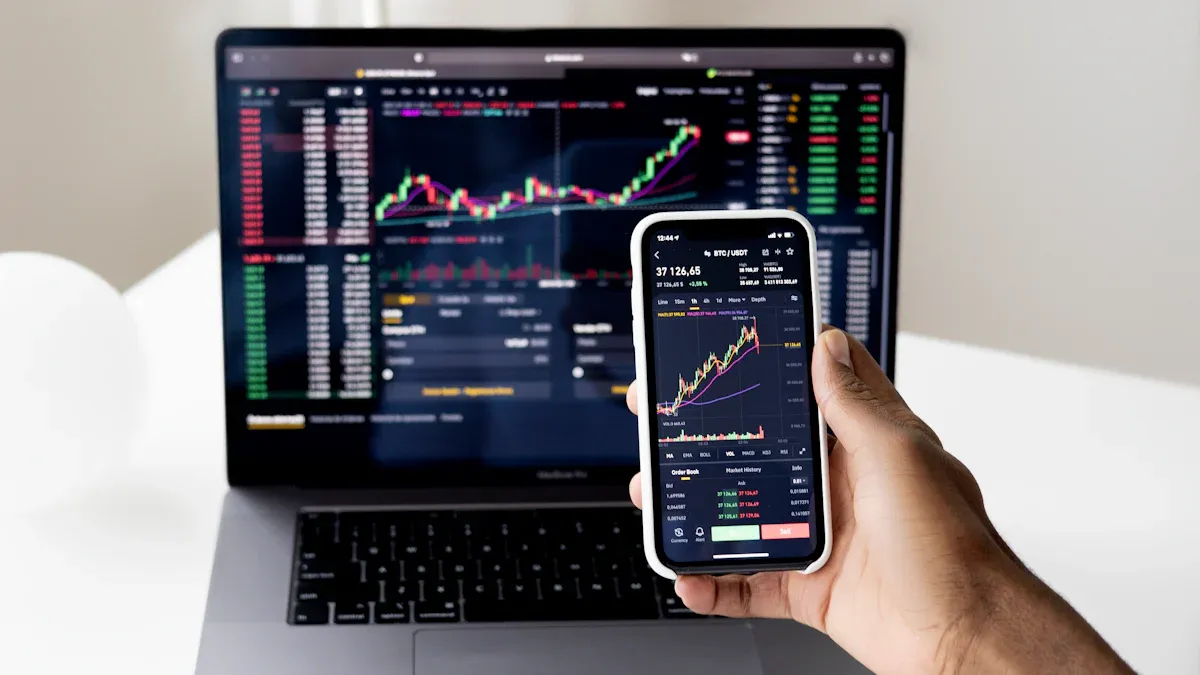
Image Source: pexels
You can open a dedicated futures and options account and use SSE 50 or CSI 300 index futures and options contracts to indirectly participate in the volatility of China’s mainland A-share market. These instruments give you powerful capabilities to execute directional trades, arbitrage, or hedge stock risk — they are the key to implementing Shanghai Composite Index investment strategies.
Key Points
- SSE Index futures and options are tools for investing in China’s A-share market, enabling directional trading, arbitrage, or risk hedging.
- Index futures offer leverage that magnifies both gains and losses. You must understand the margin system and price limits.
- Options have asymmetric risk-reward profiles. Buying options has limited risk, while selling options can carry very large risk.
- Traders must select appropriate futures or options strategies based on market conditions and personal risk tolerance.
- Successful trading requires strict risk management, including position sizing, stop-losses, and margin monitoring.
Shanghai Stock Index Futures: Rules and Core Strategies
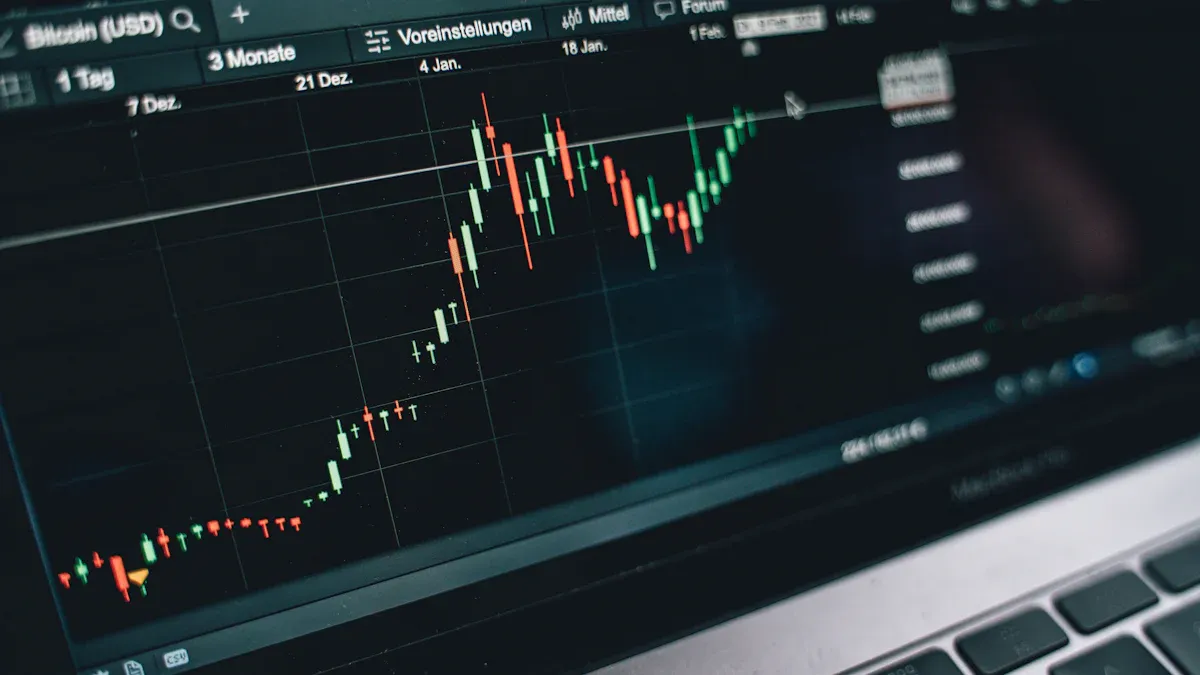
Image Source: pexels
To master Shanghai stock index futures, you must first understand the rules of the game. This is like learning to drive — you need to know the traffic laws and vehicle operation before navigating complex road conditions. This section systematically breaks down the trading rules of Shanghai stock index futures and deeply analyzes four core strategies widely used by professional investors.
Trading Rules Overview
Before entering live trading, you must have a clear understanding of the rules. Taking the SSE 50 Index Futures (code IH) as an example, it is listed on the China Financial Futures Exchange (CFFEX). Pay attention to these key points:
- Margin System: You do not need to pay the full contract value to trade one lot of index futures. You only deposit a certain percentage as performance guarantee, typically floating between 8% and 12%.
- Price Limits: To control market risk, contracts have daily price limits. Trading halts when the price moves ±10% from the previous day’s settlement price.
- Contract Multiplier: Each index point has a fixed value. For example, the SSE 50 Index Futures multiplier is 300 RMB per point.
Contract Specifications and Leverage Mechanism
Understanding contract specifications is the foundation for calculating P&L and risk. Every futures contract contains standardized terms that make trading clear.
| Contract Specification | Description |
|---|---|
| Trading Code | IH |
| Underlying Index | SSE 50 Index |
| Contract Multiplier | 300 RMB per point |
| Minimum Tick Size | 0.2 point (value 60 RMB) |
| Contract Months | Current month, next month, and the following two quarter months |
Leverage is the most prominent feature of index futures. It magnifies both gains and losses. Assume the SSE 50 Index is at 2500 points with a 10% margin requirement.
- Contract Notional Value:
2500 points × 300 RMB/point ≈ $105,000(converted at 7.15 exchange rate) - Required Margin:
$105,000 × 10% = $10,500
This means you control $105,000 worth of assets with only $10,500 — approximately 10× leverage. A 1% index move changes your account by roughly 10%.
Trading Hours and Cash Settlement
Shanghai stock index futures trading hours basically align with the A-share market, covering the main trading sessions. A key concept is cash settlement. Unlike commodity futures that require physical delivery, index futures settle in cash at expiration. All open positions are settled based on the final settlement price of the underlying spot index on expiry day. This greatly simplifies the process and makes it a pure financial instrument.
Four Core Trading Strategies
After mastering the basic rules, you can start learning how to apply these tools to execute specific trading plans. Here are four core strategies commonly used by professional investors.
Strategy 1: Macro Cycles and Directional Trading
Directional trading is the most straightforward strategy: go long if bullish, go short if bearish. However, professionals base judgments on rigorous macro analysis and data interpretation rather than gut feeling. Combining macro cycles (interest rates, inflation, GDP growth) to judge market trends is the first step.
Going further, analyze volume and open interest (OI) after the open to gauge major capital intentions. This method works in any mature futures market.
- High Volume + Rising Open Interest: This usually indicates large new capital entering, giving strong momentum and market confirmation to the current trend. For example, this pattern in an uptrend signals strong bullish sentiment and likely continuation.
- High Volume + Stable or Declining Open Interest: This may mean activity is mainly driven by closing or hedging of existing positions rather than new speculative money.
Practical Observation: When analyzing US E-mini S&P 500 (ES) futures, if volume and open interest surge during an uptrend, traders view it as a strong bullish signal and confidently build long positions. You can apply the same logic to Shanghai index futures.
Strategy 2: Cash-Futures Arbitrage
Cash-futures arbitrage is a low-risk strategy that profits from the price difference (basis) between futures and the spot index. In theory, futures price should equal spot price plus holding cost (e.g., interest) minus dividends during the holding period. Arbitrage opportunities arise when futures deviate significantly from theoretical fair value.
Building an accurate no-arbitrage interval model is key. The following formula shows the complexity involved:
| Formula |
|---|
| St(1-Cs-rc(T-t)-D(T-t)-z) - Cf < Ft < St(1+Cs+rc(T-t)-D(T-t)+z) + Cf |
This is a simplified version; a rigorous academic model includes more variables such as transaction costs, impact costs, dividends, taxes, and borrowing rates to provide a solid foundation for theoretical pricing.
| Symbol | Meaning |
|---|---|
| Ft | Futures price |
| St | Spot price |
| Cs | Spot transaction cost rate |
| Cf | Futures transaction cost rate |
| rc | Financing cost rate |
| D | Dividend yield |
| z | Impact cost rate |
Although the formulas look complex, the core idea is simple: arbitrage is only profitable when the market price deviates enough to cover all trading costs.
Strategy 3: Calendar Spread Arbitrage
Calendar spread arbitrage involves simultaneously buying and selling futures contracts of the same underlying but different expiration months to profit from changes in the price spread. For example, if you believe the near-month contract will rise faster than the far-month, buy near-month and sell far-month.
This strategy usually requires far less margin than an outright futures position, but it carries unique risks and costs.
-
Transaction Costs: To achieve similar Value-at-Risk (VaR) as an outright position, spreads may require more contracts, leading to higher trading costs.
-
Tail Risk: Despite lower margin, spreads often have higher kurtosis after risk adjustment, meaning greater vulnerability to extreme events.
-
Execution Risk: Rapid market moves or low liquidity may prevent execution at desired prices, causing slippage and hurting profitability.
-
Volatility Risk: Changes in implied volatility affect different expiration months differently, creating unexpected impacts on the spread.
Strategy 4: Portfolio Hedging with Stocks
If you hold a stock portfolio and worry about systematic market decline, you can sell Shanghai index futures to hedge. The goal is not profit but to offset stock losses with futures gains, protecting overall portfolio value.
To hedge accurately, calculate the optimal hedge ratio, usually involving the portfolio’s Beta. Beta measures portfolio volatility relative to the market.
- List Holdings and Weights: List all stocks in the portfolio and calculate each stock’s weight.
- Obtain Individual Betas: Find each stock’s Beta relative to the benchmark (e.g., SSE 50 Index).
- Calculate Weighted Betas: Multiply each Beta by its weight.
- Sum to Get Portfolio Beta: Add all weighted Betas to obtain the overall portfolio Beta.
Suppose your portfolio Beta is 1.2, meaning a 1% market drop theoretically causes a 1.2% portfolio drop. You can sell the corresponding notional value of index futures to offset this risk.
For example, in a US case, a $700,907.35 portfolio with Beta 1.14 hedged with SPY options at SPY price 4,433 would use the formula:
(Contract value) / (Portfolio value × Portfolio Beta). The same principle applies when hedging A-share portfolios with Shanghai index futures.
Precise calculation effectively strips out market (Beta) risk, making portfolio returns depend more on stock selection (Alpha).
SSE Index Options: Rules and Advanced Strategies
Image Source: unsplash
If you have mastered index futures, options become another powerful weapon in your arsenal. Unlike the linear P&L of futures, options offer asymmetric risk-reward. They grant you a right, not an obligation. This allows you to chase large upside with limited cost or design sophisticated strategies for complex markets. This chapter takes you deep into the options world — from basic rules to advanced strategies — so you truly master this flexible financial tool.
Trading Rules and Key Concepts
Before trading options, understand their basic structure. An option is a contract that gives the holder (buyer) the right, but not the obligation, to buy or sell the underlying at a specific price on or before a specific date. The buyer pays the seller a fee called the premium for this right.
Underlying ETF and Contract Specifications
Direct options on the Shanghai Composite Index are not yet available in mainland China. However, you can achieve similar exposure through SSE 50 ETF options, which are the most mainstream product and trade on the Shanghai Stock Exchange (SSE).
Here are the key specifications of SSE 50 ETF options you must memorize:
| Contract Specification | Description |
|---|---|
| Underlying Asset | Huaxia SSE 50 ETF (code: 510050) |
| Contract Type | Call Option and Put Option |
| Contract Size | 10,000 units (one contract corresponds to 10,000 ETF units) |
| Expiration Months | Current month, next month, and the following two quarter months |
| Strike Prices | 9 strikes around ETF market price (1 ATM, 4 OTM, 4 ITM) |
| Exercise Style | European (exercisable only on expiration day) |
| Settlement | Physical delivery (upon exercise, SSE 50 ETF units are delivered) |
Pro Tip: Although physical delivery applies, most speculative traders close positions before expiration rather than exercise, realizing cash P&L.
Premium, Intrinsic Value, and Time Value
The price you pay for an option — the premium — consists of two parts. Understanding them is essential for sound decisions.
- Intrinsic Value: The value the option would have if exercised immediately. It is the “certain” profit portion.
- Call intrinsic value ≈
max(Underlying price S − Strike K, 0) - Put intrinsic value ≈
max(Strike K − Underlying price S, 0)
- Call intrinsic value ≈
- Time Value: The portion of premium exceeding intrinsic value. It reflects the possibility of favorable price movement before expiration and decays over time.
Premium = Intrinsic Value + Time Value
Example: An ETF tracking the S&P 500 (SPY) trades at 3,718. You look at a 3,575 strike call quoted at 250.25. - Its intrinsic value is
3,718 − 3,575 = 143. - Its time value is
250.25 − 143 = 107.25. This $107.25 is what you pay for the possibility of further upside.
Core Greeks Explained
The Greeks measure option price sensitivity to various factors. Mastering them is like having an aircraft instrument panel.
- Delta (Δ): Speedometer. Measures how much the option price changes for a $1 move in the underlying. Call Delta 0 to 1, Put Delta -1 to 0. ATM Delta ≈ 0.5. Delta approaches 1 or -1 as the option moves deep ITM.
- Gamma (Γ): Accelerator. Measures how much Delta changes for a $1 move in the underlying. Gamma peaks at ATM because small underlying moves dramatically change the probability of finishing ITM, causing Delta to swing sharply. Deep ITM/OTM options have near-zero Gamma.
- Theta (Θ): Fuel gauge. Measures daily time value decay, usually negative. ATM options have the highest time value and therefore the highest Theta — time decay is fastest. Theta hurts option buyers and helps sellers.
- Vega (ν): Volatility sensitivity. Measures option price change for a 1% change in implied volatility. Higher volatility increases option premium (especially time value). Buying options is long volatility; selling is short volatility.
Four Basic Strategies: Buyer vs. Seller
All complex option strategies are built from these four basic operations. As a buyer, you pay premium with limited risk (max loss = premium) and large upside. As a seller, you collect premium with limited profit but potentially large risk.
Long Call (Buy Call Option)
- Market View: Strongly bullish.
- Strategy: Pay premium, buy call.
- Risk: Limited to premium paid.
- Reward: Theoretically unlimited.
Long Put (Buy Put Option)
- Market View: Strongly bearish.
- Strategy: Pay premium, buy put.
- Risk: Limited to premium paid.
- Reward: Large but not unlimited (underlying can only fall to zero).
Short Call (Sell Call Option)
- Market View: Bearish, neutral, or mildly bullish (price won’t exceed strike).
- Strategy: Sell call, collect premium.
- Risk: Theoretically unlimited.
- Reward: Limited to premium received.
Short Put (Sell Put Option)
- Market View: Bullish, neutral, or mildly bearish (price won’t fall below strike).
- Strategy: Sell put, collect premium.
- Risk: Large (underlying can fall to zero).
- Reward: Limited to premium received.
Common Combination Strategies
Once comfortable with the four basics, combine them to build strategies matching your exact market outlook.
Bull & Bear Spreads
Spreads involve simultaneously buying and selling options to reduce cost, cap risk, or improve win rate.
- Bull Call Spread: Expect moderate upside. Buy lower strike call, sell higher strike call. Reduces cost but caps max profit.
- Bear Put Spread: Expect moderate downside. Buy higher strike put, sell lower strike put.
Practical Tip: When building spreads, strike selection is critical. A common rule of thumb is the “25% Rule”: the premium received from the sold leg should be at least 25% of the premium paid for the bought leg, aiming for favorable risk-reward (e.g., 1:4).
Straddle & Strangle Volatility Strategies
These strategies bet on volatility rather than direction.
- Long Straddle:
- Construction: Buy ATM call + ATM put with same strike and expiration.
- View: Expect large move in either direction.
- Breakeven Points:
- Upper = Strike + Total premium paid
- Lower = Strike − Total premium paid
- Example: Buy $100 strike call + put for total $6 premium. Need price >$106 or <$94 to profit.
- Long Strangle:
- Construction: Buy OTM call + OTM put with different strikes, same expiration.
- View: Similar to straddle but cheaper, requires larger move.
- Short Straddle/Strangle:
- Construction: Sell the opposite legs.
- View: Expect very low volatility. Classic “income” strategy profiting from Theta decay.
- Best Timing: Sell when implied volatility (IV) is very high — high IV means expensive premium, wider breakeven, and you profit from both Theta decay and Vega crush when IV falls.
With these strategies, you can translate your Shanghai Composite views into precise, risk-controlled trades.
Practical Guide: Tool Selection and Risk Management
You now understand futures and options rules and strategies — it’s time to go live. This chapter serves as your action guide, helping you choose wisely between futures and options and providing a professional-grade risk management framework. Mastering these skills is key to long-term survival in the markets.
Futures vs. Options: How to Choose
Choice depends on your market view and risk appetite. Futures offer direct directional exposure; options provide flexibility.
Capital Efficiency and Risk Profile Comparison
Futures leverage lets you control large notional value with little capital — high capital efficiency. But high leverage means high risk — short futures can have theoretically unlimited loss.
Buying options gives defined risk — maximum loss is the premium paid. You participate in upside while capping downside.
Tool Suitability in Different Market Regimes
Different market environments call for different tools.
- Futures: Best when you have very high directional conviction — direct exposure, no time decay.
- Options: Shine in range-bound markets or when hedging — use spreads for sideways markets or protective puts as “insurance” for stock portfolios.
Core Risk Management Techniques
Successful traders don’t avoid mistakes — they manage them. These core techniques protect capital and enable steady growth.
Position Sizing and Capital Allocation
How much capital per trade? Professionals never guess. Use mathematical models like the Kelly Criterion based on win rate and reward/risk ratio. In practice, traders use fractional Kelly to reduce risk. Tools like Biyapay help clearly manage and allocate trading capital.
If you want a clean “strategy → execution → review” loop, treat every trade as a replayable record: entry thesis, expected volatility band, max tolerable drawdown, and the exact conditions that trigger exits. This keeps your post-trade review grounded in rules rather than vague hindsight.
On the tooling side, it helps to consolidate monitoring and note-taking into a single workflow. You can use BiyaPay’s stock market & symbol lookup to quickly cross-check related market moves and key reference info (especially if you use US markets as a sentiment/liquidity proxy). Then start from the official site and complete registration to keep a focused watchlist for tranche execution and rule-based review.
For the “trust layer” checklist, licensing is a reasonable baseline: BiyaPay holds a U.S. MSB license and is registered on New Zealand’s FSP, operating across multiple jurisdictions. For notices or pathway updates, you can also check the Event Center.
Stop-Loss Strategy Implementation
Stops are your safety net. An advanced method is volatility-based stops using the Average True Range (ATR) indicator. Stops widen in high volatility to avoid noise whipsaws and tighten in calm markets to protect profits.
Margin Risk Monitoring
When trading futures, constantly monitor margin levels. Your account must stay above the maintenance margin. If losses drop equity below this level, you receive a margin call.
Warning: If you fail to meet the call in time, the broker can forcibly liquidate positions — usually at a loss — without your consent is not required.
You have now seen that SSE Index futures and options are powerful professional investment tools, but high returns always come with high risk. Mastering rules, employing core strategies, and strictly applying risk management are the only path from ordinary investor to advanced trader.
Your learning journey has just begun. Don’t stop at theory — start with simulation accounts, then small real positions using the strategies in this article. Continuous learning and review will internalize knowledge into your own trading edge.
FAQ
What is the first step to trade these products?
Open a dedicated futures or options account with a compliant broker. Before committing real capital, practice extensively on a demo account to familiarize yourself with the platform and rules.
How do Shanghai index futures differ from US index futures (e.g., ES)?
The main differences are the underlying index and contract value. Shanghai futures (e.g., IH) track the SSE 50 Index. US E-mini S&P 500 (ES) tracks the S&P 500. Contract multipliers and margin requirements are completely different.
Is selling options suitable for beginners?
No. Selling options collects premium but carries potentially huge or unlimited loss. Beginners should start with limited-risk strategies like buying calls or puts. Avoid selling options until you fully understanding the risks.
How much starting capital do I need?
There is no fixed amount — it depends on contract margin and your position size. Futures require sufficient margin; option buyers need premium.
Always trade only with capital you can afford to lose. Never use living-expense money for trading.
*This article is provided for general information purposes and does not constitute legal, tax or other professional advice from BiyaPay or its subsidiaries and its affiliates, and it is not intended as a substitute for obtaining advice from a financial advisor or any other professional.
We make no representations, warranties or warranties, express or implied, as to the accuracy, completeness or timeliness of the contents of this publication.
Related Blogs of

What Should You Check Before Buying Hot U.S. Stocks? Price Volatility, Order Types, and Company Fundamentals All Matter


Can You Buy SpaceX IPO on the First Trading Day? Understand U.S. IPO Trading Rules First


Why Is It Hard to Buy U.S. IPOs at an Ideal Price on the First Trading Day? Matching, Liquidity, and Slippage Explained


How to Trade a U.S. IPO After Listing? Basic Rules Ordinary Investors Should Know

Choose Country or Region to Read Local Blog
 Australia
 Austria
 Belgium
 Canada
 Cyprus
 Czech Republic
 Denmark
 Estonia
 Finland
 France
 Germany
 Greece
 Hong Kong
 India
India Indonesia
 Ireland
 Italy
Italy Japan
Japan Latvia
 Lithuania
 Luxembourg
 Malaysia
 Malta
Malta Morocco
 Nepal
Nepal Netherlands
 New Zealand
 Norway
 Pakistan
 Philippines
 Poland
 Portugal
 Romania
 Singapore
 Slovakia
 Slovenia
 South Africa
 South Korea
 Spain
Spain Sweden
 Thailand
 The United States
 Turkey
 United Arab Emirates
 United Kingdom
 Vietnam
Contact Us




BIYA GLOBAL LLC is registered with the Financial Crimes Enforcement Network (FinCEN), an agency under the U.S. Department of the Treasury, as a Money Services Business (MSB), with registration number 31000218637349, and regulated by the Financial Crimes Enforcement Network (FinCEN).
BIYA GLOBAL LIMITED is a registered Financial Service Provider (FSP) in New Zealand, with registration number FSP1007221, and is also a registered member of the Financial Services Complaints Limited (FSCL), an independent dispute resolution scheme in New Zealand.