US Stock Futures Trading Guide for Beginners: Your First Lesson in 2025




Image Source: pexels
Imagine you don’t invest directly in Apple stocks. Instead, you bet on the “weather forecast” for the overall market. If you guess the rise or fall correctly, you profit.
When you buy stocks, you become a small shareholder in the company and share in its growth. Trading US stocks futures, however, means betting against the market on the future direction of an index, without involving any company ownership. The goal of this lesson is to equip you with essential skills. You will learn to read the market’s “weather forecast,” execute trades safely, and build risk protection.
Key Takeaways
- US stock futures are contracts to buy or sell the future price of an index, not direct investments in company stocks.
- Mini contracts (such as the Mini S&P 500) are suitable for beginners because they have lower capital requirements.
- The margin system allows you to control large-value contracts with small amounts of capital, but leverage amplifies both profits and losses.
- You can profit from market rises by “going long” or from falls by “going short.”
- Choosing a regulated broker is crucial as it ensures the safety of your funds.
- Paper trading is a mandatory step for beginners; it helps you familiarize yourself with the platform and build trading psychology.
- Stop-loss orders are a key tool for protecting capital, limiting the maximum loss on a single trade.
- Risk per trade should not exceed 1%-2% of your total account; this is the core of position management.
What Are US Stock Futures: Core Concepts for Beginners

Image Source: unsplash
Now, you have a preliminary impression of US stock futures. Next, we will dive deeper into the core concepts and break down those key terms that intimidate beginners. Once you understand these, you will have your first ticket to the futures world.
Definition of Stock Index Futures and Major Products
Stock index futures are essentially standardized legal contracts. Through this contract, you agree to buy or sell a stock market index at a predetermined price on a specific future date.
You are not trading physical stocks but the value of the index. It’s like trading the direction of overall “market sentiment.”
For beginners, the most important are the “mini” contracts of the three major US indices. They are popular due to their smaller contract sizes and lower capital thresholds. Here are the three star products you must know:
| Futures Product | Symbol | Corresponding Index | Contract Multiplier | Minimum Price Fluctuation (Tick Size) |
|---|---|---|---|---|
| Mini S&P 500 | ES | S&P 500 Index | $50 | 0.25 points = $12.50 |
| Mini Nasdaq-100 | NQ | Nasdaq-100 Index | $20 | 0.25 points = $5.00 |
| Mini Dow Jones | YM | Dow Jones Industrial Average | $5 | 1 point = $5.00 |
Beginner Tip: How to Understand the Contract Multiplier?
The “notional value” of a contract equals the current index level multiplied by the contract multiplier.
Suppose the Mini S&P 500 (ES) is currently quoted at 5,000 points. Then the full value of one ES contract is 5,000 x $50 = $250,000.
You don’t need to put up $250,000 to trade it, but this helps you intuitively feel the size of the asset you are controlling.
Trading Hours and Introduction to the Three Major Indices
One major appeal of the futures market is its nearly 24-hour trading. Unlike the stock market’s limited daily hours, futures trading is almost continuous.
CME Globex Electronic Trading Platform Hours
The main trading hours for US stock futures run from Sunday 5:00 PM (Central Time) to Friday 4:00 PM (Central Time).
There is only a short daily maintenance break from 4:00 PM to 5:00 PM. This means you can react anytime to major news from Asia, Europe, or the Americas.
These three major indices represent different aspects of the US economy:
- S&P 500: Includes 500 large US companies and is the most authoritative measure of the broad US market. Trading ES futures is equivalent to betting on the future of the overall US economy.
- Nasdaq-100: Focuses on 100 of the largest non-financial tech companies, such as Apple, Microsoft, NVIDIA, etc. Trading NQ futures means focusing on the tech sector’s performance.
- Dow Jones Industrial Average: Consists of 30 influential blue-chip US companies and is one of the oldest indices. Trading YM futures means paying more attention to traditional industrials and blue-chips.
Key Terms: Margin, Leverage, and Contracts
These three terms are at the heart of futures trading and the source of risk. You must thoroughly understand them.
- Contract A futures contract is standardized. Its symbol (e.g., ES), multiplier ($50), expiration month, etc., are predefined by the exchange; you only decide whether to buy or sell.
- Margin Margin is not the payment to purchase the contract but a “deposit” you must place in your broker account as a performance guarantee to open a position. It ensures you can cover potential losses.
- Initial Margin: The minimum funds required in your account to open a position (e.g., buying one ES contract).
- Maintenance Margin: The minimum funds you must maintain while holding a position overnight. If your account falls below this level, you will receive a margin call.
For example, for an ES contract with a notional value of up to $250,000, you might only need about $12,000 in initial margin to open the position.
- Leverage Leverage is a direct result of the margin system. It allows you to control assets worth many times your capital (margin) with a smaller amount.
Leverage is a Double-Edged Sword
Amplifies Profits: Suppose you use $12,000 margin to trade a $250,000 contract. If the index rises 1%, the contract value increases by $2,500. Your return relative to capital is $2,500 / $12,000 ≈ 20.8%.
Amplifies Losses: Similarly, if the index falls 1%, your loss is also $2,500, quickly eroding your margin.Leverage makes risk control critically important in futures trading.
Trading Directions: Going Long and Going Short
In the stock world, your goal is usually one: buy and wait for the price to rise. However, US stock futures offer bidirectional flexibility. You can profit from rises or falls. This is the essence of “going long” and “going short.”
1. Going Long - Betting on a Market Rise
When you expect the market to rise, you “go long.” This is very intuitive.
- Your Action: Buy a futures contract.
- Your Goal: Sell the contract later at a higher price to capture the difference.
Example:
Suppose you believe tech stocks are about to rally. You decide to go long one Mini Nasdaq-100 (NQ) contract.
- You buy one NQ contract at 18,000 points.
- The market rises as expected to 18,050 points.
- You sell to close the position and lock in profit.
Your profit: (18,050 - 18,000) points x $20/point = $1,000
2. Going Short - Betting on a Market Fall
When you expect a decline, you can “go short.” This may feel unfamiliar to beginners, but the principle is simple.
- Your Action: Sell a futures contract you don’t hold.
- Your Goal: Buy it back later at a lower price to capture the difference.
Example:
Suppose you analyze the market as overheated and likely to correct. You decide to short one Mini S&P 500 (ES) contract.
- You sell one ES contract at 5,000 points.
- The market falls to 4,980 points.
- You buy to close the position.
Your profit: (5,000 - 4,980) points x $50/point = $1,000
Risk Warning: Asymmetry in Long vs. Short Risks
You must understand that the risks of going long and short are fundamentally different. When long, your maximum loss is limited since the index can only fall to zero. When short, potential losses are theoretically unlimited because prices can rise indefinitely. Therefore, when shorting, set stop-losses even more strictly to guard against unexpected surges.
Long vs. Short: Quick Comparison
To make it clearer, the table below summarizes the key differences:
| Feature | Going Long | Going Short |
|---|---|---|
| Market Expectation | Bullish 📈 | Bearish 📉 |
| Opening Action | Buy contract | Sell contract |
| Profit Method | Sell at higher price | Buy back at lower price |
| Maximum Risk | Limited (invested margin) | Theoretically unlimited |
Mastering long and short positions gives you the tools to adapt flexibly in any market environment. Whether bull or bear, US stock futures offer opportunities.
US Stock Futures in Practice: From Account Opening to Your First Trade
You have grasped the core concepts of US stock futures; now it’s time to put theory into practice. This chapter will guide you through choosing your battlefield (broker) to wielding your weapon (trading platform), preparing you fully for your first trade.
How to Choose a Futures Broker
Choosing the right futures broker is one of the most critical decisions in your trading career. It affects not only fund safety but also trading costs and efficiency. A good broker is your partner; a poor one can be an obstacle.
Here are the four core criteria you must consider:
-
Regulation This is the most important safeguard. In the US, all legitimate futures brokers (Futures Commission Merchants) must be members of the National Futures Association (NFA) and regulated by the Commodity Futures Trading Commission (CFTC).
- They must meet strict minimum net capital requirements.
- Client funds must be segregated from company funds.
- They submit regular financial reports and undergo NFA audits.
Beginner Tip: On the broker’s website footer, you can usually find its NFA registration number. Verify it on the NFA website to confirm membership and clean record. Strict regulation ensures fund safety.
-
Trading Fees Fees directly eat into profits. Key fees include:
- Commissions: Fee per contract traded. Varies widely between brokers.
- Data Fees: Real-time market data may cost extra; some waive it with minimum activity or balance.
- Platform Fees: Some professional platforms charge monthly fees.
Here are commission references for some mainstream brokers (note: fees may change; check official sites):
Broker Commission per Standard Contract (Example) Interactive Brokers $0.85 E*Trade $1.50 TradeStation $1.50 -
Platform Stability and Features In fast-moving markets, platform reliability and execution speed are vital. A lag or outage can cause missed opportunities or failed stop-losses. You need fast orders, smooth charts, and powerful tools.
-
Chinese-Language Support For Chinese-speaking users, fluent support is invaluable. It saves time when handling account opening, funding, or trading issues.
Online Account Opening and Funding Preparation
After selecting a broker, the next steps are account opening and funding. The process is mostly online today.
1. Online Account Opening Steps:
- Fill out the application: Provide personal info like name, address, contact details.
- Complete risk disclosure and questionnaire: Read and acknowledge futures risks; answer questions on experience and finances.
- Submit ID and address proof: Upload passport/ID and recent utility bill or bank statement.
- Await approval: Review usually takes 1-3 business days.
2. Funding Methods:
Once approved, deposit funds to trade. Common methods:
- Wire Transfer: The fastest; funds arrive in 1 business day. Wire from your bank (e.g., licensed Hong Kong bank) to the broker’s account, including your name and account number in remarks.
- ACH Transfer: Convenient and low-cost with a US bank account, but has daily limits (e.g., $5,000) and possible hold periods.
- Digital Wallet and Stablecoin Funding: Some platforms (like Biyapay) offer flexible options. Convert stablecoins like USDT to USD via converter and transfer to your futures account—convenient for crypto users.
Tip: Always fund from your own account. Third-party transfers are usually rejected.
Core Trading Platform Features Explained
Logging into the platform can feel overwhelming with complex interfaces. Don’t worry; start with the three core functions: order types, chart analysis, and market depth.
1. Order Types: Your Trading Instructions
How do you tell the broker when and at what price to trade? Through different order types.
| Order Type | Definition | Advantages | Disadvantages | Beginner Scenarios |
|---|---|---|---|---|
| Market Order | Executes immediately at the best current price. | Guaranteed fill, fastest. | Price uncontrolled; slippage possible. | When you need to enter/exit immediately, e.g., major news release. |
| Limit Order | Executes only at your specified price or better. | Full price control. | No fill guarantee if price not reached. | Non-urgent; wait for ideal entry or take-profit price. |
| Stop Order | Triggers at a set price, then becomes a market order. | Automated risk control; no need to watch. | Becomes market order; slippage possible. | Essential! Limits loss per trade. |
2. Market Depth (DOM)
Market depth, also called the “order book” or “price ladder,” is a key tool for pros to view market microstructure. It shows real-time pending limit orders at different price levels.
- Left Side (Bids): Potential buyers’ orders and prices.
- Right Side (Asks): Potential sellers’ orders and prices.
- Center: Price ladder with each tick above/below current price.
Pro Perspective: Reading Market Depth
It reveals supply/demand. Heavy bids at a level indicate strong support; heavy asks indicate resistance. Order flow speed shows sentiment strength—buyers or sellers dominating.
Mastering these gives you active market participation. Next, practice in simulation.
The Necessity of Paper Trading
Before flying a real Boeing 747, you train thousands of hours in a simulator. Same for futures. Paper trading is mandatory training before risking real money—it’s not optional but required to become competent.
Core Principle: Do not trade real money until you consistently profit in simulation.
Paper trading offers invaluable benefits:
- Zero-Risk Learning Virtual funds let you experiment and make mistakes without loss. Explore strategies safely.
- Master the Platform Apply learned functions (market/limit/stop orders) in practice.
- Practice fast ordering, modifications, stop-loss setting.
- Interpret charts and real-time depth changes.
- Manage a virtual portfolio and track P&L. No panic from inexperience in live trading.
- Build Psychology and Discipline Even virtual P&L triggers real emotions. Experience greed/fear and learn to stick to plans, especially executing stops.
Beginner Tip: What Makes a Good Simulator?
It should be a full market lab with advanced charting and real-time news. Ensure:
- Real Data: Direct exchange feeds for live quotes/charts.
- Pro Charting: Indicators like VWAP and pivot points.
- Risk Practice: Repeated stop-loss, take-profit, sizing drills.
- Market Replay: “Time machine” to practice historical data—accelerate learning.
Take simulation seriously. Aim not for virtual wealth but a robust, executable system and strong mindset.
Futures Risk Management: Your Capital Moat for Beginners
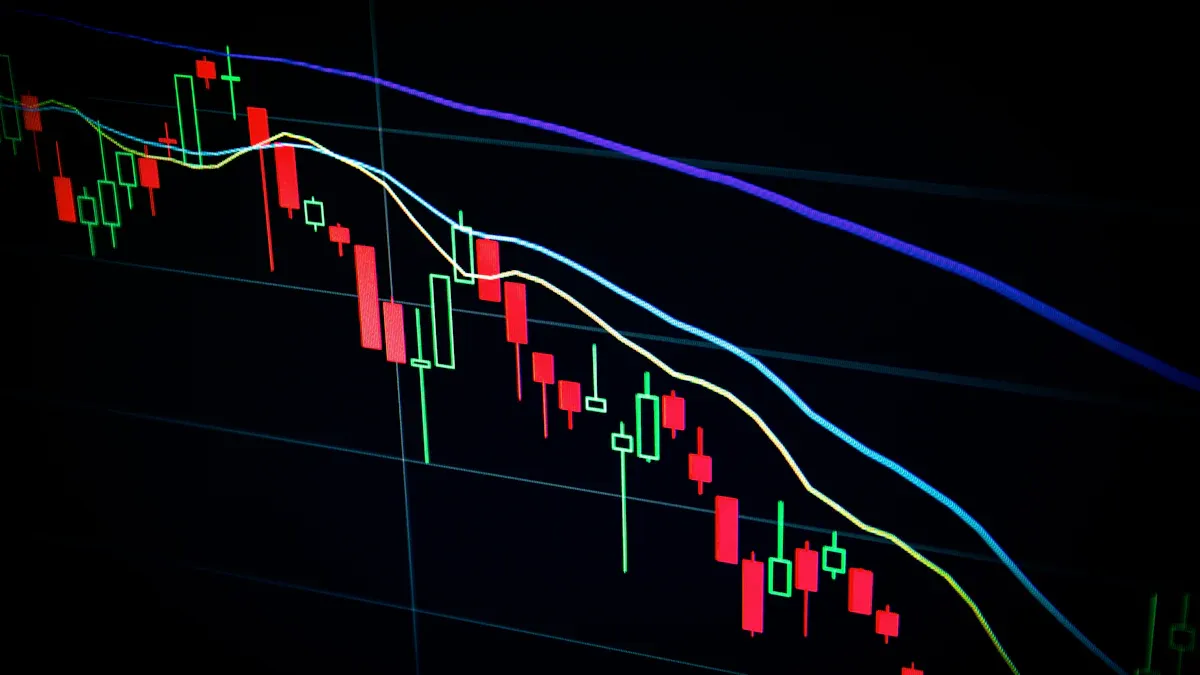
Image Source: unsplash
You know how to trade, but survival is more important. Risk management is your lifeline. This chapter builds a strong capital moat to navigate market storms.
Understanding Liquidation Risk
Leverage amplifies gains and losses. When losses erode margin, you face the nightmare: liquidation.
You need initial margin to open. Adverse moves reduce equity. Below maintenance margin, you get a margin call.
Brokers demand more funds or position closure. Failure allows forced liquidation to prevent negative balance. Account may go “close-only.”
You lose control, exiting at worst times. History shows this in events like the 1987 Black Monday crash.
Scientifically Setting Stop-Loss Points
Best prevention: control losses proactively. Stop-loss auto-closes at your threshold.
Two main methods:
-
Fixed Percentage Simple: risk a set % (e.g., 2% of account). Direct but ignores volatility.
-
Volatility-Based ATR More scientific using Average True Range (ATR) for normal fluctuation.
- Long Stop = Entry - (ATR x Multiplier)
- Short Stop = Entry + (ATR x Multiplier)
Multiplier typically 1.5-3. Adapts to market “breathing,” avoiding premature exits.
| Feature | Percentage Stop | Volatility Stop (ATR) |
|---|---|---|
| Advantages | Simple, enforces discipline | Adapts to volatility, objective |
| Disadvantages | Ignores volatility | Slightly complex, needs indicator |
| Best For | Beginners starting out | Traders wanting dynamic risk |
Position Sizing Basics
Stops define max loss per trade; sizing decides contracts. Rule: Risk no more than 1%-2% per trade.
Formula:
Example:
- Account: $20,000
- Risk: 1% = $200
- Plan: Long ES at 5,000, stop at 4,996
- Per Contract Risk: 4 points x $50 = $200
- Size: $200 / $200 = 1 contract
This keeps losses controlled, surviving drawdowns for long-term play.
2025 Trading Strategies and Market Outlook
You have your moat; now learn to attack. Clear strategies maintain direction; macro understanding provides the map. This chapter covers two basic strategies and key 2025 factors.
Beginner Basic Trading Strategies
Strategies need consistency, not complexity. Start with classics: trend following or range trading.
- Trend Following “The trend is your friend.” Trade with clear trends using moving averages.
- Bullish: Price above 20/50-day MAs; short MA above long. Buy dips to MAs.
- Bearish: Opposite; sell rallies to MAs.
- Range Trading For sideways markets: buy low, sell high.
Range Core
- Identify Range: Find repeated resistance (top) and support (bottom).
- Trade: Buy near support, sell near resistance.
- Stops: Below support/above resistance for breakouts.
Using Economic Calendars for Trading
Major data releases cause volatility—risk and opportunity. Master calendars to anticipate “earthquakes.”
Key high-impact indicators:
| Indicator | Why Important | Market Impact |
|---|---|---|
| Non-Farm Payrolls | Reflects US economic health | Strong data bullish for stocks but may raise rate hike fears |
| Consumer Price Index | Key inflation gauge | Higher-than-expected pressures rates, bearish for stocks |
| FOMC Statement | Sets US rates, affects global flows | Any wording shift causes major moves |
| GDP Growth | Economic scorecard | Directly impacts confidence |
Beginner Tip: Avoid trading at release instant—high slippage. Wait for initial reaction, then follow momentum or fade overreactions.
2025 US Stock Market Macro Factors
Don’t just stare at charts; look at the big picture. Key 2025 factors:
- Fed Policy: Rates are the “master switch.” Watch every statement. Some (e.g., JPMorgan) predict steady rates but policy uncertainty dominating.
- Inflation Trends: CPI focus; returning to target affects policy and profits.
- Geopolitical Risks: Reshaping globalization—trade policies, competition, conflicts affect supply chains and sentiment.
Stay informed for broader trading perspective.
Your journey has four milestones: understand concepts, master simulation, control risk, keep learning. Trading is rule-based, not a get-rich-quick casino. Stay calm, follow plans. Start now: choose a broker, open a demo. Your journey begins with your first simulated trade!
FAQ
How much money do I need to start trading?
Your broker sets the minimum deposit. Contract type matters—micro contracts require far less margin than minis. You don’t need huge capital to begin.
Can I lose more than my initial capital?
Theoretically possible but rare. Brokers have liquidation mechanisms. Use stop-losses proactively. Strict management prevents disasters.
Do I have to hold contracts until expiration?
No. Most day traders close before expiration, profiting from price differences. Close anytime per your strategy.
Do I pay taxes on futures profits?
Yes, profits are typically taxable. Rules are complex and vary by status/location. Consult a tax professional for personalized advice.
Is futures trading gambling?
Gambling relies on luck; successful trading on strategy. Pros use analysis, plans, and risk management. It’s a disciplined skill-based profession, not random betting.
What are “micro contracts”?
Micro contracts are scaled-down minis, usually 1/10th size. For example, Micro S&P 500 is 1/10th of ES. They allow lower capital and risk participation.
Can I trade on my phone?
Yes. Most major brokers offer powerful mobile apps for orders, management, and quotes. But complex charting is better on a computer screen.
*This article is provided for general information purposes and does not constitute legal, tax or other professional advice from BiyaPay or its subsidiaries and its affiliates, and it is not intended as a substitute for obtaining advice from a financial advisor or any other professional.
We make no representations, warranties or warranties, express or implied, as to the accuracy, completeness or timeliness of the contents of this publication.
Related Blogs of

Beginner’s Guide: Easily Understand the Shanghai Composite Index and Its Investment Value

Guide to Remitting Money from Abroad to China and RMB Exchange

Want to Invest in US Stocks from Taiwan? Complete Guide to Popular Brokers: Account Opening Process & Pros/Cons Analysis

US Index ETF Investing 2025: From Beginner to Pro – Strategies and Top Recommendations

Choose Country or Region to Read Local Blog
 Australia
 Austria
 Belgium
 Canada
 Cyprus
 Czech Republic
 Denmark
 Estonia
 Finland
 France
 Germany
 Greece
 Hong Kong
 India
India Indonesia
 Ireland
 Italy
Italy Japan
Japan Latvia
 Lithuania
 Luxembourg
 Malaysia
 Malta
Malta Morocco
 Nepal
Nepal Netherlands
 New Zealand
 Norway
 Pakistan
 Philippines
 Poland
 Portugal
 Romania
 Singapore
 Slovakia
 Slovenia
 South Africa
 South Korea
 Spain
Spain Sweden
 Thailand
 The United States
 Turkey
 United Arab Emirates
 United Kingdom
 Vietnam
Contact Us




BIYA GLOBAL LLC is a licensed entity registered with the U.S. Securities and Exchange Commission (SEC No.: 802-127417); a certified member of the Financial Industry Regulatory Authority (FINRA) (Central Registration Depository CRD No.: 325027); regulated by the Financial Industry Regulatory Authority (FINRA) and the U.S. Securities and Exchange Commission (SEC).
BIYA GLOBAL LLC is registered with the Financial Crimes Enforcement Network (FinCEN), an agency under the U.S. Department of the Treasury, as a Money Services Business (MSB), with registration number 31000218637349, and regulated by the Financial Crimes Enforcement Network (FinCEN).
BIYA GLOBAL LIMITED is a registered Financial Service Provider (FSP) in New Zealand, with registration number FSP1007221, and is also a registered member of the Financial Services Complaints Limited (FSCL), an independent dispute resolution scheme in New Zealand.