Complete Guide to US Stock Market Opening and Closing: Mastering These Five Beijing Time Points is Crucial




Image Source: unsplash
For traders in mainland China, you need to understand that the United States has daylight saving time and standard time. This directly affects the US stock market opening time in Beijing time.
Daylight Saving Time (DST): Generally starts on the second Sunday in March each year. Standard Time: Generally starts on the first Sunday in November each year.
The exact switch dates vary each year; you can refer to the table below:
| Year | DST Start Date | DST End Date |
|---|---|---|
| 2021 | March 14 | November 7 |
| 2022 | March 13 | November 6 |
| 2023 | March 12 | November 5 |
| 2024 | March 10 | November 3 |
| 2025 | March 9 | November 2 |
Key Takeaways
- US stock trading hours are divided into daylight saving time and standard time; you need to adjust according to Beijing time.
- Pre-market and after-hours sessions have low liquidity and high volatility; using limit orders is safer.
- The first hour after opening is highly volatile; beginners should observe more, while experienced traders can seize opportunities.
- The regular hours session is relatively calm, suitable for monitoring positions and planning strategies.
- The hour before closing often sees institutional rebalancing; you need to be cautious of price anomalies and stick to your trading plan.
Pre-Market Session (16:00-21:30): Key Information Release Period
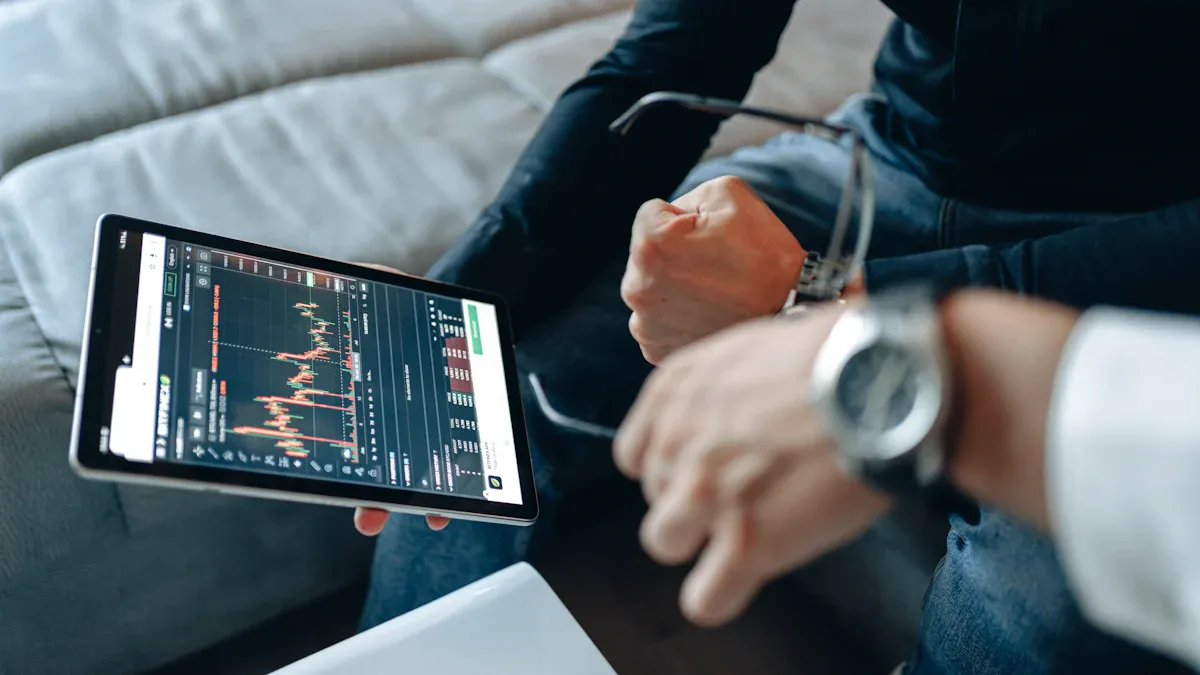
Image Source: pexels
For those in mainland China, the US stock pre-market session falls during the afternoon to evening work and daily life hours. Although this is not the official trading period, it is often the critical time that sets the tone for the day’s market. Many important company earnings reports and economic news are released during this period.
Market Characteristics and Opportunities
The biggest feature of the pre-market session is dense information and intense volatility. If a company releases better-than-expected earnings, its stock price may surge within minutes. Conversely, negative news can cause the stock price to plummet instantly. For example, in May 2019, a statement about tariffs caused the S&P 500 index to drop rapidly after opening, evaporating nearly $4 trillion in market value, demonstrating the enormous influence of news on the market.
However, opportunities always come with risks. You need to clearly recognize that pre-market trading has fewer participants and very low volume.
“Even during the busiest pre-market sessions, trading volume is far below regular trading hours.”
Typically, pre-market volume accounts for only 1% to 5% of the full day’s total. This means severely insufficient liquidity. Stock prices can fluctuate dramatically due to a single moderate-sized order, but such volatility may not necessarily persist into regular trading hours.
Trading Strategies and Risks
Trading in a low-liquidity market exposes you to one of the most direct risks: widening bid-ask spreads. Bid-ask spreads in pre-market are usually 2 to 5 times wider than during regular hours. This means higher buying costs and lower selling prices.
The table below clearly shows the core differences between pre-market and regular trading sessions:
| Feature | Pre-Market Trading | Regular Market Trading |
|---|---|---|
| Liquidity | Very low, few buyers and sellers | High, all market participants active |
| Volatility | Very high, small orders can cause drastic price changes | Relatively lower and more predictable |
| Bid-Ask Spread | Wide, large gap between buy and sell prices | Narrow, active trading reduces spread |
| Order Types | Primarily limit orders | All order types available |
Therefore, for this session, your best strategies are:
- Observe more, trade less: Treat this phase as a period for information gathering and analysis. Carefully read earnings reports and news, and assess their long-term impact on your held stocks.
- Use limit orders: If you must trade, always use limit orders to control execution prices and avoid unexpected high-cost buys or low-price sells from market orders.
- Beware of liquidity traps: Short-term traders should be especially careful of sudden price surges or drops. These movements may lack sufficient volume support, making chasing highs or panic selling extremely risky.
In summary, the pre-market session is a “preparation period” for professional investors to formulate full-day strategies, not a “playground” for beginners to trade casually.
Regular Trading Opening (21:30-22:30): Detailed Explanation of US Stock Opening Time in Beijing Time
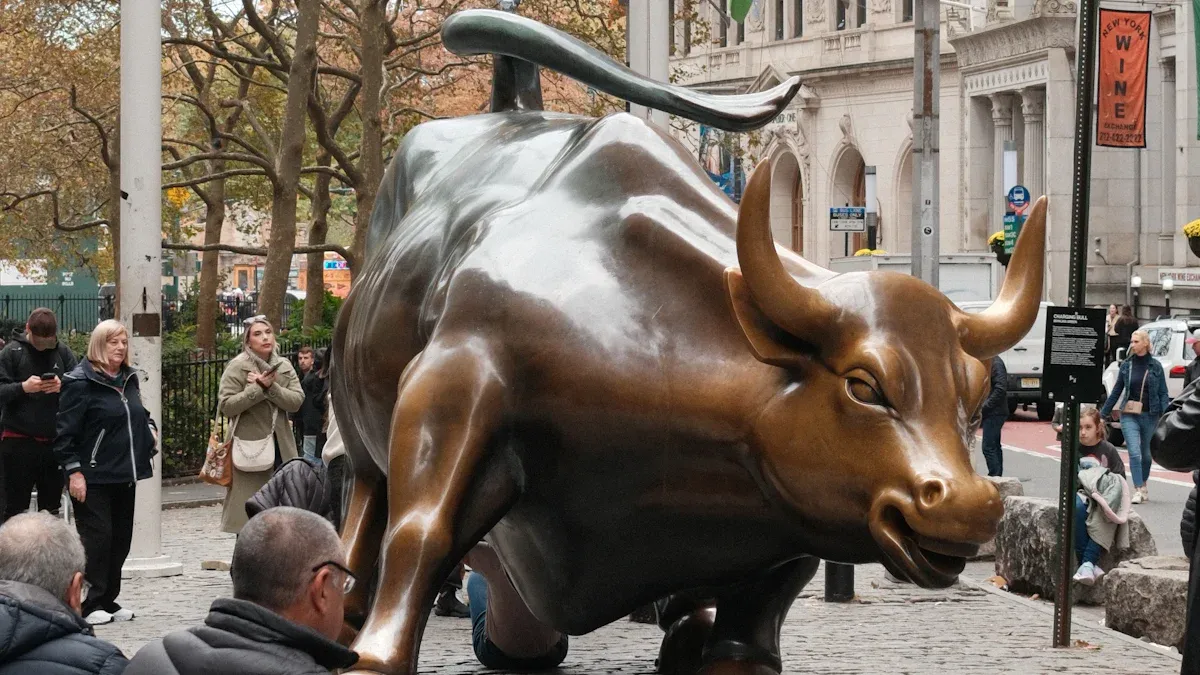
Image Source: unsplash
When the opening bell rings, US stock trading enters the most exciting phase of the day. Trading volume surges dramatically, and liquidity reaches its peak. All the information and sentiment accumulated pre-market are released at this moment, causing intense stock price volatility. For traders in mainland China, familiarizing yourself with the US stock opening time in Beijing time during this session is especially important, as it is both a land of opportunity and a source of risk.
Opportunities in the “Golden Hour”
For experienced day traders, the first hour after opening is truly a “golden period.” High liquidity means you can easily execute large orders at ideal prices, with bid-ask spreads shrinking to a minimum. Rapid price movements create excellent conditions for short-term arbitrage.
Successful traders know how to capitalize on this time. For example, trader Austin Silver primarily trades within the first 90 minutes after opening and has achieved outstanding results:
| Trader | Trading Session | Win Rate | Profitable Trade Duration | Losing Trade Duration |
|---|---|---|---|---|
| Austin Silver | 9:30 AM - 11:00 AM | 70-71% | Approx. 21 minutes | Approx. 9 minutes |
This data shows that with strict strategies, it is entirely possible to capture profitable opportunities and close them quickly during the opening session.
Strategy Differences for Beginners and Experts
However, high volatility is a double-edged sword. For beginners, this session is more like a “high-risk period.” Intense price swings can easily trigger impulsive chasing or panic selling, leading to severe losses. Trader Matthew’s experience serves as a warning; he lost $127,000 in day trading due to impatience, significantly shrinking his account.
Therefore, after understanding the US stock opening time in Beijing time, you need to adopt different strategies based on your experience level.
Advice for beginners: Observe more, operate less. In the first hour after opening, your primary task is not to make money, but to learn. Observe how the market digests news and feel the rhythm of price fluctuations. Avoid trading driven by emotions.
- Experienced traders: You can use high liquidity to execute established day trading strategies, but must set strict stop-loss points.
- Beginner investors: We strongly recommend treating this hour as an observation period. If you insist on participating, use only small amounts of capital and treat it as learning costs. Remember, not losing money is victory.
Mastering the first hour after the US stock opening time in Beijing time comes down to controlling emotions and maintaining discipline.
Regular Hours Session (22:30 - Next Day 03:00): Calm Market Observation Period
After the intense opening volatility, the US stock market typically enters a relatively stable phase. For traders in mainland China, this period spans late night and tests patience and discipline. Although not as exciting as opening or closing, it is an excellent window for reviewing the market and adjusting strategies.
Market Sentiment and Trends
The most prominent feature of the regular hours session is reduced trading activity. After the emotional release at opening, most traders take a breather, and the market enters the so-called “midday lull”. You can clearly see the changes in trading activity from the table below:
| Session | Trading Activity | Volatility |
|---|---|---|
| Opening (21:30-22:30) | Surge in volume | Intense price fluctuations |
| Regular Hours (22:30 - Next Day 03:00) | Lower volume | Less fluctuation |
| Closing (Next Day 03:00-04:00) | Increased volume and volatility | Increased price fluctuations |
However, calm does not mean no news. Sudden events impacting the market can still occur during this period. You need to stay vigilant and monitor the following types of information:
- Important economic data releases: Sometimes key reports are published during this session, prompting quick market reactions.
- Fed official speeches: Officials’ remarks may hint at future monetary policy, triggering sentiment shifts.
- Company-specific news: For example, a sudden acquisition announcement can cause a stock to surge nearly 30%; a product recall announcement may lead to a price drop.
Steady Trading Strategies
Given lower liquidity and reduced volatility in regular hours, it is not suitable for frequent short-term trading. Many experienced traders use this time to rest or review.
For you, the core task during this session is monitoring existing positions rather than opening new ones. Check if your holdings are performing as expected and if stop-loss and take-profit settings are reasonable.
This is a golden time for thinking and planning. You can use the market’s calm to review your trading plan and prepare for the “power hour” before closing. If you decide to adjust strategies after midday analysis and need to mobilize funds, advance preparation is crucial. For example, ensure sufficient USD funds in your trading account. For investors transferring funds from Hong Kong licensed bank accounts, using a fund management tool like Biyapay can help you handle USD transfers more conveniently, ensuring quick action when opportunities arise.
In summary, strategies for the regular hours session should be defensive and preparatory. Stay patient, conduct thorough analysis, and build strength for the next phase.
Closing Sprint (Next Day 03:00-04:00): Institutional Rebalancing Window
As Beijing time enters the early morning, US stock trading approaches its final hour, known as the “power hour.” Trading volume and volatility surge again, making its importance second only to opening. For those hoping to seize the last intraday opportunities, understanding this session’s unique “personality” is crucial.
End-of-Day Effects and Characteristics
The hour before closing is the main battlefield for institutional investors. Large funds, ETFs, and pension funds execute massive rebalancing and adjustments here. For example, when an ETF needs to adjust its portfolio, it often concentrates trades in the final 30 minutes before closing to minimize tracking error. This causes sudden spikes in volume for related stocks and index futures (like ES or NQ), even without news catalysts.
This phenomenon is also related to an effect called “end-of-day drift.” Research shows that much of the stock market’s returns occur overnight after closing, and this trend begins brewing before close.
Statistics show this pattern is not coincidental:
- Since the 1990s, nearly all stock returns have occurred while markets are closed.
- Portfolios built based on this effect have generated substantial returns since 1995.
- This effect is particularly pronounced in “meme stocks.”
These institutional actions create numerous trading opportunities but also risk temporary price distortions.
Coping Strategies and Preparation
Facing the complex closing dynamics, you need cautious strategies. First, beware of a manipulation tactic called “marking the close”. Some fund managers may artificially inflate prices with large buy orders at close to beautify quarterly or annual performance reports. Decisions based on these misleading closing prices can lead to unnecessary costs.
Therefore, your coping strategies should be:
- Identify institutional activity: If a stock sees a sharp volume increase without news near close, it is likely institutional rebalancing. Chasing highs or panic selling here carries high risk, as price pressure may be temporary.
- Monitor predictable events: Institutional rebalancing often occurs at month-end and quarter-end, which are predictable. Prepare mentally for unusual closing volatility on these dates.
- Execute your plan: For long-term investors, this is a good time to carry out end-of-day trading plans. For short-term traders, if participating, set strict stop-losses to guard against sudden reversals.
In short, the hour before closing is a test of wisdom and discipline. Stay calm, identify market noise, and adhere to your trading principles.
After-Hours Session (Next Day 04:00-08:00): Handling After-Hours Breaking News
When the noise of regular trading fades, the US stock market does not fully sleep. For traders in mainland China, the after-hours period from early morning to dawn is another window full of variables. Many companies choose to release earnings or major news at this time, potentially bringing unexpected opportunities or risks for the next day’s trading.
Market Characteristics and Risks
The after-hours session shares many similarities with pre-market but may carry higher risks. Its core features are thin liquidity and high volatility. With most traders offline, buyers and sellers decrease sharply, leading to two consequences:
- Widening bid-ask spreads: Trading costs increase significantly; you buy higher and sell lower.
- Intense price swings: Even small orders can cause significant price jumps.
Such volatility is often driven by breaking news. For example, auto retailer Carvana (CVNA) announced its first annual profit in February 2024 after hours, causing its stock to surge 32%. Similarly, AMC’s multiple sharp rises were closely tied to after-hours press releases. These events show that after-hours news can have a huge impact on individual stocks or even entire sectors.
After-hours volatility stems from multiple factors, including earnings releases, global events, and the absence of market makers. These amplify price changes in low-volume conditions.
Trading Strategies and Advice
Facing the unique after-hours environment, your strategies must prioritize risk control. Due to insufficient liquidity, market orders are taboo here, as they can lead to execution at highly unfavorable prices.
Your only choice—and the safest tool—is limit orders. By setting your maximum acceptable buy price or minimum sell price, you can effectively control costs and avoid slippage losses.
For major after-hours news, you can react immediately or wait for the next day’s opening. Immediate trading allows you to seize opportunities first, but you bear all risks from low liquidity.
Therefore, our advice is:
- Assess news impact: Carefully analyze the substance of the news to determine if it is short-term sentiment or long-term fundamental change.
- Always use limit orders: If trading, use limit orders and risk only a small portion of capital you can afford to lose.
- Stay patient: Often, the best strategy is observation, using after-hours price movements as key references for the next day’s opening strategy rather than rushing in.
Remember, after-hours is a domain where professionals leverage information advantages; for most, cautious observation is far wiser than blind action.
For easy review, the table below summarizes the key points of all US stock trading sessions:
| Session | Beijing Time (DST) | Features and Core Strategies |
|---|---|---|
| Pre-Market | 16:00 - 21:30 | Information-dense, low liquidity. Observe more, trade less; use limit orders. |
| Opening | 21:30 - 22:30 | Intense volatility, high liquidity. Experts seize opportunities; beginners observe. |
| Regular Hours | 22:30 - 03:00 | Market calm, reduced volatility. Monitor positions, plan strategies. |
| Closing | 03:00 - 04:00 | Institutional rebalancing, volume surge. Beware anomalies, execute plans. |
| After-Hours | 04:00 - 08:00 | Poor liquidity, frequent news. Prioritize risk control; use limit orders. |
Scientific research confirms that everyone has their own biological clock. Performance in analysis and decision-making is better during peak energy periods.
Understanding the US stock opening time in Beijing time is just the first step. More importantly, find the trading sessions that best suit your biorhythms. There is no best time—only the one most suitable for you. Starting today, create your own personalized “US stock trading schedule” and make time your friend, not your enemy.
FAQ
Which trading session is the best?
There is no absolute best trading session. It entirely depends on your personal strategy and schedule. Short-term traders prefer the high-volatility opening session. Long-term investors focus more on fundamentals, with flexible trading times. You need to find the rhythm that suits you best.
What if I miss regular trading hours?
You can still trade during pre-market (16:00-21:30) or after-hours (next day 04:00-08:00). However, be especially aware that volume is very low in these sessions, increasing risks.
Core advice: When trading pre-market or after-hours, always use limit orders to control execution prices and protect your capital.
What is a limit order?
A limit order is a trading instruction with a preset specific price. It executes only when the market reaches your set price or better. It helps precisely control trading costs and is an important risk management tool.
Why is volatility so high during the opening session?
Because the market needs to digest various news and earnings released pre-market. All traders’ emotions and orders are released at this moment, causing volume to surge and prices to fluctuate intensely. For beginners, this session is better for observation and learning.
*This article is provided for general information purposes and does not constitute legal, tax or other professional advice from BiyaPay or its subsidiaries and its affiliates, and it is not intended as a substitute for obtaining advice from a financial advisor or any other professional.
We make no representations, warranties or warranties, express or implied, as to the accuracy, completeness or timeliness of the contents of this publication.
Related Blogs of

Guide to Remitting Money from Abroad to China and RMB Exchange

Data-Driven Analysis: Shanghai Stock Index 2026 Earnings Growth Forecast

Want to Invest in US Stocks from Taiwan? Complete Guide to Popular Brokers: Account Opening Process & Pros/Cons Analysis

From the Frenzy at 6124 Points to the Darkness Before Dawn: Memory Fragments of China's Shanghai A-Shares
Choose Country or Region to Read Local Blog
 Australia
 Austria
 Belgium
 Canada
 Cyprus
 Czech Republic
 Denmark
 Estonia
 Finland
 France
 Germany
 Greece
 Hong Kong
 India
India Indonesia
 Ireland
 Italy
Italy Japan
Japan Latvia
 Lithuania
 Luxembourg
 Malaysia
 Malta
Malta Morocco
 Nepal
Nepal Netherlands
 New Zealand
 Norway
 Pakistan
 Philippines
 Poland
 Portugal
 Romania
 Singapore
 Slovakia
 Slovenia
 South Africa
 South Korea
 Spain
Spain Sweden
 Thailand
 The United States
 Turkey
 United Arab Emirates
 United Kingdom
 Vietnam
Contact Us




BIYA GLOBAL LLC is a licensed entity registered with the U.S. Securities and Exchange Commission (SEC No.: 802-127417); a certified member of the Financial Industry Regulatory Authority (FINRA) (Central Registration Depository CRD No.: 325027); regulated by the Financial Industry Regulatory Authority (FINRA) and the U.S. Securities and Exchange Commission (SEC).
BIYA GLOBAL LLC is registered with the Financial Crimes Enforcement Network (FinCEN), an agency under the U.S. Department of the Treasury, as a Money Services Business (MSB), with registration number 31000218637349, and regulated by the Financial Crimes Enforcement Network (FinCEN).
BIYA GLOBAL LIMITED is a registered Financial Service Provider (FSP) in New Zealand, with registration number FSP1007221, and is also a registered member of the Financial Services Complaints Limited (FSCL), an independent dispute resolution scheme in New Zealand.