US Stock Market Opening Hours Guide: Easily Master the 2025 Holidays




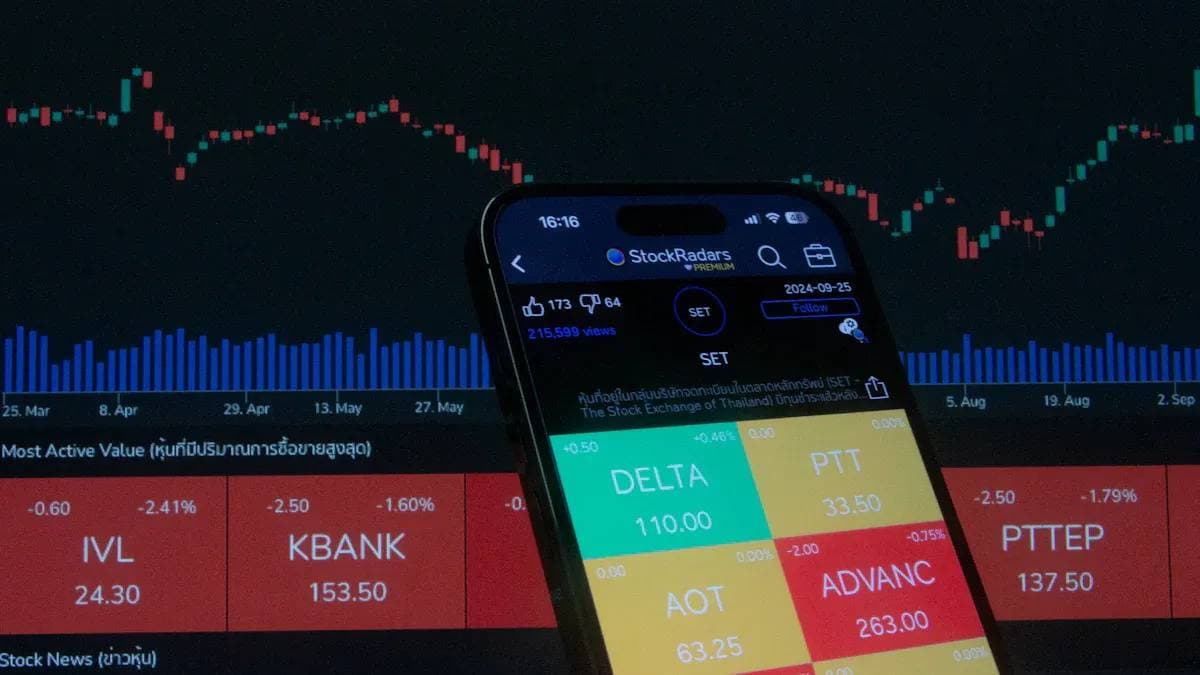
Image Source: pexels
For traders planning to invest in US stocks in 2025, mastering the full-year trading calendar is the key first step. This involves not only the regular daily US stock opening hours but also the annual holiday closures.
In 2025, the US stock market will have 10 full closure days and 3 early closure days.
Familiarizing yourself with these special dates in advance can help investors effectively plan trading strategies and avoid missing opportunities.
Key Takeaways
- In 2025, the US stock market has 10 full closure days and 3 early closure days, which investors need to know in advance.
- Regular US stock trading hours change with daylight saving time and standard time, and investors should adjust their trading plans based on Beijing time.
- Understanding US stock holidays and trading hours can help investors better manage funds and avoid making wrong trading decisions on special dates.
2025 US Stock Market Holiday Overview
For investors planning trades, understanding the full-year holiday schedule is crucial. These dates are special exceptions outside regular US stock opening hours when the market will be completely closed. Notably, the two major US exchanges—the New York Stock Exchange (NYSE) and Nasdaq—have identical holiday schedules in 2025. The holiday calendar information in this article is based on official announcements from the New York Stock Exchange.
For quick reference, here is the complete list of full closure days for the US stock market in 2025:
| Closure Date (2025) | Day of Week | Corresponding Holiday |
|---|---|---|
| January 1 | Wednesday | New Year’s Day |
| January 20 | Monday | Martin Luther King Jr. Day |
| February 17 | Monday | Washington’s Birthday |
| April 18 | Friday | Good Friday |
| May 26 | Monday | Memorial Day |
| June 19 | Thursday | Juneteenth |
| July 4 | Friday | Independence Day |
| September 1 | Monday | Labor Day |
| November 27 | Thursday | Thanksgiving Day |
| December 25 | Thursday | Christmas Day |
Tip: Mastering these dates can help you better manage positions and funds, especially around long weekends when the market may experience unusual volatility.
January 1: New Year’s Day
New Year’s Day is the globally recognized first day of the new year, and the US stock market closes on this day.
- This is a fixed market holiday.
- If New Year’s Day falls on a weekend, exchanges typically observe the holiday on the adjacent Monday or Friday.
January 20: Martin Luther King Jr. Day
A federal holiday established to honor the American civil rights leader Martin Luther King Jr.
- On this day, all US financial markets, including the NYSE and Nasdaq, close.
- Historical data analysis shows that this holiday has not formed significant seasonal trading patterns, with market performance before and after being close to random.
February 17: Washington’s Birthday
This holiday is commonly known as “Presidents’ Day” and was originally to commemorate the birthday of the first US President, George Washington. Today, it honors all US presidents. The market closes on this day.
April 18: Good Friday
Good Friday is a unique market holiday because it is not a federal statutory holiday in the United States.
- The US stock market closure is mainly based on long-standing historical tradition. The New York Stock Exchange has observed it almost every year since the late 19th century.
- A practical reason is that many traders take time off for personal or religious reasons, leading to significantly reduced trading activity. Closing the market helps maintain liquidity and avoid abnormal volatility due to low participation.
May 26: Memorial Day
This is a solemn holiday commemorating American service members who died in wars.
- The holiday unofficially marks the start of summer, often accompanied by increased consumer spending.
- Some market analysts note the so-called “Memorial Day effect”, where market returns before and after the holiday may be higher than normal, related to optimistic expectations in tourism, retail, and other sectors.
June 19: Juneteenth
Juneteenth is a federal holiday commemorating the end of slavery in the United States and one of the newest market closure days. The New York Stock Exchange officially made Juneteenth a market holiday starting in 2022.
July 4: Independence Day
This is the national holiday celebrating the United States’ formal independence from British rule on July 4, 1776. As one of the most important federal holidays, the US stock market closes for the full day.
September 1: Labor Day
Labor Day aims to recognize the contributions of workers to the US economy and society.
- All US financial markets close on this day.
- Unlike some other holidays, historical backtesting shows that Labor Day has not formed regular seasonal market effects, with trading performance typically subdued.
November 27: Thanksgiving Day
Thanksgiving is a significant holiday in American culture, with roots tracing back to the 19th century.
- The New York Stock Exchange has observed Thanksgiving closures since the early 20th century, making it a well-established tradition.
- Thanksgiving week often brings positive investor sentiment, sometimes triggering the so-called “Thanksgiving rally”. The following “Black Friday” marks the start of the holiday shopping season, and consumer expectations can also positively impact the market.
December 25: Christmas Day
As an important religious and cultural holiday celebrating the birth of Jesus, Christmas is a statutory holiday in many countries, including the United States. The US stock market follows federal holiday arrangements and closes on Christmas Day. This tradition was established in the early 20th century, making it a key winter market closure.
2025 US Stock Market Early Closure Dates
In addition to full closures, the US stock market also ends trading early on certain days before or after holidays, known as “half-day trading” or “early closure”. Investors should note that the trading window on these dates is shorter than regular US stock opening hours.
In 2025, the US stock market has three early closure days:
- July 3, Thursday (Day before Independence Day)
- November 28, Friday (Day after Thanksgiving)
- December 24, Wednesday (Christmas Eve)
On these dates, stock market trading activity typically ends at 1:00 PM Eastern Time. For your planning convenience, the specific schedule is organized as follows:
| Early Closure Date (2025) | Day of Week | Corresponding Holiday | Early Closure Time (ET) |
|---|---|---|---|
| July 3 | Thursday | Day Before Independence Day | 1:00 PM |
| November 28 | Friday | Day After Thanksgiving | 1:00 PM |
| December 24 | Wednesday | Christmas Eve | 1:00 PM |
July 3: Day Before Independence Day
Since July 4 is Independence Day with a full market closure, the previous trading day (July 3) ends early. This allows traders and market participants to start their national holiday earlier.
November 28: Day After Thanksgiving
The Friday after Thanksgiving, widely known as “Black Friday”, is a classic half-day trading session for US stocks. Since 1992, the New York Stock Exchange (NYSE) has closed early on this day.
Although the market is open, trading activity is usually significantly reduced. Historical data shows that volume on the day after Thanksgiving is about 50% lower than normal trading days. Many institutional traders take the day off, leading to lower market liquidity, which investors should consider when formulating strategies.
December 24: Christmas Eve
Christmas Eve is the day before Christmas. To allow market participants to spend time with family, the US stock market closes three hours early on this day. This is a long-standing tradition reflecting a relaxed trading atmosphere during the holidays. Investors should plan trades in advance to avoid missing the shortened trading window.
Regular US Stock Opening Hours Guide
In addition to holidays, mastering regular daily trading hours is equally important. US stock market trading hours are based on Eastern Time (ET), but due to switches between daylight saving time and standard time, corresponding times in other parts of the world change.
Daylight Saving Time (March–November)
During daylight saving time (DST), Eastern Time is set forward one hour. For 2025, DST starts on March 9 and ends on November 2. During this period, US stock opening hours are as follows:
| Trading Session | Hours (Eastern Daylight Time) |
|---|---|
| Regular Trading | 9:30 AM - 4:00 PM |
| Pre-Market Trading | 4:00 AM - 9:30 AM |
| After-Hours Trading | 4:00 PM - 8:00 PM |
For investors in mainland China, regular trading hours during DST correspond to Beijing time 9:30 PM to 4:00 AM the next day. For investors on the US West Coast, they correspond to Pacific Time 6:30 AM to 1:00 PM.
Fund Management Tip: Cross-time-zone trading requires advance fund planning. For example, investors may need to use a licensed Hong Kong bank account or a financial service platform like Biyapay to complete currency exchange in advance, ensuring sufficient USD funds are available in the account when the US stock market opens.
Standard Time (November–March)
Starting from November 2, 2025, the United States enters standard time, and clocks are set back one hour. This means all trading sessions shift one hour later in Beijing time.
During standard time, regular US stock opening hours correspond to Beijing time as:
- Beijing time 10:30 PM to 5:00 AM the next day
This change continues until early March 2026 when DST resumes. For international investors, the twice-yearly time switch is a key factor in planning trades. Be sure to recheck local trading hours at the transition points.
In summary for 2025, the US stock market has 10 full closure days and 3 early closure days. Adding these key dates to your personal calendar is essential for successfully executing trading strategies. This helps investors avoid making emotional decisions during low-volume holiday periods and ensures smooth planning with calendar reminder tools.
Be sure to bookmark this holiday guide to support your 2025 investment journey. Wishing you smooth investing and abundant returns!
FAQ
What happens if a US stock market holiday falls on a weekend?
Exchanges typically observe a substitute holiday. If the holiday falls on Saturday, the market generally closes on the preceding Friday. If it falls on Sunday, it closes on the following Monday.
Do bond markets close on US stock market holidays?
Not exactly the same. For example, on Columbus Day, the US bond market closes, but the stock market trades normally. Investors need to check recommendations from the Securities Industry and Financial Markets Association (SIFMA) separately.
Why do US stock trading hours change?
Trading hours change due to the United States’ switches between daylight saving time and standard time. Clocks are adjusted twice a year, altering time differences with other regions worldwide and affecting corresponding opening hours.
*This article is provided for general information purposes and does not constitute legal, tax or other professional advice from BiyaPay or its subsidiaries and its affiliates, and it is not intended as a substitute for obtaining advice from a financial advisor or any other professional.
We make no representations, warranties or warranties, express or implied, as to the accuracy, completeness or timeliness of the contents of this publication.
Related Blogs of

2025 Latest US Stock Account Opening Tutorial: Complete Online Application in 5 Steps


Weekly US Stock Index Futures Review and Outlook: What Investors Should Focus On


In-Depth Analysis of US Stock Pre-Market Trading: Unveiling the Secrets of the Market Before Opening

Overcoming Human Weaknesses: Detailed Guide to Beginner-Friendly Automated US Stock Trading Strategies

Choose Country or Region to Read Local Blog
 Australia
 Austria
 Belgium
 Canada
 Cyprus
 Czech Republic
 Denmark
 Estonia
 Finland
 France
 Germany
 Greece
 Hong Kong
 India
India Indonesia
 Ireland
 Italy
Italy Japan
Japan Latvia
 Lithuania
 Luxembourg
 Malaysia
 Malta
Malta Morocco
 Nepal
Nepal Netherlands
 New Zealand
 Norway
 Pakistan
 Philippines
 Poland
 Portugal
 Romania
 Singapore
 Slovakia
 Slovenia
 South Africa
 South Korea
 Spain
Spain Sweden
 Thailand
 The United States
 Turkey
 United Arab Emirates
 United Kingdom
 Vietnam
Contact Us




BIYA GLOBAL LLC is a licensed entity registered with the U.S. Securities and Exchange Commission (SEC No.: 802-127417); a certified member of the Financial Industry Regulatory Authority (FINRA) (Central Registration Depository CRD No.: 325027); regulated by the Financial Industry Regulatory Authority (FINRA) and the U.S. Securities and Exchange Commission (SEC).
BIYA GLOBAL LLC is registered with the Financial Crimes Enforcement Network (FinCEN), an agency under the U.S. Department of the Treasury, as a Money Services Business (MSB), with registration number 31000218637349, and regulated by the Financial Crimes Enforcement Network (FinCEN).
BIYA GLOBAL LIMITED is a registered Financial Service Provider (FSP) in New Zealand, with registration number FSP1007221, and is also a registered member of the Financial Services Complaints Limited (FSCL), an independent dispute resolution scheme in New Zealand.