Want to Invest in Taiwan Stocks? First Understand What the TAIEX Is and Its Practical Applications




Image Source: unsplash
You often hear news say “the market rose or fell by how many points today,” but what exactly is “the market”?
This “market” is actually the TAIEX (Taiwan Weighted Index); think of it as the thermometer measuring overall Taiwan stock market performance 🌡️.
Understanding it is the first lesson everyone wanting to invest in Taiwan stocks must learn. This article uses the plainest language to help you understand this important indicator from scratch, giving you more confidence to take your first investment step.
Key Takeaways
- The TAIEX is the indicator measuring overall Taiwan stock market performance, like the market’s thermometer.
- TSMC has a huge market cap and greatly influences the TAIEX; its rises and falls affect the entire market.
- The TAIEX cannot be bought/sold directly, but you can participate in market growth by investing in index ETFs like 0050.
- Investing in index ETFs diversifies risk, has low transaction costs, and is convenient to trade.
- Use the “total return index” to evaluate personal investment performance for more accuracy than just the TAIEX.
How is the TAIEX Calculated? Why is TSMC Key?
After learning the TAIEX is the market’s thermometer, you may wonder: how is this index calculated? Why does news always mention TSMC?
Market-Cap Weighting: Company Size Determines Influence
The TAIEX uses “market-cap weighting” for calculation; imagine it as a team competition where the heaviest players (companies) have the biggest impact on the total score.
Here, “heaviness” is the company’s “market capitalization.”
Simply put, the higher the market cap, the higher the company’s “weight” in the TAIEX. The Taiwan Stock Exchange sums all listed companies’ market caps and compares it to a base date to derive the daily index points we see.
The TAIEX calculation formula is:
Index = (Current Total Issued Market Cap / Base Period Market Cap) × 100
This calculation uses 1966 as the base year, when the index was set at 100 points. So when you hear the index at 20,000 points, it means the overall market’s total market cap is hundreds of times larger than back then.
Weighting Effect: TSMC’s Huge Influence
Under market-cap weighting rules, the top companies by market cap are called “heavyweights,” and their rises/falls significantly impact the market. In Taiwan, the most representative heavyweight is TSMC (2330).
Due to Taiwan’s industry structure heavily concentrated in semiconductors, TSMC alone accounts for about 30% of total Taiwan market cap. This creates the “one-man army” phenomenon, with a saying in the market:
“When TSMC sneezes, the Taiwan market catches a cold 🤧”
This accurately describes TSMC’s huge influence. As long as TSMC surges, even if thousands of other companies fall, the TAIEX can close green. Conversely, if TSMC plunges, even if other stocks perform well, the market struggles to avoid decline.
You can see TSMC’s massive market cap gap with other companies in the table below (in USD):
| Rank | Company Name | Market Cap (USD) |
|---|---|---|
| 1 | TSMC | 1.532 trillion |
| 2 | Foxconn | 101.93 billion |
| 3 | Delta Electronics | 82.91 billion |
| 4 | MediaTek | 71.65 billion |
| 5 | Fubon Financial | 42.38 billion |
| 6 | Quanta Computer | 36.27 billion |
| 7 | ASE Group | 33.60 billion |
| 8 | Cathay Financial Holding | 32.34 billion |
| 9 | Chunghwa Telecom | 32.27 billion |
| 10 | CTBC Financial Holding | 27.90 billion |
Thus, learning to observe TSMC’s price trend is an important reference for judging daily Taiwan stock market daily movements.
How to Read the TAIEX and Judge Taiwan Stock Market Trends?

Image Source: unsplash
After learning how the TAIEX is calculated, the next step is learning to interpret this number and apply it to your investment judgments.
Judging Market Bulls/Bears from Index Rises/Falls
You can treat TAIEX rises/falls as a “barometer” ☀️🌧️ for overall market sentiment.
- Index Rising: When the index rises, it usually means buying strength exceeds selling, market atmosphere is optimistic, and investors are generally bullish. This is called a “bull market.”
- Index Falling: Conversely, when the index falls, it indicates heavy selling pressure and a pessimistic, conservative atmosphere. This is called a “bear market.”
By observing the index’s long-term trend, you gain a macro understanding of current Taiwan stock market trends. This helps you judge whether you’re sailing with or against the wind, adjusting your investment strategy accordingly.
Tip: Single-day rises/falls only reflect short-term sentiment; judging trends requires observing at least weeks or months of charts.
Use Total Return Index to Evaluate Personal Investment Performance
You may find that even when your stocks make money, your performance seems to lag the market. This may be because you’re using the wrong comparison standard.
The commonly heard “TAIEX” doesn’t include companies’ “dividends.” When a company goes ex-dividend, its price drops, naturally pulling down the index.
For a fairer total return including dividends, refer to another indicator: Capitalization-Weighted Stock Return Index (abbreviated as Total Return Index).
Total Return Index = The index calculated by reinvesting all cash dividends received back into the market.
Simply put, only the Total Return Index truly reflects the “total return” of long-term holding Taiwan stocks. Therefore, when evaluating whether your portfolio outperforms the market average, use the Total Return Index growth rate as your benchmark for an objective assessment of your investment performance and overall Taiwan stock market trend performance.
How to Practically Invest Using the TAIEX?
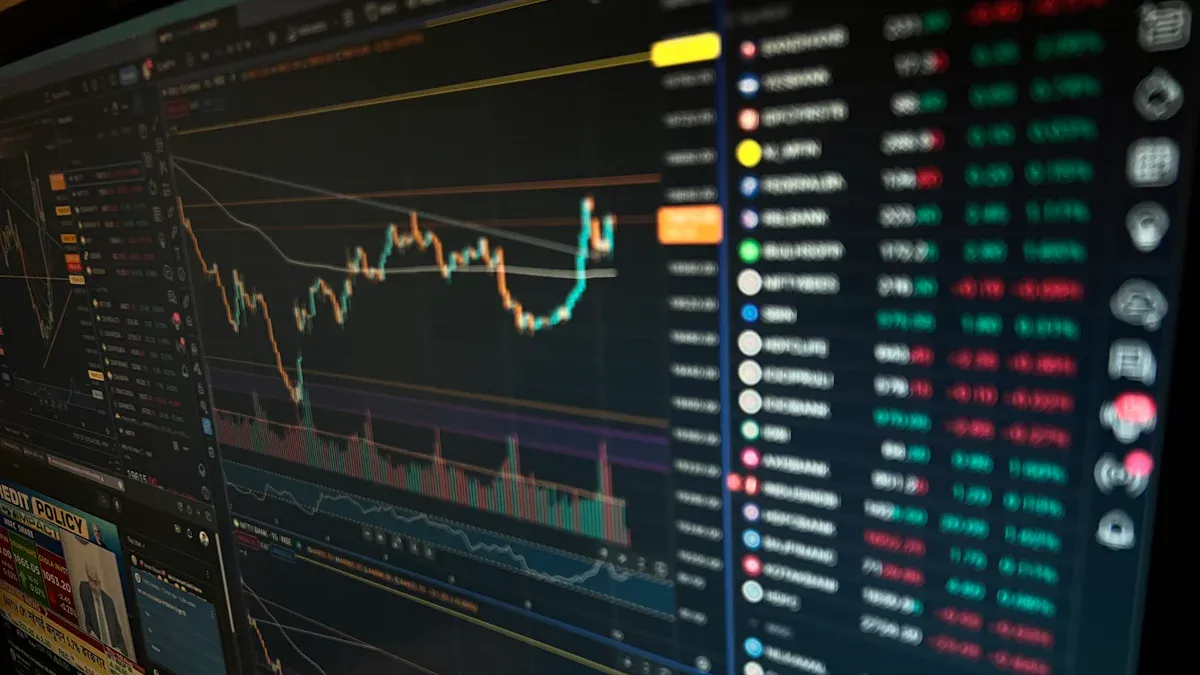
Image Source: unsplash
After learning the TAIEX is the market’s thermometer, the most critical question arises: how do I use this indicator to make money? This step turns knowledge into action.
Indices Cannot Be Bought/Sold Directly
First, establish a core concept: the TAIEX itself cannot be bought or sold directly.
An index is ultimately just a number, an abstract indicator measuring overall market performance. It’s like basketball stars’ “hang time” or movie stars’ “red carpet”—you can measure and discuss it, but you can’t actually “buy” the concept. Because an index isn’t a stock, it doesn’t represent any tradable asset.
So, how do you follow the market for growth? The answer is: invest in financial products linked to the index.
Though you can’t buy the index directly, you can invest in tools that “replicate” or “track” index performance, with the best for beginners being the index ETFs introduced next.
Investing in Index ETFs: Participating in Market Growth
For investors wanting market exposure without researching individual stocks, index Exchange-Traded Funds (ETFs) are the simplest and most efficient choice.
Think of ETFs as a “stock bento box” 🍱. The fund company packs top-performing stocks (main dishes and sides) representing the market for you; buying one ETF share equals buying a basket of great companies.
In Taiwan, the most well-known and representative ETFs tracking the TAIEX spirit are the two funds tracking the “Taiwan 50 Index”:
- Yuanta Taiwan 50 (0050)
- Fubon Taiwan 50 (006208)
Both ETFs buy Taiwan’s top 50 companies by market cap. Since these leaders account for over 70% of Taiwan’s total market cap, their overall performance nearly equals the entire Taiwan stock market trend.
From the chart above, you can see 0050 is Taiwan’s largest ETF, showing its representative status among investors.
Investing in such index ETFs has several significant advantages:
- Extreme Risk Diversification: You no longer bet all funds on a single company. Buying one 0050 share spreads your money across 50 top companies like TSMC, Foxconn, and MediaTek. Even if one or two underperform, others’ growth keeps your portfolio stable, avoiding “all eggs in one basket” risk.
- Low Transaction Costs: Compared to actively managed funds needing stock-picking managers, index-tracking ETFs have very low management costs (expense ratios). Over time, saved fees become your real profit.
- Convenient Trading: ETF trading is exactly like regular stocks. You can buy/sell anytime during market hours via broker apps, very flexible.
In summary, buying index ETFs like 0050 or 006208 lets you easily participate in long-term market growth without being a stock-picking expert, enjoying economic development dividends. For investment beginners, this is undoubtedly the most stable, smartest first step into the market.
Congratulations! After reading this, you’ve mastered the three core concepts for investing in Taiwan stocks:
- Recognize the Market Thermometer: Understand how the TAIEX uses “market cap” to determine influence and why TSMC moves the market.
- Judge Trends and Performance: Learn to read market bulls/bears from the index and objectively evaluate your investment using the “total return index.”
- Smart Market Participation: Know that professionally managed ETFs like 0050 let you diversify risk and join growth in the simplest way.
You now have the map to enter the Taiwan stock market and can confidently plan your first investment! 🚀
FAQ
How to Choose Between 0050 and 006208?
Both track the same index with nearly identical holdings. The main difference is 006208 has a lower share price and lower expense ratio, making it more accessible for small investors.
Do ETFs Pay Dividends?
Yes! Like individual stocks, ETFs distribute dividends from the dividends of their 50 holdings. 0050 and 006208 currently pay dividends semi-annually 💰.
Buying One 0050 Share is Expensive—Are There Other Ways?
Of course! Use “fractional share trading.” This lets you buy less than one full share with a few hundred or thousand NTD, perfect for budget-limited beginners.
Why Does the Market Rise But My Stocks Fall?
The TAIEX represents the “average performance of the entire market.” Market rises are often driven by heavyweights like TSMC. If your holdings aren’t heavyweights and underperform that day, this situation occurs. Overall market performance and individual stock trends can differ greatly.-
*This article is provided for general information purposes and does not constitute legal, tax or other professional advice from BiyaPay or its subsidiaries and its affiliates, and it is not intended as a substitute for obtaining advice from a financial advisor or any other professional.
We make no representations, warranties or warranties, express or implied, as to the accuracy, completeness or timeliness of the contents of this publication.
Related Blogs of

Stop Relying Only on the Shanghai Composite: How the Shenzhen Component and ChiNext Indices Reveal New A-Share Opportunities


Want to Predict A-Share Market Moves? Understanding These 5 Macro Signals Is Enough
Another Major Drop! Why Is the A-Share Index Falling Non-Stop – Where Exactly Is the Problem?


A-Share Crash Turning Point: Will 2026 Deliver a Legendary Bull Market?

Choose Country or Region to Read Local Blog
 Australia
 Austria
 Belgium
 Canada
 Cyprus
 Czech Republic
 Denmark
 Estonia
 Finland
 France
 Germany
 Greece
 Hong Kong
 India
India Indonesia
 Ireland
 Italy
Italy Japan
Japan Latvia
 Lithuania
 Luxembourg
 Malaysia
 Malta
Malta Morocco
 Nepal
Nepal Netherlands
 New Zealand
 Norway
 Pakistan
 Philippines
 Poland
 Portugal
 Romania
 Singapore
 Slovakia
 Slovenia
 South Africa
 South Korea
 Spain
Spain Sweden
 Thailand
 The United States
 Turkey
 United Arab Emirates
 United Kingdom
 Vietnam
Contact Us




BIYA GLOBAL LLC is a licensed entity registered with the U.S. Securities and Exchange Commission (SEC No.: 802-127417); a certified member of the Financial Industry Regulatory Authority (FINRA) (Central Registration Depository CRD No.: 325027); regulated by the Financial Industry Regulatory Authority (FINRA) and the U.S. Securities and Exchange Commission (SEC).
BIYA GLOBAL LLC is registered with the Financial Crimes Enforcement Network (FinCEN), an agency under the U.S. Department of the Treasury, as a Money Services Business (MSB), with registration number 31000218637349, and regulated by the Financial Crimes Enforcement Network (FinCEN).
BIYA GLOBAL LIMITED is a registered Financial Service Provider (FSP) in New Zealand, with registration number FSP1007221, and is also a registered member of the Financial Services Complaints Limited (FSCL), an independent dispute resolution scheme in New Zealand.