Beginner's Guide to Real-Time US Stock Indices: 5 Essential Indicators Every New Investor Must Know





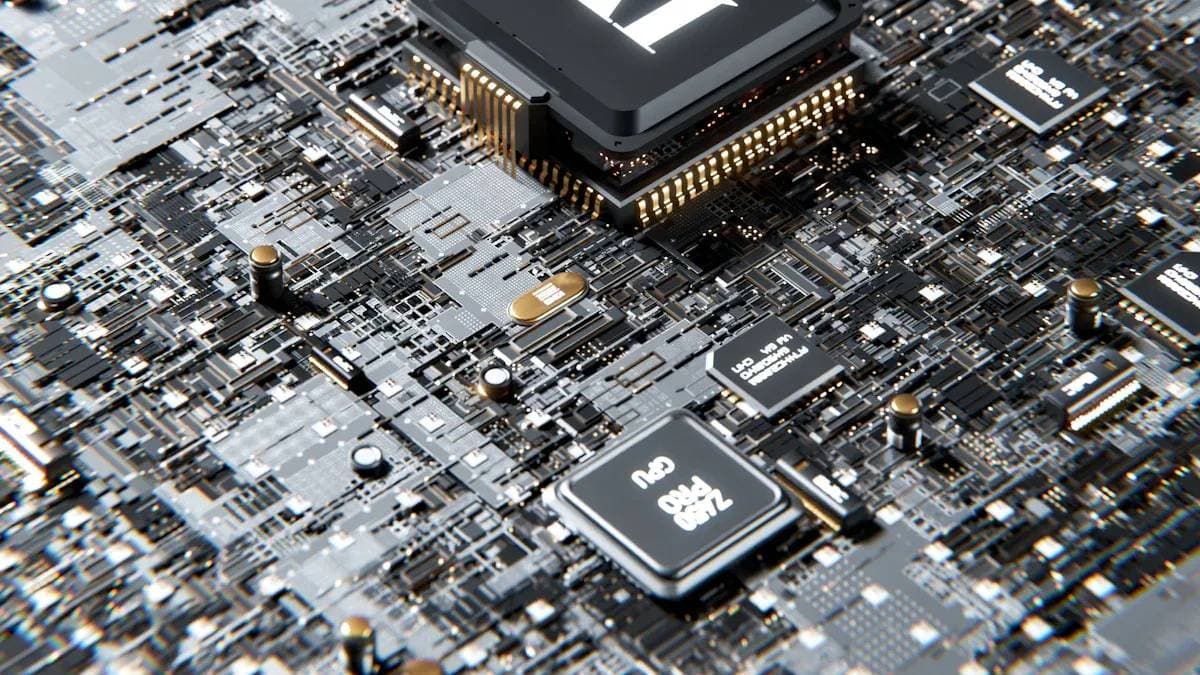
Image Source: unsplash
Did you know? The US stock market accounts for more than half of global stock market capitalization, making real-time US stock indices not only the report card of the US market, but also a key barometer for observing global economic trends. Mastering the following five major indicators is your first step toward building market insight.
Dow Jones (DJIA) · S&P 500 · Nasdaq (NASDAQ) · PHLX Semiconductor (SOX) · VIX Fear Index
Want to know which real-time US index to watch for tech stock trends? Want to judge whether the market is overheating or panicking? This beginner’s guide will answer all these questions for you.
Key Takeaways
- The Dow Jones reflects the performance of traditional US blue-chip companies and helps you quickly grasp market sentiment.
- The S&P 500 represents the overall US market and is the most important gauge of whether the market is strong or weak.
- The Nasdaq shows technology stock trends and helps you understand the development of innovative companies.
- The PHLX Semiconductor Index is the benchmark for the tech hardware industry and is closely linked to the Taiwan stock market.
- The VIX measures the market’s level of fear — extreme highs often signal buying opportunities.
Dow Jones Industrial Average (DJIA): Pulse of American Blue-Chip Stocks
Whenever news reports say “US stocks soar/fall sharply,” the most frequently mentioned real-time index is the Dow Jones Industrial Average (DJIA). With its long history, it is regarded as a key indicator for observing the performance of traditional US industrial giants.
Index Definition and Components
The Dow consists of 30 of the most representative large-cap blue-chip stocks in the United States. These companies span critical sectors such as finance, industrials, healthcare, and consumer goods — the backbone of the US economy.
Its calculation method is unique: it uses “price-weighted” methodology.
What is price weighting? Imagine a tug-of-war contest. Companies with higher share prices are like heavier players on the team — they exert much greater pulling power (influence) on the index. Therefore, even a small price move in a high-priced stock affects the Dow point total far more than the same move in a low-priced stock.
How to Interpret the Index
When reading the Dow, pay attention to the weight distribution of its components. The higher the weight, the greater the impact of that stock’s price movement on the index. For example, you can see from the table below that financial and industrial stocks currently hold significant weight.
| Rank | Company Name | Ticker | Weight |
|---|---|---|---|
| 1 | The Goldman Sachs Group, Inc. | GS | 10.76% |
| 2 | Caterpillar Inc. | CAT | 7.61% |
| 3 | Microsoft Corporation | MSFT | 6.14% |
| 4 | American Express Company | AXP | 4.73% |
| 5 | The Home Depot, Inc. | HD | 4.60% |
| 6 | Amgen Inc. | AMGN | 4.44% |
| 7 | UnitedHealth Group Incorporated | UNH | 4.37% |
| 8 | Sherwin-Williams | SHW | 4.36% |
| 9 | Visa Inc. | V | 4.24% |
| 10 | JPMorgan Chase & Co. | JPM | 4.01% |
The rise or fall of the index reflects the overall movement of these 30 stocks. Historically, major economic events always leave clear marks on the Dow — for example, “Black Monday” in 1987 caused a single-day drop of over 22%, while the early days of the 2020 COVID-19 pandemic triggered a nearly 3,000-point single-day plunge.
Investment Significance for Beginners
For new investors, the Dow has several core uses:
- Quickly grasp market sentiment: It’s the index most loved by media — helping you instantly understand whether the day’s overall market mood is optimistic or pessimistic.
- Observe traditional leaders: If you want to understand the health of large traditional US companies (finance, industrials, retail giants), the Dow is the best window.
- Build macro-economic thinking: By tracking the index, you learn to connect corporate performance with macro news (interest rates, employment data) and develop your own market analysis framework.
S&P 500 Index: The Most Comprehensive Market Thermometer
If the Dow is the “face” of the US economy, the Standard & Poor’s 500 Index (S&P 500) is the most comprehensive “health check report.” It is widely regarded as the single best gauge of large-cap US equity performance.
Index Definition and Components
The S&P 500 includes 500 of the most representative large US listed companies, spanning 11 major sectors including technology, finance, healthcare, and consumer. Unlike the Dow, it uses “market-cap weighting.”
What is market-cap weighting? Think of it as a shareholders’ meeting. The larger a company’s market capitalization (price × total shares), the bigger its voice (influence) in the index. Therefore, mega-caps like Apple (Apple) or Microsoft have far greater impact on the S&P 500 than smaller constituents.
To be included in the S&P 500, companies must pass strict screening to ensure quality and representativeness. Criteria include:
- Must be US-domiciled.
- Market cap above a certain threshold (varies with market conditions; once required at least $8.2 billion).
- High liquidity with sufficient public float.
- Solid financials — positive earnings in the most recent quarter and sum of the last four quarters.
How to Interpret the Index
The rise and fall of the S&P 500 faithfully reflects broad US economic trends. With many components and balanced sector exposure, no single stock can completely dominate, making it a stable and comprehensive market thermometer. Sustained rises usually mean the market is optimistic about the overall economic outlook.
Investment Significance for Beginners
For beginners, the S&P 500 is a core indicator you must follow closely:
- Best indicator of bull/bear markets: Compared to the Dow’s mere 30 stocks, the S&P 500 better captures overall bull or bear trends.
- The gold standard for performance: Most professional fund managers benchmark their returns against the S&P 500. If they can’t beat it, their skill is questioned. You can treat it as your personal “benchmark.”
- Starting point for learning industry leaders: Tracking the S&P 500 lets you quickly get to know the top companies across all major US sectors.
Nasdaq Composite Index (NASDAQ): Technology & Innovation Compass

Image Source: unsplash
When you want to grasp the latest pulse of global technology, the Nasdaq Composite Index is the indicator you must watch. It is not only a price index but also the arena for global innovation and growth companies.
Index Definition and Components
The Nasdaq Composite is huge — it includes every company listed on the Nasdaq exchange, totaling more than 3,000. Together they represent over $35 trillion in market value. Like the S&P 500, it is market-cap weighted, so mega-cap tech giants have decisive influence.
Tech Giants’ Playground Tech stocks account for over 50% of the index. As you can see from the table below, the index direction is almost entirely dominated by the world’s top technology companies.
| Rank | Company Name | Ticker | Market Cap (USD) |
|---|---|---|---|
| 1 | Nvidia Corporation | NVDA | $3.886 T |
| 2 | Microsoft Corporation | MSFT | $3.650 T |
| 3 | Apple Inc. | AAPL | $3.173 T |
| 4 | Amazon.com, Inc. | AMZN | $2.335 T |
| 5 | Alphabet Inc. | GOOG | $2.183 T |
How to Interpret the Index
Nasdaq performance directly reflects technology sector prosperity and market expectations for future innovation. Rising index levels usually mean investors are bullish on tech development and growth company profitability.
Over the past two decades, riding waves from internet to smartphones to AI, the Nasdaq has delivered outstanding performance. Its long-term annualized return significantly outperforms broader indices, thanks to heavy exposure to high-growth tech.
Investment Significance for Beginners
For beginners, watching the Nasdaq has three major uses:
- Track tech sector trends: It is the most direct compass for overall tech bull/bear direction.
- Assess market risk appetite: Strong Nasdaq rallies usually mean investors are willing to take more risk for future growth.
- Discover emerging innovators: Beyond the giants, you’ll find many fast-growing mid- and small-cap innovative companies.
PHLX Semiconductor Index (SOX): Core of the Global Tech Supply Chain
If you’re interested in tech stocks, besides Nasdaq, the PHLX Semiconductor Sector Index (SOX) is an advanced indicator you cannot miss. It focuses exclusively on the semiconductor industry — the key window for observing global tech hardware.
Index Definition and Components
The SOX consists of 30 large US-listed companies involved in semiconductor design, manufacturing, and sales. Like the S&P 500, it is market-cap weighted, so giants like NVIDIA, AMD, and TSMC ADR (TSM) have outsized influence.
What are semiconductors? Think of chips as the “brain” of every electronic device — smartphones, computers, cars, AI servers — none can function without them. Thus, semiconductor prosperity directly forecasts the future direction of technology.
How to Interpret the Index
The SOX is considered a leading indicator for the broader tech sector. Its moves often precede terminal product markets:
- Rising SOX: Market expects strong future chip demand → downstream products (PCs, phones, cars) likely to grow.
- Falling SOX: Suggests weakening chip orders → possible cooling in global economy or end-consumer demand.
Due to the highly cyclical nature of semiconductors, SOX volatility is usually much higher than broad-market indices.
Investment Significance for Beginners
For Taiwanese beginners, the SOX is especially important because of its extremely high correlation with Taiwan’s market:
- Leading indicator for Taiwan tech stocks: Taiwan’s economy is tightly linked to semiconductors. Many SOX components (NVIDIA, Apple) are major customers of TSMC and other Taiwanese suppliers. SOX strength/weakness often directly affects next-day Taiwan electronics opening prices.
- Grasp global tech cycle: Watching SOX lets you monitor the most upstream industry pulse and understand real demand for trends like AI and EVs.
- Understand tech risk/reward: SOX’s dramatic swings help you appreciate the high-risk, high-return nature of tech hardware stocks.
VIX Fear Index: Market Sentiment Lightning Rod

Image Source: pexels
The first four indices measure “price,” but the VIX Fear Index is unique — it measures “emotion.” When uncertainty floods the market, VIX spikes, earning its nickname as the market’s lightning rod or thermometer.
Index Definition and Calculation Basis
The full name is the CBOE Volatility Index. It is calculated from S&P 500 options prices and reflects the market’s expected volatility of the S&P 500 over the next 30 days.
Simple explanation: If VIX reads 20, the market expects a 68% probability that the S&P 500 will move less than ±20% over the next year. Higher numbers = greater expected swings = more investor anxiety.
How to Interpret the Index
The easiest way is to compare VIX with the S&P 500 — they usually move in opposite directions:
- S&P 500 crashes → panic → VIX spikes.
- S&P 500 rises steadily → calm → VIX stays low.
Common ranges for judging sentiment:
| VIX Range | Fear Level |
|---|---|
| Below 20 | Normal volatility (market calm or optimistic) |
| 20–30 | Rising uncertainty (anxiety emerging) |
| Above 30 | High fear (often seen in crises or sell-offs) |
Historically, during major crises, VIX has spiked dramatically — above 80 during both the 2008 financial crisis and early 2020 COVID panic.
Investment Significance for Beginners
For beginners, VIX is an excellent sentiment gauge that helps you stay rational:
- Measure short-term risk: High VIX = elevated near-term risk → be cautious.
- Find contrarian opportunities: As Buffett says, “Be greedy when others are fearful.” Extreme VIX spikes often coincide with quality assets becoming cheap — potential entry points for long-term investors.
- Avoid chasing highs: Prolonged low VIX can mean complacency — chasing rallies then is risky. VIX helps you stay alert.
How to Track Real-Time US Indices & Build Your Watchlist
Understanding the five indices is step one. Next, learn to track them efficiently — good tools make it effortless.
Recommended Finance Websites & Apps
Many excellent platforms offer real-time US indices. Start with these mainstream ones:
- Yahoo Finance: Classic interface, comprehensive data — first choice for many beginners.
- TradingView: Powerful charting tools — perfect for deeper technical analysis.
- Biyapay: Intuitive design, beginner-friendly, convenient for checking real-time indices and personal portfolio anytime.
If you want to translate “watching an index” into “understanding what’s moving it,” a practical step is to follow the benchmark first, then cross-check major constituents. You can use BiyaPay’s stock info lookup to verify quotes and key company details, which helps you map index moves back to sectors and heavyweight names.
Another common blind spot for beginners is currency conversion and funding costs. When you need a quick estimate for USD and other fiat conversions, BiyaPay’s fiat FX converter & comparison can help you sanity-check the rate and spread; and if you’re managing cross-border funding timing, you can review ranges and delivery expectations via send money.
Once your watchlist is stable and you’re ready to execute, it’s usually cleaner to separate research from execution: confirm the info first, then place orders through the unified trading portal, and periodically check the event center for tasks or notices you may want to track.
BiyaPay positions itself as a multi-asset wallet covering cross-border payments, investing, trading, and fund management, with U.S. MSB status and New Zealand FSP registration. To verify entry points or create an account, start from the official site and register.
Tips for Setting Up Personalized Alerts
Setting price alerts is useful, but avoid notification fatigue. Effective alerts must be specific and meaningful.
Instead of “index up 1%,” set alerts for key technical levels like “index breaks 200-day moving average” — these carry real significance.
Follow these tips to make alerts truly helpful:
- Limit quantity: Only set alerts most relevant to your strategy.
- Review regularly: Clean up your alert list monthly.
- Combine with analysis: Treat alerts as signals to dig deeper, not as automatic buy/sell triggers.
Daily Observation Checklist
Beyond watching index point changes, pay attention to the underlying economic data that drives them. Suggested daily focus items:
| Focus Item | Explanation |
|---|---|
| Major Economic Data | Releases like CPI and Non-Farm Payroll (NFP) can move markets dramatically. |
| Fed Announcements | Rate decisions, statements, and Chair comments often set the tone for weeks. |
| Earnings from Key Stocks | During earnings season, reports from heavyweights (Apple, Nvidia) directly sway the broader indices. |
Making these daily checks a habit helps you truly understand what moves real-time US indices.
Summary Comparison: One Table to Understand All Five Indices
After the detailed sections, you might feel overwhelmed. Here are clear comparison tables to instantly see each index’s unique characteristics and uses.
Market Representation Comparison
| Index | Number of Components | Weighting Method |
|---|---|---|
| Dow (DJIA) | 30 | Price-weighted |
| S&P 500 | ~500 | Market-cap weighted |
| Nasdaq (NASDAQ) | >3,000 | Market-cap weighted |
| SOX | 30 | Market-cap weighted |
| VIX | N/A (options-based) | N/A |
The S&P 500, with broad coverage and market-cap weighting, is the best single proxy for overall US market performance.
Major Sector Exposure Comparison
| Index | Primary Sector Focus |
|---|---|
| Dow (DJIA) | Traditional blue-chips: finance, industrials, healthcare |
| S&P 500 | All 11 major sectors — most balanced view of US economy |
| Nasdaq (NASDAQ) | Tech-heavy + growth companies in consumer, healthcare, etc. |
| SOX | Exclusively semiconductor design, manufacturing, equipment |
| VIX | Sector-agnostic — reflects broad market expected volatility |
Core Uses for Beginners
| Index | Most Practical Use for Beginners |
|---|---|
| Dow (DJIA) | Quickly gauge daily market mood and traditional leader performance |
| S&P 500 | Best single indicator of overall US bull/bear trend |
| Nasdaq (NASDAQ) | Track tech sector trend and market risk appetite |
| SOX | Leading indicator for Taiwan electronics supply chain performance |
| VIX | Measure fear level and spot potential contrarian opportunities |
Congratulations — you’ve completed your first lesson as a new investor! Remember, these five indices are your investment “dashboard.” Only by reading them together can you see the full market picture. Start tracking daily changes now and try to understand the underlying dynamics.
Most importantly: understanding indices is the critical first step. But successful investing ultimately depends on combining them with your own financial goals and risk tolerance to make the best decisions for you.
FAQ
If an index rises, will my individual stocks definitely rise too?
No. An index reflects the average performance of an entire market or sector. Your individual stock still depends on that company’s fundamentals. Sometimes the broader market rises, but your stock falls due to negative company news.
Which single index should I focus on?
Don’t rely on just one. Recommended combination:
- S&P 500 → overall trend
- Nasdaq → tech sector direction
- SOX → Taiwan electronics chain outlook
Can I invest directly in these indices?
You cannot buy an index directly, but you can invest through index-tracking ETFs. For example, S&P 500 ETFs like SPY and VOO are extremely popular.
How often do these real-time US indices update?
During US trading hours (usually 9:30 AM – 4:00 PM ET), they update in real time. The numbers you see on finance websites or apps refresh continuously with every trade.
*This article is provided for general information purposes and does not constitute legal, tax or other professional advice from BiyaPay or its subsidiaries and its affiliates, and it is not intended as a substitute for obtaining advice from a financial advisor or any other professional.
We make no representations, warranties or warranties, express or implied, as to the accuracy, completeness or timeliness of the contents of this publication.
Related Blogs of
Run Local Large Models or Call APIs? 2026 AI Development Cost and Payment Method Comparison


Patreon/OnlyFans and Other Overseas Creator Platforms Payout: Ultimate Tricks to Bypass Domestic Bank Forex Review for Withdrawal


How to Write Remittance Notes to Avoid Bank Risk Control Interception? 2026 Cross-Border Remittance Compliance Guide & Sensitive Words Avoidance

Capital Preparation in Early Stages of Cross-Border M&A: How Enterprises Safely Transfer Millions in USD Deposits to Overseas Trust Escrow Accounts?
Choose Country or Region to Read Local Blog
 Australia
 Austria
 Belgium
 Canada
 Cyprus
 Czech Republic
 Denmark
 Estonia
 Finland
 France
 Germany
 Greece
 Hong Kong
 India
India Indonesia
 Ireland
 Italy
Italy Japan
Japan Latvia
 Lithuania
 Luxembourg
 Malaysia
 Malta
Malta Morocco
 Nepal
Nepal Netherlands
 New Zealand
 Norway
 Pakistan
 Philippines
 Poland
 Portugal
 Romania
 Singapore
 Slovakia
 Slovenia
 South Africa
 South Korea
 Spain
Spain Sweden
 Thailand
 The United States
 Turkey
 United Arab Emirates
 United Kingdom
 Vietnam
Contact Us




BIYA GLOBAL LLC is registered with the Financial Crimes Enforcement Network (FinCEN), an agency under the U.S. Department of the Treasury, as a Money Services Business (MSB), with registration number 31000218637349, and regulated by the Financial Crimes Enforcement Network (FinCEN).
BIYA GLOBAL LIMITED is a registered Financial Service Provider (FSP) in New Zealand, with registration number FSP1007221, and is also a registered member of the Financial Services Complaints Limited (FSCL), an independent dispute resolution scheme in New Zealand.