Advanced Guide | Risk Management and Practical Mindset for US Stock After-Hours Trading





Image Source: pexels
As earnings season arrives, do you also feel the restlessness in the market? Outside regular trading hours, earnings announcements often trigger significant trading activity, causing after-hours trading volume to surge dramatically on earnings release days.
US stock after-hours trading is a double-edged sword full of opportunities and pitfalls. This article does not offer a guaranteed winning formula but shares a systematic risk management framework. Our goal is to help you advance from “trading by feel” to “disciplined execution” and learn to master extreme market volatility.
Key Takeaways
- After-hours trading in US stocks carries high risk due to low market liquidity, rapid information changes, and large price swings.
- Always use “limit orders” during after-hours trading and avoid market orders to prevent significant slippage losses.
- Set a maximum loss limit per trade, typically no more than 1% to 2% of your risk capital — this is a critical way to protect your funds.
- Use options for hedging, such as buying protective puts, to reduce losses from price declines.
- Create trading plans and maintain a trading journal to facilitate learning, improvement, and the development of a stable trading mindset.
Identifying Risks in After-Hours Trading
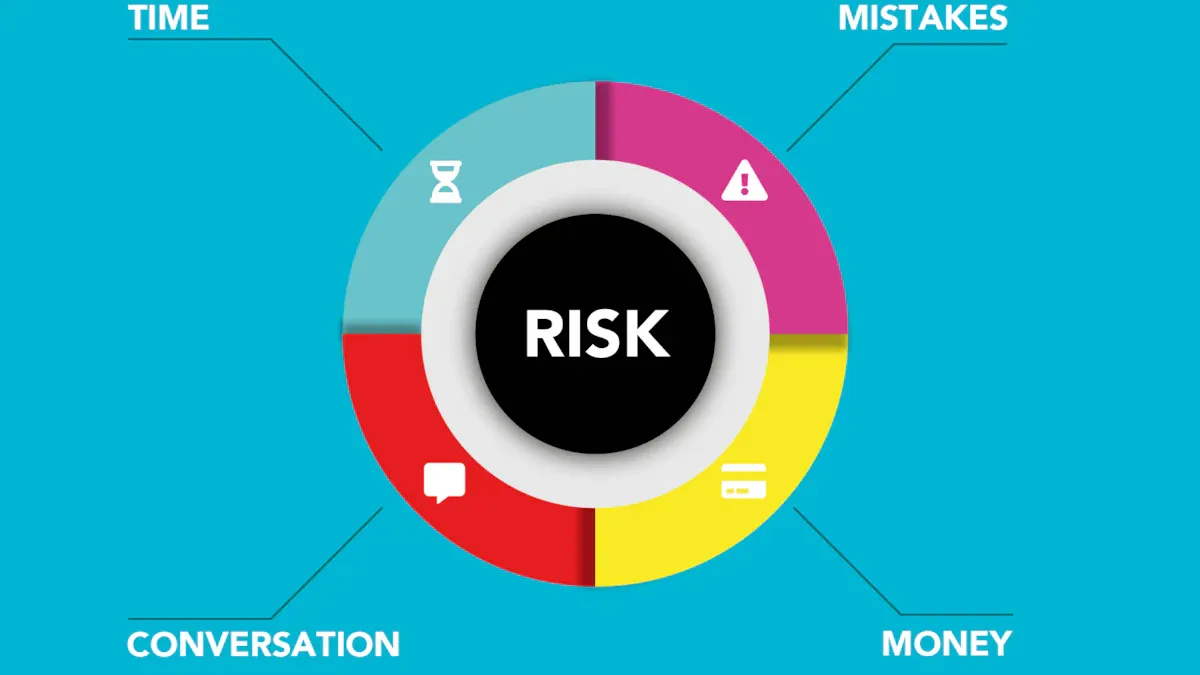
Image Source: pexels
To profit in after-hours trading, the primary task is not hunting for breakout stocks but learning to identify and respect risks. After regular trading hours end, the market rules change completely. More than 95% of trading activity occurs during regular hours, and after-hours volume may be less than 0.2% of the daily average. This means you are stepping into an arena dominated by low liquidity, information shocks, and extreme volatility.
To turn “low liquidity” into a measurable decision, break the cost down into spread, slippage, and whether the information edge has already been priced in before your order hits. Start by using BiyaPay’s stock info lookup to compare after-hours quotes versus regular-session levels, define an “acceptable spread range,” and then build your limit-order placement around that range instead of trading on an imagined price.
If your capital needs to move across currencies, run the numbers first with the fiat FX converter & comparison, and keep your watchlist plus execution checkpoints organized via the unified trading portal; for account setup, use register. As a multi-asset wallet covering investing, trading, and fund management—with U.S. MSB status and New Zealand FSP registration—BiyaPay fits workflows where risk controls and fund movements need to remain traceable.
The first step to success is turning unknown risks into known variables. Only then can you develop effective countermeasures.
Next, we will dive deep into the three core risks of after-hours trading to help you build a professional investor’s risk radar.
Liquidity Risk: Low Volume and Bid-Ask Spread Traps
Have you ever placed an order in after-hours only to find the price visible but untouchable? This is the most direct manifestation of liquidity risk.
Participation in the after-hours market drops sharply, with most market makers and institutional players having left the floor. This results in insufficient market depth and sparse buy/sell orders. The most immediate consequence is a significant widening of the bid-ask spread.
- Regular hours: An active stock might have a bid of $100.00 and an ask of $100.01 — an extremely tight spread.
- After-hours: The same stock might show a bid of $99.80 and an ask of $100.30, creating a $0.50 spread.
That $0.50 spread is your hidden transaction cost. When you want to execute immediately, you’ll likely have to buy at a higher price or sell at a lower one, putting you at a disadvantage before the trade even begins. In this low-volume environment, even small orders can cause severe price slippage, resulting in execution prices far worse than expected. This is why many brokers restrict investors to using only “limit orders” during US stock after-hours trading to prevent massive losses from market orders falling into liquidity traps.
Information Risk: Earnings and News Impact
The after-hours session is a hotbed for major news, especially corporate earnings. The market reacts extremely quickly to earnings reports; for heavily traded stocks, price movements can complete in milliseconds. If you cannot instantly assess the quality of the information, you are essentially surrendering in an information war.
To quickly interpret earnings reports, focus on the following core metrics:
- Revenue and Earnings Per Share (EPS): These are the most basic indicators. Compare the reported figures against analyst expectations. Did the company “beat” or “miss” expectations?
- Company Guidance: This is often more important than the current quarter’s results. The company’s revenue and profit forecasts for the next quarter or full year directly reveal management’s confidence in the outlook. Optimistic guidance can send the stock soaring, while pessimistic guidance can trigger catastrophic declines.
- Key Operating Metrics: Depending on the industry, pay attention to specific operational data — e.g., user growth for tech stocks, delivery numbers for EV manufacturers, same-store sales growth for retailers, etc.
Real-World Examples: The Power of Guidance
- Positive Example (Apple, Q3 2012): Despite broader economic concerns, Apple reported far-better-than-expected iPhone sales and strong forward guidance, causing the stock to surge more than 5% in after-hours trading.
- Negative Example (Netflix, Q2 2018): The earnings showed subscriber additions below market expectations, raising doubts about future growth momentum. Even though other financial metrics were decent, the stock plunged more than 14% after hours.
The market tends to punish “bad news” far more severely than it rewards “good news.” Research shows that companies missing earnings experience significantly larger average declines than the gains seen by companies beating estimates. Therefore, in US stock after-hours trading, avoiding earnings landmines is often more important than catching upside moves.
Volatility Risk: Anticipating Price Gaps
After earnings releases, stocks frequently react with “gaps” — jumping directly over intermediate price levels and creating large price voids. For example, Palantir (PLTR) gapped up 15% pre-market after reporting better-than-expected revenue and raising guidance, leaving short sellers no chance to cover.
| Ticker | Company Name | Date | After-Hours/Pre-Market Move | Key Factor |
|---|---|---|---|---|
| PLTR | Palantir Technologies | 2023-2024 | Pre-market +15% | Revenue beat + raised forward-quarter guidance |
| RDDT | Reddit, Inc. | 2024/10/30 | After-hours +12% | Strong revenue growth + better-than-expected user engagement |
This extreme volatility also renders traditional risk management tools like “stop-loss orders” completely ineffective.
Why Stop-Loss Orders Fail After Hours?
When the price hits your stop-loss level, the order converts to a “market order” with the instruction “execute at any cost.” If the stock gaps from $110 straight down to $95, a stop-loss set at $105 will trigger, but it will execute at the best available bid (possibly $95 or lower). Your actual loss will far exceed what you planned.
So how can you estimate potential swing ranges? Refer to the options market’s implied volatility (IV).
- Concept: IV reflects the market’s expectation of future price volatility. Uncertainty peaks before earnings, pushing IV higher; once earnings are released, uncertainty resolves and IV collapses instantly — known as an “IV crush.”
- Estimation Method: Use option prices on the eve of earnings to derive the market’s expected price move. Many professional tools (e.g., Market Chameleon) directly provide “expected move” data. For example, if a tool shows an expected move of ±8% for a $150 stock, the market anticipates a post-earnings price between $138 and $162.
Learning to read IV gives you a more scientific expectation of potential gap size when planning US stock after-hours trading strategies, rather than relying purely on gut feel.
Practical Risk Management for US Stock After-Hours Trading
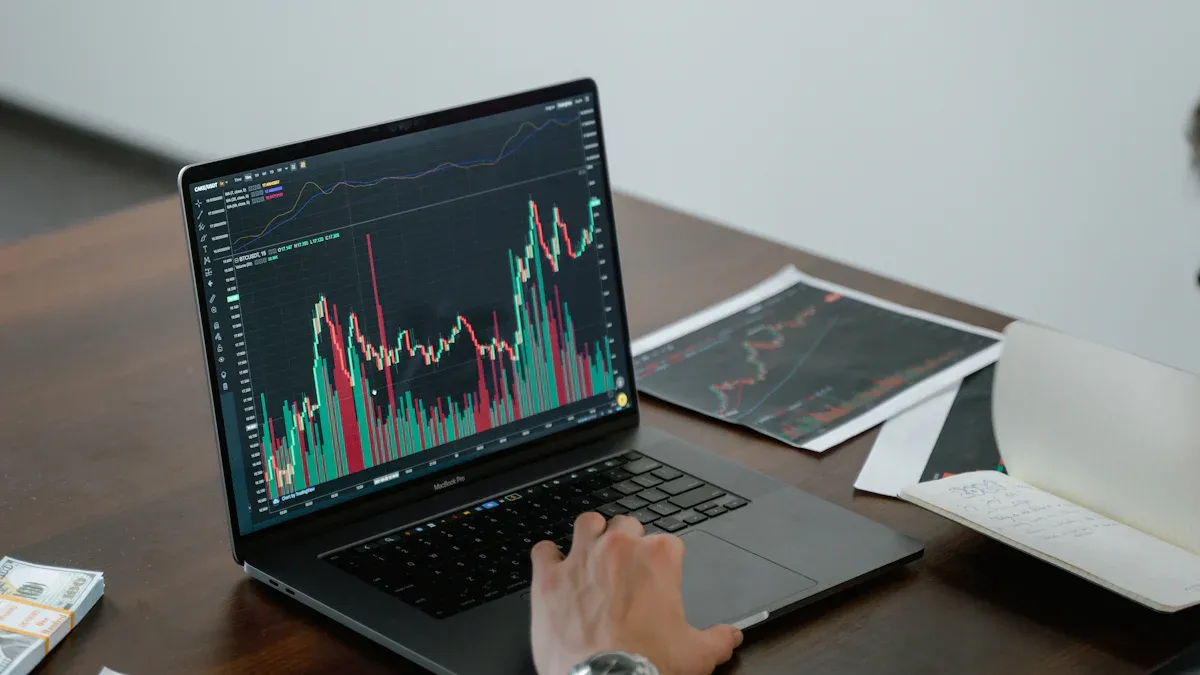
Image Source: pexels
Recognizing risk is the first line of defense, but building a rigorous risk control system is the key to surviving earnings season long-term. Knowing where risks lie is not enough — you need concrete tools and methods to actively manage them. This is not just about technique; it’s about discipline and mindset.
Successful traders internalize risk management as instinct. Before pulling the trigger, they think not about how much they can make, but how much they can lose.
Next, we move into practical execution, covering capital management, order techniques, and hedging strategies — the blueprint for turning theory into action.
Capital and Position Management Principles
In the highly volatile after-hours market, capital management far outweighs any stock-picking skill. Without iron discipline, a single uncontrolled loss can wipe out all prior gains. Here are the core principles you must establish:
- Create a dedicated “earnings season” risk capital pool Separate the funds used for high-risk earnings plays from your long-term investment portfolio completely. This money is your psychologically prepared “war chest.” Consider using a separate brokerage account or a digital asset management platform like Biyapay to clearly delineate funds and prevent emotional decisions to tap protected capital after losses.
- Set a maximum loss per trade This is the most important rule of your trading career. Professional traders generally recommend that risk per trade should not exceed 1% to 2% of your risk capital pool (source).
- Calculation: If your dedicated earnings season capital is $10,000 USD, maximum loss per trade should be $100–$200 USD.
- Execution: This limit determines your entry price, stop level, and position size. It forces you to plan the worst-case scenario before trading and eliminates destructive “holding and hoping” behavior.
- Use scaled entries and dynamic adjustments Facing earnings uncertainty, going all-in at once is extremely dangerous. Act like a cautious general, deploying troops gradually to test the battlefield.
- Start small: If you’re new to after-hours trading, begin with the smallest possible position to familiarize yourself with the rhythm and volatility.
- Reduce size after losses: If you suffer consecutive losses, immediately cut position size by 50% (example). The goal at this point is not quick recovery but regaining rhythm and confidence.
- Increase only after proven success: Scale up only after your strategy has been validated and your account shows steady growth. Focus on process consistency, not one-time windfalls.
Iron Rule of Risk Control: Never increase position size to chase losses. The market doesn’t care about your cost basis, but uncontrolled sizing will destroy both your account and your mindset.
Order Type Selection Techniques
In a thinly traded after-hours market, the way you place orders directly determines your transaction costs and risk exposure. The wrong order type can cause massive unexpected losses in seconds.
Limit Orders: Your Only Defense in After-Hours Trading
Due to wide bid-ask spreads and sparse orders, most brokers mandate or strongly recommend using only “limit orders”. Market orders are disastrous here because they will fill at any available price, easily leading to severe slippage.
| Pros & Cons of Limit Orders | Explanation |
|---|---|
| Advantages ✅ | Price control: Ensures execution will not be worse than your specified price, effectively preventing slippage. |
| Clear costs: Allows precise calculation of potential risk-reward at order entry. | |
| High applicability: The best protective tool in high-volatility or low-liquidity environments. | |
| Disadvantages ❌ | May not fill: If the market never reaches your limit price, the order remains unfilled and you may miss the move. |
| Partial fills: In extremely illiquid conditions, only a portion of the order may execute even when price is touched. |
Stop-Limit Orders: A Double-Edged Sword to Use with Caution
Since traditional stop-loss orders fail during gaps, are “stop-limit orders” a better choice? The answer: not necessarily.
- How they work: A stop-limit order has two prices: a “stop price” and a “limit price.” When the stop price is hit, the system places a limit order instead of a market order.
- Application scenario: In theory, it prevents massive slippage on gaps. Example: Stock at $110, stop price $105, limit price $104.5. If price falls below $105, the system tries to sell at no less than $104.5.
Fatal Flaw: No execution guarantee
The biggest risk is that if the stock gaps far beyond your limit range (e.g., from $110 directly to $100), the order triggers but finds no buyers above $104.5. Your order will simply not fill. You watch helplessly as the price continues falling while your position remains open, leading to even larger losses.
Therefore, in highly volatile US stock after-hours trading, relying on any automated stop order carries risk. A more reliable approach is to set price alerts and manually close positions with limit orders when triggered.
Hedging with Derivatives
For investors already holding shares but worried about earnings shocks, using options for hedging is a proactive risk management tool — essentially buying insurance for your portfolio (source).
- Buy Protective Puts The most straightforward hedging strategy. If you own 100 shares, buy one put option to lock in downside risk.
- How it works: If earnings disappoint and the stock crashes, the put’s value rises, offsetting part or all of the loss on your shares (Fidelity example).
- Pros: Maximum loss is capped, providing clear downside protection.
- Cons: You pay premium cost. If the stock rises or stays flat, that premium is money spent on unused insurance.
- Use Spread Strategies to Reduce Cost If buying puts outright feels too expensive, advanced spread strategies can lower hedging costs (but also cap upside).
- Collar Strategy: Buy a protective put and simultaneously sell an out-of-the-money call. The premium received from the call partially or fully offsets the put cost. The trade-off is giving up gains above the call strike.
- Bear Put Spread: If you expect a limited decline, buy a higher-strike put and sell a lower-strike put. This dramatically reduces net premium cost, but maximum profit is capped at the strike difference.
Learning derivatives requires extra time and effort, but it adds powerful professional weapons to your US stock after-hours trading risk management toolkit.
Practical Mindset and Discipline Building
Even the best tools and strategies will fail without a stable mindset and iron discipline. True advancement comes from shifting focus from chasing the “holy grail” technique to forging unbreakable trading discipline. This step determines whether you are a short-lived gambler or a long-term profitable trader.
Create a Trading Script to Eliminate Emotional Decisions
Under the intense pressure of after-hours trading, emotions are your greatest enemy. Fear makes you exit too early; greed keeps you from taking profits. The only weapon against emotions is a detailed “trading script” written before entry (source).
This script is your battle plan written when your mind is calmest and clearest. When the fight begins, you don’t think — you execute.
Your trading script should include at least:
- Clear entry and exit points: Pre-define price zones for entry, first profit target, and final exit based on technical or fundamental triggers.
- Invalidation point: Before placing the trade, ask: “What would prove me wrong?” That answer becomes the logical basis for your stop.
- Contingency plans: Outline responses for different scenarios — how to trail profits if the stock moves your way, or how to handle the position immediately if earnings disappoint.
Pre-defining these rules helps you follow logic instead of being led by market noise at critical moments.
The Value of Trading Journals and Reviews
If the trading script is your pre-battle plan, the trading journal is your post-battle report. Many investors underestimate the power of recording and reviewing, causing them to repeat the same mistakes.
An effective trading journal records more than just P&L; it should include:
- Trade rationale: Why did you take this trade? Which indicator or news event?
- Risk management: Where was your stop? What was the actual risk-reward ratio?
- Emotional state: How did you feel before, during, and after the trade — anxious, overconfident, frustrated?
Regularly reviewing your journal allows you to learn from past behavior. You’ll discover common patterns in winning trades and mindset weaknesses exposed by losing ones. This process is the most important step in refining your strategy and boosting performance.
Develop the Right Mindset: Embrace Losses
In the probability game of trading, no one achieves a 100% win rate. Learning to face and accept losses is mandatory to become a professional trader.
You must fundamentally reframe losses as “the cost of doing business” rather than personal failure (source). Just as a restaurant pays for ingredients and rent, occasional losses are the price you pay to extract profits from the market.
- Focus on process, not outcome: As long as you faithfully executed your plan, the trade is “good” regardless of profit or loss.
- Separate ego from trades: The market is objective and doesn’t care if you were right. Your goal is to make money, not to prove anything to the market.
- Plan for losses: Through strict capital and position management, ensure no single loss can destroy your account. When you know the worst case is under control, fear of loss naturally disappears.
When you can treat every trade with disciplined detachment (source), you are truly on the path to consistent profitability.
US stock after-hours trading is a high-difficulty game. Research shows that the primary reason most traders lose money long-term is poor risk management. Therefore, exceptional risk control is the only foundation for surviving and profiting in this arena.
Remember the three pillars of success:
- Precise risk identification
- Strict capital and order management
- Stable trading mindset
Internalize everything you’ve learned here into your trading discipline, become a calm after-hours hunter, and move forward steadily in this challenging market.
FAQ
What are the exact after-hours trading times?
US after-hours trading typically runs from 4:00 PM to 8:00 PM Eastern Time. However, exact hours vary by broker. Confirm the specific after-hours window supported by your broker.
Do all brokers support after-hours trading?
No. While most major brokers offer it, not all do. Some may provide only pre-market trading or impose specific restrictions on after-hours. Verify your broker supports this feature before committing capital.
I’m a beginner — is after-hours trading suitable for me?
After-hours trading is extremely high-risk and not recommended as a primary battlefield for beginners.
If you want to try, use only a very small amount of capital. Your initial goal should be learning and feeling market volatility, not profit. Strictly follow the capital management principles outlined in this article.
How should I set stop-losses in after-hours trading?
Traditional stop-loss orders can fail due to price gaps. A safer method is to set “price alerts.” When the price hits your alert level, you receive a notification and then manually close the position using a limit order.
*This article is provided for general information purposes and does not constitute legal, tax or other professional advice from BiyaPay or its subsidiaries and its affiliates, and it is not intended as a substitute for obtaining advice from a financial advisor or any other professional.
We make no representations, warranties or warranties, express or implied, as to the accuracy, completeness or timeliness of the contents of this publication.
Related Blogs of

YouTube Video Monetization: How Overseas Creators Convert Received USD Ad Revenue to Chinese Living Expenses the Fastest Way?


Pay for Perplexity Pro Subscription with USDT: Bypass Regional Payment Restrictions


Capital Preparation in Early Stages of Cross-Border M&A: How Enterprises Safely Transfer Millions in USD Deposits to Overseas Trust Escrow Accounts?

How to Write Remittance Notes to Avoid Bank Risk Control Interception? 2026 Cross-Border Remittance Compliance Guide & Sensitive Words Avoidance
Choose Country or Region to Read Local Blog
 Australia
 Austria
 Belgium
 Canada
 Cyprus
 Czech Republic
 Denmark
 Estonia
 Finland
 France
 Germany
 Greece
 Hong Kong
 India
India Indonesia
 Ireland
 Italy
Italy Japan
Japan Latvia
 Lithuania
 Luxembourg
 Malaysia
 Malta
Malta Morocco
 Nepal
Nepal Netherlands
 New Zealand
 Norway
 Pakistan
 Philippines
 Poland
 Portugal
 Romania
 Singapore
 Slovakia
 Slovenia
 South Africa
 South Korea
 Spain
Spain Sweden
 Thailand
 The United States
 Turkey
 United Arab Emirates
 United Kingdom
 Vietnam
Contact Us




BIYA GLOBAL LLC is registered with the Financial Crimes Enforcement Network (FinCEN), an agency under the U.S. Department of the Treasury, as a Money Services Business (MSB), with registration number 31000218637349, and regulated by the Financial Crimes Enforcement Network (FinCEN).
BIYA GLOBAL LIMITED is a registered Financial Service Provider (FSP) in New Zealand, with registration number FSP1007221, and is also a registered member of the Financial Services Complaints Limited (FSCL), an independent dispute resolution scheme in New Zealand.