Don’t Waste Your Time! The Most Complete 2025-2026 US Stock Market Hours & Holiday Schedule Guide




Image Source: pexels
You’re ready to place an order, only to discover the market is closed? Or you’re confused about daylight saving vs. standard time differences?
These common frustrations often disrupt your investing rhythm. Investors must precisely grasp trading windows. This guide ensures you never waste time again and makes every decision more efficient.
Key Takeaways
- Investors need to know US stock market holidays to avoid placing orders when the market is closed.
- US stock trading hours differ between daylight saving time (summer) and standard time (winter), so Taiwan time conversions change — pay close attention.
- The US stock market sometimes closes early, usually around major holidays — remember these special dates.
2025 US Stock Market Holiday Schedule
Knowing market holidays is the first step to successful trading. To make your investment planning more complete, understanding non-trading days in advance is crucial. These federal holidays affect overall US stock market hours. Planning ahead helps you avoid placing orders on closed days and prevents missing opportunities in other markets.
2025 Full Holiday Closure List
Below is a complete list of officially announced 2025 holiday closures for the New York Stock Exchange (NYSE) and Nasdaq (source). Save this table for quick reference anytime.
| Holiday Name | Date | Day of Week |
|---|---|---|
| New Year’s Day | January 1, 2025 | Wednesday |
| Martin Luther King, Jr. Day | January 20, 2025 | Monday |
| Washington’s Birthday / Presidents’ Day | February 17, 2025 | Monday |
| Good Friday | April 18, 2025 | Friday |
| Memorial Day | May 26, 2025 | Monday |
| Juneteenth National Independence Day | June 19, 2025 | Thursday |
| Independence Day | July 4, 2025 | Friday |
| Labor Day | September 1, 2025 | Monday |
| Thanksgiving Day | November 27, 2025 | Thursday |
| Christmas Day | December 25, 2025 | Thursday |
Quick Tip: US stock market holidays are primarily based on federal holidays. For example, Washington’s Birthday (Presidents’ Day) is the first federal holiday created to honor an individual’s birthday and remains a fixed market closure. Mark these dates on your calendar in advance to avoid disrupting your US stock market hours planning.
2026 US Stock Market Holiday Schedule
Continuing your planning, here are the 2026 market holidays. Knowing these in advance makes your investment strategy more forward-looking and lets you handle closures calmly. Understanding these specific non-trading days helps you schedule trades more accurately and manage your portfolio effectively.
2026 Full Holiday Closure List
Below is the 2026 US stock market holiday schedule. Note that since Independence Day (July 4) falls on a Saturday in 2026, the market will close early on Friday, July 3.
| Holiday Name | Date | Day of Week |
|---|---|---|
| New Year’s Day | January 1, 2026 | Thursday |
| Martin Luther King, Jr. Day | January 19, 2026 | Monday |
| Washington’s Birthday / Presidents’ Day | February 16, 2026 | Monday |
| Good Friday | April 3, 2026 | Friday |
| Memorial Day | May 25, 2026 | Monday |
| Juneteenth National Independence Day | June 19, 2026 | Friday |
| Independence Day | July 3, 2026 | Friday |
| Labor Day | September 7, 2026 | Monday |
| Thanksgiving Day | November 26, 2026 | Thursday |
| Christmas Day | December 25, 2026 | Friday |
Did You Know? Stories Behind Market Holidays
You might wonder why certain holidays affect US stock market hours.
- Labor Day: This holiday traces back to late 19th-century labor union movements fighting for better working conditions. It became a federal holiday in 1894, so NYSE and Nasdaq close to honor workers’ contributions.
- Good Friday: Interestingly, Good Friday is not a federal holiday, yet market closure is a long-standing tradition. This is mainly due to historical practice and the fact that many traders take the day off, significantly reducing activity. Closing ensures liquidity and market stability.
Regular US Stock Market Hours: Open & Close Times

Image Source: unsplash
Besides holidays, understanding daily trading hours is equally critical. If you’re unclear about daylight saving vs. standard time differences, you might miss the best buying or selling windows. This section breaks it down in detail so you’ll never be confused about complex US stock market hours again.
The two major US exchanges — the New York Stock Exchange (NYSE) and Nasdaq — have regular trading hours of Eastern Time (ET) Monday to Friday, 9:30 AM to 4:00 PM.
However, because the US observes Daylight Saving Time (DST), the time difference with Taiwan changes, creating two different trading windows.
Daylight Saving Time Trading Hours (Taiwan Time)
When Daylight Saving Time begins, the US moves clocks forward one hour. This directly affects trading hours in Taiwan. During DST, US stock market hours convert as follows:
- Pre-market trading: 4:00 PM – 9:30 PM (Taiwan time)
- Regular trading: 9:30 PM – 4:00 AM next day (Taiwan time)
- After-hours trading: 4:00 AM – 8:00 AM next day (Taiwan time)
For most Asian investors, this falls at night, so schedule your sleep accordingly to participate.
Standard Time (Winter) Trading Hours (Taiwan Time)
When DST ends and the US returns to Standard Time (commonly called winter time), clocks move back one hour. Therefore, all Taiwan trading times shift one hour later.
- Pre-market trading: 5:00 PM – 10:30 PM (Taiwan time)
- Regular trading: 10:30 PM – 5:00 AM next day (Taiwan time)
- After-hours trading: 5:00 AM – 9:00 AM next day (Taiwan time)
Master this difference, and you won’t be waiting in vain for the market to open on winter nights.
2025–2026 Daylight Saving Time Change Dates
To help you track changes precisely, here are the DST start and end dates for the next two years. Add them directly to your calendar!
| Year | Daylight Saving Time (DST) Starts | Standard Time (ST) Starts |
|---|---|---|
| 2025 | March 9 (Sunday) | November 2 (Sunday) |
| 2026 | March 8 (Sunday) | November 1 (Sunday) |
Time Change Trivia Did you know? Under the U.S. Energy Policy Act of 2005, since 2007, DST has started on the second Sunday of March at 2:00 AM and ended on the first Sunday of November at 2:00 AM. Memorize this rule, and even without a table, you can estimate future changes!
Special Trading Days: Early Closure Reminders
Besides full closures, watch for several “half-day” sessions when the US stock market closes early. These usually occur the day before or after major holidays due to significantly reduced volume. Knowing these special US stock market hours prevents you from missing the final trading window.
Early closures uniformly end at 1:00 PM Eastern Time.
Here are the known early closure dates for 2025–2026 (source):
| Year | Date | Event |
|---|---|---|
| 2025 | July 3 (Thu) | Day before Independence Day |
| 2025 | November 28 (Fri) | Day after Thanksgiving (Black Friday) |
| 2025 | December 24 (Wed) | Christmas Eve |
| 2026 | November 27 (Fri) | Day after Thanksgiving (Black Friday) |
Day After Thanksgiving (Black Friday)
The day after Thanksgiving is the famous “Black Friday” shopping frenzy, but trading enthusiasm cools. The market closes early at 1:00 PM ET.
- Taiwan time: Already in standard time → 2:00 AM next day.
Day Before Independence Day (e.g., 2025/7/3)
When July 4 falls on a weekend or Friday, the preceding trading day often closes early so people can start celebrating. For example, July 3, 2025 (Thursday) is a half-day.
- Taiwan time: During DST → 1:00 AM next day.
Christmas Eve
Christmas Eve is full of holiday spirit. To let traders and participants go home to family, the market ends at 1:00 PM ET.
Key Reminder: Time Conversion Rules
- Early close during DST (1:00 PM ET) → Taiwan 1:00 AM next day
- Early close during Standard Time (1:00 PM ET) → Taiwan 2:00 AM next day
Memorize this simple rule and you’ll never get confused again!
What Are Pre-Market and After-Hours Trading?
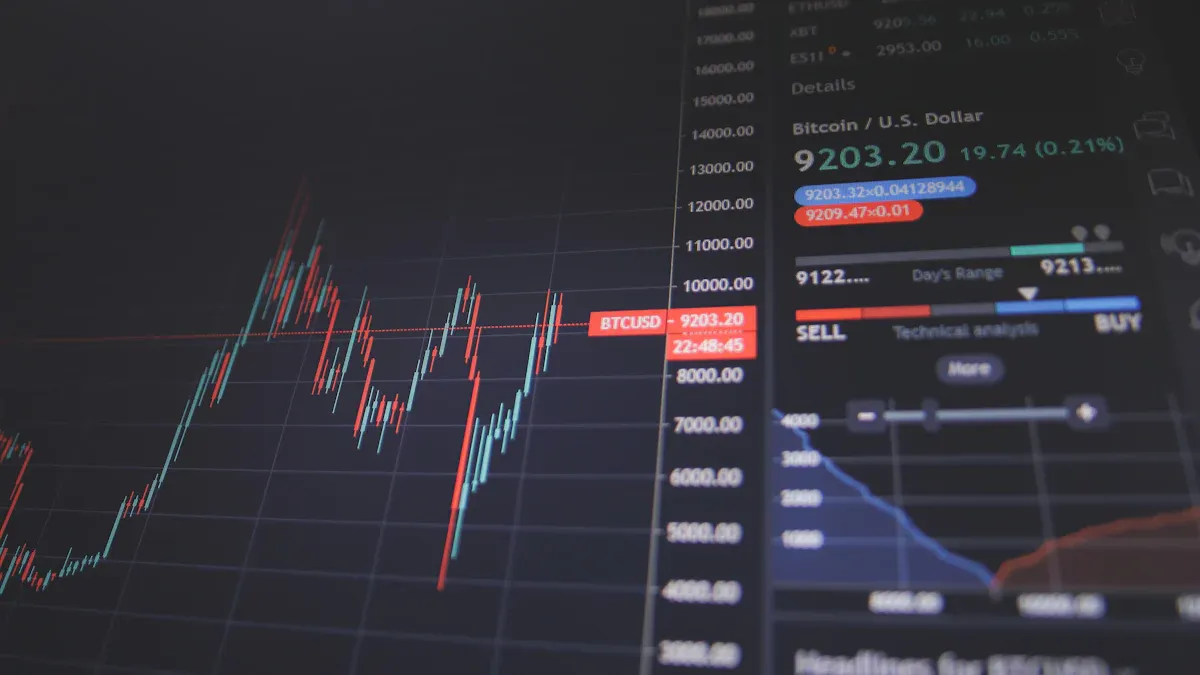
Image Source: unsplash
You’ve probably heard of “pre-market” or “after-hours” trading — but what are they? Simply put, they are extended trading sessions outside regular hours (9:30 AM–4:00 PM ET). Major news like earnings reports or economic data is often released during these periods. As of January 2025, pre-market and after-hours trading already accounts for over 11% of total US stock volume, showing their growing importance.
Pre-Market Trading Hours
Pre-market trading typically runs from 7:00 AM to 9:25 AM Eastern Time. This window lets you act before the official open.
You can use this time to:
- Gauge market sentiment toward overnight news or events.
- Trade immediately on freshly released earnings or announcements.
- Assess performance in other global markets and position early.
This gives savvy investors a head start before the opening bell.
After-Hours Trading Hours
After-hours trading continues after regular hours, generally lasting until 8:00 PM Eastern Time. It provides opportunities to react to news breaking after the close. You can participate through platforms like Biyapay that support extended hours, but always be aware of the risks.
⚠️ Risk Warning for Extended Hours Trading
Because participation is lower, liquidity is thinner, which can cause:
- Wider bid-ask spreads: You may buy higher and sell lower than during regular hours.
- Higher volatility: Even small volume can trigger large price swings.
- No execution guarantee: Your order may not fill at all.
Therefore, fully understand these risks before trading in extended hours.
This guide summarizes 2025–2026 holiday closures, daylight saving and standard time trading hours, and special early-close rules. Bookmark this page or share it with fellow investors as your quick reference for the next two years.
Master precise timing and make every investment decision more efficient!
FAQ
What happens if a US stock market holiday falls on a weekend?
If the holiday falls on Saturday, the market usually closes on the preceding Friday. If it falls on Sunday, closure is postponed to Monday, so you never miss the holiday.
Are trading hours the same for all US stocks?
Not entirely. The times in this guide mainly apply to the New York Stock Exchange (NYSE) and Nasdaq. Over-the-counter (OTC) markets may have different rules.
*This article is provided for general information purposes and does not constitute legal, tax or other professional advice from BiyaPay or its subsidiaries and its affiliates, and it is not intended as a substitute for obtaining advice from a financial advisor or any other professional.
We make no representations, warranties or warranties, express or implied, as to the accuracy, completeness or timeliness of the contents of this publication.
Related Blogs of

Another Major Drop! Why Is the A-Share Index Falling Non-Stop – Where Exactly Is the Problem?


Want to Predict A-Share Market Moves? Understanding These 5 Macro Signals Is Enough


Volume-Price Rising Together or Diverging? Complete A-Share Practical Trading Strategy Guide


Beginner’s Guide: What to Do When a Stock Hits Limit-Down? Can You Still Trade?

Choose Country or Region to Read Local Blog
 Australia
 Austria
 Belgium
 Canada
 Cyprus
 Czech Republic
 Denmark
 Estonia
 Finland
 France
 Germany
 Greece
 Hong Kong
 India
India Indonesia
 Ireland
 Italy
Italy Japan
Japan Latvia
 Lithuania
 Luxembourg
 Malaysia
 Malta
Malta Morocco
 Nepal
Nepal Netherlands
 New Zealand
 Norway
 Pakistan
 Philippines
 Poland
 Portugal
 Romania
 Singapore
 Slovakia
 Slovenia
 South Africa
 South Korea
 Spain
Spain Sweden
 Thailand
 The United States
 Turkey
 United Arab Emirates
 United Kingdom
 Vietnam
Contact Us




BIYA GLOBAL LLC is a licensed entity registered with the U.S. Securities and Exchange Commission (SEC No.: 802-127417); a certified member of the Financial Industry Regulatory Authority (FINRA) (Central Registration Depository CRD No.: 325027); regulated by the Financial Industry Regulatory Authority (FINRA) and the U.S. Securities and Exchange Commission (SEC).
BIYA GLOBAL LLC is registered with the Financial Crimes Enforcement Network (FinCEN), an agency under the U.S. Department of the Treasury, as a Money Services Business (MSB), with registration number 31000218637349, and regulated by the Financial Crimes Enforcement Network (FinCEN).
BIYA GLOBAL LIMITED is a registered Financial Service Provider (FSP) in New Zealand, with registration number FSP1007221, and is also a registered member of the Financial Services Complaints Limited (FSCL), an independent dispute resolution scheme in New Zealand.