Must-Read Before Trading the Dow Jones: Complete Guide to Analyzing Trends and Going Long or Short



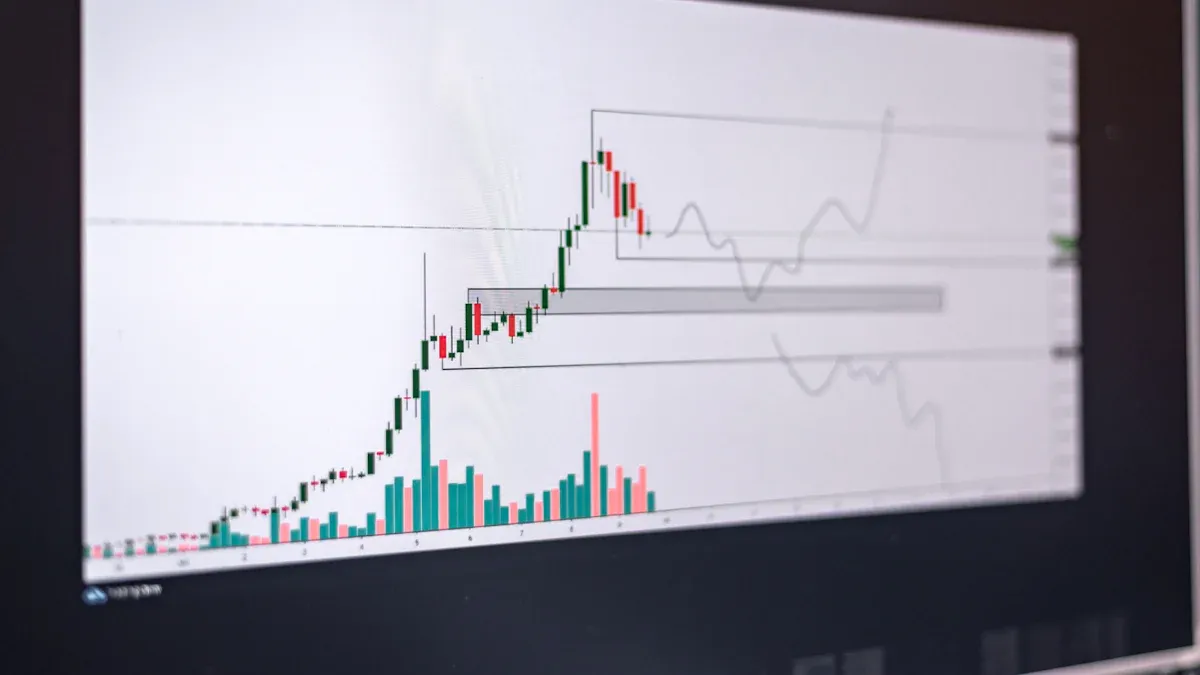
Image Source: pexels
This article provides a complete practical guide to trading the Dow Jones Industrial Average, helping you build a clear trading framework. You may be thinking about several core questions:
- Which tool is most suitable for me to trade with?
- How do I determine whether to buy or sell right now?
- How exactly do I place a long or short order?
This article turns these complex concepts into simple, practical steps so you can get started quickly.
Key Points
- Choosing the right Dow Jones trading instrument is crucial; for example, CFDs are suitable for short-term trading, while ETFs are ideal for long-term investing.
- There are two main ways to analyze Dow Jones trends: technical analysis using chart signals and fundamental analysis using economic data and news.
- When you believe the market will rise, you can “go long”; when you believe it will fall, you can “go short.”
- You must have a plan before trading and strictly control risk; for example, never let a single trade lose more than 2% of total capital.
- Beginners should first practice with a demo account to become familiar with the trading process and strategy before using real money.
Comparison of Dow Jones Trading Instruments
Choosing the right trading instrument is the first step to success. Different instruments have different characteristics and suit different types of investors. Below, we compare four mainstream ways to trade the Dow Jones to help you find the best fit.
Contracts for Difference (CFD)
A Contract for Difference (CFD) is a flexible derivative financial product. You do not need to actually own the underlying asset; instead, you trade the difference between the opening and closing prices.
Advantages:
- Two-way trading: Easily go long (buy) or short (sell).
- Flexible leverage: Control a larger position with smaller capital, though risk increases accordingly.
- Extended trading hours: Usually offers nearly 24-hour trading.
Best for: Aggressive investors seeking high leverage and frequent short-term trading.
Exchange-Traded Funds (ETF)
An ETF is like a basket of stocks that tracks the performance of a specific index. You can buy and sell ETFs that track the Dow Jones Industrial Average on a stock exchange just like individual shares.
The annual total expense ratio for Dow-tracking ETFs typically ranges between 0.33% and 0.51%; compare fees and fund size when choosing.
Best for: Conservative investors who prefer long-term holding, risk diversification, and no leverage.
Index Futures (E-mini Dow)
Index futures are standardized contracts that agree to buy or sell the index at a specific price on a future date. E-mini Dow futures (YM) are a popular tool among professional traders.
| Specification | Value |
|---|---|
| Contract Size | Index value × $5 |
| Minimum Tick Value | $5.00 per point |
| Minimum Price Fluctuation | 1 point |
Best for: Well-capitalized professional investors who can handle higher risk and are familiar with margin trading.
Directly Buying Component Stocks
You can also directly purchase the 30 companies that make up the Dow Jones Index. This approach makes you a direct shareholder in these blue-chip companies.
A tax-saving tip: stock trading commissions or fees can be added to your cost basis. For example, if you spend $1,000 to buy shares and pay a $10 commission, your cost basis becomes $1,010. This reduces taxable capital gains when you sell later.
Best for: Value investors who want long-term exposure to specific blue-chip stocks and participate in company growth.
How to Analyze Dow Jones Industrial Average Trends?
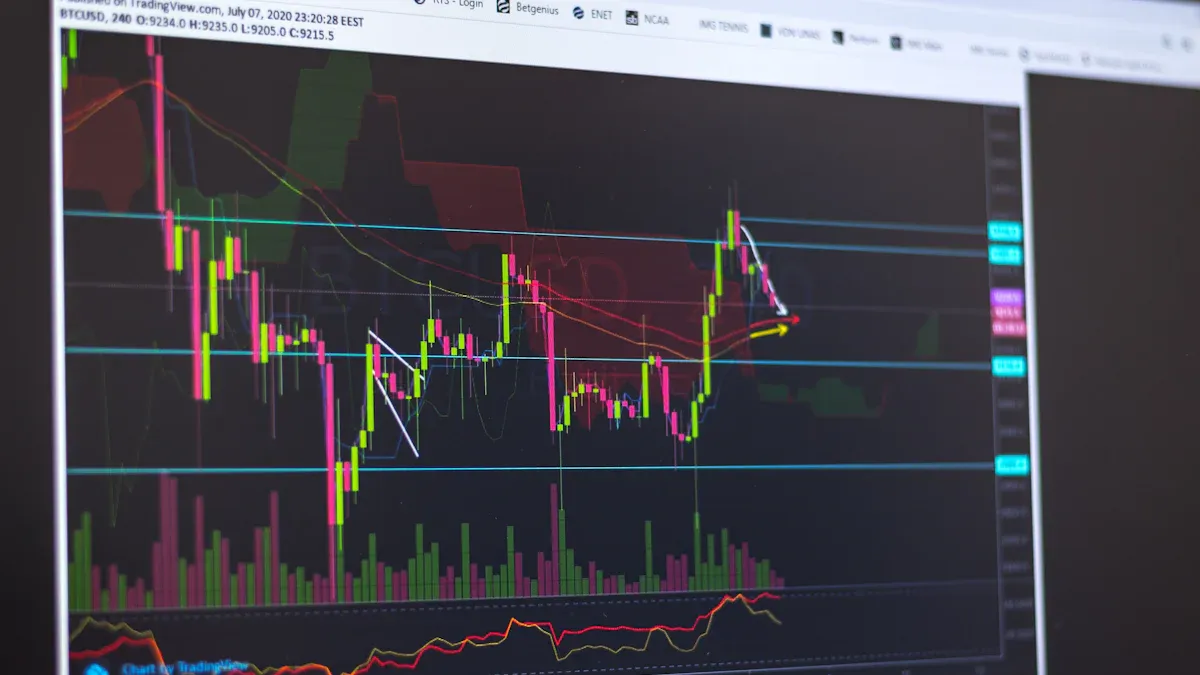
Image Source: pexels
After selecting your instrument, the next step is learning how to judge market direction. There are two main methods to analyze Dow Jones trends: technical analysis and fundamental analysis. Combining both gives you a more comprehensive decision-making basis.
Technical Analysis: Buy/Sell Signals on Charts
Technical analysis involves studying past price charts and volume to predict future price movements. You don’t need to be a math expert; just learn to recognize a few key signals.
1. Moving Averages (MA)
Moving averages smooth out price fluctuations and help identify long-term trends. The most common signals come from crossovers between short-term and long-term MAs:
- Golden Cross: When a short-term MA (e.g., 50-day) crosses above a long-term MA (e.g., 200-day), it is generally considered a bullish signal, indicating the market may enter an uptrend.
- Death Cross: When a short-term MA crosses below a long-term MA, it is generally a bearish signal, suggesting the market may turn downward.
2. Relative Strength Index (RSI)
RSI is a momentum indicator that measures the speed and magnitude of price changes, with values ranging from 0 to 100. It helps determine if the market is “overheated” or “overcooled.”
- Overbought: When RSI exceeds 70, the asset may be overbought, with a risk of short-term pullback — a potential sell or wait signal.
- Oversold: When RSI falls below 30, the asset may be oversold, with a chance of rebound — a potential buy signal.
Fundamental Analysis: Key Factors Affecting the Market
Fundamental analysis focuses on macroeconomic factors that affect the economy and corporate earnings. For an index, the most important factor is the overall health of the U.S. economy.
Key Economic Data
The following regularly released data points are market focal points you must follow:
- Non-Farm Payrolls (NFP): Released monthly, reflecting U.S. employment conditions. Strong data usually signals a healthy economy and is positive for stocks.
- Consumer Price Index (CPI): A key inflation measure. Excessive inflation may prompt the Fed to raise rates, pressuring stocks.
- Federal Reserve Interest Rate Decisions: The Fed’s rate hikes or cuts directly affect funding costs. Rate hikes are generally negative for stocks; rate cuts are positive.
Impact of Geopolitical Events
Major geopolitical events such as wars, trade disputes, or terrorist attacks bring uncertainty and cause sharp short-term volatility.
- World War I (1914-1918): The market plunged about 30% at the outbreak, but after reopening, the Dow Jones rose over 80% in 1915.
- 9/11 Terrorist Attacks: On the first day of reopening, the Dow fell 7.1%. However, the market not only recovered in subsequent years but continued to rise.
Historical data shows that while geopolitical shocks are severe, their long-term impact on the market is usually limited. However, there are exceptions; the 1973 oil crisis caused damage that lasted a full year.
The table below compares average real returns of the S&P 500 before and after geopolitical events:
| Period | Average Return Without Geopolitical Events | Average Return After Geopolitical Events |
|---|---|---|
| 3 months | 1.3% | 0.3% |
| 6 months | 2.6% | 2.6% |
| 12 months | 5.5% | 5.5% |
You can see that short-term reactions (within 3 months) are usually negative, but in the medium to long term (6–12 months), the market tends to digest the shock and return to fundamentals.
Practical Tutorial: Long and Short Strategies

Image Source: unsplash
After learning analysis methods, the most critical step is turning knowledge into action. This section walks you through the complete trading process — from spotting signals, deciding entry, to setting take-profit and stop-loss — so you won’t stare at charts feeling lost.
Bullish Market Long Strategy
When analysis indicates the market is about to rise, formulate a “long” plan. Going long means buying the asset and selling later when the price rises to profit. Here are several common long entry signals.
Signal 1: Moving Average Golden Cross
As mentioned earlier, a golden cross is a strong bullish signal. You can combine different moving averages to generate powerful crossover signals. When a shorter-term MA crosses above a longer-term MA, it’s a buying opportunity.
Trading Tip Aggressive traders may not wait for full trend confirmation and instead enter in stages:
- Establish the first long position when the fast MA crosses the medium MA.
- Add more long positions when the medium MA also crosses the slow MA, riding the trend.
Signal 2: Price Breaks Key Resistance
Resistance is a “ceiling” that price has repeatedly failed to break. When price breaks through this ceiling with volume, it shows strong buying pressure, usually followed by further upside.
Long Practical Example
Suppose you observe a golden cross on the Dow Jones daily chart, and price also breaks above the previous high resistance. You can plan a long trade:
| Item | Setting Method & Reason |
|---|---|
| Entry Point | Buy after price confirms it has stabilized above resistance (e.g., wait for close above resistance). |
| Take-Profit | Set at the next higher historical resistance zone or expected gain target. |
| Stop-Loss | Place just below the broken resistance. If price falls back, the breakout may be false. |
Bearish Market Short Strategy
When you judge the market may fall, adopt a “short” strategy. Shorting involves borrowing the asset, selling it first, then buying it back cheaper to return, profiting from the price difference.
Signal 1: Moving Average Death Cross
A death cross is a classic bearish pattern. When a short-term MA (e.g., 50-day) falls below a long-term MA (e.g., 200-day), it suggests downward momentum is building. You can use this signal to liquidate existing longs or initiate new shorts.
Signal 2: Head and Shoulders Pattern
The head and shoulders is a pattern signaling a potential reversal from uptrend to downtrend. It looks like a person’s head with two shoulders.
- Pattern Recognition: The chart shows three peaks; the middle “head” is highest, with lower “left shoulder” and “right shoulder.” The line connecting the two lows is the “neckline.”
- Confirmation Signal: When price breaks below the neckline with volume, the pattern is confirmed — a strong sell signal.
Note: Strict stop-loss is your lifeline when shorting Theoretical loss on a short is unlimited, so stop-loss is critical. You can use these methods to set stop-loss:
- Key Resistance: Place stop slightly above an established resistance, e.g., above the “right shoulder” top in a head and shoulders pattern.
- Technical Indicators: Use tools like Bollinger Band upper edge or Average True Range (ATR) to dynamically adjust stop distance.
Short Practical Example
Suppose after a prolonged uptrend, you spot a classic head and shoulders pattern, and price has just broken below the neckline support. You can plan a short trade:
| Item | Setting Method & Reason |
|---|---|
| Entry Point | Short after price confirms break below neckline. |
| Take-Profit | Measure the vertical distance from head peak to neckline and project downward from the breakout point as initial target. |
| Stop-Loss | Place slightly above the right shoulder high. If price rises back above, the pattern may be invalid. |
Trading Plan and Risk Management
The biggest difference between successful traders and gamblers is having a detailed plan and strict discipline. Learning analysis is only the first step; managing your capital and risk determines how long you survive in the market.
Set Clear Trading Goals
Before committing any money, you must have a clear trading plan. This plan is your battle map, helping you stay calm amid market volatility. A rigorous plan starts with understanding every step; any oversight can ruin your results.
Your trading plan should include:
- Entry Criteria: Why enter now? Is it a golden cross or breakout?
- Exit Criteria: When will you take profit or cut loss?
- Strategy Choice: Choose a strategy you fully understand and can execute strictly to avoid mistakes from complexity.
Learn Capital and Position Management
The core of capital management is ensuring a few losing trades don’t wipe you out. A widely adopted professional rule is the “2% Rule.”
2% Rule: Maximum loss on any single trade should not exceed 2% of total trading capital. This rule effectively protects your principal and gives you more chances to try.
For example, with a $45,200 account, your maximum risk per trade should be $904 ($45,200 × 0.02).
Additionally, you should adjust position size based on market volatility. Reduce position size when volatility is high; increase slightly when calm, keeping dollar risk per trade similar.
Stop-Loss Is Your Lifeline
Stop-loss is an indispensable part of any trading plan. Its greatest benefit is providing emotional comfort, helping you overcome fear and greed.
Pre-setting stop-loss cultivates a professional trading mindset, treating capital as business assets rather than gambling chips. Exit decisions are made when you’re clear-headed and free from pressure, preventing impulsive moves that turn small losses into devastating ones. Remember: a stop-loss isn’t admitting defeat; it’s the necessary tool to keep you trading another day.
You now master the four core steps of trading: choosing instruments, analyzing trends, executing long/short, and risk management. The key to success isn’t just analytical skill but strict discipline. Many beginners fail due to emotional decisions or ignoring risk, eventually letting losses balloon.
Remember: trading without a stop-loss is like driving without a seatbelt — extremely dangerous.
Do not rush to use real money. The best next step is to open a demo account and repeatedly practice the strategies in this article until you build solid confidence.
FAQ
When is the best time to trade the Dow Jones?
The best time to trade Dow Jones-related products is during U.S. market hours. Liquidity is highest and price movement most active then, offering the most opportunities.
Tip: U.S. stocks summer session opens at 9:30 PM Taipei time; winter session opens at 10:30 PM.
How much starting capital do I need to trade the Dow Jones?
Starting capital depends on the instrument. ETFs or component stocks may require a few hundred dollars. With leveraged instruments like CFDs, you can start with less margin, but always prioritize risk control and avoid over-leveraging.
Why should I use a demo account first?
A demo account lets you practice in a zero-risk environment. You can test analysis techniques, get familiar with order placement, and validate your strategy effectiveness. It’s the best way to build stable trading psychology and confidence.
*This article is provided for general information purposes and does not constitute legal, tax or other professional advice from BiyaPay or its subsidiaries and its affiliates, and it is not intended as a substitute for obtaining advice from a financial advisor or any other professional.
We make no representations, warranties or warranties, express or implied, as to the accuracy, completeness or timeliness of the contents of this publication.
Related Blogs of
Overcoming Human Weaknesses: Detailed Guide to Beginner-Friendly Automated US Stock Trading Strategies


Best Free Real-Time US Stock Quote Websites Besides Yahoo Finance


Profit Expansion is the Core Driver: Analyzing the Growth Engines of the US Stock Market in 2026

2025 Latest US Stock Account Opening Tutorial: Complete Online Application in 5 Steps

Choose Country or Region to Read Local Blog
 Australia
 Austria
 Belgium
 Canada
 Cyprus
 Czech Republic
 Denmark
 Estonia
 Finland
 France
 Germany
 Greece
 Hong Kong
 India
India Indonesia
 Ireland
 Italy
Italy Japan
Japan Latvia
 Lithuania
 Luxembourg
 Malaysia
 Malta
Malta Morocco
 Nepal
Nepal Netherlands
 New Zealand
 Norway
 Pakistan
 Philippines
 Poland
 Portugal
 Romania
 Singapore
 Slovakia
 Slovenia
 South Africa
 South Korea
 Spain
Spain Sweden
 Thailand
 The United States
 Turkey
 United Arab Emirates
 United Kingdom
 Vietnam
Contact Us




BIYA GLOBAL LLC is a licensed entity registered with the U.S. Securities and Exchange Commission (SEC No.: 802-127417); a certified member of the Financial Industry Regulatory Authority (FINRA) (Central Registration Depository CRD No.: 325027); regulated by the Financial Industry Regulatory Authority (FINRA) and the U.S. Securities and Exchange Commission (SEC).
BIYA GLOBAL LLC is registered with the Financial Crimes Enforcement Network (FinCEN), an agency under the U.S. Department of the Treasury, as a Money Services Business (MSB), with registration number 31000218637349, and regulated by the Financial Crimes Enforcement Network (FinCEN).
BIYA GLOBAL LIMITED is a registered Financial Service Provider (FSP) in New Zealand, with registration number FSP1007221, and is also a registered member of the Financial Services Complaints Limited (FSCL), an independent dispute resolution scheme in New Zealand.