How to Safely Use USDT for Investment Remittances? A Comprehensive Guide to Risk Control Essentials



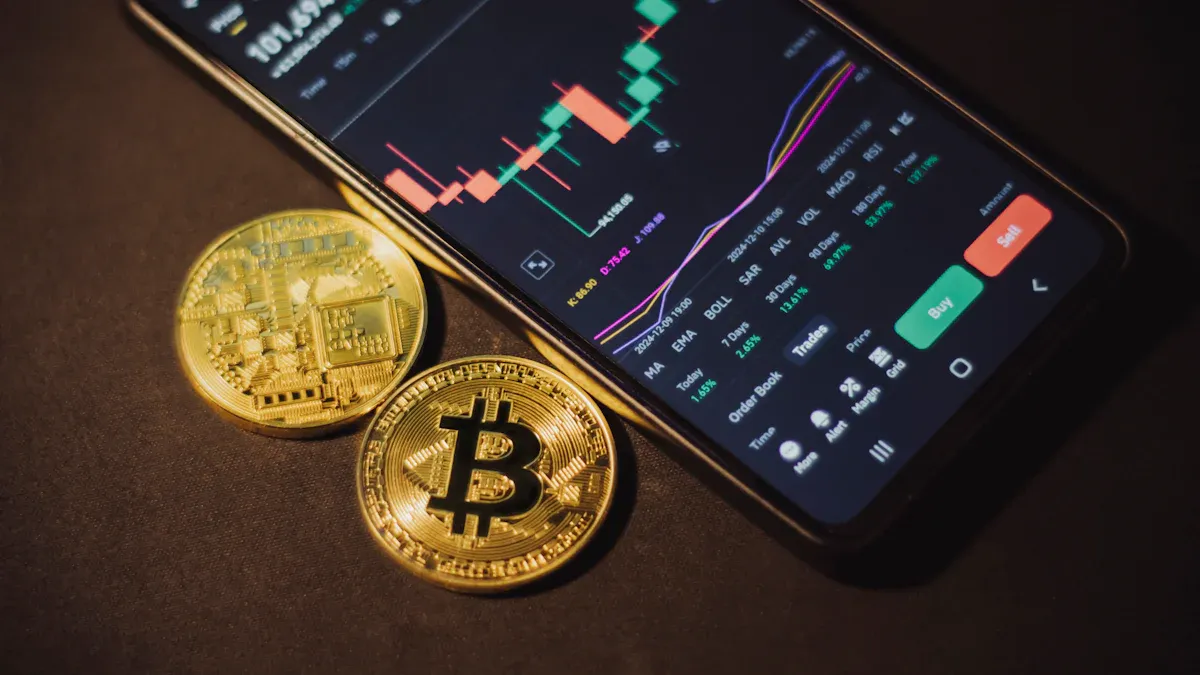
Image Source: pexels
Stablecoins like USDT are becoming the cornerstone of digital assets. You may frequently use it in investments and cross-border remittances due to its stable value, low transaction costs, and fast speed. The stablecoin market has grown rapidly in recent years, with its transaction efficiency far surpassing traditional banks.
Note: Behind the convenience lie hidden risks. Factors such as its pegging mechanism, platform security, and lack of regulation can threaten your assets.
Effective risk control is crucial. You need a systematic guide to ensure fund security is fully protected while enjoying the convenience.
Key Takeaways
- Choose a reliable trading platform and ensure it has a good reputation and security measures.
- Carefully verify transaction information, especially the recipient address and network type, as blockchain transactions cannot be revoked.
- Use cold wallets or hardware wallets to store most USDT, protecting your assets from cyber attacks.
- Understand and comply with local cryptocurrency laws and regulations to ensure legitimate fund sources.
- Be wary of high-yield scams and third-party payments to protect yourself from fraud.
Choosing Reliable Channels: The Foundation of Platform Risk Control
Selecting a safe and reliable channel is the starting point for all transactions and the most important risk control step. Most of your risks stem from the platform you choose.
Understanding Stablecoins: USDT’s Pegging Mechanism and Risks
USDT claims its value is pegged 1:1 to the USD. Its core mechanism is reserve backing. In theory, for every USDT issued by Tether, there should be an equivalent real-world asset (mainly USD) in its reserves as support.
However, this peg is not absolutely stable. When market panic or doubts about reserve transparency arise, de-pegging risks emerge.
| Stablecoin | De-Peg Event Time | De-Peg Extent | Main Reason |
|---|---|---|---|
| Tether (USDT) | October 2018 | Dropped to about $0.85 | Concerns over its USD reserves and banking relationships |
| USD Coin (USDC) | March 11, 2023 | Dropped to $0.887 | Part of reserves held in collapsed Silicon Valley Bank |
| UST (TerraUSD) | May 2022 | Catastrophic de-peg | Algorithm failure leading to collapse with LUNA value |
Identifying and Selecting Reputable Trading Platforms
A reputable platform is the first line of defense for fund security. You should prioritize platforms recognized by mainstream markets with a large user base and good reputation. When evaluating, focus on the following:
- Security: Does it provide multi-factor authentication (MFA), cold storage, and other security measures.
- Compliance: Does it comply with local KYC (know your customer) and AML (anti-money laundering) policies.
- User Experience: Is the interface clear and easy to use, with responsive customer support.
For example, platforms like Biyapay focus on simplifying payment and remittance processes, providing users with convenient and compliant fiat-to-crypto exchange channels, making them a good choice.
Once a reputable venue is chosen, pair it with tools and compliant rails to manage both risk and cost.
BiyaPay positions itself as a multi-asset trading wallet spanning cross-border remittance, investing, and treasury-style cash management; it operates with multi-jurisdictional credentials (e.g., U.S. MSB, New Zealand FSP), which helps maintain clear audit trails. In practice, estimate proceeds and potential slippage with the free FX Rate & Converter before moving funds; when settling to bank accounts, use the Remittance channel for standard banking routes across major currencies and regions; for corporate beneficiaries or cross-border details, validate payee data via the built-in SWIFT lookup and IBAN checker to reduce return-payment risk.
For fast internal settlements within your circle, on-platform transfers between BiyaPay users post instantly with zero fees, limiting on-chain fee exposure and counterparty friction. After registration and KYC, beneficiary data and transaction history stay unified under one account, reducing operational and compliance errors from app-hopping.
Reviewing Platform Security Credentials and Audit Reports
Transparency is the cornerstone of trust. Reliable stablecoin issuers and trading platforms regularly publish audit reports issued by independent third parties. For example, Tether commissions well-known accounting firms like BDO to publish reserve attestation reports on its official website. You can personally review these reports to confirm whether reserve assets are sufficient, thereby making informed judgments.
Beware of High-Yield Wealth Management and “Fly-by-Night” Exchanges
If an opportunity sounds too good to be true, it probably is a trap.
Beware of the following danger signals:
- Promise “guaranteed returns” or unrealistically high interest rates (e.g., “3% daily”).
- Require you to pay additional “taxes” or “handling fees” before withdrawal.
- Platform website is poorly made, full of grammatical errors, with anonymous team backgrounds.
The collapse of FTX exchange is a painful lesson; it was once an industry giant but ultimately caused users to lose billions due to lack of internal oversight and risk management.
Diversify Assets: Avoid Concentrating Storage on a Single Platform
Don’t put all your eggs in one basket. This is the oldest rule in investing and applies equally in the crypto world. Effective asset diversification is a key risk control strategy. It is recommended to store most long-term held assets (about 70%) in self-custody wallets you control, keeping only funds for short-term trading (about 30%) on exchanges. This greatly reduces the risk of total asset loss due to issues with a single platform.
Rigorous Transaction Operations: Preventing Counterparty and Process Risks
Image Source: pexels
Choosing the right platform is just the first step. Every operation during the transaction process directly relates to your fund security. Rigorous operational habits are essential risk control measures.
Screening Reliable OTC Merchants and Counterparties
When conducting over-the-counter (OTC) transactions, you deal directly with individuals or teams rather than the platform itself. Therefore, screening reliable counterparties is crucial. You need to be wary of a fraud technique known as “triangular scam.”
Triangular Scam Analysis: The scammer contacts both you (Merchant A) and another buyer (B) simultaneously. They ask you to provide a payment account, then send your account information to B. After B pays you, you think the transaction is complete and release USDT to the scammer. Ultimately, B reports to the police for not receiving goods, and your bank account may be frozen as a result.
To avoid such risks, you can take the following measures:
- Prioritize certified merchants on the platform with numerous positive reviews and high transaction volumes.
- Start with small transactions to test the counterparty’s reliability.
- Insist on conducting fund exchanges only with the counterparty’s own accounts.
Before Transaction: Carefully Verify Address and Amount
A core feature of blockchain transactions is irreversibility. Once you send USDT, there is no “revoke” button.
Statistics show that on Ethereum alone, over $3.4 billion in assets have been permanently lost due to user errors (such as sending to wrong addresses). A tiny address mistake can cause your funds to disappear forever.
Before clicking “send,” be sure to:
- Copy and Paste Address: Manual input is highly error-prone.
- Double Verification: Carefully compare the first and last few characters of the address.
- Confirm Network Type: Ensure the transfer network you select (such as TRC-20, ERC-20) matches the recipient address.
During Transaction: Reject Third-Party Payments and Offline Deals
During the transaction, you need to adhere to two bottom lines: reject third-party payments and avoid offline transactions.
- Reject Third-Party Payments: If the counterparty requires you to pay to another unknown account or uses someone else’s account to pay you, immediately terminate the transaction. This is highly likely money laundering and poses extreme freezing risks to your bank account.
- Avoid Offline Transactions: Do not be tempted by so-called “cash deals.” In recent years, robberies and kidnappings due to offline cryptocurrency transactions have occurred frequently. Criminals use social media to scout targets, set traps under the guise of transactions, and rob your funds through violence upon meeting.
After Transaction: Properly Keep Transaction Vouchers and Records
After completing each transaction, develop the habit of saving records. This is not just for accounting but to protect yourself in case of disputes.
Be sure to save the following information:
- Transaction Screenshots: Complete conversations and transfer pages including counterparty information, amount, and time.
- Transaction Hash (TxID): This is your unique transfer proof on the blockchain.
- Bank Transfer Records: If fiat is involved, keep relevant electronic receipts.
These vouchers will be your strongest evidence when dealing with bank risk control inquiries or handling transaction disputes.
Secure Asset Storage: Building Your Personal Digital Vault
Image Source: pexels
Storing USDT securely outside exchanges is the ultimate defense for protecting assets. Building your own digital vault means you have absolute control over your assets.
Differences and Choices Between Hot and Cold Wallets
Your first step is to choose the right wallet. Wallets are divided into hot and cold wallets, with the core difference being whether connected to the internet.
Hot wallets are always online, convenient for anytime trading, but this also makes them vulnerable to cyber attacks. Cold wallets are completely offline, with extremely high security but relatively inconvenient to use.
You can choose based on your needs:
| Feature | Hot Wallet | Cold Wallet |
|---|---|---|
| Connection Status | Always online | Offline storage |
| Security | Vulnerable to cyber attacks | Extremely high security |
| Applicable Scenarios | Frequent trading, small amounts | Long-term storage, large amounts |
| Risks | Cyber theft, phishing attacks | Physical loss or damage |
Operational Advice: If you are an active trader, use a hot wallet to store small amounts. If you plan to hold large assets long-term, a cold wallet is the top choice for security.
Properly Managing Private Keys and Seed Phrases
Private keys and seed phrases are the only keys to your wallet. Once lost or leaked, your assets are unrecoverable forever. You must treat them like safeguarding a bank safe key.
Follow these best practices:
- Physical Backup: Write the seed phrase on paper and store it in a fireproof, waterproof safe.
- Use Metal Storage: To handle extreme situations like fires, engrave the seed phrase on a metal plate.
- Distribute Storage: Create multiple backups and store them in different secure geographic locations.
Never store private keys or seed phrases as screenshots or text on internet-connected computers or phones.
Hardware Wallets: The Ultimate Guarantee for Asset Security
Hardware wallets are physical devices specifically for storing private keys and are recognized as the safest asset storage method.
Their core advantage is that all transaction signatures are completed offline inside the device, with private keys never touching the internet. Even if your computer is infected with a virus, assets remain safe. Brands like Ledger, Trezor, and Ellipal provide reliable hardware wallet solutions, protecting your assets through secure chips and physical isolation.
Preventing Phishing and Malware
Scammers use various means to trick you into leaking private keys or authorizing malicious transactions. You must stay vigilant at all times.
Beware of the following common scams:
- Email Phishing: Receive emails disguised as official, inducing you to click malicious links.
- Fake Giveaways: See “free airdrops” on social media requiring you to connect your wallet to claim rewards.
- Impersonating Customer Service: Someone pretends to be platform support, asking for your seed phrase to “solve issues.”
- Malicious Browser Extensions: Install seemingly useful extensions that actually steal your information.
Never enter your seed phrase or private key on untrusted websites.
Embracing Compliance: Avoiding Legal and Regulatory Risks
In the world of digital assets, compliance is not a barrier but an important link in protecting your fund security. Actively embracing compliance is a wise choice for long-term, safe transactions and an advanced risk control strategy.
Understanding Local Crypto Asset Policies
Regulatory policies for crypto assets vary greatly across countries and regions. Before starting transactions, you must understand and comply with local laws and regulations. This helps avoid unintentional violations.
Global Regulatory Overview: Policies worldwide are evolving, from U.S. bill drafts to the EU’s comprehensive framework and various explorations in Asia; understanding these dynamics is crucial.
| Region/Country | Regulatory Focus/Features |
|---|---|
| United States | Multi-agency decentralized regulation, exploring digital asset market framework. |
| European Union | MiCA regulations provide comprehensive framework, focusing on investor protection and transparency. |
| Singapore | Protects retail traders, prohibits using local credit cards to buy crypto. |
| Hong Kong | Follows “same risk, same regulation” principle, plans to launch stablecoin bill. |
| Japan | Has advanced stablecoin legal framework, supports Web3-friendly policies. |
Ensuring Compliance of Fund Sources and Uses
When conducting large transactions or transferring funds from exchanges to banks, platforms or banks may require you to prove the legitimate source of funds. This is a standard “anti-money laundering” (AML) procedure. Preparing proof documents in advance makes your transaction process smoother.
You can prepare the following documents to prove fund sources:
- Salary Income: Recent 3 months’ pay stubs and bank statements.
- Property Sales: Property sale contract and bank records showing proceeds credited.
- Personal Savings: Bank statements reflecting savings history.
- Loans: Loan agreement and bank records showing loan credited.
- Inheritance or Gifts: Copy of will or donor letter.
Handling Bank Account Risk Control and Inquiries
Banks are highly sensitive to cryptocurrency-related transactions. Frequent P2P transactions, large fund exchanges with unknown accounts, or direct large withdrawals from exchanges may trigger bank risk control systems, leading to account inquiries or even freezing.
Tip: When communicating with banks (such as licensed banks in Hong Kong), maintain transparency and cooperation. Clearly explain the business logic of transactions and present well-kept transaction vouchers and fund source proofs; this usually resolves issues effectively.
Staying Updated on KYC and AML Regulatory Dynamics
“Know Your Customer” (KYC) and anti-money laundering (AML) are core to global financial regulation. These regulations are constantly updating, with increasingly strict requirements for trading platforms. You should proactively follow these regulatory dynamics to ensure your transaction behavior always meets the latest compliance requirements. This not only protects your account security but is also the attitude of a responsible digital citizen.
Safely using USDT is not a one-time effort; it is a dynamic process requiring continuous learning and vigilance. Internalize the following four core essentials into your operational habits to effectively protect personal assets while enjoying digital currency convenience.
- Preferred Channels: Start with reputable platforms.
- Rigorous Transactions: Carefully verify every operational detail.
- Secure Storage: Master control over your own assets.
- Embrace Compliance: Avoid potential legal risks.
Looking ahead, clear regulatory frameworks will boost investor confidence. As JPMorgan experts point out, bills requiring stablecoins to have 1:1 asset backing may accelerate their mainstream adoption. Stay updated on industry dynamics to seize future opportunities.
FAQ
Can I trade on multiple exchanges?
Yes, and we recommend it. Diversifying funds across several reputable platforms reduces risks from issues with a single platform. This is an effective risk management strategy.
Do I have to use a hardware wallet?
Not necessarily. If you only conduct small, frequent transactions, a reputable hot wallet suffices. But if you plan to hold large assets long-term, a hardware wallet provides the highest level of security and is your best choice.
What is the difference between TRC-20 and ERC-20 USDT?
They are based on different blockchain networks. ERC-20 (Ethereum) is widely used but has higher transfer fees. TRC-20 (Tron) offers fast transfers and extremely low fees, usually under $1, making it more suitable for small remittances.
If my USDT is stolen, can it be recovered?
Usually very difficult. Blockchain transactions are irreversible; once assets are transferred, recovery is nearly impossible. Therefore, prevention is far more important than post-incident remedies. Be sure to safeguard your private keys and seed phrases.
*This article is provided for general information purposes and does not constitute legal, tax or other professional advice from BiyaPay or its subsidiaries and its affiliates, and it is not intended as a substitute for obtaining advice from a financial advisor or any other professional.
We make no representations, warranties or warranties, express or implied, as to the accuracy, completeness or timeliness of the contents of this publication.
Related Blogs of

2025 USD to CNY Exchange Rate Forecast and Transfer Strategies: A Must-Read Guide

Top 3 Apps with the Most Complete Nasdaq Composite Index Data


From the Frenzy at 6124 Points to the Darkness Before Dawn: Memory Fragments of China's Shanghai A-Shares

Latest US Stock Market Closure Notice Released: All Key Dates and Potential Market Impacts You Need to Know

Choose Country or Region to Read Local Blog
 Australia
 Austria
 Belgium
 Canada
 Cyprus
 Czech Republic
 Denmark
 Estonia
 Finland
 France
 Germany
 Greece
 Hong Kong
 India
India Indonesia
 Ireland
 Italy
Italy Japan
Japan Latvia
 Lithuania
 Luxembourg
 Malaysia
 Malta
Malta Morocco
 Nepal
Nepal Netherlands
 New Zealand
 Norway
 Pakistan
 Philippines
 Poland
 Portugal
 Romania
 Singapore
 Slovakia
 Slovenia
 South Africa
 South Korea
 Spain
Spain Sweden
 Thailand
 The United States
 Turkey
 United Arab Emirates
 United Kingdom
 Vietnam
Contact Us




BIYA GLOBAL LLC is a licensed entity registered with the U.S. Securities and Exchange Commission (SEC No.: 802-127417); a certified member of the Financial Industry Regulatory Authority (FINRA) (Central Registration Depository CRD No.: 325027); regulated by the Financial Industry Regulatory Authority (FINRA) and the U.S. Securities and Exchange Commission (SEC).
BIYA GLOBAL LLC is registered with the Financial Crimes Enforcement Network (FinCEN), an agency under the U.S. Department of the Treasury, as a Money Services Business (MSB), with registration number 31000218637349, and regulated by the Financial Crimes Enforcement Network (FinCEN).
BIYA GLOBAL LIMITED is a registered Financial Service Provider (FSP) in New Zealand, with registration number FSP1007221, and is also a registered member of the Financial Services Complaints Limited (FSCL), an independent dispute resolution scheme in New Zealand.