Latest US Stock Market Closure Notice Released: All Key Dates and Potential Market Impacts You Need to Know



Image Source: pexels
Traders need to prepare for the upcoming US market closures. The next key date is January 1, 2025.
Holiday: New Year’s Day Date: January 1, 2025, Wednesday
The market will be fully closed on this day. Accurately understanding the US market closure schedule is an indispensable part of professional investment planning. This helps investors effectively manage trading activities and avoid potential risks.
Key Points
- Investors need to know US stock closure dates, which can help them better plan trades.
- When the US stock market is closed, trading stops, which may lead to large price fluctuations upon post-holiday opening.
- Before holidays, investors should manage their stock positions well and pay attention to global news.
- Investors can trade in pre-market or after-hours sessions, but these periods carry higher risks and require caution.
- Understanding the closure schedule and preparing in advance is an important way for investors to maintain steady investing.
Overview of US Market Closure Dates
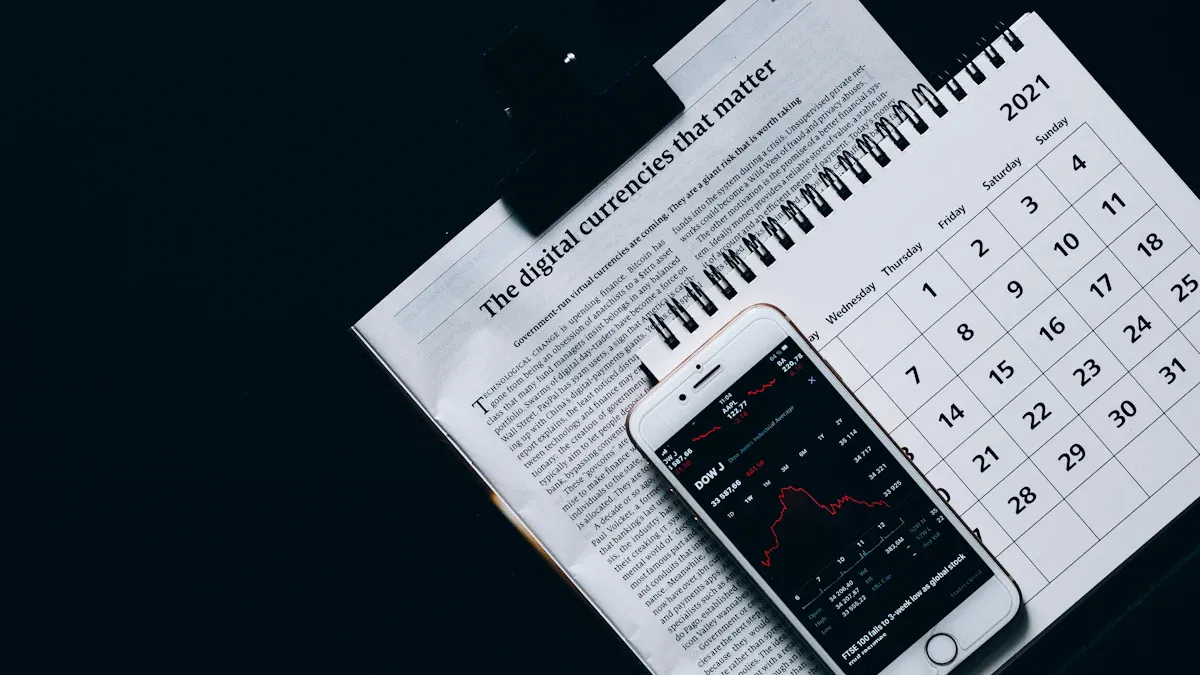
Image Source: pexels
To help investors fully grasp the US market closure schedule, we have compiled a detailed holiday calendar. Accurately knowing these dates is the foundation for formulating trading plans, managing funds, and avoiding overnight risks.
Upcoming Closure Schedule
Following New Year’s Day 2025, the next legal US stock market closure will be Martin Luther King Jr. Day.
Holiday: Martin Luther King Jr. Day Date: January 20, 2025, Monday Market Status: Fully closed
Investors should mark this date in advance and adjust trading strategies accordingly.
Complete 2024/2025 Closure Calendar
The following is the complete 2024 and 2025 closure and early closing schedule officially released by the New York Stock Exchange and Nasdaq.
Please Note:
- All early closing times are in Eastern Time.
- Good Friday is not a federal holiday, but the US stock market traditionally closes on this day.
- Official schedules may change; investors are advised to stay updated.
2024 US Stock Market Closures and Early Closings Calendar
| Date | Holiday | Day | Special Arrangement |
|---|---|---|---|
| January 1 | New Year’s Day | Monday | Closed |
| January 15 | Martin Luther King Jr. Day | Monday | Closed |
| February 19 | Presidents’ Day | Monday | Closed |
| March 29 | Good Friday | Friday | Closed |
| May 27 | Memorial Day | Monday | Closed |
| June 19 | Juneteenth National Independence Day | Wednesday | Closed |
| July 3 | Day Before Independence Day | Wednesday | Early close at 1:00 PM |
| July 4 | Independence Day | Thursday | Closed |
| September 2 | Labor Day | Monday | Closed |
| November 28 | Thanksgiving | Thursday | Closed |
| November 29 | Day After Thanksgiving | Friday | Early close at 1:00 PM |
| December 24 | Christmas Eve | Tuesday | Early close at 1:00 PM |
| December 25 | Christmas Day | Wednesday | Closed |
2025 US Stock Market Closures and Early Closings Calendar
| Date | Holiday | Day | Special Arrangement |
|---|---|---|---|
| January 1 | New Year’s Day | Wednesday | Closed |
| January 20 | Martin Luther King Jr. Day | Monday | Closed |
| February 17 | Presidents’ Day | Monday | Closed |
| April 18 | Good Friday | Friday | Closed |
| May 26 | Memorial Day | Monday | Closed |
| June 19 | Juneteenth | Thursday | Closed |
| July 3 | Day Before Independence Day | Thursday | Early close at 1:00 PM |
| July 4 | Independence Day | Friday | Closed |
| September 1 | Labor Day | Monday | Closed |
| November 27 | Thanksgiving | Thursday | Closed |
| November 28 | Day After Thanksgiving | Friday | Early close at 1:00 PM |
| December 24 | Christmas Eve | Wednesday | Early close at 1:00 PM |
| December 25 | Christmas Day | Thursday | Closed |
Mastering these key dates can help traders better plan positions and cash flow, calmly coping with changes in market rhythm.
Key Impacts of Closures on the Market
Image Source: pexels
Knowing closure dates is just the first step; more importantly, understanding the chain reactions closures cause in the market. Professional investors use these impacts to optimize their trading strategies.
Reduced Trading Liquidity
US market closures mean stock market trading activities completely stop. This directly causes market liquidity to drop to freezing point. During closures, investors cannot execute any buy or sell orders. For traders holding large positions or high-risk portfolios, this means they cannot respond to sudden news when the market is closed, increasing overnight risk.
Post-Holiday Opening Volatility Risk
During closures, global economic and political events continue. Releases of important economic data (such as non-farm payrolls, CPI) or brewing geopolitical events accumulate market information. These suppressed market sentiments and trading demands release concentratedly at the post-holiday opening, easily triggering sharp price fluctuations or gaps.
Case Analysis: Suppose the US Bureau of Labor Statistics releases far-better-than-expected non-farm payroll data on a market closure day (e.g., Good Friday). This strong report may signal a more hawkish Federal Reserve policy. With the market closed, traders cannot react immediately. At the next trading day’s opening, concentrated market sentiment may cause index futures to open sharply lower, with related sectors (e.g., tech stocks) facing heavy selling.
Pre-Holiday Market Sentiment Changes
Market sentiment often subtly changes before holidays, known as the “holiday effect.” On one hand, some traders tend to reduce positions before long holidays to avoid uncertainty. On the other hand, there is a general optimistic tendency in the market. Research finds that investor sentiment is usually higher and more stable during holidays than on trading days. This positive mindset sometimes affects the last trading day before holidays, potentially driving slight increases in volume and prices without major negative news.
Investor Strategies During Closure Periods
Facing market closures, smart investors do not choose to completely step away but adopt a series of proactive strategies to manage risks and opportunities. Formulating clear coping plans is what distinguishes professional traders from ordinary participants.
Advance Position and Risk Management
Before long holidays, proactively managing positions is the primary task for risk control. Investors should carefully evaluate existing holdings, especially high-leverage or high-risk positions.
Professional Advice: Using stop-loss orders is a basic and effective risk management technique. It allows traders to preset a sell price; once the market price hits that level, the system automatically closes the position, limiting potential losses to an acceptable range.
For traders seeking finer control, bracket orders provide dual protection. They set both take-profit and stop-loss prices at entry. Some platforms like Biyapay offer convenient bracket order functions, helping traders lock in risk-reward ratios at entry and avoid emotional decisions.
For options traders, note that time value decay does not stop during closures. A three-day long weekend may cause more time value loss than a normal trading day, significantly affecting options prices.
Monitor Major Holiday News
During US market closures, the global economic and political stage does not pause. Major geopolitical events or key data releases from other major economies may trigger sharp fluctuations upon US market reopening. Therefore, maintaining high information sensitivity is crucial.
Investors can follow these authoritative financial media for real-time, reliable global news:
- The Wall Street Journal
- Barron’s
- MarketWatch
These professional media under Dow Jones provide in-depth analysis and market insights, helping investors prepare for post-holiday openings.
Make Good Use of Pre-Market and After-Hours Trading
Although regular trading sessions are closed, investors can still react to sudden news through pre-market and after-hours sessions.
- Pre-Market Trading: Eastern Time 4:00 AM – 9:30 AM
- After-Hours Trading: Eastern Time 4:00 PM – 8:00 PM
However, participating in these sessions requires extra caution due to significant risks:
- Low Liquidity: Sparse buy/sell orders mean large orders may be hard to fill or heavily impact prices.
- Wider Spreads: Larger gaps between bid and ask prices directly increase trading costs.
- Gap Risk: Prices may suddenly jump without intermediate levels, causing stop-loss orders to fail.
- Heightened Volatility: Even small trades or news can trigger sharp price swings in low-liquidity environments.
Therefore, only experienced investors should consider trading in these sessions and must use limit orders to control execution prices.
US stock market closures are a fixed rhythm of market operation. Smart investors view them as windows for strategy adjustment and risk management, not mere trading pauses. Historical data shows certain patterns in market behavior around holidays. For example, the market performance in the first week of the new year attracts much attention:
- The S&P 500 has risen 63% of the time in the first week of the new year.
- Even when down in the first week, the index has still achieved positive returns 73% of the year.
This reminds investors to incorporate closure schedules into trading plans. Maintaining information sensitivity and advance planning is key to achieving steady investing.
FAQ
What if a holiday falls on a weekend?
When a legal holiday falls on Saturday, the US stock market usually closes on the previous Friday. If it falls on Sunday, the market closes on the following Monday. Investors need to note these special arrangements.
Is the US bond market closure schedule exactly the same as the stock market?
Not exactly the same. The US bond market follows recommendations from the Securities Industry and Financial Markets Association. It has more closure days than the stock market, such as Columbus Day and Veterans Day, when bonds close.
Why can index futures still fluctuate during closures?
Index futures (e.g., E-mini S&P 500) trade on different exchanges with different hours than the stock market. They may continue trading during US stock closures, reflecting global investors’ reactions to news.
What is the difference between early closing and full closure?
Full closure means no trading all day. Early closing means the market ends the day’s trading at a specific time (usually 1:00 PM Eastern Time). The day after Thanksgiving is a typical early closing day.
*This article is provided for general information purposes and does not constitute legal, tax or other professional advice from BiyaPay or its subsidiaries and its affiliates, and it is not intended as a substitute for obtaining advice from a financial advisor or any other professional.
We make no representations, warranties or warranties, express or implied, as to the accuracy, completeness or timeliness of the contents of this publication.
Related Blogs of

US Stock Investing 101: How to Evaluate Company Value and Pick Your First Great Stock

Data-Driven Analysis: Shanghai Stock Index 2026 Earnings Growth Forecast

Say Goodbye to Currency Exchange Hassles: In-Depth Review of the Best Channels for Converting RMB to USD


Want to Invest in US Stocks from Taiwan? Complete Guide to Popular Brokers: Account Opening Process & Pros/Cons Analysis

Choose Country or Region to Read Local Blog
 Australia
 Austria
 Belgium
 Canada
 Cyprus
 Czech Republic
 Denmark
 Estonia
 Finland
 France
 Germany
 Greece
 Hong Kong
 India
India Indonesia
 Ireland
 Italy
Italy Japan
Japan Latvia
 Lithuania
 Luxembourg
 Malaysia
 Malta
Malta Morocco
 Nepal
Nepal Netherlands
 New Zealand
 Norway
 Pakistan
 Philippines
 Poland
 Portugal
 Romania
 Singapore
 Slovakia
 Slovenia
 South Africa
 South Korea
 Spain
Spain Sweden
 Thailand
 The United States
 Turkey
 United Arab Emirates
 United Kingdom
 Vietnam
Contact Us




BIYA GLOBAL LLC is a licensed entity registered with the U.S. Securities and Exchange Commission (SEC No.: 802-127417); a certified member of the Financial Industry Regulatory Authority (FINRA) (Central Registration Depository CRD No.: 325027); regulated by the Financial Industry Regulatory Authority (FINRA) and the U.S. Securities and Exchange Commission (SEC).
BIYA GLOBAL LLC is registered with the Financial Crimes Enforcement Network (FinCEN), an agency under the U.S. Department of the Treasury, as a Money Services Business (MSB), with registration number 31000218637349, and regulated by the Financial Crimes Enforcement Network (FinCEN).
BIYA GLOBAL LIMITED is a registered Financial Service Provider (FSP) in New Zealand, with registration number FSP1007221, and is also a registered member of the Financial Services Complaints Limited (FSCL), an independent dispute resolution scheme in New Zealand.