Say Goodbye to High Fees: How to Easily Complete International Transfers with USDT



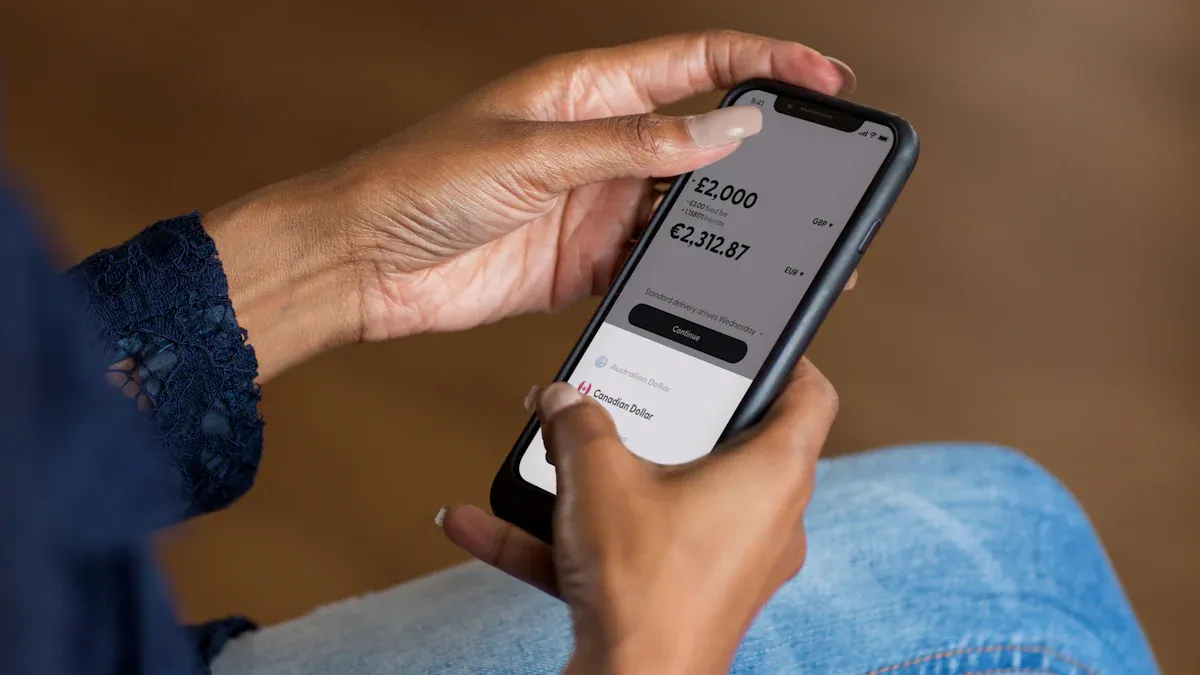
Image Source: unsplash
An international transfer no longer has to mean high fees. You can use a simple three-step process: buy USDT with your local currency, transfer it via the blockchain, and then sell the USDT for the destination currency. This method can significantly reduce your costs.
Did you know? Using stablecoins for international transfers can be much cheaper than traditional banks. The global average cost for a traditional remittance is about 6.2%, but with stablecoins, it’s often less than 1.5%. This means you could save up to 90% on fees.
The process leverages the stablecoin USDT to bypass the expensive intermediary banks that drive up the costs of traditional wire transfers. Instead of paying fees that can range from $15 to $45 or more for a single transaction, you use a digital currency designed for stability and low-cost transfers.
Key Takeaways
- Using USDT for international transfers can significantly reduce fees, much cheaper than traditional banks.
- Choosing the TRC-20 network for USDT transfers offers low fees and fast speeds, making it the best choice for internationalremittances.
- Before transferring, always carefully verify the recipient address and network, as blockchain transactions cannot be reversed once sent.
- In C2C transactions, only choose reputable merchants and confirm receipt of payment before releasing USDT.
- USDT transfers are fast and convenient, but understand and mitigate operational, counterparty, price volatility, and compliance risks.
Preparations Before Remittance

Image Source: unsplash
Before starting the transfer, thorough preparations are key to ensuring fund safety and efficient arrival. You only need to complete two core steps: choose a suitable cryptocurrency exchange and set up your receiving wallet.
Choose a Cryptocurrency Exchange
Your first step is to select a reliable cryptocurrency exchange. The ideal platform should support both your local fiat currency (e.g., buying via bank account) and C2C (Customer-to-Customer) trading in the recipient’s currency. Mainstream exchanges like Binance or OKX are common choices due to their large user base and good liquidity.
After registration, you must complete the identity verification (KYC) process. This is a mandatory requirement for all compliant exchanges to prevent financial crimes.
What is needed to complete identity verification (KYC)? Prepare the following materials to help you pass the review quickly:
- Identity Documents: Government-issued valid ID, such as passport, driver’s license, or ID card.
- Selfie Photo: Follow platform instructions to take a real-time selfie to verify it is you.
- Proof of Address: Some regions may require it, such as recent utility bills or bank statements.
Although this article uses the stablecoinUSDT as an example, the principle applies equally to other mainstream stablecoins like USDC. We choose USDT because it hasthe highest trading volume and liquidity, allowing you to easily buy and sell at any time.
If you prefer not to juggle multiple exchanges and P2P platforms, you can also use an integrated wallet to streamline the flow. For instance, the BiyaPay website offers a multi-asset account where you can hold both fiat and USDT, and move from buying, receiving and finally cashing out within one system instead of stitching together several separate tools.
Before sending any funds, you can try BiyaPay’s fiat rate comparison tool to estimate how much the recipient might actually receive, then compare that with traditional wires or pure C2C routes. In some cases, combining the USDT leg with BiyaPay’s cross-border remittance service can be a simpler way to have local currency arrive directly in the recipient’s bank account.
BiyaPay operates under licences such as a U.S. MSB registration and a New Zealand FSP registration, and runs its services across multiple jurisdictions. For users who care about both lower fees and a clearer compliance framework around their international transfers, this kind of set-up can be a practical option alongside the DIY exchange approach described in this guide.
Set Up Receiving Crypto Wallet
Next, you need a crypto wallet to receive USDT.Wallets are mainly divided into two categories: exchange wallets (custodial) and self-custodial wallets.The difference lies in who holds the “key” (i.e., private key) controlling your assets.
| Feature | Exchange Wallet (Custodial) | Self-Custodial Wallet |
|---|---|---|
| Private Key Control | Managed by the exchange | Fully controlled by the user |
| Ease of Use | Simple operation, suitable for beginners | Relatively complex, requires technical knowledge |
| Recovery Method | Can recover account via customer service | Losing seed phrase means permanent asset loss |
| Security | Depends on platform security measures | User responsible, bears the risk |
For beginners, we strongly recommend using the exchange’s built-in wallet. This method is the simplest; you don’t need to manage complex private keys or seed phrases. After completing registration and KYC on the exchange, the platform automatically generates a wallet for you, which you can use directly for receiving and sending, greatly simplifying the entire transfer process.
Stablecoin USDT Remittance: Full Four-Step Process
After completing preparations, you can officially start the remittance. The entire process can be broken down into four simple, clear steps. We will guide you step by step to ensure your funds arrive safely and quickly at the destination.
Step One: Buy USDT with Fiat
First, on your chosen exchange (like Binance or OKX), use your local fiat to buy the stablecoin USDT. The most common way is through the platform’s C2C (Customer-to-Customer) trading market, also known as P2P (Peer-to-Peer) trading. Here, you can buy USDT directly from other users like shopping online.
You will see many merchant ads listing their rates and accepted payment methods. In North America and Europe, buying USDT supports various convenient payment methods:
- Apple Pay / Google Pay: These mobile payment methods are very popular, supporting USD, EUR, and other currencies. Forsmall transactions under $150, sometimes no additional verification is needed.
- Bank Transfer: In the US, you can use ACH transfer to buy directly from your bank account.
- Credit/Debit Card: This is also a common way to buy USDT in the US and elsewhere.
You just need to choose a reputable merchant with high trading volume, place an order following platform instructions, and complete fiat payment. After the merchant confirms receipt of your payment,the exchange’s escrow system releases the corresponding amount of USDT to your exchange wallet.
Step Two: Choose TRC-20 Network
USDT is a stablecoin that can run on multiple blockchain networks. Think of different networks as different courier companies with varying speeds and fees. For international transfers, choosing the right network is crucial as it directly determines your transfer cost and speed.
The most mainstream networks currently include ERC-20 (Ethereum), TRC-20 (TRON), and BEP-20 (Binance Smart Chain). Here are their core differences:
| Feature | TRC-20 (TRON) | ERC-20 (Ethereum) |
|---|---|---|
| Address Format | Starts with T | Starts with 0x |
| Transaction Fees | Extremely low, usually under $1 | Higher, can be very expensive during network congestion |
| Transaction Speed | Very fast, usually seconds to minutes | Slower, may take minutes or longer |
| Network Congestion | Less congestion, stable fees | Frequent congestion, large fee fluctuations |
| Main Uses | Suitable for frequent, small quick transfers | Widely used for complex DeFi and NFT applications |
Core Recommendation: Prioritize TRC-20 Network For international remittance scenarios,TRC-20 network is the best choice. Its transaction fees are extremely low (averaging about $0.315), andtransfer confirmation time usually does not exceed one minute. This means your funds can arrive near-real-time while maximizing cost savings.
Step Three: Execute Transfer
Now, your USDT is ready, and you have confirmed using the TRC-20 network. Next is executing the transfer operation.
- Obtain Recipient Address: First, the recipient provides their TRC-20 network USDT receiving address. This address is a string starting with the letter “T”.
- Enter Withdrawal Page: In your exchange wallet, find the “Withdraw” function.
- Fill Transfer Information:
- Currency: Select USDT.
- Withdrawal Address: Accurately paste the recipient address you just obtained.
- Transfer Network: Must select TRC-20 (TRON). Choosing the wrong network results in permanent fund loss.
- Transfer Amount: Enter the USDT amount you wish to remit.
- Confirm and Execute: The platform displays estimatedhandling fees and actual arrival amount.
Safety First: Double-Check! Before clicking “confirm,” verify the recipient address and transfer network at least twice. Blockchain transfers are irreversible; once wrong, no one can recover your funds.
After initiating the transfer, you get a “transaction hash” (TxID). You can use this hash toquery transfer status on TRON network’s official explorer (like Tronscan), confirming if the transaction succeeded and when it arrives.
Step Four: Sell USDT for Exchange
When the recipient’s exchange wallet shows USDT arrival, enter the final step: convert the stablecoin USDT to the target country’s fiat, such as JPY, EUR, or GBP.
This process is the reverse of Step One “Buy USDT.” The recipient needs to create a “sell” USDT ad on their local exchange’s C2C/P2P market or directly select a buyer with a suitable offer.
The operation flow is as follows:
- The recipient selects “sell” in the C2C market, finding a buyer willing to purchase USDT with local fiat (like JPY).
- Choose a merchant with high trading volume and good ratings for “certified merchants” to ensure safety.
- The buyer pays fiat to the recipient via their local bank account (e.g., a Hong Kong licensed bank account).
Important Tip: Receive Payment First, Then Release Coins As the seller, you must log into your bank account and personally confirm the money has arrived with the correct amount.Before confirming receipt of fiat, absolutely do not click “I have received payment” or “release cryptocurrency” on the exchange platform.
Once you confirm receipt, release USDT to the buyer on the exchange. If any issues arise, like the buyer claiming payment but you haven’t received it, immediately contact customer service via the platform’s appeal system. The exchange’s escrow temporarily freezes the USDT until the dispute is resolved, protecting your assets.
At this point, a low-cost, high-efficiency international transfer is fully completed.
Cost Analysis and Risk Mitigation
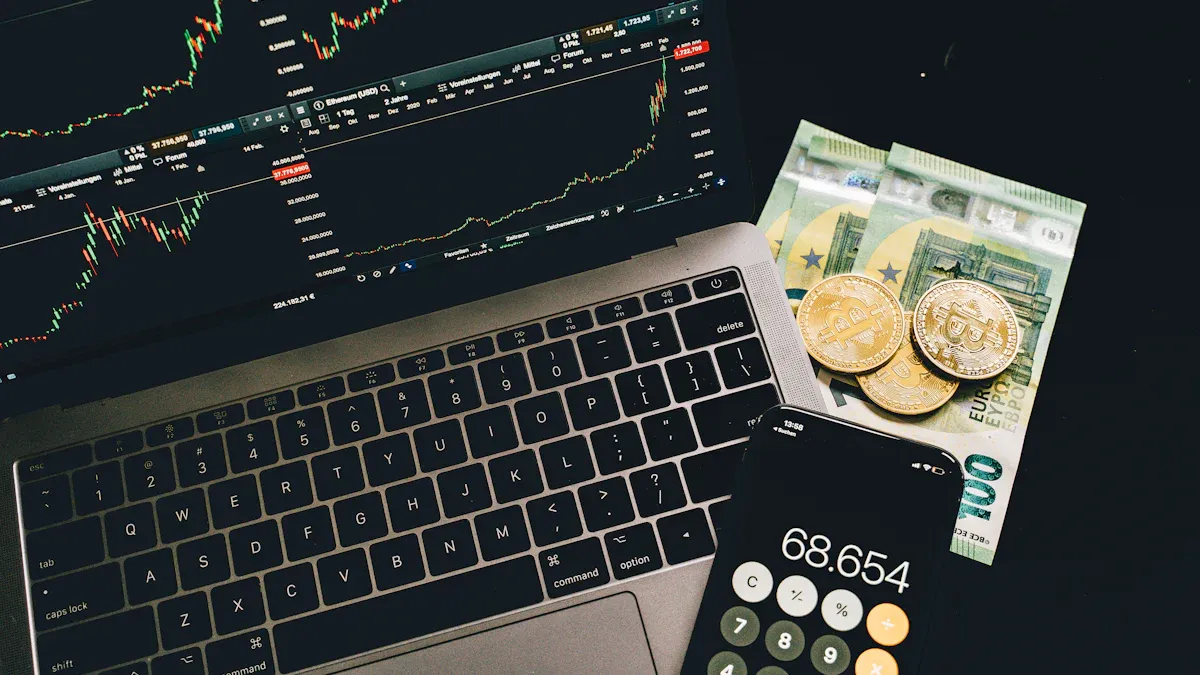
Image Source: pexels
Although using USDT for transfers is fast and convenient, you still need to understand its cost structure and potential risks. Clearly recognizing these factors helps you make informed decisions and safely complete every transaction.
Remittance Cost Structure
Unlike traditional bank wires with fixed percentages or high fixed fees, USDT remittance costs are very transparent and low. Your total fees mainly consist of three parts:
- C2C Trading Spread: When buying and selling USDT, there is a slight difference between merchant quotes and real-time market rates. This is the profit merchants earn for services. Choosing high-volume markets reduces this spread.
- Network Transfer Fee: Paid to blockchain network miners for processing your transaction. As mentioned, TRC-20 network fees are extremely low.
- Exchange Withdrawal Fee: When transferring USDT from one exchange to another address, the platform charges a fixed fee. This fee is usually low too.
| Cryptocurrency | Binance Withdrawal Fee | OKX Withdrawal Fee |
|---|---|---|
| USDT (TRC-20) | 1 USDT | 1.7 USDT |
Cost Advantage at a Glance Assume you remit $1,000. Traditional banks may charge $25-$45 in fees. With USDT, your total cost may only be C2C spread (about 0.1%-0.5%) plus under $2 withdrawal fee, far below traditional methods.
Four Core Risks and Countermeasures
Understanding and mitigating risks is prerequisite for safely using cryptocurrency. Here are four core risks you need to focus on:
- Operational Risk You may enter the wrong address or select the wrong network during transfer. Blockchain transactions are irreversible; once wrong, funds may be permanently lost. Many have lost assets bysending to the correct address but wrong network, though sometimes recoverable, the process is complex and stressful. Countermeasure: Always double-check recipient address and transfer network (e.g., confirm TRC-20) before transfer. Starting with small amounts for testing is a good habit.
- Counterparty Risk In C2C transactions, you may encounter merchants attempting fraud or money laundering. Countermeasure: Always choose platform’s reputable “certified merchants.” Check their total trades and ratings. As seller, never release your cryptocurrency before confirming full payment in your bank account.
- Price Volatility Risk Although stablecoin USDT aims to peg 1 USD, historically it has experienced brief price deviations due to extreme market sentiment orconfidence crises. Countermeasure: Do not hold large amounts of stablecoins long-term as savings. Execute transfer and sell operations quickly after buying, keeping the entire process short to minimize volatility risk.
- Compliance Risk Cryptocurrency regulations vary by country and region. Countermeasure: Before transactions, proactively understand and comply with relevant laws in your and the recipient’s locations.
In summary, the core advantage of USDT international transfers lies in its extremely low cost andnear-real-time efficiency. Blockchain networks operate 7x24 hours uninterrupted, allowing you to initiate transactions anytime, completely eliminating traditional banks’1 to 5 business days long waits.
Three Elements of Safe Operation Your fund safety comes first. Always remember:
- Double-Check: Carefully verify recipient address and network before transfer.
- Screen Merchants: In C2C transactions, choose high-volume,highly rated certified merchants.
- Mitigate Risks: Fully understand and take measures to avoid operational, transaction, and compliance risks.
After fully understanding the process, we encourage you to start with asmall transfer to personally experience its efficiency and convenience.
FAQ
How long does a USDT transfer take?
When using the TRC-20 network, transfers usually arrive within minutes. This is much faster than the 1 to 5 business days required for traditional bank wires. Blockchain operates around the clock, allowing transfers anytime without bank hour restrictions.
Is remitting with USDT legal?
Cryptocurrency regulations vary by country and region. You are responsible for understanding and complying with relevant laws in your and the recipient’s locations. In uncertain cases, we recommend consulting local professionals for accurate information.
Is there a minimum amount for remittance?
The blockchain itself has no minimum transfer limit. But consider exchange withdrawal fees (usually $1-$2) and C2C merchants’ minimum trade amounts. Thus, we suggest starting with a small but meaningful amount (like $50).
What if I send USDT to the wrong address?
Blockchain transfers are irreversible. If you send funds to the wrong address or choose the wrong network, funds will likely be permanently lost. Therefore, double-checking address and network before clicking “confirm” is crucial.
*This article is provided for general information purposes and does not constitute legal, tax or other professional advice from BiyaPay or its subsidiaries and its affiliates, and it is not intended as a substitute for obtaining advice from a financial advisor or any other professional.
We make no representations, warranties or warranties, express or implied, as to the accuracy, completeness or timeliness of the contents of this publication.
Related Blogs of

A-Share Crash Turning Point: Will 2026 Deliver a Legendary Bull Market?


Beginner’s Guide: What to Do When a Stock Hits Limit-Down? Can You Still Trade?
In-Depth Review: After ChiNext Dropped Over 1% and Rebounded, Who Will Be Tomorrow’s A-Share Leader?

How to Wire Transfer USD from Industrial and Commercial Bank of China to OCBC Singapore? This Guide is All You Need

Choose Country or Region to Read Local Blog
 Australia
 Austria
 Belgium
 Canada
 Cyprus
 Czech Republic
 Denmark
 Estonia
 Finland
 France
 Germany
 Greece
 Hong Kong
 India
India Indonesia
 Ireland
 Italy
Italy Japan
Japan Latvia
 Lithuania
 Luxembourg
 Malaysia
 Malta
Malta Morocco
 Nepal
Nepal Netherlands
 New Zealand
 Norway
 Pakistan
 Philippines
 Poland
 Portugal
 Romania
 Singapore
 Slovakia
 Slovenia
 South Africa
 South Korea
 Spain
Spain Sweden
 Thailand
 The United States
 Turkey
 United Arab Emirates
 United Kingdom
 Vietnam
Contact Us




BIYA GLOBAL LLC is a licensed entity registered with the U.S. Securities and Exchange Commission (SEC No.: 802-127417); a certified member of the Financial Industry Regulatory Authority (FINRA) (Central Registration Depository CRD No.: 325027); regulated by the Financial Industry Regulatory Authority (FINRA) and the U.S. Securities and Exchange Commission (SEC).
BIYA GLOBAL LLC is registered with the Financial Crimes Enforcement Network (FinCEN), an agency under the U.S. Department of the Treasury, as a Money Services Business (MSB), with registration number 31000218637349, and regulated by the Financial Crimes Enforcement Network (FinCEN).
BIYA GLOBAL LIMITED is a registered Financial Service Provider (FSP) in New Zealand, with registration number FSP1007221, and is also a registered member of the Financial Services Complaints Limited (FSCL), an independent dispute resolution scheme in New Zealand.