From 3% to Under 1%: How Stablecoins Are Reshaping the Global Remittance Cost Landscape




Image Source: pexels
The global remittance cost landscape is undergoing profound change. In 2023, global remittance totals reached a record $818 billion, but the cost of fund flows remains high.
The average cost of traditional bank remittances exceeds 6%, while the stablecoin path can reduce it to an astonishing under 1%.
This significant cost difference stems from fundamentally different operating mechanisms. Compared to traditional bank remittances, stablecoins’ advantage lies in bypassing the expensive and slow SWIFT network and intermediary correspondent banks, achieving near-real-time peer-to-peer value transfer. Although many countries’ remittance costs have strived to approach the UN’s proposed 3% target, stablecoin technology offers a brand-new possibility for achieving more efficient and inclusive global fund flows.
Key Takeaways
- Stablecoins can reduce global remittance fees from over 6% to under 1%.
- Traditional bank remittances are expensive and slow because they pass through many intermediary banks with additional fees.
- Stablecoin remittances occur directly via blockchain networks, eliminating intermediary links, resulting in fast speeds and low fees.
- Although stablecoin remittances have many advantages, they also face challenges like unclear regulations and inconvenient conversion.
- In the future, stablecoins are expected to make global fund flows cheaper and more efficient, helping more people enjoy inclusive finance.
Why Are Traditional Remittances “Expensive and Slow”?
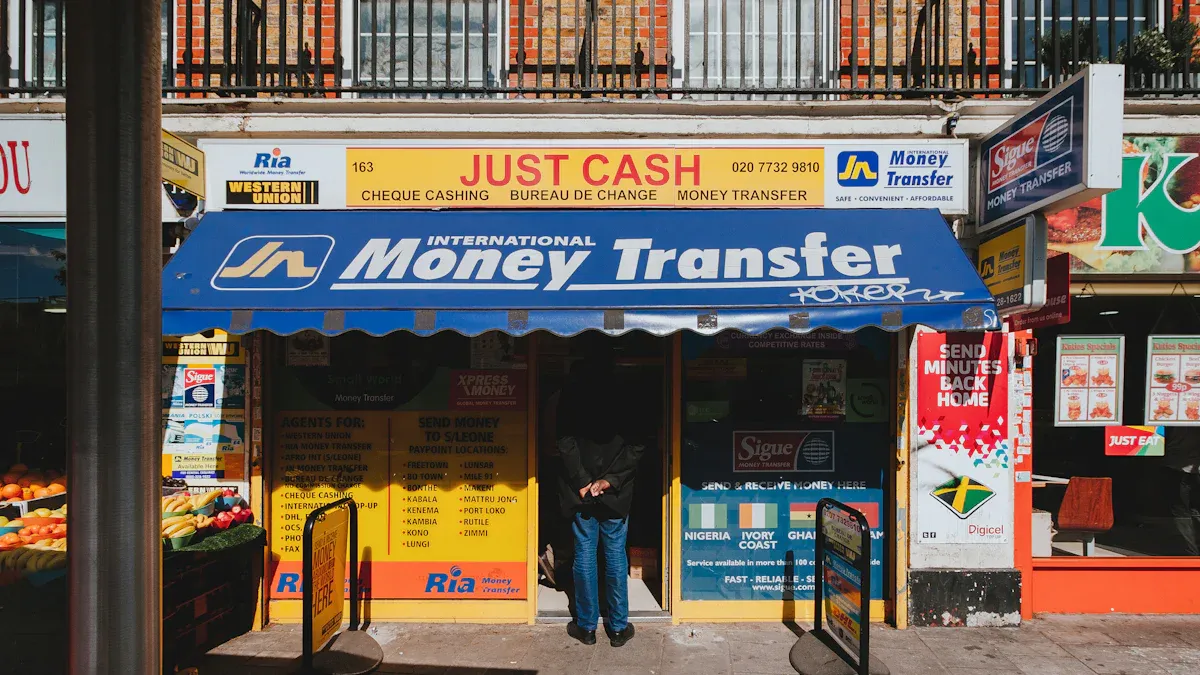
Image Source: unsplash
To understand the huge cost difference between stablecoins and traditional bank remittances, we first need to dissect the operating mode of the traditional system. The “expensive” and “slow” nature of traditional remittances is not accidental but the inevitable result of its underlying infrastructure and complex processes.
SWIFT System: The Root of High Costs
Many people mistakenly believe the SWIFT system directly transfers funds, but it is essentially a secure “financial messenger”. SWIFT (Society for Worldwide Interbank Financial Telecommunication) transmits payment instructions between banks, while actual fund settlement relies on a vast network of correspondent banks.
When the sending bank and receiving bank have no direct account relationship, funds must pass through one or even multiple intermediary banks in a relay. For example, remitting from a bank in Hong Kong to the U.S. may route through correspondent banks in London or Frankfurt. This process creates two core issues:
- Layered Fees: Each correspondent bank involved deducts a service fee from the principal, typically between $5 and $40 USD. The more links the remittance passes through, the less the final arrival amount.
- Compliance Costs: Strict anti-money laundering (AML) and know-your-customer (KYC) regulations significantly increase banks’ operational costs. These high compliance expenses are ultimately passed on to consumers through fees.
Hidden Costs: FX Markup and Time Loss
In addition to explicit fees, traditional remittances include hard-to-detect hidden costs.
First is FX Markup. The exchange rate provided by banks is usually not the real mid-market rate but a marked-up “quoted rate.” This spread is typically between 2% and 4%, a considerable expense for large remittances.
Second is Time Loss. An international wire transfer on average takes 1 to 5 business days to complete. During this period, the sender’s funds are locked in the banking system, unable to be used for investment or interest generation, constituting significant opportunity cost.
Overall, the final cost of a traditional remittance = Sending bank fee + Correspondent bank fees + FX markup + Time opportunity cost. These factors together lead to its expensive and inefficient status.
Stablecoins vs. Traditional Bank Remittances: Cost and Efficiency Comparison

Image Source: pexels
The emergence of stablecoins has brought disruptive change to the global remittance market. Compared to traditional bank remittances, it demonstrates huge advantages in cost and efficiency. This new model is not mere optimization but fundamentally reshapes the underlying logic of cross-border fund flows.
Mechanism Analysis: How Peer-to-Peer Disrupts Intermediaries
Traditional remittances rely on a centralized network of banks, while stablecoins use blockchain technology to achieve true peer-to-peer (P2P) value transfer. This process completely bypasses expensive intermediary correspondent banks.
The stablecoin remittance mechanism can be broken down into three core steps:
- Fiat On-ramp: The sender first exchanges local fiat currency (e.g., USD) for an equivalent stablecoin (e.g., USDC or USDT). This can be done through digital asset exchanges or specialized payment providers.
- Blockchain Transfer: The stablecoin is sent directly from the sender’s digital wallet to the recipient’s digital wallet via the blockchain network. Transactions are verified and recorded by globally distributed computer nodes without any bank involvement. This step is key to cost savings and efficiency gains.
- Fiat Off-ramp: After receiving the stablecoin, the recipient exchanges it for local fiat currency through a local exchange or service provider.
The essence of this P2P model is that the blockchain network itself handles transaction verification and settlement, replacing correspondent banks in the traditional model. Network participants verify transactions and receive a small network fee (Gas Fee) as reward, eliminating expensive third-party bank service fees.
Additionally, efficiency differences across blockchain networks significantly impact remittance speed.
| Blockchain Network | Average Confirmation Time |
|---|---|
| Solana | About 2-5 seconds |
| TRON | A few seconds |
| Polygon | 15-60 seconds |
| Ethereum | 1-5 minutes |
As shown in the table, most mainstream blockchain networks complete transaction confirmation in minutes or even seconds, forming a stark contrast with traditional wire transfers that take days.
Quantitative Analysis: Cost Reduction from 6% to Under 1%
To more intuitively understand the cost difference between stablecoins and traditional bank remittances, we analyze a specific case: Remitting $1,000 from the U.S. to Mexico.
Path One: Traditional Bank Remittance (Example: A Licensed Bank in Hong Kong)
According to World Bank data, the global average remittance cost is about 6.3%. For a $1,000 remittance through the banking system, the cost breakdown is typically as follows:
- Sending Bank Fee: Banks usually charge a fixed fee of about $25.
- Correspondent Bank Fees: Before reaching the Mexican bank, funds may pass through one or more intermediary banks, each charging $20 - $40 in processing fees.
- FX Markup: When converting USD to Mexican pesos, banks add about 2%-3% spread to the market rate, equivalent to $20 - $30 in hidden cost.
Total Cost Estimate: $25 + $20 + $20 = $65, or 6.5% of the total amount. This remittance not only takes 1-3 business days, but the recipient also receives a significantly reduced amount.
Path Two: Stablecoin Remittance (Example: USDC)
Now, let’s examine the cost of the same remittance using stablecoins. Assume the sender operates through a digital asset payment platform (e.g., Biyapay).
- ① Fiat On-ramp Fee: Convert $1,000 to USDC. Using bank transfer (ACH), many platforms have low fees. For example, Coinbase charges 0.5% spread for transactions over 200](https://bitbo.io/buy/coinbase-vs-kraken/). Calculated at **0.5%**, the cost is **. Calculated at 0.5%, the cost is $5.
- ② Blockchain Network Fee (Gas Fee): Transfer USDC from U.S. wallet to Mexican wallet. Using the TRON network (TRC20), “energy” and “bandwidth” costs typically equate to $2 - $4. Even on Ethereum, fees are usually in the few-dollar range, far below correspondent bank fees.
- ③ Fiat Off-ramp Fee: The recipient in Mexico converts USDC to Mexican pesos. This fee varies by platform. A competitive platform may charge around 0.5%. Calculated thus, the cost is about $4.95.
Total Cost Estimate: $5 (on-ramp) + $3 (network fee) + $4.95 (off-ramp) ≈ $12.95, only 1.3% of the total amount. The entire process can complete in minutes at fastest.
Cost Comparison Overview
| Fee Item | Traditional Bank Remittance | Stablecoin Remittance (USDC on TRON) |
|---|---|---|
| On-ramp/Sending Fee | $25 | $5 (0.5%) |
| Intermediary Fee | $20 (correspondent bank) | $3 (network fee) |
| Off-ramp/Rate Spread | $20 (2% markup) | $4.95 (0.5%) |
| Total | About $65 (6.5%) | About $12.95 (1.3%) |
| Arrival Time | 1-3 business days | Minutes |
Through this quantitative comparison, the enormous potential of stablecoins in reshaping the global remittance cost landscape is clear. It not only cuts nearly 80% of direct costs but also boosts fund turnover efficiency hundreds of times.
Real-World Applications and Challenges of Stablecoin Remittances
Although stablecoins demonstrate huge advantages in theory, their true value lies in real-world applications. From individuals to large institutions, more participants are benefiting from this technology, but the road ahead is not without obstacles.
Real Use Cases: Who Is Benefiting?
Early beneficiaries of stablecoin remittances are mainly groups highly sensitive to cost and efficiency.
At the level of concrete choices, many of these users want to keep access to familiar bank rails while gradually testing stablecoin routes to lower their all-in costs. A multi-asset wallet such as BiyaPay brings these options into a single interface, offering both fiat remittance channels and on-chain transfers so they can decide per transaction based on amount, urgency, and the recipient’s preferred way to get paid.
For recurring payments to family members or overseas partners, senders can fund transfers through the BiyaPay remittance service and then rely on the website’s FX rate and cost comparison tool to estimate net proceeds across currencies and routes. In practice this makes the trade-off between a stablecoin corridor and a traditional wire more transparent, instead of treating the choice as purely theoretical.
Because BiyaPay holds financial licenses in jurisdictions such as the United States and New Zealand, including MSB and FSP registrations, its cross-border flows operate within established regulatory frameworks. For migrant workers and freelancers who care about both fees and documentation, this setup helps connect the advantages of stablecoins with everyday money-management habits, rather than forcing a complete switch in how they move funds internationally.
- Migrant Workers and Freelancers: They are the largest beneficiary group. In high-inflation countries like Argentina and Nigeria, freelancers and small business owners prefer receiving USDC or USDT as payment to hedge local currency depreciation. Through platforms like Biyapay, they can receive global payments at extremely low cost.
- Multinational Corporations and Financial Giants: Many large enterprises are exploring stablecoin applications. For example, Visa is piloting USDC for cross-border settlement, while JPMorgan has launched JPM Coin for institutional clients. This marks stablecoins moving from personal use to mainstream corporate finance.
- Humanitarian Aid: In regions with collapsed banking systems or under sanctions, stablecoins become lifelines. Aid organizations bypass disrupted bank channels to deliver funds quickly to those in need.
| Location | Organization/Platform | Stablecoin Solution | Results |
|---|---|---|---|
| Myanmar | Coala Pay | Bypass bank blockades, automate payments to local NGOs | Settlement time reduced 99%, costs cut over 80% |
| Sudan | NRC & Coala Pay | Overcome banking system collapse, disburse funds to partners | Transaction costs reduced 24%, frontline liquidity increased 34% |
| Afghanistan | HesabPay | Issue stablecoin pegged to local currency for direct payments | Instant settlement, bypass bank blockages, on-chain transparency |
Future Obstacles: Compliance, Liquidity, and Off-ramp Costs
Despite broad application prospects, stablecoin adoption faces three core challenges.
First is regulatory uncertainty. Global regulatory frameworks are unclear; while the U.S. and EU have advanced related bills (e.g., MiCA), differences remain in anti-money laundering (AML), issuer qualifications, reserve requirements, etc., complicating cross-border service compliance.
Second is liquidity and off-ramp costs. In many developing countries, the “last mile” problem of converting stablecoins to local fiat is prominent. Insufficient liquidity in local fiat trading pairs leads to high off-ramp costs. For enterprise-level large payments, converting tens of thousands of USD in stablecoins at once may cause slippage due to liquidity shortages, offsetting some cost advantages.
Core Challenges Overview Compared to traditional bank remittances, stablecoins solve the intermediary issue but introduce new friction points:
- User Experience: Requires setting up digital wallets and trading accounts, with a high operational barrier.
- Fraud Risk: Instant and irrevocable transactions increase difficulty in fraud recovery.
- Technical Fragmentation: Incompatibility between different blockchain networks and wallets adds complexity.
Overcoming these obstacles is key to whether stablecoins become the global mainstream remittance method.
Stablecoins simplify financial processes through technology, significantly enhancing fund flow efficiency and bringing revolutionary impact to reducing global remittance costs.
Looking ahead, as innovations like on-chain FX mature and global regulatory frameworks improve, stablecoins are expected to further compress costs, becoming critical infrastructure for inclusive finance.
Authoritative institutions predict its market size will reach trillions of USD. This indicates stablecoins are laying a solid foundation for a more efficient, lower-cost global fund flow network.
FAQ
Are stablecoins safe?
The safety of stablecoins depends on their issuer. Reputable issuers hold sufficient reserve assets and undergo regular audits. Users should choose mainstream and transparent stablecoins like USDC or USDT to reduce risks.
What is the difference between stablecoins and Bitcoin?
The core difference lies in price stability. Stablecoins are pegged 1:1 to fiat currencies like the USD to maintain stable value. Cryptocurrencies like Bitcoin experience drastic price fluctuations, unsuitable as tools for daily payments and value storage.
How can ordinary people start using stablecoin remittances?
Individuals need to complete three steps through compliant digital asset platforms:
- Open an account and complete identity verification (KYC).
- Exchange local fiat for stablecoins (on-ramp).
- Send stablecoins via blockchain network to the recipient’s digital wallet address.
Is using stablecoin remittances legal?
Regulations vary by country and region. In major economies like the U.S. and EU, regulatory frameworks are gradually forming to standardize stablecoin issuance and use. Users should understand and comply with local laws and regulations before transacting.
*This article is provided for general information purposes and does not constitute legal, tax or other professional advice from BiyaPay or its subsidiaries and its affiliates, and it is not intended as a substitute for obtaining advice from a financial advisor or any other professional.
We make no representations, warranties or warranties, express or implied, as to the accuracy, completeness or timeliness of the contents of this publication.
Related Blogs of

Volume-Price Rising Together or Diverging? Complete A-Share Practical Trading Strategy Guide


In-Depth Review: After ChiNext Dropped Over 1% and Rebounded, Who Will Be Tomorrow’s A-Share Leader?


How to Wire Transfer USD from Industrial and Commercial Bank of China to OCBC Singapore? This Guide is All You Need


Like a Snowball: Let Shanghai Stock Market Index Make Your Money Work for You

Choose Country or Region to Read Local Blog
 Australia
 Austria
 Belgium
 Canada
 Cyprus
 Czech Republic
 Denmark
 Estonia
 Finland
 France
 Germany
 Greece
 Hong Kong
 India
India Indonesia
 Ireland
 Italy
Italy Japan
Japan Latvia
 Lithuania
 Luxembourg
 Malaysia
 Malta
Malta Morocco
 Nepal
Nepal Netherlands
 New Zealand
 Norway
 Pakistan
 Philippines
 Poland
 Portugal
 Romania
 Singapore
 Slovakia
 Slovenia
 South Africa
 South Korea
 Spain
Spain Sweden
 Thailand
 The United States
 Turkey
 United Arab Emirates
 United Kingdom
 Vietnam
Contact Us




BIYA GLOBAL LLC is a licensed entity registered with the U.S. Securities and Exchange Commission (SEC No.: 802-127417); a certified member of the Financial Industry Regulatory Authority (FINRA) (Central Registration Depository CRD No.: 325027); regulated by the Financial Industry Regulatory Authority (FINRA) and the U.S. Securities and Exchange Commission (SEC).
BIYA GLOBAL LLC is registered with the Financial Crimes Enforcement Network (FinCEN), an agency under the U.S. Department of the Treasury, as a Money Services Business (MSB), with registration number 31000218637349, and regulated by the Financial Crimes Enforcement Network (FinCEN).
BIYA GLOBAL LIMITED is a registered Financial Service Provider (FSP) in New Zealand, with registration number FSP1007221, and is also a registered member of the Financial Services Complaints Limited (FSCL), an independent dispute resolution scheme in New Zealand.