
Intesa Sanpaolo Wire Transfer Fees to the US: Charges, Exchange Rates, and Total Cost





When sending money from Intesa Sanpaolo to the US, a single fee on the confirmation screen does not tell you the full cost. Your total expense may also depend on the exchange rate, the allocation of charges, and fees imposed by intermediary banks and the US recipient bank. The same transfer amount can produce different results depending on your account terms, payment channel, and receiving currency. Check which conditions apply to you, then compare the total amount debited with the recipient's net proceeds. This is especially useful when a dollar-denominated bill must be paid in full.
Fee information checked as of November 2, 2026. The discussion focuses on transfers from accounts with Intesa Sanpaolo S.p.A. in Italy to US bank accounts. Actual charges depend on the applicable contract, current terms, and transaction details.
Key Takeaways
- Published fees must be checked against your account terms; they are not a personalized quote.
- Sending dollars or euros changes where currency conversion takes place.
- Calculate transfer fees, exchange-rate differences, and third-party charges separately.
- OUR, SHA, and BEN allocate responsibility for fees; they do not establish a single total price.
- Compare both the sender's total payment and the recipient's net proceeds.
What Does Intesa Sanpaolo Charge for Transfers to the US?

Intesa Sanpaolo's published fees help identify the charges to check, but they do not replace a quote for your account. Before sending money to the US, establish which account agreement and payment channel apply, then review the relevant foreign-currency or non-SEPA transfer terms. Do not calculate your costs using another account's promotion or the fee schedule of a different bank within the group.
The bank's Intesa Sanpaolo transfer fee terms, updated on July 16, 2026, list the following charges for outgoing foreign-currency transfers:
| Charge | Published amount | What to check |
|---|---|---|
| Transfer execution fee | €12 | Applicable service, payment channel, and individual contract terms |
| Online transfer execution fee | €8 | Whether it applies to the online channel you are using |
| Commissione di intervento | 0.22%, minimum €4 | Calculation basis, minimum charge, and any contractual discounts |
Check the execution fee for your actual payment channel. Do not add the €12 fee and the €8 online fee together. Separately establish whether the percentage-based commission applies and which amount the bank uses to calculate it. Minimum charges matter particularly for smaller transfers: even if the percentage calculation produces a low figure, the minimum may still apply.
Account terms can differ. The XME Conto account terms, updated on October 1, 2026, apply to a specified group of returning customers and list a zero intervention commission for foreign-currency transfers. This does not mean every XME account or every outgoing charge is free. It shows why the eligibility conditions on the first page must be read alongside the fee table.
Even if your account has the same name, a different opening date, contract version, or promotional arrangement may produce a different result. Record the execution fee and percentage-based commission separately, then add exchange-rate effects and third-party charges. An incomplete calculation should not be treated as the total cost.
Sending Dollars or Euros: Where Does the Conversion Cost Arise?
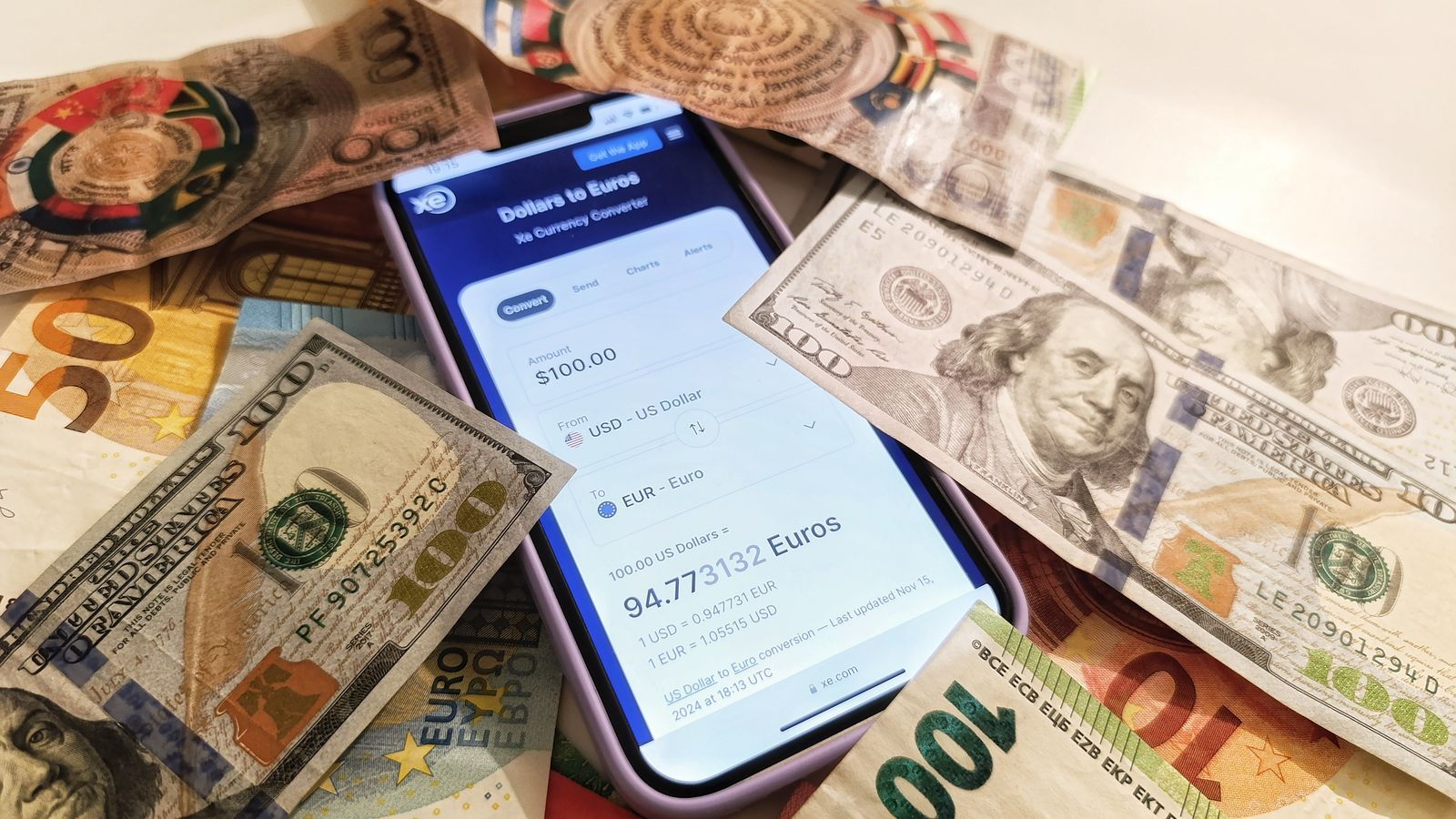
Choosing the transfer currency also determines who converts the money and at which stage. Sending dollars from a euro account generally requires conversion at the sending end. Sending euros to the US requires checking whether the receiving account accepts them and whether they will subsequently be converted into dollars. A lower execution fee does not necessarily deliver more dollars; compare the conversion outcome as well.
Sending Dollars from a Euro Account
Focus on the EUR/USD rate actually applied to your transaction, rather than only the market reference rate shown by a search tool. Intesa Sanpaolo's general terms use the bank's applicable bid or ask quotation and set separate conditions for certain conversion services. You should therefore not assume that every transaction uses the mid-market rate or a single, unchanging exchange-rate markup.
For example, converting €1,000 at $1.08 per euro rather than $1.07 produces a $10 difference. This is a calculation example, not a bank quote. When comparing rates, use reference values from the same time where possible. Also confirm whether the rate is locked, when it takes effect, and whether separately listed commissions are already included in the total debit.
If fee names are similar, ask the bank to clarify their meaning and calculation basis. Do not automatically charge the same commission twice in your calculation simply because it appears in both transfer and conversion terms.
Sending Dollars from a Dollar Account
If you have an available dollar balance and send dollars directly, the principal may not require conversion for this transfer. However, execution fees, applicable commissions, and third-party charges still need checking. If the bank debits fees from a separate euro account, include that expense in your budget rather than looking only at the reduction in your dollar balance.
A transfer with no conversion is also different from a funding arrangement with no conversion cost. If you previously bought the dollars with euros, include the earlier fees and actual exchange rate when assessing the full cost. Holding dollars in advance also exposes you to exchange-rate changes during that period. Avoiding an immediate conversion does not automatically make the arrangement cheaper.
Sending Euros to a US Account
First confirm whether the US account accepts euros and whether the funds will remain in euros, be converted into dollars, or be returned because they do not meet the account's receiving conditions. A bank's ability to receive international wires does not mean every account can hold multiple currencies. If conversion is required, establish whether the recipient bank or another processing bank supplies the rate.
Sending euros to a US bank account does not become an ordinary SEPA transfer simply because the currency is the euro. Obtain the applicable fees and conversion terms before choosing this arrangement, rather than comparing only whether the sending bank charges for conversion. Take particular care with bills that must be paid in full if the net proceeds cannot be confirmed in advance.
How Do OUR, SHA, and BEN Affect the Net Amount Received?

OUR, SHA, and BEN primarily determine who pays the charges, rather than the full price of the transfer. An international wire may pass through intermediary banks, and the US recipient bank may charge an incoming fee under its account terms. The allocation changes who pays and whether fees reduce the principal received. Available options and coverage depend on the transaction and contract.
| Fee option | Usual allocation of responsibility | What to check about the amount received |
|---|---|---|
| OUR | The sender pays the relevant charges | Which fees are covered and whether a specific full-amount delivery arrangement applies |
| SHA | The sender pays sending-side charges, while the recipient pays their applicable charges | Whether intermediary or receiving charges reduce the principal or are posted separately |
| BEN | The recipient pays the relevant charges | Availability, deduction method, and whether the net proceeds meet the payment requirement |
Intesa Sanpaolo's general fee terms list a €22 expense-recovery charge for USD transfers with OUR charges. This does not replace the transfer execution fee, nor does it mean that €22 covers the entire transfer. Confirm whether it applies to your account and which external charges it covers for the actual payment route.
If the recipient must receive a specified amount, ask whether the bank makes an explicit commitment about the amount delivered and which deductions that commitment covers. Selecting OUR alone should not be treated as a guarantee that the amount will arrive to the last cent. Equally, OUR should not be dismissed as irrelevant to net proceeds. The contract and service coverage determine the result.
US recipient bank fees cannot be summarized with one universal figure either. Different banks, personal or business accounts, and service arrangements may involve charges, waivers, or fees posted separately. Even if the full principal is credited, a subsequent account fee still reduces the recipient's net funds.
Keep both the transfer receipt and the receiving account statement when reconciling the payment. Records from both sides make it easier to distinguish sending-side conversion differences, deductions along the route, and separately posted recipient bank charges. Avoid attributing every discrepancy to Intesa Sanpaolo's exchange rate.
How Can You Calculate the Total Payment and Net US Proceeds?
Put the sender's total payment and the recipient's net proceeds in the same calculation before deciding which quote is more suitable. The total payment includes the transfer principal and fees paid separately. Net proceeds must account for applicable costs actually borne by the recipient. An exchange-rate spread is generally already reflected in the conversion result; do not calculate the converted amount and then deduct the same rate difference again as an extra charge.
How Much Will Be Debited for a Fixed Transfer Principal?
All amounts and rates below are hypothetical illustrations, not actual Intesa Sanpaolo quotes. Suppose you instruct the bank to convert and send a principal of €1,000 at $1.07 per euro. Sending-side fees total €10 and are charged separately. Relevant receiving-side charges total $20 and are deducted from the transfer:
- Converted amount sent: 1,000 × 1.07 = $1,070.
- Total paid from the sending account: 1,000 + 10 = €1,010.
- Recipient's net proceeds: 1,070 − 20 = $1,050.
Although the transaction's conversion rate is 1.07, the effective rate after these fees is approximately $1.0396 per euro, calculated as 1,050 ÷ 1,010. This measure combines the effects at both ends and can help compare quotes with matching conditions.
Also check what the payment form means by “amount.” If your entire budget is €1,000 and fees must be paid from it, the conversion principal cannot still be €1,000. Applicable fees must first be accounted for according to the transaction rules. Where percentage-based charges apply, the calculation may require more than subtracting a fixed fee.
How Much Do You Need for a Fixed Recipient Amount?
If the recipient needs to receive a net $1,070, work backward from that target. Consider a separate hypothetical scenario: a confirmed $20 will be deducted from the principal, the actual rate is $1.09 per euro, and sending-side fees total €12, charged separately. You would need to send $1,090, requiring a conversion principal of €1,000 and a total payment of €1,012.
This result holds only if the relevant deductions and amounts have been confirmed. If charges along the route remain uncertain, do not present a reverse calculation as a guaranteed recipient amount. Ask whether the bank offers a suitable full-amount delivery arrangement. If the recipient bank posts a separate charge, clarify whether “in full” refers to the credited principal or the available funds after related fees.
When comparing two arrangements, keep the budget, receiving currency, quote time, and treatment of charges consistent. An estimated recipient amount and an explicit commitment to deliver a stated amount also involve different service conditions. Market movements between conversion times should not be interpreted entirely as differences in providers' fees.
What Should You Check Before Confirming the Transfer?
The most useful pre-transfer check is to ensure that the fees, receiving instructions, and payment objective all refer to the same transaction. Intesa Sanpaolo's pre-confirmation transfer fee summary allows you to check charges before approval; its guidance explains that fees vary by account terms, destination, and currency. However, seeing the sending bank's summary does not mean all receiving-side expenses have been established.
Before submitting, check:
- Whether the correct account terms and payment channel apply, and whether fees are separate or deducted from the principal.
- The debit currency, transfer currency, actual exchange rate, and when that rate takes effect.
- The scope of OUR, SHA, or BEN charges and whether it meets the recipient's amount requirement.
- Whether the recipient name, account number, and bank instructions match the account receiving the wire.
- Whether the estimated arrival time, amount limits, and exception-handling terms fit your payment deadline.
Verify a US bank's routing number for the intended payment type. Do not automatically use ACH details for a wire. Where SWIFT information, an intermediary bank, or further-credit instructions are required, use the recipient bank's instructions for that account. Do not invent an IBAN or copy another account's template simply to make the form accept the payment.
For the amount, check the remaining allowance for the bank channel and the recipient's account conditions. Biya's explanation of international money transfer limits can help distinguish per-transfer, daily, and monthly caps, but the actual figures must be checked with the account being used. A sufficient balance does not mean the channel will let you send all of it in one transaction that day.
Bank acceptance, correspondent settlement, and availability in the US account are different stages. Cutoff times, business days, and information checks can affect processing. Do not interpret a settlement value-date provision as a promise that the recipient will have usable funds within the same number of days. If the payment deadline is tight, checking in advance is generally preferable to making changes after sending.
If you discover incorrect details, contact the sending bank promptly to ask whether the payment can be amended, investigated, or requested back, and what charges apply. A return can involve costs already incurred and another conversion, so do not assume the full original amount will come back. Keep the transaction summary, receipt, reference number, and receiving account records for reconciliation.
If you are also considering Biya or other funding arrangements, use the same calculation method. First confirm support for the actual sending country or region, fiat currency pair, US account receiving method, and payment purpose, then compare net proceeds. When consulting the Biya Fee Center, consider the transaction's exchange rate, transfer-out fees, and possible external bank charges rather than deciding on one fee alone. Biya's fiat-to-fiat conversion and cross-border remittance options should each be checked against the functions available to you. An example quote for another route does not establish availability for Italy-to-US transfers. Service availability depends on your location, identity verification, platform rules, and applicable laws and regulations.
Frequently Asked Questions
Are Intesa Sanpaolo Transfers to a US Account in My Own Name Free?
An account in your own name does not automatically make an international interbank transfer free. Charges still depend on your account agreement, payment channel, currency, and allocation of fees. Even where sending-side discounts apply, check any applicable intermediary and US recipient bank charges separately.
Can Intesa Sanpaolo Charge SEPA Rates for Sending Euros to the US?
Choosing euros does not by itself make the payment an ordinary SEPA transfer. For a transfer to a US bank account, check the relevant non-SEPA arrangement, the account's ability to receive the currency, and any conversion. A euro-transfer promotion may not cover this route.
Will an Intesa Sanpaolo Dollar Account Still Incur Currency Conversion Fees?
Sending an existing dollar balance directly in dollars generally does not require conversion of the principal for that transfer. It does not make the transfer free: execution fees, applicable commissions, and third-party charges still need checking. Include separately debited euro fees and any earlier conversion costs when assessing the full budget.
Why Might an Intesa Sanpaolo Rate Inquiry Differ from the Actual Transfer Rate?
A rate displayed during an inquiry is not necessarily the transaction's execution rate. The two may reflect different times, purposes, and execution conditions. Confirm the specific rate, effective time, and applicable charges. Do not treat an earlier inquiry and a later execution as quotations from the same moment.
Will I Receive the Full Original Amount if a US Bank Returns My Intesa Sanpaolo Transfer?
A full refund of the original amount is not guaranteed. Bank processing charges already incurred, applicable return fees, and exchange-rate changes during reconversion may affect the amount returned. Ask the sending bank for the reason and fee breakdown, then reconcile them with the original debit.
What Should I Check if an Intesa Sanpaolo Transfer Was Correct but the US Account Received Less?
First check the transfer amount and currency on the receipt, then compare the fee allocation with the receiving account records. A difference may come from intermediary deductions, incoming fees, currency conversion, or separately posted charges. Ask the relevant banks to confirm the cause rather than inferring it from the balance difference alone.
*Ang artikulong ito ay ibinigay para sa pangkalahatang layunin ng impormasyon at hindi bumubuo ng legal, buwis, o iba pang propesyonal na payo mula sa BiyaPay o sa mga subsidiary at kaakibat nito, at hindi ito nilalayong maging kapalit ng pagkuha ng payo mula sa isang financial advisor o sinumang iba pang propesyonal.
Hindi kami gumagawa ng anumang pahayag o garantiya, hayag man o ipinahiwatig, hinggil sa katumpakan, kabuuan, o pagiging napapanahon ng nilalaman ng publikasyong ito.
Mga kaugnay na blog tungkol sa

International Money Transfer Limits: Per-Transfer, Daily, and Monthly Caps Explained

Crypto Off-Ramp Services vs. Exchanges: Fees, Payouts, and Trade-Offs


Chase Wire Transfer Routing Number: Domestic Wires and International SWIFT Codes


Using a Virtual Visa Card: Online Payments, Subscriptions, and Declined Transactions
Pumili ng Bansa o Rehiyon para Basahin ang Lokal na Blog
 Australia
 Austria
 Belhika
 Canada
 Siprus
 Republika ng Tsek
 Dinamarka
 Estonia
 Pinlandiya
 Pransiya
 Alemanya
 Gresya
 Hong Kong
 India
 Indonesia
 Ireland
 Italya
 Hapon
 Latvia
 Lithuania
 Luxembourg
 Malaysia
 Malta
 Morocco
 Nepal
 Olanda
 New Zealand
 Noruwega
 Pakistan
 Pilipinas
 Poland
 Portugal
 Romania
 Singapore
 Slovakia
 Eslobenya
 Timog Aprika
 Timog Korea
 Espanya
 Suwesya
 Taylandiya
 Estados Unidos
 Turkiya
 Nagkakaisang Arabong Emirato
 Nagkakaisang Kaharian
 Biyetnam