
Easy Collection: Stablecoin (USDT) Remittance Makes Freelancing Freer




Image Source: pexels
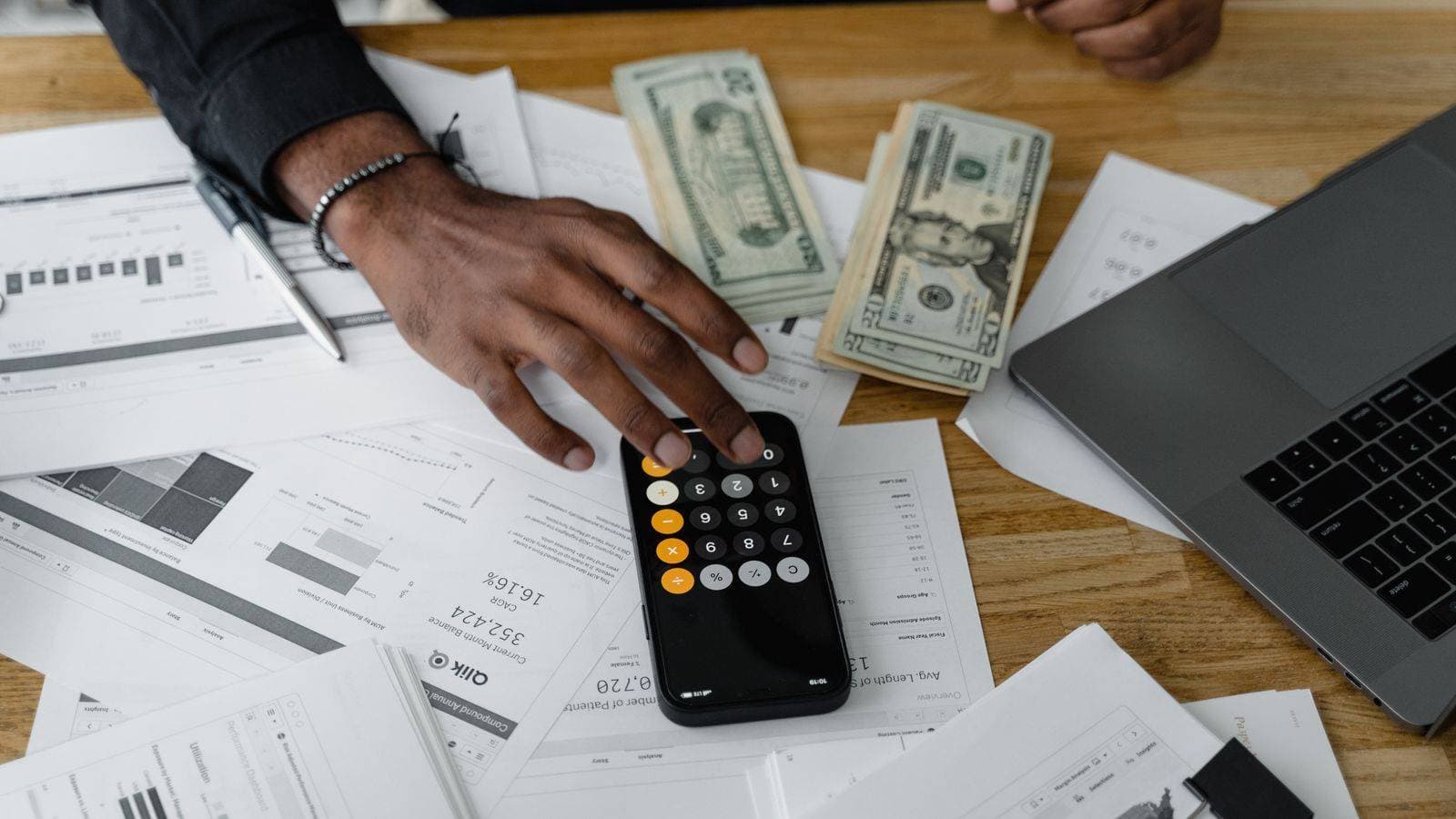
Are you tired of your hard-earned income being eroded by high handling fees? Using traditional methods for collection, total fees can reach 7-8% of the transaction amount. You also have to endure 1 to 5 business days of long waiting.
Now, you can choose a completely new method. Through stablecoin (USDT) remittance, your collection costs can drop to below 1.5%, with funds arriving in minutes.
Key Takeaways
- Using USDT remittance can significantly reduce fees, much cheaper than traditional bank transfers.
- USDT remittance is very fast, arriving in minutes without waiting several days.
- USDT’s value is as stable as the USD, no need to worry about exchange rate changes causing losses.
- Collecting USDT is simple, just three steps: get the address, inform the client, then convert to cash.
- Protect your digital wallet and seed phrase, choose secure platforms to prevent loss of funds.
USDT Remittance vs Traditional Methods: Cost Advantage Analysis
Image Source: unsplash
When you receive an international remittance, have you ever been confused why the arrived amount is always less than expected? This is not a calculation error but because traditional remittance methods hide multiple fees. Now, let’s deeply analyze these costs and see how stablecoin (USDT) remittance saves you real money.
“Hidden” Fees in Traditional Collection
Traditional bank wire transfers are like a relay race across multiple transit stations, with each station charging a “toll”. These fees are usually not clearly listed on your bill but are deducted directly from your remittance.
- Bank Wire Fees: This is the first fee charged when your client’s bank sends the payment, typically around 38 USD.
- Intermediary Bank Fees (Lifting Charges): If the client’s bank has no direct relationship with your receiving bank, funds need to pass through one or more intermediary banks. Each intermediary bank deducts a fee, usually 10 to 30 USD. If your remittance passes two intermediaries, this fee can double.
- CurrencyExchangeFees (Currency Conversion Fees): When funds convert from USD to your local currency, the bank charges an exchange fee. Even platforms like PayPal charge up to 3% to 4% markup for cross-border payments.
- Exchange Rate Markups: This is the most hidden cost. The exchange rate provided by banks is not the real-time market rate but includes a 1% to 6% profit margin. This means for every 1000 USD exchanged, you may invisibly lose 10 to 60 USD.
Example: Your US client pays you 1,000 USD for work.
- Their bank charges $35 for the wire.
- Funds pass one intermediary, deducting another $20 processing fee.
- When finally arriving at your bank, only $945 remains. Converting to local currency loses more due to poor rates. Ultimately, over 5% of your hard-earned money “evaporates” en route.
How USDT Avoids High Fees
Unlike traditional financial systems, USDT is built on blockchain technology. You can think of it as a global, decentralized digital ledger. When collecting via USDT, funds are sent directly from the client’s digital wallet to yours, like sending an email.
This peer-to-peer transaction method completely bypasses all intermediary links:
- No Intermediaries: Transactions no longer require transit banks, eliminating high intermediary fees.
- Extremely Low Network Fees: The only fee you pay is the blockchain’s “miner fee” (Gas Fee) to validate and record the transaction. This is very cheap, usually under 1 USD.
| Network | USDT Token Standard | Average Transfer Fee |
|---|---|---|
| TRON | TRC-20 | Approx. $0.3 - $2 |
| BNB Smart Chain | BEP-20 | Approx. $0.05 - $1 |
Calculation: For the same 1,000 USD receipt, using stablecoin (USDT) remittance, e.g., via Biyapay receiving TRC-20 USDT, your cost may be as low as about 1 USD. Compared to traditional wires often over 50 USD in total fees, you can easily save over 98% in costs.
Eliminate Exchange Rate Spread: USDT’s Value Preservation
One major uncertainty in traditional remittance is exchange rate fluctuation. From client sending to your receipt, it may take days, directly affecting your actual income due to rate changes. Moreover, banks and payment platforms profit from rate spreads, further eating into your earnings.
USDT, as a stablecoin, perfectly solves this. Its value is pegged 1:1 to USD, meaning 1 USDT ≈ 1 USD. This stability is guaranteed by holding equivalent cash and cash equivalents as reserves.
When you receive USDT, you get stable digital dollars. No worry about losses from rate fluctuations or high currency conversion fees from banks. You can choose the most favorable time to exchange USDT for needed local currency, keeping full control over your funds.
In summary, through stablecoin (USDT) remittance, you bypass layered intermediary charges and eliminate uncertainties from rate fluctuations and high spreads, ensuring every penny of your hard work maximizes into your pocket.
Master Stablecoin (USDT) Remittance: Three-Step Collection Guide
Say goodbye to complex bank processes. Now, with just a smartphone, you can easily complete the entire collection process. Traditional wires take up to 5 business days, while USDT collection arrives in minutes and usually cashes out within 1 hour. Let’s see how to operate specifically.
Step 1: Obtain Your USDT Receiving Address
Your USDT receiving address is like your digital bank account number, the sole credential for receiving funds. Getting it is very simple.
First, you need a digital wallet. You can choose a platform like Biyapay that provides wallet services to create an account.
- Complete registration on Biyapay or similar platform; the system automatically generates a digital wallet for you.
- Log into your wallet account and find the “Receive” or “Deposit” function.
- Select the digital currency you want to receive, which is USDT.
- Choose the correct network. This is the most critical step. The TRC-20 network is favored by freelancers for its speed and low fees.
- Copy your USDT receiving address. It is a long string of letters and numbers.
Important Tip: Be sure to confirm with your client that they will transfer via your specified network (e.g., TRC-20). If networks mismatch (e.g., you provide TRC-20 address, but they send via ERC-20), funds will be permanently lost.
Step 2: Send Collection Request to Client
After obtaining the address, you can provide it to the client. To make the process more professional and clear, it is recommended to include complete payment information in the invoice.
You can add the following to your invoice:
- Clear Payment Instructions: Inform the client you accept USDT payment.
- Your USDT Receiving Address: Paste the address copied in the previous step into the payment section of the invoice.
- Specified Blockchain Network: Clearly state “Please transfer using TRC-20 network”.
- Payment Amount: Specify the total USDT due (e.g., 1,000 USDT).
Pro Tip: Use QR Code to Simplify Payment To prevent client errors when manually entering the address, you can generate a dedicated QR code for your USDT address. The client just scans the QR code with their wallet App, and the payment address and amount auto-fill, seamlessly connecting the process and greatly reducing operation errors. You can use free tools like
usdtqrcode.app, enter your address to generate with one click.
Step 3: Quickly Convert USDT to Cash
When the client completes the transfer, you will see the USDT in your wallet within minutes. Now, the final step is to turn these digital dollars into cash in your bank account. This is done through the “Peer-to-Peer” (P2P) trading market.
Many platforms have built-in P2P trading. Taking Biyapay as an example, the process is as follows:
- Enter the P2P trading area in the Biyapay app.
- Select “Sell USDT”; you will see many buyer ads.
- Filter your preferred receipt method, such as bank transfer, and choose a buyer with suitable rate and limits.
- Enter the USDT amount to sell and place the order. The platform temporarily locks your USDT.
- Wait for the buyer to pay to your bank account (e.g., your Hong Kong bank account).
- After confirming full receipt, click “Confirm Receipt and Release” on the platform; the platform transfers USDT to the buyer. Transaction complete.
The entire process is highly efficient, giving you full control over funds.
| Comparison Item | Traditional Wire | Stablecoin (USDT) Remittance |
|---|---|---|
| Arrival Speed | 1 - 5 business days | 2 - 10 minutes |
| Cash-Out Speed | Already arrived, no cash-out needed | Usually complete within 1 hour |
| Fund Control | Low, depends on bank processing | High, funds directly in personal wallet |
Through these simple three steps, you can use stablecoin (USDT) remittance to break free from traditional finance constraints and enjoy low-cost, high-efficiency collection.
Safe Collection: Risks and Prevention in USDT Transactions
Image Source: unsplash
While enjoying the efficiency and convenience of stablecoin (USDT) remittance, you must prioritize fund safety. In the digital asset world, you are the sole guardian of your funds. Following these core principles can effectively avoid risks.
Wallet Security: Protect Your Digital Assets
Your digital wallet security starts with properly safeguarding the “seed phrase”. The seed phrase is the only key to recover your wallet; once leaked, your assets face huge risk.
- Offline Storage: Write the seed phrase on paper or a dedicated metal plate and store in a fireproof safe.
- Eliminate Digital Traces: Never screenshot or photograph the seed phrase, and do not store it on any connected device or cloud service.
- EnableTwo-Factor Authentication (2FA): Enable 2FA for your platform account. It requires a dynamic code from your phone after password entry. This extra protection effectively prevents unauthorized access.
- Beware ofPhishing Scams: Scammers often impersonate official support via email or message, requesting your seed phrase or private key. Remember, no official platform will ask for this information.
Security Warning Your seed phrase is your ultimate authority. Never share it with anyone.
Platform Selection: Reduce Counterparty Risk
Counterparty risk refers to the risk of loss due to issues with the platform itself (e.g., hacking or mismanagement). Choosing a reputable, secure platform is crucial.
You can choose a regulated centralized platform like Biyapay. When selecting, focus on:
- Security Audits and Compliance: Does the platform regularly undergo third-party security audits and comply with anti-money laundering (AML) and know your customer (KYC) financial regulations.
- Proof of Reserves (PoR): A responsible platform publicly shows via proof of reserves that user assets exceed liabilities, ensuring your funds are safe.
- Customer Support: Choose platforms offering timely, effective customer service for quick help when issues arise.
For freelancers who do not want to stitch together multiple services, an integrated wallet-style tool can be easier to manage. The Biyapay official site offers a multi-asset wallet that links USDT collection, fiat conversion, and cross-border withdrawals in one flow. After receiving USDT from a client, you can initiate a remittance to your own or family bank account directly in the app instead of juggling several platforms.
On the cost side, BiyaPay surfaces an upfront estimate and separates on-chain network fees from fiat on/off-ramp charges, which fits this article’s emphasis on making each part of the fee structure explicit rather than hiding it in spreads. You can also use its free FX rate converter to see the effective rate when turning USDT into local currency and compare it with bank wires or third-party processors before deciding how to get paid.
From a regulatory perspective, BiyaPay operates under licenses such as a US MSB registration and New Zealand FSP authorization and aligns its flows with local compliance rules in those jurisdictions. For freelancers already getting paid in USDT, this type of platform adds a layer of regulated safeguards and auditability on top of the convenience of stablecoin-based remittances, keeping the overall risk profile closer to what you would expect from a traditional financial app.
By choosing platforms with strict security measures and high transparency, you minimize counterparty risk.
Operation Essentials: Ensure Precise Fund Arrival
Blockchain transactions are irreversible. Once sent, no one can revoke or modify. Thus, every operational detail is critical.
- Repeatedly Verify Receiving Address: Before transfer, copy-paste and double-check the client’s provided USDT address. One character error can cause permanent loss.
- Confirm Correct Network: Ensure you and the client choose the exact same blockchain network. For example, you provide TRC-20 address; client must send via TRC-20. Mismatch also causes loss.
- Conduct Test Transaction: Before large transfers, send a small amount (e.g., 1 USDT) to test. Confirm the small payment arrives successfully before sending the rest. This effectively avoids major losses from address or network errors.
Your hard work deserves maximum returns. Stablecoin (USDT) remittance is the powerful tool to achieve this. As global gig economy workers are projected to exceed 1.2 billion by 2025, choosing more efficient collection methods has become inevitable.
Embrace USDT, and you gain:
- Extremely Low Costs: Say goodbye to 2%-4% high fees.
- Ultimate Speed: Funds arrive in minutes, not days.
- Full Control: Assets fully under your control, eliminating freeze risks.
Act now, break free from traditional constraints, and achieve true dual freedom in career and finances.
FAQ
Is USDT Legal in My Country?
USDT’s legal status varies by country and region. You need to understand and comply with local regulations. In many regions, individuals holding and using USDT for cross-border collection is legal.
Which Network Should I Choose (TRC-20 or ERC-20)?
Recommended: TRC-20 TRC-20 network has fast transfer speed and fees usually under 1 USD. ERC-20 fees are higher. Therefore, we suggest prioritizing TRC-20 for collection to maximize cost savings.
Is USDT’s Value Really Stable?
Yes. USDT maintains its 1:1 peg to USD by holding equivalent cash and cash equivalents as reserves. This makes its value relatively stable, effectively avoiding risks from traditional forex fluctuations.
How to Convert Received USDT to Cash?
You can directly sell USDT to buyers via the platform’s built-in P2P trading market. Choose bank transfer receipt; the buyer will remit to your specified bank account, such as your Hong Kong bank account.
*この記事は一般的な情報提供のみを目的としており、BiyaPayまたはその子会社および関連会社からの法務、税務その他の専門的助言を構成するものではなく、また、金融アドバイザーやその他の専門家から助言を受けることの代替を意図するものではありません。
当出版物の内容の正確性、完全性または適時性について、当社は明示または黙示を問わず、一切の表明および保証を行いません。
の関連ブログ

Crypto-Related Stocks vs Digital Assets: What Investors Actually Own

Best Crypto Apps for Beginners: Fees, Security, and Ease of Use




 オーストラリア
 オーストリア
 ベルギー
 カナダ
 キプロス
 チェコ共和国
 デンマーク
 エストニア
 フィンランド
 フランス
 ドイツ
 ギリシャ
 香港
 インド
 インドネシア
 アイルランド
 イタリア
 日本
 ラトビア
 リトアニア
 ルクセンブルク
 マレーシア
 マルタ
 モロッコ
 ネパール
 オランダ
 ニュージーランド
 ノルウェー
 パキスタン
 フィリピン
 ポーランド
 ポルトガル
 ルーマニア
 シンガポール
 スロバキア
 スロベニア
 南アフリカ
 韓国
 スペイン
 スウェーデン
 タイ
 アメリカ合衆国
 トルコ
 アラブ首長国連邦
 イギリス
 ベトナム