
Crypto Off-Ramp Services vs. Exchanges: Fees, Payouts, and Trade-Offs




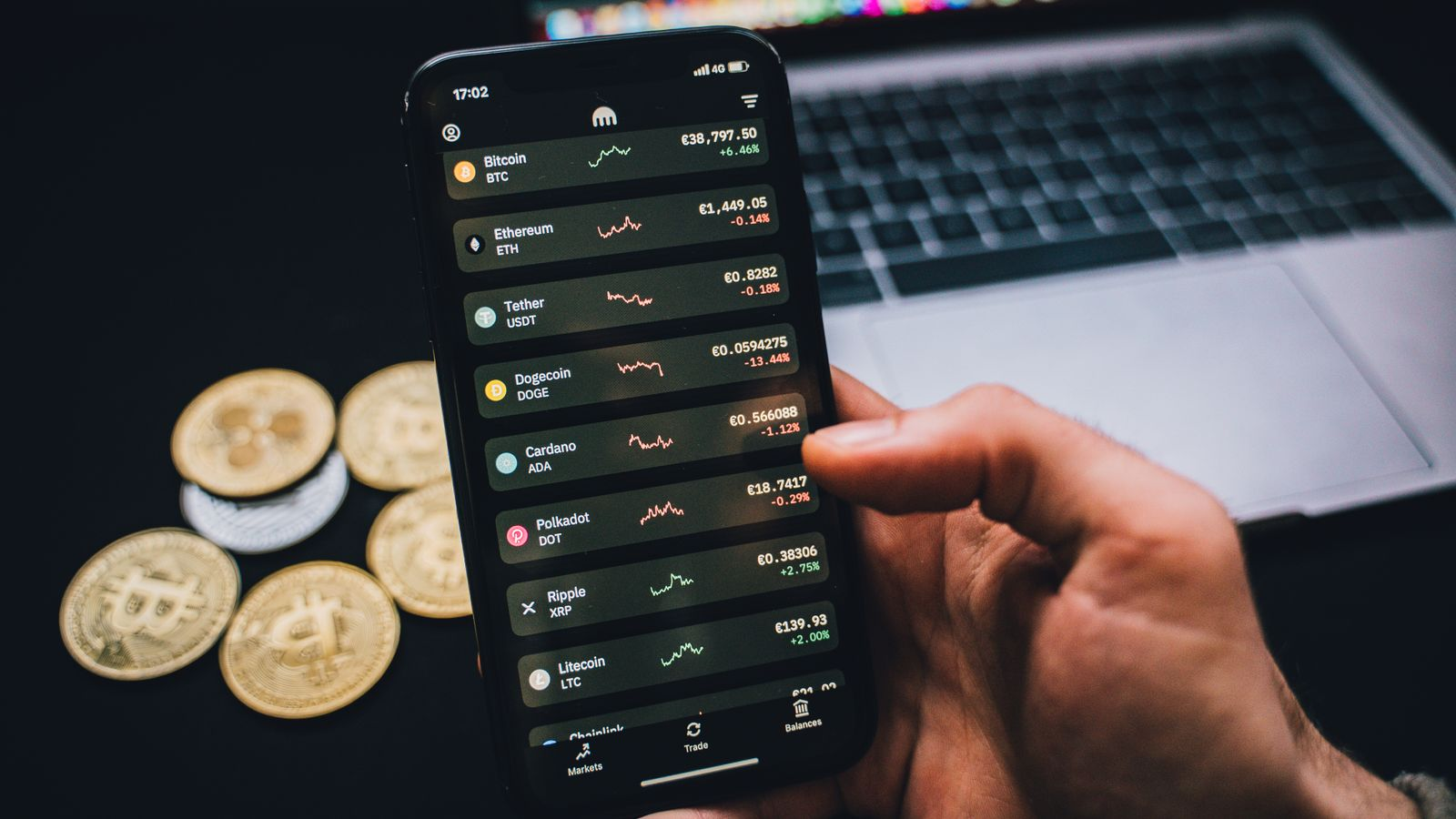
Wallet-based off-ramp services and exchange withdrawals can both convert crypto into fiat, but their quotes, payout options, and processing responsibilities differ. Exchanges themselves can function as off-ramps. The comparison here concerns two routes: accessing a provider through a wallet to sell and receive funds, or transferring assets to an exchange, selling, and then withdrawing. Before choosing, confirm that the entire route is available to you. Then compare the final proceeds from the same assets, estimated delivery times, and account requirements rather than focusing on a single fee.
Key Takeaways
- Selling through a wallet may involve a third party, identity verification, and a transfer of assets.
- Total costs include conversion, crypto transfers, payouts, and any additional currency exchange.
- Bank accounts, bank cards, and platform balances are separate payout destinations to verify.
- Check regional eligibility, asset networks, and receiving requirements before moving assets.
- Asset location, cash-out amount, and frequency affect the trade-offs between the two routes.
What Actually Differs Between Wallet Off-Ramp Services and Exchange Withdrawals?
Wallet-integrated off-ramps typically bring provider selection, quotes, and payout arrangements into a closely connected workflow. The exchange route generally creates a fiat balance on the platform before you request a withdrawal. Both ultimately require asset delivery, a sale, and a fiat payout. However, the party you establish a service relationship with, and the stage at which you can still change your instructions, may differ. A streamlined interface does not remove intermediate steps, and a separate account does not necessarily make the process more complicated.
Wallet-Integrated Off-Ramps: The Entry Point Is the Wallet, but a Third Party May Execute the Order
A wallet's Sell button may connect to one or more providers. After selecting the asset and amount, you receive a third-party quote, complete the required verification and payout setup, and send the assets to the processor. The wallet's role may primarily involve displaying the entry point, linking the order, and helping you sign the on-chain transaction.
For example, MetaMask's wallet selling process directs users to a provider for any required identity verification and bank account setup before returning to the wallet to confirm the asset transfer. Available tokens and networks vary by region. Avoiding a separate visit to an exchange does not mean verification or a crypto transfer is unnecessary, or that the wallet team executes the fiat payout directly.
Before accepting a quote, identify the actual provider, applicable terms, and support channel for the order. If the wallet shows an order as complete, also establish whether that means the sale or the payout has completed.
Exchange Withdrawals: Establish a Withdrawable Balance, Then Request a Payout
A typical exchange route involves depositing supported assets, selling them for fiat, checking the withdrawable balance, and selecting a receiving account for the payout. If the assets are already on an exchange that meets your requirements, you can avoid an unnecessary on-chain deposit. If they are in a self-custody wallet, first check the deposit network and receiving requirements.
An exchange may also offer different ways to sell. An instant sale uses a quote-confirmation process, while order-book trading generates proceeds from actual fills. If a limit order has not filled completely, you cannot treat the entire order value as cash. After selling, distinguish the fiat balance from the amount currently available to withdraw.
| Comparison | Wallet-Integrated Off-Ramp | Sale Followed by an Exchange Withdrawal |
|---|---|---|
| Execution relationship | The wallet interface may connect to a third-party provider | Processing uses the exchange account and its payout channels |
| Asset delivery | Usually requires sending assets according to the sell order | External assets must first be deposited; assets already on the platform can be sold directly |
| Selling method | Commonly uses a provider quote | May offer instant quotes or order-book trading |
| Destination of proceeds | A supported payout destination or balance | Usually a fiat balance followed by a payout request |
| Key checks | Quote coverage, provider identity, and order responsibility | Execution method, withdrawable balance, and payout eligibility |
A crypto withdrawal from an exchange sends crypto, while a fiat withdrawal sends fiat currency. P2P selling also involves payment from a counterparty and cannot be assessed using exactly the same conditions. The exchange route discussed here focuses on platform fiat withdrawals.
How Can You Compare the Final Proceeds From the Same Crypto Assets?

A fair comparison holds the asset quantity, quote timing, target fiat currency, and payout method constant, then accounts for every applicable cost. A wallet off-ramp's service fee and an exchange's trading commission may cover different things, so their percentages are not directly comparable. More useful measures are how much the bank or other destination account is expected to receive and how much you must spend separately to obtain that payment.
Wallet Off-Ramp Quotes: Check Which Costs Are Already Included
The provider may charge a processing fee, and the wallet or a partner may have applicable charges too. Other costs may be embedded in the conversion price rather than deducted separately. When assessing a quote, check the quantity sold, receiving currency, estimated payout, and fee summary. The absence of a separate fee line does not establish that there is no cost.
Sending assets also generally incurs network fees. If the existing asset or network is unsupported, a preliminary swap or bridge transfer may add costs and execution risks. Establish whether those steps are necessary while comparing routes rather than counting only the charges shown when you finally click Sell.
Clarify what “you receive” includes: whether service and payout fees have been deducted, whether currency conversion is included, and whether an external receiving institution can impose additional charges. Do not subtract costs already reflected in a net quote again. Keep expenses not yet included as separate items.
The Exchange Route: What Costs Exist Beyond Selling Fees?
The exchange route may involve costs for transferring assets in, executing the sale, and withdrawing fiat. Distinguish a spread embedded in an instant-sale quote from order-book trading fees and slippage. When calculating from actual executed amounts, do not deduct effects already reflected in the execution prices a second time.
If you sell into one fiat currency but the receiving account requires another, an additional conversion may be necessary. A lower trading rate does not remove fixed withdrawal charges or intermediary and receiving-bank fees. Conversely, if the assets are already on the exchange, do not add a crypto transfer fee for a transfer that never occurs.
If your comparison involves applicable Biya charges, check Biya's pricing center for the relevant product, then assess the order display and current rules. Different assets, conversions, and payout services may follow different fee arrangements. An offer for another product cannot be applied to the entire off-ramp route.
Use Consistent Assumptions to Avoid Missing or Double-Counting Fees
Suppose both routes sell the same quantity of assets using the same gross sale-value benchmark. The wallet service charges 2% of that value, covering conversion and payout. The exchange charges a 0.3% selling fee plus a EUR 5 payout fee. Assume there are no other differences in pricing, currency conversion, or bank charges. Network fees are accounted for separately.
| Gross Sale-Value Benchmark for the Same Assets | Expected Proceeds Through the Wallet Service | Expected Proceeds Through the Exchange Route |
|---|---|---|
| EUR 100 | EUR 98 | EUR 94.70 |
| EUR 10,000 | EUR 9,800 | EUR 9,965 |
These assumptions illustrate how fixed charges have a greater relative effect on small payments, while percentage fees become more significant as amounts increase. They do not represent any platform's current rates or an inevitable pricing relationship between the two service types. Actual quotes may use minimum fees, pricing tiers, or other arrangements and must be calculated separately.
If the assets are sent from the same wallet and each route also requires a separately paid network fee equivalent to EUR 1, the amounts received in the EUR 100 example remain EUR 98 and EUR 94.70. Net values after the separately paid expense are EUR 97 and EUR 93.70. The latter measure compares the full economic cost; it should not be described as the amount credited to the bank.
In practice, obtain quotes at approximately the same time and save their validity periods and fee summaries. Mark external charges that cannot be determined in advance as uncertainties. Tax obligations also cannot be inferred from withdrawal fee rates and should be assessed separately under applicable rules.
How Do Bank Account Payouts, Card Payouts, and Platform Balances Differ?

The payout destination determines whether the converted money is directly usable for your intended purpose. Bank transfers, card payouts, and credits to platform balances may require different details, have different availability, and involve further steps. A route offering higher proceeds cannot be compared directly with a bank payout if the money remains in a balance that does not meet your needs. Establish the destination before comparing speed and costs.
Bank account payouts generally require valid receiving details for the relevant currency and compatibility with the provider's payment network. An account that can receive euros does not necessarily accept U.S. dollars under the same conditions. A bank's ability to receive a particular payment also does not establish that the provider offers that channel to your account.
Card payouts are a different arrangement. Being able to buy crypto with a card does not prove that the same card can receive cash-out proceeds. The card network, issuer, card type, and service region may all affect availability. Follow card payout requirements only when the order offers that option. Do not independently substitute a card number for a bank account number.
Payment accounts or platform balances may require another withdrawal or conversion after the sale. Confirm whether funds can be transferred out, whether additional minimums or charges apply, and how the balance is held and protected. Converting assets into a stablecoin also does not create fiat funds available at your bank.
MoonPay's selling and payout arrangements distinguish bank and card payouts and explain that timing depends on the region and method. Even with the same provider, one delivery timeframe cannot be applied to every order.
When comparing speed, separate on-chain confirmation, order processing, payout dispatch, and crediting by the receiving institution. “Instant” may describe only the payment network, excluding earlier asset transfers and reviews. Bank holidays, additional verification, or the need to accept an updated quote may also extend the full process.
If your goal is moving crypto proceeds into a bank account, use the actual currency, amount, and availability at the bank as the final checks. An estimated date in a quote is useful, but it should not be treated as a guaranteed delivery commitment.
Which Requirements Can Make an Apparently Cheap Off-Ramp Unavailable?
A price comparison is meaningful only if the route supports your eligibility, asset network, and receiving destination together. A wallet displaying a service, or an exchange allowing you to sell an asset, does not establish that every requirement for the subsequent fiat payout has been met. Check the entire process before transferring assets rather than looking for a receiving method after the sale is complete.
Regional eligibility and identity verification must be checked against your actual residence, account type, and service conditions. Controlling a wallet's private keys does not remove a third-party off-ramp's verification requirements. Having an exchange account does not make every fiat payout channel available either. Some orders may require additional source-of-funds or transaction-purpose documents.
Assets and networks must match precisely. Support for USDT or USDC can differ across networks. A platform accepting deposits of an asset may not support selling it directly for your required fiat currency. Preliminary swaps, bridging, or an additional intermediary platform change the costs, timing, and risks. They should not be treated as free preparation.
Receiving-account requirements include the account-holder name, account location, personal or business status, and whether the bank or payment institution is accepted. Do not assume you can use a relative's account or interchange personal and business accounts. A provider supporting a banking network does not mean it accepts every financial institution connected to it.
Kraken's fiat withdrawal options list minimums, fees, eligibility, and estimated timing by currency and channel. They also advise checking the account interface for current availability. Select the specific route that matches your circumstances rather than presenting the lowest listed fee as available to everyone.
Amounts and limits also require checks at each stage. The minimum deposit, minimum sale quantity, and minimum fiat withdrawal may differ. A small test is useful only if it meets receiving and order rules. One successful test does not establish that a larger amount will avoid additional checks. Do not use inaccurate information or split amounts to evade requirements.
Finally, confirm that the receiving bank accepts the relevant source and payment arrangement. A provider's willingness to send funds does not guarantee bank credit, and the bank may request an explanation of their source. Keep sale orders, on-chain records, and payment confirmations for subsequent inquiries. Choose a route based on genuine eligibility and complete records.
How Should Asset Location and Cash-Out Frequency Shape Your Choice?
Where the assets are held is usually the most practical starting point. For assets in a self-custody wallet, compare the complete result from a wallet-integrated service with transferring to an exchange. If the assets are already on an exchange that meets your requirements, first assess its existing selling and withdrawal arrangements. There is no need to add a transfer solely for a simpler interface, or to skip comparing net proceeds and receiving conditions just because a platform is familiar.
| Scenario | What to Compare |
|---|---|
| Assets in self-custody with occasional fiat needs | The provider's combined quote versus all costs and steps involved in transferring to an exchange |
| Assets already on an exchange with an eligible receiving account | The selling method, withdrawable balance, and intended payout channel |
| Small cash-outs | Fixed charges, minimum amounts, and extra transfer costs |
| Larger or frequent cash-outs | Percentage fees, execution prices, limits, and completeness of records |
| A firm deadline for using the money | Total estimated timing, review requirements, and procedures for investigating delays |
Convenience and price control also involve trade-offs. A combined quote can help you understand expected proceeds in advance, but confirm when the price becomes fixed and when a new quote may need acceptance. An order-book limit order lets you specify an acceptable price but may not fill. Market execution requires consideration of current liquidity and slippage. A choice of order types does not guarantee better final proceeds.
Custody and processing responsibilities matter too. Wallet-integrated off-ramps also require delivering assets to a processor according to the order. That does not mean the assets remain in your custody throughout the process. The exchange route involves assets and balances held on the platform. For both routes, establish who executes the sale, who sends the fiat, and whom to contact about an abnormal order.
Keep the actual provider's name, order number, transaction hash, and payment references. For an on-chain sending issue, check the wallet and receiving instructions first. If the provider has received the assets but the order remains incomplete, contact the executing provider. Bank payouts already sent require the relevant payment evidence for tracing. Sending assets again is not a way to resolve a delay.
If you manage crypto holdings, fiat spending, and other assets together, first establish how much usable cash you need, then assess conversion routes. Avoid increasing the sale amount solely to reduce the relative effect of a fixed fee. As a global multi-asset wallet, Biya can be used in relevant asset and fund management scenarios. When choosing a specific function, check available assets, the target currency, fees, and subsequent payout arrangements. Wallet-integrated off-ramps and exchange withdrawals each have their own conditions. A product name alone does not establish support for a particular third party or any bank. Review expected proceeds, estimated dates, and actual receipts together to assess whether a route continues to meet your needs. Availability of relevant services depends on your location, identity verification results, platform rules, and applicable laws and regulations.
Frequently Asked Questions
Do Wallet-Based Off-Ramp Services Still Require Identity Verification?
They may. A wallet's self-custody model does not remove the actual off-ramp provider's identity verification and account requirements. You may need to submit information, set up a receiving account, or complete additional checks through a third-party process. Identify the executing provider and applicable conditions before sending assets. Successfully creating a wallet does not establish off-ramp eligibility.
If a Wallet Supports USDT, Can You Always Cash It Out to a Bank?
No. A wallet's ability to hold USDT on a particular network does not establish that its connected provider supports that network, asset, and target fiat combination. Regional, amount, and receiving conditions also apply. If a preliminary swap or bridge transfer is required, include its extra costs and risks in the comparison rather than sending directly to an unsupported address.
Does a Free Fiat Withdrawal Mean the Entire Exchange Cash-Out Has No Cost?
No. A free withdrawal generally concerns a specified payout stage. Selling fees, quoted spreads, crypto transfer costs, currency conversion, and external bank charges may still apply. Compare final proceeds using the same asset quantity and receiving currency, and separately list excluded costs. An offer on one charge does not make the entire route free.
Can a Wallet Off-Ramp Pay Someone Else's Bank Account?
Do not assume this is allowed. An off-ramp may require the receiving account-holder name to match the verified user, with different conditions for personal, joint, and business accounts. Check the actual provider's rules. Using someone else's account in place of your own ineligible account can lead to returns, delays, or further checks.
What Should You Do if an Off-Ramp Quote Expires After You Have Sent the Crypto?
Check the original order and on-chain transfer status first, then contact the executing provider for instructions. You may need to accept an updated quote or supply additional information; the original price should not be assumed valid. Do not send the assets again or use a new order's address for an additional transfer under the original order. Follow the provider's instructions for that specific order.
Should Frequent Cash-Out Users Always Choose an Exchange?
Not necessarily. Account preparation and recurring operational costs deserve more attention with frequent use, but actual rates, net proceeds, available limits, and payout channels still determine the comparison. Assets already on an exchange may require fewer deposit steps. If assets are normally held in self-custody, include each transfer and the service conditions in your assessment.
*この記事は一般的な情報提供のみを目的としており、BiyaPayまたはその子会社および関連会社からの法務、税務その他の専門的助言を構成するものではなく、また、金融アドバイザーやその他の専門家から助言を受けることの代替を意図するものではありません。
当出版物の内容の正確性、完全性または適時性について、当社は明示または黙示を問わず、一切の表明および保証を行いません。
の関連ブログ

US to Portugal Online Money Transfer Limits: Per-Transaction Caps Explained


International Money Transfer Limits: Per-Transfer, Daily, and Monthly Caps Explained




 オーストラリア
 オーストリア
 ベルギー
 カナダ
 キプロス
 チェコ共和国
 デンマーク
 エストニア
 フィンランド
 フランス
 ドイツ
 ギリシャ
 香港
 インド
 インドネシア
 アイルランド
 イタリア
 日本
 ラトビア
 リトアニア
 ルクセンブルク
 マレーシア
 マルタ
 モロッコ
 ネパール
 オランダ
 ニュージーランド
 ノルウェー
 パキスタン
 フィリピン
 ポーランド
 ポルトガル
 ルーマニア
 シンガポール
 スロバキア
 スロベニア
 南アフリカ
 韓国
 スペイン
 スウェーデン
 タイ
 アメリカ合衆国
 トルコ
 アラブ首長国連邦
 イギリス
 ベトナム