How to Check the Routing Number of Bancolombia? Details You Must Know Before Remitting Money




Image Source: unsplash
Are you looking for a Colombia bank routing number? Please note that for internationalremittances to Colombia, what you need is the globally recognizedSWIFT code, not the routing number in the US banking system. Every year, a large amount of funds are remitted from the US to Colombia, and ensuring information accuracy is crucial.
- In 2024, the total remittances received by Colombia were $11.848 billion, with 53% coming from the US.
- In the first seven months of 2025, the total remittances were $7.575 billion, with the US accounting for 42%.
For your convenience in quick lookup, here are theSWIFT codes for several major banks:
| Bank Name | SWIFT/BIC Code |
|---|---|
| Bancolombia S.A. | COLOCOBM |
| Banco de Bogotá | BBOGCOBB |
| Davivienda | CAFECOBB |
| BBVA Colombia | GEROCOBB |
Key Takeaways
- When remitting to Colombia, you need to use the SWIFT code, not the US bank routing number.
- Routing numbers are only used within the US, while SWIFT codes are globally recognized bank identifiers.
- Please contact the recipient directly to obtain the correct SWIFT code and complete bank account information.
- Before remitting, carefully verify the recipient’s name, account number, and bank SWIFT code to ensure the information is accurate.
- An incorrect SWIFT code will cause the remittance to fail, funds to be returned, and may incur additional fees and time loss.
Does a Colombia Bank Routing Number Exist?
The answer is very clear: it does not exist. If you are looking for a Colombia bank routing number for international remittances, then you may have confused two completely different banking system concepts. The so-called “routing number” (Routing Number or ABA Number) is a unique identifier in the US banking system, specifically for financial transactions within the US.
Many people remitting from the US have this question, which is completely understandable. Because when you transfer money within the US through the Automated Clearing House (ACH) or set up direct deposit, providing a 9-digit routing number is standard procedure. But remember, this rule only applies within the US. When you need to remit funds to Colombia, the rules change.
Routing Number vs. SWIFT Code
To ensure your funds arrive accurately and safely in Colombia, you must understand the fundamental difference between a routing number and a SWIFT code. Simply put, one is a “domestic ID,” and the other is an “international passport.”
- Routing Number: This is a9-digit code managed by the American Bankers Association (ABA). Its official definition is “identifying the specific financial institution responsible for paying negotiable instruments.” This number helps funds find the correct bank within the US banking system and is only valid within the US.
- SWIFT Code: This is aninternational standard code consisting of 8 or 11 letters and numbers, managed by the Society for Worldwide Interbank Financial Telecommunication (SWIFT). It identifies specific banks and their branches worldwide and is essential information for international wire transfers.
The table below can help you understand their differences more intuitively:
| Feature | SWIFT Code | Routing Number |
|---|---|---|
| Geographic Scope | 🌎 Globally recognized, connecting financial institutions in over 200 countries/regions | 🇺🇸 Only used within the US |
| Code Structure | 8 or 11 alphanumeric characters, including bank, country, region, and branch information | Fixed 9 pure digits, including Federal Reserve, institution, and check digit information |
| Primary Function | Cross-border fund transfers and international financial communication | Domestic US transfers, such as ACH payments, wire transfers, and check processing |
Tip: When remitting to a bank account in Colombia, what you need to provide to the remittance institution is that 8 to 11-digit SWIFT code, not any form of Colombia bank routing number.
Why You Cannot Use ACH Routing Number for Remittance
You cannot use an ACH routing number to remit to Colombia because the ACH network and SWIFT network are two independent systems designed for different purposes.
The ACH (Automated Clearing House) network is primarily a system designed for batch payments within the US. It is highly efficient and low-cost (usually less than $1 per transaction), making it ideal for regular domestic transfers like payroll and bill payments. However, its international processing capability is very limited.
The SWIFT (Society for Worldwide Interbank Financial Telecommunication) network is a global financial “messenger” system. It does not transfer funds itself but provides a secure, standardized communication platform forover 11,000 financial institutions worldwide to send and receive fund transfer instructions. When you initiate an international remittance, your bank sends payment instructions to the recipient bank in Colombia via the SWIFT network.
| Comparison Dimension | ACH Network (US Domestic) | SWIFT Network (International) |
|---|---|---|
| Transaction Speed | Usually 1-3 business days | Usually 1-5 business days, depending on intermediary banks |
| Transaction Fees | Extremely low cost | Higher, usually $20 - $50 USD, plus intermediary bank fees |
| Applicable Scenarios | Regular payments within the US | Global cross-border remittances |
| Information Required | Recipient account number + 9-digit routing number | Recipient account number + 8/11-digit SWIFT code |
Therefore, attempting to use a Colombia bank routing number designed for the US domestic system for international remittance is like trying to use a local bus card to board an international flight—the system simply cannot recognize it. To ensure your funds reach the destination smoothly, the only correct way is to obtain and use the recipient bank’s SWIFT code.
Four Methods to Query SWIFT Codes
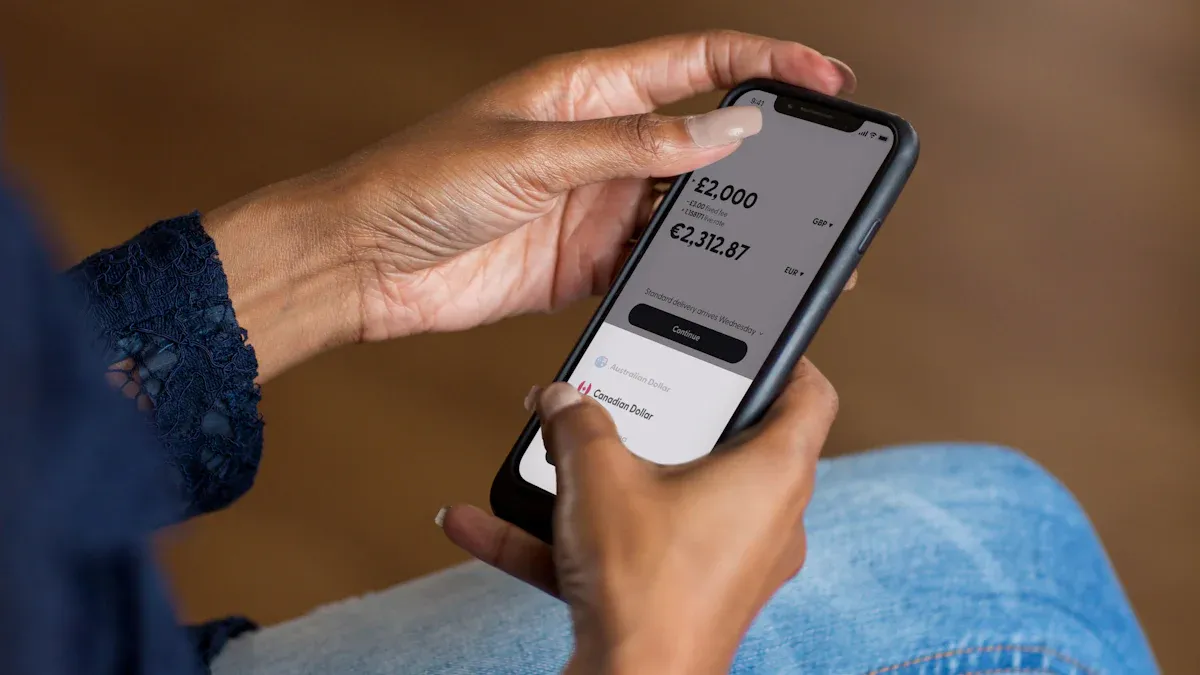
Image Source: unsplash
Before you start validating each item, align the details with BiyaPay’s tools. Use the free SWIFT lookup to pinpoint the recipient bank’s code, and (when applicable for Europe) verify account formats with IBAN check. If currency conversion is involved, estimate net proceeds and potential costs in advance with the currency converter & comparison, then proceed with cross-border remittance once amounts make sense.
BiyaPay is a multi-asset trading wallet that supports global payments and multi-currency exchange, operating under multi-jurisdictional compliance frameworks (e.g., U.S. MSB, New Zealand FSP). Completing the trio of “correct codes,” “matching details,” and “transparent pricing,” and then following the four methods in this guide, materially reduces the odds of returns and delays.
Now you are clear that international remittances to Colombia require a SWIFT code, not a non-existent Colombia bank routing number. So, how do you find this key code accurately? Here are four verification methods; it is recommended to start with the first one.
Method 1: Contact the Recipient
This is the most direct and reliable method. The recipient knows their bank account information best. Communicating directly with them can avoid errors from the source.
To ensure nothing goes wrong, you can ask the recipient for a checklist containing the following information:
- Recipient’s Full Name: Must match the name on the bank account exactly.
- Recipient Bank’s SWIFT/BIC Code: This is the most important code.
- Recipient Account Number: For example, Bancolombia’s 11-digit local account number.
- Account Type: Is it a savings account (Ahorros) or a checking account (Corriente).
- Recipient Address and ID Number: Some remittance services may require this.
Best Practice: Ask the recipient to copy and paste the information directly from their online banking or bank statement to you. This minimizes spelling errors due to manual input.
Method 2: Visit the Bank’s Official Website
If you know the recipient bank’s name, visiting its official website is another reliable query channel. Most banks provide the information needed for international remittances on their websites.
You can follow these steps:
- Open the recipientbank’s official website (for example,
bancolombia.comorbancodebogota.com). - Look for links labeled “Internacional,” “Transferencias Internacionales” (International Transfers), “Giros,” or “Contáctenos” (Contact Us).
- On these pages, you can usually find the bank’s official SWIFT code.
Remember to obtain information from the bank’s official website. Relying on unofficial sources may lead to outdated or incorrect codes.
Method 3: Use Online Query Tools
There are many free SWIFT/BIC code query tools on the internet. You just need to enter the bank name and country, and these tools will provide the corresponding code.
These online toolsregularly obtain updates from reliable financial institution databases and perform validation checks to ensure data accuracy. They are very convenient and fast but should be used as auxiliary verification means.
Usage Steps:
- Search for “SWIFT code finder” or “BIC code search” in a search engine.
- Choose a reputable query website.
- Enter the bank name (such as
Davivienda) and country (Colombia). - The system will display the matching SWIFT code, usually
CAFECOBB.
Important Tip: Be vigilant when using these tools. After finding the code, it is best to cross-verify it using Method 1 or Method 2. These tools are for finding SWIFT codes, not for querying non-existent Colombia bank routing numbers.
Method 4: Consult Your Remittance Bank
Finally, your own bank (the remitting party) is also a valuable resource. When you initiate a remittance, whether through online banking or in person at a branch, the bank’s system or staff can assist you.
- Verification Function: Many banks’ online remittance platforms have built-in SWIFT code verification. When you enter the code, the system may automatically display the corresponding bank name for you to confirm.
- Customer Support: If you are unsure, you can directly call your bank’s customer service hotline. They have experience handling international remittances and can accesscommercial databases to verify if the recipient institution identification code you provided is correct.
Before clicking the “confirm remittance” button, be sure tocarefully verify all details. Any minor error, whether in name spelling, account digits, or SWIFT code, may cause remittance delays, returns, or even crediting to the wrong account, resulting in unnecessary fund losses.
Key Information Verification Checklist Before Remittance

Image Source: pexels
Finding the correct SWIFT code is just the first step. To ensure your funds reach the recipient smoothly and quickly, you must carefully verify every key piece of information below before remitting. Any minor error may cause the remittance to fail.
Recipient Account Number
Colombian bank account numbers do not have a unified format, and their length varies by bank. For example, Bancolombia accounts are usually 11 digits, while Davivienda accounts may be up to 18 digits.
| Bank | Savings Account Length (Max) | Checking Account Length (Max) |
|---|---|---|
| Bancolombia | 11 | 11 |
| Banco de Bogotá | 11 | 11 |
| Davivienda | 18 | 18 |
| BBVA* | 16 | 16 |
| Scotiabank Colpatria | 10 | 10 |
| Banco de Occidente | 9 | 9 |
Special Note: For BBVA bank, if your remittance amount exceeds a certain threshold (for example, $15,000), the bank may only accept 9-digit checking accounts. Be sure to confirm this with the recipient.
Recipient Full Name
The recipient name you provide must exactly match the legal full name on their bank account. Even seemingly minor differences like “Jon” and “Jonathan” may cause the remittance to fail.According to regulations from the US Federal Reserve, international wire transfers must include accurate recipient information.
A simple spelling error can bring a series of troubles:
- Remittance failure, funds returned, processing may take weeks.
- You may need to pay additional bankfees, and previously paid remittance fees are non-refundable.
- If currencyconversion is involved, you may suffer losses due to exchange rate fluctuations when funds are returned.
Recipient Address and ID Number
Many remittance services and banks require you to provide the recipient’s full address and ID number (Cédula de Ciudadanía). This information is used for anti-money laundering (AML) and know-your-customer (KYC) compliance checks. Especiallywhen the recipient needs to withdraw cash, the name they provide must exactly match the name on their government-issued ID to successfully withdraw.
Recipient Bank Full Name and Address
In addition to the SWIFT code, you also need to provide the recipient bank’s full legal name and address. A common question is: should you fill in the branch address or the head office address?
For international remittances, filling in the bank’s head office address is usually sufficient. Many large banks have a central address dedicated to handling all international remittances. For example,Wells Fargo explicitly states that all international wire transfers should use its head office address in San Francisco, regardless of which branch the recipient’s account is in.
In summary, the key to remitting to Colombia is finding the correct SWIFT/BIC code, not looking for a non-existent Colombia bank routing number.
Most Critical Action Step: Communicate directly with the recipient. Ask them to provide a recipient information checklist including the SWIFT code, full account number, account full name, and bank full name.
Research shows thatup to 41% of cross-border payments to Colombia have experienced delays or failures. Therefore, before clicking “confirm remittance,” be sure to verify all information word by word to ensure nothing goes wrong and avoid unnecessary financial and time losses.
FAQ
Is the SWIFT Code Unique?
Yes. Each bank or its specific branch has a unique SWIFT code. It’s like the bank’s international ID number. You must ensure you use the correct code for the recipient bank so that funds arrive accurately.
Do I Need to Provide the Branch SWIFT Code?
Not necessarily. For most large banks, using their head office SWIFT code (usually 8 digits) is sufficient. For example, COLOCOBM is Bancolombia’s head office code. Funds will be automatically allocated to your recipient’s account through the head office system.
What Happens If the SWIFT Code Is Wrong?
If the code is wrong, the remittance will be rejected and returned. This process may take several weeks. You will not only lose theremittance fee (usually $20 - $50 USD) but may also suffer additional losses due to exchange rate changes.
How Long Does a Remittance to Colombia Take?
International remittances via the SWIFT network usually take 1 to 5 business days. The specific time depends on your remittance bank, the recipient bank, and the processing efficiency of any intermediary banks. Holidays may also affect arrival speed.
*This article is provided for general information purposes and does not constitute legal, tax or other professional advice from BiyaPay or its subsidiaries and its affiliates, and it is not intended as a substitute for obtaining advice from a financial advisor or any other professional.
We make no representations, warranties or warranties, express or implied, as to the accuracy, completeness or timeliness of the contents of this publication.
Related Blogs of
In-Depth Analysis of US GDP: Comprehensive Insights from Consumption to Investment


US Stock Index Futures Trading Secrets: Master the Four Major Indices to Unlock Wealth Opportunities

BiyaPay Secures Sumsub's Highest Security Certification: Building a Rock-Solid Foundation for a Global Integrated Financial Platform with Zero-Tolerance Risk Controls


2026 Latest US Stock Broker Review: Which is Better in Features and Fees - IB, Futu, or Tiger Securities

Choose Country or Region to Read Local Blog
 Australia
 Austria
 Belgium
 Canada
 Cyprus
 Czech Republic
 Denmark
 Estonia
 Finland
 France
 Germany
 Greece
 Hong Kong
 India
India Indonesia
 Ireland
 Italy
Italy Japan
Japan Latvia
 Lithuania
 Luxembourg
 Malaysia
 Malta
Malta Morocco
 Nepal
Nepal Netherlands
 New Zealand
 Norway
 Pakistan
 Philippines
 Poland
 Portugal
 Romania
 Singapore
 Slovakia
 Slovenia
 South Africa
 South Korea
 Spain
Spain Sweden
 Thailand
 The United States
 Turkey
 United Arab Emirates
 United Kingdom
 Vietnam
Contact Us




BIYA GLOBAL LLC is a licensed entity registered with the U.S. Securities and Exchange Commission (SEC No.: 802-127417); a certified member of the Financial Industry Regulatory Authority (FINRA) (Central Registration Depository CRD No.: 325027); regulated by the Financial Industry Regulatory Authority (FINRA) and the U.S. Securities and Exchange Commission (SEC).
BIYA GLOBAL LLC is registered with the Financial Crimes Enforcement Network (FinCEN), an agency under the U.S. Department of the Treasury, as a Money Services Business (MSB), with registration number 31000218637349, and regulated by the Financial Crimes Enforcement Network (FinCEN).
BIYA GLOBAL LIMITED is a registered Financial Service Provider (FSP) in New Zealand, with registration number FSP1007221, and is also a registered member of the Financial Services Complaints Limited (FSCL), an independent dispute resolution scheme in New Zealand.