The Security and Limits of MoneyGram Remittance Service: Understanding How to Make Cross-Border Payments Efficiently and Securely




Image Source: pexels
You might be wondering, is MoneyGram’s remittance service safe? The answer is yes, as long as you follow its rules.
MoneyGram is the world’s second-largest international remittance company, with an operational model similar to Western Union. To efficiently and securely complete a transfer, the key is understanding its security mechanisms and specific limitations. Proper operation helps you make effective use of this service.
Key Points
- MoneyGram uses advanced technology to protect your personal information and funds, such as enhanced identity verification and secure bank account linking.
- After a transfer, you receive an 8-digit reference number, which the recipient needs along with a valid ID to collect funds, so ensure the recipient’s name is accurate.
- MoneyGram has transfer amount limits and country-specific service availability, so check the latest information on its website or app before sending.
- MoneyGram offers flexible payment and receiving options, allowing recipients without bank accounts to collect cash at global agent locations.
- Beware of fake “lottery” and “emergency assistance” scams, only send money to known and trusted individuals, and carefully verify all fees and exchange rates.
Analysis of MoneyGram’s Security Mechanisms
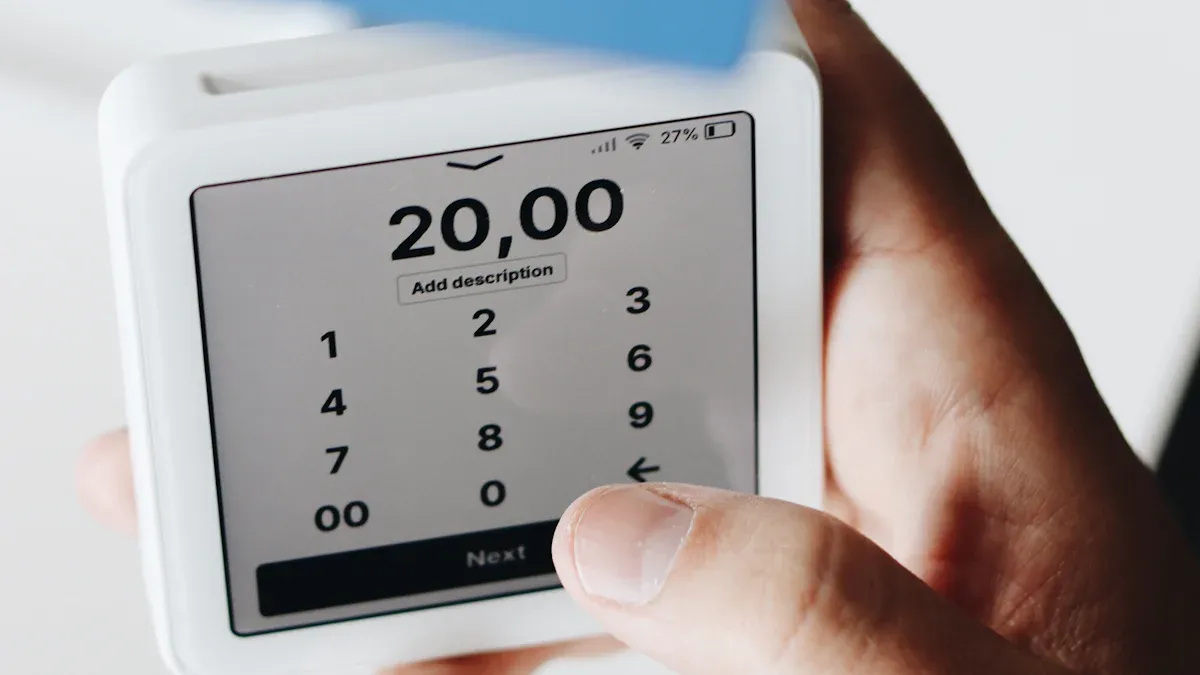
Image Source: unsplash
MoneyGram’s security is not just an empty claim; it is built on a robust set of interconnected protective measures. When you use MoneyGram’s remittance service, multiple security measures safeguard your funds. Understanding these mechanisms allows you to complete cross-border payments with greater confidence.
Advanced Encryption and Monitoring Technology
Your personal information and funds’ security are MoneyGram’s top priorities. To protect your data, MoneyGram employs industry-leading technology.
- Advanced Identity Verification Technology: MoneyGram collaborates with Mitek, using a system called
Mobile Verify™. When you submit identification documents online, this system uses machine learning to instantly verify their authenticity. This not only speeds up verification but also helps meet anti-money laundering (AML) requirements, preventing fraud from the outset. - Secure Bank Account Linking: In the U.S., MoneyGram partners with fintech company Plaid to allow secure linking of your bank account. Plaid’s technology instantly verifies your account details, combined with MoneyGram’s anti-fraud system, providing dual protection for your transactions.
Critical Role of the Transaction Reference Number
When you complete a transfer, you receive a unique 8-digit Reference Number. This number is the key credential for the transaction, like the key to a safe. You must securely share this number with your recipient, as they need it to collect the funds.
How does the recipient use the reference number to collect funds?
The process is straightforward, requiring just three steps:
- The recipient needs to find a nearby MoneyGram agent location.
- At the location, they fill out a simple receipt form, accurately entering the 8-digit reference number you provided.
- They submit the completed form along with a valid photo ID to the staff, and upon verification, they can collect the cash.
Strict Identity and Information Verification
To ensure funds are accurately delivered to the intended recipient, MoneyGram enforces a rigorous identity verification process. Whether transferring online or in-person, you need to provide accurate information.
For online transactions, you typically need to prepare the following personal information for identity verification:
- Your full name
- Complete residential address (not a P.O. box)
- Valid phone number
- Date of birth
- In the U.S., a Social Security Number (SSN) or Individual Taxpayer Identification Number (ITIN) is also required
Additionally, recipients must present a valid government-issued photo ID when collecting funds.
Important Note: Name must match exactly
The name on the recipient’s ID must exactly match the recipient name you provided during the transfer. Any slight discrepancy could result in the funds being denied at the agent location.
Accepted ID types vary by country but typically include:
- Passport
- Driver’s license
- National ID
For example, in the U.S., MoneyGram accepts a wide range of IDs, including state IDs, U.S. military IDs, and resident alien cards (green cards).
Identifying and Preventing Common Remittance Scams
Although MoneyGram’s system is secure, fraudsters often attempt to exploit users. You must stay vigilant, especially against these two common scams.
Type 1: Fake “Lottery” Scam
You might suddenly receive an email or message congratulating you on winning a foreign lottery prize. However, they’ll tell you that you must first pay a “handling fee,” “tax,” or “shipping fee” to claim the prize.
How to Identify and Prevent?
- Remember: True prizes are free. Any request to pay money upfront to claim a prize is a scam.
- If someone asks you to pay fees via wire transfer or prepaid cards, stop contact immediately.
- Legitimate lotteries never require upfront fees.
Type 2: “Emergency Assistance” and “Romance” Scams
Fraudsters may build a relationship with you online, then suddenly claim an emergency (e.g., car accident, illness) and ask for urgent funds. They deliberately avoid video calls or in-person meetings.
How to Identify and Prevent?
- Only send money to people you know and trust in real life.
- Be wary of individuals with vague personal details or inconsistent stories.
- Before sending money, try verifying their identity via video call.
- Use online reverse image search tools to check if photos they sent were stolen from the internet.
- Never share your personal banking information or reference number with strangers.
If you suspect any transfer request, trust your instincts and stop the operation immediately.
Main Limitations and Rules of MoneyGram’s Remittance Service
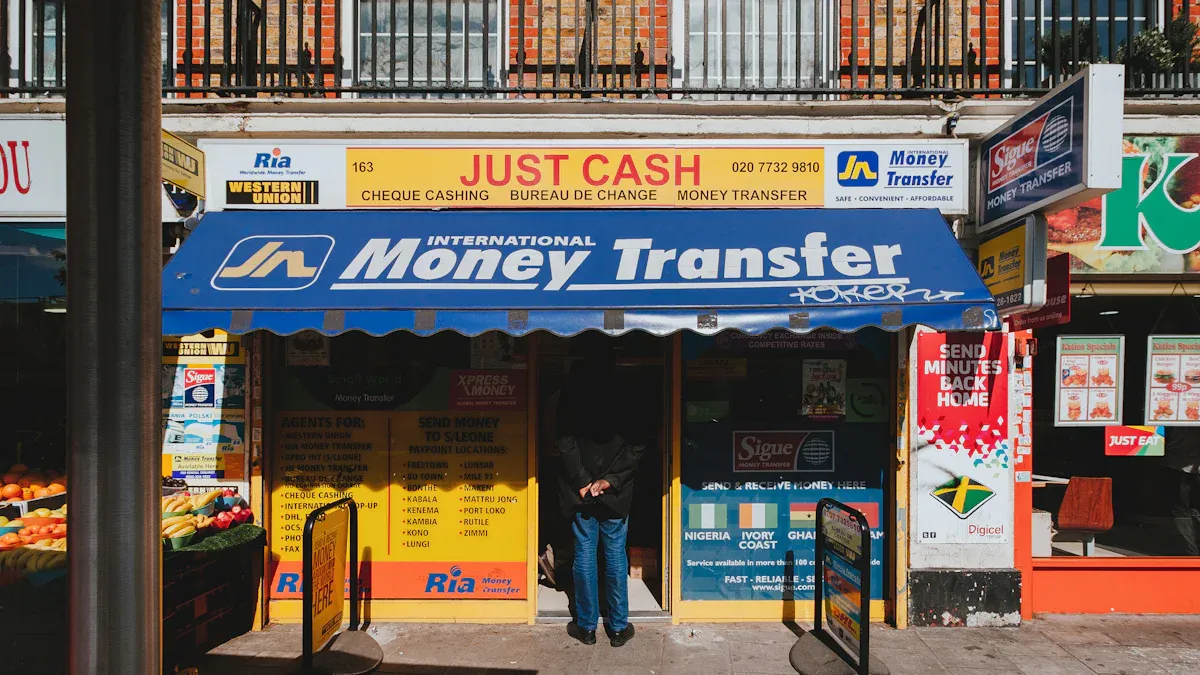
Image Source: unsplash
After understanding MoneyGram’s security mechanisms, you also need to grasp its specific rules. These limitations directly impact whether your transfer will succeed. Familiarizing yourself with these rules can help you avoid unnecessary issues and make the process smoother.
Transfer Amount Limits
When using MoneyGram’s remittance service, you’ll encounter limits on transfer amounts. These limits vary by country, regulations, and the payment method chosen.
For online transfers, note the following:
- Single Transfer Limit: For transfers from the U.S. to many countries (including mainland China), the single online transfer limit is typically 10,000 USD.
- 30-Day Total Limit: Within 30 days, the cumulative transfer amount limit is also typically 10,000 USD.
Important Reminder
The above amounts are for reference only. Specific transfer limits may change at any time. Before any transaction, you should visit MoneyGram’s website or use the calculator in its app to check the latest and most accurate limit information for your sending and receiving countries.
Service Coverage by Country and Region
MoneyGram has a vast global network, enabling its services to reach every corner of the world. You can send money to over 200 countries and regions.
| Data Source | Countries and Regions Covered | Number of Global Agent Locations |
|---|---|---|
| Wikipedia | Over 200 | Approximately 400,000 |
| fxcompared.com | Over 200 | Approximately 347,000 |
However, due to international sanctions and regulations, MoneyGram cannot provide services to the following countries or regions:
- Iran
- North Korea
- Syria
- Sudan
- Cuba
Flexible Payment and Receiving Methods
MoneyGram offers multiple payment and receiving options, allowing you to choose the most convenient one based on your situation.
Your Payment Methods (How to Send Funds): When sending money online, you can typically choose from the following payment methods:
- Credit Card (Visa, MasterCard)
- Debit Card (Visa, MasterCard)
- Bank Account Transfer (e.g., in the U.S., you can use a checking or savings account)
Note that if you use a credit card for payment, your card issuer may charge additional cash advance fees and interest.
Recipient’s Receiving Methods (How to Receive Funds): Your recipient also has multiple options to receive funds:
- Cash Pickup: Collect cash directly at hundreds of thousands of agent locations worldwide.
- Bank Account: Funds are deposited directly into the recipient’s bank account.
- Mobile Wallet: In some countries that support this service, funds can be deposited into a mobile wallet.
Unique Receiving Method: No Bank Account Required
One of MoneyGram’s greatest advantages is that recipients don’t need a bank account to receive funds. This is a crucial feature for people in regions with limited banking services.
Globally, approximately 1.4 billion adults lack bank accounts. They cannot use traditional banking services, making it difficult to receive or save money securely. MoneyGram’s cash pickup service addresses this issue. Recipients only need the reference number you provide after the transfer and a valid ID to collect cash at any nearby MoneyGram agent location. This extensive global agent network opens a window for underserved populations.
Fee Structure and Exchange Rate Issues
When making cross-border transfers, fees and exchange rates are your top concerns.
1. Transaction Fees (Transfer Fees) MoneyGram’s fees are not fixed. They vary based on the following factors:
- Transfer amount
- Sending and receiving countries
- Payment method (bank account transfers are usually cheaper than credit cards)
- Receiving method (bank account deposits and cash pickups may have different fees)
2. Exchange Rate You need to understand that the exchange rate offered by MoneyGram differs from the real-time market rate (Mid-market Rate) you find online. All remittance providers add a profit margin to their exchange rates. This means the foreign currency you convert will be slightly less than what you’d get at the market rate.
How to Avoid Surprises?
Before finalizing and paying for any transfer, use the price calculator on MoneyGram’s website or app. It will clearly list all fees and show you the exact amount the recipient will receive. This ensures you have full transparency on all costs.
If you compare channels for total cost and timing, you may also review BiyaPay’s remittance service, which locks the rate at order time and discloses fees clearly, making side-by-side evaluation straightforward.
BiyaPay is a multi-asset wallet for payments and fund management, supporting fiat–crypto conversion and operating under licenses in multiple regions (e.g., US MSB, NZ FSP). See the homepage for an overview.
Before committing, use the free converter to estimate receive-amount and fee differences, then choose the appropriate path.
Efficient and Secure Remittance Operation Guide
Having mastered MoneyGram’s rules, you can now begin the actual transfer process. Follow these three simple steps to efficiently and securely complete every transfer.
Step 1: Pre-Transfer Preparation
Thorough preparation is the first step to a successful transfer. Before starting, ensure you have all the necessary information and documents.
First, you need to prepare your personal information for identity verification. This typically includes:
- Your full name and residential address
- Valid phone number and date of birth
- In the U.S., possibly a Social Security Number (SSN) or Individual Taxpayer Identification Number (ITIN)
- A valid, non-expired government-issued ID
Verify Recipient’s Name
You must confirm with the recipient that the name spelling on their ID exactly matches the information you provide. Any slight discrepancy could lead to the agent location refusing payment, causing unnecessary trouble.
Step 2: Choose Payment Method and Fill in Information
With preparations complete, you can start the transfer process. Using MoneyGram’s remittance service mobile app makes the process very intuitive.
- Download the MoneyGram app from your mobile app store.
- Create or log into your personal account. If you’re a new user, you’ll need to enter detailed information to complete identity verification.
- Enter the recipient’s details and the amount you wish to send.
- Choose your payment method (e.g., bank account, debit card) and the recipient’s receiving method (e.g., cash pickup).
- Carefully review all information, confirm it’s correct, and click send.
Step 3: Post-Transfer Tracking and Confirmation
After sending the transfer, your work isn’t done. The final step is to track the transfer status and ensure the recipient receives the funds smoothly.
Upon completing the transfer, you’ll receive a reference number. Share this number securely with your recipient. You can use MoneyGram’s “Track a Transfer” tool on its website to monitor the transfer’s progress.
- Visit the tracking page on the website.
- Enter your reference number and your last name.
- Click the “Track Transfer” button to view the real-time status, such as “Ready for Pickup” or “Received.”
If you’ve created a personal account, you can also log in and view all transfer records in the “Transaction History.”
Your experience determines the ultimate effectiveness of MoneyGram’s remittance service. You can leverage its vast global network and the unique advantage of recipients not needing a bank account. At the same time, you need to be aware of amount limits and service gaps in certain regions. Varying user reviews (e.g., 4.0 rating on Trustpilot versus lower ratings on Yelp) remind us that experiences vary by individual.
Action Tip 💡
Before any transfer operation, visit MoneyGram’s official website or use its mobile app to carefully verify the latest fees, exchange rates, and rules. This is the key step to minimizing risks.
FAQ
What if I enter the wrong recipient name?
The recipient will be unable to collect the funds. You must immediately contact MoneyGram customer service to modify the information or cancel the transaction. Note that modifying the name may incur additional fees, so double-check before sending.
How long does a MoneyGram transfer take?
Transfer speed depends on the receiving method.
- Cash Pickup: Typically completed within minutes.
- Bank Account Deposit: May take a few hours to several business days, depending on the recipient bank’s processing speed.
Can I cancel a transfer that’s already been sent?
As long as the recipient hasn’t collected the funds, you can cancel the transfer. You can do this online via MoneyGram’s app or website or contact customer service for assistance. Note that transaction fees are typically non-refunded.
What happens if a transfer remains unclaimed for a long time?
If a transfer remains unclaimed for a certain period (typically 90 days), the transaction will be automatically canceled. MoneyGram will notify you and arrange a refund. The original transaction fees may not be refunded.
*This article is provided for general information purposes and does not constitute legal, tax or other professional advice from BiyaPay or its subsidiaries and its affiliates, and it is not intended as a substitute for obtaining advice from a financial advisor or any other professional.
We make no representations, warranties or warranties, express or implied, as to the accuracy, completeness or timeliness of the contents of this publication.
Related Blogs of

From the Frenzy at 6124 Points to the Darkness Before Dawn: Memory Fragments of China's Shanghai A-Shares


2025 Year-End Outlook: Can the Nasdaq Continue Its Growth Legend Amid Volatility?


Learn Investing from Zero: Your First Practical Guide to Global Stock Markets


US Stock Investing 101: How to Evaluate Company Value and Pick Your First Great Stock

Choose Country or Region to Read Local Blog
 Australia
 Austria
 Belgium
 Canada
 Cyprus
 Czech Republic
 Denmark
 Estonia
 Finland
 France
 Germany
 Greece
 Hong Kong
 India
India Indonesia
 Ireland
 Italy
Italy Japan
Japan Latvia
 Lithuania
 Luxembourg
 Malaysia
 Malta
Malta Morocco
 Nepal
Nepal Netherlands
 New Zealand
 Norway
 Pakistan
 Philippines
 Poland
 Portugal
 Romania
 Singapore
 Slovakia
 Slovenia
 South Africa
 South Korea
 Spain
Spain Sweden
 Thailand
 The United States
 Turkey
 United Arab Emirates
 United Kingdom
 Vietnam
Contact Us




BIYA GLOBAL LLC is a licensed entity registered with the U.S. Securities and Exchange Commission (SEC No.: 802-127417); a certified member of the Financial Industry Regulatory Authority (FINRA) (Central Registration Depository CRD No.: 325027); regulated by the Financial Industry Regulatory Authority (FINRA) and the U.S. Securities and Exchange Commission (SEC).
BIYA GLOBAL LLC is registered with the Financial Crimes Enforcement Network (FinCEN), an agency under the U.S. Department of the Treasury, as a Money Services Business (MSB), with registration number 31000218637349, and regulated by the Financial Crimes Enforcement Network (FinCEN).
BIYA GLOBAL LIMITED is a registered Financial Service Provider (FSP) in New Zealand, with registration number FSP1007221, and is also a registered member of the Financial Services Complaints Limited (FSCL), an independent dispute resolution scheme in New Zealand.