Breaking News: Nasdaq Confirms Advancement of All-Day Stock Trading Plan



Image Source: pexels
Nasdaq formally confirmed in March 2025 that it will fully advance its stock market all-day (24/5) trading plan. This change signals a profound adjustment in the landscape of global capital markets.
The exchange officially expects to formally implement the plan in the second half of 2026. This move aims to break the restrictions of traditional US stock closing times and seize the growing demand opportunities from global investors for the US stock market.
Key Points
- Nasdaq will launch 24/5 all-day stock trading in the second half of 2026.
- This plan allows global investors to trade US stocks at any time, meeting their needs.
- All-day trading will bring new risks, such as low trading volume at night and large price fluctuations.
- Other exchanges are also extending trading hours, and global markets are changing.
- Investors and listed companies need to adapt to this new era of “never-sleeping” markets.
Detailed Explanation of Nasdaq 24/5 Trading Plan
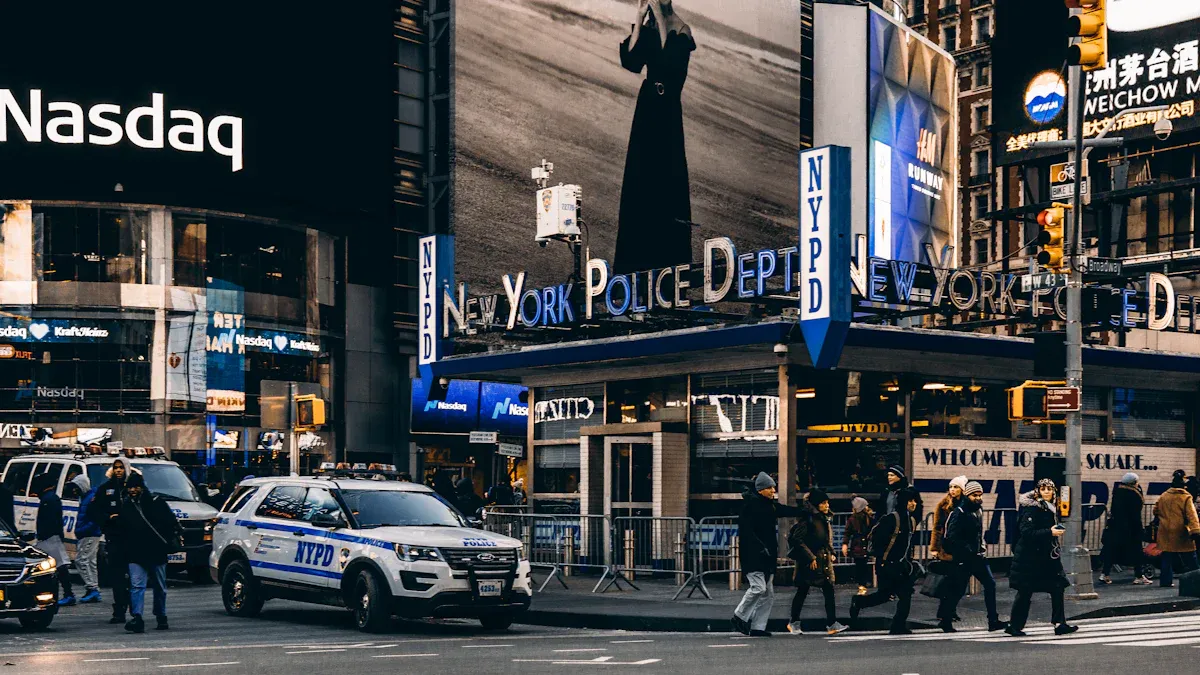
Image Source: unsplash
Nasdaq’s all-day trading plan this time is not a whim but a carefully considered strategic deployment. The details of the plan reveal its ambition to reshape the market trading model while foreshadowing a profound industry change.
Official Confirmation and Implementation Timeline
Nasdaq sent a clear signal to the market in March 2025, formally confirming that it will advance its stock market all-day trading plan. This official statement ended long-standing market speculation.
Key Time Nodes
- Formal Confirmation: March 2025
- Expected Implementation: Second Half of 2026
Exchange executives stated that the team is working closely with regulators and all market participants to ensure a smooth launch in the second half of 2026. This timeline provides sufficient preparation time for brokers, technology providers, and investors to adapt to the upcoming new trading environment.
24-Hour Non-Stop Trading Goal
Nasdaq’s goal is to achieve continuous trading five days a week, 24 hours a day, namely the “24/5” model. This means global investors will be able to trade stocks listed on Nasdaq at any time from Sunday evening to Friday evening U.S. Eastern Time.
This change aims to break the constraints of traditional trading sessions. The current trading window mainly serves investors in the North American time zone, while participants in other global regions have to operate in the middle of the night or early morning. The 24/5 trading model will completely change this situation.
| Trading Mode | Current Standard Trading Hours (ET) | Planned 24/5 Trading Hours (ET) |
|---|---|---|
| Coverage | Monday to Friday, 9:30 AM - 4:00 PM | Sunday Evening - Friday Evening, Non-Stop All Day |
| Main Advantages | Concentrated Market Liquidity | Seamless Global Time Zone Docking, Enhanced Trading Flexibility |
The core driving force of this move is to meet the growing investment demand from global investors, particularly in Asia and Europe. By providing a “never-sleeping” market, Nasdaq hopes to position itself as a true global capital center.
Regulatory Approval as a Key Step
Although Nasdaq’s plan is ambitious, its implementation must cross a key threshold: obtaining formal approval from the U.S. Securities and Exchange Commission SEC. The SEC’s review will focus on whether the plan can enhance market efficiency while ensuring fairness, order, and stability.
In fact, the SEC has precedents for extended trading hours. The agency previously approved the application of 24X National Exchange, allowing it to conduct near all-day trading. This paves the way for Nasdaq’s application, but does not mean approval will be automatic. The SEC will strictly evaluate Nasdaq’s proposal, focusing on the following aspects:
- Investor Protection: Ensure investors, especially retail investors, fully understand the potentially lower liquidity and higher volatility risks of nighttime trading.
- Market Fairness and Order: Establish robust real-time monitoring systems and emergency response plans to address trading anomalies and systemic risks, preventing market manipulation.
- Technology and System Resilience: Assess whether the trading, clearing, and settlement infrastructure can withstand 7x24-hour pressure. This includes upgrading systems to adapt to extended trading hours and deploying advanced cybersecurity measures, such as encryption and regular vulnerability assessments.
- Liquidity and Pricing Efficiency: Address liquidity thinning issues in non-peak hours (such as 8 PM to 4 AM ET). Insufficient liquidity will lead to wider bid-ask spreads, directly increasing investors’ trading costs.
Nasdaq clearly stated that it is collaborating with all market participants to jointly design a framework that meets investor needs without introducing improper risks. Ensuring market integrity and protecting investor interests remain the primary premises of this change.
Global Exchanges’ “Never-Sleeping” Competition
Nasdaq is not fighting alone in the race to extend trading hours. In fact, a “never-sleeping” competition around global capital market attention has already begun. Major exchanges are laying out plans, striving to seize the initiative in this change.
New York Stock Exchange’s Pursuit
As Nasdaq’s most direct competitor, the New York Stock Exchange (NYSE) is acting just as swiftly. Its parent company, Intercontinental Exchange Group (ICE), announced as early as October 2024 plans to extend trading hours on its NYSE Arca stock exchange to five days a week, 22 hours a day.
This plan will cover trading sessions from 1:30 AM to 11:30 PM Eastern Time. This move is widely interpreted by the market as a direct response to Nasdaq’s strategy, aiming to ensure its competitiveness in global trading.
The implementation of the plan depends on a key link: Depository Trust & Clearing Corporation (DTCC) must correspondingly extend its clearing service hours. This indicates that extending trading is not a unilateral action by the exchange but requires coordinated upgrades of the entire market infrastructure.
Cboe’s Synchronous Layout
The Chicago Board Options Exchange (Cboe) is also an active participant in this competition. Cboe formally announced in February 2025 plans to launch 24/5 trading services on its EDGX stock exchange. The plan clearly targets overseas investors with strong demand for US stocks, especially retail investors in the Asia-Pacific region.
To meet the needs of different investors, Cboe’s layout also includes providing near-24-hour trading services for specific products like Russell 2000 Index options.
| Exchange | Planned Mode | Announcement Time | Core Goal |
|---|---|---|---|
| Nasdaq | 24/5 | March 2025 | Build Global Capital Center |
| NYSE (Arca) | 22/5 | October 2024 | Maintain Market Competitiveness |
| Cboe (EDGX) | 24/5 | February 2025 | Serve Asia-Pacific Investors |
Considerations in International Markets Like London
As U.S. exchanges stride toward the “never-sleeping” era, other international financial centers are also cautiously considering. The London Stock Exchange Group (LSEG) has publicly stated that it is studying the feasibility of extending trading hours or even implementing 24-hour trading. However, compared to the U.S. market, London faces more complex challenges:
- Technology Upgrades: Whether existing systems can support all-day non-stop operation.
- Regulatory Coordination: Need for extensive discussions with regulators in Europe and other regions.
- Market Impact: Must assess the impact of extended trading on dually listed companies and potential effects on market liquidity.
These factors make markets like London more cautious in decision-making, with their change pace expected to lag behind the U.S.
Driving Forces Behind the Change
Nasdaq and major exchanges racing to extend trading hours is not simply a technology competition; behind it are profound market changes and user demand pushes. Three core driving forces are reshaping the future of global capital markets.
Rise of Retail Investors and Globalization Demand
Since 2020, retail investors have entered the market on an unprecedented scale, becoming an undeniable force. This wave has completely changed the market ecology.
- Surge in Retail Participation: In the first quarter of 2020, average daily US stock trading volume increased 62.4%. By early 2025, retail capital inflows matched pandemic peaks in number and even surpassed in amount.
- Strong Global Demand: The Asian market has an “insatiable global appetite” for US stocks. However, time differences force European and Asian investors to trade in the middle of the night, greatly limiting their participation.
To serve these investors spread across the globe, the market needs more flexible trading hours. At the same time, fintech applications like Biyapay have emerged, simplifying cross-border payments and currency exchange processes to help global retail investors enter the US market more conveniently, further driving globalization investment demand.
Farewell to Traditional “US Stock Closing Time”
The traditional concept of “US stock closing time” is gradually losing its original meaning. Trading activity is no longer confined to the fixed window from 9:30 AM to 4:00 PM Eastern Time.
Data shows that currently over 11% of US stock trading activity occurs outside regular trading sessions. The continuous growth in pre-market and after-hours trading volume indicates that investors want to continue reacting to market news and events after the traditional US stock closing time. All-day trading is the formal confirmation of this real demand.
Inspiration from Cryptocurrency Markets
The 7-day, 24-hour non-stop trading characteristic of cryptocurrency markets is reshaping investor expectations. In an era where Bitcoin can be traded anytime, the fixed opening and closing times of traditional stock markets seem increasingly outdated.
ION Global Equities Head Bob Cioffi points out, investors now expect all markets to provide all-day availability. If stock markets do not actively evolve, they may lose appeal to the next generation of traders. Liquidity will naturally flow to the most convenient options. When investors can trade cryptocurrencies, forex, and futures anytime, breaking the old US stock closing time restrictions for stock markets is only a matter of time.
Opportunities and Challenges of All-Day Trading
Image Source: unsplash
Although all-day trading paints a blueprint full of opportunities, this profound change also comes with a series of complex challenges. From individual investors to listed companies and the entire market infrastructure, every participant will face new tests.
Convenience and Risks for Investors
For global investors, the most direct appeal of the 24/5 trading model is its unprecedented convenience and flexibility.
- Enhanced Trading Convenience: Investors are no longer limited by fixed work hours and can trade at any time according to personal schedules, especially convenient for non-full-time traders.
- Seizing Price Opportunities: Market news (such as company earnings, analyst rating adjustments) often released after traditional US stock closing time. All-day trading allows investors to react immediately, capturing price opportunities driven by news events.
- Responding to Global Events: Investors can quickly respond to global political and economic dynamics affecting the US market, better managing their portfolios.
- Psychological Comfort: Even without active trading, knowing they can manage positions anytime brings investors peace of mind.
However, behind the opportunities lie risks that cannot be ignored. Nighttime trading environments differ significantly from regular sessions, especially for retail investors; understanding these risks is crucial.
Warning: Liquidity in nighttime trading sessions is usually lower, with potentially higher volatility, directly affecting trading costs and execution certainty.
| Risk Type | Specific Description |
|---|---|
| Insufficient Liquidity | Order volume in nighttime sessions may be far less than regular sessions, making it difficult for investors to execute at desired prices or even complete trades. |
| Increased Volatility | Fewer participants may lead to sharper price swings, with orders possibly partially executed or at unfavorable prices. |
| Wider Bid-Ask Spreads | Thin liquidity directly leads to larger differences between buy and sell prices (spreads), increasing investors’ actual trading costs. |
| News Announcement Impact | In sessions with fewer participants at night, major news impacts may be amplified, leading to disproportionate overreactions. |
| Price Disconnection Risk | Nighttime trading prices may not fully reflect next-day opening market consensus, exposing investors to price change risks. |
Concerns of Listed Companies
All-day trading not only changes investor behavior patterns but also brings new operational pressures and strategic considerations to listed companies. A recent Nasdaq survey shows that about half of responding companies hold reservations about extended trading hours, especially regarding liquidity and corporate actions.
Listed companies’ concerns mainly focus on the following aspects:
- Information Disclosure and Investor Relations Management: Traditional US stock closing time provides companies with a valuable “digestion period” for releasing major news (such as earnings, merger announcements). In the 24/5 trading model, this window disappears. Companies need to establish all-day investor relations (IR) teams, possibly setting up night shifts or hiring external resources to monitor stock price fluctuations in real-time, respond to investor inquiries, and manage market expectations. For smaller biotechnology companies, releasing key information like clinical trial results in low-liquidity sessions can easily trigger excessive market reactions.
- Operational Costs and Compliance Pressure: To adapt to non-stop trading, companies and their cooperating brokers and advisors need to update technology systems, adjust internal policies and workflows. This not only means additional cost investments but also brings more complex compliance challenges, such as ensuring best execution and trade reporting obligations in all trading sessions.
- Financing Activities and Stock Price Stability: Companies need a relatively stable price environment when conducting capital market activities like additional offerings and placements. Potential sharp volatility in nighttime sessions may bring more uncertainty to pricing and execution of financing activities.
Systemic Challenges: Technology, Clearing, and Regulation
Transforming the stock market into a “never-sleeping” ecosystem poses the greatest challenges from the infrastructure supporting its operation. This is not just a technical issue but involves reshaping a series of core links like clearing, settlement, and regulation.
Technical bottlenecks are real challenges. In August 2024, the after-hours trading platform Blue Ocean was forced to suspend services due to surging trading volume. This incident sounded an alarm: even systems designed for extended sessions may buckle under sudden traffic. For massive markets like Nasdaq and NYSE, ensuring system stability under 7x24-hour high pressure is an arduous task.
Liquidity issues in nighttime sessions (such as 8 PM to 4 AM ET) are particularly prominent. Extremely thin liquidity will lead to significantly wider bid-ask spreads, directly harming investor interests. However, in specific cases, nighttime trading volume may also surge. For example, during U.S. presidential election vote counting, geopolitical crisis outbreaks, or after earnings releases from giants like Nvidia (Nvidia) and Tesla (Tesla), E-mini S&P 500 index futures nighttime trading volume has repeatedly hit historical highs. This sudden trading flood is both a market opportunity and the ultimate test of system stability and risk management capabilities.
Additionally, traditional clearing and settlement processes must be thoroughly reformed. Currently, clearing companies (such as DTCC) mostly use market closing time for data processing, risk calculation, and fund settlement. To support 24/5 trading, the entire post-trade processing chain—from brokers to clearing institutions to custodian banks—must upgrade systems to achieve near real-time risk monitoring and processing. This requires market regulators to synchronously update rules to adapt to a market environment without a clear “end-of-day” concept.
Nasdaq advancing all-day trading is an inevitable step for the US stock market toward globalization and meeting modern investor needs. This move marks the arrival of a new era. Although the market faces multiple challenges like liquidity dispersion, technical bottlenecks (such as the Blue Ocean case), and regulatory coordination, the synchronous layouts of global exchanges indicate that this change trend is irreversible.
Global capital markets are entering a new era of “trading never sleeps.” All investors and market participants must adapt to this constantly evolving landscape, preparing for future opportunities and challenges.
FAQ
When will the 24/5 trading plan formally start?
Nasdaq officially expects to formally implement the plan in the second half of 2026. This move aims to provide more flexible trading hours for global investors. The specific date will depend on final regulatory approval.
What risks does all-day trading pose for ordinary investors?
Investors mainly face two types of risks:
- Liquidity Risk: Nighttime trading volume may be lower, making orders difficult to execute.
- Price Risk: Bid-ask spreads may widen, increasing trading costs, and price volatility may be more severe.
Do other exchanges have similar plans besides Nasdaq?
Yes. The New York Stock Exchange (NYSE) and Chicago Board Options Exchange (Cboe) have also announced their respective extended trading hour plans. Major global exchanges are competing to meet globalization investment demand.
*This article is provided for general information purposes and does not constitute legal, tax or other professional advice from BiyaPay or its subsidiaries and its affiliates, and it is not intended as a substitute for obtaining advice from a financial advisor or any other professional.
We make no representations, warranties or warranties, express or implied, as to the accuracy, completeness or timeliness of the contents of this publication.
Related Blogs of

US Stock Market Holiday Countdown: How Investors Should Position for Next Week's Trading

How to Choose US Major Indices: Pros and Cons Analysis of S&P 500, Dow Jones, and Nasdaq

Micro Dow, Micro Nasdaq, Micro S&P Futures Comprehensive Comparison – Helping You Find the Best Trading Choice


Is the W-8BEN Form Required for Opening a US Stock Account? Understand How to Save on Taxes in One Article

Choose Country or Region to Read Local Blog
 Australia
 Austria
 Belgium
 Canada
 Cyprus
 Czech Republic
 Denmark
 Estonia
 Finland
 France
 Germany
 Greece
 Hong Kong
 India
India Indonesia
 Ireland
 Italy
Italy Japan
Japan Latvia
 Lithuania
 Luxembourg
 Malaysia
 Malta
Malta Morocco
 Nepal
Nepal Netherlands
 New Zealand
 Norway
 Pakistan
 Philippines
 Poland
 Portugal
 Romania
 Singapore
 Slovakia
 Slovenia
 South Africa
 South Korea
 Spain
Spain Sweden
 Thailand
 The United States
 Turkey
 United Arab Emirates
 United Kingdom
 Vietnam
Contact Us




BIYA GLOBAL LLC is a licensed entity registered with the U.S. Securities and Exchange Commission (SEC No.: 802-127417); a certified member of the Financial Industry Regulatory Authority (FINRA) (Central Registration Depository CRD No.: 325027); regulated by the Financial Industry Regulatory Authority (FINRA) and the U.S. Securities and Exchange Commission (SEC).
BIYA GLOBAL LLC is registered with the Financial Crimes Enforcement Network (FinCEN), an agency under the U.S. Department of the Treasury, as a Money Services Business (MSB), with registration number 31000218637349, and regulated by the Financial Crimes Enforcement Network (FinCEN).
BIYA GLOBAL LIMITED is a registered Financial Service Provider (FSP) in New Zealand, with registration number FSP1007221, and is also a registered member of the Financial Services Complaints Limited (FSCL), an independent dispute resolution scheme in New Zealand.