Resonance of AI Wave and Industrial Recovery: Outlook for Hong Kong Stock Market Bull Pattern in 2026



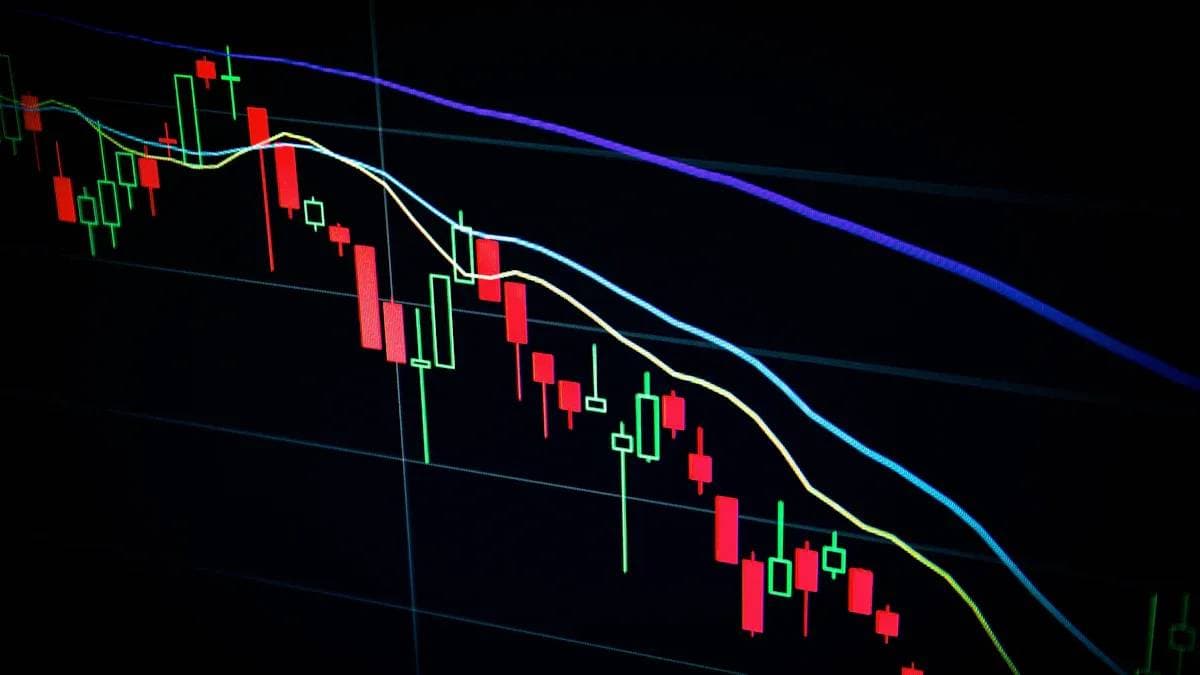
Image Source: unsplash
The artificial intelligence (AI) wave resonates with industrial recovery, driving the Hong Kong stock market to exhibit a bull market pattern in 2026. Market opportunities are expected to feature structural characteristics rather than a broad rally. Some mainstream investment banks have expressed optimistic expectations, for example, Morgan Stanley has set positive forward targets for the Hang Seng Index.
| Institution | Forecast Time Point | Hang Seng Index Target (Base Scenario) | Hang Seng Index Target (Bull Scenario) |
|---|---|---|---|
| Morgan Stanley | End of December 2026 | 27,500 points | 34,700 points |
In this context, technology stocks become the core driver of the market. At the same time, the recovery of cyclical sectors and the defensive value of high-dividend assets also provide diversified investment opportunities, jointly forming a professional investment landscape full of opportunities and challenges.
Key Points
- The Hong Kong stock market will usher in a bull market in 2026, with AI technology and industrial recovery as the main driving forces.
- This bull market is structural, and investors should focus on AI technology, innovative drugs, and high-dividend assets.
- Improved global capital liquidity and supportive policies from mainland China will provide strong backing for the market.
- Corporate profitability will significantly improve, with AI empowerment and cyclical sector recovery being key.
- Investors need to be vigilant about AI bubble risks and macroeconomic policy uncertainties, and carefully select high-quality stocks.
Macro Capital Side: Global Liquidity and Policy Support
Abundant capital is the cornerstone driving a bull market. Looking ahead to 2026, the liquidity environment for the Hong Kong stock market is expected to significantly improve under the combined effect of multiple positive factors, providing solid support for market upside.
Expected Turning Point in Global Liquidity
The market widely expects major global central banks, especially the Federal Reserve, to enter an interest rate cutting cycle between 2025 and 2026. The shift in the interest rate environment will ease funding pressures in global markets and release substantial liquidity. For an open economy like Hong Kong, improved USD liquidity will directly reduce financing costs and attract international capital inflows.
Dividend from Mainland China’s Steady Growth Policies
Mainland China’s continuous rollout of steady growth policies has injected a strong boost into the market. The government has clearly stated that it will adopt an expansionary fiscal stance in 2025, supplemented by multiple specific measures to boost economic vitality.
- Expand the trade-in program for consumer goods to stimulate domestic demand.
- Accelerate fiscal transfer payments to support local economies.
- Introduce nationwide childcare subsidies, providing RMB 3,600 per year for each child under three.
- Relax real estate restrictions in core cities like Shenzhen.
The implementation of these policies will effectively improve corporate profit expectations and enhance investor confidence.
Strengthening Pricing Power of Southbound Capital
Southbound capital from mainland China has become a key force influencing the Hong Kong stock market. Data shows that since July 2023, southbound capital has achieved net inflows for 27 consecutive months. As of early September 2025, the net inflow scale for the year has exceeded HK$1.006 trillion, setting a historical record. This force has significantly strengthened its pricing power in core assets, especially in the technology sector.
Global Asset Reallocation and Foreign Capital Inflows
After prolonged adjustments, the valuation depression effect of Hong Kong stocks has become more prominent, attracting global long-term investors for reallocation.
The valuation level of the Hang Seng Index provides a safety margin. As of December 2025, its price-to-earnings ratio (PE) is 18.08 times, although higher than the past decade’s average of 15.16 times, it remains attractive globally.
As mainland China’s economy stabilizes and global risk appetite recovers, foreign capital is expected to reverse previous sustained outflows and redirect attention to high-quality Chinese assets with long-term growth potential.
Industrial Profit Side: Core Engine Driving Hong Kong Stock Market

Image Source: pexels
If capital is water, then corporate profits are the boat. Profit growth is the core engine driving the long-term bull market in the Hong Kong stock market. Looking ahead to 2026, under the backdrop of AI technology empowerment and global economic recovery, the profit fundamentals of listed companies are expected to see significant improvement.
AI Empowerment: Second Growth Curve for Tech Giants
Artificial intelligence is becoming key for tech giants to unlock their second growth curve. Progress in AI business directly impacts market judgments of company value. For example, a Nasdaq report noted that after news of Baidu potentially spinning off its Kunlun AI chip unit for an IPO, its stock price rose about 10%, and Citibank reaffirmed its $181 target price.
Broader research indicates that AI applications can fundamentally enhance corporate value.
A study of Chinese A-share listed companies from 2015 to 2023 found that AI technology significantly improves corporate ESG (environmental, social, and governance) performance through the following ways:
- Alleviating financing constraints
- Enhancing external oversight
- Improving information disclosure
This technology-driven efficiency and governance optimization provides a solid foundation for long-term corporate growth.
Profit Inflection Point: Results of Corporate Cost Reduction and Efficiency Improvement Emerge
After challenges in previous years, many companies have gradually emerged from the trough through cost reduction and efficiency gains, with profitability beginning to recover. Data shows that profit margins for Hong Kong non-financial stocks improved by 0.3 percentage points year-on-year in the first half of this year. More importantly, the market holds positive expectations for future profit growth, with the consensus EPS growth forecast for the Hang Seng Index in 2026 reaching 10%, indicating that the profit inflection point has been established.
Industrial Recovery: Elastic Release in Cyclical Sectors
As the global economy gradually recovers, demand for industrial goods is expected to rebound, bringing significant profit elasticity to cyclical sectors. Taking copper as an example, as an economic “barometer,” its price forecasts reflect market optimism. Multiple institutions predict that copper prices will remain high in 2025-2026, with some forecasts even suggesting a potential breakthrough above $10,000 per ton.
| Institution/Source | 2025 Average Copper Price Forecast | 2026 Average Copper Price Forecast |
|---|---|---|
| ING Think | $9,572 per metric ton | $9,837 per metric ton |
| Scotiabank | $4.25 per pound | $4.05 per pound |
| Gov Capital | Near $5.60 per pound by end of 2025 | $5.10-5.70 per pound |
New demands from energy transition and data centers will continue to absorb copper supply, creating a favorable operating environment for companies in related industrial, energy, and materials sectors.
Offshore Expansion in Pharmaceuticals: Value Revaluation for Innovative Drug Companies
The “offshore licensing” of Chinese innovative drug companies is becoming a highly certain growth path, driving sector value revaluation. Multinational pharma companies have generally recognized the quality of Chinese innovative drug assets, with BD transactions (Business Development) becoming increasingly active.
- In the first half of 2025, Chinese pharmaceutical companies completed over 70 overseas licensing deals.
- The total upfront payments for these deals reached $33 billion.
- The total potential value of the deals exceeded $480 billion.
This trend indicates that Chinese innovative drug companies are leveraging their R&D strength to secure a place in the global market, with their intrinsic value being rediscovered and repriced by international capital.
Market Divergences and Outlook: Structural Opportunities Under Cautious Expectations
Although the market expects a bull market pattern, investors have significant divergences on the sources of driving forces, macroeconomic constraints, and the ultimate market form. These divergences form the investment backdrop under cautious expectations, highlighting the importance of structural opportunities.
Divergence Between Valuation Repair and Profit Growth
The market holds two different views on the core driver of this rally. Some institutions believe valuation repair is the main driver. For example, HSBC Private Bank is bullish on Hong Kong stocks due to attractive valuations and high dividend yields. This view holds that current low prices provide sufficient upside space.
However, another perspective emphasizes that only solid profit growth can support a sustainable bull market. They argue that rallies relying solely on valuation expansion are short-lived, and companies must prove their profitability is entering an upward channel to truly earn long-term capital trust.
Oscillations and Slowdown in Credit Cycle
Global liquidity expectations are positive, but mainland China’s credit cycle may exhibit oscillations and slowdown. This means weaker credit expansion willingness in corporate and household sectors, constraining the intensity of fixed asset investment and consumption recovery.
Slowdown in credit expansion may limit capital expenditure and growth speed in some industries. This will make the overall market upside slope gentler, rather than a V-shaped reversal.
Game Between “Excess Liquidity” and “Scarce Assets”
Under global rate cut expectations, the market will welcome abundant “excess liquidity.” These funds will actively seek “scarce assets” with high growth certainty and long-term competitive barriers. In the current environment, such assets mainly point to:
- Tech leaders with AI technology moats
- Pharmaceutical companies with innovative pipelines and offshore capabilities
- State-owned enterprises providing stable cash flows with high dividends
This game will lead to significant internal market differentiation, with valuation premiums for high-quality assets potentially continuing to widen.
Market Consensus: Structural Rally as Main Theme
Overall, the market is forming a clear consensus: the 2026 rally will primarily feature structural characteristics rather than a broad rise. Investors need to abandon the fantasy of “rising tide lifts all boats” and focus on specific sectors and companies that can transcend cycles and realize growth logic. The ability to select individual stocks will become key to determining investment returns.
2026 Hong Kong Stock Market Investment Strategy: Focusing on Structural Opportunities

Image Source: pexels
Facing the structural bull market pattern in 2026, the core of investment strategy lies in precisely identifying and focusing on sectors with long-term growth momentum. Investors should abandon broad rally expectations, adopt a selective approach, and allocate around four main lines: AI technology, innovative growth, stable high dividends, and cyclical elasticity.
Core Main Line: AI Applications and Hardware Industry Chain
Artificial intelligence is the core engine driving this bull market, with investment opportunities spanning hardware and application levels.
On the hardware side, the explosion in AI computing power demand brings certain growth to the industry chain. Demand for key components like neural processing units (NPU) and high-bandwidth memory (HBM) is particularly strong. Data shows these sub-markets are entering a high-growth period.
| AI Hardware Sub-Market | Expected Compound Annual Growth Rate (2025-2034) |
|---|---|
| Neural Processing Unit (NPU) | Over 19% |
| High-Bandwidth Memory (HBM) | Over 19% |
| Graphics Processing Unit (GPU) | Over 18% |
| AI-Optimized DRAM | Over 18% |
NPU growth mainly benefits from its low-latency and high-efficiency advantages in edge device AI applications. Meanwhile, AI-optimized DRAM is expected to see significant market adoption growth through supporting rapid data exchange in training processes.
On the application side, commercialization progress in fields like autonomous driving is accelerating, providing huge growth space for related companies. Some companies planning to list in Hong Kong have demonstrated strong technical strength and commercialization potential.
- Pony AI Inc.: An autonomous driving company focused on AI research and development, planning to use proceeds for large-scale commercialization and fleet expansion.
- WeRide Inc.: Another autonomous driving company committed to accelerating fleet mass production and global business expansion.
Industry expert Le noted that Pony AI and WeRide are “among global leaders”, highlighting their technology moats and investment value.
Growth Opportunities: Innovative Drugs and Offshore Leaders
Beyond AI, innovative drug companies and consumer brands with global competitiveness represent another important growth line in the Hong Kong stock market.
Chinese innovative drug companies are achieving value revaluation through the “offshore licensing” model. Sichuan Biokin focuses on developing ADC drugs for cancer treatment, with 17 therapies in its pipeline and a co-development agreement with Bristol Myers Squibb. Rona Therapeutics, planning to list, focuses on RNA interference therapies with 15 drug pipelines.
Henlius Biopharmaceutical stands out among them. The company has built stable cash flows through biosimilars to fund innovative drug R&D. In the first half of 2024, total revenue was approximately $389 million, with net profit reaching $54 million. Its flagship PD-1 inhibitor serplulimab achieved breakthroughs in small cell lung cancer treatment, with expected global peak sales of $5 billion, and has begun contributing significant growth in overseas markets like Southeast Asia and India.
Additionally, more mainland Chinese consumer brands are accelerating global expansion through “A+H” dual listings on the Hong Kong Stock Exchange. Listings of seasoning manufacturers like Haitan Flavoring indicate Chinese brands are actively participating in international competition, providing investors opportunities to share globalization dividends.
Stable Choice: High Dividends and Dividend Assets
In market volatility, high-dividend assets provide valuable defensiveness and stable cash returns, serving as the “ballast stone” in investment portfolios. Such assets are mainly concentrated in state-owned enterprises in mature industries like finance, energy, and telecommunications, with stable operations and consistent payout policies.
The performance of the Hang Seng High Dividend Yield Index fully illustrates the attractiveness of such assets.
| Indicator | Value |
|---|---|
| Underlying Index | Hang Seng High Dividend Yield Index |
| Annualized Yield | 6.25% (as of December 9, 2025) |
| Per Share Dividend | Approximately $0.21 (calculated at HK$1.60) |
For long-term investors seeking stable returns, allocating to high-dividend assets not only yields considerable dividend income but also acts as a buffer when market uncertainty increases.
Cyclical Elasticity: Industrial, Energy, and Materials Sectors
As the global economy recovers, cyclical sectors like industrial, energy, and materials will exhibit significant profit elasticity.
In the industrial and materials field, the lithium battery industry chain is a focus worth attention. Benefiting from strong demand in new energy vehicles and energy storage markets, industry prospects are broad.
- By 2026, solid-state battery technology is expected to accelerate commercialization, with far higher demand for high-end lithium resources than traditional batteries, bringing structural growth opportunities.
- Institutions like Cinda Securities recommend focusing on leading battery companies like CATL and Eve Energy, as well as upstream material companies like Tianci Materials and Putailai.
- Industrial Securities believes that with price stabilization and slowed capacity expansion, profitability in the lithium battery sector is expected to recover.
In the energy field, despite the global shift to green energy, traditional energy will still play an important role in the coming years. Price forecasts indicate oil and gas prices will remain at levels enabling corporate profitability.
| Energy Type | Forecast Price (2026) |
|---|---|
| Brent Crude | $55 per barrel |
| Henry Hub Natural Gas | $4 per million British thermal units (BTUs) |
This price environment provides stable profit expectations for energy giants like CNOOC and PetroChina, making them important investment targets in cyclical recovery.
Looking ahead to 2026, the Hong Kong stock market, under the resonance of AI technology and industrial recovery, presents a structural bull market pattern. Key investment directions are clear: AI technology as the main line, supplemented by innovative pharmaceuticals and high-dividend assets, while paying attention to phased opportunities in cyclical sectors.
Risk Disclosure Investors must remain prudent and face potential risks:
- Uncertainties in global macroeconomic policies, especially the Federal Reserve’s interest rate path.
- Impacts from slowdown in mainland China’s credit cycle.
- AI Bubble Risk: Studies show AI bubble risk scored 8 out of 8, with highly concentrated investments; if technology promises fail to materialize, it could trigger chain reactions.
FAQ
What is the main driving force behind the Hong Kong stock market bull market in 2026?
The bull market pattern in the Hong Kong stock market in 2026 is mainly driven by two factors:
- AI Technology Wave: Artificial intelligence creates new growth points for technology companies.
- Industrial Cycle Recovery: Global economic warming drives profit repair in cyclical industries. These two forces jointly provide upside momentum for the market.
Is this bull market a broad rally?
Market consensus believes this is not a broad rally. The bull market will exhibit significant “structural” features. Capital will concentrate in “scarce assets” with core competitiveness, such as AI leaders and innovative drug companies. Investors need to select individual stocks rather than expect all stocks to rise.
What are the main risks in investing in the Hong Kong stock market?
Investors should be vigilant about several major risks. Global macroeconomic policies, especially the Federal Reserve’s interest rate path, carry uncertainties. Additionally, there may be bubble risks in the AI field. Studies show its bubble score is 8 out of 8, with highly concentrated investments, requiring caution against pullbacks.
Besides technology stocks, which sectors are worth attention?
Besides AI technology stocks as the core main line, several other sectors provide diversified opportunities. Innovative drug companies show growth potential through offshore capabilities. High-dividend state-owned enterprises provide stable defensive value. Cyclical industrial and energy sectors possess profit elasticity.
*This article is provided for general information purposes and does not constitute legal, tax or other professional advice from BiyaPay or its subsidiaries and its affiliates, and it is not intended as a substitute for obtaining advice from a financial advisor or any other professional.
We make no representations, warranties or warranties, express or implied, as to the accuracy, completeness or timeliness of the contents of this publication.
Related Blogs of

Will AI Drive Taiwan Stock Market to New Highs Again? Analyzing 2026 Index Trends and Investment Strategies


2025 China Stock Market App Review: Tonghuashun, East Money, Sina Finance - Who is the Best Value King


How the Rise of Sovereign AI Will Impact the Future of Taipei Stock Market's Tech Supply Chain
A 35-Year Turbulent Journey: Panoramic Review of the Starting and Ending Points of China A-Share Bull Markets

Choose Country or Region to Read Local Blog
 Australia
 Austria
 Belgium
 Canada
 Cyprus
 Czech Republic
 Denmark
 Estonia
 Finland
 France
 Germany
 Greece
 Hong Kong
 India
India Indonesia
 Ireland
 Italy
Italy Japan
Japan Latvia
 Lithuania
 Luxembourg
 Malaysia
 Malta
Malta Morocco
 Nepal
Nepal Netherlands
 New Zealand
 Norway
 Pakistan
 Philippines
 Poland
 Portugal
 Romania
 Singapore
 Slovakia
 Slovenia
 South Africa
 South Korea
 Spain
Spain Sweden
 Thailand
 The United States
 Turkey
 United Arab Emirates
 United Kingdom
 Vietnam
Contact Us




BIYA GLOBAL LLC is a licensed entity registered with the U.S. Securities and Exchange Commission (SEC No.: 802-127417); a certified member of the Financial Industry Regulatory Authority (FINRA) (Central Registration Depository CRD No.: 325027); regulated by the Financial Industry Regulatory Authority (FINRA) and the U.S. Securities and Exchange Commission (SEC).
BIYA GLOBAL LLC is registered with the Financial Crimes Enforcement Network (FinCEN), an agency under the U.S. Department of the Treasury, as a Money Services Business (MSB), with registration number 31000218637349, and regulated by the Financial Crimes Enforcement Network (FinCEN).
BIYA GLOBAL LIMITED is a registered Financial Service Provider (FSP) in New Zealand, with registration number FSP1007221, and is also a registered member of the Financial Services Complaints Limited (FSCL), an independent dispute resolution scheme in New Zealand.