What Is Pre-Market and After-Hours Trading in US Stocks? A Complete Guide to Extended Hours Trading



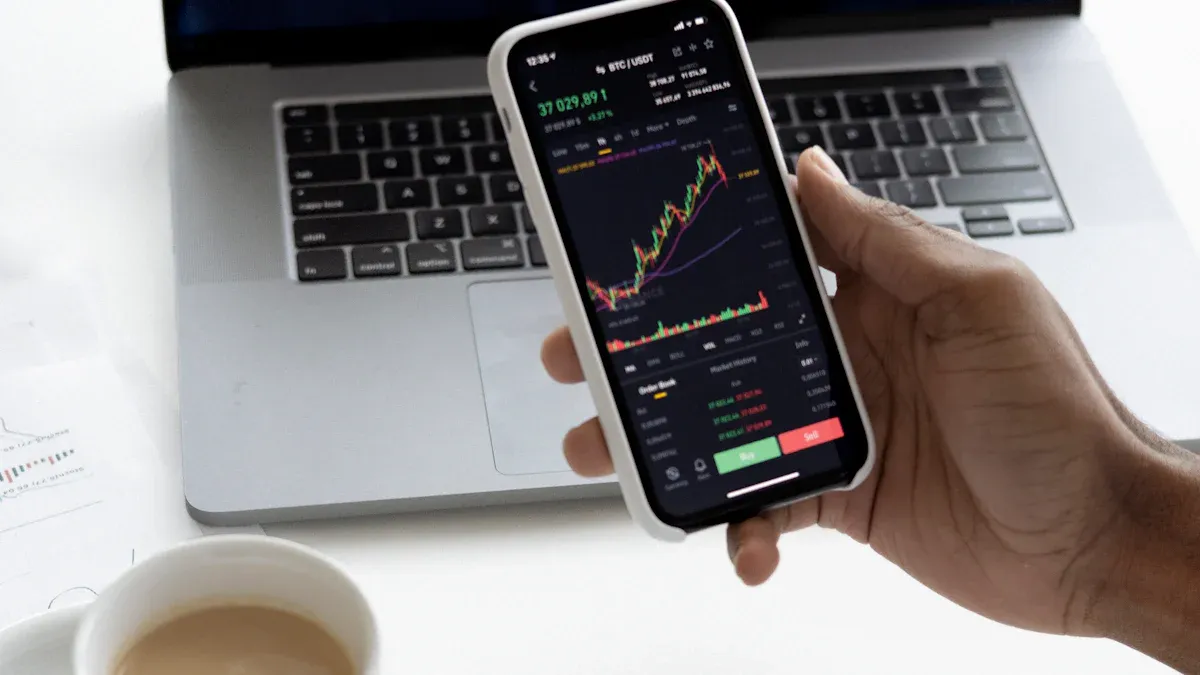
Image Source: pexels
You can think of US stocks pre-market and after-hours trading as the stock market’s “overtime.” Understanding the complete US stock trading hours is very important.
- Pre-Market Session: Eastern Time 4:00 AM - 9:30 AM (Beijing Time 4:00 PM - 9:30 PM)
- Regular Session: Eastern Time 9:30 AM - 4:00 PM (Beijing Time 9:30 PM - 4:00 AM)
- After-Hours Session: Eastern Time 4:00 PM - 8:00 PM (Beijing Time 4:00 AM - 8:00 AM)
Note: During daylight saving time, Beijing Time shifts forward by one hour accordingly.
So, how does this trading work? What are its pros and cons? And how can you participate?
Key Takeaways
- US stock trading includes regular hours and extended hours. Extended hours consist of pre-market and after-hours, serving as the market’s “overtime.”
- Extended hours trading allows you to react quickly to news. For example, after a company releases earnings, you can immediately buy or sell stocks.
- Extended hours trading carries higher risks. It has lower trading volume, greater price volatility, and wider bid-ask spreads.
- Participating in extended hours trading requires broker support. You must enable the permission and can only use limit orders.
- Beginner investors should approach extended hours trading with caution. It is recommended to use small amounts of capital and practice first in a demo account.
Understanding US Stock Trading Hours: Regular vs. Extended Sessions
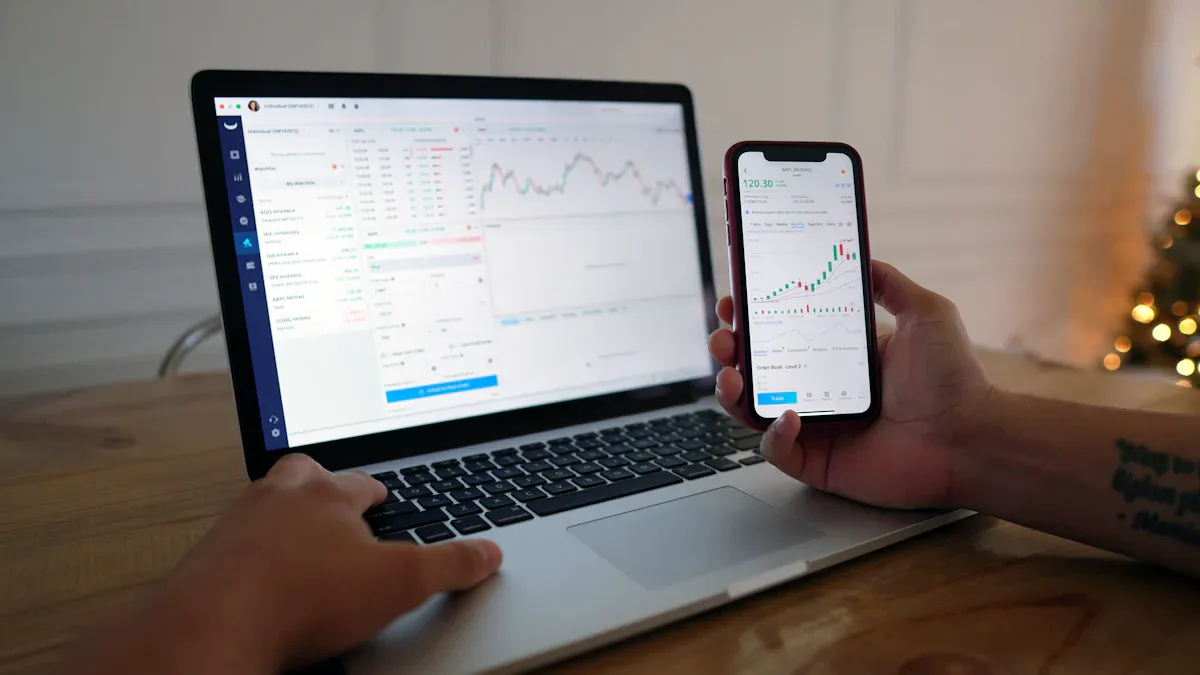
Image Source: unsplash
To make the most of extended hours, you first need to clearly distinguish between the regular and extended US stock trading sessions. They differ significantly in operation and trading rules.
Definition of Regular Trading Hours
Regular trading hours are the core and most active period of the US stock market. You can think of it as the stock market’s “official business hours.” The vast majority of trading volume occurs during this time. The official hours for the two major US exchanges are as follows:
- New York Stock Exchange (NYSE): Eastern Time 9:30 AM to 4:00 PM
- Nasdaq Stock Market: Eastern Time 9:30 AM to 4:00 PM
During this period, market liquidity is highest, and bid-ask spreads are typically the narrowest.
Pre-Market and After-Hours Extended Sessions
Pre-market and after-hours sessions together form the complete extended trading hours. You can view them as supplements to regular hours, providing the market with additional reaction time. The full breakdown of US stock trading hours is as follows:
- Early Trading Session (Pre-market Session): 4:00 AM - 9:30 AM, this is the most active phase of pre-market trading.
- Core Trading Session: 9:30 AM - 4:00 PM, the regular session.
- Extended Trading Session (Post-market Session): 4:00 PM - 8:00 PM, typically used to react to news released after the close.
How Extended Hours Work: ECNs and Limit Orders
Extended hours trading does not take place on the main trading floors of the NYSE or Nasdaq. Instead, it relies on a system called Electronic Communication Networks (ECNs). An ECN like NYSE Arca is a fully automated electronic system that directly matches buyers’ and sellers’ orders.
Since trading volume in extended hours is much lower than in regular hours, market volatility is higher. To protect you from extreme price swings, ECNs generally accept only one order type: Limit Orders.
Important Reminder: You must use limit orders for pre-market and after-hours trading. This means you must set a specific price at which you are willing to buy or sell the stock. If the market price does not reach your set price, the order will not execute. This effectively prevents you from executing at an unexpected bad price in a low-liquidity market.
Opportunities and Risks of Extended Hours Trading

Image Source: pexels
Extended hours trading offers a unique opportunity window, but it also comes with risks that cannot be ignored. Before deciding to participate, you must clearly weigh the pros and cons.
Opportunities: Immediate Reaction to After-Hours News
The biggest appeal of extended hours trading is that it allows you to react immediately to major news. Many key pieces of information that affect stock prices, such as company earnings, merger announcements, or important macroeconomic data, are often released outside regular trading hours.
- Responding to Company Earnings: Imagine you hold Tesla (Tesla) and it releases quarterly earnings after the 4:00 PM close that far exceed expectations. In the after-hours session, the stock price may surge quickly. At this point, you can immediately sell to lock in profits without waiting until the next morning’s open, avoiding uncertainty from changing market sentiment.
- Capitalizing on Economic Data: Important economic data, such as the US Jobs Report, is usually released pre-market. This data immediately influences market expectations for the economy and interest rate policy. For example, a much-weaker-than-expected jobs report might lead the market to anticipate an earlier Fed rate cut. This could cause stock index futures to rise pre-market, while the dollar index falls. You can use the pre-market session to adjust your portfolio based on this information in advance.
Practical Perspective: When a weak ADP employment report is released pre-market, investors may immediately flock to safe-haven assets like gold, driving up prices. Interest-rate-sensitive stock sectors may also fluctuate. Extended hours trading lets you capture these short-term opportunities driven by macro news.
Risks: Low Liquidity and High Volatility
The flip side of opportunities is significant risk, with the core being low liquidity and the resulting high volatility.
You can imagine the regular session market as an ocean—trading volume is huge, and a single trade barely makes waves. Extended hours, however, are more like a small pond, with far fewer participants and much lower volume. Although data shows that retail participation in after-hours trading has increased in recent years, overall volume remains much lower than regular hours.
In this “small pond,” even a modest buy or sell order can cause dramatic price swings. This volatility is a double-edged sword:
- Prices May Be Distorted: The price you see may not truly reflect the stock’s value. For example, a biotech stock might “surge” 15% after-hours on just over 10,000 shares traded due to a partnership rumor. However, when regular trading resumes the next day with heavy volume, this gain may vanish instantly.
- "Price Reversal" Trap**: Price movements in extended hours are likely to reverse in the next regular session. Research shows that overnight price changes often move in the opposite direction of the following regular session. If you chase highs after-hours, you may face losses at the next open.
Important Warning: Never equate extended hours price movements with regular session trends. These movements are often temporary, lacking sufficient volume support, and highly deceptive.
Risks: Wider Bid-Ask Spreads
Another risk directly related to low liquidity is the widening of bid-ask spreads.
Simply put, the bid-ask spread is the difference between the highest price a buyer is willing to pay (Bid) and the lowest price a seller will accept (Ask). This difference is your direct trading cost. During regular US stock trading hours, with active buyers and sellers competing, the spread is usually very narrow.
However, in extended hours, the situation is completely different.
Due to fewer traders, competition in bids and asks weakens, causing spreads to widen significantly. Research indicates that extended hours spreads are typically 2 to 4 times wider than regular hours.
Suppose a stock has a bid of $100.00 and ask of $100.02 in regular hours—a $0.02 spread. After-hours, the bid might drop to $99.95 and ask rise to $100.15—a $0.20 spread. This means your implicit trading cost increases tenfold.
This wider spread directly erodes potential profits and can put you in a floating loss as soon as you buy.
Pros and Cons Comparison Table
To help you understand more intuitively, here is a summary of the main advantages and disadvantages of extended hours trading:
| Feature | Pros | Cons |
|---|---|---|
| Timeliness | ✅ Immediate reaction to after-hours news and earnings. | ❌ Severe price volatility, often just short-term overreactions. |
| Flexibility | ✅ Flexibility to manage positions outside regular hours. | ❌ Extremely low liquidity; orders may not fill or only partially fill. |
| Pricing | ✅ Potential to buy below the next day’s open price. | ❌ Huge bid-ask spreads significantly increase trading costs. |
| Convenience | ✅ Convenient for investors unavailable during regular hours. | ❌ Prices may be distorted with “price reversal” traps. |
| Order Types | 🔒 Limit orders only, providing price protection. | 🔒 No market orders; may miss fast execution opportunities. |
How to Participate in Pre-Market and After-Hours Trading?
After understanding the opportunities and risks, if you believe extended hours trading fits your strategy, the next question is: how to actually participate? The process is not complicated, but you need to follow these three key steps and execute each correctly.
Step 1: Choose a Supporting Broker
First, confirm whether your brokerage account supports extended hours trading. Not all brokers offer this service, and supported hours vary by broker.
- Check Trading Hours: Most brokers start pre-market at Eastern Time 4:00 AM, but some may start earlier or later.
- Mainstream Broker Support: Many major brokers provide this feature to retail clients.
Example: Charles Schwab:
- It offers pre-market (7:00 AM - 9:25 AM ET) and after-hours (4:05 PM - 8:00 PM ET) trading.
- On its thinkorswim® platform, it even provides 24/5 trading for over 1,100 popular stocks and ETFs.
For investors in Asia, popular online brokers like Futu Securities and Tiger Brokers also support US stock extended hours trading, offering convenient access. When choosing, compare their specific supported hours and tradable instruments.
Step 2: Enable Extended Hours Trading Permission
On most brokerage platforms, extended hours trading is not enabled by default. You need to manually activate it and agree to the related risk disclosure agreement. This is a critical step to ensure you fully understand the potential risks.
Typically, the process requires you to:
- Log into your broker’s app or trading software.
- Go to account settings or trading settings menu.
- Find the “Extended Hours Trading” or similar option.
- Carefully read and agree to the related agreements.
When enabling this feature for the first time, the system will require you to confirm that you have read and understood a series of documents, which may include:
- 《Extended Trading Hours (US Market) Risk Disclosure Statement》
- Customer Agreement and Disclaimer
- Related terms and conditions
Important Reminder: Be sure to read the risk disclosure statement carefully. It details risks like low liquidity, high volatility, and wider spreads in extended hours. Only proceed if you fully understand and accept these risks.
Step 3: Submit Limit Orders Correctly
Once permission is enabled, you can place orders in extended hours. Remember, you can only use limit orders. Here is a general order placement process using a mainstream broker app (such as Futu or Tiger Brokers) as an example:
- Select the Stock: Search and open the detail page for the stock you want to trade in your app.
- Enter the Trading Interface: Click the “Trade” or “Buy/Sell” button on the page.
- Fill in Order Details:
- Order Type: Select “Limit Order.”
- Price: Enter the maximum buy price or minimum sell price you are willing to accept. This is your price limit.
- Quantity: Enter the number of shares you wish to trade.
- Activate Extended Hours Option: This is the most critical step. Find the “Allow Pre/After-Hours Trading” or similar toggle on the order page and turn it on. If you do not check this, your order will only be valid during regular US stock trading hours.
- Set Order Duration: You also need to set the Time-in-Force, which determines how long your order remains active if not filled immediately.
To help you understand, the table below explains two common order duration settings:
| Time-in-Force | Active Period | Order Type | Notes |
|---|---|---|---|
| Day + Extended Hours | From placement, covers all sessions that day until after-hours close (e.g., 8:00 PM ET). | Limit orders only | Also called “seamless order”; expires automatically after market close. |
| Good-Til-Canceled + Extended Hours | Covers all sessions across multiple future trading days until filled, canceled, or expired. | Limit orders only | On some platforms, can remain active up to 180 days. |
Practical Advice: Before clicking “Confirm Order,” double-check your order type (must be limit), price, quantity, and that “Allow Pre/After-Hours Trading” is selected. A small oversight can cause the order to fail or execute at the wrong time.
Now you understand that extended hours trading is a double-edged sword. It offers opportunities to react immediately to major news (like earnings), but you must also face challenges from low liquidity and high volatility. It is more suitable for experienced investors or as a small-position strategy for specific events.
Final Reminder for Beginners
For beginner investors, understanding risks is far more important than seizing opportunities. If you decide to try, always remember these key strategies:
- Trade with smaller positions to reduce risk.
- Always use limit orders to protect your execution price.
- Practice first in a demo account to familiarize yourself with the rules.
FAQ
Why can only limit orders be used in extended hours?
Because trading volume is low and price volatility is high in extended hours. Brokers require you to set a clear buy or sell price to protect you. This prevents your order from executing at a far-worse-than-expected price during violent swings.
What if my extended hours order does not fill?
If your order remains unfilled when extended hours end, it will automatically expire. You will need to resubmit a new order in the next trading session (e.g., the following day’s pre-market).
Tip: Check your order’s duration setting. Some brokers allow “Good-Til-Canceled” orders that remain active across multiple trading days.
Can all stocks be traded pre-market and after-hours?
No. Typically, only higher-volume, more popular stocks and ETFs support extended hours trading. Some low-volume or over-the-counter (OTC) stocks may not be available in extended hours.
Are extended hours trades included in the day’s volume?
No. Extended hours volume is calculated separately and not included in the official regular session volume (Eastern Time 9:30 AM - 4:00 PM). You can view pre-market, after-hours, and regular session volume data separately on many financial websites or trading software.
*This article is provided for general information purposes and does not constitute legal, tax or other professional advice from BiyaPay or its subsidiaries and its affiliates, and it is not intended as a substitute for obtaining advice from a financial advisor or any other professional.
We make no representations, warranties or warranties, express or implied, as to the accuracy, completeness or timeliness of the contents of this publication.
Related Blogs of

Data-Driven Analysis: Shanghai Stock Index 2026 Earnings Growth Forecast


Beginner’s Guide: Easily Understand the Shanghai Composite Index and Its Investment Value


2025 Year-End Outlook: Can the Nasdaq Continue Its Growth Legend Amid Volatility?

Learn Investing from Zero: Your First Practical Guide to Global Stock Markets
Choose Country or Region to Read Local Blog
 Australia
 Austria
 Belgium
 Canada
 Cyprus
 Czech Republic
 Denmark
 Estonia
 Finland
 France
 Germany
 Greece
 Hong Kong
 India
India Indonesia
 Ireland
 Italy
Italy Japan
Japan Latvia
 Lithuania
 Luxembourg
 Malaysia
 Malta
Malta Morocco
 Nepal
Nepal Netherlands
 New Zealand
 Norway
 Pakistan
 Philippines
 Poland
 Portugal
 Romania
 Singapore
 Slovakia
 Slovenia
 South Africa
 South Korea
 Spain
Spain Sweden
 Thailand
 The United States
 Turkey
 United Arab Emirates
 United Kingdom
 Vietnam
Contact Us




BIYA GLOBAL LLC is a licensed entity registered with the U.S. Securities and Exchange Commission (SEC No.: 802-127417); a certified member of the Financial Industry Regulatory Authority (FINRA) (Central Registration Depository CRD No.: 325027); regulated by the Financial Industry Regulatory Authority (FINRA) and the U.S. Securities and Exchange Commission (SEC).
BIYA GLOBAL LLC is registered with the Financial Crimes Enforcement Network (FinCEN), an agency under the U.S. Department of the Treasury, as a Money Services Business (MSB), with registration number 31000218637349, and regulated by the Financial Crimes Enforcement Network (FinCEN).
BIYA GLOBAL LIMITED is a registered Financial Service Provider (FSP) in New Zealand, with registration number FSP1007221, and is also a registered member of the Financial Services Complaints Limited (FSCL), an independent dispute resolution scheme in New Zealand.