Must-Read Guide to Exchanging USD to CNY: 7 Methods to Save You a Significant Amount of Money





Image Source: pexels
Have you ever considered that every time you exchange USD to CNY, you might be quietly losing money? Many people pay unnecessary fees when remitting money due to information asymmetry. The volume of funds transferred from the United States to China is enormous, with annual statistics once reaching as high as 163 billion USD.
The key to saving money lies in choosing the right channels and timing.
Our guide is based on market analysis and real experiences, aiming to provide clear, actionable advice to help you easily avoid exchange rate traps and maximize the amount you receive.
Key Points
- Compare exchange rates and fees from different banks to choose the most cost-effective bank wire transfer service.
- Use online remittance platforms, which typically offer better exchange rates and faster arrival times.
- Utilize exchange rate tools to exchange when rates are favorable and avoid periods of high volatility.
- For large-amount remittances, negotiate with banks or professional forex dealers to secure more favorable rates.
- Stay away from illegal private exchange channels to ensure fund safety and avoid legal risks.
Bank Wire Transfers: Shop Around to Save More
Bank wire transfers are a very traditional and secure method for transferring large amounts of funds. However, “secure” does not mean “cost-effective.” If you walk into a bank and handle the remittance directly, you are likely to pay unnecessary fees. The real secret to saving money is to take the initiative to compare.
Compare Bank Quoted Rates and Total Fees
Many people only focus on the bank’s posted exchange rate (the “quoted rate”), but that’s only part of the story. Your total cost consists of three parts: exchange rate spread, wire transfer fees, and potential intermediary bank fees. An apparently favorable rate may be offset by high handling fees.
Money-Saving Tip: Before remitting, you need to create a simple cost comparison table to calculate the total fees for each bank.
| Item | US Bank A | US Bank B |
|---|---|---|
| Remittance Amount | $10,000 | $10,000 |
| Bank Exchange Rate | 6.90 | 6.92 |
| Wire Transfer Fee | $25 | $45 |
| Estimated CNY Received | ¥68,972.5 | ¥69,155 |
| Overall Comparison | Lower fees | Better rate, but higher total cost |
Note: The table above is a simplified example and does not include intermediary bank fees.
Choose the Right Remittance Currency and Receiving Bank
This is a very important yet easily overlooked money-saving technique. When remitting from the United States to mainland China, you should choose to send USD directly rather than converting to CNY at the US bank first.
We strongly recommend sending USD. Let the recipient convert the USD to CNY at a bank in mainland China. This is because mainland Chinese banks typically offer a better USD buying rate than the exchange rates provided by US banks, meaning the recipient can get more CNY.
Clarify Intermediary Bank Fee Sharing
When your remitting bank has no direct relationship with the receiving bank, the funds will pass through one or more “intermediary banks.” These banks will deduct a service fee from your remittance. This intermediary bank fee typically ranges from $15 to $50 per transaction, and costs can add up if multiple intermediaries are involved.
To prevent the received amount from shrinking, you should proactively inquire with the bank when remitting and choose the “OUR” mode. This means you, as the remitter, bear all fees in the wire transfer process, ensuring the recipient receives the full amount you sent.
Online Platforms: Fast Choices for USD to CNY Exchange
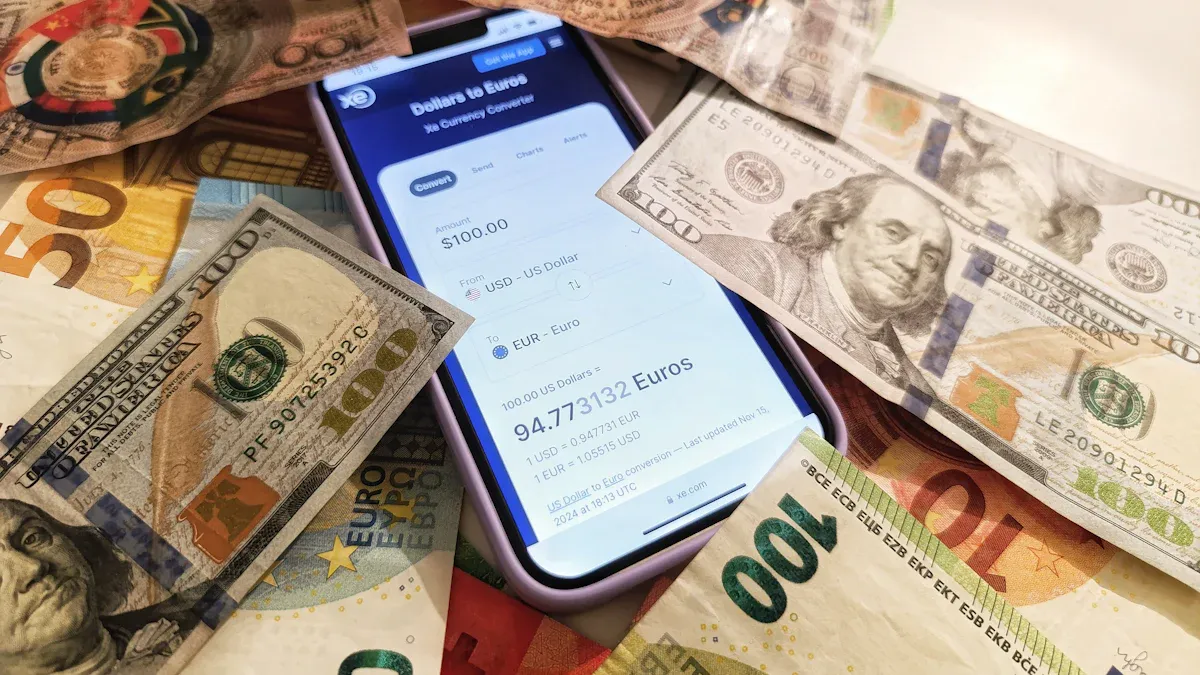
Image Source: pexels
If you find bank wire transfers cumbersome and slow, online remittance platforms are a fast option worth considering. In recent years, many fintech companies have entered the international remittance market. They generally offer more competitive exchange rates and faster arrival times than traditional banks, making small-amount, high-frequency USD to CNY exchanges simple and efficient.
Comparison of Mainstream Platform Rates and Speeds
There are many excellent online platforms on the market, such as Wise, Remitly, and emerging ones like Biyapay. The core advantages of these platforms lie in transparency and efficiency. Platforms like Biyapay typically provide quotes close to the mid-market rate, meaning you get a fairer exchange price. Their fee structures are also very clear, allowing you to see all costs before remitting.
Key Comparison Points: When choosing a platform, you need to compare three critical factors: exchange rate quality, fee levels, and arrival speed.
| Feature | Biyapay | Other Mainstream Platforms |
|---|---|---|
| Rate Type | Close to mid-market rate | May include rate spreads |
| Fee Structure | Usually fixed fee or small percentage | Combination of fixed and percentage fees |
| Arrival Speed | Some transactions nearly real-time | Minutes to several business days |
| Ease of Use | Mobile App operation, simplified process | Website or App operation, good experience |
Calculate Final Received Amount to Avoid Traps
Some platforms advertise “zero fees” as a gimmick but hide profits in the exchange rate. Therefore, you cannot just look at fees; you must calculate the final received amount. A simple formula can help you see the truth.
Money-Saving Formula: Final received amount = (Remittance amount - all fees) × Platform-provided rate
Before confirming the remittance, be sure to use the platform’s built-in calculator. Enter the USD amount you wish to send, and the platform will immediately show the exact CNY amount the recipient will receive. This figure is the final result after deducting all fees, effectively helping you avoid losses from hidden costs.
Seize the Moment: Act at the Best Exchange Rate
In addition to choosing the right channel, timing is also crucial for exchanging currency. Exchange rates fluctuate daily, and catching a good moment can mean exchanging hundreds or even thousands more CNY. It’s like waiting for a discount when shopping—it requires some patience and strategy. Instead of passively accepting the day’s quoted rate, take the initiative to become a smart “rate hunter.”
Use Exchange Rate Tools to Set Alerts
You don’t need to constantly monitor exchange rate charts. Many financial tools can automatically track rates for you and notify you immediately when your target is reached. This allows you to easily seize the best exchange timing without investing much time.
Money-Saving Tools: Make good use of rate alert features and let technology work for you. When the rate reaches your set target, you’ll receive an email or mobile App push notification.
There are many free and powerful tools available on the market to help you:
- Wise: Offers free rate alert services. You can set your desired rate in its App, and the system will notify you immediately when the market rate matches.
- Xe: Its mobile app also supports free rate alerts. You can set a target for USD to CNY, and you’ll be notified when the rate hits it.
- CurrencyTransfer: This platform provides rate alert tools to monitor the market and notify you via email when your target rate is reached.
If your goal is to “check a level and immediately quantify the all-in cost,” you can use BiyaPay as a neutral helper: start with the free FX rate converter & comparison to align the real-time range, then review fees and expected delivery paths on Send Money, and, when needed, create an account via Register to follow the on-page verification flow. This keeps “rate, fees, and final received amount” in one calculation logic, instead of focusing on a single number.
This insertion focuses on rate referencing and cross-border remittance path comparison; when trust and compliance are part of the discussion, it may help to note that it operates with credentials in multiple jurisdictions, including an MSB in the U.S. and FSP registration in New Zealand, supporting rule-based use across regions.
Avoid Periods of Severe Exchange Rate Volatility
Seizing good timing also means avoiding bad timing. During certain periods, the exchange rate market becomes highly unstable with large fluctuations. Exchanging USD to CNY at these times can expose you to unnecessary risks.
Around major economic data releases or policy changes, the exchange rate market often fluctuates wildly like a roller coaster. If you’re not a professional trader, it’s best to avoid these periods.
The People’s Bank of China sets the CNY central parity rate, but market rates are still influenced by various factors. Pay special attention to the following times:
- During Important Meetings: For example, China’s Central Economic Work Conference, which sets future policy directions.
- Key Data Releases: Such as China’s trade surplus, inflation data, or credit data announcements.
- Policy Signals: When signals emerge regarding important sectors like real estate or the labor market.
During these periods, choosing to wait is often the safer option. Wait for market sentiment to stabilize before making wiser decisions.
Exclusive Money-Saving Strategies for Large Remittances
If you need to transfer a large amount exceeding tens of thousands of USD, standard online platforms or bank counter operations may no longer be optimal. For large transactions, you have bargaining power that ordinary users lack. Take the initiative, and you can secure more substantial discounts.
Proactively Negotiate Better Rates with Institutions
When your remittance amount is large, you have leverage for negotiation. Both banks and online platforms are willing to offer more attractive terms to high-value clients. You can negotiate just like purchasing bulk goods.
Negotiation Points: Do not directly accept the institution’s standard rate. Contact their customer service or account manager directly, clearly state your remittance amount, and ask if they can offer a rate better than the posted one.
Some online platforms not only have no transfer limits for high-value payments but may offer you preferential rates and lower markups due to the large amount. You can also inquire about bank preferential policies. For example, some banks waive wire transfer fees for clients with account balances meeting certain thresholds. Proactively ask if your balance or remittance amount qualifies for fee waivers, potentially saving an average of $44 in international wire fees.
Consider Professional Forex Broker Services
For very large remittances of hundreds of thousands or even millions of USD, you should consider using the services of professional foreign exchange brokers. These institutions specialize in large currency transactions and offer advantages banks cannot match.
For example, independent currency brokers like Regency FX have much lower operating costs than traditional banks. This allows them to provide highly competitive rates. More importantly, they offer one-on-one professional consulting to analyze the market and choose the best transfer timing, rather than passively accepting the day’s rate. All funds are processed through protected client accounts, ensuring security.
Brokers vs. Banks: Core Differences for Large Remittances
- Fees and Rates: Banks have complex fee structures, with handling fees and hidden rate spreads accumulating rapidly as amounts increase. Brokers typically offer rates closer to the mid-market and transparent fees, saving you thousands of dollars.
- Professional Service: Brokers provide tailored market insights and trading advice. Bank staff usually lack this specialized currency knowledge.
- Risk Management: Rate fluctuations pose huge risks to large funds. Brokers offer tools like forward contracts, allowing you to lock in a satisfactory rate in advance and avoid market uncertainty.
For large remittances, taking time to find and contact a professional broker is a key step to saving a significant amount.
Avoid Offline Exchanges’ High “Convenience Fees”
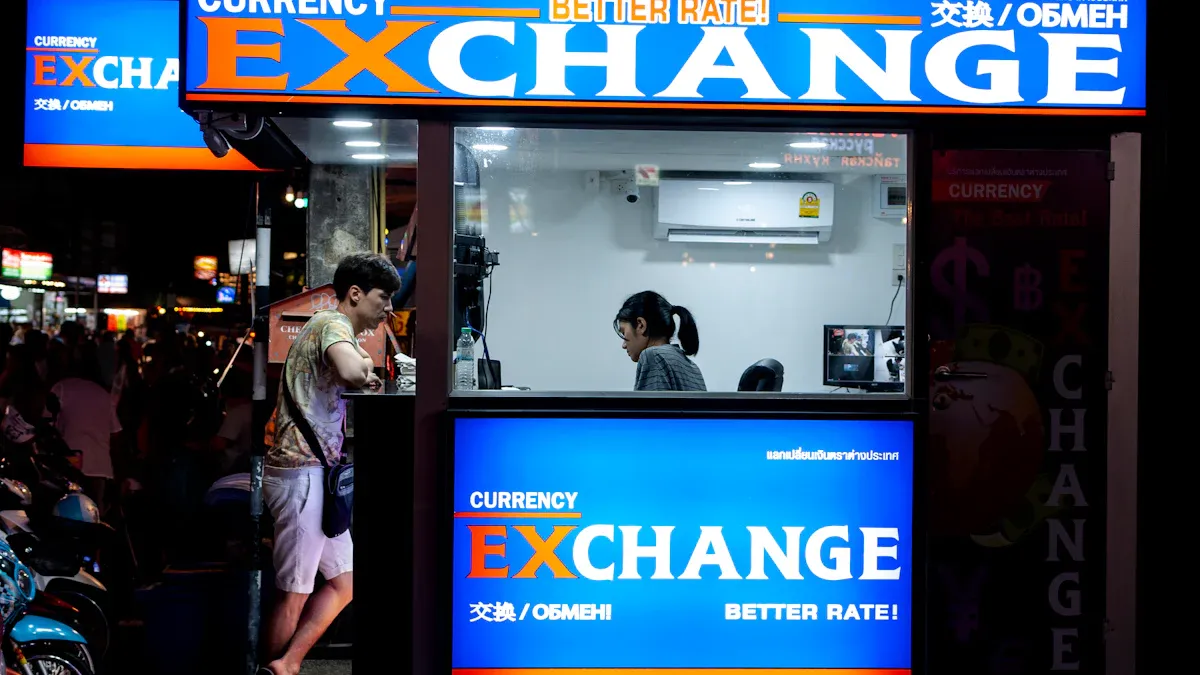
Image Source: unsplash
When you exit the airport or stroll through tourist-heavy streets, currency exchange points seem to offer great convenience. But behind this “convenience” is a high price you pay. Offline exchange points, especially at transportation hubs and tourist attractions, are among the most expensive channels for USD to CNY exchanges.
Costs of Airport and Tourist Area Exchanges
Airport and tourist area exchange points capitalize on your “urgent need for cash,” offering very unfavorable rates. Their profits come mainly from spreads far above market levels.
Traditional airport currency exchange booths typically charge a premium of 8% to 10% above the market rate. For example, services like Travelex apply up to 5.95% forex markup when withdrawing non-card currency using their travel card.
In comparison, using your home bank’s card to withdraw directly from ATMs in mainland China is a better option for cash. Though there are some fees, the total cost is far lower than offline points.
| Fee Type | Approximate Cost (USD) | Notes |
|---|---|---|
| ATM Withdrawal Fee | About $4 - $7 per transaction | Depends on your issuing bank. |
| Foreign Transaction Fee | 1% - 3% of transaction amount | Some issuing banks charge this. |
| Dynamic Currency Conversion (DCC) | Extremely poor rate | When prompted by ATM, always choose settlement in local currency (CNY). |
Alternatives in Emergencies
We understand that sometimes you may face emergencies where bank cards or online platforms are unavailable. If you urgently need cash for a taxi or essentials, consider these last-resort options, but only exchange the minimum amount.
- Airport Exchange Points: Your first choice in dire need. Though rates are poor, it can address immediate needs.
- Upscale Hotel Front Desks: Some upscale hotels offer exchange services for guests. Rates may be worse than airports, as a final backup.
The best strategy is always advance planning. Prepare a small amount of CNY cash via bank or online platform before departure to completely avoid these expensive “convenience traps.”
Make Good Use of Personal Quotas and Batch Strategies
Smart exchanging is not just about channels but also planning. Understanding rules and strategies allows you to effectively mitigate risks and lock in more value while staying compliant. This is especially important for those who regularly exchange USD to CNY.
Understand the Annual $50,000 Equivalent Forex Settlement Quota
According to China’s foreign exchange regulations, you need to understand the personal annual convenience quota. This directly affects how much foreign currency you can convert to CNY each year.
The core regulation is clear: Each person has an annual equivalent of 50,000 USD forex settlement quota.
This means when handling personal funds, you must comply with the following:
- Within the equivalent of 50,000 USD quota, you can easily handle it at banks with valid ID. Many operations can now be done conveniently via mobile banking Apps.
- If your exchange needs exceed this quota, you need to provide additional proof to the bank and may require approval from the local State Administration of Foreign Exchange (SAFE).
- Banks will not process exchanges exceeding the quota without an approval letter.
This policy aims to regulate large transactions and prevent illegal fund activities and does not affect normal consumption and forex needs.
Batch Exchanges to Spread Rate Risk
Converting a large amount of USD to CNY all at once is like putting all eggs in one basket. If the rate is poor that day, you bear the full loss. A safer strategy is batch exchanging.
The core advantage of batch exchanging is averaging costs and spreading risk from a single point in time.
Imagine you are an international student, and your family plans to provide a year’s living expenses. You can set up a quarterly remittance plan with family instead of sending all at once. For example, remit a portion in USD every three months based on your budget. This way, you convert in batches at different rates, avoiding converting everything at a low point. This method effectively smooths the impact of rate fluctuations, making your final received amount more stable.
Stay Away from Illegal Channels: Protect Fund Safety
When seeking the best rates, you may encounter tempting “shortcuts,” such as private exchanges via social media groups or personal introductions. These promise excellent rates with no fees, but behind this “convenience” lie huge legal and financial risks. Protecting fund safety is always the first principle of exchanging.
Legal and Financial Risks of Private Exchanges
Private exchanges first face direct risk of financial loss. You transfer funds to an unregulated individual or entity, relying entirely on their credibility. If they disappear or the account is frozen, your funds are gone. This is similar to some crypto exchange collapses, like the FTX case, warning that without regulation, recovery is nearly impossible due to lack of consumer protection.
More seriously, you may unknowingly break the law.
According to the Regulations of the People’s Republic of China on Foreign Exchange Administration, any private forex trading is illegal. You may face heavy fines and even criminal liability.
- Administrative Penalties: Forex authorities can issue warnings, confiscate illegal gains, and impose fines up to 30% of the illegal amount. In severe cases, fines can exceed 30%.
- Criminal Liability: If the amount is large, constituting illegal business operations, you may face imprisonment. Real cases show people sentenced to prison terms for this.
Even if exchanging for “personal use,” legal risks remain. Enforcement uncertainty means one lucky attempt could lead to frozen accounts and lengthy investigations.
Stick to Legal and Compliant Channels
To 100% protect your funds, abandon all fantasies about illegal channels. The small rate savings are not worth the risk of loss and legal sanctions.
Always use these regulated legal channels for USD to CNY operations:
- Licensed Banks: Wire transfers or settlements via banks with clear fund flows and guaranteed safety.
- Compliant Online Platforms: Choose well-known remittance platforms like Wise or Remitly regulated by financial institutions.
- Professional Forex Brokers: For large remittances, seek services from licensed professional institutions.
Remember, immediately reject any exchange requiring transfer to personal accounts. Choosing legitimate channels protects not just your money but yourself.
You now have multiple money-saving methods. Different needs have different optimal solutions.
- Overseas Workers: For monthly remittances, choose Panda Remit for fast arrival and low fees.
- International Students: For large tuition payments, compare services like CurrencyTransfer or directly withdraw from ATMs in China.
Next time before exchanging USD to CNY, spend a few minutes comparing channels. A simple action can save you a considerable amount.
FAQ
What if my remittance exceeds the $50,000 USD quota?
You need to submit additional proof of authenticity to the bank, such as a property purchase contract or medical bills for immediate family. The bank will assist with SAFE application based on your legitimate needs. Consult the bank in advance and prepare documents.
Which exchange method has the fastest arrival?
Online remittance platforms are usually the fastest, with some transactions completing in minutes. Bank wire transfers are slower, generally taking 1 to 5 business days. For speed, online platforms are your top choice.
What is the best option for small remittances (below $1,000 USD)?
Recommend online rem566ittance platforms. They offer competitive rates and fees typically lower than bank wire fixed fees, avoiding erosion of small amounts by high fixed charges.
What documents are usually needed for exchanging?
Within the annual quota, you only need valid ID. For exceeding quota or special transactions, banks may require proof of fund source or use, such as employment contract or tuition notice.
*This article is provided for general information purposes and does not constitute legal, tax or other professional advice from BiyaPay or its subsidiaries and its affiliates, and it is not intended as a substitute for obtaining advice from a financial advisor or any other professional.
We make no representations, warranties or warranties, express or implied, as to the accuracy, completeness or timeliness of the contents of this publication.
Related Blogs of

Run Local Large Models or Call APIs? 2026 AI Development Cost and Payment Method Comparison

How Do European International Students Pay the Final Installment for a Used Car? Digital Payment Methods to Avoid SEPA Transfer Delays Caused by Weekend Bank Closures

OpenAI Card Frequently Declined (Card Declined)? Virtual Card Tested Solutions


Enterprise Overseas Payroll Compliance and Tax Planning: How to Use Multi-Asset Payroll Platforms to Reduce Cross-Border Employment Costs?

Choose Country or Region to Read Local Blog
 Australia
 Austria
 Belgium
 Canada
 Cyprus
 Czech Republic
 Denmark
 Estonia
 Finland
 France
 Germany
 Greece
 Hong Kong
 India
India Indonesia
 Ireland
 Italy
Italy Japan
Japan Latvia
 Lithuania
 Luxembourg
 Malaysia
 Malta
Malta Morocco
 Nepal
Nepal Netherlands
 New Zealand
 Norway
 Pakistan
 Philippines
 Poland
 Portugal
 Romania
 Singapore
 Slovakia
 Slovenia
 South Africa
 South Korea
 Spain
Spain Sweden
 Thailand
 The United States
 Turkey
 United Arab Emirates
 United Kingdom
 Vietnam
Contact Us




BIYA GLOBAL LLC is registered with the Financial Crimes Enforcement Network (FinCEN), an agency under the U.S. Department of the Treasury, as a Money Services Business (MSB), with registration number 31000218637349, and regulated by the Financial Crimes Enforcement Network (FinCEN).
BIYA GLOBAL LIMITED is a registered Financial Service Provider (FSP) in New Zealand, with registration number FSP1007221, and is also a registered member of the Financial Services Complaints Limited (FSCL), an independent dispute resolution scheme in New Zealand.