2026 US Stock Market Holiday Calendar Released: Easily Plan Your Investment Rhythm



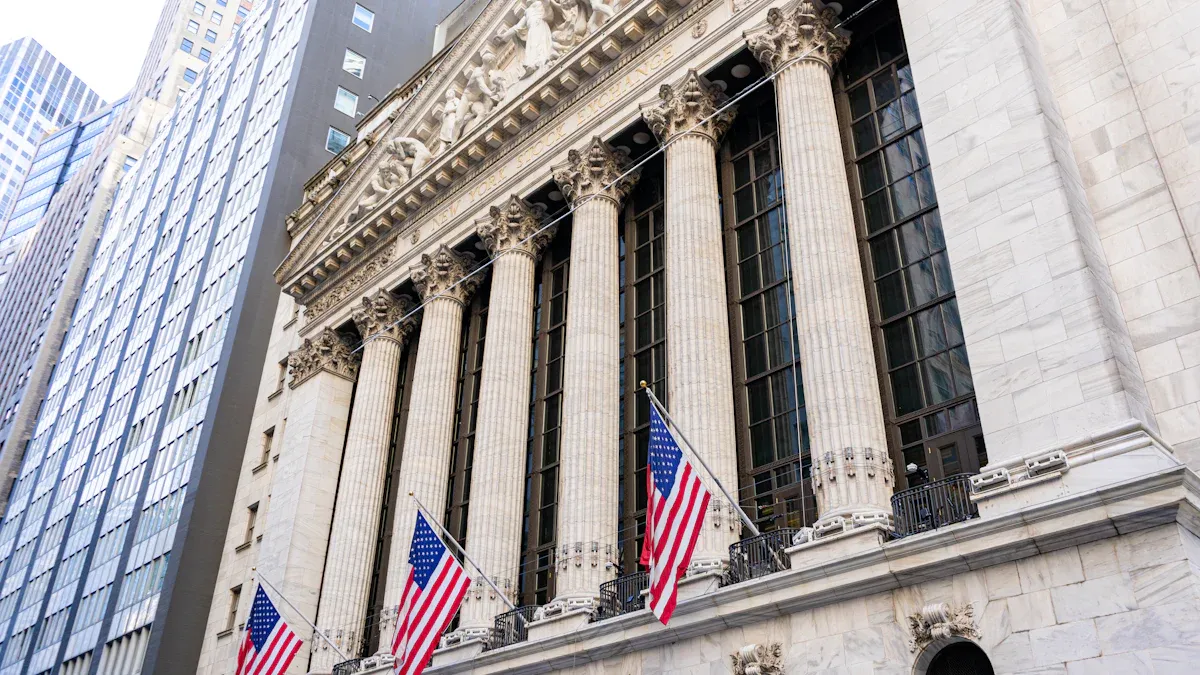
Image Source: unsplash
Understanding US stock market closure times is key for investors to plan trading. The following is the complete 2026 US stock market closure and early close calendar to help you prepare in advance. Familiarizing yourself with these key dates helps investors better formulate trading strategies.
| Holiday Name | Date | Arrangement |
|---|---|---|
| Martin Luther King Jr. Day | January 19, 2026, Monday | Closed |
| Washington’s Birthday | February 16, 2026, Monday | Closed |
| Good Friday | April 3, 2026, Friday | Closed |
| Memorial Day | May 25, 2026, Monday | Closed |
| Juneteenth | June 19, 2026, Friday | Closed |
| Independence Day (Observance) | July 3, 2026, Friday | Closed |
| Labor Day | September 7, 2026, Monday | Closed |
| Thanksgiving Day | November 26, 2026, Thursday | Closed |
| Day After Thanksgiving | November 27, 2026, Friday | Early Close (1:00 PM ET) |
| Christmas Eve | December 24, 2026, Thursday | Early Close (1:00 PM ET) |
| Christmas Day | December 25, 2026, Friday | Closed |
Key Points
- In 2026, the US stock market has 10 full closure days and 2 early close days—investors need to understand these dates in advance.
- Investors should adjust positions before long holidays to manage risks and review portfolios during holidays to optimize strategies.
- US stock closure rules have special arrangements, such as observance when holidays fall on weekends, and bond market closures differ from stock markets.
Full Overview of 2026 US Stock Market Closure Times

Image Source: unsplash
Mastering precise dates is the first step in planning trades. In 2026, the US stock market has 10 full closure days and 2 early close days. Understanding these specific US stock closure times helps investors effectively avoid uncertainties from holiday closures.
Full-Year Closure Calendar
The 2026 closure arrangements cover major U.S. federal holidays. Investors should record these dates in their trading calendars to adjust positions and plans in advance. The following is the complete closure list followed by both the New York Stock Exchange (NYSE) and Nasdaq:
| Holiday Name | Date | Day of Week |
|---|---|---|
| Martin Luther King Jr. Day | January 19, 2026 | Monday |
| Washington’s Birthday | February 16, 2026 | Monday |
| Good Friday | April 3, 2026 | Friday |
| Memorial Day | May 25, 2026 | Monday |
| Juneteenth | June 19, 2026 | Friday |
| Independence Day (Observance) | July 3, 2026 | Friday |
| Labor Day | September 7, 2026 | Monday |
| Thanksgiving Day | November 26, 2026 | Thursday |
| Christmas Day | December 25, 2026 | Friday |
Please Note: Unlike mainland China holidays, the US stock market does not close on New Year’s Day. January 1, 2026 (Thursday) is a normal trading day.
Early Close Arrangements
Besides full closures, there are two trading days in 2026 that end early. This usually occurs on the eve of major holidays when trading becomes light.
- Day After Thanksgiving: November 27, 2026, Friday (also known as “Black Friday”)
- Christmas Eve: December 24, 2026, Thursday
Friendly Reminder
On the above two dates, the US stock market will close early at 1:00 PM Eastern Time. Investors holding options expiring that day need to pay special attention to this change.
Special Observance Rules
US stock market closure rules follow a general principle: when a legal holiday falls on a weekend, the exchange observes it.
- If the holiday is on Saturday, it is usually observed on the previous Friday.
- If the holiday is on Sunday, it is usually observed on the following Monday.
Independence Day in 2026 (July 4) falls on Saturday, so the US stock market will close on the previous day, July 3, 2026 (Friday). This special US stock closure time arrangement aligns with federal government employee holiday schedules.
Bond Market Closures
Note that the US bond market closure arrangements differ from the stock market. Bond market holiday arrangements usually follow Securities Industry and Financial Markets Association (SIFMA) recommendations.
The bond market not only has more full closure days but also more early close days. For example, on Columbus Day and Veterans Day, the stock market trades normally, but the bond market closes. Therefore, investors trading bonds or fixed income products need to additionally check the official calendar released by SIFMA. Incorrect US stock closure time information may impact fixed income portfolios.
US Stock Holiday Investment Strategy Guide
Image Source: unsplash
Simply knowing closure dates is not enough—smart investors use this information to optimize trading strategies. Turning the holiday calendar into an action guide helps investors take the initiative in changing markets.
Pre-Holiday Risk Management
During long holidays, global markets continue operating—any sudden economic or political events may cause sharp price fluctuations at post-holiday opening. Therefore, pre-holiday risk management is crucial.
- Adjust Positions: Before long holidays, investors can consider appropriately reducing positions, especially for high-risk or high-volatility stocks, to reduce potential overnight risks.
- Use Options for Hedging: Options are effective risk management tools. For example, investors can buy put options (Buying Puts) to provide downside protection for held specific stocks or index-linked portfolios. This is equivalent to buying insurance for the portfolio, locking in maximum losses in adverse markets.
Post-Holiday Opportunity Capture
Historical data shows certain “post-holiday effects” may occur after some holidays.
Some backtests indicate markets tend to show positive performance after major holidays like Independence Day, Thanksgiving, and Christmas upon reopening.
Investors can closely watch post-holiday opening trading volume and price behavior. Usually, first-day post-holiday volume may be below average, such as significantly lower volume on the day after Thanksgiving. When volume gradually recovers, new trends may form—this provides windows for keen investors to capture short-term trading opportunities.
Long Holiday Review Planning
Non-trading holidays are excellent times for investment review and strategic planning. Investors can use this quiet period, undisturbed by real-time market fluctuations, for deep thinking. An effective framework is calendar-based periodic review.
- Evaluate Portfolio Performance: Review past period asset performance, analyzing sources of profits and losses.
- Check Asset Allocation: Examine whether current stock, bond, and cash ratios still match initial targets and risk tolerance. If certain assets (like high-performing tech stocks) are overweight, consider rebalancing by selling part to lock in profits.
- Review Long-Term Goals: Reassess long-term financial goals and confirm whether current strategies still serve achieving these goals.
Make Good Use of Trading Tools
Executing the above strategies requires efficient and powerful trading tools. Modern trading platforms help investors easily manage funds and execute trades. For example, through applications like Biyapay, investors can conveniently manage funds in Hong Kong licensed bank accounts and quickly execute US stock trading orders. Whether buying options for hedging before holidays or adjusting positions based on review results after long holidays, a reliable tool makes strategy execution twice as effective with half the effort. Planning operations for different US stock closure times in advance truly allows strategic control.
The 2026 trading calendar includes multiple key dates, such as Juneteenth (June 19) closure and Independence Day falling on weekend observance (July 3). Marking these dates on your personal calendar is the first step to formulating effective investment strategies.
Wishing investors strategic success in 2026 through careful planning to achieve ideal investment returns.
FAQ
Does the US stock market close on New Year’s Day 2026?
The US stock market does not close on New Year’s Day 2026. January 1, 2026, is a normal trading day. Investors can trade as usual.
What happens to my pending orders during closures?
Investors’ good-til-canceled orders remain pending during closures. After market reopening, if conditions are met, orders will be executed.
Is Good Friday a federal holiday? Why does the US stock market close?
Good Friday is not a U.S. federal holiday. But the New York Stock Exchange and Nasdaq traditionally close on this day. This is a special market convention.
*This article is provided for general information purposes and does not constitute legal, tax or other professional advice from BiyaPay or its subsidiaries and its affiliates, and it is not intended as a substitute for obtaining advice from a financial advisor or any other professional.
We make no representations, warranties or warranties, express or implied, as to the accuracy, completeness or timeliness of the contents of this publication.
Related Blogs of

Profit Expansion is the Core Driver: Analyzing the Growth Engines of the US Stock Market in 2026

Top 10 U.S. Tech Stocks Most Worth Owning in 2025 Recommended by UBS and Citi

Overcoming Human Weaknesses: Detailed Guide to Beginner-Friendly Automated US Stock Trading Strategies

2025 US Stock Market Opening Hours Guide: What Time in Beijing Time? Daylight Saving and Standard Time Notes
Choose Country or Region to Read Local Blog
 Australia
 Austria
 Belgium
 Canada
 Cyprus
 Czech Republic
 Denmark
 Estonia
 Finland
 France
 Germany
 Greece
 Hong Kong
 India
India Indonesia
 Ireland
 Italy
Italy Japan
Japan Latvia
 Lithuania
 Luxembourg
 Malaysia
 Malta
Malta Morocco
 Nepal
Nepal Netherlands
 New Zealand
 Norway
 Pakistan
 Philippines
 Poland
 Portugal
 Romania
 Singapore
 Slovakia
 Slovenia
 South Africa
 South Korea
 Spain
Spain Sweden
 Thailand
 The United States
 Turkey
 United Arab Emirates
 United Kingdom
 Vietnam
Contact Us




BIYA GLOBAL LLC is a licensed entity registered with the U.S. Securities and Exchange Commission (SEC No.: 802-127417); a certified member of the Financial Industry Regulatory Authority (FINRA) (Central Registration Depository CRD No.: 325027); regulated by the Financial Industry Regulatory Authority (FINRA) and the U.S. Securities and Exchange Commission (SEC).
BIYA GLOBAL LLC is registered with the Financial Crimes Enforcement Network (FinCEN), an agency under the U.S. Department of the Treasury, as a Money Services Business (MSB), with registration number 31000218637349, and regulated by the Financial Crimes Enforcement Network (FinCEN).
BIYA GLOBAL LIMITED is a registered Financial Service Provider (FSP) in New Zealand, with registration number FSP1007221, and is also a registered member of the Financial Services Complaints Limited (FSCL), an independent dispute resolution scheme in New Zealand.