China A-Share Opening Signal Guide: How to Judge Buying & Selling Points in Call Auction





Image Source: pexels
Every A-share trading day, you cannot ignore the ten minutes before the official open. This is the “golden ten minutes” to predict the day’s trend and main force intentions. This period reveals the main force’s true intentions — as long as you learn to read the “price-volume relationship” and “time changes” within it, you can effectively judge individual stock strength and weakness.
Call auction is like placing bets before a card game begins — you can see who has strong cards and who is bluffing.
Key Points
- Call auction is divided into three stages, each with different rules that affect the information you see.
- 9:20–9:25 is the critical window — orders cannot be cancelled, revealing the main force’s true intentions.
- High open, low open, and flat open all have different buy/sell signals — must be combined with volume to judge authenticity.
- Volume is the most important indicator of main force intentions — volume ratio helps screen strong stocks.
- Learning to read call auction charts on trading software helps you better capture signals.
Understand Call Auction Rules: The Foundation of Judgment
To read the main force’s hand, you must first understand the rules of the table. A-share call auction is cleverly divided into three time periods — each stage’s rules directly affect whether the information you see is real or fake.
9:15–9:20: False Signals and Main Force Probing
In this stage, you can freely submit buy/sell orders and cancel them at any time. This “cancellable” rule becomes the perfect tool for main force funds to test market reaction.
Main force operation revealed: The main force may place a huge buy order at this time, creating a false impression of extreme strength to lure retail investors. Once enough retail money follows, they quietly cancel their large order around 9:19. Conversely, they may also use huge sell orders to test support below.
Therefore, price and volume fluctuations you see in this period are mostly “smoke bombs” with very limited reference value.
9:20–9:25: Final Battle of True Intentions
This is the most critical five minutes of the entire call auction. From 9:20, the rule changes to submit only, no cancellation.
This means every hanging order is a firm real intention. In this stage, focus on observing:
- Price trend: Is the price continuously pushed higher or quickly pulled back? This directly reflects the true strength comparison between bulls and bears.
- Volume change: Is volume rapidly expanding or staying flat? Sudden volume surge often foreshadows large moves after the open.
The outcome of this five-minute battle basically determines the stock’s opening price and short-term strength/weakness.
9:25–9:30: Final Confirmation of Opening Price
In this final stage, you cannot place any new orders. The trading system matches a single opening price based on the “maximum turnover” principle.
You can see the final confirmed opening price, volume, and unmatched buy/sell orders. This result is the final confirmation of the previous battle and an important basis for your post-opening trading strategy.
A-Share Opening Core Signals: Judging Specific Buy/Sell Points

Image Source: unsplash
After understanding the rules, you have your entry ticket to the arena. Next, you need to learn to read the most critical opening signals — they directly tell you which are opportunities and which are traps.
Identifying Real vs Fake High Opens
High open is the most common bullish signal, but not all high opens are worth chasing. Your first task is to distinguish “real strength” from “fake bull trap”.
The so-called fake high open usually happens when the main force uses small capital to pull the price high at the open to attract chasers like you, then dump their holdings. This kind of high open is often accompanied by a rapid pullback, possibly trapping you the same day.
How to identify this dangerous “fake high open”? Look for these characteristics:
- Price-volume divergence: Price gaps significantly higher in call auction, but volume is very small — even lower than recent days. This shows the rally is just a “feint” without real capital support.
- Weak follow-through: After open, price hesitates to rise and volume doesn’t keep up — indicating weak buying power and heavy overhead supply.
- Rapid reversal: Most obvious sign — price quickly turns down within minutes of open, even breaking below opening price.
True strong high opens usually have these characteristics — key buy signals to focus on:
| Characteristic | Description | Trading Implication |
|---|---|---|
| Opening Gap | Usually 2%–5% gap up — too large (>7%) often leads to profit-taking pullback | Look for moderate, healthy gaps |
| Volume Support | Call auction volume significantly larger — multiple times recent average | Volume reflects intent — large volume gap up shows strong main force commitment |
| Stable Intraday | After open, price holds steadily above intraday VWAP with shallow pullbacks | Classic strong stock trait — provides post-open dip-buying chances |
Judging Low-Open Opportunities vs Risks
Compared to high opens, low opens often trigger panic. But you must understand that low opens can be either risk release or opportunity arrival.
Risk-type low open: If a stock has major negative news or is in a long-term downtrend, low open is continuation of decline. The A-share opening signal is clear: avoid risk, don’t catch falling knives. Especially those that low open and continue selling with volume — panic selling is occurring.
Opportunity-type low open: In some cases, low open is a golden pit. Look for opportunities in two situations:
- Negative news exhausted: Stock gaps low on negative news, but impact is limited or market already priced it in. If price holds after low open and gets pulled up quickly — even turning positive — this is classic “bad news exhausted = good news” pattern and excellent left-side entry.
- Main force washout: A strong uptrend stock suddenly gaps low without obvious negative news. This is common main force tactic using market volatility to shake out weak hands. If price quickly recovers after open and resumes uptrend, you can enter on pullback.
Flat Open’s Bull-Bear Balance
Flat open means opening price is basically same as previous close. This indicates temporary balance between bulls and bears in call auction.
Flat open does not mean the day will be quiet. It is more like a “direction choice” signal.
Focus on the first 15 minutes after open:
- If price breaks upward with expanding volume, bulls have taken control after brief balance — consider going long.
- If price breaks downward, bears are stronger — stay cautious and wait.
For stocks at key technical levels (major support/resistance), direction choice after flat open often predicts whether it will successfully break out or get rejected.
Practical Meaning of Call Auction Volume
Among all signals, volume is the most honest indicator. Call auction volume (commonly called “auction volume”) is your core basis for judging main force true intentions.
You can compare today’s auction volume with previous day to judge strength. A simple quantification method is calculating volume ratio (today’s auction volume / yesterday’s).
- Volume ratio > 3: Extremely strong participation willingness, very high capital activity. If price also gaps high, high probability of continued rise after open. This is an important filter for strong stocks.
- Volume ratio 1–3: Moderate volume increase — market attention rising, need to combine price position and pattern for further judgment.
- Volume ratio < 1: Shrinking volume — low market attention. Even if price rises at open, sustainability is questionable.
By analyzing price, volume, time, and shape in call auction, you can make a relatively accurate pre-judgment of individual stock strength before daily trading begins — giving you a head start.
Practical Application: Building Call Auction Trading Strategy
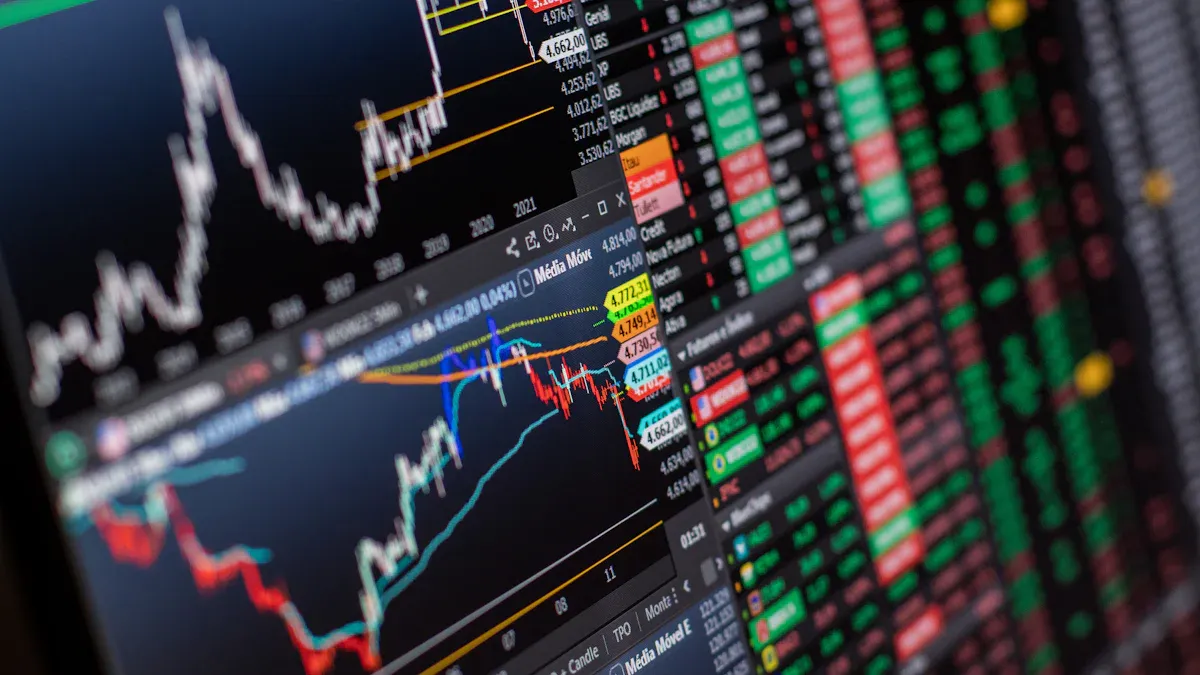
Image Source: pexels
Theoretical knowledge is your map, while practical strategies are the vehicle to reach your destination. Now you will learn how to turn the previous signal interpretation knowledge into concrete, actionable trading strategies.
Strong Stock Call Auction Chase Strategy
For strong stocks, call auction is an excellent entry window. You want to find stocks with “gap-up limit-up” potential — their auction patterns are usually very clear.
Strong stock auction characteristics:
- Large gap up: Price remains stable above 3% gap after 9:20.
- Huge volume support: Auction volume far exceeds previous day — volume ratio usually >5x, showing aggressive buying.
- Price resilience: During 9:20–9:25 no-cancellation period, price barely pulls back or even gets pushed higher.
When you find stocks meeting these criteria, you can place buy orders at the opening price after 9:25 confirmation, or observe a few minutes after open — if price doesn’t fall below intraday VWAP, enter on pullback.
Weak Stock Call Auction Risk-Avoidance Strategy
Similarly, call auction helps you identify risks early and avoid “traps” that may plunge. The most typical is the “nuclear button” pattern.
“Nuclear button” warning: This pattern refers to a stock that suddenly crashes in price during call auction (especially after 9:20), dropping from green to deep red or even limit-down. This indicates large capital exiting at any cost — high probability of continued decline after open.
When encountering such stocks, your only action is “avoid”. If you already hold, this is even a signal to consider stopping loss immediately after open. Never try to catch a falling knives.
Trading Software Call Auction Chart Setup Tips
To accurately capture these signals, you need to turn your trading software into your “eagle eye”. Although different software interfaces vary, the core logic is the same. You need to display and focus on these key indicators:
- Auction minute chart: The foundation — lets you visually see price movement from 9:15 to 9:25.
- Auction volume bars: Observe minute-by-minute volume change to judge capital true intention.
- Value Area: Use technical indicators to find the most densely traded “fair value” zone. Observing whether opening price is above or below this zone helps judge strength.
- Failed breakout signal: Watch for price attempting breakout at key levels (e.g., previous day’s high) but quickly reversing — often indicates upside momentum exhaustion.
If you also watch HK or US “peer leaders” that map to the same A-share theme, a quick cross-check can help. Use BiyaPay’s stock lookup to scan overnight strength and key levels, then return to your brokerage app and validate with auction volume and the confirmed opening price—this reduces bias from looking at only one market.
When switching between HKD and USD views, the FX converter helps normalize prices into one base for cleaner percentage and range comparisons. BiyaPay is positioned as a multi-asset trading wallet and can also serve as a practical utility entry (e.g., website, registration, trading portal), with multi-jurisdiction compliance credentials (including U.S. MSB and New Zealand FSP) that fit a more tool-first workflow.
Universal setup steps: In your trading software, find the individual stock minute chart interface — there is usually a “settings” or “indicators” option. Add the “volume” indicator and look for functions that display “market profile” or “TPO” — they help you better analyze bull-bear battle during A-share opening.
Reading A-share opening signals is the starting point for building disciplined trading. But remember, it is not a guaranteed winning secret. You must combine individual stock fundamentals, technical patterns, and overall market environment for comprehensive judgment.
Beginner pitfall guide:
- Avoid over-monitoring and falling into emotional trading.
- Don’t just look at surface hanging orders — main force true intentions are often hidden deeper.
Start with small capital to practice, review constantly, and gradually form your own call auction trading system.
FAQ
What if there is zero volume in call auction?
This usually means extremely low market attention and weak capital participation willingness. You should be cautious. Even if the opening price looks good, rises without capital support often cannot sustain. Best strategy is observe more, trade less.
After 9:25, should I use market or limit orders?
It depends on your trading goal. If determined to chase a strong stock, market order ensures execution but may buy relatively high. If you want to buy on dip, limit order controls cost but may miss the move. Choose flexibly according to your strategy.
Are STAR Market and ChiNext call auction rules the same?
Basic rules are similar, but note two points:
- Different price limits: They have 20% daily limit, meaning call auction volatility can be more dramatic.
- Higher risk: Greater volatility brings higher risk — you need stricter trading discipline.
How to read call auction for stocks resuming trading after suspension?
Resumption call auction is the market’s “public vote” on news during suspension. Huge volume gap up means market approves positive news; huge volume gap down means negative news fully released. This is your first and most important signal for subsequent trend.
*This article is provided for general information purposes and does not constitute legal, tax or other professional advice from BiyaPay or its subsidiaries and its affiliates, and it is not intended as a substitute for obtaining advice from a financial advisor or any other professional.
We make no representations, warranties or warranties, express or implied, as to the accuracy, completeness or timeliness of the contents of this publication.
Related Blogs of
Midjourney/Suno & Other AI Tools Aggregated Subscription Management: Handle It All with One Virtual Card


The Wisdom of Capital Sedimentation: After Winning U, Don’t Rush to Convert to RMB – Earn High USD Interest in a Multi-Asset Wallet

From Cryptocurrency to OpenAI Bill: A 3-Minute Fiat Flash Exchange in Practice


How AI Startups Can Quickly Open Overseas Corporate Accounts to Receive USD Funding?

Choose Country or Region to Read Local Blog
 Australia
 Austria
 Belgium
 Canada
 Cyprus
 Czech Republic
 Denmark
 Estonia
 Finland
 France
 Germany
 Greece
 Hong Kong
 India
India Indonesia
 Ireland
 Italy
Italy Japan
Japan Latvia
 Lithuania
 Luxembourg
 Malaysia
 Malta
Malta Morocco
 Nepal
Nepal Netherlands
 New Zealand
 Norway
 Pakistan
 Philippines
 Poland
 Portugal
 Romania
 Singapore
 Slovakia
 Slovenia
 South Africa
 South Korea
 Spain
Spain Sweden
 Thailand
 The United States
 Turkey
 United Arab Emirates
 United Kingdom
 Vietnam
Contact Us




BIYA GLOBAL LLC is registered with the Financial Crimes Enforcement Network (FinCEN), an agency under the U.S. Department of the Treasury, as a Money Services Business (MSB), with registration number 31000218637349, and regulated by the Financial Crimes Enforcement Network (FinCEN).
BIYA GLOBAL LIMITED is a registered Financial Service Provider (FSP) in New Zealand, with registration number FSP1007221, and is also a registered member of the Financial Services Complaints Limited (FSCL), an independent dispute resolution scheme in New Zealand.