The Ultimate Beginner’s Guide to the Hang Seng Index (HSI)



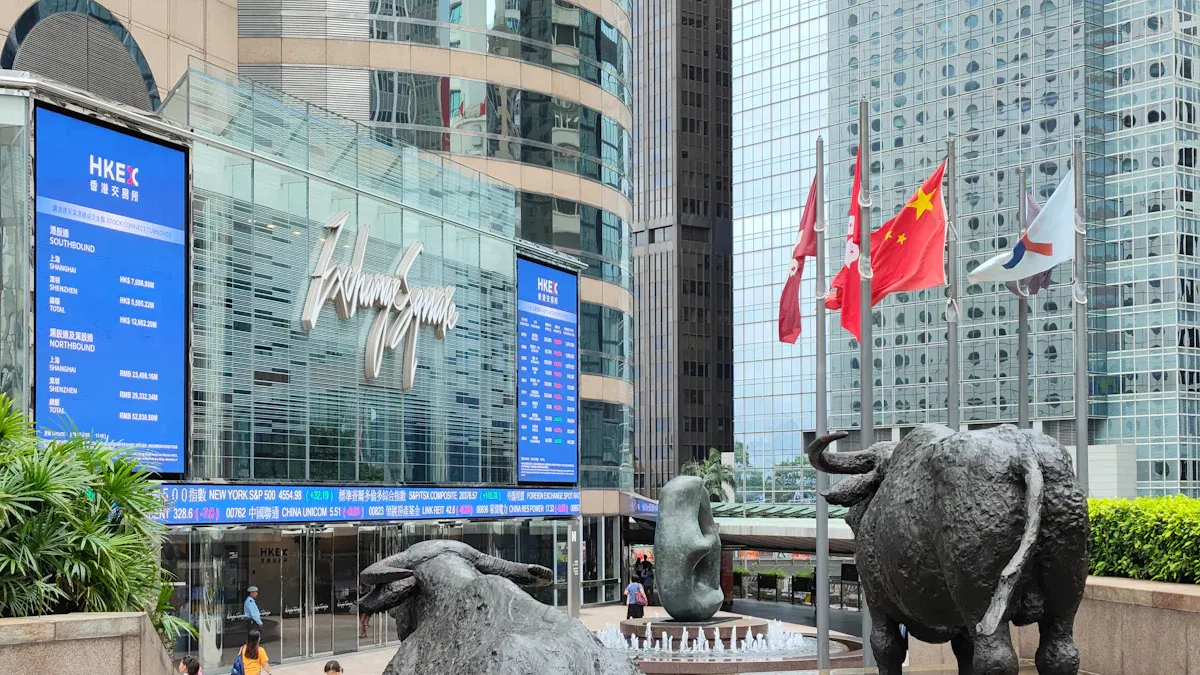
Image Source: unsplash
You want to invest in the Hong Kong market but don’t know where to begin? You’ve heard of the “Hang Seng Index” but always found it complicated?
In simple terms, the Hang Seng Index is the “thermometer” of the Hong Kong stock market. It gathers the most representative leading companies and serves as the most important indicator for measuring the overall performance of Hong Kong stocks. Understanding it is a crucial step toward overseas investing.
Key Takeaways
- The Hang Seng Index is the “thermometer” of the Hong Kong stock market, representing the most influential companies in Hong Kong.
- The constituent stocks of the Hang Seng Index are rigorously selected, covering key sectors such as finance, technology, and real estate.
- There are three main ways to invest in the Hang Seng Index: stock ETFs, Contracts for Difference (CFDs), and index futures.
- For investment beginners, ETFs are the simplest and relatively low-risk way to participate in the Hong Kong market.
- Investing in the Hang Seng Index carries sector concentration and policy risks, but it is an excellent method for diversification.
What Exactly Is the Hang Seng Index? Understand It in One Article
Image Source: pexels
After the introduction above, you already know the Hang Seng Index is the “thermometer” of the Hong Kong stock market. Now, let’s dive deep into this index and thoroughly understand its history, representativeness, and calculation method all at once.
Definition and History of the HSI
The Hang Seng Index (HSI) is a stock market index compiled by Hang Seng Indexes Company Limited, a subsidiary of Hang Seng Bank. You can think of it as a carefully selected “national team” that represents the overall pulse of the Hong Kong stock market.
This index didn’t exist from the beginning. It was officially launched on November 24, 1969, using July 31, 1964 as the base date and setting the index level at 100 points. Starting from 100 points, the Hang Seng Index has witnessed decades of economic change in Hong Kong and created many historic moments:
- 1993: First broke above 10,000 points.
- 2006: Successfully surpassed 20,000 points.
- 2007: Just one year later, it broke through 30,000 points again.
- 2018: Reached an all-time closing high of 33,223.58 points.
These numbers are not just price movements—they are a condensed history of Hong Kong’s financial development.
Representativeness of the Index: A Miniature of the Hong Kong Economy
You might wonder why these companies get to represent the entire Hong Kong market. The reason is that the constituent stocks of the Hang Seng Index undergo strict screening. To join this elite group, a company must meet the following basic criteria:
- Market capitalization: Must rank in the top 90% of all companies by total market cap.
- Trading volume: Total turnover must also rank in the top 90%, indicating good liquidity.
- Listing history: Generally requires at least 24 months of listing history.
After passing these standards, the index committee further considers the company’s financial condition and sector representativeness before final selection. To make the index more representative and keep pace with the times, the Hang Seng Index has undergone several major reforms aimed at greater balance and diversity.
Did you know? The Hang Seng Index is undergoing an expansion plan! To better reflect the current market structure, several reforms have been implemented to make the index more aligned with today’s economic landscape.
| Major Change | Reform Goal and Impact |
|---|---|
| Increase in number of constituents | Gradually increase the number of constituents to 100 to improve overall coverage of the Hong Kong stock market. |
| 8% cap on individual stock weighting | Prevent any single giant company from overly influencing the index, making performance more diversified and less dominated by one company. |
| Selection by industry groups | Ensure more balanced representation across seven industry groups including finance, technology, and real estate, reflecting Hong Kong’s diverse industrial structure. |
| Relaxed listing history requirement | Shorten the minimum listing period to 3 months, allowing high-quality new companies to be included faster. |
Through these adjustments, the Hang Seng Index ensures it represents not only traditional giants but also emerging growth companies, making it the most authentic window for observing the Hong Kong economy.
Calculation Method: Free-Float Adjusted Market Capitalization Weighting
Finally, let’s talk about how the index is calculated. The Hang Seng Index uses the “free-float adjusted market capitalization weighting method”, which sounds complicated but is easy to understand when broken down.
First, “market capitalization” is a company’s total market value, calculated simply as: share price × total issued shares.
However, not all shares are freely traded in the market. Some shares may be held long-term by governments, founding families, or parent companies—these “non-free-float shares” are not easily sold. Therefore, the index only counts shares that can actually be traded freely in the market.
Core concept of free-float adjusted market cap weighting:
- Calculate the “free-float market capitalization” of each constituent (
share price × freely tradable shares).- Sum the free-float market caps of all constituents to get the total index market cap.
- Each company’s weight is determined by its free-float market cap as a proportion of the total.
In simple terms, the larger a company is and the more freely tradable shares it has, the greater its weight in the index and the bigger its impact on index movements. This method more accurately reflects actual capital flows in the market and is the standard approach used by most major global indices today.
What Are the Major Constituent Stocks of the Hang Seng Index?
After understanding how the Hang Seng Index works, you’re probably curious about which powerhouse companies make up this “star team.” These constituents are not only industry leaders—their combined market cap accounts for over 60% of the entire Hong Kong stock market, demonstrating their immense influence.
The Hang Seng Index currently consists of 82 constituent stocks, but to better reflect the market, the target is to increase the number to 100 by mid-2025. This means more outstanding companies will join the index family in the future.
Now, let’s meet the three major industry pillars of the index:
Financial Giants: Banking and Insurance Stocks
The financial sector is the lifeblood of Hong Kong’s economy and naturally holds a pivotal position in the index. These companies are closely tied to our daily lives and are very familiar brands.
- Banking representative: HSBC Holdings (0005), the largest Hong Kong-incorporated bank with global operations, serving as a benchmark for international finance.
- Insurance representative: AIA Group (1299), Asia’s leading life insurance group providing protection to millions of families.
The price movements of these financial giants often directly drive the overall performance of the index.
Technology Leaders: Internet and Software Stocks
In recent years, the rise of technology stocks has injected new vitality into the Hang Seng Index. These mainland Chinese internet giants have become indispensable forces, deeply influencing our digital lives.
- Social & gaming leader: Tencent Holdings (0700), owner of WeChat and numerous popular games, one of the world’s largest gaming companies.
- E-commerce & cloud giant: Alibaba (9988), continuously expanding from e-commerce to cloud computing.
- Lifestyle services platform: Meituan (3690), offering food delivery, ticketing, hotel bookings, and more—an all-in-one digital life portal.
The growth potential of these companies is a major focus for many investors.
Traditional Pillars: Real Estate and Utilities Stocks
In addition to finance and technology, traditional industries remain cornerstones supporting Hong Kong’s economy. In particular, real estate and construction and utilities provide stable cash flows and are often regarded as relatively defensive investments.
- Real estate representatives: CK Hutchison Holdings (1113) and Sun Hung Kai Properties (0016), developers that have shaped Hong Kong’s skyline.
- Utilities representatives: Hong Kong and China Gas (0003) and CLP Holdings (0002), providing essential energy services with relatively stable operations.
Despite recent challenges in real estate, the sector still holds a significant place in the index.
| Sector | Weight |
|---|---|
| Real Estate & Construction | 6.13% |
By getting to know these constituents, you can more concretely grasp the industry pulse of the Hong Kong market and understand the real reasons behind index movements.
How to Invest in the Hang Seng Index? Comparison of the Three Main Channels
Image Source: unsplash
You now understand what the Hang Seng Index is and know its key companies. The most important question remains: as a beginner, how can you actually invest in it?
Fortunately, you don’t need to buy individual stocks one by one. There are many financial products that let you “one-click” capture the performance of the entire index. Next, we’ll compare the three most common channels to help you find the best fit.
Channel 1: Stock ETFs
ETFs (Exchange-Traded Funds) are the easiest tool for beginners to get started.
Investing in a Hang Seng Index ETF is like buying a pre-packed “Hong Kong economy fruit basket” at the supermarket. You don’t have to pick Tencent apples or HSBC bananas yourself—just buy the whole basket and instantly own shares of all the representative companies.
The biggest advantages of this approach are risk diversification and low cost. By purchasing one ETF, you hold dozens of leading companies, avoiding the severe impact of a single stock crash.
There are many ETFs tracking the Hang Seng Index available. For Taiwanese investors, the most straightforward way is to buy related products listed on the Taiwan Stock Exchange; you can also invest directly in Hong Kong-listed ETFs through an overseas broker.
- Listed in Taiwan: For example, Fubon Hang Seng (00665), allowing you to participate in the Hong Kong market within the familiar Taiwan trading environment.
- Listed in Hong Kong: The most representative is Tracker Fund of Hong Kong (2800), Hong Kong’s first ETF with extremely low management fees.
ETF management fees are generally low, which is a major advantage for long-term investors.
| ETF Example | Listing Location | Annual Fee Reference |
|---|---|---|
| Tracker Fund (2800) | Hong Kong | ~0.07% |
| Fubon Hang Seng-related ETFs | Taiwan | ~0.85% (this is for leveraged products; regular ETFs are lower) |
In summary, ETFs are ideal for those who want to hold long-term, steadily participate in market growth, and don’t want to spend much time researching individual stocks.
Channel 2: Contracts for Difference (CFDs)
CFDs are a more flexible but higher-risk derivative financial product.
When trading CFDs, you do not actually own any stocks in the index. You simply enter a contract with a broker to trade based on the “price movement” of the index. If the index rises, you profit from the difference; if it falls, you lose the difference.
The biggest features of CFDs are:
- Leveraged trading: You can control a position worth tens or even hundreds of times your capital (called margin). This “small capital, big return” can magnify profits—but losses are magnified too.
- Two-way trading: You can profit whether the market goes up or down. Go long if you expect a rise; go short if you expect a fall.
- Low entry barrier: Compared to futures, CFDs require very little starting capital. Some brokers allow you to begin trading with less than 100 USD.
Risk Warning: Leverage is a double-edged sword The high leverage nature of CFDs amplifies outcomes. If the market moves against you, losses can exceed your initial margin. Therefore, CFDs are more suitable for short-term traders who can tolerate high risk and have some trading experience.
Channel 3: Index Futures
Index futures are standardized contracts agreeing to buy or sell a specific index at a predetermined price on a future date.
This is the most professional and highest-capital-threshold option among the three, typically used by institutions or professional traders for hedging or large-scale speculation.
Hang Seng Index futures come in “regular” and “mini” contracts, differing mainly in contract value.
| Futures Type | Contract Multiplier (Value per Index Point) |
|---|---|
| Hang Seng Index Futures (Regular) | HKD $50 |
| Mini Hang Seng Index Futures | HKD $10 |
This means every 1-point move in the index results in a HKD $50 or $10 gain/loss per contract. Trading one standard Hang Seng Index futures contract requires substantial margin—approximately 10,000 USD. Due to the high threshold and complexity, beginners should generally avoid direct involvement.
Best Choices for Beginners: ETFs vs. CFDs Pros and Cons
For someone just starting out, the two channels worth considering most are ETFs and CFDs. Each has its own strengths and weaknesses, suitable for different goals and risk tolerances. Here’s a quick comparison table.
| Feature | Stock ETF | CFD |
|---|---|---|
| Asset Ownership | ✅ Actually own a basket of stocks | ❌ No physical asset ownership, only price difference |
| Leverage | No leverage (except leveraged ETFs) | High leverage, magnifies gains/losses |
| Trading Direction | Primarily long, follows long-term growth | Can go long or short, fully flexible |
| Holding Cost | Low annual management fee | Usually overnight interest, not suitable for long-term holding |
| Risk Level | Diversified, relatively low | High risk, possible loss exceeding principal |
| Suitable For | Long-term investors, beginners, conservative investors | Short-term active traders who accept high risk |
Recommendation Summary:
- If you want the simplest, laziest way to participate in Hong Kong’s long-term growth and just let your money sit, ETFs are the best choice.
- If you have your own views on market movements, want more active short-term trading, and fully understand leverage risks, CFDs may offer the flexibility you need.
Congratulations! You’ve now mastered the key to investing in the Hong Kong market. Let’s quickly recap the three main points:
- What the Hang Seng Index is: It’s the thermometer measuring the overall performance of the Hong Kong stock market.
- Why it matters: It gathers the most representative leading companies and is a miniature of the Hong Kong economy.
- How to invest: For beginners, investing in a basket via ETFs is the simplest approach.
Investing in the Hang Seng Index is a lazy yet effective way to participate in the Hong Kong market and diversify your portfolio. However, you still need to be aware of related risks, such as concentration in specific sectors and policy risks tied to mainland Chinese companies.
Understanding the Hang Seng Index is your first step into overseas investing. Choose the method that suits you best and start building your global investment map!
FAQ
What are the risks of investing in the Hang Seng Index?
There are two main risks. First is sector concentration risk—finance and technology have high weightings, so poor performance in these sectors significantly impacts the index. Second is policy risk—many constituents are mainland Chinese companies, so policy changes can affect share prices.
What’s the difference between the Hang Seng Index and the US S&P 500?
Think of them as national teams from different countries. The main differences lie in the markets and industry structures they represent.
| Index | Represented Market | Main Industry Composition |
|---|---|---|
| Hang Seng Index | Hong Kong | Finance, Technology, Real Estate |
| S&P 500 | United States | Technology, Healthcare, Finance |
How much money do I need to start investing?
It depends on the tool. For ETFs, the minimum is the price of one share. For CFDs, some brokers let you start with less than 100 USD, but always be cautious of the high leverage risk.
Is the Hang Seng Index’s performance directly tied to the Chinese economy?
Yes, there is a strong correlation. A large portion of the Hang Seng Index consists of mainland Chinese giants like Tencent and Alibaba. Therefore, mainland China’s economic data, industry policies, and market sentiment directly affect these companies’ share prices and, in turn, the overall movement of the index.
*This article is provided for general information purposes and does not constitute legal, tax or other professional advice from BiyaPay or its subsidiaries and its affiliates, and it is not intended as a substitute for obtaining advice from a financial advisor or any other professional.
We make no representations, warranties or warranties, express or implied, as to the accuracy, completeness or timeliness of the contents of this publication.
Related Blogs of

Why Did A-Shares Plunge at the End of 2025? Can a Turning Point Emerge After Risk Release?

Dow Jones Represents Stability, Nasdaq Focuses on Growth, S&P 500 Reflects the Overall Picture: How to Choose

Why Does the A-Share Market Always Surge and Crash Dramatically? An Article Revealing the Truth Behind the Game Between Retail and Institutional Investors

How to Buy FUTU Stock: Step-by-Step Guide to Choosing the Best Trading Platform and Easily Investing in U.S. Stock Leaders

Choose Country or Region to Read Local Blog
 Australia
 Austria
 Belgium
 Canada
 Cyprus
 Czech Republic
 Denmark
 Estonia
 Finland
 France
 Germany
 Greece
 Hong Kong
 India
India Indonesia
 Ireland
 Italy
Italy Japan
Japan Latvia
 Lithuania
 Luxembourg
 Malaysia
 Malta
Malta Morocco
 Nepal
Nepal Netherlands
 New Zealand
 Norway
 Pakistan
 Philippines
 Poland
 Portugal
 Romania
 Singapore
 Slovakia
 Slovenia
 South Africa
 South Korea
 Spain
Spain Sweden
 Thailand
 The United States
 Turkey
 United Arab Emirates
 United Kingdom
 Vietnam
Contact Us
Company and Team
BiyaPay Products
Customer Services




BIYA GLOBAL LLC is a licensed entity registered with the U.S. Securities and Exchange Commission (SEC No.: 802-127417); a certified member of the Financial Industry Regulatory Authority (FINRA) (Central Registration Depository CRD No.: 325027); regulated by the Financial Industry Regulatory Authority (FINRA) and the U.S. Securities and Exchange Commission (SEC).
BIYA GLOBAL LLC is registered with the Financial Crimes Enforcement Network (FinCEN), an agency under the U.S. Department of the Treasury, as a Money Services Business (MSB), with registration number 31000218637349, and regulated by the Financial Crimes Enforcement Network (FinCEN).
BIYA GLOBAL LIMITED is a registered Financial Service Provider (FSP) in New Zealand, with registration number FSP1007221, and is also a registered member of the Financial Services Complaints Limited (FSCL), an independent dispute resolution scheme in New Zealand.